


Should I open or buy a Hardee's franchise in 2027?
Quality
Certified

Opening a Hardee's in 2027 makes sense mainly for experienced multi-unit operators with $700K+ in liquid capital and $1.6M+ in debt capacity — not first-time owners. The 2025 FDD lists total investment at $1,375,000–$2,637,395 against a median AUV of $1,238,549, with a 9.5% combined royalty load and a 30-42 month breakeven. Single-unit buyers should look at lower-cost concepts instead.
The outcome you should expect
Franchise economics for a new Hardee's unit split sharply by operator type, and the honest way to frame the question is "what outcome does my profile produce," not "is Hardee's a good brand." For a disciplined operator landing at or near the median $1,238,549 Annual Unit Volume (AUV) reported in the 2025 FDD Item 19, the realistic outcome is 17%-20% restaurant-level EBITDA ($212,000-$250,000), compressing to 13%-14% after general and administrative overhead, and 8%-12% after debt service once an SBA 7(a) note is layered on top. In dollar terms, that's roughly $110,000-$180,000 of Year-1 owner cash flow for a unit financed with something like $1.6M at 10.5% interest. That is a real, livable outcome — but only at or above median volume, and only with the working capital to survive the first 4-7 months before volume stabilizes.
The outcome changes materially depending on where a unit lands in the AUV distribution. A top-quartile unit clearing $1.55M in annual sales reaches breakeven in 24-30 months and produces owner cash flow well above the $180,000 ceiling cited above. A bottom-quartile unit under $950,000 in AUV often never clears breakeven on the debt-service-adjusted basis; the 9.5% combined royalty and ad fund contribution, plus fixed labor and occupancy costs, eat the entire draw. This is the single most important fact to internalize before signing: Hardee's is not a brand where "average" performance guarantees a profitable outcome. The spread between bottom-quartile and top-quartile units is roughly $600,000 in annual revenue, and that spread determines whether the franchise is a wealth-building asset or a decade of debt service with no owner pay.
For a multi-unit operator opening a third, fifth, or tenth unit inside an existing territory, the expected outcome is different and better: shared G&A (one accounting function, one HR function, one regional manager covering 4-6 units) compresses overhead by several points of revenue, and CKE's Franchise Development Incentive Program rebates royalty for committed unit growth. That's how operators like Boddie-Noell (328 units) and Summit Restaurants (80+ units) built $30M-$80M portfolios — not by any single unit outperforming the median, but by scale economics on G&A and procurement that a single-unit owner can never replicate. If your plan is one restaurant, your expected outcome is the single-unit numbers above. If your plan is a development territory, the outcome is materially better on a per-unit basis.
What drives that outcome (mermaid)
Four variables drive whether a Hardee's franchise produces an acceptable outcome, and they interact rather than operating independently.
Liquid capital and debt capacity set the floor. CKE does not offer company financing — every deal runs through an SBA 7(a) loan, a conventional restaurant lender, or cash — so the franchisee's balance sheet determines deal size, interest rate, and how much runway exists before the unit needs to hit stabilized volume. Under-capitalized operators who skimp on the recommended $160,000-$250,000 working capital line are the single most common failure pattern: honeymoon traffic fades in month 3-4, payroll-to-sales creeps above 32%, and there is no cushion left to cover the gap while the unit finds its real volume.
Trade-area density and site quality set the ceiling. AUV is overwhelmingly a function of traffic counts, daytime population, household income in the $45,000-$85,000 band, and — critically — how many competing burger QSRs sit within the trade area. A market with a McDonald's, two Wendy's, a Burger King, and a Whataburker within 20 miles caps a new Hardee's at bottom-quartile volume almost by definition; there simply isn't enough unclaimed demand. Hardee's brand strength over-indexes in the Southeast and lower Midwest relative to sibling brand Carl's Jr. (which skews West Coast), so markets like Greenville SC, Knoxville TN, and Springfield MO still have less-contested trade areas than, say, a block in suburban Atlanta with five burger chains already present.
The royalty and ad-fund structure sets the margin ceiling regardless of volume. The 4% royalty (reduced to 3.5% for new-unit franchisees in their first five years) plus 5.5% national ad fund contribution totals 9.5% of gross sales off the top — one of the higher combined rates in burger QSR versus McDonald's (4%+4%) or Bojangles (4%+4%). That 9.5% comes out before any other cost is paid, so it mechanically compresses the margin available for labor, COGS, occupancy, and owner draw at every volume level.
Operator bench depth determines whether the unit survives the first 18 months. QSR margins collapse without 60+ hours a week of operator presence through stabilization, which is precisely why CKE's discovery day deprioritizes multi-unit applicants who show up without a GM candidate already identified — an absentee structure is a leading predictor of failure regardless of how good the site or balance sheet look on paper.
Benchmarks and realistic ranges
Use these ranges to stress-test any specific deal rather than relying on the headline averages alone, since the spread between low and high cases is the entire story for Hardee's economics.
Total initial investment: $1,375,000-$2,637,395 per the 2025 FDD Item 7. That breaks down roughly into $25,000-$35,000 franchise fee (plus a $10,000 multi-unit development fee if applicable), $100,000-$550,000 in site improvements, $525,000-$735,000 in building construction for a ~3,200 sq ft freestanding unit with drive-thru, $350,000-$540,000 in equipment, $45,000-$80,000 in signage, $32,000-$72,000 in opening training support, a fixed $9,000 POS setup fee, $160,000-$250,000 in working capital for the first three months, $25,000-$50,000 in insurance/permits/legal, and $35,000-$90,000 in architectural and engineering costs.
Annual Unit Volume (AUV): median $1,238,549, average $1,288,025 (Item 19). Bottom quartile sits under $950,000; 75th percentile clears $1.55M. The gap between those two figures — roughly $600,000 in annual revenue — is larger than many entire franchise systems' median AUV, which is why generic "the median unit does fine" statements are misleading without knowing which quartile a specific site will land in.
Ongoing fees: 9.5% combined (4% royalty, or 3.5% for new units in years 1-5, plus 5.5% ad fund). That compares to McDonald's and Bojangles at 8% combined (4%+4%), so Hardee's sits roughly 1.5 points higher on the royalty burden than two comparable systems — a meaningful difference when margins are already running 13%-20%.
Debt service: a $1.6M SBA 7(a) note at 10.5% over a 10-year term runs roughly $14,000-$22,000 a month, which at bottom-quartile volume ($950,000 AUV) can consume the entirety of what would otherwise be owner draw.
Breakeven timing: 30-42 months for the median unit, 24-30 months for top-quartile operators, and effectively never (on a cumulative-cash basis) for the bottom quartile.
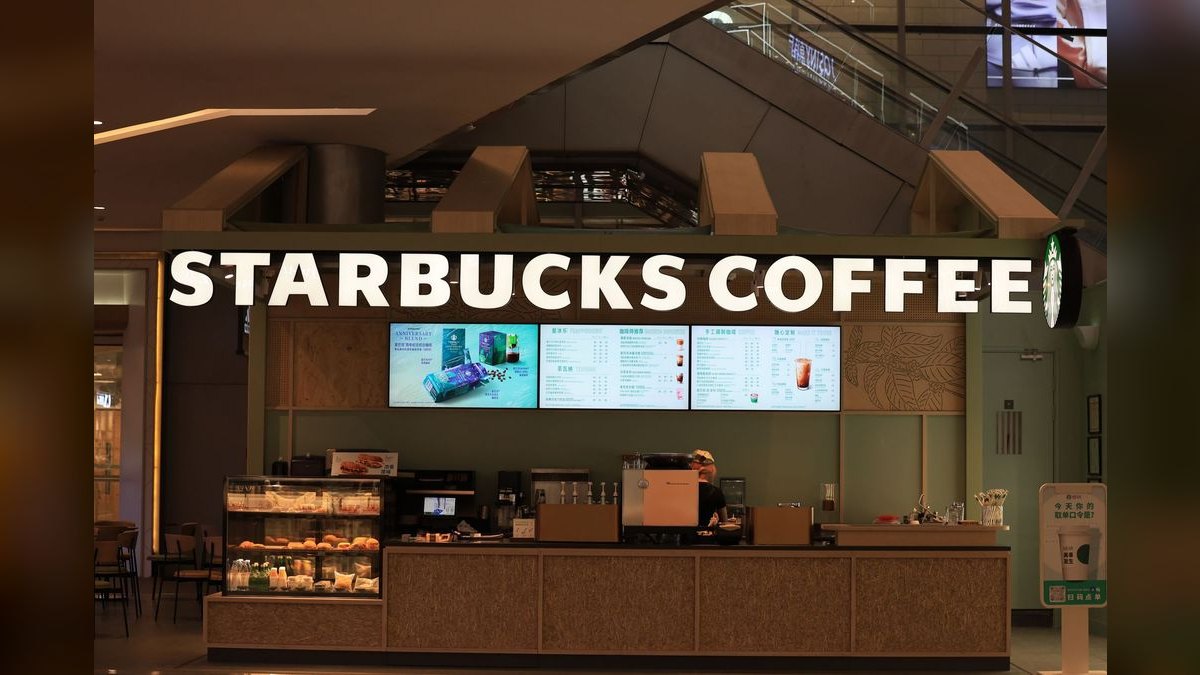
Build cost context relative to alternatives: Smashburger runs $650,000-$1.5M at 6% royalty, Mooyah $525,000-$985,000 at 6%, BurgerFi $900,000-$1.5M at 5.5%. Slim Chickens runs $1.0M-$2.4M against a median AUV near $2.1M — a far stronger cash-on-cash ratio than Hardee's despite a similar investment range. These comparisons matter because "it's a national burger brand" is not sufficient justification on its own; the ratio of investment to AUV is what determines returns, and several competitors post better ratios than Hardee's at similar or lower capital requirements.
Risks, edge cases, and failure modes
The dominant failure mode is a first-time single-unit buyer undercapitalized relative to the build. The $1.4M-$2.6M total investment implies SBA debt service of $14,000-$22,000 a month; at a bottom-quartile $900,000 AUV, that payment alone absorbs the entire owner draw before counting labor or COGS. Pair that with a thin working-capital line below the recommended $160,000-$250,000 and a cash crunch typically hits in month 4-7, exactly when honeymoon traffic fades and the unit has to earn its real volume.
Market saturation is a second major risk. Inside 20 miles of three McDonald's, two Wendy's, a Burger King, and a Whataburger, a new Hardee's unit's AUV ceiling is effectively the bottom quartile from day one — no amount of operational excellence overcomes a trade area that's already saturated with competing burger QSR demand.
Breakfast-dependency is a subtler risk. Hardee's Made From Scratch Biscuits program is a genuine system strength, but national breakfast daypart traffic is contracting as remote-work patterns mature, so a business plan that leans heavily on breakfast as the primary profit center is underwriting against a daypart that is structurally softening, not growing.
Absentee ownership is disqualifying in practice. QSR margins depend on 60+ hours a week of hands-on operator presence through the first 18 months; an owner who plans to hire a day-one GM and stay hands-off is taking on one of the highest-risk configurations in the entire system.
2027-specific macro pressure compounds all of the above. Wendy's posted an 11% same-store sales decline in Q4 2025, McDonald's traffic among lower-income consumers is down, and 44% of households earning under $50,000 report dining out less than the prior year. The value-menu war triggered by McDonald's $5 Meal Deal has compressed system-wide burger QSR margins by 150-220 basis points through 2026. Hardee's Thickburger platform ($6.99-$10.99) insulates ticket size but suppresses traffic when consumers trade down — meaning the brand's premium positioning is a double-edged sword in a value-driven cycle. Beef costs sit 18% above the 2023 baseline with 2027 forecasts flat-to-up 3%, and QSR labor costs have risen from a $13.50/hr median in 2022 to $17.25/hr in early 2026 — both compressing the same restaurant-level margin that determines owner draw.
CKE's reimage program is an edge case worth flagging specifically: existing franchisees face $250,000-$450,000 mandatory remodels in 2027-2028, which is a real liability for anyone buying an existing unit rather than building new — a new-build franchisee gets the 2027 image package by default and avoids that capex exposure entirely, so the "buy existing" versus "build new" decision has a hidden cost differential that isn't visible in the sale price alone.
A practical rollout plan (mermaid)
A disciplined path from "considering Hardee's" to "operating one" runs through four phases rather than a single leap.
Phase one — underwriting (first 4-6 weeks): Pull the actual 2025 FDD directly from CKE and read Items 7, 19, 20, and 21 in full. Item 20 lists every franchisee who opened, closed, or transferred in the last three years — call a meaningful sample of them, weighted toward your target geography, before assuming the headline AUV applies to your market. In parallel, get a soft SBA 7(a) prequalification from a lender that specializes in QSR franchise lending; if the $700,000 liquid / $1.6M debt capacity threshold isn't met, the process should stop here rather than proceeding on hope.
Phase two — site and competitive validation (next 4-6 weeks): Commission a trade-area study for 2-3 candidate sites, screening for daytime population, household income in the $45,000-$85,000 band, and traffic counts above roughly 25,000 vehicles per day on the primary road. Map every competing burger QSR within 5 miles; if density exceeds roughly one burger QSR per 8,000 residents, that market should be deprioritized regardless of how attractive the specific parcel looks.
Phase three — financial stress test and decision (next 2-3 weeks): Model the deal at three AUV scenarios — $950,000 (bottom quartile), $1.25M (median), and $1.55M (top quartile) — against the actual debt terms quoted by the lender. If the bottom-quartile case can't service debt and still cover a modest owner draw, the deal is too thin regardless of how the median case looks. At this stage, also cross-shop 2-3 existing Hardee's resales; an existing underperforming unit acquired at 30%-40% of new-build cost and turned around over 12-18 months is frequently a better risk-adjusted entry than a ground-up build.
Phase four — build and open (months 7-18 for new construction): Permits and construction typically run 6-9 months, equipment installation and staffing another 2-3 months, with a 6-week manager and crew training cycle preceding grand opening. Budget 12-18 months to stabilized volume after opening, and don't mistake early honeymoon traffic for the unit's real run rate — the first reliable read on true AUV comes after month 6-9 of operation, not the opening quarter.
Related questions
How much liquid capital do I actually need before CKE will approve me?
Plan on $700,000 or more in liquid capital plus demonstrated access to roughly $1.6M in debt financing. Below that threshold, underwriting typically stalls regardless of how strong the proposed site looks.
Is it better to build new or buy an existing Hardee's?
Buying an existing underperforming unit at 30%-40% of new-build cost and repositioning it over 12-18 months is often the better risk-adjusted entry, but it carries exposure to the mandatory $250,000-$450,000 reimage capex that a new build avoids.
What's a realistic alternative if I only have $300,000-$600,000 to invest?
Lower-build concepts like Scooter's Coffee, Dog Haus, or Slim Chickens generally offer better cash-on-cash returns at roughly half the capital risk of a Hardee's build.
Does owning the land under the unit change the economics?
Yes — owning a $300,000-$500,000 parcel creates a second profit stream (operating cash flow plus ground-lease economics at a 5%-7% cap rate) and gives an exit option that preserves land value even if the operating entity is later sold.
FAQ
How much money do I need to open a Hardee's franchise? Total initial investment runs $1,375,000 to $2,637,395 for a traditional freestanding unit with drive-thru, and lenders generally expect at least $700,000 in liquid capital before approving financing for the balance.
How long does it take to break even on a new Hardee's?
Breakeven typically lands between month 30 and month 42 for a unit performing at or near median volume, 24-30 months for top-quartile performers, and effectively never for bottom-quartile units on a cumulative-cash basis.
What ongoing fees does a Hardee's franchisee pay? A combined 9.5% of gross sales — a 4% royalty (3.5% for new units during their first five years) plus a 5.5% national advertising fund contribution — comes off the top before any operating costs are covered.
How much profit can I realistically expect in year one? A well-run unit at or near the $1,238,549 median AUV typically produces $110,000-$180,000 in owner cash flow after debt service in the first year, though bottom-quartile units can produce little to nothing after financing costs.
Should a first-time restaurant owner open a Hardee's? Generally no. The capital intensity, 30-42 month payback window, and intense burger-segment competition favor experienced multi-unit operators with existing back-office infrastructure over first-time single-unit buyers.
How does Hardee's compare to other burger franchise options in 2027? Hardee's median AUV near $1.24M is respectable but not category-leading, and its 9.5% combined royalty and ad-fund rate runs higher than McDonald's or Bojangles at 8% combined — meaning comparable or smaller competitors can offer better margin structure at similar investment levels.
Sources
- CKE Restaurants Inc., Hardee's Franchise Disclosure Document (2025 filing), hardeesfranchising.com
- U.S. Small Business Administration, SBA 7(a) Loan Program overview, sba.gov
- Restaurant Business Online, restaurantbusinessonline.com
- QSR Magazine, qsrmagazine.com
- U.S. Bureau of Labor Statistics, Quick Service Restaurant wage data, bls.gov
- USDA Economic Research Service, Livestock and Meat Domestic Data, ers.usda.gov
- International Franchise Association, franchise.org
- Nation's Restaurant News, nrn.com
Related on PULSE
This page will be disappearing soon. Save it to your device for $1 — or read it free while it is here.
@Kory-White- · if Venmo asks, the last 4 of my number are 2012
This page is gone.
This one is off the shelf now. $1 keeps it on your phone for good — the whole page, pictures and diagrams included.
 franchiseShould I open or buy an Auntie Anne's franchise in 2027?
 franchiseShould I open or buy a Goddard School franchise in 2027?
 franchiseShould I open or buy a Domino's franchise in 2027?
 franchiseShould I open or buy an F45 Training franchise in 2027?
 franchiseShould I open or buy a Big O Tires franchise in 2027?
 franchiseShould I open or buy a Great Clips franchise in 2027?
 franchiseShould I open or buy a Primrose Schools franchise in 2027?
 franchiseShould I open or buy a Smoothie King franchise in 2027?
 franchiseShould I open or buy a Bruster's Real Ice Cream franchise in 2027?
 franchiseShould I open or buy a UPS Store franchise in 2027?