


Should I open or buy a Bonchon franchise in 2027?
Quality
Certified
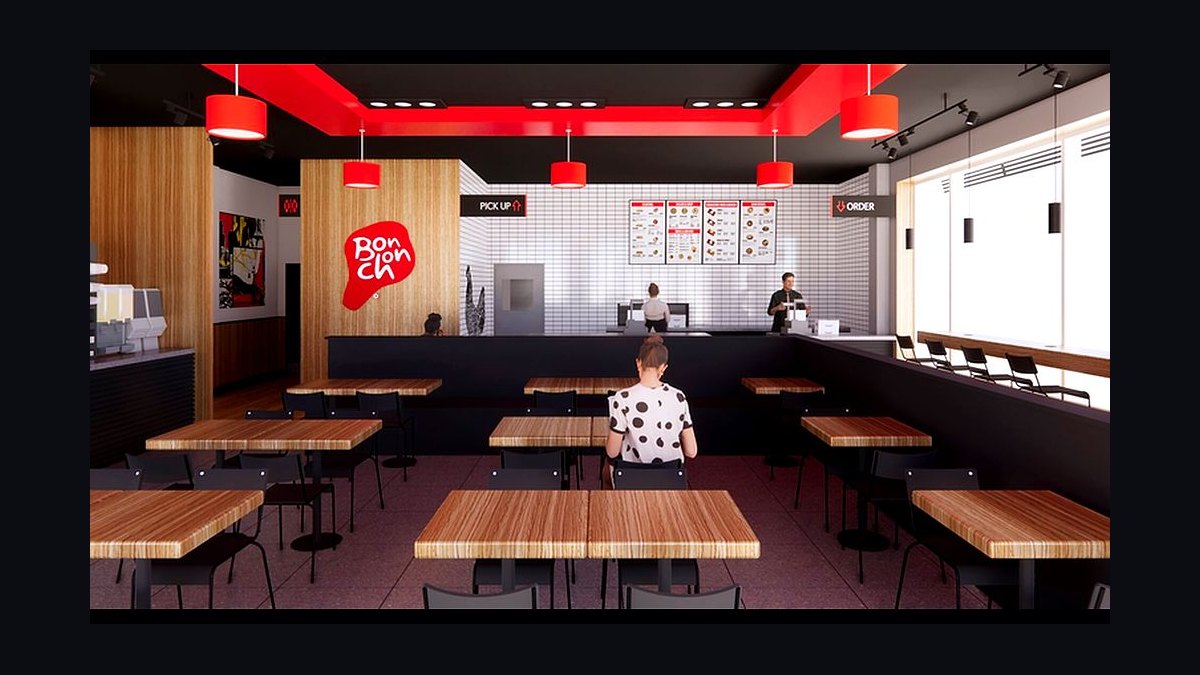
Only if you bring multi-unit restaurant experience, roughly $400K–$600K liquid, and a trade area with proven Korean-food demand. Bonchon's disclosed investment range runs roughly $591K–$1.31M against a system AUV near $1.36M. Buying an existing profitable unit is usually the lower-risk path; opening new suits operators who can control site selection.
Opening a new unit versus buying an existing one
These are two different businesses wearing the same logo, and confusing them is the most expensive mistake a first-time franchise buyer makes. Opening new means you pay the $35,000 franchise fee, sign a lease on a site nobody has proven, spend nine to fourteen months in permitting and build-out earning nothing, and then find out whether your trade-area thesis was right. Buying an existing unit means you pay a multiple of trailing cash flow — restaurant resales typically trade somewhere in the range of two to four times seller's discretionary earnings, with stronger multiples for units with long lease terms and clean books — and you inherit a proven sales history, a trained crew, an existing delivery ranking, and a customer base that already knows the address.
The economics diverge sharply. A new build burns capital for a year before generating a dollar, then ramps through a honeymoon spike, a post-opening trough, and a slow climb toward steady-state volume that usually settles somewhere between months fourteen and twenty-four. An acquisition generates cash in week one. That cash-flow timing difference matters enormously when you are servicing an SBA loan — the new-build operator is making interest-only or full payments out of pocket during construction, while the acquirer's first payment comes out of revenue the business is already producing.
The trade-off runs the other way on ceiling and on control. When you open, you choose the site, negotiate the lease, design the labor model, and hire every person. If your read on the market is good, you capture all the upside of a well-placed store and you own a lease you negotiated rather than one someone else signed in a weaker moment. When you buy, you inherit everything — including a lease with five years left at above-market rent, a walk-in cooler nearing end of life, a manager who is leaving the day the deal closes, and whatever reputation the previous owner built on the delivery platforms. Bad reviews and a depressed platform ranking are real, quantifiable liabilities that take six to twelve months of consistent execution to repair.
There is also a third path worth naming, because operators routinely overlook it: buying a distressed or underperforming unit at a discount to build-out cost. A store doing $800K in a trade area that should support $1.3M is often available for well under what a ground-up build would cost, and the gap between actual and potential volume is the return. This is the highest-skill play on the board. It only works if you can diagnose *why* the store underperforms — bad operator, bad site, or bad market — and the first is fixable, the second sometimes, the third never. Most buyers cannot tell these apart from the outside, which is exactly why the discount exists.
The trade-area question that decides everything else
Before you compare capital structures, answer whether your market supports the concept at all. Korean fried chicken is not a universal-demand category the way burgers or pizza are. It carries a higher average check than commodity QSR, it requires customer familiarity with the product, and it performs best where either Asian-American household density or a young, food-adventurous population provides a reliable base.
Practically, that means running the demographics on your three-mile and five-mile rings before you spend a dollar on legal review. You want meaningful Asian-American household density, median household income comfortably above the metro average, strong daytime population from offices or a university, and — this is the underrated signal — at least one competing Asian or Korean concept already trading at healthy volume. Competition in this category is confirmation, not threat. A trade area with three busy Korean restaurants is telling you the demand exists. A trade area with zero is telling you that you would be the one educating the market, which is a marketing expense nobody budgets for and few first-time operators survive.
Markets like Dallas, Houston, Atlanta, Northern Virginia, the Bay Area, Queens, and Orange County have the density and the cultural familiarity to support the concept at or above system average. Tier-three suburban markets frequently do not, and the failure pattern is consistent: the store opens strong on novelty, runs a good first ninety days on curiosity traffic, and then settles at sixty percent of pro forma when the novelty burns off and the repeat base turns out to be too thin. If your market analysis depends on converting people who have never eaten Korean fried chicken, you are underwriting a marketing campaign, not a restaurant.
The adjacent lesson applies across franchising broadly. Every ethnic-cuisine and specialty concept — Halal Guys, Poke chains, Indian fast-casual, Filipino brands like Jollibee — carries this same trade-area sensitivity, and the brands with the widest geographic tolerance are the ones selling the most familiar product. When you move from a commodity category into a specialty one, you trade lower competition for a harder site-selection problem. Price that trade honestly.
How to decide between the two paths
The decision tree below is the honest sequence. Note that liquidity and experience come first, before you look at any specific unit — because if you fail those gates, which path you prefer is irrelevant.
Two branches deserve extra comment. First, the experience gate. Bonchon's product is technique-dependent — double-fry method, sauce application timed to preserve texture, and batch forecasting on a protein that does not hold well. An operator without line experience cannot tell whether their crew is executing correctly until the reviews tell them, and by then the delivery ranking has already slipped. If you lack that experience, the honest options are to partner with someone who has it, take a general-manager role at a comparable concept for a year, or buy an existing unit specifically to inherit a functioning kitchen crew.
Second, the diagnosis branch on distressed units. "Operator problem" looks like: inconsistent hours, poor delivery packaging, a menu that has drifted, negative reviews that all mention service rather than food, high staff turnover. "Site problem" looks like: low measured foot traffic, poor visibility or difficult ingress, an anchor tenant that has gone dark, a trade area whose demographics have shifted. The first you fix with management. The second you cannot fix at any price, and the seller knows it, which is why the price looks attractive.
The concrete numbers behind each option
Start with the disclosed figures, which come from the Franchise Disclosure Document — the single load-bearing document in any franchise decision. Bonchon's recent FDD puts total initial investment in the range of roughly $591,000 at the low end for the smaller fast-casual prototype to roughly $1,313,000 at the high end for a full dine-in build. The franchise fee sits at $35,000. Ongoing fees run a 5% royalty on gross sales plus a marketing contribution generally in the 2.5% to 5% band. Item 19 reports a system average unit volume around $1,358,000, with top-quartile performers reported near $2,462,634.
Break the new-build investment into its components and you can see where the variance lives. Leasehold improvements and build-out are the largest single line and swing the widest — roughly $215,000 for a small second-generation space taking over existing restaurant infrastructure, versus $620,000 or more for a ground-up or first-generation build where you are installing grease traps, hood systems, and utility runs from scratch. Kitchen equipment, dominated by fryers, hood, and walk-in, runs somewhere from $145,000 to $245,000. Furniture, fixtures, and smallwares add $40,000 to $95,000. Technology and POS, $18,000 to $32,000. Signage, $15,000 to $40,000 depending on how aggressive the landlord's and municipality's sign codes are. Opening inventory, $22,000 to $38,000. Training and travel for the initial management team, $14,000 to $28,000. Insurance, permits, and deposits, $12,000 to $32,000. Working capital for the first three months, $75,000 to $148,000 — and this line is the one operators shortchange most often and regret most reliably.
The single largest controllable variable in that stack is whether you take a second-generation restaurant space. Inheriting a functional hood, grease interceptor, and adequate electrical and gas service can cut two hundred thousand dollars and three months off the project. It is worth searching harder and waiting longer for a second-gen box than accepting a first-gen shell in a nominally better center.
On the operating side, the model only works if food cost stays under roughly thirty percent and labor under roughly twenty-eight. Occupancy — rent plus common area maintenance — should land under about eight percent of sales; the difference between eight percent and twelve percent occupancy is roughly the difference between a healthy store-level margin in the mid-teens and a marginal one below ten. Store-level EBITDA in the ten to fifteen percent band is a realistic expectation for a competent operator at or near system AUV, which puts operator earnings on a median unit somewhere in the $150,000 to $220,000 range before debt service.
Now layer the debt. An SBA 7(a) loan at seventy-five percent of a $900,000 project is $675,000. At prevailing rates in the high single digits over a ten-year amortization, monthly debt service lands roughly in the $8,000 to $9,000 range; a larger project at the top of the range pushes that meaningfully higher. Annualize it and you are servicing well over $100,000 a year out of that $150,000–$220,000 operator earnings figure. That is the whole game: at system AUV with disciplined costs, the deal produces a modest owner distribution plus principal paydown. At eighty percent of system AUV, it produces a job with no distribution. At seventy percent, it produces a cash call.
One structural detail deserves specific attention. Franchisors frequently offer incentive programs — reduced or waived royalties for an initial period, fee discounts for multi-unit commitments, or development-cost support. When such a program applies, model it as a one-time timing benefit, not as permanent margin. A royalty holiday on a $1.35M unit is worth something on the order of $67,000 in the year it applies, and operators who bank that number as their steady-state margin get a nasty surprise the month full royalties begin — which typically arrives while the store is still ramping. Build your pro forma at full fee load from day one and treat any incentive as a cushion.
For the acquisition path, the numbers work differently. You are buying trailing cash flow at a multiple, and the diligence question is whether that cash flow is real and whether it is durable. Real means verified against bank deposits, sales tax filings, and POS exports — never against a seller's spreadsheet. Durable means the lease has enough term remaining that you are not renegotiating from a weak position in eighteen months, the equipment has useful life left, and the sales trend is flat or improving rather than declining. A store with three years left on its lease is worth materially less than the same store with ten, because at renewal the landlord holds all the leverage and knows exactly how much your leasehold improvements cost.
Franchisor consent is the other acquisition variable. Transfers require approval, usually a transfer fee, often a requirement that you complete the full training program, and sometimes a mandated remodel to current brand standards as a condition of approval. That remodel obligation can be a six-figure surprise attached to a deal that otherwise penciled. Get the franchisor's transfer conditions in writing before you go hard on a deposit.
What the wider franchise market tells you about this specific bet
It helps to place Bonchon against its neighbors, because the right question is rarely "is this a good franchise" but "is this the best use of $900,000 and five years of my life."
Within Korean fried chicken specifically, bb.q Chicken and Pelicana are the direct comparables. Both generally carry lower entry costs and smaller footprints; both carry less U.S. brand recognition outside dense Korean-American clusters, and both have thinner domestic support infrastructure. The trade is straightforward: lower capital at risk, lower brand pull, more of the marketing burden on you. For an operator with an existing customer base and cultural fluency in the market, that trade can favor the smaller brand. For an operator relying on brand awareness to drive discovery, it does not.
Step out one ring and the chicken category broadly is where a great deal of franchise capital has flowed in recent years. Wingstop, Dave's Hot Chicken, Raising Cane's, and Slim Chickens have all pushed hard, and the category-level effect is that chicken concepts now compete against each other for the same sites, the same crews, and the same commodity inputs. That last point matters: when everyone is buying wings and boneless breast, wholesale poultry pricing gets tight, and any supply disruption — avian influenza being the recurring one — hits every operator in the category simultaneously. Franchise agreements typically require sourcing from approved suppliers, which means you have limited ability to shop around when your primary protein spikes. Model a bad chicken year. If a four-to-six-point COGS increase for two quarters wipes out your cushion, you are underwritten too thin.
Step out another ring and compare against non-restaurant franchising entirely. Service franchises — home services, restoration, senior care, pest control, commercial cleaning — typically require a fraction of the capital, carry no lease exposure, no perishable inventory, and no health inspections, and generate margins that often exceed restaurant margins. What they lack is the top-line ceiling and the tangible asset. If your goal is cash flow per dollar invested, a service franchise usually wins outright. If your goal is building an operating company with real enterprise value and a path to five or ten units, restaurants have the ceiling that service brands generally do not. Be honest with yourself about which goal you actually have, because operators who wanted cash flow and bought a restaurant are the ones you find selling at a discount three years later.
Finally, consider the channel mix, because it has reshaped restaurant unit economics generally and this category specifically. A large and growing share of volume in fried-chicken concepts arrives through delivery and pickup rather than dine-in. That changes almost every assumption in the model: it lowers the value of dining-room square footage, raises the importance of a well-designed pickup and delivery-driver flow, introduces third-party commissions of roughly fifteen to thirty percent on those orders, and makes your platform ratings a direct revenue driver. An operator who treats delivery as an afterthought will underperform system average by a wide margin. An operator who designs the store around throughput and packaging integrity — food that survives twenty minutes in a bag — can beat it. This is also the strongest argument for the smaller fast-casual footprint: if half your volume never sits down, you are paying rent on chairs nobody uses.
Implementation and sequencing if you proceed
The sequence below assumes you cleared the liquidity and experience gates. Follow it in order; the expensive mistakes almost all come from doing step six before step two.
A few notes on the steps that carry the most weight.
The franchisee calls are the highest-return four hours you will spend in the entire process. Item 20 of the FDD lists current franchisees and, critically, those who left the system in the prior year. Call both groups. Ask current operators for their year-one actual volume against the pro forma they were shown, their real food cost in month six, whether marketing-fund spending is visible in their market, what their occupancy percentage is, and whether they would sign again knowing what they know. Ask departing operators what specifically broke. Ten honest conversations will tell you more than any consultant's report, and they cost nothing but the phone calls.
The attorney review is not optional and not a place to economize. Budget several thousand dollars for a franchise-specialist attorney — not your general business lawyer — and direct their attention to Item 6 for the complete fee schedule, Item 8 for supply-chain restrictions and any rebates the franchisor collects from your suppliers, Item 11 for what the franchisor actually promises to do for you versus what it merely may do, Item 17 for renewal terms, transfer conditions, and post-termination non-competes, Item 19 for the basis and limitations of the financial representations, and Item 20 for the turnover trend across three years. Turnover is the tell. A system opening many units while also closing or transferring many is a system whose economics do not hold for the median operator.
On lending, work with lenders who write restaurant paper routinely. They will underwrite the deal faster, they understand what a reasonable ramp looks like, and they will not panic when month four comes in under plan. Expect a personal guarantee, expect a lien on personal real estate if you have equity, and expect the lender to require a working-capital reserve. If a lender is willing to fund you at ninety percent with no reserve, that is not a favor — it is a structure that leaves you no room for the first equipment failure.
On the lease, the terms that matter most beyond base rent are the free-rent period during build-out, the tenant improvement allowance, the exclusivity clause preventing the landlord from leasing to a competing concept in the same center, the assignment rights that let you sell the business later without landlord veto, and the personal guarantee burn-off. Negotiate the burn-off hard: a guarantee that steps down after three years of on-time payment is worth more to you than a small reduction in base rent.
On staffing, the single most common operational failure in year one is opening with too few trained people and burning out the ones you have. Hire and train deeper than you think you need, expect to lose a meaningful fraction of your opening crew within ninety days, and keep a hiring pipeline warm from day one. Labor cost discipline does not mean running short — it means running the right people at the right hours, and a short-staffed store loses more in throughput and reviews than it saves in wages.
Finally, on the second unit. The multi-unit path is where the real return in franchising lives, because G&A, management depth, and purchasing leverage all amortize across stores. But do not sign a multi-unit development agreement before you have run one unit for twelve stable months. Development agreements carry opening schedules with real penalties, and an operator who committed to three stores before learning whether they can run one has converted a recoverable mistake into an unrecoverable one.
Related questions
Is buying an existing franchise unit always safer than opening new?
No. An existing unit removes construction and ramp risk but transfers site, lease, equipment, and reputation risk to you. A well-diligenced resale in a proven location is safer. A resale you did not verify against bank records is not.
How much of the investment can be financed?
SBA 7(a) financing commonly covers seventy to eighty percent of a qualified project, with the balance as owner equity. Expect a personal guarantee, a working-capital reserve requirement, and collateral liens. Higher leverage reduces your cushion, not your risk.
What single metric best predicts unit success?
Occupancy cost as a percentage of sales. Rent plus CAM under roughly eight percent leaves room for a healthy margin; above twelve percent, the store needs above-average volume just to reach break-even.
Can I operate a Bonchon franchise absentee?
Realistically no in year one. Technique-dependent food, high labor intensity, and delivery-rating sensitivity all require owner presence. Margin typically compresses several points when the owner steps back before systems and management are proven.
What does a franchise resale typically cost relative to a new build?
Restaurant resales commonly trade at a multiple of seller's discretionary earnings rather than at replacement cost. A profitable unit can exceed build-out cost; an underperforming one often sells well below it, which is where the opportunity and the risk both sit.
FAQ
What is the total initial investment to open a Bonchon franchise?
Recent Franchise Disclosure Document figures put the total initial investment roughly between $591,000 and $1,313,000, inclusive of the $35,000 franchise fee. The low end reflects a smaller fast-casual footprint in a second-generation space; the high end reflects a larger dine-in build. Actual cost depends heavily on local construction pricing, whether the space has existing restaurant infrastructure, and lease negotiation.
What liquidity and net worth does the franchisor typically require?
Expect requirements in the range of $400,000 to $600,000 in liquid assets and net worth around $1.5 million. These thresholds exist so the operator can fund the equity portion, survive a slower-than-projected ramp, and absorb unbudgeted costs. Lenders apply similar screens independently, so meeting the franchisor's bar does not guarantee financing.
What are the ongoing fees?
A 5% royalty on gross sales plus a marketing contribution generally in the 2.5% to 5% range. That combined seven-and-a-half to ten points comes off the top before any operating expense, which is why occupancy and food cost discipline matter so much — there is less room for error than in an independent restaurant.
How long until the store breaks even and pays back the investment?
Operating break-even commonly lands somewhere between month fourteen and month twenty after opening. Full cash-on-cash payback for a unit performing at or near system average typically runs four to six years with a conventional equity contribution, and longer for a unit that settles below system volume or carries above-average occupancy cost.
Does the fast-casual format change the math?
Yes, in both directions. A smaller footprint lowers build-out cost and rent, which compresses payback and reduces capital at risk. It also reduces dine-in seating capacity, so the format depends more heavily on delivery, pickup, and throughput. Evaluate it as a different business model rather than a cheaper version of the same one.
Should I sign a multi-unit development agreement upfront?
Not before operating one unit successfully for at least twelve months. Development agreements bind you to an opening schedule with real financial consequences for missing it. The purchasing and G&A leverage of multiple units is genuine, but it is a reward for proven operating capability, not a substitute for it.
Sources
- https://www.ftc.gov/business-guidance/resources/franchise-rule-compliance-guide
- https://www.sba.gov/funding-programs/loans/7a-loans
- https://www.franchise.org/
- https://www.ers.usda.gov/topics/animal-products/poultry-eggs/
- https://www.bls.gov/iag/tgs/iag722.htm
- https://www.qsrmagazine.com/
- https://www.nrn.com/
- https://www.restaurant.org/research-and-media/research/
- https://www.irs.gov/businesses/small-businesses-self-employed/starting-a-business
- https://www.census.gov/programs-surveys/acs
Related on PULSE
This page will be disappearing soon. Save it to your device for $1 — or read it free while it is here.
@Kory-White- · if Venmo asks, the last 4 of my number are 2012
This page is gone.
This one is off the shelf now. $1 keeps it on your phone for good — the whole page, pictures and diagrams included.
 franchiseShould I open or buy a Jeremiah's Italian Ice franchise in 2027?
 franchiseShould I open or buy a Taco Bell franchise in 2027?
 franchiseShould I open or buy a Whataburger franchise in 2027?
 franchiseShould I open or buy a Merry Maids franchise in 2027?
 franchiseShould I open or buy a Drybar franchise in 2027?
 franchiseShould I open or buy a Cinnabon franchise in 2027?
 franchiseShould I open or buy a Wingstop franchise in 2027?
 franchiseShould I open or buy a Wendy's franchise in 2027?
 franchiseShould I open or buy an Ace Hardware franchise in 2027?
 franchiseShould I open or buy a Meineke franchise in 2027?