


Should I open or buy a Wing Zone franchise in 2027?
Quality
Certified
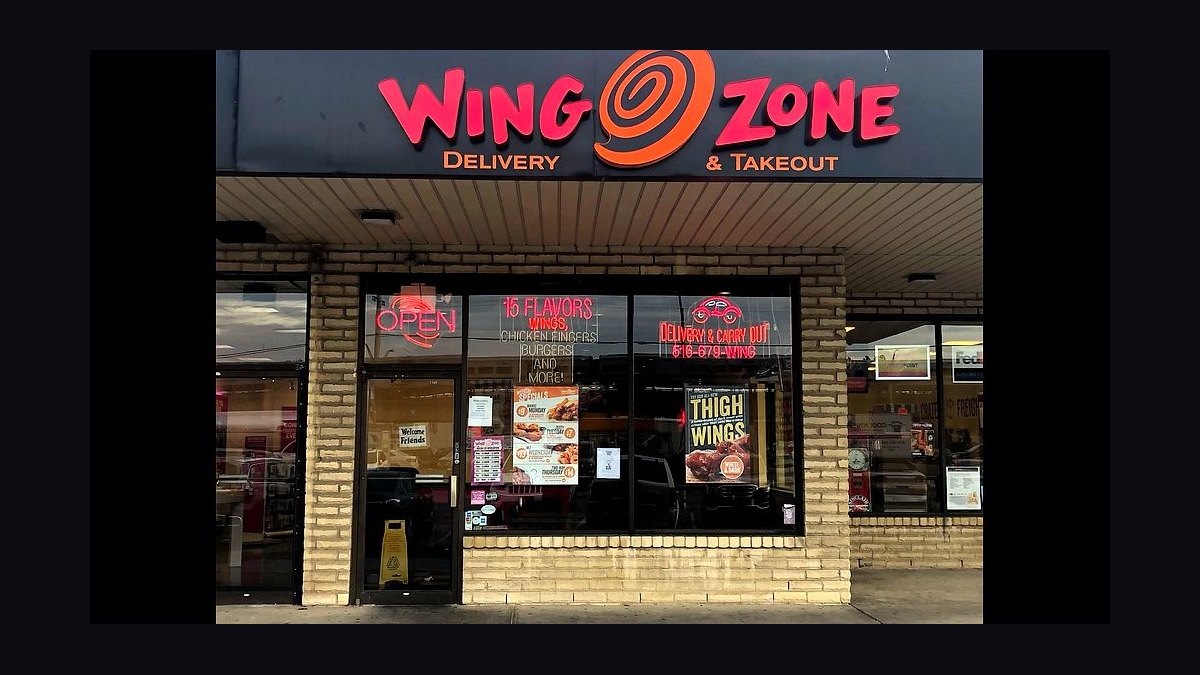
Probably not, unless you can land a sub-$500K build in a suburban delivery zone with weak Wingstop coverage. Wing Zone in 2027 is a distant #3 chicken-wing franchise behind Wingstop's 2,400+ units. Item 7 floors at $269,550, but a real build runs $420K-$751K. Item 19 shows $946K average gross sales; at a 15% margin, expect $95K-$155K Year-1 owner cash flow and a 5-7 year payback — only as a full-time owner-operator.
The Outcome You Should Expect
Anyone modeling whether to open a Wing Zone franchise in 2027 needs to separate the marketing pitch from the disclosed numbers. The 2024 FDD (filed April 2024, with a 2025 amendment carrying it through most of 2027 closings) reports average gross sales of $946,000 across 22 U.S. units, with a median closer to $820,000 — a meaningful gap that tells you the average is being pulled up by a handful of strong performers while a chunk of the system sits well below $800K. That distribution matters more than the headline number, because it means half the existing franchisees are running a business that generates less top-line revenue than the average suggests, and thinner top-line revenue is exactly what turns a workable royalty structure into an unworkable one.
Run the math forward from a realistic $750K-$850K AUV. After the 6% royalty and 4% national marketing contribution, you've given up 10% of gross before touching a single operating line. Industry-standard restaurant-level EBITDA margins for the wing-and-tender segment run 12%-18% per IBISWorld's chicken restaurant category data; Wing Zone units that hit the higher end of that band are almost always owner-operated, not managed by a hired GM. At a blended 15% margin on an $800K-$900K unit, Year-1 owner cash flow lands in the $95K-$140K range before debt service — and if you financed 80% of a $500K-$650K build through an SBA 7(a) loan, debt service alone can consume $60K-$90K annually depending on rate and term, which is why the realistic take-home for a leveraged first-time buyer is closer to $50K-$90K in year one, not the gross owner cash flow figure alone.
The outcome bifurcates hard based on operator type. Full-time owner-operators working the line themselves for the first 18 months consistently land in the upper half of the Item 19 range. Absentee owners layering Wing Zone onto a portfolio that already includes a Subway or a Smoothie King, and staffing the unit with a $45K-$50K general manager, routinely land in the bottom quartile or below — food cost drifts from a target 30% to 36%-38%, labor drifts from 24%-26% to 29%-31%, and the four to six points of margin that disappear are exactly the margin that separates a profitable Wing Zone from one that prints a loss every month. If you are evaluating this as a semi-passive investment rather than a business you will personally run for the first year and a half, adjust every projected number downward by at least a third before you sign anything.
What Drives That Outcome
Three structural forces determine whether a given Wing Zone location clears the benchmarks above or falls short of them, and all three are knowable before you sign a franchise agreement — which is the entire point of running the diligence sequence below rather than trusting the FDD's rosy framing.

The first and largest driver is Wingstop proximity. Wingstop is projected to exceed 2,400 U.S. units by the end of 2026 and continues opening 300+ new locations annually, backed by a takeout-and-delivery model that reported 38.8% year-over-year revenue growth in late 2024 and is tracking toward a $1.85M+ system-wide average unit volume. Every Wing Zone location that opens within four miles of an existing or incoming Wingstop measurably loses AUV — segment comp data puts the compression at 12%-22% once a Wingstop lands nearby, driven by Wingstop's superior digital ordering stack, larger marketing budget, and higher brand recall in food-delivery app search results. A trade area that looks clean today can stop being clean the moment Wingstop's real estate team signs a lease two miles away, so this isn't a one-time check — it's an ongoing exposure that a franchise buyer has to underwrite as risk, not just screen for at the outset.
The second driver is third-party delivery economics, which have moved against every wing-centric concept over the past two years. DoorDash and Uber Eats both raised commission floors to 27%-32% for non-promoted restaurants in 2026, and while cities like Seattle and New York have imposed delivery-fee caps, platforms have largely routed around those caps with restaurant-facing "service fees" that land in the same place financially. On a $30 wing order delivered through a major aggregator, the restaurant nets roughly $19-$21 before food cost is even subtracted — and wings already carry one of the thinnest per-order dollar margins in the QSR category because bone-in chicken wholesale prices swung between $1.45/lb and $2.95/lb in 2024-2026, with boneless costs following broiler markets up another 14% in 2026 on avian-flu-driven culls. A Wing Zone that leans on delivery volume without aggressively pushing first-party ordering is handing away margin it cannot afford to lose.
The third driver is operator background and hours. Franchisees converting from another QSR concept — a Domino's, Papa John's, or Jersey Mike's operator picking up a Wing Zone as an adjacent brand — bring food-cost discipline and labor-scheduling systems that translate directly, and they consistently outperform first-time restaurant owners on the same Item 19 disclosures. Combine that operational background with 55-65 hours a week of owner presence for the first 18 months, and you get the upper-quartile outcomes; remove either factor and the outcome regresses toward the median or below it.
Benchmarks and Realistic Ranges

The published Item 7 range for a Wing Zone franchise runs from $269,550 at the low end to $751,000 at the high end, and the gap between those two numbers is not noise — it reflects two fundamentally different business formats. The $269,550 floor assumes an aggressive endcap, delivery-and-carryout-only build with minimal seating, roughly 1,200-1,500 square feet, low-cost signage, and a landlord contributing meaningful tenant improvement dollars. A full 1,800-2,200 square foot dine-in-capable location with a real buildout, code-compliant kitchen ventilation, and a standard commercial lease should be budgeted at $550,000-$750,000 all-in, and anyone modeling off the low-end number without matching it to an equivalent low-end format is setting up a capital shortfall in month four or five.
Breaking down the components: build-out and leasehold improvements run $120,000-$310,000, kitchen equipment (fryers, ventilation hoods, POS systems) runs $85,000-$175,000, signage and opening inventory run $25,000-$60,000, working capital for the first three months runs $30,000-$85,000, and rent deposits, training, and insurance round out at $20,000-$90,000. On top of whichever total you land on, add $50,000-$80,000 of personal liquidity above the Item 7 figure — that cushion is what survives a slow January, a $30,000-$40,000 unexpected HVAC or hood-suppression repair, or a three-month ramp period that runs longer than projected.

On the fee side, the royalty is 6.0% of gross sales, the national marketing fund is 4.0%, and there's a local marketing minimum of 1.0% — 11% of top-line revenue committed before any operating expense is paid, which is on the higher end for the QSR wing category and needs to be modeled explicitly rather than assumed away. Against that fee structure, a $720,000-$820,000 AUV — the realistic band rather than the $946,000 average — produces restaurant-level EBITDA in the $108,000-$147,000 range at a 15% margin, and Year-1 owner cash flow after debt service typically lands $50,000-$90,000 lower than that EBITDA figure for a franchisee who financed the majority of the build through SBA debt. Simple payback on the full initial investment ranges 4.5-7.5 years, with 5-7 years the realistic center for an owner-operator running a mid-sized build rather than the cheapest possible endcap.
Risks, Edge Cases, and Failure Modes
The single most predictable failure mode is the absentee multi-unit operator who adds Wing Zone as a third or fourth brand to an existing portfolio and staffs it with a general manager unfamiliar with wing-specific food cost management. Bone-in and boneless wing pricing is more volatile than almost any other QSR protein input, and a GM without weekly menu-engineering discipline — adjusting portion sizes, sauce mix, and combo pricing in response to weekly wholesale swings — will watch food cost drift from a 30% target to 36%-38% within a couple of quarters, at which point the unit is likely printing a monthly loss in the low thousands even at a respectable sales volume.

A second failure mode is straightforward undercapitalization: a buyer who takes the $269,550 Item 7 floor at face value, builds to that budget without the format assumptions that number requires, and runs out of working capital by month four. Restaurants without a cash buffer beyond initial working capital estimates cannot absorb a slow month, an equipment failure, or a permitting delay, and the failure typically shows up as a forced closure or a distressed resale within the first 18 months rather than a slow decline.
A third and increasingly common failure mode, given where the wing category sits in 2027, is signing in a trade area where Wingstop later opens nearby. Because Wingstop continues opening at a pace of 300+ units annually and its site-selection team specifically targets high-traffic delivery corridors, a Wing Zone location that looks uncontested at signing can face a new Wingstop within 12-24 months, and the resulting comp-sales decline of 18%-25% within two quarters is not something the franchise agreement protects against — there's no exclusivity radius broad enough to guarantee permanence in a category this competitive.
Lease structure is the fourth failure mode, and it's the one most within a buyer's control. Any lease priced above roughly 9% of realistically stress-tested projected sales — not the $946,000 average, but a conservative $720,000 stress case — makes the unit economics fail by default regardless of how well the location is operated. Rent negotiated as a percentage of an optimistic sales number, rather than a stress-tested one, is the quiet killer behind a large share of franchise closures across the category, not just within Wing Zone specifically.
A Practical Rollout Plan
Anyone still moving forward after weighing the outcomes above should treat the next 90 days as a structured decision process rather than an emotional one, because the $27,500-$40,000 franchise fee is non-refundable the moment it's paid.
Start with capital verification in the first week: confirm $200,000 or more in liquid, non-retirement capital and a net worth of $500,000 or higher, sized against the realistic $751,000 worst-case Item 7 outcome rather than the optimistic floor. If an SBA 7(a) loan covering roughly 80% of the build isn't achievable on your financials, stop before spending money on legal review.
Move into FDD discovery over the following two weeks: request the current Wing Zone FDD directly from a Capriotti's franchise development representative, read all 23 disclosure items with particular attention to Item 19 closures, Item 20 unit counts, Item 6 fee stack, and Item 11 technology fees, and pay a franchise attorney $2,500-$4,000 for a formal review — this step is not optional given the fee structure and 10-year term length involved.
Spend the next two weeks on franchisee validation calls: contact at least eight current franchisees from the Item 20 disclosure list and ask directly about actual AUV, actual food cost and labor percentages, time to breakeven, and whether they'd sign again. Treat three or more refusals to talk, or two or more negative answers, as a hard signal to walk away.
Trade area selection comes next: pull a five-mile competitor heat map through a service like Placer.ai or Buxton, eliminate any candidate site within four miles of an existing Wingstop, and physically visit six candidate locations during peak windows — Friday evening and Sunday football afternoons — to observe real foot and car traffic rather than relying on desktop data alone.
Negotiate the lease against the stress case, not the average: push for rent below 8% of a conservative $720,000 projected AUV, request six to twelve months of free rent or a landlord-funded tenant improvement allowance of $40-$80 per square foot, and cap any personal guaranty at 24 months rather than the full lease term. Build a five-year P&L modeled at that same $720,000 stress-case AUV, and only proceed if EBITDA stays positive in year one and debt service coverage exceeds roughly 1.35x. If it doesn't clear that bar, walk and revisit the category in twelve months rather than signing on hope.
Related questions
How does opening a Wing Zone compare to buying a Wingstop franchise?
Wingstop carries a higher fee ($30K) and build cost ($400K-$1M+) plus mandatory multi-unit development in most territories, but delivers a $1.85M+ AUV and stronger category tailwind. Wing Zone requires far less capital but competes from a distant #3 market position.
Is buying an existing Wing Zone resale better than opening a new one?
Often yes — resales trade at 0.7-1.0x trailing EBITDA, typically $180,000-$320,000 all-in, skip build-out risk entirely, and cash-flow from day one if the prior operator ran the unit competently.
What happens to a Wing Zone franchise if a Wingstop opens nearby?
Comp sales typically decline 18%-25% within two quarters as Wingstop's stronger delivery app and marketing budget pull share. There's no franchise-agreement protection against this once it happens.
Can I run a Wing Zone as a virtual-brand-only ghost kitchen?
Yes — layering a Wing Zone Express ghost-kitchen menu into an existing restaurant with idle fryer capacity can add $8,000-$22,000 in monthly incremental sales for $25,000-$60,000 in setup, without new real estate risk.
FAQ
What is the total investment needed to open a Wing Zone franchise? The Item 7 floor is $269,550 for the smallest endcap format, but a realistic all-in build with proper working capital and a standard lease lands between $420,000 and $751,000.
How much can I expect to earn from a Wing Zone franchise in 2027?

Based on 2024 FDD Item 19 data, average gross sales across 22 units were $946,000 with a median near $820,000. After the 6% royalty and 4% marketing fee, a 15% restaurant-level margin produces roughly $95,000-$155,000 in Year-1 owner cash flow before debt service.
How long does it take to break even on a Wing Zone franchise? Simple payback typically runs 5-7 years for a full-time owner-operator. Absentee ownership or a poorly chosen site can push that well beyond 7 years or prevent breakeven entirely.
Is Wing Zone a strong brand compared to its competitors in 2027? No — it's a distant #3 behind Wingstop's 2,400+ units and dominant takeout model. Wing Zone franchisees succeed by finding delivery zones Wingstop hasn't yet saturated, not by out-competing it head-on.
What site characteristics matter most for a Wing Zone location? A suburban endcap with strong delivery-radius traffic, no Wingstop within four miles, and rent priced below 8% of a conservative sales projection matter more than square footage or visibility alone.
Can I open a Wing Zone franchise with less than $500,000 total? It's possible only with a sub-$500,000 all-in build and a low-cost lease matching the aggressive endcap format. Since realistic builds often exceed $420,000, a $500,000 budget leaves little cushion for working capital or overruns.
Sources
- Wing Zone Franchise Disclosure Document, 2024 Edition (Items 5, 6, 7, 19, 20) — Capriotti's Franchising, LLC
- Franchise Chatter — Wing Zone Franchise Review: Costs, Fees, News, Average Revenues
- Franchise Chatter — FDD Talk: Wing Zone Average Sales Figures
- VettedBiz — Wing Zone Franchise Insights: FDD, Costs & Fees
- FranchiseGrade — Wing Zone Cost to Purchase, Royalties, Profit
- International Franchise Association — Capriotti's & Wing Zone Development Updates
- Restaurant Dive — Capriotti's Sandwich Shop Acquires Wing Zone
- IBISWorld — Chicken Restaurants in the US (NAICS 72251) Industry Report
- Wingstop Inc. (NASDAQ: WING) Quarterly Earnings Releases
- U.S. Bureau of Labor Statistics — Consumer Price Index, Food Away from Home
Related on PULSE
This page will be disappearing soon. Save it to your device for $1 — or read it free while it is here.
@Kory-White- · if Venmo asks, the last 4 of my number are 2012
This page is gone.
This one is off the shelf now. $1 keeps it on your phone for good — the whole page, pictures and diagrams included.
 franchiseShould I open or buy a Take 5 Oil Change franchise in 2027?
 franchiseShould I open or buy a Hand and Stone Massage franchise in 2027?
 franchiseShould I open or buy a Merry Maids franchise in 2027?
 franchiseShould I open or buy a Goddard School franchise in 2027?
 franchiseShould I open or buy a Wingstop franchise in 2027?
 franchiseShould I open or buy a Meineke franchise in 2027?
 franchiseShould I open or buy a Bojangles franchise in 2027?
 franchiseShould I open or buy an F45 Training franchise in 2027?
 franchiseShould I open or buy a Jeremiah's Italian Ice franchise in 2027?
 franchiseShould I open or buy a Smoothie King franchise in 2027?