


Should I open or buy a Buffalo Wild Wings franchise in 2027?
Quality
Certified
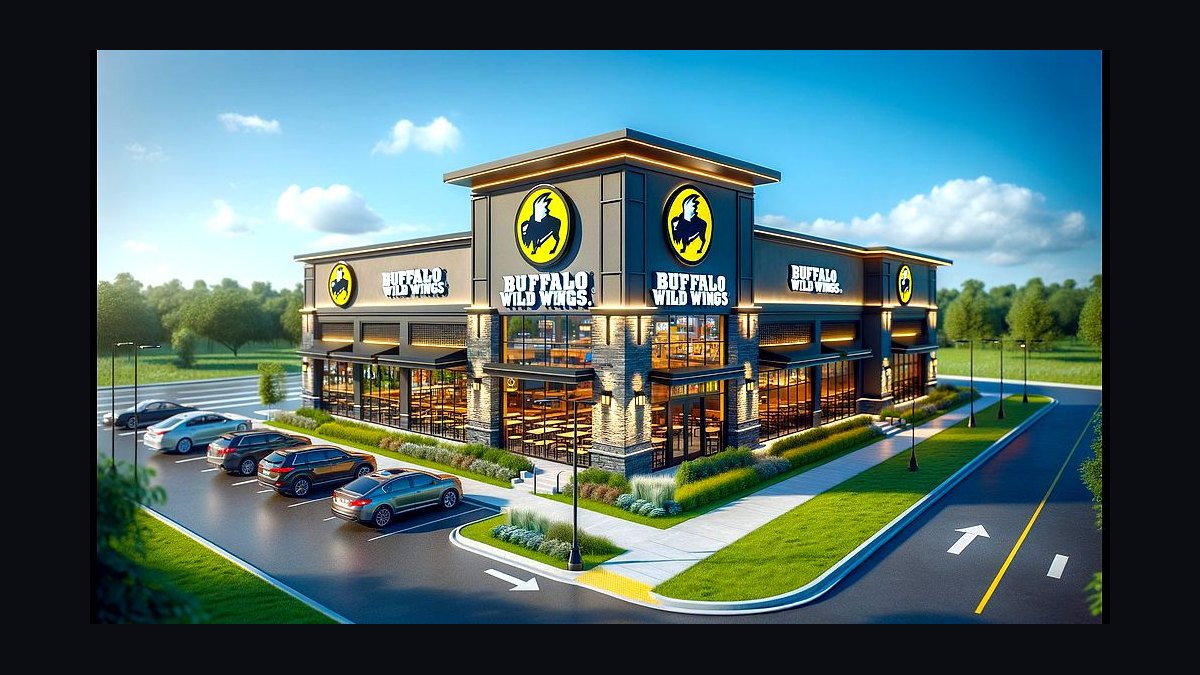
For most buyers in 2027, no. A traditional Buffalo Wild Wings franchise runs roughly $2.9M–$4.9M to open, carries about 8.75% of gross sales in royalty plus marketing, and pays back over nine to eleven years. Only multi-unit operators, small-format Go co-locators, and buyers of existing cash-flowing units have defensible math.
A buyer walks in with $1.5 million and a lease broker on speed dial
Picture the most common version of this decision. A successful contractor or regional sales leader sells a business, clears roughly $1.5M liquid, and decides that a sports bar is the retirement play. The brand is familiar — everyone has watched a game at a Buffalo Wild Wings — and the franchise sales process is warm and professional. A broker sends over a second-generation restaurant box, 5,800 square feet, previously a chain steakhouse, in a Sun Belt suburb with 42,000 people inside three miles and median household income around $78,000. On paper it looks like the textbook site.
Then the numbers arrive. Even in a second-generation building — meaning the plumbing, hood, grease trap, and rough electrical already exist — a full conversion to current brand standards lands in the $1.8M–$3.2M range for real estate improvements and build-out, plus $600K–$900K for equipment and furniture, fixtures, and equipment. Add initial inventory, three months of working capital, and the franchise fee, and the all-in total sits in the $2.88M–$4.88M band the 2025 Item 7 disclosure describes. Our $1.5M buyer is not writing a check; they are assembling a capital stack, and the equity slice on a $3.5M project under a typical 80/20 SBA structure is about $700K before reserves.
The second shock is the ongoing burn. Royalty is 5% of gross sales. The national marketing fund adds 3.25%, and local advertising minimums push another 0.5%–0.75%. That is roughly 8.75%–9% removed before a single wing is fried or a single hourly employee is paid. On mean average unit volume near $3.32M, that is about $290K–$300K a year off the top. On a bottom-quartile unit doing $2.2M, it is still $193K — the same fixed percentage against a much thinner sales base, which is precisely why weak units in this system do not merely underperform, they invert.
The third shock is time. Site control, permitting, construction, and hiring typically consume 18–24 months from signed franchise agreement to opening day, and the first year post-open is a ramp, not a plateau. Our buyer's liquidity has to survive that entire window with zero distributions. This is the scenario worth sitting with before any spreadsheet: the concept can be perfectly good and the deal still be wrong for the person buying it.
How the royalty-on-gross structure actually determines your outcome
The mechanism that decides whether a Buffalo Wild Wings unit works is not brand strength or wing quality. It is the interaction between a percentage-of-gross fee load and a fixed-cost operating model.
Restaurants of this format carry three large cost blocks that behave differently. Food cost is variable and moves with commodity prices, running roughly 30%–33% of sales in a normal wing-price year and higher when bone-in jumbo wings spike. Labor is semi-fixed: you cannot staff a 5,500–6,500 square foot dining room and full bar below a floor, so labor lands around 32%–36% of sales in higher-wage states and refuses to scale down proportionally when traffic softens. Occupancy is entirely fixed — a 20-year triple-net lease at $45–$75 per square foot on a 5,800 square foot box is $261K–$435K annually regardless of whether you sell anything.
Now layer the 8.75% off-the-top. Because it is charged on gross sales rather than profit, it is the one cost that never flexes in your favor. When a unit does mean volume, the arithmetic clears: 32% food, 33% labor, 9% occupancy, 8.75% fees, and roughly 5%–7% for utilities, insurance, repairs, and supplies leaves a mid-case operator EBITDA somewhere around 12%–15%, or roughly $400K–$500K on $3.32M. That is a real business.
Drop volume to $2.2M and the same structure produces a very different picture. Food percentage may hold or worsen with less purchasing leverage. Labor percentage rises because the fixed floor is now a larger share of a smaller number. Occupancy jumps from about 9% of sales to nearly 13%. The 8.75% is unchanged as a percentage but now consumes a larger share of the shrinking contribution margin. Operator EBITDA compresses toward zero or below. This is the single most important mechanical insight in the whole decision, and it explains why franchise systems can report an attractive mean while a meaningful share of units struggle.
The practical takeaway: model the bottom quartile first, not the mean. If a unit at $2.2M in sales still produces positive operator cash flow after debt service in your model, the deal has structural resilience. If it only works at the average, you have bought a bet on being above average in a system where you have limited control over the trade area's trajectory.
The numbers a 2027 buyer should actually underwrite
The 2025 Franchise Disclosure Document is the authoritative anchor, and no public 2026 amendment changes the shape of the analysis. A 2027 buyer should inflate every capital line by roughly 8%–12% over the disclosed ranges, because commercial construction costs have been climbing in the mid-single digits annually and restaurant build-outs are labor-heavy in exactly the trades that remain tight.
Capital, traditional format. Initial franchise fee in the low tens of thousands. Real estate improvements and build-out, $1.8M–$3.2M. Equipment and FF&E, $600K–$900K. Opening inventory, $35K–$60K. Three months working capital, $250K–$400K. Total initial investment, $2.88M–$4.88M before 2027 escalation.
Capital, small format (BWW Go). The Go format is a fundamentally different animal: a compact, largely off-premise-oriented box. Total investment lands in the $564K–$1.05M range, with build-out at $250K–$650K and equipment at $150K–$250K. Early-cohort volumes run near $1.4M with operator EBITDA in the 10%–15% band, producing a payback in the three-to-six-year range rather than nine-plus.
Ongoing fees. 5% royalty, 3.25% national marketing fund, 0.5%–0.75% local advertising minimum. All on gross.
Revenue benchmarks. System mean average unit volume around $3.32M for traditional units. That is the number to interrogate hardest, because a mean tells you nothing about dispersion. Bottom-quartile units in the $2.1M–$2.4M range are the underwriting case.
Commodity exposure. Bone-in jumbo wings are the defining input. Prices closed 2025 near $2.84 per pound against a 2019 baseline closer to $1.85, and forward pricing for late-2026 into 2027 has been tracking in the $2.90–$3.15 range. Wing prices have historically swung 30%–50% year over year. A 50-cent-per-pound move on a unit selling meaningful bone-in volume is a six-figure annual swing at store level. Menu engineering toward boneless, which is a portioned chicken breast product with far more stable pricing, is the standard hedge — but it dilutes the brand promise that drives the traffic.
Labor. $15–$22 per hour base in most markets, with fully loaded costs of $22–$26 in California, Washington, and New York once payroll taxes, workers' compensation, and mandated benefits are included. Assume the higher end when underwriting a coastal site.
Off-premise economics. Delivery aggregators extract roughly 25%–30% commission. When off-premise runs low-to-mid twenties as a share of revenue, a 27% blended commission on that slice is roughly 6% of total sales in channel cost — layered on top of the 8.75% franchise load. This is the most commonly under-modeled line in the entire pro forma, and it is the reason the small-format Go economics look better: the format was designed around that channel rather than retrofitted to it.
Valuation on exit. Cash-flowing traditional units trade in the 4.0x–5.0x adjusted EBITDA range; small-format units somewhat lower, around 3.5x–4.5x. Note the asymmetry: you build at replacement cost approaching $3.5M and exit at a multiple of earnings that, at $450K of EBITDA, implies $1.8M–$2.25M in enterprise value. The gap between build cost and resale value is the strongest single argument for buying an existing unit rather than constructing a new one. In most casual-dining franchise systems, acquisition is cheaper than construction per dollar of cash flow, and it eliminates the 18–24 month pre-revenue window entirely.
Real estate as a separate asset. If you can purchase land and building for $1.8M–$2.4M rather than signing a 20-year triple-net lease at $55 per square foot, annual debt service in the $140K–$180K range replaces a $319K rent obligation, and you own an appreciating asset that survives the restaurant. Many of the wealthiest franchisees in casual dining made their money on the real estate, not the operating company. Treat the property decision as a separate investment thesis with its own return requirement.
Trade-offs, adjacent formats, and where the same capital performs better
The honest framing is not "is Buffalo Wild Wings a good brand" but "against what alternatives, for which buyer." The same $1M–$2M of equity has several credible homes.
Wingstop. Total investment in the $315K–$948K range on a footprint near 1,500 square feet, royalty around 6%, average unit volumes reported in the $1.8M range in recent annual filings. The unit economics are structurally different: almost no dining room, minimal bar, far lower labor, and a business built for takeout and delivery from inception rather than converted to it. Payback in the two-and-a-half to four-year range is achievable. For a first-time single-unit operator, this is the sharper comparison, and the fact that it competes for the same wing occasion makes the contrast unavoidable.
Slim Chickens and adjacent chicken concepts. Investment roughly $1.36M–$3.78M, royalty near 5%, average volumes in the mid-$2M range. Build complexity sits between Wingstop and traditional Buffalo Wild Wings. The category tailwind — chicken as the protein of choice across fast casual — is real and durable.
Independent sports bar acquisition. Buying a profitable independent at 2.5x–3.5x seller's discretionary earnings eliminates the 8.75% off-the-top entirely and gives you full control of the beverage program. Cocktail and craft-beer margins are the highest-contribution line in any bar, and franchise brand standards constrain how aggressively you can build that program. The trade: no national marketing, no supply chain leverage, no brand recognition on day one, and a much harder eventual exit because independents trade at lower multiples to less sophisticated buyers.
Small-format co-location inside an existing unit. For an operator already running Arby's, Sonic, or Jimmy John's locations, adding a Go format into or beside an underperforming sister unit is the highest-return version of this decision. Shared general manager overhead, an existing lease, an existing hood, and an existing delivery workflow collapse the capital requirement dramatically and add incremental revenue against fixed costs already being paid.
Waiting. The most underrated option. First-wave small-format operators will sort themselves out over 12–18 months; some overbuilt markets will produce distressed units available at 2.5x–3x EBITDA. Buying a proven-out unit from a tired operator, rather than being the one who proves it out, is a legitimate strategy and costs nothing but patience.
One adjacent consideration worth naming: liquor license value. In restricted-quota states such as Texas, and in certain municipalities in Oklahoma and Florida, a full on-premise license carries meaningful standalone transfer value. When you acquire an existing sports bar — franchised or independent — in one of those jurisdictions, a portion of the purchase price is buying a scarce, transferable asset that holds value independent of the restaurant's performance. That creates a floor under the deal that a new build in an unrestricted state simply does not have. It is not a reason to buy a bad restaurant, but it materially changes the downside case on a marginal one.
Pitfalls that sink first-time franchise buyers, and the diligence that prevents them
Underwriting to the mean. Every franchise disclosure presents averages, and averages are seductive. The discipline is to build your model at bottom-quartile volume with high-side commodity and labor assumptions, then check whether you still service debt. If yes, proceed. If no, you are not buying a business, you are buying an option on being above average.
Skipping the franchisee calls. Item 20 of the disclosure document lists current franchisees and those who left the system in the prior three years. This is the most valuable page in the entire document and the most commonly skimmed. Call at least eight current operators and four former ones. Ask three specific questions: What was your actual store-level EBITDA margin last year? What did you spend on local marketing above the required fund contribution? What was your build-out overrun against the disclosed estimate? Former franchisees will tell you things no broker will.
Ignoring construction overrun risk. Disclosed build ranges are estimates, and restaurant construction routinely runs over on the items nobody models: utility upgrades, code-triggered ADA and fire suppression work, hood and make-up air, and site work discovered after demolition. Carry a contingency of 10%–15% of hard costs as real, committed capital — not as an optimistic footnote.
Signing a lease before the model clears. Landlords move faster than lenders and will press for a signed lease to hold a site. A 20-year triple-net obligation with a personal guarantee is the single most dangerous document in the stack, because it survives the restaurant. Negotiate a co-tenancy clause, a personal guarantee burn-off after 36–48 months of performance, and an assignment right that permits transfer to a qualified buyer without landlord consent being unreasonably withheld. These three terms are worth more than a modest rent reduction.
Absentee ownership. With labor at a third of sales and food at another third, two-thirds of the cost structure is managed daily by whoever is standing in the building. Franchise systems in this category consistently show that owner-operator units outperform absentee ones. If your plan is to hire a general manager and check reports weekly, adjust your projected margin down by several points before you decide.
Missing the closure math. Units do close in every system, and the exit is not free. Lease termination, equipment disposal, and remaining franchise obligations can run into the high six figures. When you model downside, model exit cost, not just breakeven.
A clean 90-day process. Days 1–10: request the current disclosure document directly from the franchisor, read Items 5, 6, 7, 19, 20, and 21 completely, and check state addenda for net worth and liquidity floors above the base requirements. Days 11–25: make the twelve franchisee calls. Days 26–45: build a three-statement model in the bottom-quartile case. Days 46–60: run new-build and resale-acquisition paths side by side, with the same equity. Days 61–75: assemble the capital stack — SBA 7(a) caps at $5M and a conventional-plus-SBA combination through an established restaurant lender is the standard structure. Days 76–85: decide lease versus own on the real estate as a separate investment. Days 86–90: go or no-go, with a hard rule that you only sign if the bottom-quartile model produces positive cash flow, at least two Item 20 references rate their experience highly, and your personal liquidity survives a 24-month ramp with no distributions.
Related questions
Is buying an existing Buffalo Wild Wings safer than building one?
Generally yes. Acquisition at 4.0x–5.0x EBITDA delivers cash flow immediately, eliminates 18–24 months of construction risk, and gives you real trailing financials instead of projections. The trade-off is inheriting deferred maintenance, an aging build, and possibly a declining trade area — so diligence shifts from site selection to unit history.
How much does wing price volatility really affect a unit?
Substantially. Bone-in wing prices have swung 30%–50% year over year historically. On a unit with meaningful bone-in mix, a 50-cent-per-pound move translates into a six-figure annual margin swing. Operators hedge by shifting mix toward boneless, contracting forward where possible, and adjusting menu pricing — but none of these fully neutralize it.
Does the small-format Go model actually work for a first-time owner?
It is the more defensible entry point at $564K–$1.05M with a three-to-six-year payback, but it is still a restaurant requiring daily operator presence. It works best as a co-location for someone already running units in the same portfolio, where general manager overhead and lease costs are already covered.
What credit and net worth do franchisors typically require?
Expect a net worth floor around $1M and liquid capital of roughly $750K as a base for traditional units, with certain state addenda imposing higher thresholds. For a full build you should plan on $1.5M or more in genuine liquidity, since lenders will want equity plus post-closing reserves.
FAQ
What is the total investment to open a Buffalo Wild Wings franchise in 2027?
The traditional full-size format runs roughly $2.88M–$4.88M based on the most recent Item 7 disclosure, and a 2027 buyer should add 8%–12% for construction cost escalation. The small-format Go concept runs $564K–$1.05M, which is the only realistic entry point for most single-unit buyers.
What are the ongoing fees?
Royalty is 5% of gross sales, the national marketing fund is 3.25%, and local advertising minimums add 0.5%–0.75%. Combined, roughly 8.75%–9% of every sales dollar leaves before food, labor, or rent — and it is charged on gross, not profit, so it does not flex when a soft year arrives.
What does a unit actually earn?
System mean average unit volume sits near $3.32M with mid-case operator EBITDA around 12%–15%, or roughly $400K–$500K. Bottom-quartile units run $2.1M–$2.4M in revenue, where the same fixed cost structure can compress operator margin to zero or below. Underwrite the bottom quartile.
How long until payback?
Nine to eleven years for a traditional new build, which is long for casual dining. The small-format path is three to six years. Buying an existing cash-flowing unit at 4.0x–5.0x EBITDA is effectively a four-to-five-year payback with revenue from month one and no construction exposure.
Can I run this as an absentee owner?
Realistically, no. Labor and food together are roughly two-thirds of the cost structure and are managed daily on-site. Owner-operator units consistently outperform absentee ones in this category. If you intend to hire a general manager and manage remotely, reduce your projected margin materially before deciding.
What alternatives deserve a look with the same capital?
Wingstop at $315K–$948K on a small footprint, Slim Chickens at $1.36M–$3.78M, an independent sports bar acquisition at 2.5x–3.5x seller's discretionary earnings, or a distressed small-format resale after the first wave sorts out. For a first-time single-unit buyer, the smaller-footprint chicken concepts generally produce better returns per dollar of equity.
Sources
- https://www.franchising.inspirebrands.com/
- https://www.buffalowildwings.com/
- https://www.sba.gov/funding-programs/loans/7a-loans
- https://www.ftc.gov/business-guidance/resources/consumers-guide-buying-franchise
- https://www.ir.wingstop.com/
- https://www.ers.usda.gov/topics/animal-products/poultry-eggs/
- https://www.bls.gov/oes/current/oes_nat.htm
- https://www.restaurant.org/research-and-media/research/
- https://www.turnerconstruction.com/cost-index
- https://www.cmegroup.com/markets/agriculture.html
Related on PULSE
- Should I open or buy a Wings Etc franchise in 2027?
- Should I open or buy a Wings Over franchise in 2027?
- Should I open or buy an Epic Wings franchise in 2027?
- Should I open or buy an Atomic Wings franchise in 2027?
- Best chicken and wings franchises to buy in 2027
- Should I open or buy a Wild Birds Unlimited franchise in 2027?
This page will be disappearing soon. Save it to your device for $1 — or read it free while it is here.
@Kory-White- · if Venmo asks, the last 4 of my number are 2012
This page is gone.
This one is off the shelf now. $1 keeps it on your phone for good — the whole page, pictures and diagrams included.
 franchiseShould I open or buy a Jimmy John's franchise in 2027?
 franchiseShould I open or buy a Papa John's franchise in 2027?
 franchiseShould I open or buy a Bruster's Real Ice Cream franchise in 2027?
 franchiseShould I open or buy a Drybar franchise in 2027?
 franchiseShould I open or buy a Servpro franchise in 2027?
 franchiseShould I open or buy a Chipotle franchise in 2027?
 franchiseShould I open or buy a Bojangles franchise in 2027?
 franchiseShould I open or buy a Jiffy Lube franchise in 2027?
 franchiseShould I open or buy a Pizza Hut franchise in 2027?
 franchiseShould I open or buy a Cold Stone Creamery franchise in 2027?