


Should I open or buy a Dave & Buster's franchise in 2027?
Quality
Certified

For almost every US or Canadian reader, the answer is no — Dave & Buster's does not franchise domestically; all 200+ US and Canadian venues are company-owned. The only live path to open a Dave & Buster's is an international multi-unit development agreement requiring $10M+ net worth, $5M+ liquid, and $4M–$8M per venue, with payback typically running 5–8 years.
The outcome you should expect
Walk in expecting to buy a single Dave & Buster's the way you'd buy a Subway or a Great Clips, and you will be disqualified before you ever see a number. Dave & Buster's Entertainment, Inc. (NASDAQ: PLAY) stopped selling a domestic franchise years ago, and it has never reopened that door. Every one of the 200-plus venues in the US and Canada is corporate-operated. There is no US Franchise Disclosure Document because there is no US franchise offering to disclose. If someone contacts you claiming to sell "the Dave & Buster's franchise package" domestically, that is either a misunderstanding of the brand or an outright scam — the SBA, the International Franchise Association, and the FTC have all confirmed there is no registered domestic offering.
The outcome that actually exists sits outside North America. Dave & Buster's international team awards territory development agreements — not single-unit franchises — to operators who commit to a minimum of five venues inside a defined region. That changes the shape of the decision entirely. You are not evaluating "should I open one Dave & Buster's," you are evaluating "should I commit $20M–$40M across five-plus venues over several years, in a market I may not already operate in." The qualifying bar reflects that scale: a personal net worth of roughly $10 million, liquid capital near $5 million, and — critically — a demonstrated track record of operating 25 or more units in food-and-beverage or entertainment. D&B's international screening team is not evaluating first-time operators; they are evaluating conglomerates like Alshaya Group, Apparel Group, or Americana Group that already run dozens of Western F&B and retail concepts under license in the Gulf, India, or Latin America.
If you clear that bar and get a territory approved, the realistic outcome is a slow-burn, capital-intensive build: each venue costs $4 million to $8 million all-in, generates something in the neighborhood of $10 million to $12 million in annual revenue once stabilized, and throws off first-year EBITDA in the $1.5 million to $3 million range. Payback lands at five to eight years. That is a legitimate, profitable outcome for a sovereign-wealth-adjacent operator or a mall-anchored developer with patient capital — and a completely unreachable outcome for a US-based individual investor with $500,000 and a dream.
For that second reader — the overwhelming majority of people who type this question into a search bar — the realistic outcome is redirection, not franchising: buy PLAY stock, acquire or build an independent eatertainment venue, or open a smaller concept (Main Event, Pinstripes-style assets, or a self-built regional brand) where the entry capital and track-record requirements are within reach.
What drives that outcome
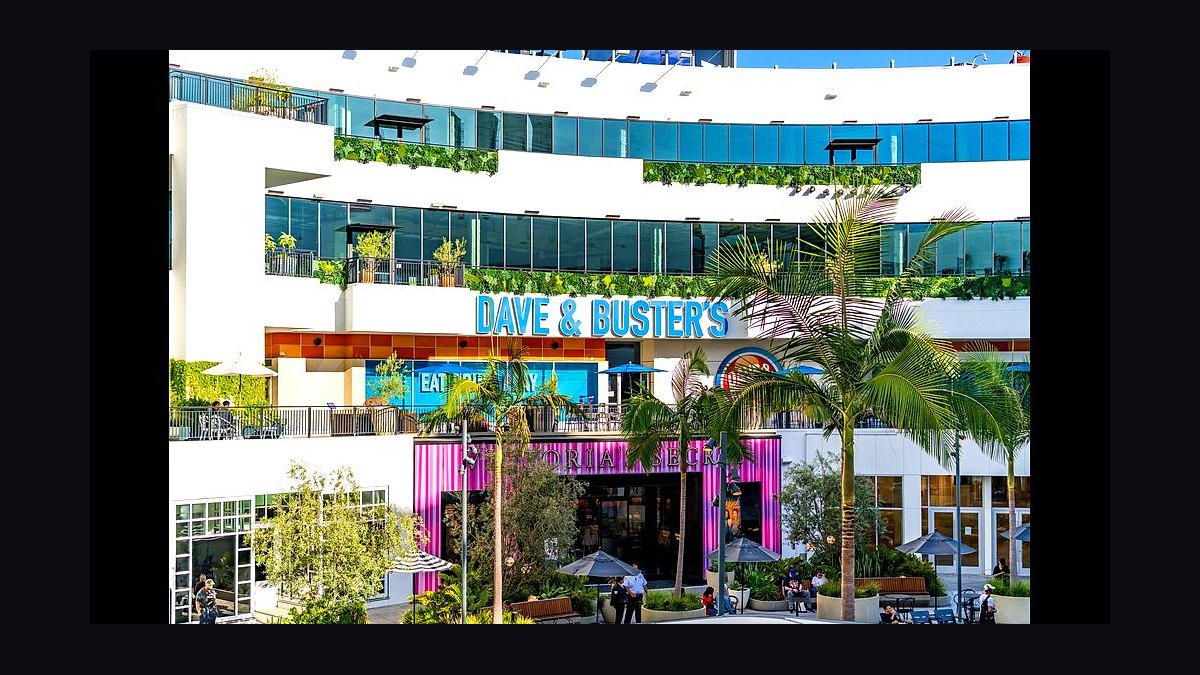
Three structural facts drive this outcome, and none of them are negotiable through better salesmanship or a bigger down payment.
First, Dave & Buster's corporate strategy since its 2022 acquisition of Main Event has been consolidation and operational control, not franchise expansion. The company makes more money running its own venues at 22–28% store-level EBITDA margins than it would collecting a 6% royalty from a franchisee running the same venue at the same margin. That math only flips in markets where D&B itself cannot efficiently deploy capital — which is exactly why the franchise door is open internationally and closed domestically.
Second, the operator-screening bar exists because venue-level eatertainment businesses are operationally brutal relative to a typical quick-service franchise. A Dave & Buster's blends a full-service restaurant, a bar, an arcade with hundreds of individually maintained games, and event/banquet sales — four different operating disciplines under one roof. A franchisee who has only run a sandwich shop cannot execute that. D&B's insistence on 25+ units of prior operating experience is a proxy for "has this group already proven it can run complex, multi-revenue-stream hospitality at scale," which is why family-office money with no operating partner gets turned away just as fast as an undercapitalized first-timer.
Third, 2025–2026 eatertainment market conditions reinforced rather than loosened those gates. Pinstripes filed Chapter 7 in Q4 2025 and liquidated 16 venues. Topgolf sold a 60% stake to a private equity buyer at a valuation well below what Callaway paid for it in 2021. Dave & Buster's own same-store sales fell 3.3% in Q4 FY2025. Lenders watched all of that happen and pulled back hard on eatertainment construction debt — senior loan-to-value for new venues now caps around 50–55%, which pushes required equity per venue up to $3 million-plus. None of that makes the domestic franchise door open; if anything, a wobblier category makes corporate even less willing to hand control of its brand to an unproven franchisee.
Benchmarks and realistic ranges
Treat every figure below as a range, not a quote, since the underlying disclosures are international-market filings rather than a US Item 7.
Entry capital. The initial franchise fee runs around $500,000 per venue. A territory development fee, which covers the minimum five-venue commitment, adds $1.5 million to $2.5 million on top of that — before a single venue is built. Build-out and leasehold improvements run $3.5 million to $5.5 million per location; games, AV, and point-of-sale equipment add another $1.2 million to $2.0 million; opening inventory and working capital bring in $400,000 to $700,000 more. All-in, budget $4 million to $8 million per venue, and $20 million to $40 million for the five-venue minimum territory.
Ongoing fees. Royalty runs 6.0% of gross sales, with an additional 2.0% going to the marketing/brand fund — 8% of top-line revenue off the top before any operating costs are paid.
Revenue and profitability. Corporate average unit volume sits near $10.8 million for FY2025. Store-level EBITDA margins run 22–28%, translating to roughly $1.5 million to $2.5 million of venue-level EBITDA in a conservative first year, climbing toward $2 million to $3 million once a venue stabilizes. Corporate-wide, PLAY posted a 20.4% adjusted EBITDA margin and $478 million of total system adjusted EBITDA in FY2025 — context for how profitable the brand is when run at scale, even while same-store sales slipped 3.3% in Q4.
Qualification thresholds. Net worth of at least $10 million, liquid assets of at least $5 million, and a minimum five-venue territory commitment are the entry requirements posted on D&B's international franchising portal. These are floor numbers; the operators who actually get approved — Gulf conglomerates, mall-anchored developers with 15 million-plus annual foot traffic — typically clear them by a wide margin.
Comparable alternatives, for scale. Main Event (D&B's own secondary brand) franchises in select international markets and offers selective US territory development for operators with $5 million-plus liquidity, at a lower $3 million to $5 million per-venue band. Bowlero and Lucky Strike run multi-unit development programs that added 28 venues in 2025 combined — a lower bar than D&B's but still requiring real operating capital. PLAY shares themselves traded around $22–$28 in mid-2026, down from a 2023 peak above $60, at roughly 2.6x EV/EBITDA — a historically cheap entry point for anyone who wants brand exposure without operating a single venue.
Risks, edge cases, and failure modes
The most common failure mode is disqualification mid-process — an operator spends weeks assembling a personal financial statement and trade references only to be told their net worth or liquidity falls short, or that they lack the 25-unit operating résumé D&B's international team requires. That screening happens early and is not negotiable with a bigger earnest-money check; the fix is to partner with an established regional operator who already clears the bar, not to push harder on your own application.
A second failure mode is geography mismatch: an operator secures capital and a territory in a market without sufficient affluent-household density — D&B's successful international venues cluster around markets with disposable income exceeding $35,000 per capita and malls pulling 15 million-plus annual visitors. A territory in a market without that density risks years of subpar AUV against a fixed $4M–$8M capital base, stretching the 5–8 year payback toward 10+ years or never.
A third, newer risk is financing availability. Since the Pinstripes Chapter 7 and the Topgolf ownership shuffle, lenders have gotten materially more conservative about eatertainment construction debt — senior debt now commonly caps at 50–55% loan-to-value, meaning an operator who modeled 70–80% leverage into their returns will find the deal doesn't clear underwriting, and needs $3 million to $4 million of equity per venue just to close.
A fourth edge case is real estate timing risk in the rollout itself: anchor-mall sites suitable for a Dave & Buster's-scale footprint are scarce, and if a signed territory agreement doesn't convert into secured sites within roughly 120 days, the deal frequently unwinds — the corporate approval has an implicit clock that the real estate market doesn't always cooperate with.
Finally, there's a category-level risk every applicant should price in regardless of their own execution: eatertainment same-store sales are compressing industry-wide, not just at D&B. Consumers are visiting less often but spending more per visit when they do — a trend confirmed by consumer card data showing arts/entertainment spend up roughly 8% year-over-year while restaurant spend sits flat. That favors operators with strong per-visit yield management and penalizes anyone modeling growth purely off visit frequency.
A practical rollout plan
If you've cleared the basic net-worth and liquidity screen and you're seriously pursuing an international Dave & Buster's territory, treat it as a 90-day qualification sprint before you treat it as a construction project.
In the first two weeks, pull your real personal financial statement and be brutally honest about whether you clear $10 million net worth and $5 million liquid. If you don't, stop here — redirect toward a sub-$1 million eatertainment franchise or toward PLAY equity instead of burning months on an application that will be declined.
In the following two weeks, confirm you are not domiciled or operating inside the US or Canada, since that geography is categorically closed regardless of capital. If you are a US-based operator, your path runs through acquisition — a distressed Pinstripes site, an independent eatertainment venue, or a Main Event territory — not a D&B application.
Weeks three through five go to building or borrowing the operator résumé: D&B's international team wants to see 25-plus units of prior F&B or entertainment operating experience. If you don't have it personally, this is the point to bring in a partner group that does, rather than trying to argue your way past the requirement.
Weeks five through seven are the formal application: submit through the official portal at franchising.daveandbusters.com with your personal financial statement, trade references, a five-year territory plan, and a proposed five-venue-minimum rollout schedule. Expect 60 to 90 days of corporate review before you hear back.
While that review runs — weeks seven through nine — build your own venue-level P&L independent of whatever corporate tells you, using the $10.8 million AUV benchmark, 6% royalty, 2% marketing fee, and roughly 30–34% combined food, beverage, and prize-redemption cost of goods. Stress-test it against an $8 million AUV scenario and a slower 15% first-year ramp, since the industry's recent same-store softness argues for modeling conservatively rather than at the corporate average.

In the final two weeks, make the real estate call: if you can't secure anchor-mall sites within roughly 120 days of a signed agreement, be prepared for the deal to unwind, and don't treat a signed term sheet as a done deal until sites are locked. Throughout the entire 90 days, run Bowlero, Main Event, and distressed Pinstripes real estate as parallel tracks rather than sequential fallbacks — the opportunity cost of waiting six-plus months on a single D&B decision is real, and operators who parallel-path end up with options instead of a single bet.
Related questions
Can I buy a single Dave & Buster's location in the US?
No. Every US and Canadian venue is company-owned. The only franchise structure D&B offers is an international multi-unit territory development agreement outside North America.
Is Main Event easier to franchise than Dave & Buster's?
Yes, somewhat. Main Event, owned by D&B since 2022, offers select international franchising and limited US territory development for operators with $5 million-plus liquidity, at a lower $3M–$5M per-venue investment band.
What's the fastest way to get exposure to Dave & Buster's without operating a venue?

Buy PLAY stock. Shares traded around $22–$28 in mid-2026 at roughly 2.6x EV/EBITDA, giving equity exposure to the brand's $478 million of system-wide adjusted EBITDA without any operating risk.
How does the Pinstripes bankruptcy affect someone considering eatertainment?
It created a buyer's market: 16 venues liquidated in Q4 2025, with several unleased sites available at 30–40 cents on the dollar to qualified operators willing to take over existing eatertainment real estate.
Does franchising a Dave & Buster's internationally require experience in that specific country?
Not explicitly, but D&B strongly favors applicants who already have local market relationships — mall landlords, regulatory contacts, and consumer insight — which is why most approved operators are existing regional F&B conglomerates rather than outside entrants.
FAQ
Can I open a single Dave & Buster's franchise in the US? No. Dave & Buster's does not franchise any single location in the US or Canada. All domestic venues are company-owned and operated. The only franchise path is international multi-unit development outside North America.
How much money do I need to qualify for a Dave & Buster's franchise? You typically need a net worth of at least $10 million, with $5 million in liquid assets. Each venue requires $4 million to $8 million in capital investment. These are honest minimum ranges, not exact figures.
What is the typical revenue and profit for a Dave & Buster's location? A single venue generally generates $10 million to $12 million in annual revenue, with first-year EBITDA between $1.5 million and $3 million. Payback periods usually run five to eight years. These are broad estimates, not guarantees.
Are there franchise opportunities for smaller investors who still want to open something similar? No direct Dave & Buster's option exists for smaller investors. Alternatives include buying PLAY stock, acquiring an independent eatertainment concept like Main Event, or purchasing assets from a bankrupt chain such as Pinstripes.
What countries are currently open for Dave & Buster's international franchises? The company selectively awards multi-unit development agreements outside the US and Canada. Active regions have included parts of Asia, the Middle East, and Latin America, but availability changes — contact D&B's international team directly.
How long does it take to break even on a Dave & Buster's franchise investment? Break-even typically takes five to eight years, depending on location, local market conditions, and operational efficiency. This is a realistic range; some territories may take longer based on tourism and local competition.
Sources
- Dave & Buster's Entertainment, Inc. — FY2025 10-K Annual Report,
ir.daveandbusters.com/financials/annual-reports - Dave & Buster's Entertainment, Inc. — Q4 FY2025 Earnings Release & Conference Call Transcript
- Dave & Buster's International Franchising Portal,
franchising.daveandbusters.com - Sharpsheets — "Dave & Buster's Franchise FDD, Profits & Costs,"
sharpsheets.io/blog/dave-busters-sport-bar-franchise-profits-costs-fees - International Franchise Association (IFA) — Franchise Business Economic Outlook
- U.S. Federal Trade Commission — Franchise Rule Compliance Guide (16 CFR Part 436)
- IBISWorld — "Arcade, Food & Entertainment Complexes in the US," Industry Report 71139b
- Restaurant Business Online — "Dave & Buster's looks for revenue growth as its sales slow"
- The Motley Fool — coverage of PLAY stock movement
- Bank of America Institute — Consumer Checkpoint, Arts & Entertainment Spending
Related on PULSE
This page will be disappearing soon. Save it to your device for $1 — or read it free while it is here.
@Kory-White- · if Venmo asks, the last 4 of my number are 2012
This page is gone.
This one is off the shelf now. $1 keeps it on your phone for good — the whole page, pictures and diagrams included.
 franchiseShould I open or buy a Valvoline Instant Oil Change franchise in 2027?
 franchiseShould I open or buy a Dunkin' franchise in 2027?
 franchiseShould I open or buy a Big O Tires franchise in 2027?
 franchiseShould I open or buy a Roto-Rooter franchise in 2027?
 franchiseShould I open or buy an Auntie Anne's franchise in 2027?
 franchiseShould I open or buy an Ace Hardware franchise in 2027?
 franchiseShould I open or buy a Marco's Pizza franchise in 2027?
 franchiseShould I open or buy a Bahama Breeze franchise in 2027?
 franchiseShould I open or buy a Primrose Schools franchise in 2027?
 franchiseShould I open or buy a UPS Store franchise in 2027?