


Should I open or buy a Papa Murphy's franchise in 2027?
Quality
Certified
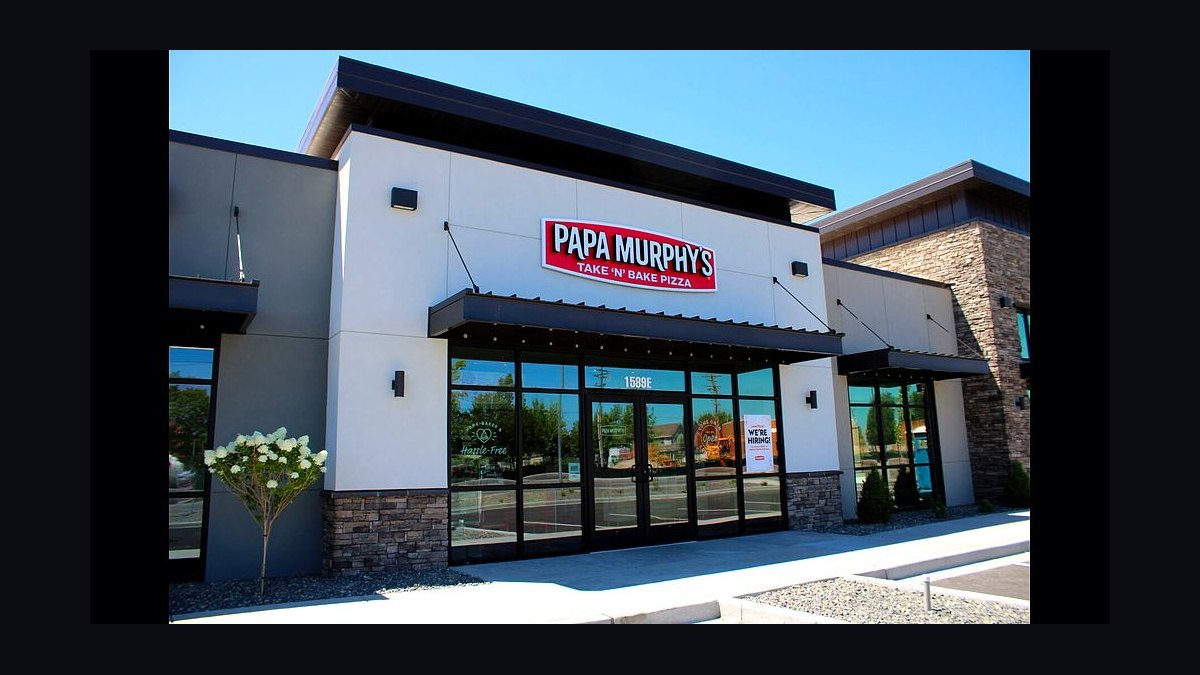
Probably not as a new build. The honest 2027 entry is buying an existing Papa Murphy's store at roughly 0.4–0.6× revenue in a legacy Western or Midwestern market and running it owner-operator. A ground-up franchise runs $367K–$733K against a $594K median unit volume — a six-to-eight-year payback most buyers should decline.
What a take-and-bake franchise actually is, and why the distinction drives everything
Papa Murphy's sells an unbaked pizza. The customer walks in, orders, watches a crew member build the pie on a stainless table, carries it home in a cardboard tray, and bakes it in their own oven. That single product decision cascades through every line of the P&L, and if you do not understand the cascade you will misprice the business.
Start with labor. A hot-pizza quick-service restaurant needs cooks, oven tenders, a cut table, insulated bags, and — in most systems — a delivery fleet or a third-party aggregator eating 20–30% of every delivered ticket. Papa Murphy's needs none of that. There is no oven in the building. There is no dining room to bus. There is no 11pm closing crew because nobody buys an unbaked pizza at 11pm. Labor lands in the 18–22% of sales band instead of the 28–32% a comparable hot-pizza QSR carries. That eight-to-ten-point structural gap is the entire investment thesis, and it is the reason the brand survived a decade of contraction that would have killed a thinner concept.
Now the second-order effects. No oven means no Type I hood, no fire suppression system, no grease interceptor, no make-up air unit — the four line items that turn a restaurant build-out into a $500K project. It means a smaller footprint, typically 1,200–1,600 square feet against 2,000–2,800 for a delivery-and-carryout pizza store. It means the space can go into a B-grade strip center next to a nail salon instead of an A-grade endcap with a drive-thru, which is where occupancy costs live or die. And it means the health-department classification is different in most jurisdictions, because you are assembling a raw food product rather than cooking one.
That last point produces the moat nobody talks about enough: because the pizza is uncooked, it qualifies as a grocery item under SNAP rules in participating states, and Papa Murphy's has the point-of-sale integration to accept EBT. No hot-pizza competitor can touch that. In a market where a meaningful share of households use SNAP benefits, you are the only pizza in town that a family can buy with them. That is not a marketing advantage you built — it is a regulatory one that came with the product design, and it is durable in exactly the markets where the brand is strongest.
The trade-off runs the other direction too, and it is severe. You have surrendered dinner. You cannot serve the office lunch, the late-night crowd, the stadium order, the "we are hungry right now" impulse that drives half of pizza demand. Your business compresses into a 3pm–8pm window, skewed hard toward Friday and Saturday, and roughly 70% of your revenue arrives inside about twenty hours a week. That concentration is why absentee ownership fails here and owner-operation works — there are only twenty hours that matter, and the owner needs to be standing in them.
Understanding this is also how you evaluate whether to open a Papa Murphy's at all versus a neighboring concept. If you are drawn to the low build cost and the labor structure, the honest comparison set is not just other pizza brands — it is every low-capex, high-frequency, take-home food format: a fresh-pasta counter, a butcher-shop meal-kit program, a regional bakery-café franchise. Papa Murphy's is a specific bet that the take-and-bake format survives the next consumer cycle. If you do not believe that, no purchase price makes the deal work.
Reading the disclosure document like a buyer, not like a prospect
Every franchise sale in the United States runs through a Franchise Disclosure Document, and the FDD is where the deal is actually decided. Most prospects read the brochure and skim the FDD. Reverse that.
Item 5 and Item 7 give you the money in. The initial franchise fee sits in the $15,000–$25,000 range. Total initial investment for a new build runs $367,428–$733,124 in the 2025 disclosure — a spread wide enough to be almost useless until you decompose it. The low end assumes a second-generation space with usable plumbing and HVAC in a cheap market; the high end assumes a shell build in an expensive one. Item 7 also fixes your qualification bar: roughly $125,000 liquidity and $350,000 net worth.
Item 6 gives you the ongoing drag. Royalty is 5.0% of weekly net sales. The brand marketing fund takes another 2.0%. A local marketing minimum adds a further 2.0%, though that one you at least direct yourself. Call the unavoidable corporate take 7% of every dollar that crosses the counter, before you have paid for a single pound of cheese.
Item 19 is where prospects get hurt. The financial performance representation shows a system average around $1.4M and a median around $594K. That gap is not noise — it is the shape of the system. A cohort of legacy high-volume stores in Washington, Oregon, Idaho, and Montana, some of them thirty years established with paid-off build-outs and cult-level local loyalty, pulls the mean up while half the system operates under $600K. If you model your P&L off the average, you have modeled a store you are statistically unlikely to own. Build off the median and treat anything above it as upside you have to prove, site by site.
Item 20 is the most underused table in any FDD, and for a contracting brand it is the whole story. It shows outlets opened, closed, transferred, and terminated, broken out by state and by year. Read the transfers column: a high transfer rate in a state means owners are exiting, which is either distress or a healthy resale market, and you need to know which. Read the terminations column: those are franchisees who did not get to sell. Then cross-reference against your own target state. A brand can be shrinking nationally and perfectly healthy in the three counties you care about — or the reverse.
Item 21 carries the franchisor's audited financials. Papa Murphy's parent is MTY Food Group, a Montreal-based multi-brand operator whose portfolio includes Cold Stone Creamery, TacoTime, and Sweet Frog. MTY has publicly characterized the Papa Murphy's turnaround as more complicated than anticipated, and it took back roughly fifty underperforming stores in 2024 to operate or resell. You are buying into a brand whose owner has said out loud that fixing it is hard. That is not disqualifying — it is priced in, and it is why resale multiples are where they are — but you need to have read it yourself rather than heard it from a broker.
Item 20 also gives you the franchisee contact list, including former franchisees. That list is the single most valuable asset in the document, and the next section is built around using it.
The ninety-day process from first call to close
Days 1–14 — pull and dissect the FDD. Request the current document from the franchisor's development site. You are entitled to it, and requesting it does not obligate you to anything. Read the six items above in order and build your own spreadsheet. Do not use the franchisor's pro forma. Do not use the broker's. Your model should have exactly one revenue assumption — the median — and you should be able to state, in one sentence, why a specific site would beat it.
Days 15–30 — validate with twelve operators. Use the Item 20 list. Call six current franchisees in or near your target state and six who exited in the last twenty-four months. The exits are the more valuable calls and the harder ones to make. Ask each the same four questions: what were your net sales last year, what is your store-level EBITDA, would you buy this again at today's investment level, and how has the franchisor been to work with since MTY acquired the brand. Take notes verbatim. If fewer than eight of twelve say they would buy again, you have your answer and you have spent nothing but two weeks.
Days 31–45 — build the shortlist. For a new build, the site criteria the brand looks for are roughly 30,000+ population within three miles, median household income in the $55K–$95K band, and no competing take-and-bake within five miles. Note what that income band implies: this is not a premium concept and it does not work in a market that has traded up past it. For resales, pull three to five listings from the franchise-resale marketplaces and business-for-sale sites, and request trailing-twelve P&Ls plus tax returns before you sign anything binding. A seller who will not produce tax returns is telling you something.
Days 46–60 — scrub the books. Hire a CPA who has done franchise transactions, typically $3,000–$5,000 for a single-unit review. Verify cost of goods at or under 29% of sales, labor at or under 22%, occupancy in the 8–11% band. Store-level EBITDA at 12% or better on the tax returns, not on the seller's add-back schedule. Every add-back is a negotiating position, not a fact. If two or more lines are materially off benchmark, you are buying a turnaround, and turnarounds are priced differently than cash-flow assets.
Days 61–75 — finance it. The brand appears on the SBA franchise registry, which makes a 7(a) loan the standard instrument. Expect a 15–20% equity injection and a ten-year amortization on the non-real-estate portion. Get two competing term sheets. Local community banks that already lend in your county frequently beat the national franchise-specialist lenders by half a point or more, because they can underwrite the market as well as the concept.
Days 76–90 — approval and close. A resale transfer requires franchisor approval and carries a transfer fee, commonly in the $7,500–$10,000 range. You will submit liquidity verification and a net worth statement against the Item 7 thresholds. Budget thirty days for approval and do not schedule your closing before it clears. Training runs about six weeks at an existing store — do it yourself even if you plan to install a manager, because you cannot hold a crew to a 29% food cost standard you have never personally hit.
What the money actually looks like at the median store
Run the median store all the way down and the picture gets concrete fast. On $594,000 in annual net sales: cost of goods at 29% takes about $172,000. Labor at 20% takes roughly $119,000. Royalty and brand fund at a combined 7% takes about $42,000. Local marketing at 2% is another $12,000. Occupancy at 9% is roughly $53,000. Utilities, insurance, supplies, credit card fees, repairs, and the miscellaneous drip of running a storefront realistically run another 7–9%, call it $45,000.
That leaves store-level EBITDA somewhere in the 10–13% band — roughly $60,000 to $77,000 — before any debt service and before the owner has paid themselves a salary. If you financed a $450,000 acquisition on a ten-year SBA note, annual debt service alone runs in the $60,000–$70,000 range depending on rate. The median store, financed at a new-build cost basis, does not clear its own debt with room to live on. That is the arithmetic behind the recommendation, and it is why the median owner-operator's true take-home lands in the $45,000–$75,000 range only when the owner is also working the counter — the "owner's salary" is really the labor line they are not paying someone else.
Now run the same model at $900,000 in sales, which is roughly where the top quartile lives. COGS and labor scale, but occupancy does not — that lease is fixed. Neither does the manager's salary, the insurance, or the bookkeeping. Every dollar above the fixed-cost break-even flows through at a much higher incremental margin, and owner cash flow moves into the $140,000–$210,000 band. This is the single most important dynamic in single-unit food retail: the difference between a bad deal and a good one is not the concept, it is where the store sits on the volume curve relative to fixed costs.
Which is why the purchase price matters more than anything else in this decision. New-build economics on a median-volume store produce a six-to-eight-year payback, and six-to-eight years is too long to be exposed to a single concept in a contracting system. Resale listings in the $199,000–$895,000 range, transacting around 0.4–0.6× revenue, are the reason this deal is worth looking at in 2027 at all. Buy a verified $700,000-revenue store for $300,000–$400,000 and the payback compresses to four or five years with real owner cash flow in the $80,000–$140,000 band. Same brand, same royalty, same product — entirely different investment, purely because of basis.
Two adjacent cost realities deserve mention. First, working capital: budget three months of full operating expense — $50,000 to $70,000 at median volume — separate from the purchase price. Undercapitalized food acquisitions fail on cash timing, not on unit economics. Second, deferred capex: any store that has been on the market for a while has a seller who stopped replacing walk-in compressors, POS terminals, and dough sheeters. Get an equipment inspection and price the fix list into your offer.
Where buyers get this wrong
Modeling off the average. The $1.4M figure is real and it is also irrelevant to a first-time buyer. It describes a cohort you are not joining on day one. Every failed deal in this system starts with a spreadsheet built on someone else's thirty-year-old store.
Buying absentee. A general manager at $55,000 plus payroll taxes consumes 9–12% of revenue at median volume. Layer that on top of the 7% corporate take and there is nothing left. The concept's labor advantage is real but it is not deep enough to fund a layer of management the model was never designed to carry. If you cannot work the Friday-Saturday peak yourself, this is not your business.
Opening in a market with no brand memory. Take-and-bake has genuine organic awareness in the Pacific Northwest and Mountain West, where the format has been part of the household rotation for decades. It does not have that in most of the Southeast, the Northeast, or the big Texas metros, where a large share of consumers have to be taught what the product even is before they can want it. A 2% brand fund on a thousand-unit system does not buy category education in a market from scratch. That is a job for you and your $10,000 opening marketing budget, and it is a much bigger job than it sounds.
Paying for A-grade real estate. The concept generates B-grade revenue per square foot by design — no dine-in, no drive-thru, no late-night. If your lease clears $32 per square foot, occupancy alone runs 12–15% of sales and the deal is dead before you sell a pizza. Cheap, clean, visible, easy-parking strip space next to a grocery anchor is the correct site. Fighting for the endcap is a mistake buyers make because it feels like ambition.
Trusting add-backs. Sellers normalize aggressively: the owner's truck, the spouse on payroll, "one-time" repairs that happen every year. Every add-back should be independently verifiable or excluded. Price off the tax return.
Underestimating the psychology of a contracting system. Every quarter, the parent company will discuss the brand in terms of closures and stabilization rather than growth. Your franchise business coach may cover more territory than they did five years ago. Marketing support will feel thin. Over a five-year hold that grinds on people, and operators who need external validation to stay motivated tend to disengage in year three — right when the store needs them most. Know your own temperament before you sign.
Skipping the exit question. You should be able to describe, at purchase, who buys this store from you and at what multiple. If your answer is "someone like me," ask why there would be more of you in five years than there are now. Buying at 0.4–0.5× revenue is partly protection against the answer being "fewer."
Choosing between build, buy, and walk away
The framework reduces to four gates, and each one is a hard stop rather than a scoring input.
Gate one: market history. The brand works where it is already woven into the week. If your trade area does not have a fifteen-plus-year Papa Murphy's habit, you are not buying a franchise, you are funding a category launch on a 2% marketing budget. Walk.
Gate two: your own role. Owner-operator or nothing. This is not a snobbery about hard work — it is arithmetic about a management layer the margin structure cannot support at median volume.
Gate three: basis. Resale over new build, and specifically resale at 0.4–0.6× revenue on verified numbers. The single largest variable in your return is what you paid, and 2027 is unusual in offering deep resale inventory because of voluntary exits plus the stores the parent took back and is reselling. That inventory is the opportunity. It also will not last indefinitely — a stabilized unit count and thinner listings would close this window.
Gate four: verified numbers. T-12 revenue above $700,000 and store EBITDA at 12% or better on tax returns. Below that, you are either re-pricing to turnaround levels or passing.

If you clear all four, the deal is legitimately good: four-to-five-year payback, $80,000–$140,000 in owner cash flow, a labor structure competitors cannot replicate, and a purchase price that already prices in the bad news. Then hold it for twelve full months before adding a second unit. Multi-unit is where the model gets genuinely interesting — three to five stores at $250,000–$400,000 each, one regional manager, one bookkeeper, one shared local marketing budget, and the fixed costs that crush a single-unit operator start to amortize. But the second store must be bought with cash flow and confidence from the first, not with optimism.
If you fail any gate, price the alternatives honestly rather than talking yourself into the deal. Marco's Pizza is a hot-pizza system with stronger unit-growth momentum and higher average unit volumes, at an initial investment in the $285,000–$686,000 range and a comparable royalty. Pizza Ranch runs a buffet-and-delivery hybrid with real rural Midwestern loyalty and higher AUVs, but at $1.2M–$2.5M it is a different capital class entirely. An independent take-and-bake in a friendly market gives you zero royalty and full menu freedom at the cost of the brand fund, the supply chain, and the SNAP-integrated point of sale. And if what attracted you was the category rather than the operating life, MTY Food Group trades publicly on the TSX — you can own the turnaround without writing a check for a build-out.
The broader lesson generalizes past this one brand. In any mature or contracting franchise system, new units are the worst risk-adjusted entry and existing units at distressed multiples are the best, because the resale market prices the brand's bad news while the franchisor's development office does not.
Related questions
Is Papa Murphy's a dying brand?
Shrinking, not dying. The system has lost 300+ locations since 2019 and closed 2025 around 1,014 units, down about 2.9% year over year. The parent calls the turnaround complicated. Contraction has been concentrated in weak units, which is why survivors' economics hold up better than the headline suggests.
Can I use an SBA loan to buy a Papa Murphy's?
Yes. The brand appears on the SBA franchise registry, so 7(a) financing is the standard path for both new units and resale transfers. Expect a 15–20% equity injection, a ten-year amortization on non-real-estate assets, and a personal guarantee. Community banks often price better than national franchise lenders.
How many hours a week does an owner-operator actually work?
Fifty to sixty in year one, dropping toward forty once a crew is trained. The critical constraint is coverage of the Friday–Saturday evening peak, when the majority of weekly revenue lands. Owners who delegate that window see ticket accuracy and speed degrade quickly.
Does a second store make the economics better?
Meaningfully, yes — but only after the first is stable. Three to five units support one regional manager and one bookkeeper, spreading fixed overhead that a single unit carries alone. Buy unit two with cash flow from unit one, and only after twelve clean months of operating history.
What should I pay for an existing store?
Roughly 0.4–0.6× trailing revenue in the current market, adjusted down for deferred maintenance and remaining lease term. On a verified $700,000 store that implies $280,000–$420,000. Price off tax returns, never off a seller's add-back-adjusted "owner benefit" figure.
FAQ
What does it cost to open a new Papa Murphy's from scratch?
The FDD puts total initial investment between roughly $367,000 and $733,000, including a $15,000–$25,000 franchise fee, build-out, equipment, signage, opening inventory, and initial working capital. The low end assumes a second-generation space in an inexpensive market; the high end assumes a shell build in an expensive one. You will also need about $125,000 in liquidity and $350,000 in net worth to qualify.
Why does the average revenue differ so much from the median?
Because the system contains a cohort of long-tenured, high-volume stores in the Pacific Northwest and Mountain West that pull the mean far above the middle of the distribution. The average sits around $1.4M while the median is near $594K. A first-time buyer should model the median, since the average describes stores built decades ago in markets where the brand is a household institution.
How much does an owner realistically take home?
At median volume, an owner-operator working the business typically nets $45,000–$75,000 after all operating costs — and that figure includes the value of labor they are personally performing rather than paying for. Top-quartile operators around $900,000 in sales see $140,000–$210,000, because fixed costs do not scale with revenue. Debt service comes out of those numbers.
Is resale really better than building new?
In this system, in this cycle, yes. Resale listings transacting near 0.4–0.6× revenue let you acquire proven revenue for less than construction cost, compressing payback from six-to-eight years to four-to-five. You also get an existing customer base, a trained crew, and trailing financials you can verify — none of which a new build offers. The trade-off is inheriting whatever the previous owner deferred.
What kind of market does this concept need?
Suburban and rural trade areas with 30,000+ people within three miles, household income in the $55,000–$95,000 band, cheap strip-center rent, and — critically — an established local habit around take-and-bake. Legacy Western and Midwestern markets fit. Dense urban cores and markets with no brand history generally do not, because occupancy is too high in the first case and awareness too low in the second.
What is the single biggest mistake buyers make?
Buying absentee. A general manager consumes 9–12% of revenue at median volume, stacked on top of a 7% royalty-and-brand-fund load, and the margin structure simply cannot carry both. The concept's labor advantage exists precisely because the model assumes an owner in the store during the twenty hours a week that produce most of the revenue.
Sources
- https://www.sba.gov/document/support-sba-franchise-directory
- https://www.ftc.gov/business-guidance/resources/franchise-rule-compliance-guide
- https://www.ftc.gov/business-guidance/resources/consumers-guide-buying-franchise
- https://www.fns.usda.gov/snap/retailer/eligible
- https://www.bls.gov/cpi/
- https://www.restaurantdive.com/
- https://www.nrn.com/
- https://www.franchise.org/
- https://mtygroup.com/en/investors/
- https://www.bizbuysell.com/
Related on PULSE
- Should I open or buy a Papa John's franchise in 2027?
- How long does it take to open a franchise and break even in 2027?
- Should I open or buy a Tommy Gun's Original Barbershop franchise in 2027?
- What does an SBA 7(a) loan actually cover when buying a franchise?
- How do I read Item 19 of a Franchise Disclosure Document?
This page will be disappearing soon. Save it to your device for $1 — or read it free while it is here.
@Kory-White- · if Venmo asks, the last 4 of my number are 2012
This page is gone.
This one is off the shelf now. $1 keeps it on your phone for good — the whole page, pictures and diagrams included.
 franchiseShould I open or buy a Cinnabon franchise in 2027?
 franchiseShould I open or buy a Wingstop franchise in 2027?
 franchiseShould I open or buy a Matco Tools franchise in 2027?
 franchiseShould I open or buy a Pizza Hut franchise in 2027?
 franchiseShould I open or buy a Cook Out franchise in 2027?
 franchiseShould I open or buy a Massage Envy franchise in 2027?
 franchiseShould I open or buy a Sonic Drive-In franchise in 2027?
 frShould I open or buy a McDonald's franchise in 2027?
 franchiseShould I open or buy a Kona Ice franchise in 2027?
 franchiseShould I open or buy an Anytime Fitness franchise in 2027?