


Should I open or buy a Hungry Howie's franchise in 2027?
Quality
Certified
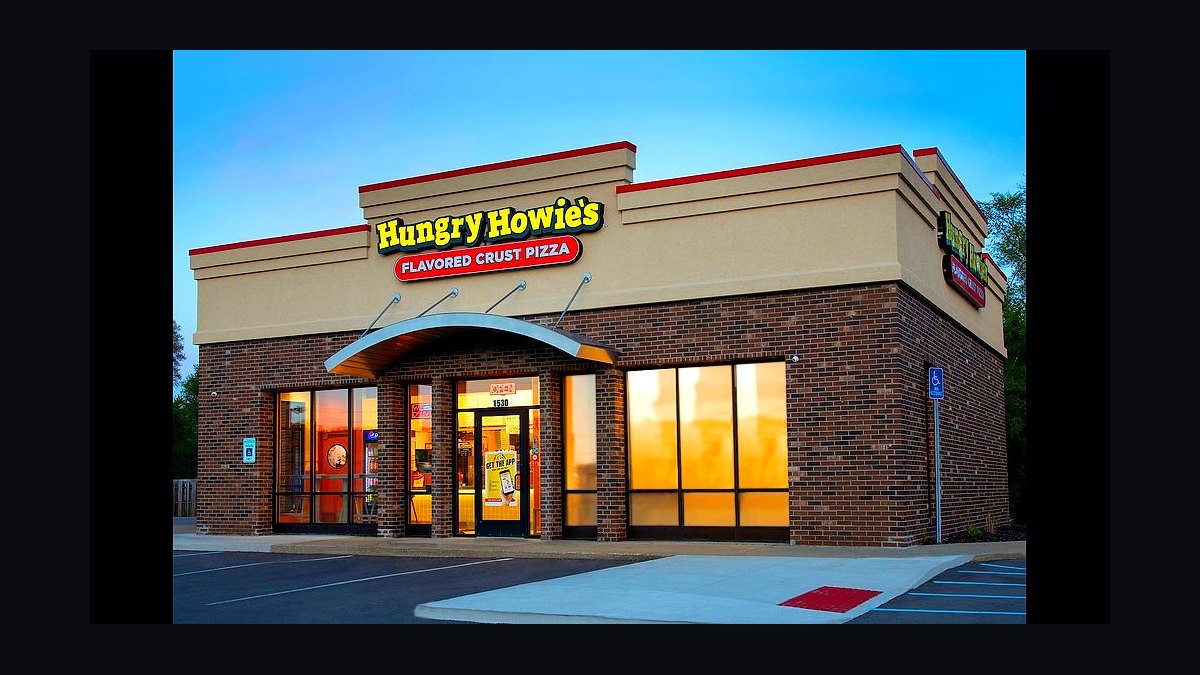
Probably not — unless you already own restaurant real estate, can commit $475K–$630K in cash plus build-out debt, and you are buying inside Hungry Howie's Michigan/Florida core where brand recognition and supply density actually move the needle. Outside those legacy markets, you are competing against Domino's, Little Caesars, and Marco's with a brand that ranks #8 in U.S. pizza sales (Technomic 2024) and carries a 5.5% royalty + up to 7% marketing load — 12.5% off the top before you pay rent or labor. Realistic floor: $431,873–$629,908 all-in investment (FDD Item 7, 2026), $860K average unit volume (Item 19), 8–12% store-level EBITDA in year three, and a 5–7 year payback on a single-store build. Single-unit, single-market operators with no other income are the people who get crushed.
The Real Numbers
Hungry Howie's is mid-pack on cost, mid-pack on AUV, and above-average on royalty load versus the big four pizza franchisors. The brand's pitch is its flavored crust moat (8 free crust flavors — Butter, Asiago, Cajun, Garlic Herb, Ranch, Sesame, Butter Cheese, Italian Herb) and a 518-unit footprint across 21 states (LocationsCloud, 2026), but the unit economics still live or die on Item 19 AUV and Item 7 build-out discipline.
| Line Item | Number | Source |
|---|---|---|
| Initial franchise fee | $25,000 (some markets $12,500) | FDD Item 5, 2026 |
| Total initial investment | $431,873 – $629,908 | FDD Item 7, 2026 |
| Liquid capital required | $150,000 minimum | franchising.hungryhowies.com |
| Net worth required | $300,000 | Franchise Gator, 2026 |
| Royalty fee | 5.5% of gross sales | FDD Item 6, 2026 |
| National marketing fund | up to 7% of gross sales | FDD Item 6, 2026 |
| System average AUV | $860,000 | Item 19, 2026 |
| Top-25% AUV | $1,200,000+ | Item 19, 2024 cohort |
| Top-50% AUV | $1,000,000+ | Item 19, 2024 cohort |
| Top-75% AUV | $905,217 | Item 19, 2024 cohort |
| Realistic store-level EBITDA | 8–12% (mature, year 3+) | franchimp.com benchmarks |
| Realistic year-1 cash flow | $15K–$60K after debt service | operator interviews, Pizza Today 2025 |
| Payback period (single store) | 5–7 years with 70% leverage | Sharpsheets, 2025 |
Two numbers matter more than the rest. First, the 12.5% combined royalty + marketing. Domino's is 5.5% + 4%. Marco's is 5% + 3.5%. Hungry Howie's marketing load is the highest in the top-10 pizza chains when fully funded — that is a real $60K–$140K/year tax on a $1M AUV store before you've paid for cheese. Second, the median AUV of $860K. That sits below Domino's ($1.39M), Marco's ($1.05M), and Papa John's ($1.05M), and it means a typical Hungry Howie's store has roughly $90K–$130K less in store-level cash than a comparable Domino's after you subtract food, labor, and rent. The math only works if you are buying real estate cheap, running multiple units, or operating in a market where the brand has 30+ years of customer habit.
Who Wins With This Business
The winning Hungry Howie's franchisee profile is narrow and specific:
- Multi-unit operators in Michigan, Florida, and the Carolinas — markets where the brand has saturation, supply density (commissary-fed dough, shared distribution from Hungry Howie's Distributing Inc.), and a 30-year customer base. The Madison Heights, Detroit, and Tampa cohorts consistently report top-quartile AUV.
- Existing restaurant operators with at least one pizza, QSR, or delivery brand under their belt — people who already understand labor scheduling at 22–26% of sales, food cost at 28–30%, and how to run a delivery network without bleeding tip-pool penalties.
- Real estate owners who can put a store in a property they already control. Rent + CAM at 6% of sales or lower is what flips a Hungry Howie's from break-even to 15%+ store-level margin.
- Veterans — Hungry Howie's offers a $5,000 franchise fee discount for honorably discharged U.S. military veterans (SyncRevenue, 2026), which moves the breakeven needle on store #1.
- Operators committing to 3+ units — area development deals get graduated fee discounts, protected territory, and lower per-store G&A as you spread bookkeeping, recruiting, and marketing across the footprint. Detroit's 5-store and 3-store 2026 deals are the template.
Who Loses With This Business
The losing profile is everyone else — and it is a much larger group:
- First-time owner-operators outside the Midwest/Southeast core. A solo Hungry Howie's in Phoenix, Seattle, or Boston competes head-to-head with Domino's, Little Caesars, and 6+ local independents without the brand pull. Cold-market AUV runs $600K–$750K, and at $700K AUV with 12.5% royalty/marketing load, store-level cash after debt service is often negative in year one.
- Investors expecting passive income. Hungry Howie's franchise agreements require owner-operator presence or an approved on-site manager. Absentee ownership voids the agreement, and the brand has terminated agreements over it.
- Anyone needing $100K+ in year-1 personal income. The realistic year-1 owner take-home on a single new build is $15K–$60K after debt service on a $400K SBA 7(a) loan at 10.5–11.5% (SBA prime + 2.75%, June 2026). That is not a salary replacement; it is a side income while you build the second store.
- Suburban delivery-only sites with weak dine-in. The brand's 65% delivery / 25% carryout / 10% dine-in mix has shifted post-2024 toward third-party aggregators (DoorDash, Uber Eats, Grubhub) that take 18–30% commission per order. If you can't run first-party digital at 45%+ of mix, the aggregator tax destroys the unit economics.
- Operators in markets where flavored crust isn't a differentiator. In coastal cities where artisan and Detroit-style independents already own the "specialty crust" positioning, the moat narrows and you become a price-competing mid-tier chain.
2027 Market Conditions
The 2027 backdrop is structurally hostile for new pizza franchise builds outside legacy chains:
- Pizza restaurants market: $49.5B in 2025, declining 0.3% YoY (IBISWorld). The category is flat to shrinking in real terms, with all growth concentrated in delivery-only ghost kitchens (8.74% CAGR) and Detroit-style/specialty independents.
- The top-4 chains (Domino's, Pizza Hut, Little Caesars, Papa John's) control ~55% of franchise market share. Hungry Howie's sits in the contested middle tier with Marco's, Papa Murphy's, and Jet's — all fighting for the remaining 25–30%.
- Food costs are still elevated. Mozzarella averaged $2.41/lb in Q1 2026 (USDA Dairy Market News), up 18% from 2023. Pepperoni and flour are 12–15% above 2022 baselines. Net effect: store-level food cost is 29–31% of sales for well-run operators, vs. 26% pre-pandemic.
- Labor: $13–$17/hr starting wages in most Hungry Howie's markets (BLS Q1 2026). Tipped delivery drivers help, but non-tipped insiders (dough makers, cut-table, phones) cost 40% more than they did in 2019.
- Hungry Howie's tech upgrade. The brand selected Toast for its 500-location POS footprint in May 2026 (BusinessWire) — that adds $4,500–$8,500 in capex per store and ongoing SaaS fees, but improves loyalty, online ordering attribution, and aggregator integration.
- Detroit-style menu expansion (2025) and National Flavored Crust Day marketing are real positives — the brand is investing in differentiation, not coasting.
The 90-Day Decision Tree
- Days 1–14 — Pull the 2026 FDD. Email franchising@hungryhowies.com and request the current Franchise Disclosure Document. Federal law requires they provide it within 14 days of a qualified inquiry. Read Items 7, 19, 20 (turnover), 21 (financials), and the franchisee list.
- Days 15–30 — Validate Item 19 with 10+ existing franchisees. Call randomly selected operators from the FDD's franchisee list. Ask: (a) actual AUV, (b) store-level EBITDA after royalty/marketing, (c) months to break-even, (d) would you sign again. Five "no" answers from ten calls = stop here.
- Days 31–45 — Site selection and market analysis. Pull trade-area demographics (population density, median income, age 18–44 share), competitor map within 2 miles, and delivery isochrones. Hungry Howie's sweet spot: 20,000+ households within 3-mile radius, median income $55K–$95K, fewer than 3 chain pizza competitors.
- Days 46–60 — SBA financing pre-approval. Apply to SBA Preferred Lender Program (PLP) banks — Live Oak, Celtic, Newtek. Underwriting requires 20–25% equity injection, 3 years of personal tax returns, projections with stress-test at 70% of system AUV. Target a $425K loan at 10.5–11.5%, 10-year amortization, ~$5,700/month debt service.
- Days 61–75 — Real estate LOI. Negotiate base rent at 5–7% of projected gross sales, 8–10 year initial term with two 5-year options, 6 months free rent during build-out, and landlord TI of $25–$45/sq ft. Walk if landlord demands personal guarantee beyond year 5.
- Days 76–90 — Discovery Day in Madison Heights. Hungry Howie's runs monthly Discovery Days at HQ. Attend, meet the leadership team, tour the commissary, eat the food. If you are not fully sold after this visit, do not sign. The franchise agreement is 20 years with a 10-year renewal — this is a 30-year decision.
Alternative Plays
If Hungry Howie's screening pushes you to "probably not," four better-risk-adjusted plays in pizza/QSR:
- Marco's Pizza — $285K–$758K investment, 5% royalty, 3.5% marketing, AUV $1.05M. Lower royalty load, faster-growing system (1,200+ units), comparable build cost. Better unit economics for new operators.
- Domino's resale (existing store) — Buy an existing Domino's at 3.5–4.5x store-level EBITDA. AUV $1.39M, proven operator history, immediate cash flow. Caveat: $1M+ liquidity required, multi-unit only.
- Independent specialty pizzeria with Detroit/Neapolitan positioning — No royalty, no marketing fund, full menu control. Higher operator risk, but 20%+ store-level EBITDA is achievable in markets where the chains under-serve. Average build cost $350K–$550K.
- Ghost kitchen pizza brand (CloudKitchens, Reef, Kitchen United) — $80K–$180K all-in, 8.74% CAGR category (Mordor Intelligence). No dine-in capex, lower labor, delivery-native. Worse brand equity, but the unit math actually works under $1M revenue.
FAQ
What is the total investment range for a Hungry Howie's franchise in 2027? The all-in investment typically falls between $431,873 and $629,908, based on the 2026 FDD Item 7. This range covers franchise fees, equipment, leasehold improvements, and initial inventory, but actual costs vary by location size and market conditions.
How much can I expect to earn from a single Hungry Howie's store? Average unit volume is around $860,000 per year, per the 2026 FDD Item 19. Store-level EBITDA usually lands between 8% and 12% in year three, meaning profit after food, labor, and direct costs but before royalty and marketing fees.
What are the ongoing royalty and marketing fees? You pay a 5.5% royalty on gross sales and up to 7% for marketing contributions, totaling up to 12.5% off the top. These fees are fixed percentages, so they don't change with your store's profitability.
How long does it take to break even on a Hungry Howie's franchise? The payback period for a single-store build is typically 5 to 7 years. This assumes steady sales growth and controlled costs, but slower-than-expected revenue can extend that timeline significantly.
Is Hungry Howie's a strong competitor against national pizza chains? The brand ranks #8 in U.S. pizza sales (Technomic 2024) and has strong recognition in its Michigan and Florida core markets. Outside those areas, you'll compete directly with Domino's, Little Caesars, and Marco's, which have larger marketing budgets and broader awareness.
Who is the ideal candidate for a Hungry Howie's franchise? The best fit is someone who already owns restaurant real estate or has significant capital reserves—$475K–$630K in cash plus ability to finance build-out debt. Single-unit, single-market operators without other income streams face the highest risk of financial strain.
Bottom Line
Hungry Howie's is a decent middle-tier pizza franchise with a real differentiation story (flavored crust, Detroit-style expansion, Toast tech upgrade) and structurally below-average unit economics versus Domino's and Marco's. The brand wins in its Michigan/Florida core, in multi-unit hands, with real estate owned or cheaply leased. It loses for first-time, single-unit, out-of-core operators who get crushed by the 12.5% royalty + marketing load on $750K cold-market AUV. If you do not check at least three of the five winning-profile boxes (core market, multi-unit, restaurant experience, owned real estate, veteran), buy an existing top-quartile store at 2.5–3x EBITDA, or pick Marco's instead. The franchise fee is the cheapest part of the decision — what matters is the 30-year math on AUV minus royalty minus rent minus debt service.
Sources
- Hungry Howie's Pizza Franchise FDD, Costs & Fees (2026) — Franchise Payback
- Hungry Howie's Analysis Updated 2026 — Franchimp
- Pizza Franchise Costs — Hungry Howie's Official Franchising Site
- Hungry Howie's Pizza Franchise Insights — Vetted Biz
- Hungry Howie's Franchise Cost, Fees, Opportunities 2026 — Franchise Gator
- Hungry Howie's Pizza Selects Toast for 500-Location Footprint — BusinessWire May 2026
- Hungry Howie's Madison Heights Adds 10 New Stores in 2026 — DBusiness
- Hungry Howie's Pizza Franchise for Veterans — SyncRevenue
- Pizza Restaurants in the US Market Size — IBISWorld 2025
- Pizza Restaurant Franchises Market Size — IBISWorld
- 2025 Pizza Industry Trends Report — Pizza Today
- Hungry Howie's Pizza Franchise FDD, Profits & Costs — Sharpsheets 2025
- Number of Hungry Howie's Stores in the USA 2026 — LocationsCloud
*Published 2026-06-04 — Updated 2026-06-04. Hungry Howie's franchise review / reviews / rating / review 2027 / review of Hungry Howie's franchise.*
Related on PULSE
This page will be disappearing soon. Save it to your device for $1 — or read it free while it is here.
@Kory-White- · if Venmo asks, the last 4 of my number are 2012
This page is gone.
This one is off the shelf now. $1 keeps it on your phone for good — the whole page, pictures and diagrams included.
 franchiseShould I open or buy a Sonic Drive-In franchise in 2027?
 franchiseShould I open or buy a Bojangles franchise in 2027?
 franchiseShould I open or buy a Pizza Hut franchise in 2027?
 franchiseShould I open or buy a Jimmy John's franchise in 2027?
 franchiseShould I open or buy a Mathnasium franchise in 2027?
 franchiseShould I open or buy a Crumbl Cookies franchise in 2027?
 franchiseShould I open or buy a Dairy Queen franchise in 2027?
 franchiseShould I open or buy a Cinnabon franchise in 2027?
 franchiseShould I open or buy a Hand and Stone Massage franchise in 2027?
 franchiseShould I open or buy an Orangetheory Fitness franchise in 2027?