


Should I open or buy a Blaze Pizza franchise in 2027?
Quality
Certified
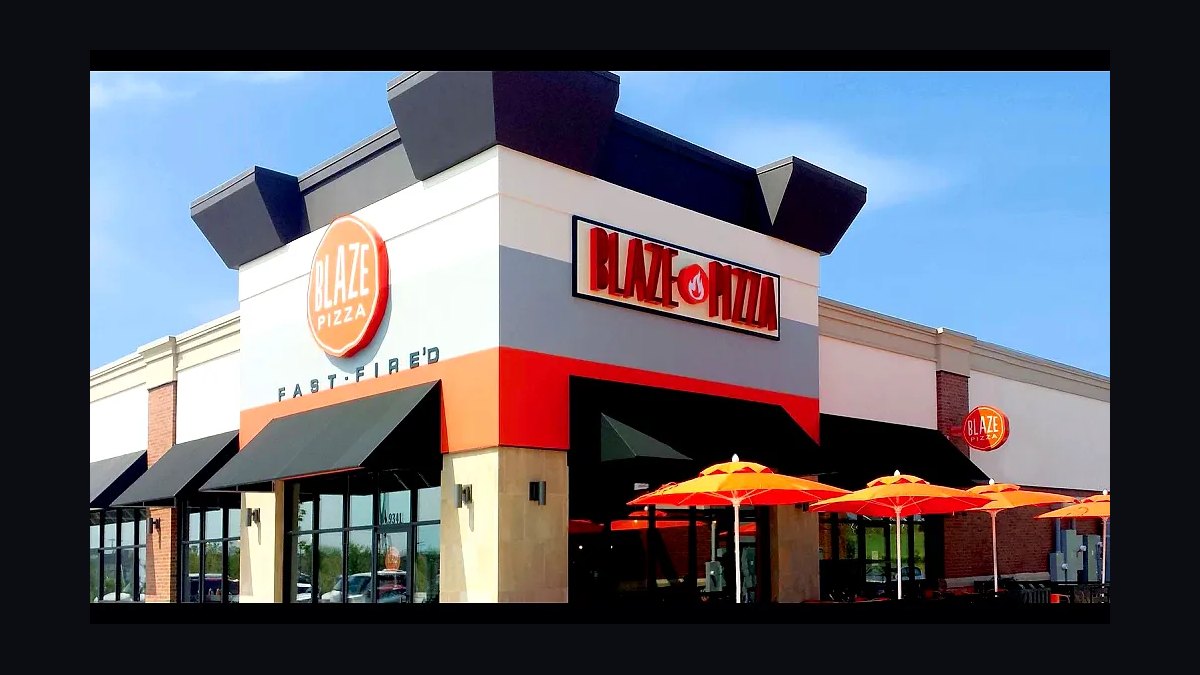
Probably not as a new build — unless you can self-fund a $900K all-in position, control an A-grade lifestyle-center site with strong lunch traffic, and accept that fast-casual pizza shrank again through 2025. The realistic 2027 floor to open a Blaze Pizza franchise is $666,900–$1,143,000 in startup capital against a system AUV near $1.28M, with payback running four to six years. Buying an existing resale unit at $300K–$450K is the version of this deal that actually pencils for most first-time operators.
A Concrete Scenario That Frames The Problem
Picture a mid-career operator — call her the typical candidate who calls a Blaze franchise development office in early 2027. She has run two sandwich-shop locations for a regional licensee, has $280,000 in liquid savings, and has been pre-qualified for SBA 7(a) financing up to $650,000. She likes the brand: build-your-own, 180-second fast-fired pizza, a loyal fanbase from a decade of operation, and a franchise fee that looks modest next to a full-service restaurant concept. She is deciding between three paths — sign a new-build franchise agreement for a ground-up store in a growing suburb, buy a closed-store resale package from an exiting franchisee two states over, or walk away and put the same capital into a brand that is still adding units instead of losing them.
This scenario matters because it is the actual decision tree every serious 2027 prospect faces, and the answer changes completely depending on which path she takes. If she signs for the new build, she is paying 2027 construction costs — permits, build-out, equipment, smallwares, and three months of working capital — into a category where same-store sales have been negative for multiple consecutive years. If she buys the resale, she inherits a trained crew, a proven sales history at that specific address, and equipment that trades at 40 to 60 cents on the dollar versus new. If she walks, she keeps her capital liquid for a brand in a different, growing segment.
The scenario also exposes the real risk that generic franchise-fee math hides: the $30,000 franchise fee is a rounding error against the $900,000 total exposure. Anyone evaluating whether to open a store under this flag has to model the full capital stack, the debt service, and the segment trend — not just the headline fee — because the fee is the cheapest part of the decision and the easiest to get distracted by.
How The Mechanism Actually Works
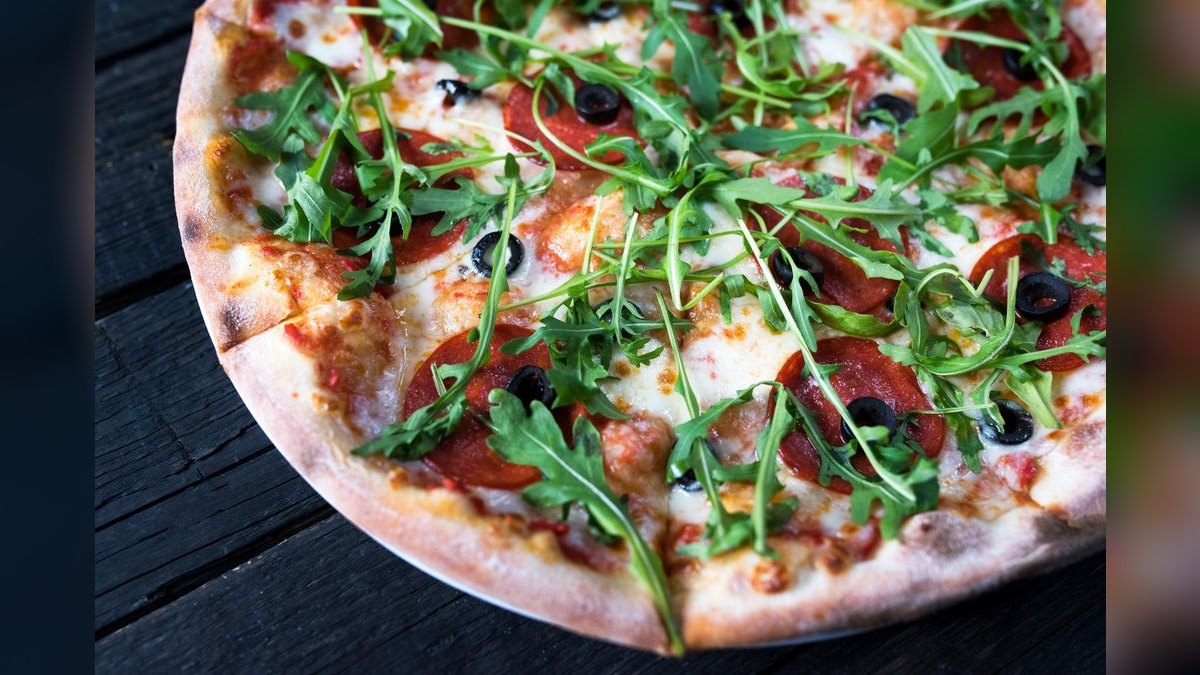
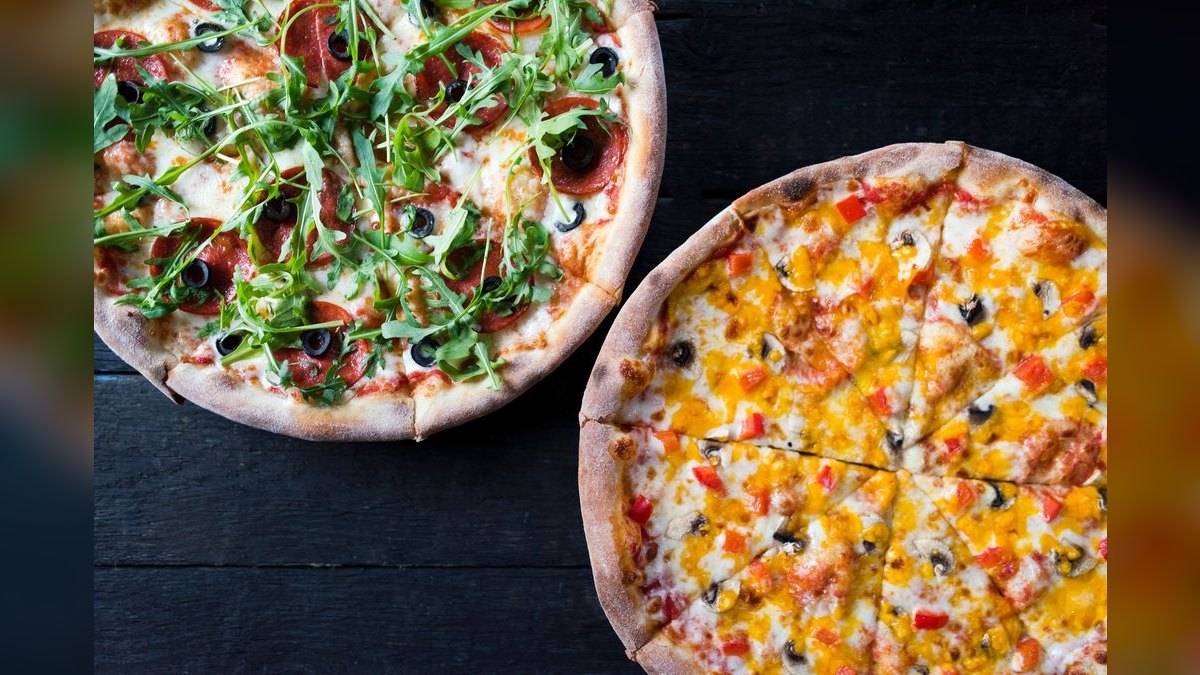
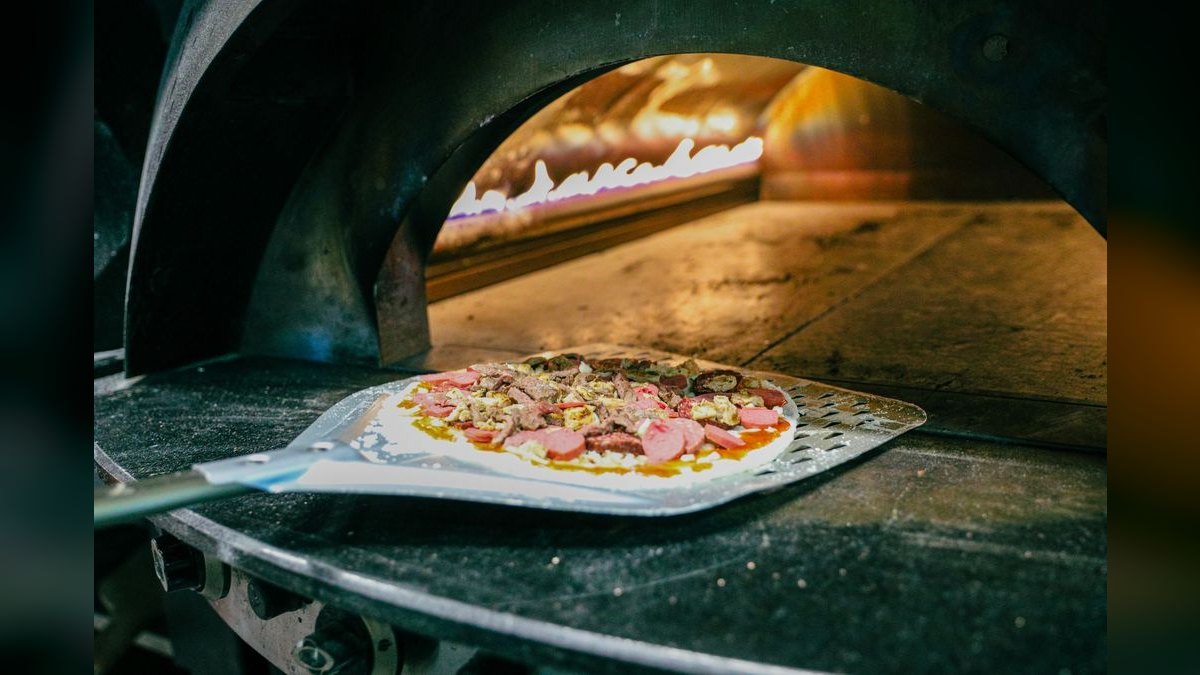
A Blaze Pizza unit generates revenue through a build-your-own assembly line — guest selects dough, sauce, cheese, and toppings, the pie goes into a 180-second high-heat oven, and the ticket gets rung at the register or a kiosk. Revenue splits heavily toward the lunch daypart, historically 52–58% of daily sales, because the format mirrors a fast-casual sandwich or bowl concept more than a dinner-destination pizzeria. That daypart concentration is the single biggest driver of site-level economics: a location without strong lunch foot traffic — an office cluster, a university, a dense lifestyle center — structurally underperforms even with good evening traffic, because the format was never built to carry a dinner-only trade area.
From that top-line revenue, three deductions happen before the franchisee sees a dollar: a 5% royalty on gross sales, a 2% national marketing contribution, and a 1–2% local marketing requirement, all owed to the franchisor regardless of store profitability. Below that line sits prime cost — food plus labor — which needs to land near 58% of sales for the unit economics to work at a $900K build. Labor is the harder half of that equation to control, because a fast-fired pizza line still needs adequate staffing through two peak rushes (lunch and dinner) even on a slow Tuesday, and the model breaks when prime labor runs above roughly 32% of sales — you cannot staff your way into profitability at this AUV; you can only out-earn the fixed cost structure by hitting volume.
The mermaid below traces the actual decision mechanism a 2027 prospect should run before signing anything — capital capacity, operator experience, site quality, and whether the deal is a new build or a resale all gate the outcome before the FDD ever gets signed.
The mechanism also runs in reverse at closure: when a unit's trailing AUV sinks below roughly $980,000, prime cost mechanically exceeds target even with disciplined management, debt service consumes the remaining margin, and the franchisee either sells at resale pricing or lets the lease lapse at renewal. That is the structural pattern behind the unit count decline — it is not primarily bad operators, it is sites and dayparts that never generated enough covers.
Real Numbers, Ranges, And Benchmarks
The clearest way to evaluate whether to open a Blaze Pizza store in 2027 is to work through the actual investment table rather than the headline franchise fee. The initial franchise fee is $30,000, flat, regardless of unit count on a single-unit agreement — though multi-unit development agreements for three-plus units typically discount the fee on units four and beyond, often to $20,000–$25,000, with a separate development fee due at signing. Build-out and leasehold improvements run $282,000–$542,000 depending on square footage and local construction costs. Equipment — oven, POS, furniture — adds $215,000–$310,000. Signage, smallwares, and opening inventory run $42,000–$78,000. Architect fees, permits, training, and travel add $38,000–$72,000. Insurance, utility deposits, and pre-opening labor run $24,000–$51,000, and three months of working capital adds another $35,900–$60,000. Total initial investment lands at $666,900 on the low end and $1,143,000 on the high end — a wide enough range that site selection and local construction costs matter more than almost any other single variable.
Against that investment, the system-wide average unit volume sits near $1,281,665, with top-quartile stores performing closer to $1,650,000 and bottom-quartile stores running $850,000–$980,000. That dispersion is the real story: a top-quartile store and a bottom-quartile store can differ by 70–90% in revenue while carrying nearly identical fixed costs, which means the gap between a great outcome and a failing one is almost entirely a function of site and daypart traffic, not brand strength. Royalty runs 5.0% of gross sales, national marketing 2.0%, and local marketing 1.0–2.0%, for a combined 8–9% off the top before any operating cost is paid.
At median AUV, estimated franchisee EBITDA runs $153,800–$192,250, a 12–15% margin — but that figure is pre-debt-service. Financing 70% of a $900,000 all-in build at an SBA 7(a) rate near 10.75% in 2027 (Prime plus roughly 2.75) produces annual debt service near $98,000. Net cash to the owner after debt service, before any owner draw, lands at $55,000–$95,000 on a workweek that regularly exceeds 60 hours for an owner-operator. Equity payback at that median scenario runs four to six and a half years; top-quartile stores hitting $1.65M AUV can pay back equity in two and a half to three and a half years, while bottom-quartile stores below $980,000 frequently never pay back equity at all and exit through lease non-renewal in years five through seven.
The category backdrop matters as much as the unit economics. Fast-casual pizza posted a roughly 5% sales decline in 2024 and a smaller 0.3% decline in 2025, with 2026 tracking flat to slightly down. Unit count for the segment's top brands fell by roughly 180 net units from 2023 to 2025. Blaze itself contracted from a 2019 peak of 343 units to roughly 250 by 2026 — a loss of close to a hundred units in six years, with 2024 alone seeing more than forty closures against a dozen new openings. Input costs for 2027 are expected to run cheese flat to up 3%, flour up 1–2%, and labor up 4–6% in states with $15 minimums, which now cover roughly half the country. None of that makes the brand unworkable, but it does mean the tailwinds that made 2015-era fast-casual pizza math easy are gone, and every projection has to be built on current, not historical, assumptions.
Trade-Offs And Alternatives
The central trade-off in 2027 is new-build risk versus resale value. A new-build franchise exposes the full $900,000-plus capital stack to peak construction pricing and zero sales history, betting entirely on site selection and a category that has not grown in several years. A resale unit — bought from an exiting franchisee, typically in the $300,000–$450,000 range for a turnkey store with equipment, trained crew, and an actual trailing AUV — compresses that risk substantially, because the buyer is purchasing known performance rather than a projection. The $450,000 delta between the two paths is effectively the margin of safety in a segment that is not currently expanding.
A second trade-off sits between single-unit ownership and multi-unit development. Blaze favors three-plus unit development agreements and discounts the franchise fee on later units, which works well for an operator who can spread general and administrative overhead — a district manager, shared purchasing, cross-trained staff — across several stores and absorb one underperforming location without it sinking the portfolio. A first-time single-unit buyer has no such cushion; if the one store misses its AUV target, there is no sister location to offset it.
A third trade-off is brand versus segment. An operator fixed on pizza specifically could instead evaluate a Domino's franchise, which runs a delivery-first model with average unit volumes near $1.5M and a royalty structure in the 6.5–8% range depending on the agreement vintage — a model that has structurally outcompeted fast-casual pizza because consumers have shown they will pay $7–9 for delivered pizza rather than $13–16 for a dine-in-style pie that travels poorly. An operator open to leaving pizza entirely could look at Cava, which grew system-wide sales around 18% in 2025, or Dave's Hot Chicken, which grew units roughly 30% from 2024 to 2025 — both in categories currently expanding rather than contracting. An operator who wants to keep margin rather than brand recognition could run an independent, non-franchised pizza concept, trading the marketing and systems support of a franchise for 600–800 basis points of additional EBITDA margin by eliminating royalty and national marketing fees entirely.
Weighed together, these trade-offs point toward a narrow set of profiles for whom opening new makes sense in 2027: multi-unit operators with existing fast-casual infrastructure, real-estate-led buyers who already control a top-tier site at favorable occupancy cost, and operators with a genuine catering and delivery operation that can offset the lunch-dependency of the model. Everyone else is better served chasing a resale or a different brand entirely.
Common Pitfalls And How To Avoid Them
The most common and most expensive pitfall is signing a lease in a mall, power-center, or food-court location because the rent looks cheap relative to a free-standing pad. Mall locations underperform free-standing sites by a wide margin according to franchisor disclosures, and a chunk of the brand's overall contraction traces directly to exactly this site type. The fix is mechanical: walk only A-grade, lifestyle-center or university-adjacent sites, and treat any site where all-in occupancy exceeds roughly 11% of projected AUV as disqualified regardless of how attractive the base rent looks on paper.

A second pitfall is underestimating debt service against pre-debt EBITDA. It is easy to look at a $155,000–$190,000 EBITDA figure at median AUV and assume that is take-home; it is not, once $98,000 in annual debt service on a leveraged build is subtracted. The fix is to model every projection on a post-debt-service, cash-to-owner basis from the start, not on an EBITDA headline, and to stress-test the model at bottom-quartile AUV ($850,000–$980,000) before signing anything.
A third pitfall is skipping franchisee validation. The FDD's Item 20 table lists current and former franchisees, and the single highest-leverage use of the 90 days before signing is calling at least twenty of them — weighted toward operators who opened between 2019 and 2022, past the honeymoon period and seasoned enough to give an honest answer on real AUV, real prime cost, real lease rate, refresh capital expenditure, and whether they would do it again. Skipping this step means relying entirely on franchisor-supplied projections, which are legally required to be conservative in disclosure but are not a substitute for an operator's lived experience.
A fourth pitfall is over-indexing on third-party delivery as a growth lever without modeling its margin impact. Thin-crust, fast-fired pizza travels poorly, and delivery platforms typically take roughly 30% of the ticket; layered on top of the 5% royalty and 2% marketing contribution, delivery contribution margin can turn negative below a roughly $14 ticket. The fix is to treat delivery as a convenience channel for existing demand, not as a primary growth strategy to open a new trade area, and to price delivery menus to absorb the platform's take rate rather than matching in-store pricing.
A fifth pitfall is treating the $30,000 franchise fee as the headline cost and losing sight of refresh capital expenditure obligations buried in the franchise agreement addendum. Refresh cycles — mandatory updates to decor, equipment, or branding every several years — can run tens of thousands of dollars per cycle and are negotiable before signing but not after. The fix is to negotiate a capped refresh expenditure, commonly sought near $75,000 per five-year cycle, into the franchise agreement addendum before signing, because royalty and marketing percentages are fixed by the franchisor but territory, development schedule, and refresh caps generally are not.
Related questions
How much does it cost to buy an existing Blaze Pizza franchise versus opening a new one?
A resale unit typically trades for $300,000–$450,000 including equipment and trained staff, against $666,900–$1,143,000 for a new build — the resale buyer also pays a $30,000 transfer-adjacent franchise fee on top of the purchase price.
What franchise fee does Blaze Pizza charge in 2027?
The initial franchise fee is $30,000 per restaurant, with discounts common on units four and beyond under a multi-unit development agreement, plus a separate development fee due at signing.
Is the fast-casual pizza segment still shrinking in 2027?
Yes — the segment posted negative same-store sales in 2024 and 2025, and competitors like MOD Pizza, Pieology, and Pie Five have all seen distress sales, bankruptcy, or sharp unit contraction in the same window.
What's a safer alternative to opening a new pizza franchise right now?
Multi-unit agreements in currently growing fast-casual categories — Cava or Dave's Hot Chicken, for example — or buying a resale unit rather than building new, both reduce the capital exposure that sinks first-time new-build operators.
FAQ
What is the Blaze Pizza franchise fee in 2027? The initial franchise fee is $30,000 per restaurant. Multi-unit development agreements for three or more units often get a reduced fee on units four and beyond, frequently $20,000–$25,000, plus a separate development fee due at signing. Resale buyers also pay the $30,000 fee in addition to the purchase price of the unit itself, and the fee is non-refundable and due at franchise agreement signing rather than at store opening.
What is a realistic Year-1 return if I open a Blaze Pizza store? At median AUV near $1.28M, with roughly 70% leverage and owner-operator labor, expect EBITDA of $155,000–$190,000 before debt service and net cash to the owner of $55,000–$95,000 after debt service. Cash-on-cash return on the equity portion of the build can run 20–35% at median performance, but collapses toward zero or negative at bottom-quartile AUV near $900,000, where debt service alone can exceed pre-debt EBITDA.
How many Blaze Pizza units have closed in recent years?

The brand peaked at 343 units in 2019 and had contracted to roughly 265 by the end of 2024, settling near 250 by 2026 — a net loss of close to a hundred units, or roughly 27%, over six years. The pace of closures has slowed but has not reversed as of 2026.
Is it smarter to open a new Blaze Pizza store or buy a resale? Buying a resale is the stronger risk-adjusted entry for most 2027 buyers. A turnkey resale at $300,000–$450,000 comes with a proven sales history and trained staff, compresses equity payback to roughly two to three years versus four to six and a half years for a new build, and avoids paying peak 2027 construction costs into a segment that is not currently growing.
What's the biggest risk in opening a Blaze Pizza franchise in 2027? Daypart concentration combined with delivery erosion. The model depends heavily on lunch traffic, and thin-crust fast-fired pizza does not travel well on third-party delivery platforms, which structurally caps how much a weak-daypart site can be rescued by adding delivery volume. Combined with a contracting category overall, site selection and daypart strength matter more than brand execution.
How long does it take to break even after opening a Blaze Pizza franchise? Equity payback runs roughly four to six and a half years at median performance with typical leverage. Top-quartile stores can pay back in two and a half to three and a half years, while bottom-quartile stores frequently never recover their equity and exit at lease renewal. Resale buyers see the fastest payback, often two to three years, because they are buying a proven AUV rather than a projection.
Sources
- Franchise Chatter, "Blaze Pizza Franchise Review: Costs, Fees, News, Average Revenues and/or Profits," https://www.franchisechatter.com
- 1851 Franchise, "Franchise Deep Dive: Blaze Pizza's Franchise Costs, Fees, Profit and Data," https://1851franchise.com
- Restaurant Business Online, https://www.restaurantbusinessonline.com
- QSR Magazine, https://www.qsrmagazine.com
- Nation's Restaurant News, https://www.nrn.com
- Restaurant Dive, https://www.restaurantdive.com
- FAT Brands Inc. investor relations and SEC filings (NASDAQ: FAT), https://ir.fatbrands.com
- Technomic / Winsight Fast-Casual industry reporting, https://www.winsightgrubstreet.com
- IBISWorld, "Pizza Restaurants in the US" industry report, https://www.ibisworld.com
- U.S. Federal Trade Commission, Franchise Rule disclosure guidance, https://www.ftc.gov
Related on PULSE
- Best pizza franchises to buy in 2027
- Should I open or buy an East of Chicago Pizza franchise in 2027?
- Should I open or buy a Gatti's Pizza franchise in 2027?
- Should I open or buy a Pizza Ranch franchise in 2027?
- Should I open or buy a Snappy Tomato Pizza franchise in 2027?
- Should I open or buy a Hunt Brothers Pizza franchise in 2027?
This page will be disappearing soon. Save it to your device for $1 — or read it free while it is here.
@Kory-White- · if Venmo asks, the last 4 of my number are 2012
This page is gone.
This one is off the shelf now. $1 keeps it on your phone for good — the whole page, pictures and diagrams included.
 frShould I open or buy a McDonald's franchise in 2027?
 franchiseShould I open or buy a Cinnabon franchise in 2027?
 franchiseShould I open or buy a Meineke franchise in 2027?
 franchiseShould I open or buy a Little Caesars franchise in 2027?
 franchiseShould I open or buy a Culver's franchise in 2027?
 franchiseShould I open or buy a McAlister's Deli franchise in 2027?
 franchiseShould I open or buy a Wingstop franchise in 2027?
 franchiseShould I open or buy a Kumon franchise in 2027?
 franchiseShould I open or buy an Anytime Fitness franchise in 2027?
 franchiseShould I open or buy a KinderCare franchise in 2027?