


Should I open or buy a Pieology franchise in 2027?
Quality
Certified
Probably not — unless you can stomach a shrinking 109-unit chain, secure a sub-$300K conversion site, and you already operate two or more pizza restaurants nearby. Pieology's 2024 FDD Item 7 puts startup at $304,000 to $807,500 plus a $25,000 franchise fee, with 5% royalty + 2% marketing fee stacked on top. Item 19 shows average gross sales near $743,000 — well below the $1.2M fast-casual pizza category AUV that MOD Pizza, Blaze Pizza, and Pizza Studio post. Conservative Year-1 cash flow on a single unit runs $45,000 to $90,000 of owner EBITDA, with breakeven on cash invested in 6 to 9 years. The brand is closing corporate stores and pivoting to pure franchising in 2027 — opportunity for a disciplined multi-unit operator, trap for a first-timer.
The Real Numbers
Pieology disclosed in its most recent FDD (Item 7) that initial investment ranges from $304,000 on the low end (inline conversion of an existing restaurant in a secondary market) to $807,500 on the high end (new ground-up build in a major metro). The franchise fee is $25,000 for a single unit and $20,000 per unit for multi-unit development agreements. Royalty is 5% of gross sales weekly; brand fund / marketing fee is 2% weekly. Item 19 discloses gross sales for franchised units that operated the full prior fiscal year, with the system-wide average gross sales of approximately $743,000 per unit. Sharpsheets and Vetted Biz estimate EBITDA margins of 12% to 15% for healthy units — translating to $89,000 to $111,000 in pre-debt operator earnings on a median store.
| Line item | Low | High | Notes |
|---|---|---|---|
| Initial franchise fee | $25,000 | $25,000 | FDD Item 5; $20K/unit for multi-unit |
| Build-out (leasehold improvements) | $130,000 | $385,000 | 1,800-2,400 sq ft inline; conversion vs. new |
| Equipment, smallwares, POS | $75,000 | $145,000 | Conveyor oven, prep line, refrigeration |
| Signage, decor, furniture | $18,000 | $48,000 | Interior pizzeria fit-out per brand spec |
| Opening inventory | $7,500 | $14,000 | Food, paper, smallwares |
| Training and travel | $4,500 | $12,000 | Required pre-opening training |
| Insurance, deposits, fees | $5,500 | $22,500 | Liquor (where applicable), liability, utility |
| Working capital (3 months) | $38,500 | $156,000 | Per FDD Item 7 |
| Total initial investment | $304,000 | $807,500 | Pieology FDD Item 7 (most recent) |
| Ongoing royalty | 5% | 5% | Of weekly gross sales |
| Brand fund / marketing | 2% | 2% | Of weekly gross sales |
| Average gross sales (Item 19) | — | — | ~$743,000 system average |
| Owner EBITDA (12-15% margin) | $89,000 | $111,000 | Pre-debt service |
| Cash payback (single unit) | 6 years | 9+ years | Median operator |
Compare against MOD Pizza ($1.3M AUV), Blaze Pizza ($1.2M AUV), and the IBISWorld 2026 Pizza Restaurants in the US industry average of $1.08M per location — Pieology underperforms the fast-casual pizza category average by roughly 30 to 40%. The IFA's 2026 Franchise Economic Outlook ranks fast-casual pizza among the slowest-growing QSR sub-segments, with projected unit growth of just 0.8% for 2027.
Who Wins With This Business
Multi-unit veterans converting a closed pizza site. If you already run two or more pizza restaurants within a 30-mile radius, share back-of-house labor and supply contracts, and can negotiate a conversion lease at $22-28 per sq ft NNN, Pieology's lower-than-MOD startup floor (you can open for $304K vs. $700K-$1.4M at MOD) lets you layer a third or fourth unit on existing infrastructure. Operators on the Pieology development pipeline in Texas, Arizona, and the Carolinas have made this work by bundling 3-5 units under a $20K/unit multi-unit fee and running a shared GM across two stores.
Catering- and college-adjacent operators. Pieology's build-your-own model and 5-minute personal pizza throughput lines up with college campus dining, corporate catering, and youth-sports volume. Operators near Cal State Fullerton, Arizona State, and University of Texas at Arlington post AUVs above $900K by running 35-40% catering mix rather than relying on lunch walk-in traffic.
Owner-operators with $200K liquid and another income stream. Pieology requires $200,000 liquid capital and $500,000 net worth per franchisesbiz.com and franchisepayback.com. Owners who keep a day job or spouse income through Year-3 — and run the store themselves, not a hired GM at $65K — convert the 12% margin into $130K+ of owner take-home by stripping out the GM line.
Operators in markets MOD and Blaze just exited. MOD closed 26 stores in Q1 2025; Blaze rationalized 40+ underperformers in 2024-2025. Vacant build-out, working POS, and existing trade area awareness make these assignment-of-lease conversions Pieology's single best 2027 deal.
Who Loses With This Business
First-time franchisees with no pizza-ops experience. Pieology's conveyor-oven throughput, dough management, and 30-second pizza-build standard are unforgiving. First-timers underestimate prime cost (food + labor often runs 62-67% vs. the 58% target), and the gap shows up by month 4, just as 3-month working capital from Item 7 burns down.
Single-unit operators in tier-1 metros paying $48+/sq ft rent. Bay Area Pieology closures in 2026 were attributed by Restaurant Business Online to high rent and rising minimum wage. Rent above 8% of sales combined with $22/hour California fast-food minimum wage (AB 1228 in effect 2024) crushes the 12% EBITDA target into negative territory. Avoid San Francisco, Seattle, NYC boroughs, and downtown LA unless your rent is sub-$36/sq ft NNN.
Investors expecting a passive return. Pieology is not a semi-absentee model. The FDD strongly recommends owner-operator presence for the first 24 months. Hands-off investors who hire a $70K GM and a $50K AGM delete the margin — there is no margin left to delete.
Anyone planning a ground-up build at the $807,500 high end. Recent fast-casual pizza unit-economics math doesn't justify a $800K investment in a $743K AUV concept. Cash-on-cash returns at that level drop below 8% in Year 3 — worse than a T-bill with none of the liquidity.
2027 Market Conditions
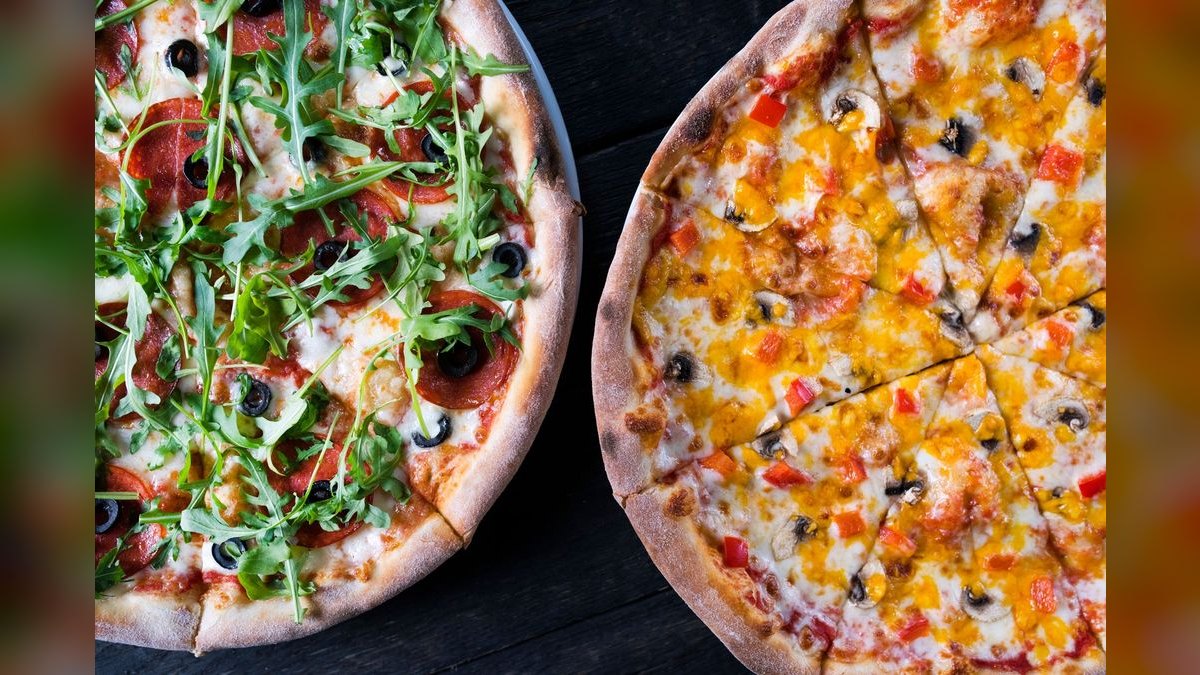
The fast-casual pizza category is contracting. Restaurant Business Online has called the sub-segment an existential crisis — net unit count peaked in 2018-2019 and MOD, Blaze, Pieology, Pie Five, and Project Pie have all closed or restructured in the 2023-2026 window. Pieology itself closed 6 corporate stores in Northern California in 2026 and announced a strategic restructuring to focus on franchising, per Restaurant Business Online's March 2026 reporting.
Three 2027 tailwinds for a disciplined operator:
- Conversion inventory. MOD's 26 Q1-2025 closures, Blaze's 40+ overhaul-driven exits, and Pieology's own corporate-store closures put 80-120 fully built fast-casual pizza shells on the market at $0.40-$0.60 per buildout dollar.
- Multi-unit development incentives. Pieology has been waiving or discounting franchise fees for 3+ unit commitments in Texas, Florida, Tennessee, and the Carolinas — secondary markets where rent is $24-32/sq ft and state minimum wage is $7.25-$13/hour.
- Catering and third-party-delivery rebalancing. DoorDash and Uber Eats commissions remain 18-23%, but Pieology's 2026 in-app ordering rollout (per FastCasual.com industry coverage) reduces third-party dependence — operators getting 45%+ of sales through first-party digital are clearing 18% EBITDA.
Three 2027 headwinds:
- Wage inflation. California AB 1228 ($20/hr fast-food), NY $17/hr, WA $16.66/hr as of 2026-2027 — Pieology stores in these states are 2-3 EBITDA points underwater vs. Texas or Tennessee.
- Commodity volatility. Cheese (mozzarella block) ran $2.40-$2.85/lb in 2025-2026 per USDA AMS Dairy Market News, flour and pepperoni up 8-12% YoY per BLS PPI. Prime cost discipline matters more than ever.
- Consumer trade-down to value pizza. Little Caesars, Domino's $7.99 Mix & Match, Papa Johns Papa Pairings have pulled discretionary lunch dollars from fast-casual. Pieology's $10-13 personal pizza ticket is 34-67% above value-pizza alternatives.
The 90-Day Decision Tree
- Days 1-10 — Pull and read the most recent Pieology FDD. Get the active FDD from franchisor disclosure (Item 23) or via a FRANdata / FDD Exchange subscription. Read Item 7 (initial investment), Item 19 (financial performance representations), Item 20 (outlet count and transfers/terminations), Item 21 (financial statements) in that order.
- Days 11-20 — Decode Item 20 outlet table. Count transfers, terminations, non-renewals, and ceased operations for 3 prior fiscal years. If transfers + terminations + ceased ops > 12% of total units per year, that is a red flag. Pieology's recent Item 20 shows elevated activity consistent with the corporate restructuring.
- Days 21-35 — Call 12-15 existing Pieology franchisees from Item 20's franchisee list. Ask three things: (a) Are you above or below $743K AUV? (b) What is your prime cost? (c) Would you sign again today? If fewer than 60% answer "yes" to (c), walk away.
- Days 36-45 — Drive the trade area. Pull a 5-minute and 10-minute drive-time demographic from Placer.ai or SafeGraph. Pieology's sweet spot is median household income $68K-$110K, daytime population 18K+ within 1 mile, a college, hospital, or office park anchor.
- Days 46-55 — Build your P&L on a $743K AUV. Do not model your store at $900K AUV "because you'll be better". Use the system average from Item 19. Plug in real rent quotes, state-specific wage, 30-32% food cost, 28-32% labor cost, 5% royalty + 2% marketing, and see if the EBITDA line lands above $90K. If not, the deal fails.
- Days 56-70 — Get three franchise attorney reviews of the FDD. Standard rate $3,500-$6,000 for a full Item-by-Item review. Negotiate personal-guarantee carve-outs, territory protections (Item 12), and transfer-fee caps (Item 17).
- Days 71-85 — Decision gate. If EBITDA model > $90K, AUV anchors > $800K in your trade area, rent < 8% of projected sales, multi-unit development discount available, franchisee survey >60% "would sign again" — proceed. Anything less, walk away and look at the alternatives below.
- Days 86-90 — Sign and lock financing. Pieology is SBA-approved on the SBA Franchise Directory — most operators finance 65-75% of total investment through an SBA 7(a) loan at SOFR + 2.75%, putting $80K-$200K equity down.
Alternative Plays

Buy a closed MOD or Blaze location and convert independent. A fully built fast-casual pizza shell runs $80,000-$140,000 in assignment-of-lease and asset-purchase costs. Independent pizza shops do not pay 7% royalty + marketing fee — that is $52,000 per year in royalty savings at a $743K AUV. Owner-operated independents in this segment regularly hit 18-22% EBITDA per IBISWorld's 2026 Pizza Restaurants Industry Report.
Slice House by Tony Gemignani. Pizza Today's #1 Pizza Operator brand. FDD Item 7 of $700K-$1.3M, 6% royalty, but AUV reportedly $1.4M-$1.8M per the Slice House franchise site. Higher ceiling, more demanding operations.

Marco's Pizza or Jet's Pizza (delivery-led). Both carryout/delivery-led with lower build-out ($280K-$550K), AUVs $850K-$1.1M, and delivery-friendly economics that dodge dine-in labor inflation. Marco's FDD Item 19 has consistently outperformed fast-casual pizza category averages.
Single-unit Domino's resale. Existing Domino's stores resell at 3-4x EBITDA, AUV $1.2M+, 5.5% royalty, proven 35-year unit economics, better SBA financing terms. The Domino's franchisee-pipeline route via internal advancement is the lowest-risk entry.
Pass on pizza entirely; deploy capital into a healthier category. Per Restaurant Business Online and Technomic, chicken (+5.4% same-store), Mexican (+4.1%), coffee (+3.8%) are outpacing pizza (+1.9%) in 2026-2027. Raising Cane's franchisees, Wingstop multi-unit operators, and Dutch Bros franchisees are clearing 22-28% EBITDA with similar capital requirements.
FAQ
What is the total investment needed to open a Pieology franchise in 2027? The initial investment, per Pieology's 2024 FDD Item 7, ranges from $304,000 to $807,500, plus a $25,000 franchise fee. This covers build-out, equipment, and startup costs, but a lower-cost conversion site (under $300,000) is recommended to improve financial viability.

How much can I expect to earn from a single Pieology franchise? Average gross sales are around $743,000, based on Item 19 data. After royalties (5%) and marketing fees (2%), conservative Year-1 owner EBITDA is $45,000 to $90,000. This is significantly below the fast-casual pizza category average of $1.2 million.
How long does it take to break even on a Pieology franchise? Breakeven on cash invested typically takes 6 to 9 years for a single unit. This timeline assumes steady performance and no major market disruptions, making it a long-term commitment rather than a quick return.
Is Pieology a growing or shrinking brand in 2027? Pieology is shrinking, with about 109 units as of 2024, and is closing corporate stores to pivot to pure franchising. This creates opportunities for multi-unit operators but poses risks for first-timers due to reduced brand momentum.
Who is the ideal candidate for a Pieology franchise in 2027? The ideal candidate is a disciplined multi-unit operator who already runs two or more pizza restaurants nearby, can secure a low-cost conversion site, and has the capital to weather a 6- to 9-year breakeven. First-time franchisees are generally not recommended.

How do Pieology's finances compare to competitors like MOD or Blaze Pizza? Pieology's average gross sales of $743,000 are well below the $1.2 million category average for fast-casual pizza chains like MOD Pizza, Blaze Pizza, and Pizza Studio. This gap makes Pieology less profitable per unit, though lower startup costs may offset some risk for experienced operators.
Bottom Line
Pieology in 2027 is a multi-unit conversion play, not a first-time franchise. The $304K-$807K startup range, $743K average AUV, 12-15% EBITDA, and 6-9 year payback make it viable only when you can layer it onto existing pizza infrastructure, convert a closed MOD or Blaze shell, avoid coastal high-wage metros, and negotiate a multi-unit development discount. A first-time, single-unit operator in California, New York, or Washington is looking at a 9-12 year payback with sub-$50K owner take-home — that is a job, not a business. Run the 90-day decision tree, talk to 15 franchisees, model the P&L on the $743K average rather than a hopeful $900K, and if the numbers don't clear $90K EBITDA, walk to Slice House, Marco's, or an independent conversion. The pizza category will survive; not every brand in it will.
Sources
- Pieology Restaurants Franchise FDD, Profits & Costs (2025) — Sharpsheets
- Pieology Restaurants Franchise Insights: FDD, Costs & Fees — Vetted Biz
- Pieology closes units amid a 'restructuring' — Restaurant Business Online
- Fast-casual pizza faces an existential crisis — Restaurant Business Online
- MOD and Blaze Pizza lap the field — Restaurant Business Online
- Pieology Restaurants Franchise FDD, Costs & Fees (2025) — Franchise Payback
- Pieology Franchise 2026 Complete Guide — Franchise Grade
- The 26 Best Pizza Franchises of 2025 in the USA — Sharpsheets
- Blaze Pizza fans the flames of fast-casual pizza with brand overhaul — Restaurant Business Online
- IBISWorld Pizza Restaurants in the US Industry Report 2026
- IFA 2026 Franchise Economic Outlook — International Franchise Association
- USDA AMS Dairy Market News — Mozzarella Block Prices 2025-2026
Pieology review / Pieology reviews / Pieology rating / Pieology review 2027 / review of Pieology franchise
Related on PULSE
- How long does it take to open a franchise and break even in 2027?
- Should I open or buy a Tommy Gun's Original Barbershop franchise in 2027?
- Should I open or buy a Painting with a Twist franchise in 2027?
Recently Added — Related
This page will be disappearing soon. Save it to your device for $1 — or read it free while it is here.
@Kory-White- · if Venmo asks, the last 4 of my number are 2012
This page is gone.
This one is off the shelf now. $1 keeps it on your phone for good — the whole page, pictures and diagrams included.
 franchiseShould I open or buy a Kumon franchise in 2027?
 franchiseShould I open or buy a Merry Maids franchise in 2027?
 franchiseShould I open or buy an Auntie Anne's franchise in 2027?
 franchiseShould I open or buy a Massage Envy franchise in 2027?
 franchiseShould I open or buy a Papa John's franchise in 2027?
 franchiseShould I open or buy a Goddard School franchise in 2027?
 franchiseShould I open or buy a Mac Tools franchise in 2027?
 franchiseShould I open or buy an F45 Training franchise in 2027?
 franchiseShould I open or buy a Take 5 Oil Change franchise in 2027?
 franchiseShould I open or buy a Jimmy John's franchise in 2027?