


Should I open or buy a Donatos Pizza franchise in 2027?
Quality
Certified
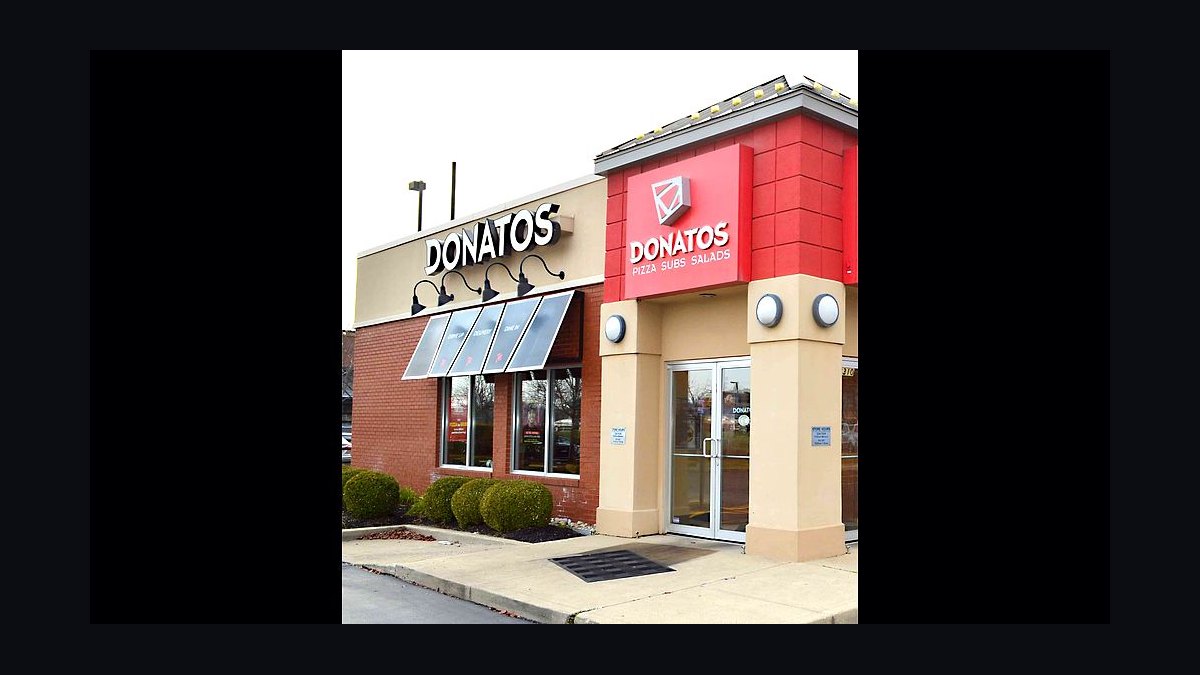
Yes, but only if you're capitalized and experienced: open a Donatos Pizza franchise in 2027 if you hold $250,000 in liquid cash, $1 million net worth, and multi-unit restaurant experience, targeting East Coast or Southeast white-space markets. Expect $541,818-$1,038,174 total investment, a 22-30 month breakeven, and $95,000-$145,000 Year-1 owner benefit. Skip it with under $200,000 liquid or solo first-time ambitions.
A Multi-Unit Operator Weighs the Decision
Picture a Marco's Pizza area developer running four stores across Tennessee. Her stores throw off $380,000 in combined annual owner cash flow, her lender relationship is solid, and she has a construction superintendent who has opened three locations without her on-site every day. She is deciding whether her fifth unit should be another Marco's, or whether she should bring a second brand into the portfolio — specifically, whether to open a Donatos Pizza franchise in the Nashville suburbs where Donatos has no footprint yet.
This is the profile Donatos is actually recruiting in 2027, and it is the profile the unit economics reward. A single-store first-timer evaluating the same decision faces a materially different risk picture: no existing supervisor to absorb into a second payroll, no banking relationship that already trusts their operating history, and no buffer if the build-out runs over budget. The operator in this scenario clears every qualification hurdle Donatos screens for at Discovery Day — $1M+ net worth, $250K+ liquid, and a demonstrated ability to run a kitchen she doesn't personally staff every shift. The first-timer with $220,000 liquid and no multi-unit experience clears none of them, and that gap is the entire reason the franchisor's screening exists: Donatos has watched under-capitalized single-unit operators miss their first-90-day food-cost calibration, blow through working capital before the labor model stabilizes, and show up in the 4-7% annual termination-and-non-renewal rate that the FDD's historical data discloses for exactly that profile.
The decision tree diverges hard at the capital-and-experience fork. For the multi-unit operator, opening a Donatos is a portfolio-diversification play: a second brand reduces single-concept exposure, the $30,000 franchise fee and $541,818-$1,038,174 build-out are a known quantity against her existing credit line, and she can amortize a shared regional manager across both brands' stores within an 18-24 month window. For the first-timer, the same numbers represent nearly all of their net worth concentrated in one location with no operating cushion if the $62,000 monthly breakeven sales line takes 12 months longer to reach than projected — a realistic outcome given that build-out overruns of 15-25% have become common in 2027 due to HVAC and refrigeration cost inflation.
The question "should I open or buy a Donatos Pizza franchise in 2027" therefore has two honest answers depending on which operator is asking. For the capitalized multi-unit operator eyeing a white-space DMA in the Carolinas, Tennessee, Virginia, Maryland, or the Florida panhandle, the math supports moving forward in 2027, with Discovery Day application as the next concrete step. For the solo first-timer without an operating partner or a second income stream to absorb an 18-month ramp, the honest answer is to build capital and operating experience first — potentially through a lower-investment brand like Hungry Howie's or Marco's — before returning to the Donatos conversation with a stronger qualification file.
How the Franchise Qualification and Development Process Works
The mechanism that converts an interested buyer into an open Donatos store runs through a sequential gate structure, and understanding each gate explains why the franchise rewards certain operator profiles and screens out others. The process begins with self-qualification: Donatos' franchise development team pre-screens on net worth ($1M+), liquidity ($250K+ minimum), and credit (FICO 720+ is the de facto bar lenders apply even though Donatos itself doesn't publish a hard credit minimum). An applicant who clears this first gate requests the FDD — Donatos is legally required to deliver it within 14 days of a qualified request under FTC franchise disclosure rules — and should immediately route Items 7, 19, 20, and 21 to a franchise-specific attorney, since those are the investment range, the financial performance representations, the existing-franchisee contact list, and the termination/transfer history respectively.
The second gate is validation: the Item 20 contact list is not a formality, it is the single highest-value diligence step available, because it lets an applicant ask existing operators whether the FDD's investment range and Item 19 performance tiers held up in practice. Calling 8-12 franchisees across at least three different DMAs surfaces the gap between pro-forma and actual — build-out costs that ran over, first-year cash flow that lagged projections, or field-support quality that didn't match the sales pitch. Skipping this step is the single most common mistake first-time buyers make across franchising generally, not just in pizza.
The third gate is Discovery Day at Donatos' Columbus, Ohio headquarters — a two-day, in-person evaluation where the franchisor meets the candidate face-to-face, tours its commissary, and makes its own go/no-go decision. This is a real filter, not a formality: Donatos rejects a meaningful share of Discovery Day attendees, because the company is protecting its brand and its existing franchisees' trade areas from under-qualified operators as much as it is selling territory. A candidate who passes Discovery Day then negotiates territory (trade-area radius, typically targeting 1.5-2 miles of exclusivity) and locks financing — in 2027, SBA 7(a) loans for this segment are running at prime plus 2.25-2.75%, translating to roughly 8.75-9.5% all-in.
The final gate is execution: signing the 10-year Franchise Agreement, engaging a tenant rep for site selection, and moving through a 90-180 day site-selection window followed by 120-180 days of build-out. The entire qualify-to-open cycle typically spans nine to fourteen months from first contact to grand opening, and every gate in that sequence exists to filter for the same thing — an operator who can absorb a slow ramp without running out of cash before the store matures.
Real Numbers, Ranges, and Benchmarks
The 2026 FDD, which governs deals signed through April 2027, puts the realistic all-in investment for a traditional Donatos restaurant at $541,818 to $1,038,174, on top of a flat $30,000 initial franchise fee for a 10-year term. That range breaks down across several line items that matter for budgeting: leasehold improvements and build-out run $185,000-$475,000 depending on whether the site is a conversion or ground-up construction; equipment including Donatos-spec Marsal deck ovens and conveyor equipment runs $145,000-$215,000; signage and the 2026 decor package adds $25,000-$55,000; POS and online-ordering integration (Olo plus the Donatos Rewards API) runs $18,000-$32,000; and three months of working capital reserve should be budgeted at $60,000-$90,000 to cover payroll and rent through the ramp period.

Ongoing fees total 5.75% to 8.75% of net sales before any operating costs: a 4% royalty, a 0.75% national marketing fund contribution, and a 1-4% local cooperative advertising fee that varies by DMA. These fees come off the top of gross sales, meaning they hit before rent, labor, or food cost are paid — a detail that matters when modeling cash flow, since a 1-point swing in co-op ad spend moves owner cash flow by roughly $10,000-$13,000 a year on a median-volume store.
Item 19 of the FDD discloses system-wide franchised average unit volume (AUV) of $1,287,440 for top-quartile stores in fiscal 2025, a system-wide median near $1,053,000, and a system-wide mean closer to $957,664. Store-level EBITDA is disclosed in bands tied to weekly net sales: stores doing $10,000-$15,000 per week run 8-11% EBITDA margins, $15,000-$20,000 per week runs 12-15%, $20,000-$25,000 per week hits 16-19%, and stores clearing $25,000 or more per week deliver 20-23% store-level EBITDA. Translating those bands to payback: a single traditional unit at median AUV breaks even in 30-42 months, while a top-quartile unit breaks even in 22-28 months. Monthly breakeven net sales for an average-cost build sit near $62,000.
On the financing side, the three most active 2027 lenders in the QSR pizza segment are Live Oak Bank, Huntington National, and ApplePie Capital, and SBA 7(a) terms are running prime plus 2.25-2.75% (roughly 8.75-9.5% all-in as of 2027). Real estate economics favor endcap inline sites of 2,400-2,800 square feet with a drive-thru pickup window, typically leasing at $28-$38 per square foot NNN, with landlord tenant-improvement packages in developed markets running $35-$60 per square foot — a material offset against the build-out line item when negotiated well.
Trade-offs Against Competing Pizza Brands and Formats
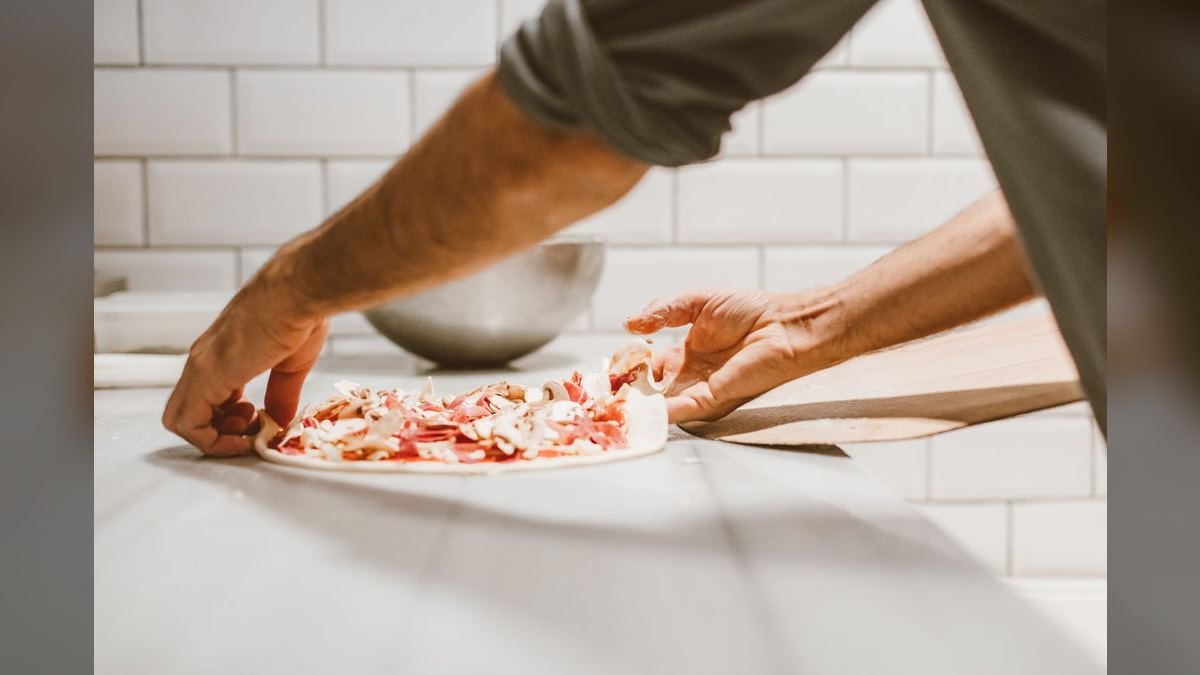
Donatos is not the only franchise option in this category, and the comparison set matters for anyone weighing whether the Donatos investment level is justified relative to its returns. Marco's Pizza, a comparable Midwest-rooted brand, carries a lower investment range of $240,000-$795,000, a 5.5% royalty, and a lower AUV near $850,000 — a better fit for a first-time single-unit operator with $150,000-$200,000 liquid who isn't ready for Donatos' higher capital bar. Mountain Mike's Pizza, concentrated on the West Coast, runs $427,000-$1.04 million with AUV near $1.36 million in mature markets at a 5% royalty — comparable capital intensity to Donatos but in a geography Donatos barely touches. Hungry Howie's, a flavored-crust niche brand, runs a lower $278,000-$555,000 band with AUV around $735,000, suited to secondary-market operators with closer to $120,000 liquid.
Fast-casual formats like Pieology and MOD Pizza sit in a different operating model entirely — lower labor intensity per transaction but also a lower AUV ceiling of $820,000-$950,000 on a $535,000-$890,000 investment, which compresses the return relative to capital employed compared to Donatos' traditional format. An independent, non-franchised pizzeria avoids the franchise fee and royalty stack entirely — saving 8-12% of SG&A that would otherwise go to Donatos — but trades that savings for a slower three-to-five-year ramp to a $700,000-$900,000 AUV ceiling, no national marketing fund, and a 40-50% three-year failure rate for independent restaurants generally, well above Donatos' sub-1% termination rate for multi-unit operators.

A fifth option worth real consideration is buying an existing Donatos resale rather than building new — checking bizbuysell.com listings and the Item 20 transfer disclosures for units coming to market. Resales trade at roughly 2.0-2.5x seller's discretionary earnings, putting established units in the $350,000-$725,000 range, below the low end of new-build cost, while bypassing build-out risk and delivering cash flow from day one rather than after an 18-month ramp. The trade-off is limited inventory and inheriting whatever deferred maintenance or lease terms the prior owner left behind — a resale still needs the same attorney review of transfer terms that a new build needs of Items 7 and 19.
Common Pitfalls and How to Avoid Them
The single most common failure mode is under-capitalization disguised as optimism: a buyer with $200,000-$250,000 liquid treats the low end of the FDD's investment range as the expected outcome rather than the floor, then gets hit by the 15-25% build-out overruns that have become routine in 2027 due to HVAC and refrigeration cost inflation. The fix is mechanical — budget to the high end of the Item 7 range ($1,038,174, not $541,818) when sizing your working capital reserve, and hold back an additional contingency beyond the FDD's own working-capital line rather than treating it as the full cushion.
The second pitfall is absentee ownership during the ramp period. Donatos' own operating model assumes daily owner presence for roughly the first 18 months, because the labor model, shift-lead training, and the first-90-day food-cost calibration — where waste commonly runs 8-11% before settling to a 3-5% steady state — require hands-on correction that a remote owner can't provide through a manager alone. Buyers planning to keep a corporate job and run the store as a side investment should treat that plan as disqualifying unless they have a genuinely experienced, equity-incentivized operating partner running the floor full time.

The third pitfall is skipping or shortcutting the Item 20 validation calls. Buyers under time pressure to close sometimes call two or three franchisees instead of the recommended 8-12 across multiple DMAs, and end up with a skewed, overly rosy picture if those few contacts happen to be the brand's best performers. The fix is procedural: treat the validation-call stage as non-negotiable and specifically ask about build-out cost overruns, actual versus pro-forma Year-1 cash flow, and field-support responsiveness — the three areas where FDD disclosures and lived experience diverge most often.
The fourth pitfall is picking the wrong territory out of impatience. A buyer eager to move quickly sometimes accepts an available site in an already-saturated Ohio or Indiana market rather than waiting for a white-space opening in the Carolinas, Tennessee, or Virginia corridor Donatos is actively developing. Trade-area cannibalization in mature markets caps achievable AUV below $900,000 even with excellent execution, which mechanically extends payback well past the 30-42 month median. The fix is patience: a six-to-twelve month wait for the right white-space territory is cheaper than locking into a saturated one. Finally, over-leveraging — financing more than 75% of total project cost — crushes Year-1 cash flow through debt service before the store has stabilized sales; buyers should stress-test their model assuming a 12-month-slower ramp than the pro forma before committing to a debt structure that leaves no room for that delay.
Related questions
How much does it cost to open a Donatos Pizza franchise?
Realistic total investment is $541,818-$1,038,174 per the 2026 FDD Item 7, plus a $30,000 franchise fee, with $250,000+ liquid cash and $1 million net worth required to qualify.
What is the average revenue of a Donatos Pizza franchise?
System-wide franchised AUV was $1,287,440 for top-quartile stores in fiscal 2025, with a system-wide median near $1,053,000 and a mean closer to $957,664, per Item 19.
Is Donatos Pizza a good franchise to buy in 2027?
It's a strong fit for capitalized multi-unit operators in East Coast and Southeast white-space markets, with 22-30 month breakeven; it's a weak fit for under-capitalized solo first-timers.
How long does it take to open a Donatos franchise from signing to grand opening?
Site selection runs 90-180 days and build-out runs 120-180 days after signing, putting total time from qualification to opening at roughly nine to fourteen months.
What markets is Donatos Pizza expanding into in 2027?
Donatos is actively recruiting in the Carolinas, Tennessee, the Florida panhandle, Virginia, Maryland, and upstate New York — white-space DMAs with demographic alignment but limited current brand presence.
FAQ
What is the total investment needed to open a Donatos Pizza franchise in 2027? Realistic startup costs range from roughly $542,000 to $1,038,000 per the 2026 FDD Item 7, plus a $30,000 franchise fee. You'll need at least $250,000 in liquid cash and a $1 million net worth, though actual costs vary by location, build-out scope, and equipment choices.

How long does it take to break even on a Donatos franchise? Breakeven typically lands around month 22 to 30 for a single traditional store at a top-quartile AUV, and 30-42 months at median AUV. This depends heavily on sales ramp speed, local market saturation, and how tightly you control labor and food cost from day one.
What are the ongoing royalty and marketing fees? You'll pay a 4% royalty, a 0.75% national marketing fee, and a local co-op ad fee ranging from 1% to 4%, for a combined 5.75-8.75% of net sales. These come out of gross sales before rent, labor, or food cost are paid.
What is the typical annual owner benefit for a Donatos franchise? On a median AUV of $1.05 million to $1.29 million, conservative Year-1 cash flow after all franchisor fees is roughly $95,000 to $145,000 in owner benefit, though actual take-home varies with local rent, labor cost, and operational efficiency.
Is prior restaurant experience required to open a Donatos franchise? Multi-unit restaurant experience is strongly preferred, and single-unit first-timers with under $200,000 liquid cash generally don't clear Donatos' qualification bar. The franchisor screens for operators who already understand food cost control and multi-location scaling.
Which markets are best for a Donatos franchise in 2027? The active development corridor is the East Coast and Southeast — specifically the Carolinas, Tennessee, Virginia, Maryland, and the Florida panhandle. These white-space DMAs offer brand-recognition upside and lower lease rates than mature Ohio and Indiana territories.
Sources
- Donatos Pizza 2026 Franchise Disclosure Document (filed April 2026), Items 5, 6, 7, 19, 20, 21
- Donatos Pizza Franchise Cost — donatospizzafranchise.com/investment/
- Franchise Chatter, "Donatos Pizza Franchise Review 2026: Costs, Fees, Average Revenues and/or Profits"
- Vetted Biz, "Donatos Pizza Franchise Insights: FDD, Costs & Fees" (vettedbiz.com/franchises/donatos-pizza)
- 1851 Franchise, "Donatos Pizza Franchise Deep Dive: Units, Costs and Earnings"
- IBISWorld Industry Report 73722B, "Pizza Restaurants in the US" (March 2026)
- BLS Consumer Expenditure Survey, Food Away From Home (Q1 2026)
- International Franchise Association, "Donatos Pizza Heats Up 2026 With Groundbreaking Innovation and National Momentum" (January 2026)
- SBA Franchise Directory listing for Donatos Pizza LLC (current 2027)
- Pizza Today, "Donatos Continues East Coast Expansion, Eyeing North and South Carolina"
Related on PULSE
- Best pizza franchises to buy in 2027
- Should I open or buy an East of Chicago Pizza franchise in 2027?
- Should I open or buy a Gatti's Pizza franchise in 2027?
- Should I open or buy a Pizza Ranch franchise in 2027?
- Should I open or buy a Snappy Tomato Pizza franchise in 2027?
- Should I open or buy a Hunt Brothers Pizza franchise in 2027?
This page will be disappearing soon. Save it to your device for $1 — or read it free while it is here.
@Kory-White- · if Venmo asks, the last 4 of my number are 2012
This page is gone.
This one is off the shelf now. $1 keeps it on your phone for good — the whole page, pictures and diagrams included.
 franchiseShould I open or buy a Goddard School franchise in 2027?
 franchiseShould I open or buy a Pizza Hut franchise in 2027?
 franchiseShould I open or buy a Massage Envy franchise in 2027?
 franchiseShould I open or buy a Valvoline Instant Oil Change franchise in 2027?
 franchiseShould I open or buy an F45 Training franchise in 2027?
 franchiseShould I open or buy a Jeremiah's Italian Ice franchise in 2027?
 franchiseShould I open or buy a Bahama Breeze franchise in 2027?
 franchiseShould I open or buy a Dunkin' franchise in 2027?
 franchiseShould I open or buy a Cook Out franchise in 2027?
 franchiseShould I open or buy a Cinnabon franchise in 2027?