


Should I open or buy a Quiznos franchise in 2027?
Quality
Certified
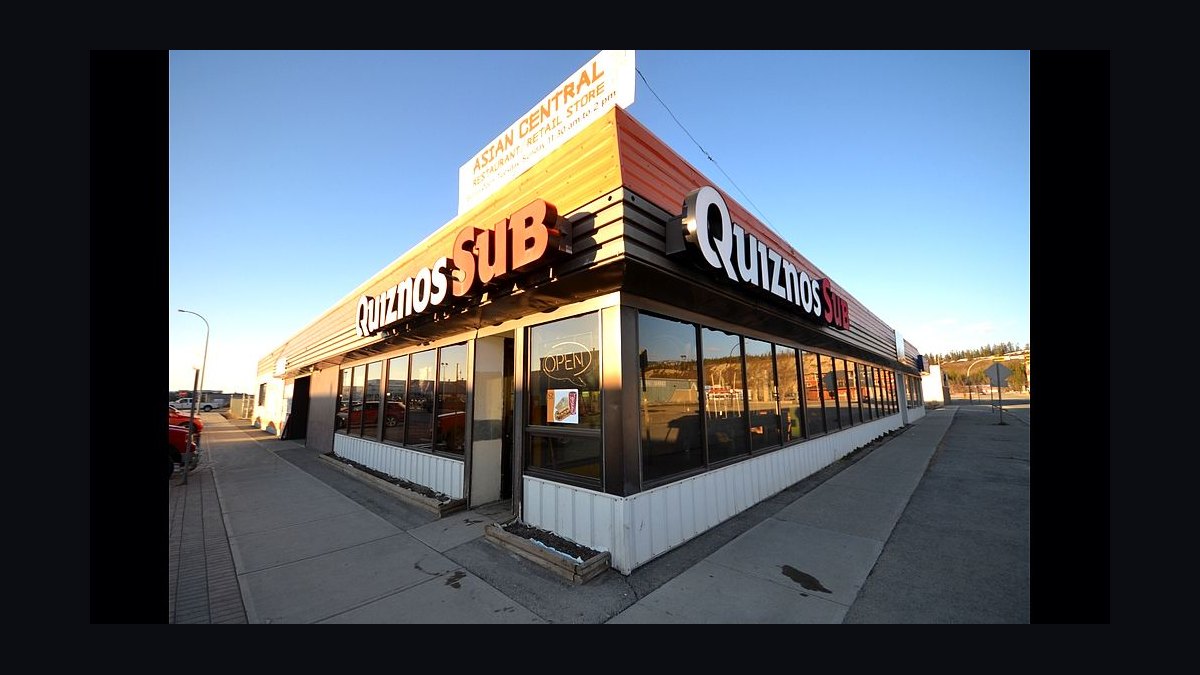
Probably not. Quiznos has shrunk from roughly 4,700 U.S. units in 2006 to about 148 by late 2024, publishes no Item 19 earnings claim, and carries a $220,600–$611,000 Item 7 range. Only a self-financed owner-operator converting cheap real estate they already control should open one — everyone else has better franchise options.
What a Quiznos deal actually is in 2027, and why the shape matters
Strip away the brand nostalgia and a Quiznos agreement in 2027 is a fairly plain license: you pay a $30,000 initial franchise fee, a 5% royalty on gross sales, and a 2% contribution to the national marketing fund, in exchange for the trademark, the operating system, a build-out spec, and a territory that is — bluntly — mostly empty. The brand is owned by REGO Restaurant Group, which also runs Taco Del Mar, following a 2014 Chapter 11 bankruptcy and a 2018 acquisition by High Bluff Capital. The royalty and ad-fund structure was deliberately cut down from the historic 7% royalty plus 4% ad fund that legacy franchisees complained crushed them. That reduction is real and it is operator-friendly. It is also the clearest signal in the whole disclosure document about where the negotiating leverage now sits: a franchisor that has lost most of its system does not price like one that hasn't.
Here is the part most first-time buyers skim past. A franchise fee buys three theoretically distinct things — a trademark customers recognize, an operating system that shortens your learning curve, and a demand-generation engine that fills your dining room. In a healthy system, the third item is the expensive one and it is worth every point of royalty. Chick-fil-A operators pay a lot and get a line out the door. In a declining system, the first two survive but the third quietly evaporates, and you are effectively paying 7% of top-line for a logo and a training binder. The math on that is not subtle: at a $417,000 gross revenue estimate, 7% is roughly $29,000 a year leaving the business, which for many single-unit operators is the difference between a real owner salary and a hobby.
That framing generalizes well beyond sandwiches, and it is worth holding onto if you are shopping other categories too. Any legacy brand in a shrinking segment — casual-dining conversions, mall-based food concepts, older frozen-yogurt or smoothie systems, tanning and video-rental-adjacent retail — presents the same structural question. You are not asking "is this a good brand?" You are asking "does this brand still generate demand I could not generate myself for less than what the royalty costs?" For Quiznos in 2027, honest answers to that question are hard to construct. The toasted-sub differentiator that built the chain in the 2000s is no longer proprietary; every major competitor toasts on request, and consumers do not drive past a Jersey Mike's to find one.
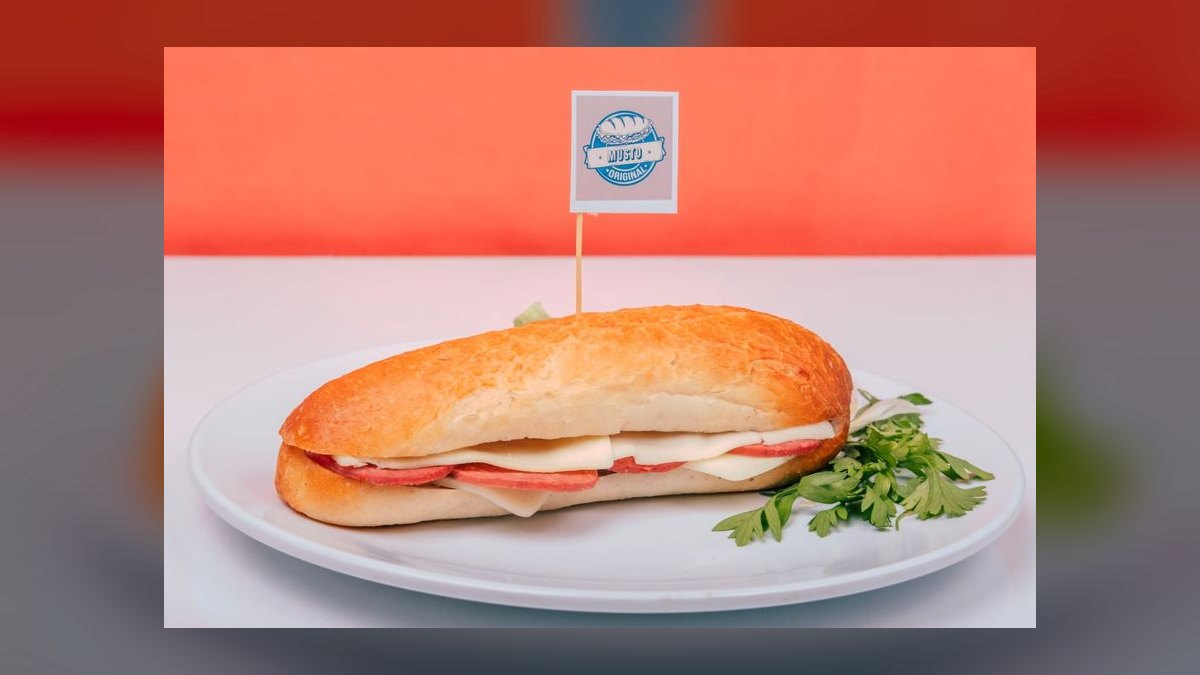
The second structural fact is the absence of an Item 19 financial performance representation. FTC Rule 436 does not require a franchisor to make one — it only requires that any claims made be substantiated and disclosed in Item 19. So a blank Item 19 is legal and common among smaller and struggling systems. But it changes your underwriting entirely. With no franchisor-provided revenue figures, every projection in your business plan is yours to defend, to your lender, your spouse, and yourself. Third-party aggregators peg average gross revenue near $417,139 against a QSR sandwich sub-sector benchmark closer to $608,302 — roughly $191,000 of annual revenue gap. Those third-party numbers are estimates, not audited franchisor data, and you should treat them as directionally useful rather than bankable.
The step-by-step process from first inquiry to open doors
The sequence below is the one a disciplined buyer follows, and it is deliberately front-loaded with diligence that costs a few thousand dollars rather than a few hundred thousand. Most people who lose money on a franchise did the steps in the wrong order — they signed, then found the site, then discovered the lease economics didn't work, then tried to negotiate from a position with zero leverage because the franchise agreement was already executed.
Start by pulling the current Franchise Disclosure Document. Several states maintain free public repositories — California, Illinois, Minnesota, New York, Virginia, and Wisconsin among them — and you can read the document without ever speaking to a franchise development rep. Read Items 5, 6, 7, 19, 20, and 21 line by line. Item 20 is the one people underuse: it lists current and former franchisees with contact information, plus the outlet tables showing openings, closures, transfers, and terminations over the last three years. Pull three consecutive years of FDDs and lay the Item 20 tables side by side. A system where closures exceed openings every year is telling you something the marketing deck will not.
Then work the phones. Call at least eight franchisees off the Item 20 list, and deliberately split them: half operators with three or more years in the system, half who exited or sold in the last 24 months. The departures are the honest interviews. Ask specific, numeric questions — gross sales last year, food cost as a percentage, labor as a percentage, the actual dollar royalty bill, how long the build took versus the estimate, and whether they would sign again. Ask what the franchisor did the last time a competitor opened within a mile. Write the answers down; you are building the Item 19 the franchisor declined to provide.
Only after the phone work do you engage a franchise attorney and a CPA who has restaurant clients — not a general business attorney. The three documents that matter are the franchise agreement, the lease and any lease addendum the franchisor requires, and the personal guarantee. The personal guarantee is where families get hurt: a ten-year lease at $3,500 a month is a $420,000 personal obligation if the unit closes in year two and you signed for the full term. Negotiate a liquidated-damages cap, a guarantee that burns off or steps down after a stated period, and if possible a good-guy clause that limits your lease exposure to a few months' rent if you surrender the space clean.
Real estate comes next, and it should be locked before you sign the franchise agreement rather than after. Demand a five-year primary term with two five-year options, co-tenancy protection so an anchor tenant leaving lets you renegotiate, and a kick-out clause tied to a sales floor. Walk away from a landlord asking $40 per square foot in a trade area where the brand has already failed once. Build-out and permitting typically consume three to six months depending on municipality, health-department scheduling, and whether you are converting an existing food-service space with a grease trap and hood already in place or building from a vanilla shell. Conversions save both money and calendar; a shell build can add sixty to ninety days of permitting alone.
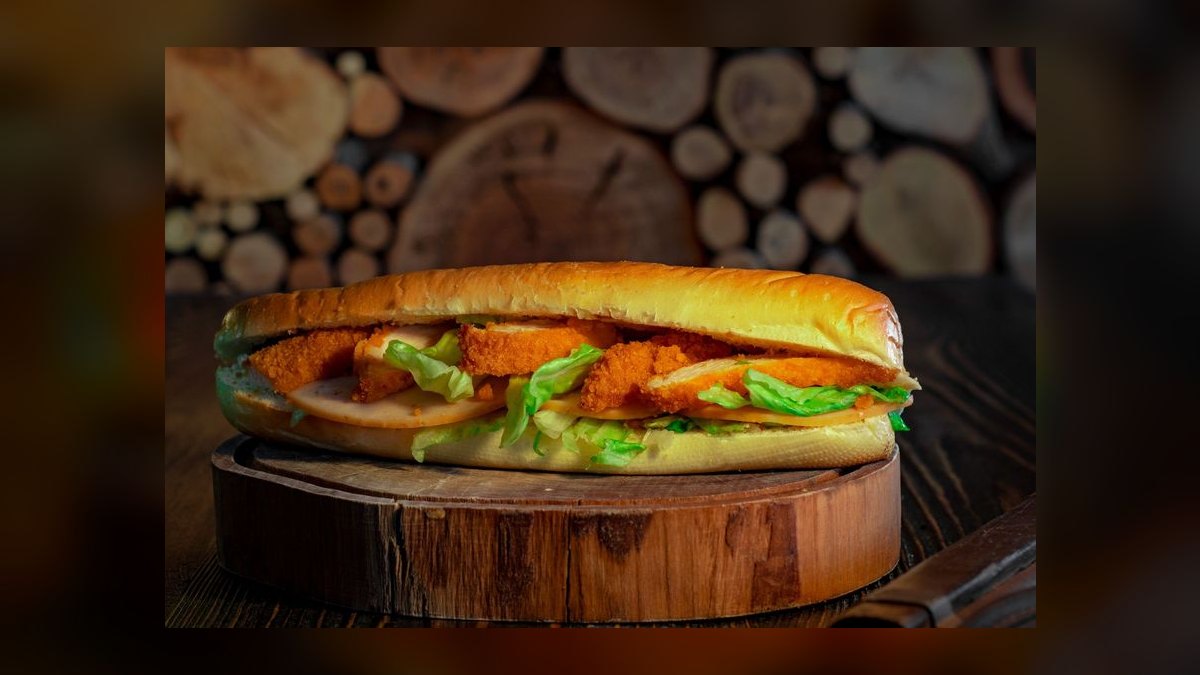
Finally, stress-test before you commit. Model the unit at $350,000, $417,000, and $500,000 in annual revenue. If you cannot fully service debt and pay yourself a $60,000 salary at the $350,000 case, the deal is not a deal — it is a job with negative equity attached. When you do sign, sign one unit. Refuse any area-development commitment, however attractive the fee discount looks.
Costs, timelines, and the ranges a practitioner should plan around
The Item 7 total initial investment runs roughly $220,600 to $611,000. That spread is not noise — it is almost entirely the difference between converting an existing restaurant space and building from a raw shell in an expensive municipality. Inside that range, the $30,000 initial franchise fee is the smallest and least interesting line. Architectural and design fees typically run $15,000 to $60,000. Equipment, fixtures, and signage land somewhere between $75,000 and $175,000. Leasehold improvements and build-out are the swing factor at $80,000 to $280,000. Opening inventory runs $8,000 to $12,000, insurance, training, and permits add $5,000 to $15,000, and the FDD's three-month working capital allowance sits at a thin $7,600 to $34,000.
That working capital line deserves scrutiny, because it is where FDDs across the industry are systematically optimistic. Three months of working capital assumes you reach break-even cash flow in the first quarter. In a system with declining brand awareness, a new unit does not open to a queue — it opens to whoever notices. Plan six to nine months of operating reserve on top of the Item 7 number, which for most sites means an extra $40,000 to $80,000 you should not count as optional.
On the operating side, use QSR-median cost structure as your starting frame and then adjust for your market. Food and packaging typically consume around 32% of revenue, labor around 28% in most markets and higher in states with elevated minimum wages, occupancy around 10% if your lease is sane, royalty plus marketing a fixed 7%, and other operating expenses — utilities, insurance, repairs, third-party delivery commissions, credit card fees, supplies — around 12%. Add those and you are at roughly 89% of revenue before owner compensation, leaving an 11% margin. On $417,000 that is roughly $45,800. On $350,000 it is closer to $38,500 and the percentage compresses further because occupancy and several opex lines are fixed in dollars, not percentages.
Now layer in capital recovery. A $300,000 conversion returning $45,800 a year pays back in roughly six and a half years before any debt service. A $500,000 ground-up build at the same revenue takes closer to eleven years, which is longer than your initial lease term and longer than most franchise agreements run. If you finance $200,000 through an SBA 7(a) loan at prime plus a couple of points on a ten-year amortization, annual debt service lands somewhere near $28,000 — which consumes most of that $45,800 and leaves the owner working full time for what's left. That is the single most important number in this entire analysis, and it is why "can I get a loan?" is the wrong question. The right question is "does this survive a loan?" For Quiznos at typical estimated revenue, mostly it does not.
Third-party delivery deserves its own line because it distorts unit economics in ways that pre-2020 franchise models never contemplated. Marketplace commissions in the 15-30% range on delivery orders mean a store doing 25% of volume through delivery apps is effectively running four to seven points higher blended food-and-fee cost than the same store doing counter business only. Sandwiches travel reasonably well, which is a genuine point in the category's favor, but the commission drag is real and belongs in your model rather than in the optimism column.
Timeline-wise, plan on 30 to 90 days for diligence and document review, 30 to 60 days for site selection and lease negotiation if you don't already control space, 90 to 180 days for permitting and build-out, and two to four weeks of training and pre-opening. Call it seven to twelve months from serious inquiry to open doors on a conversion, and up to eighteen months on a ground-up build in a slow-permitting jurisdiction. Every month of that timeline after lease execution is a month of rent against zero revenue, which is exactly why the working capital line matters more than the franchise fee.
Where buyers get this wrong, and the failure patterns that repeat
The most expensive mistake is the absentee-owner assumption. The model looks fine on a spreadsheet when you plug in a general manager at $55,000 and treat yourself as an investor. It stops working the moment you notice that the 11% margin already assumed 28% labor, and that adding a salaried manager on top of a store doing $417,000 pushes labor past 40%. At that revenue level there is no room for a layer of management between the owner and the line. The operators who make single-unit QSR economics work run the shift themselves for the first eighteen months, compress labor toward 26%, and personally control food cost through portioning discipline that no hourly employee has a reason to enforce.
The second pattern is the multi-unit roll-up built on one pilot. A franchise development rep will offer a discounted fee on a three-unit area development agreement, and it feels like a bulk discount. It is the opposite: you have converted a capped, single-unit risk into an obligation to open stores on a schedule regardless of whether the first one works. In declining systems this has a near-perfect failure record. Sign one. If it works, sign the second one from a position of proof and negotiate better terms because you now have operating data the franchisor wants.
The third is misreading a low royalty as a good deal. REGO cutting royalties from 7% to 5% and the ad fund from 4% to 2% genuinely helps operators, but it also cuts the ad fund's total dollars. Two percent of $417,000 is about $8,300 per unit per year, and with roughly 148 U.S. units that is a national marketing budget of well under two million dollars. Competitors with a thousand-plus units and million-dollar average revenues are outspending that by orders of magnitude. A low royalty on a brand that cannot advertise is not a discount — it is an accurate price.

The fourth is trade-area wishful thinking. Buyers convince themselves that the reason Quiznos left their town is that the previous operator was bad. Sometimes that's true; a single badly run unit does close in an otherwise viable market. More often the unit closed because the category traffic moved to competitors with better throughput and larger ad budgets, and reopening the same brand in the same trade area re-runs an experiment whose result you already have. The honest test: is the nearest Jersey Mike's, Jimmy John's, Firehouse, Potbelly, or Subway at least a mile and a half away, and is there a captive daytime population — office park, hospital campus, industrial employer, university — that generates lunch demand independent of brand pull? If the answer to either is no, the site is doing the work the brand can't, and it had better be a very good site.
The fifth mistake is skipping the resale market. Buying an existing operating unit from a departing franchisee is structurally different from opening a new one, and often better. You get real sales history — actual P&Ls, not estimates — an established customer base, existing equipment, and a lease with known terms. You also inherit the deferred maintenance, the reputation, and whatever reason the seller is leaving. Price an existing unit off a multiple of seller's discretionary earnings, typically in the two-to-three-times range for small QSR, verify the numbers against sales-tax filings and bank deposits rather than the seller's spreadsheet, and confirm with the franchisor that the transfer will be approved and what transfer fee and remodel obligations come with it. Many franchisors require a full remodel to current spec on transfer, which can turn a cheap acquisition into an expensive one overnight.
The sixth is treating the franchisor's field support as guaranteed. Support quality scales with headcount, and headcount scales with royalty revenue. A 148-unit system collects a fraction of what it did at 4,700 units, which means fewer field consultants, less supply-chain leverage on food costs, and slower response when your point-of-sale integration breaks. Ask franchisees directly how many field visits they got last year and how long a support ticket takes. Their answers will tell you more about the system's health than any financial disclosure.
A decision framework: when Quiznos makes sense and when something else does
The framework below is intentionally restrictive, because the honest conclusion for most buyers is "no," and a framework that produces "yes" too easily is not doing its job. Work it in order; a failure at any gate ends the analysis rather than deducting points.
Gate one is real estate control. If you already own the building or hold a below-market lease on a space that was previously food service, you have eliminated the two largest cost drivers — build-out and occupancy — and the entire model changes. Occupancy at 6% instead of 10% adds four points of margin, which on $417,000 is nearly $17,000 a year and cuts payback by more than a year. If you are shopping the open market for a lease at market rent, the deal almost never clears.
Gate two is financing. You should be able to fund the full Item 7 range plus six to nine months of reserve without a bank. This is not a preference; it is a structural read. Lenders are appropriately cautious about brands with declining unit counts and no Item 19, and if you are stretching to qualify for the loan, the debt service will consume the margin. Self-financing is also the only version of this deal where a slow first year is survivable rather than terminal.
Gate three is your tolerance for underwriting without disclosed numbers. Some experienced operators are genuinely fine here — they have run stores, they can read a trade area, and they trust their own model more than a franchisor's. First-time owners are not in that group, and there is no shame in that. If you need an Item 19 to sleep at night, pick a brand that publishes one.
Gate four is competitive geography, tested honestly with a drive rather than a map. Sit in the parking lot at 11:45 on a Tuesday and count cars at the nearest three sandwich competitors. That hour of observation is worth more than any demographic report.

If any gate fails, the alternatives dominate on measurable dimensions. Jersey Mike's runs a substantially higher average unit volume and publishes Item 19 data, at a correspondingly higher total investment. Jimmy John's operates smaller footprints with strong delivery economics. Firehouse Subs, now under Restaurant Brands International, offers development incentives and published unit economics. Penn Station East Coast Subs is the closest direct analog on the toasted-sub positioning with healthier franchisee margins. And the independent play is genuinely credible here: a toasted-sandwich concept under your own brand saves the $30,000 fee and roughly $29,000 a year in royalty and ad fund, and when the franchisor brings no measurable demand lift, that saving is pure margin. You give up the operating system and the supply chain — real losses, especially for a first-time operator — but you also give up nothing on the demand side, which is the whole argument.
Broaden the lens one more step before deciding. If your actual goal is owning a cash-flowing local business rather than specifically selling sandwiches, run the same gates against adjacent categories with better structural math: service franchises with low build-out and no food waste, food concepts inside existing hosts like convenience stores or grocery, ghost-kitchen formats that eliminate dining-room occupancy entirely, or an existing profitable independent restaurant bought on a multiple of verified earnings. Each of those beats a declining-brand ground-up build on payback, and several beat it on downside risk too. The franchise fee is never the expensive part of the decision — the ten-year lease and the personal guarantee are.
Related questions
How do I verify a franchisor's unit counts independently?
Compare the Item 20 outlet tables across three consecutive FDD years — they disclose openings, closures, transfers, and terminations by state. Cross-check against the franchisor's own store locator and third-party franchise databases. Persistent gaps between marketing claims and Item 20 tables are a serious credibility signal.
Is buying an existing franchise unit safer than opening a new one?
Usually yes, because you get verified sales history instead of estimates. Price off two-to-three times seller's discretionary earnings, verify against sales-tax filings and bank deposits, and confirm the franchisor's transfer fee plus any mandatory remodel-to-current-spec obligation before you agree on price.
What does a blank Item 19 actually mean legally?
Nothing illegal. FTC Rule 436 requires substantiation for claims made, not that claims be made at all. A blank Item 19 also means franchise sellers cannot legally give you revenue figures verbally — if a development rep quotes numbers, that is a violation and a reason to walk.
How much working capital should I hold beyond the FDD estimate?
Plan six to nine months of full operating expenses, not the three months many Item 7 tables assume. For a store with roughly $30,000 monthly operating costs, that is an extra $40,000 to $80,000 beyond the disclosed range — the reserve that determines whether a slow opening is survivable.
Does a lower royalty rate make a weak franchise worth it?
Rarely. Royalty is the price of demand generation, so a cut royalty usually reflects a cut ad fund. Two percent of a $417,000 average across roughly 148 units funds very little national awareness. Evaluate total ad dollars per unit, not the percentage.
FAQ
What is the total investment range to open a Quiznos franchise in 2027?
The FDD Item 7 range runs roughly $220,600 to $611,000, covering the $30,000 initial franchise fee, architectural fees, equipment, build-out, opening inventory, insurance and permits, and a three-month working capital allowance. The spread is driven almost entirely by whether you convert an existing food-service space or build from a vanilla shell.
Does Quiznos disclose earnings figures I can underwrite against?
No. The current disclosure document contains no Item 19 financial performance representation, so there are no franchisor-provided revenue or profit figures. Third-party estimates place average gross revenue near $417,139 against a sub-sector benchmark closer to $608,302, but those are outside estimates, not audited franchisor data, and individual results vary widely.
How many Quiznos locations are still operating?
Roughly 148 U.S. units as of late 2024, plus a comparable number internationally, down from about 4,700 domestic units in 2006. That is a decline of roughly 97% of the domestic footprint over two decades. New openings are rare and concentrated in conversions rather than broad expansion.
What payback period should I model?
For a $300,000 conversion generating around $45,800 in annual pre-debt cash flow, payback lands near six and a half years. A $500,000 ground-up build stretches past ten years, which exceeds most initial lease terms. Year one is frequently cash-flow negative once build-out overruns and slow-ramp revenue are accounted for.
Can I finance this with an SBA loan?
It is difficult. Lenders scrutinize declining systems and the absence of an Item 19 makes projections hard to defend. Even when approved, roughly $28,000 in annual debt service on a $200,000 ten-year note consumes most of the modeled cash flow — so the practical bar is being able to self-finance rather than qualify.
Is this a reasonable first franchise for a new owner?
Generally no. A shrinking system, no disclosed unit economics, and a high investment relative to estimated revenue make it a poor first purchase. It fits a narrow profile: an experienced operator converting cheap real estate they already control, funding it themselves, and capping exposure at a single unit.
Sources
- https://www.ftc.gov/business-guidance/resources/franchise-rule-compliance-guide
- https://www.ftc.gov/business-guidance/industry/franchises
- https://dfpi.ca.gov/franchise-investment-law/
- https://www.dos.ny.gov/licensing/franchise/franchise.html
- https://mn.gov/commerce/industries/securities/franchise/
- https://www.sba.gov/funding-programs/loans/7a-loans
- https://www.bls.gov/iag/tgs/iag722.htm
- https://www.nrn.com/
- https://www.qsrmagazine.com/
- https://www.restaurantdive.com/
Related on PULSE
This page will be disappearing soon. Save it to your device for $1 — or read it free while it is here.
@Kory-White- · if Venmo asks, the last 4 of my number are 2012
This page is gone.
This one is off the shelf now. $1 keeps it on your phone for good — the whole page, pictures and diagrams included.
 franchiseShould I open or buy a Domino's franchise in 2027?
 franchiseShould I open or buy a Goddard School franchise in 2027?
 franchiseShould I open or buy a Wendy's franchise in 2027?
 frShould I open or buy a McDonald's franchise in 2027?
 franchiseShould I open or buy a UPS Store franchise in 2027?
 franchiseShould I open or buy an F45 Training franchise in 2027?
 franchiseShould I open or buy a Chipotle franchise in 2027?
 franchiseShould I open or buy a Firehouse Subs franchise in 2027?
 franchiseShould I open or buy a Smoothie King franchise in 2027?
 franchiseShould I open or buy a Bojangles franchise in 2027?