


Should I open or buy a Penn Station East Coast Subs franchise in 2027?
Quality
Certified
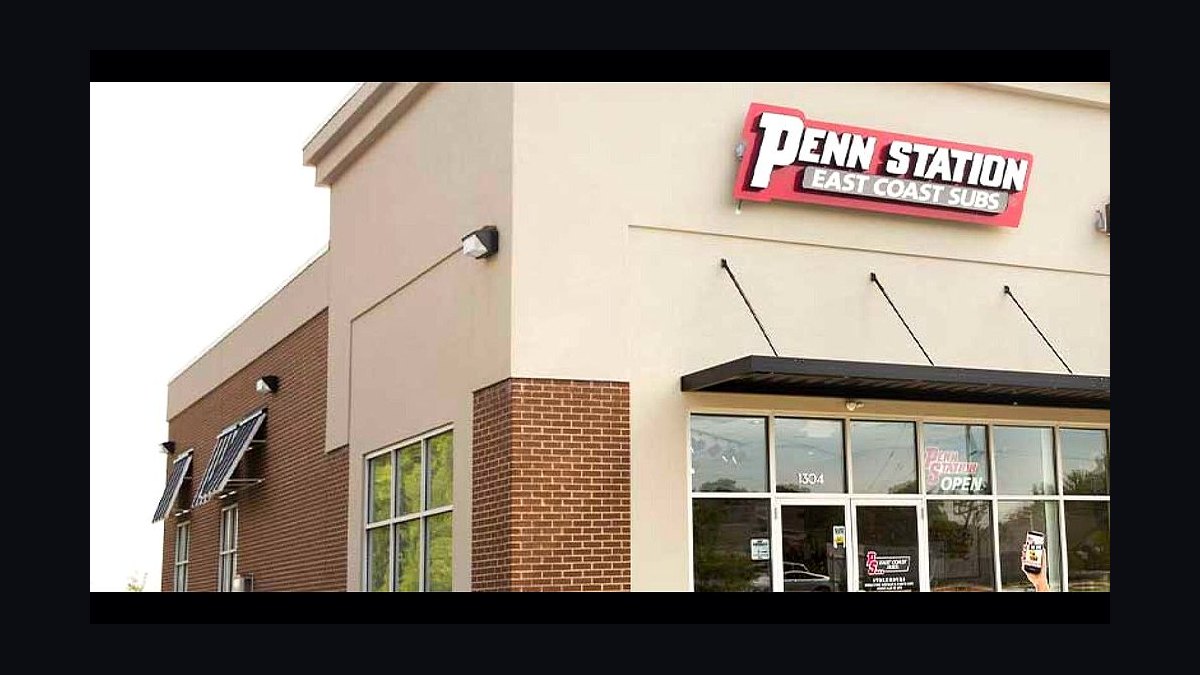
Opening or buying a Penn Station East Coast Subs franchise in 2027 makes sense only if you bring $300,000+ in liquid capital, prior multi-unit quick-service experience, and a Midwest or Southeast trade area where the brand already has recognition. The total investment runs $507,500–$858,750, royalties and marketing fees total roughly 8% of gross sales, and realistic payback sits at 7–9 years — first-time operators without that capital cushion should look elsewhere.
What it is and why it matters
Penn Station East Coast Subs is a grilled-sandwich franchise concept built around a signature Philly cheese-steak cooked on a flat-top grill, alongside hot subs, fresh-cut fries, and fresh-squeezed lemonade. The system operates 300+ units, concentrated heavily in Ohio, Kentucky, Indiana, and the broader Midwest, with a Cincinnati-based franchisor and corporate headquarters. The brand's core differentiator against Subway, Jersey Mike's, and Firehouse Subs has always been the hot-grilled format rather than cold cut-and-stack assembly — a slower ticket time but a defensible flavor position.
Why this matters for a 2027 buyer specifically: the company rebranded to "Penn Station Sandwiches" in 2026, adding wraps, bowls, and 9-grain bread SKUs to chase office catering and health-conscious dayparts it had been ceding to competitors. That rebrand is a tacit admission that the pure grill-only positioning was capping unit volume. Anyone evaluating this franchise in 2027 is evaluating a brand mid-transition, not a mature, static system — the menu you train on at Discovery Day may already differ meaningfully from the menu that built the historical Item 19 numbers you're underwriting against.
The decision to open a location under this system is fundamentally a capital-allocation decision wrapped in an operations question. You are not just buying a recipe and a sign; you are buying a royalty obligation (6% of gross sales), a national marketing assessment (2%), a local marketing minimum (roughly 2%), and a multi-year commitment to a specific piece of equipment — the cheese-steak grill — that dictates throughput, labor training time, and ultimately your ceiling on ticket volume during rush periods. Understanding that the grill is both the brand's competitive moat and its operational bottleneck is the single most important mental model before signing anything.
Trade area matters disproportionately here compared to more geographically diversified concepts. Penn Station's brand equity is regional, not national — a resident of Columbus recognizes the name and has a mental map of the menu; a resident of Sacramento does not. That asymmetry means the same investment dollar produces very different Year-1 sales depending entirely on whether you're opening inside or outside the brand's existing footprint, which is why market selection carries more weight in this system than in a nationally uniform concept like Subway or McDonald's.
The step-by-step process

Moving from interest to signed franchise agreement follows a fairly standard but rigorous sequence, and skipping steps is the single most common source of buyer's remorse in this segment.
Start with a capital and credit self-assessment before you ever contact the franchisor. Most Penn Station franchisees who succeed carry $300,000+ in liquid capital and $1,000,000+ in net worth, plus a FICO score north of 700, because SBA 7(a) lenders will not approve marginal borrowers for a restaurant concept with this cost structure. If you fail this checkpoint, stop — pursuing a lower-capital concept is a better use of your time than pursuing a Penn Station location you can't actually finance.
Next, request the current Franchise Disclosure Document and read Items 7, 19, and 20 in full before any exploratory call. Item 7 gives the total investment range; Item 19 gives historical sales performance (average unit volume, and the spread between top- and bottom-quartile units); Item 20 gives a list of current and former franchisees you're entitled to contact. Cross-reference Item 20 against a map of your target trade area to identify the 8–12 closest existing operators — these are the people whose answers will actually be relevant to your market.
Then comes validation calling — the step most prospective buyers under-invest in. Call at least 8–10 franchisees from the Item 20 list and ask specific, falsifiable questions: what was your actual Year-1 gross, did you hit the system average unit volume by Year 2, what is your honest store-level EBITDA margin, and would you sign again today. Vague or evasive answers are themselves data. If a majority of your calls come back below the system's published average, treat that as a signal about your specific geography, not an outlier.
With validation calls complete, move into site selection and lease negotiation, typically for an 1,800–2,400 square foot inline space with strong daytime population density nearby. Run foot-traffic or demographic data for your top two or three candidate sites before signing a letter of intent — you want to confirm the published average unit volume is a realistic target for that specific address, not just for the system as a whole.
Once a site is under control, move to lender pre-qualification. SBA 7(a) financing is the standard instrument for this investment size, and locking a rate quote early protects your underwriting model from drifting rates during the months it takes to build out. From there, Discovery Day at the Cincinnati headquarters is your last real diligence opportunity before signing — a multi-day immersion with existing operators and training staff where you should arrive with a written list of open questions rather than relying on memory.
Costs, timelines, and typical ranges
The total initial investment to open a Penn Station location ranges from $507,500 to $858,750, covering the $25,000 initial franchise fee, leasehold improvements, the signature grill and kitchen equipment package, signage, point-of-sale technology, opening inventory, training travel, insurance, and roughly three months of working capital. The grill and associated hood and ventilation equipment alone typically runs $135,000–$195,000, reflecting the specialized nature of the cooking line that differentiates this brand from a simple cold-sandwich operation.
Ongoing costs stack on top of that initial outlay: a 6% royalty on gross sales, a 2% national marketing fund contribution, and a local marketing minimum around 2%, for a combined 8–10% of top-line revenue committed to the franchisor and marketing obligations before you cover rent, labor, or cost of goods. Average gross sales across the system sit near $771,000 per unit, though the spread is wide — top-quartile locations exceed $1,000,000 while bottom-quartile units run closer to $510,000–$620,000, meaning trade-area selection can swing your revenue by nearly double.
Store-level EBITDA margins for a healthy unit at or above average volume land in the 12–15% range. Applying that margin to the system average implies roughly $92,000–$116,000 of annual cash flow before debt service, but a financed build at typical SBA terms consumes a substantial share of that — leaving many owner-operators with first-year take-home in the $58,000–$95,000 band once debt service is deducted, and considerably less if the unit underperforms.
Timeline-wise, expect four to seven months from signed lease to grand opening once you account for permitting, build-out, equipment installation, and the mandatory multi-week training program at company headquarters. Breakeven on operating cash flow typically arrives between month 14 and month 22, and full payback of the initial investment — recovering your total capital outlay, not just clearing monthly operating costs — generally takes 7 to 9 years. That payback horizon is longer than many prospective franchisees initially assume, and it's a direct function of the combined royalty-plus-marketing load stacked against a mid-size sandwich-segment average ticket.
Working capital sizing deserves particular attention: budget for a minimum of three months of full payroll and rent obligations, because ramp to a stabilized run-rate commonly takes four to seven months. Buyers who size working capital to the low end of the FDD range and then hit a slower-than-expected ramp are the ones who experience real financial stress in months five through fourteen, precisely when a green crew is still learning the grill's throughput demands.
Where teams get it wrong
The most common and costly mistake is treating this as a passive investment. The current franchise agreement does not support an absentee or purely semi-absentee ownership model — the system expects an approved, engaged operating partner on-site or closely managing day-to-day operations. Franchisees who tried a "hire a general manager and check in weekly" approach are disproportionately represented in the bottom-quartile sales band, because the grill's throughput and the brand's target ticket times require hands-on labor management that a disengaged owner simply doesn't provide.
A second frequent error is underwriting the deal against the system-wide average unit volume rather than a conservative, market-specific estimate. The $771,000 average blends strong Midwest-cluster units with weaker outlying locations; running your personal financial model at the average rather than at a discounted, geography-adjusted figure sets an unrealistic expectation for cash flow and debt service coverage. Prudent buyers model against a figure meaningfully below the published average and treat outperformance as upside rather than baseline.
Third, many first-time restaurant buyers underestimate how unforgiving the cheese-steak grill is as a piece of equipment to staff around. Throughput collapses quickly under an untrained crew, and the brand's target ticket time is difficult to hit without staff who have logged real hours on that specific line. Buyers coming from outside food service, or from a cold-sandwich background, often discover this only after opening, when labor turnover during the first few months creates a compounding throughput problem during peak hours.
Fourth, coastal and dense-urban buyers frequently misjudge the real estate economics. Triple-net rent in high-cost coastal markets can run well above what the brand's revenue ceiling supports, compressing margin even at strong absolute sales figures. The unit economics here were built around Midwest and Southeast rent structures, and importing the concept into a materially higher-rent market without adjusting expectations for margin compression is a recurring cause of underperformance.

Finally, teams evaluating this opportunity in 2027 specifically sometimes fail to pressure-test the 2026 menu rebrand during their franchisee validation calls. Asking existing operators generic questions about historical sales misses the point if those sales were generated under the old, simpler menu. A thorough buyer asks specifically how the new wraps, bowls, and expanded bread offerings have affected ticket times, labor complexity, and food cost since the rebrand — that's forward-looking diligence the FDD's historical Item 19 numbers cannot fully capture.
Decision framework: when to choose what
Not every prospective operator should pursue this specific franchise, and the right choice depends heavily on your capital position, experience level, and target geography. A useful framework separates buyers into three tiers based on available liquid capital and existing operating experience.

Buyers with under $250,000 in liquid capital and no prior multi-unit restaurant experience are generally better served by a lower-cost sandwich or fast-casual concept with a total investment closer to $260,000–$400,000, where the learning curve and capital exposure are more forgiving of first-time mistakes. Buyers in the $300,000–$500,000 liquid capital range, especially those with prior multi-unit quick-service management experience, are the core fit for a single Penn Station location — particularly inside the brand's existing Midwest or Southeast recognition footprint. Buyers with $500,000+ in liquid capital and a track record of operating multiple units simultaneously are well positioned to pursue an area-development agreement for three to five units, capturing shared labor pools and centralized management efficiencies that meaningfully improve store-level margins versus a single standalone location.
Geography should also gate the decision independent of capital: if your target market sits outside the Midwest or Southeast corridor where Penn Station has organic brand recognition, you're effectively asking customers to try an unfamiliar concept against entrenched, nationally recognized competitors like Jersey Mike's and Firehouse Subs — a materially harder marketing lift that the franchise's local marketing minimum was not sized to overcome on its own.
Related questions
How much does it cost to open a Penn Station franchise?
Total initial investment ranges from $507,500 to $858,750, covering the franchise fee, build-out, the signature grill equipment, technology, initial inventory, and working capital, per the current Franchise Disclosure Document Item 7.
What is the average sales volume for a Penn Station location?
System average unit volume is roughly $771,000, though top-quartile units exceed $1,000,000 and bottom-quartile units run closer to $510,000–$620,000 depending heavily on trade area strength.
Can I own a Penn Station franchise without running it myself?

No — the franchise agreement expects an engaged, approved operating partner on-site rather than a purely absentee owner; franchisees who tried remote management underperformed the system average.
How does the 2026 rebrand affect a 2027 franchise purchase?
The rebrand to "Penn Station Sandwiches" adds wraps, bowls, and new bread SKUs aimed at catering and health-conscious dayparts, introducing menu complexity risk that buyers should specifically ask about during franchisee validation calls.
What other sandwich franchises should I compare against Penn Station?
Cousins Subs, Jon Smith Subs, Capriotti's, and Jersey Mike's all compete in the same segment with different capital requirements and average unit volumes, and comparing their FDDs side by side is a reasonable part of due diligence.
FAQ
What is the total investment needed to open a Penn Station franchise in 2027? The total investment ranges from $507,500 to $858,750, covering the franchise fee, equipment, leasehold improvements, and opening inventory. Most buyers finance the majority of this through SBA 7(a) loans.
How much can I expect to earn in the first year as an owner-operator?

First-year cash flow for an owner-operator typically falls between $58,000 and $95,000 after debt service, based on the system's average unit volume and the combined royalty and marketing fee structure.
How long does it take to break even and fully pay back the investment? Breakeven on operating cash flow usually arrives between month 14 and month 22. Full payback of the initial capital outlay typically takes 7 to 9 years depending on location performance and financing terms.
Do I need prior restaurant experience to open this franchise successfully? Yes, prior multi-unit quick-service or fast-casual management experience is strongly recommended. First-time operators with under $300,000 in liquid capital are generally advised to consider a different concept.
What are the best locations to open a Penn Station franchise? Dense Midwest or Southeast trade areas where the brand already has recognition perform best, since those markets provide built-in customer awareness that newer, unfamiliar territories lack.
Does the 2026 menu rebrand change the risk profile of this opportunity? Yes — the shift to "Penn Station Sandwiches" adds wraps, bowls, and new bread options aimed at catering, which increases menu complexity and should be specifically discussed with existing franchisees before signing.
Sources
- Franchise Business Review — Penn Station Franchisee Satisfaction Report — franchisebusinessreview.com/top-franchises/penn-station
- Entrepreneur Franchise 500 — Penn Station East Coast Subs Profile — entrepreneur.com/franchises/directory/penn-station-east-coast-subs/282673
- Restaurant Business — "Subway is rapidly losing its sub sandwich dominance" — restaurantbusinessonline.com/financing/subway-rapidly-losing-its-sub-sandwich-dominance
- Fast Casual — coverage of Penn Station menu and brand updates — fastcasual.com
- PR Newswire — Penn Station Sandwiches brand and menu announcements — prnewswire.com
- U.S. Small Business Administration — SBA 7(a) loan program overview — sba.gov/funding-programs/loans/7a-loans
- IBISWorld — Sandwich & Sub Stores in the US industry reports — ibisworld.com
- U.S. Bureau of Labor Statistics — CPI Food Away From Home data — bls.gov/cpi
Related on PULSE
- Should I open or buy an East Coast Wings + Grill franchise in 2027?
- Should I open or buy an East of Chicago Pizza franchise in 2027?
- Should I open or buy an East Side Mario's franchise in 2027?
- Should I open or buy a Lenny's Grill & Subs franchise in 2027?
- Should I open or buy a Jon Smith Subs franchise in 2027?
- Should I open or buy a Port of Subs franchise in 2027?
This page will be disappearing soon. Save it to your device for $1 — or read it free while it is here.
@Kory-White- · if Venmo asks, the last 4 of my number are 2012
This page is gone.
This one is off the shelf now. $1 keeps it on your phone for good — the whole page, pictures and diagrams included.
 franchiseShould I open or buy a Chipotle franchise in 2027?
 franchiseShould I open or buy a Cook Out franchise in 2027?
 franchiseShould I open or buy a Mac Tools franchise in 2027?
 franchiseShould I open or buy a Servpro franchise in 2027?
 franchiseShould I open or buy a Little Caesars franchise in 2027?
 franchiseShould I open or buy a Bruster's Real Ice Cream franchise in 2027?
 franchiseShould I open or buy a Dunkin' franchise in 2027?
 franchiseShould I open or buy a Take 5 Oil Change franchise in 2027?
 franchiseShould I open or buy a Supercuts franchise in 2027?
 franchiseShould I open or buy an Orangetheory Fitness franchise in 2027?