


Should I open or buy a Krispy Kreme franchise in 2027?
Quality
Certified
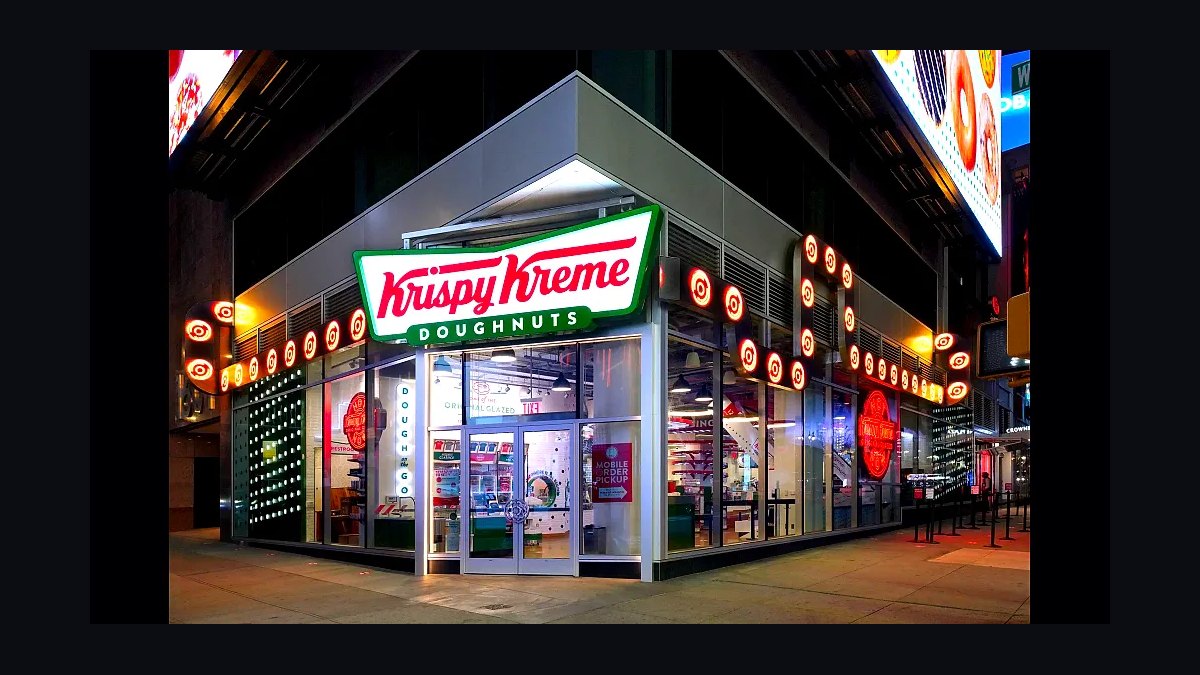
Probably not, unless you already run multiple QSR units with seven-figure liquidity and locked suburban real estate. Krispy Kreme in 2027 is a turnaround brand mid-refranchising, with a collapsed McDonald's partnership behind it and negative systemwide comps. Experienced multi-unit operators buying divested company stores at a discount can win; first-time solo franchisees generally cannot.
The outcome you should expect
Set your expectations by format, because "a Krispy Kreme franchise" is really three different businesses wearing the same logo, and they behave nothing alike on a P&L.
A Factory Store is a small manufacturing plant with a retail counter bolted to the front. It has the glass wall, the conveyor, the glaze waterfall, the "HOT NOW" sign — and it produces doughnuts not just for its own counter but for a wholesale route feeding grocery, convenience, and club doors within a radius. That wholesale layer, called Delivered Fresh Daily (DFD) in Krispy Kreme's language, is where the volume lives. The retail counter is the marketing; the route is the revenue. If you underwrite a Factory Store on retail traffic alone, you will miss badly, because you have paid for production capacity you are not selling through.
A Tunnel Oven Shop is the middle child: smaller production capability, less theatre, lower build cost, correspondingly lower ceiling. It can supply a modest DFD footprint but not a metro-scale one.
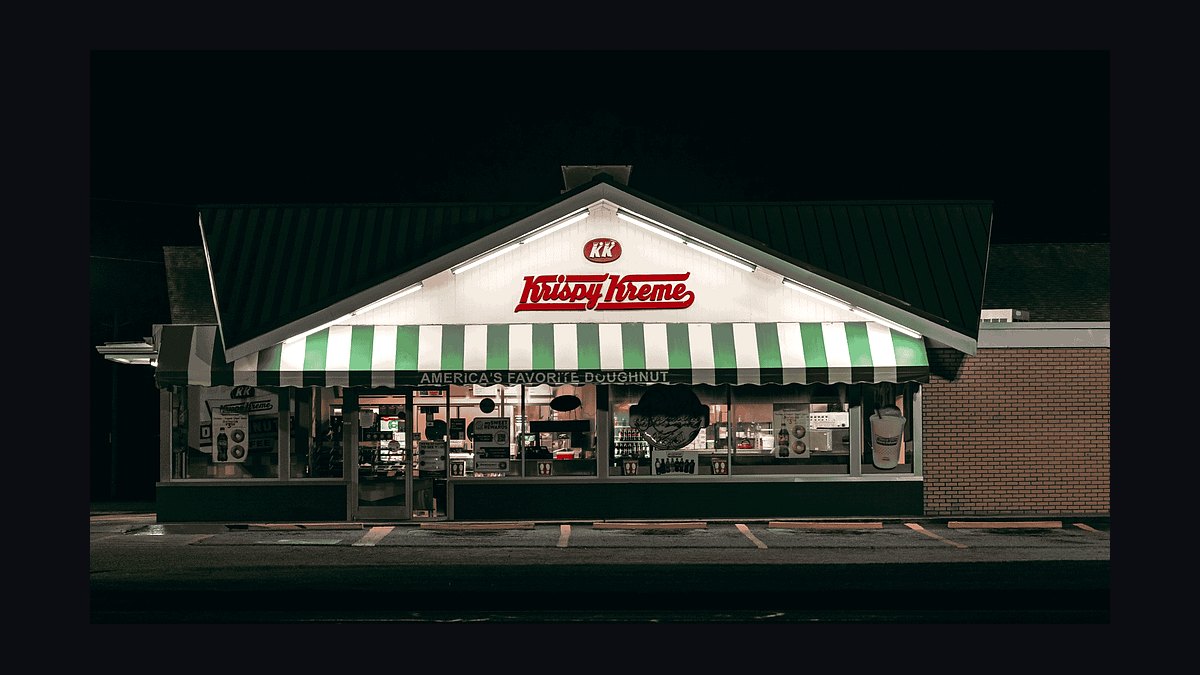
A Fresh Shop produces nothing. It is a retail box supplied daily by a nearby producing hub. Build cost is the lowest of the three, but so is the margin structure, because you are buying finished product from the hub rather than manufacturing it yourself. A Fresh Shop is essentially a retail concession on someone else's production economics — often the franchisor's, sometimes another franchisee's. That dependency is the single most under-modeled risk in the format: your cost of goods, your delivery reliability, and your product freshness window are all controlled by a party you do not own.
So the honest expected outcome looks like this. If you are a multi-unit operator with existing back-office infrastructure, buying refranchised company stores in a market where you can build a real DFD route, you should expect a slow, grinding, capital-intensive business that eventually produces respectable cash-on-cash returns in years four through seven — and you should expect to earn those returns from route density and labor discipline, not from brand pull. If you are a first-timer with one Fresh Shop in a metro that already has Krispy Kreme product sitting on the Walmart shelf at a lower price point than your counter, you should expect thin margins, a long payback, and a competitor that is literally your own brand.
The category context matters here too. The doughnut business in the US is mature and grows roughly at the pace of population and inflation. That means share is taken, not created. Every new unit in a trade area is fighting over a fixed pool of doughnut occasions against Dunkin', regional craft shops, grocery in-store bakeries, and the increasingly aggressive convenience-store coffee-and-pastry bundle from operators like Wawa, Sheetz, and QuikTrip. A flat category punishes operators who assumed the brand would do the selling.
What drives that outcome
Four variables move the needle far more than anything in the marketing deck. Rank your diligence accordingly.
Wholesale route density. For any producing format, the DFD door count inside your territory is the dominant input. Doughnut production has high fixed cost — the fryer line, the proofer, the glazer, the overnight labor crew — and those costs are the same whether you run the line at 40% or 85% of capacity. Route density is how you fill the line. An operator with 60 committed doors amortizes production across a much larger revenue base than one with 15, and the difference shows up almost entirely in EBITDA, not in sales. This is why the same store, in the same city, can be a good business for one owner and a bad one for another.
Labor as a percentage of sales. Doughnut production is not assembly; it is a multi-stage overnight process with a real skill component. Mix, proof, fry, glaze, pack, load routes, then open a retail counter with a separate crew. Compared with a coffee-forward concept where a two-person shift can run the whole box, this format carries structurally higher labor. Every point of labor you cannot squeeze out comes straight off the bottom line, and unlike rent it is not fixed at signing — it drifts with local wage floors, which have been climbing across most US metros.
Real estate format. Suburban arterial pads with a drive-thru have outperformed mall and inline locations by a wide margin across the whole QSR sweets category, and the gap has widened as mall foot traffic eroded structurally rather than cyclically. A drive-thru changes the daypart mix — it captures the commute occasion, which is the highest-frequency doughnut occasion there is. An inline mall unit captures the browse occasion, which has been shrinking for a decade. If your broker brings you a mall pad, that is not a discounted opportunity; it is a discounted format.

Franchisor stability. You are buying a system, and the system is mid-restructure. The McDonald's distribution partnership — announced as a major national expansion of DFD — was terminated in 2025 by mutual agreement after the economics did not work at scale, with the company publicly citing unsustainable operating costs. That is a material data point about DFD margin discipline, not just a lost customer. Simultaneously the company has been refranchising: selling company-operated stores to experienced operators to shift capital off its own balance sheet. Refranchising is genuinely good for the right buyer — it creates negotiating leverage and lets you buy an operating store with a known sales history instead of a greenfield guess — but it also signals that the franchisor prefers your capital to its own in these markets. Read that signal honestly.
Benchmarks and realistic ranges
Do not underwrite from any number you read on the internet, including this page. Every figure that matters is in the current Franchise Disclosure Document, and it changes year to year. What follows is how to *read* those numbers, plus the general shape of the category, which is stable enough to reason about.
Item 7 is your investment range, and it is incomplete by design. It covers the franchise fee, build-out, equipment, signage, technology, initial inventory, and a stated period of working capital. It does not cover real estate acquisition if you are buying the dirt, and its working-capital line is almost always thinner than reality for a production format with a route business. Add your own ramp reserve on top — six months of full operating cost, not three, because a producing store with a route needs time to build the door count that makes the line profitable.
Item 19 is optional for the franchisor and selective by nature. When a financial performance representation is provided, read exactly which subset of stores it describes: company-operated only, franchised only, all units, top quartile, units open more than a year. A median AUV drawn from mature company stores in established markets tells you very little about a new franchised unit in a new market. The standard defensive move is to underwrite at a meaningful discount to whatever Item 19 shows — commonly 25 to 30 percent — and then check whether the deal still services debt. If it only works at the disclosed median, it does not work.

Item 20 is the most honest section in the document. It gives you unit counts by state and, critically, transfers, terminations, non-renewals, and ceased operations by year. A brand can look healthy in Item 19 and rotten in Item 20. Ratio the closures and transfers against total units for three consecutive years. Rising transfer volume in a refranchising cycle is expected; rising terminations and ceased operations is a different story.
Item 21 gives you the franchisor's own audited financials. Since the parent company is publicly traded, cross-check that against the SEC filings — the 10-K and quarterly reports will tell you about systemwide comparable sales, impairment charges, and segment-level margin far more candidly than any franchise brochure. If systemwide comps are negative while you are being sold a growth story, that discrepancy is the conversation to have at Discovery Day.
Cost structure to model. For a producing doughnut format, plan around food and packaging cost in the mid-twenties as a percentage of sales, labor in the high twenties to low thirties, occupancy in the high single digits to low teens depending on market, and combined royalty plus advertising contributions per the FDD. Distribution cost — vehicles, fuel, drivers, returns on unsold wholesale product — is a line item that pure retail concepts do not have and that first-time operators routinely forget. Wholesale stale returns in particular can quietly eat several points of margin if your route forecasting is sloppy.
Financing. Most deals in this size range close through SBA 7(a) loans, sometimes stacked with equipment financing and personal equity, occasionally with a ROBS structure for the equity slice. Lenders underwriting franchise deals will want to see debt service coverage comfortably above 1.25x, and prudent operators target 1.5x on their own conservative case. Check the SBA Franchise Directory for current eligibility status before you build a capital stack around it. Note that lenders track brand-level default rates; a system in a public turnaround will face tighter terms and more scrutiny than a brand with clean momentum, which shows up as a higher rate or a larger equity requirement.

The comparison set. If you are evaluating whether to open a Krispy Kreme at all, price it against the adjacent alternatives on the same conservative basis: drive-thru-only coffee concepts, mature doughnut-and-coffee brands, single-product dessert franchises, and building an independent craft shop with no royalty at all. The independent path deserves genuine consideration for a single-unit operator — it trades brand recognition and a proven operations playbook for full margin capture and complete control over the menu. For an owner-operator who intends to be in the building every day and who has real product skill, that trade is often better than it looks on paper.
Risks, edge cases, and failure modes
Channel cannibalization. This is the risk most specific to this brand and the one most often missed. Krispy Kreme sells packaged doughnuts through grocery, club, and convenience channels at price points well below a fresh retail counter. If your trade area is already saturated with DFD doors, you are opening a store whose product is available three miles away at a lower price, in a channel the customer already visits weekly. Map every existing DFD door in and around your proposed territory before you sign anything, and understand precisely what territorial protection — if any — the franchise agreement gives you against wholesale distribution. Retail exclusivity and wholesale exclusivity are different grants, and confusing them is an expensive mistake.
Hub dependency for Fresh Shops. Your product arrives from a producing facility you do not control. If that hub's owner has a labor problem, a route problem, or an equipment failure, your shelves are the ones that go empty. Worse, if that hub decides to close or is sold, the economics of your box change overnight. Before signing a Fresh Shop deal, ask directly: who owns my supplying hub, what is their unit-level health, and what is the contingency if they exit? A single-source supply chain with no alternate is a structural fragility, not an operational hiccup.
Turnaround timing risk. Buying into a system during a restructure cuts both ways. You may get favorable territory terms and a discounted purchase price on refranchised units — that is the upside, and it is real. The downside is that turnarounds take longer than announced, marketing spend gets prioritized toward the company's own priorities, and product or format initiatives you were counting on can be shelved. Do not build a pro forma that requires the turnaround to succeed on schedule. Build one that works if the brand simply holds flat.
The saturation trap in a refranchising window. When a franchisor is actively pushing units into a market, competitive density in your trade area can rise faster than demand. Get explicit, written clarity on development rights and protected radius, and ask what other deals are pending nearby. A verbal assurance from a development rep is worth nothing; the franchise agreement is the only document that binds.
Underestimating overnight operations. This is a business where the value is created between midnight and 6 a.m. Owners who are not operationally engaged with the production shift — who treat this like a retail investment and hire a manager to run it — consistently underperform. Product quality drifts, waste climbs, route accuracy slips, and the customer notices within weeks. If you do not intend to be present for production, this is the wrong format for you.
Equipment concentration. The fryer line, the proofer, and the glazer are specialized, expensive, and not interchangeable with generic restaurant equipment. A major failure is both a repair bill and a total revenue stoppage for the producing side, including your wholesale obligations, which do not pause because your oven did. Budget a maintenance reserve and confirm the service network in your region before you open.
Personal guarantee reality. SBA-backed franchise debt is personally guaranteed and typically secured against personal assets including a residence. A first-time operator putting a home behind a single unit in a mature category during a brand restructure is taking asymmetric risk. That is not a reason never to do it; it is a reason to be certain the conservative case works.
A practical rollout plan
If the concept still fits after all that, run a disciplined ninety-day process. The point of a fixed timeline is to prevent the slow drift into commitment that franchise sales processes are designed to produce.
Days 1–10: Get the current FDD and read all of it. Request it directly from franchise development, not from a third-party summary site. Read Item 3 for litigation history, Item 12 for territory rights, Item 19 for any financial performance representation, Item 20 for unit turnover, and Item 21 for franchisor financials. Federal rules give you a mandatory waiting period between receiving the FDD and signing — use it as intended rather than as a formality.
Days 11–20: Call existing franchisees off the Item 20 list. Target fifteen or more, and deliberately include operators who left the system; their contact information is in the document, and they will tell you things current franchisees will not. Ask the same four questions each time: what is your actual store-level EBITDA percentage, what does your DFD route contribute versus retail, would you sign again knowing what you know, and what in the operations manual surprised you. If a meaningful share reports store-level EBITDA in the single digits, stop there.
Days 21–35: Build your own pro forma from scratch. Do not adapt the franchisor's model. Start from your discounted AUV assumption, apply your own market's wage rates rather than a national average, include distribution cost and stale returns explicitly, and stress-test at 20 percent below your base case. Run three scenarios — conservative, base, optimistic — and make the decision on the conservative one.
Days 36–50: Site selection and legal review in parallel. Engage a franchise attorney who does this work regularly; a general commercial lawyer will miss the territory and transfer provisions that matter most. In parallel, work a commercial broker with real QSR experience on traffic counts, drive-thru feasibility, egress, and zoning for a production use, which is a materially different entitlement question than plain retail. Some municipalities treat a production kitchen with overnight truck traffic quite differently from a coffee shop.
Days 51–70: Assemble the capital stack. Get lender term sheets in writing with the actual rate, term, and covenant package, not a verbal indication. Confirm current SBA eligibility. Model your debt service against the conservative pro forma and confirm coverage above 1.5x. If the deal only clears at the base case, you are underfunded.
Days 71–85: Attend Discovery Day as mutual diligence. Bring your accountant. Ask about the DFD strategy going forward, the refranchising pipeline in your region, marketing fund allocation, and what specifically changed operationally after the McDonald's partnership ended. Watch how directly those questions get answered.
Days 86–90: Decide against pre-committed criteria. Sign only if the conservative pro forma services debt at 1.5x, the franchisee calls corroborated your margin assumptions, and you hold at least two qualified sites so you are not negotiating from a single option. Otherwise walk. The cost of walking is diligence expense; the cost of signing into a bad deal is years of personally guaranteed debt.
Related questions
How long does it take to break even on a doughnut franchise?
Payback in a production-heavy sweets format is typically measured in years, not months, and depends almost entirely on wholesale route density and labor control. Model it from your own conservative case rather than a franchisor projection, and assume a six-month ramp before volume stabilizes.
Is a Fresh Shop a safer entry point than a Factory Store?

Lower capital, but not necessarily lower risk. You give up production margin and take on supply dependency from a hub you do not control. The lower entry price buys a smaller downside, not a better business.
What does refranchising mean for a prospective buyer?
The franchisor is selling company-operated stores to experienced operators. For a qualified buyer it creates negotiating leverage and a store with real sales history. It also means the franchisor prefers your capital to its own in that market — worth understanding before you bid.
Should I consider building an independent doughnut shop instead?
For a single-unit owner-operator with product skill, seriously yes. You forfeit brand recognition and a proven playbook, but you keep the royalty and advertising percentages and control the entire menu. In a mature category, that margin difference is often decisive.
How much does wholesale distribution actually matter?
For producing formats, it is the difference between a good store and a bad one. Fixed production cost is the same at 40 percent or 85 percent capacity, so door count drives EBITDA far more than retail counter traffic does.
FAQ
What are the three Krispy Kreme store formats?
Factory Stores produce doughnuts on site with full theatre and supply a wholesale route; Tunnel Oven Shops produce at smaller scale with lower build cost; Fresh Shops produce nothing and are supplied daily by a nearby producing hub. Capital requirements, margin structure, and operational complexity differ substantially across the three, so evaluate them as three separate businesses rather than three sizes of one.
Where do I get the actual investment and earnings numbers?

The current Franchise Disclosure Document, requested directly from franchise development. Item 7 gives the estimated initial investment, Item 19 gives any financial performance representation, Item 20 gives unit turnover, and Item 21 gives franchisor financials. Because the parent is publicly traded, cross-check the story against SEC filings for systemwide comparable sales and impairments.
Why did the McDonald's partnership matter so much?
It was positioned as a large national expansion of the Delivered Fresh Daily wholesale channel. Both companies ended it in 2025, citing operating costs that did not work at that scale. For a prospective franchisee the useful lesson is about DFD margin discipline: wholesale volume alone does not guarantee wholesale profit, and route economics need to be underwritten line by line.
Can a first-time franchisee succeed with this brand?
It is possible but structurally harder than in most categories. The format carries overnight production labor, specialized equipment, wholesale logistics, and — during a restructuring cycle — a brand doing its own repositioning. First-timers without QSR back-office infrastructure are usually better served by simpler operating models with lower fixed production cost.
What is the biggest risk people overlook?
Channel cannibalization. Packaged product sold through grocery, club, and convenience stores competes directly with your retail counter at a lower price point. Map every existing wholesale door in and near your territory before signing, and confirm in writing what your territorial protection actually covers — retail exclusivity and wholesale exclusivity are separate grants.
Does the refranchising window make this a better deal?
For the right buyer, yes. Buying an operating store with a real sales history removes greenfield guesswork, and a franchisor motivated to divest gives you leverage on price and territory terms. That advantage only materializes if you can independently verify the store's economics and if your conservative pro forma clears debt service without needing the turnaround to succeed on schedule.
Sources
- https://www.ftc.gov/business-guidance/resources/franchise-rule-compliance-guide
- https://www.sba.gov/document/support-sba-franchise-directory
- https://investors.krispykreme.com/
- https://www.sec.gov/cgi-bin/browse-edgar?action=getcompany&company=krispy+kreme&type=10-K
- https://www.franchise.org/
- https://www.nrn.com/
- https://www.qsrmagazine.com/
- https://www.bls.gov/cew/
- https://www.census.gov/programs-surveys/economic-census.html
- https://consumer.ftc.gov/articles/buying-franchise-consumer-guide
Related on PULSE
- Should I open or buy a Dunkin' franchise in 2027?
- How long does it take to open a franchise and break even in 2027?
- What should I look for in an FDD before signing a franchise agreement?
- Is buying an existing franchise location better than building new?
- How do wholesale distribution routes change QSR franchise economics?
This page will be disappearing soon. Save it to your device for $1 — or read it free while it is here.
@Kory-White- · if Venmo asks, the last 4 of my number are 2012
This page is gone.
This one is off the shelf now. $1 keeps it on your phone for good — the whole page, pictures and diagrams included.
 franchiseShould I open or buy a Kumon franchise in 2027?
 franchiseShould I open or buy a Jiffy Lube franchise in 2027?
 franchiseShould I open or buy a Little Caesars franchise in 2027?
 franchiseShould I open or buy a Dairy Queen franchise in 2027?
 franchiseShould I open or buy a Massage Envy franchise in 2027?
 franchiseShould I open or buy a Wingstop franchise in 2027?
 franchiseShould I open or buy an F45 Training franchise in 2027?
 franchiseShould I open or buy a Great Clips franchise in 2027?
 franchiseShould I open or buy a Goddard School franchise in 2027?
 franchiseShould I open or buy a Taco Bell franchise in 2027?