


Should I open or buy a sweetFrog franchise in 2027?
Quality
Certified

Probably not — unless you can buy a profitable existing sweetFrog at a discount in a college town or Mid-Atlantic market. Opening a brand-new traditional sweetFrog requires a total investment of $239,500–$607,500 (2024 FDD, Item 7), with a $30,500–$58,000 franchise fee and 5% royalty + up to 3% marketing on gross sales. System average unit volume (AUV) is approximately $491,030 (Item 19), translating to roughly $58,924–$73,655 in operator earnings before debt service — a 12–15% EBITDA margin in a contracting category. Realistic breakeven: 36–54 months; Year-1 owner cash flow on a fresh build is frequently negative $20K–$40K after debt service. The play that pencils in 2027 is a resale of an established unit at 2.0–2.5x seller's discretionary earnings (SDE), not a greenfield.
The Real Numbers
sweetFrog's 2024 FDD (most recent issued; 2025 FDD typically registers Q2) lays out two formats: Traditional (in-line or end-cap retail) and Non-Traditional (kiosk, college dining, hospital, vehicle). The economics diverge sharply between formats.
| Line Item | Traditional (Item 7) | Non-Traditional (Item 7) |
|---|---|---|
| Initial franchise fee | $30,500 – $58,000 | $13,500 – $42,500 |
| Leasehold improvements / build-out | $80,000 – $250,000 | $20,000 – $120,000 |
| Equipment (machines, mix tanks, POS) | $60,000 – $130,000 | $25,000 – $75,000 |
| Signage, decor, furniture | $15,000 – $45,000 | $5,000 – $25,000 |
| Opening inventory | $8,000 – $15,000 | $4,000 – $10,000 |
| Training & travel | $3,500 – $7,500 | $3,500 – $7,500 |
| 3 months working capital | $25,000 – $75,000 | $15,000 – $50,000 |
| Insurance, permits, deposits | $7,500 – $17,000 | $5,000 – $12,000 |
| TOTAL INITIAL INVESTMENT | $239,500 – $607,500 | $96,350 – $362,000 |
Ongoing fees (Item 6): 5% royalty on gross sales plus a maximum $10/week surcharge; 1.5% System Marketing Fund + 1% local advertising (up to 3% combined); technology fee ~$200/month; brand audit fees on visits.

Revenue & profit (Item 19, 2024 FDD): system-wide AUV of $491,030 across reporting units; estimated franchisee earnings range $58,924 – $73,655 annually before owner draw, debt service, and unfunded capex. That is a 12.0% – 15.0% EBITDA margin at the median — thin for a food category with refrigeration energy load and dairy COGS exposure. Payback period for a traditional build at $400K invested: ~5.5–7 years on those earnings, or ~3.5–4.5 years if the unit overperforms to $650K AUV.
The disconnect to watch: Item 19's $491K AUV is system-wide, but the mode for resale units listed on BizBuySell hovers $280K–$380K. Many existing franchisees operate below the reported average, which is what creates the resale-at-discount opportunity.
Who Wins With This Business
Resale buyers paying 2.0–2.5x SDE for a unit with 3+ years of operating history win the most. They skip the $80K–$250K build-out, inherit lease terms (often below current market rent for retail in mature centers), get an existing customer file, and can negotiate the franchise fee waiver on transfer. A $325K-AUV unit doing $48K SDE sold for $110K–$120K offers a 40%+ cash-on-cash return if the buyer can hold operating margin.
College-town and Mid-Atlantic operators — sweetFrog originated in Richmond, VA, and its strongest unit economics still sit in Virginia, North Carolina, South Carolina, Maryland, and the DC metro, where brand recognition is highest. A franchisee with an existing presence in those states can negotiate multi-unit development agreements with discounted fees and franchisor support.
Owner-operators with food-service experience outperform absentee owners by 2.5x–3x in this category. Daily labor management, ice cream machine maintenance, and topping waste control are the three levers that separate 12% EBITDA from 20% EBITDA, and they reward founder presence.
Buyers with a real-estate angle — if you own retail space or have inside-track on a sub-$25/sqft lease in a high-traffic suburban center, the math improves meaningfully. Rent at or below 8% of sales is the silent prerequisite for unit profitability.
Who Loses With This Business
Greenfield builders in tier-1 metros lose. A $550K build in suburban Atlanta or Dallas in 2027, levered with a 10-year SBA 7(a) at 9.5%–10.5%, carries ~$5,800/month in P&I against ~$5,000/month in median franchisee earnings. The unit operates cash-flow negative for Years 1–3 before any owner draw.
Mall-based concepts at lifestyle centers built 2008–2015 lose. Foot-traffic decay in B and C malls accelerated post-2024, and sweetFrog units inside dying malls have driven the bulk of the system's ~332-location count compression from a 2014 peak of ~360. Anchor-tenant losses (department stores, sit-down chains) take ancillary food traffic with them.
Absentee investors lose. The "passive income" pitch in this category fails on labor: dairy and frozen-product handling demands daily owner-or-GM presence. Hired-manager-only sweetFrog units run 300–500 bps lower EBITDA than owner-operated peers.
Anyone counting on the 2010–2015 froyo boom revenue assumptions loses. The category peaked at ~3,020 chain units in 2018 and has compressed to ~2,552 by 2020, with Menchie's shuttering 100+ stores over five years and Pinkberry down to ~60 stores from a peak of 130+. The secular trend is unfriendly.
2027 Market Conditions
Category contraction continues. The second froyo wave has been declining for a decade. Yogurtland is the outlier growth story — closing 2025 with 22 new agreements and 54 units sold and celebrating its 20th anniversary in 2026 — but it remains a regional/West-Coast operator. Menchie's is now the largest froyo chain by global unit count but has been net-closing US units. sweetFrog at ~332 locations is the third-largest US chain and the largest East-of-Mississippi footprint.
Self-serve format is the differentiator that survived. Buffet-style toppings and pay-by-weight kept froyo viable as a destination treat versus ice cream chains (Cold Stone, Baskin-Robbins, Dairy Queen). sweetFrog leans into this; it is structurally cheaper to operate than a scoop concept (no labor on toppings line).
Dairy and labor cost pressure. 2027 USDA all-milk price projections sit $22–$24/cwt, up from 2020 lows of $17/cwt. Combined with federal minimum wage debate and 14 states at $15+/hr, labor-and-COGS pressure has compressed margins industry-wide by ~250–400 bps versus 2018–2019 norms.
Resale market is buyer-friendly. Aging first-wave franchisees (most units opened 2011–2016) are reaching natural exit timing. BizBuySell lists 15–25 sweetFrog units at any given time, with asking prices clustered at 2.5x–3.5x SDE; closed transactions trend 2.0x–2.5x. This creates the real opportunity in 2027.
The 90-Day Decision Tree
- Days 1–10: Pull the FDD. Request the 2024 sweetFrog FDD (or 2025 once registered) from
sweetfrogfranchising.com. Read Item 7 (initial investment), Item 19 (financial performance), Item 20 (outlet tables — track unit closures over the last 3 years), and Item 21 (audited financials of franchisor) before anything else.
- Days 11–20: Build the territory map. Use DataAxle or Esri Business Analyst to map existing sweetFrog units within 30 miles. Reject any market with >1 unit per 50,000 population as oversaturated. Mid-Atlantic college towns under 150,000 population score best.
- Days 21–30: Call ten existing franchisees. Item 20 lists every current franchisee and their contact info. Call at least 10, ask: (a) actual gross sales last 12 months, (b) actual EBITDA after owner draw, (c) labor as % of sales, (d) whether they would buy again. Fewer than 6 "yes-would-buy-again" responses = walk away.
- Days 31–50: Compare greenfield vs. resale. Run two pro formas side-by-side: a $425K greenfield at $400K AUV (Year-1 conservative) vs. a $130K resale of a unit doing $340K AUV with $52K SDE. The resale wins on IRR every time unless you have specific real-estate advantage.
- Days 51–70: Get financing pre-qualified. SBA 7(a) lenders (Live Oak Bank, Newtek, Huntington) underwrite sweetFrog acquisitions. Expect 10–15% buyer equity, 8.5–10.5% rate, 10-year amortization on a resale; 20–25% equity on a greenfield build.
- Days 71–85: Validate with a franchise attorney. Engage a franchise-specialty attorney (Internicola Law Firm, Marks & Klein, Wiggin and Dana — $400–650/hr) to review the FDD, transfer agreement (for resale), and lease. Budget $3,500–$7,500 for this. Skipping this step is the most common buyer mistake.
- Days 86–90: Decide and deposit. If greenfield: sign the franchise agreement and pay the $30K–$58K fee. If resale: sign LOI at 2.0–2.5x SDE max, with 60-day diligence period including franchisor transfer approval.
Alternative Plays
Yogurtland resale if you're in California, Arizona, Nevada, Texas, or Hawaii — the brand is growing, not contracting, and 2025 saw record agreements. Initial investment $250K–$575K; royalty 6%; AUV reportedly tracks higher than sweetFrog at $550K–$650K in core markets.
Independent self-serve frozen yogurt with a local concept — skip the $30K–$58K franchise fee and 8% in ongoing royalty+marketing. The trade-off is brand recognition and supply-chain leverage, but in a contracting category the franchise premium is harder to justify. Total build can run $160K–$280K on identical footprint.

Crumbl Cookies franchise if you want the dessert-category-with-better-economics play. AUV reported at $1.4M–$1.8M in core markets, though investment runs $329K–$629K and the category is showing 2026–2027 saturation signs.
Kona Ice mobile franchise for the under-$200K-investment dessert play. Truck-based shaved ice with $150K–$200K all-in, no leasehold risk, and Item 19 disclosures showing strong unit economics in southern markets.
Buy an SBA-listed independent ice cream shop off BizBuySell. Multiples sit 2.5x–3.5x SDE for owner-operated shops with 5+ year history, no royalty drag, full control of pricing and product mix.
FAQ
What is the total investment needed to open a sweetFrog franchise? The total investment for a new traditional sweetFrog franchise ranges from $239,500 to $607,500, including a $30,500–$58,000 franchise fee. This covers build-out, equipment, inventory, and other startup costs as outlined in the 2024 FDD.
How much can I expect to earn as a sweetFrog franchise owner?

The system average unit volume (AUV) is around $491,030, which typically yields operator earnings of roughly $58,924–$73,655 before debt service. That's an EBITDA margin of about 12–15%, though actual profits vary by location and management.
How long does it take to break even on a sweetFrog franchise? Realistic breakeven for a new build is 36 to 54 months. In the first year, many owners face negative cash flow of $20,000–$40,000 after debt service, especially if the unit is in a less proven market.
Is it better to buy an existing sweetFrog franchise instead of opening a new one? Yes, if you can find a profitable resale at 2.0–2.5 times seller's discretionary earnings (SDE). Established units in college towns or Mid-Atlantic markets with proven AUVs above $400,000 often pencil better than greenfield locations.
What ongoing fees does a sweetFrog franchise require? You'll pay a 5% royalty on gross sales and up to 3% for marketing contributions. These fees are standard in the frozen yogurt industry and directly impact your net profit margin.
Is the frozen yogurt category growing or shrinking in 2027? The category is contracting overall, making new store openings riskier. Success is more likely in niche, high-traffic settings like college towns where demand remains steady, rather than in oversaturated suburban areas.
Bottom Line
Greenfield sweetFrog in 2027 is a hard pass for most buyers — the $239K–$607K initial investment against $58K–$73K in Item 19 earnings generates IRR below most operator hurdle rates, especially in a contracting category. The play is a resale at 2.0–2.5x SDE on a unit doing $350K+ AUV with 3+ years of history in Mid-Atlantic or college-town markets. That structure delivers 24–36 month payback and 15–25% cash-on-cash returns for owner-operators with food-service backgrounds. Pull the 2024 FDD, call ten franchisees, and anchor underwriting to the bottom-quartile $280K AUV, not the system-wide $491K average. Walk away from any unit that requires absentee management or sits in a tier-1 metro at full retail rent.
Sources
- Sweetfrog Franchise FDD, Profits & Costs (2025) — Sharpsheets
- Sweetfrog Franchise FDD, Costs & Fees (2026) — Franchise Payback
- Sweetfrog Franchise Insights: FDD, Costs & Fees — VettedBiz
- sweetFrog Frozen Yogurt Franchise (Costs + Fees + FDD) — Franchise Direct
- sweetFrog Franchise Cost, Fees, Opportunities (2026) — Franchise Gator
- sweetFrog Premium Frozen Yogurt Franchise Review — FranchiseGrade
- The second frozen yogurt craze continues its long decline — Restaurant Business
- Why Frozen Yogurt Chains Are Closing Down — Mashed
- New and Existing Franchisees Driving Yogurtland's Growth — Franchise Times
- Frozen Yogurt Industry: Data Reports 2026 — WifiTalents
- sweetFrog Franchise Listings — BizBuySell
- SBA Franchise Directory — U.S. Small Business Administration
Related on PULSE
This page will be disappearing soon. Save it to your device for $1 — or read it free while it is here.
@Kory-White- · if Venmo asks, the last 4 of my number are 2012
This page is gone.
This one is off the shelf now. $1 keeps it on your phone for good — the whole page, pictures and diagrams included.
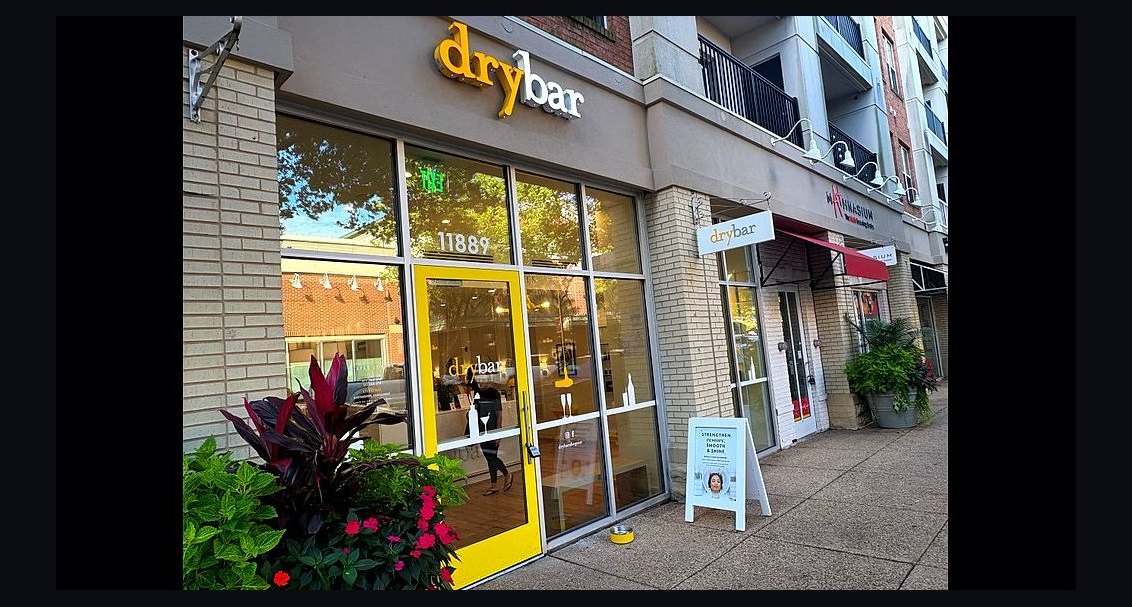 franchiseShould I open or buy a Drybar franchise in 2027?
 franchiseShould I open or buy a Roto-Rooter franchise in 2027?
 franchiseShould I open or buy a Firehouse Subs franchise in 2027?
 franchiseShould I open or buy a Smoothie King franchise in 2027?
 franchiseShould I open or buy a Wendy's franchise in 2027?
 franchiseShould I open or buy a Bojangles franchise in 2027?
 franchiseShould I open or buy a Jimmy John's franchise in 2027?
 franchiseShould I open or buy a Stanley Steemer franchise in 2027?
 franchiseShould I open or buy a Domino's franchise in 2027?
 franchiseShould I open or buy a Meineke franchise in 2027?