


Should I open or buy a Tasty Burger franchise in 2027?
Quality
Certified
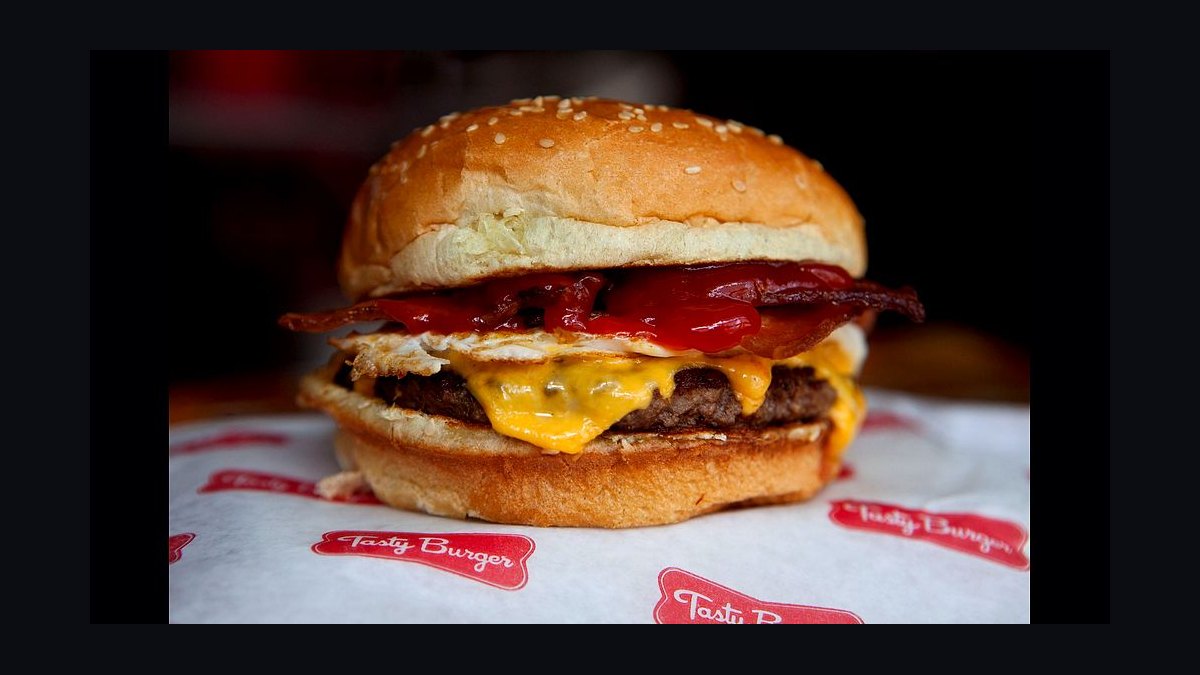
Probably not as a conventional franchise. Tasty Burger operates a small, founder-led corporate chain concentrated in Boston and Washington, DC, without a widely distributed franchise offering. Unless you are a credentialed Boston-metro multi-unit operator negotiating a direct license, a disclosed better-burger franchise like BurgerFi, Smashburger, or Wayback Burgers is the more realistic 2027 path.
The two paths in front of you, side by side
When someone types "Tasty Burger franchise" into a search bar, they are usually imagining the same thing they imagine when they type "Chick-fil-A franchise" or "Jersey Mike's franchise": a franchisor with a sales department, a downloadable brochure, a discovery day, a territory map, and a Franchise Disclosure Document that a lawyer can mark up in an afternoon. That is a *product*. It is standardized, priced, and regulated. What Tasty Burger actually is — a compact, chef-driven regional chain built by two Boston operators around Fenway, Harvard Square, the South End, and a couple of DC neighborhoods — is not that product. It is a business with a brand, a supply chain, and a very specific real-estate thesis, and any deal you strike with it will look more like a partnership or a license than a franchise purchase.
That distinction is not pedantic. It changes what you are buying, what protections you have, how the deal is taxed, how a bank underwrites it, and what happens when the relationship sours. So the honest framing of this question is not "should I buy a Tasty Burger franchise?" but "which of two structurally different transactions am I actually a candidate for?"
Path A — the direct, negotiated relationship with the brand. In this path you approach the founders or their corporate office, propose a specific city, a specific site, and a specific capital stack, and you negotiate a bespoke agreement: a license, a joint venture, a management arrangement, or an area-development commitment. There is no menu. Everything — fee, royalty rate, term, territory, renewal, transfer rights, supply mandates — is negotiated line by line. The upside is that a negotiated deal can be *better* than a standard franchise deal if you bring something the brand badly wants: a trophy site it cannot get itself, capital it does not want to raise, or operating depth in a market it wants to enter. The downside is that you carry all the diligence burden yourself. There is no Item 19 average unit volume table handed to you, no Item 20 list of every franchisee who left the system in the last three years, no state examiner who reviewed the disclosure before it reached you. You build that picture from scratch, or you go in blind.

Path B — a disclosed better-burger franchise with a real FDD. Here you pick from the brands that actually sell franchises: BurgerFi, Wayback Burgers, and other fast-casual burger systems that register offerings and publish disclosure documents. The economics are less negotiable — you take the royalty and the marketing fund as published — but the information asymmetry collapses. You get an itemized estimated initial investment, a disclosed royalty and ad-fund structure, litigation and bankruptcy history, a franchisee contact roster you can call, and in many cases a financial performance representation you can model against. For a first-time or second-time restaurant owner, that transparency is usually worth more than a few negotiated basis points on royalty.
There is a third path that people forget, and it deserves a seat at the table: buy an existing independent burger restaurant outright. In most metros, profitable owner-operated restaurants trade at low multiples of seller's discretionary earnings, and an SBA 7(a) loan will finance a business acquisition just as readily as a franchise build-out. You inherit revenue on day one instead of building it, you pay no royalty forever, and you skip the eighteen-month ramp that kills undercapitalized new units. What you give up is brand pull, systems, and a playbook — and if the seller's numbers are soft, you can inherit their problems along with their kitchen.
What actually separates a franchise from a license
The reason this page keeps circling back to "it's not really a franchise" is that the word has a legal definition in the United States, and that definition triggers real obligations. Under the FTC's Franchise Rule, a relationship is a franchise when three elements are present: the franchisor grants the right to operate under its trademark, exercises significant control over or provides significant assistance to the operation, and requires a payment for that right. Hit all three and the seller must give you a disclosure document at least fourteen calendar days before you sign anything or pay anything. Miss one — genuinely miss it, not by re-labeling the contract — and you are in license or joint-venture territory, where no mandatory disclosure applies.
Several states go further. A cluster of registration states require a franchisor to file its offering with a state agency before selling to residents, and a separate cluster of business-opportunity and franchise-relationship statutes govern how and whether a franchisor can terminate or refuse to renew. This is why the first practical question you should ask any small brand is not "what's the royalty?" but "are you registered to sell in my state, and if not, what is the structure you propose instead?" A brand that answers that question crisply is a brand with counsel. A brand that gets annoyed by it is telling you something.
The practical consequences of being on the license side of the line are worth spelling out, because they surprise people:
- No mandated disclosure. Nobody has to show you unit-level performance, the litigation history, or the list of former partners. You have to ask, and you have to make production of that information a condition of your deposit.
- Fewer statutory exit protections. Franchise relationship laws in some states make it hard to terminate a franchisee without cause and a cure period. A pure license agreement often gets none of that; your protection is whatever you negotiated into the contract.
- Different lender treatment. SBA lenders lean on the SBA Franchise Directory to confirm eligibility quickly. Brands in the directory clear that step almost automatically. A bespoke license agreement can still qualify, but the lender's counsel has to review the agreement for control provisions that would make you an affiliate rather than an independent borrower — and that review adds weeks, sometimes kills the loan, and occasionally requires the brand to sign an addendum it has never signed before.
- Different tax and accounting treatment. An initial franchise fee and a license fee are both typically capitalized and amortized, but joint-venture equity, management fees, and profit splits are accounted for very differently. Get your CPA in the room before the term sheet is signed, not after.
None of this means a license is worse. Plenty of excellent regional restaurant deals are licenses. It means the *diligence you must perform yourself scales inversely with the disclosure you are handed.* A disclosed franchise hands you a hundred pages of vetted information. A negotiated license hands you a phone number.
How to decide between them
The decision is not really about which brand you like. It is a sequence of gates, and most people fail one of the first three without realizing it. Work through them honestly, in order, before you spend a dollar on legal fees.
Gate one is geography. Tasty Burger's identity is welded to Boston. The Fenway location is a ballpark business. Harvard Square is a captive-university business. The DC units sit in dense, walkable, transit-fed neighborhoods. Every one of those is a high-rent, high-volume, walk-in-driven site. If you are pitching a suburban inline space in a market three time zones away, you are not pitching a version of the business the founders recognize, and the answer is going to be no — or worse, a yes that fails.
Gate two is capital, measured correctly. The number that matters is not the headline build-out cost. It is build-out plus equipment plus opening inventory plus training plus *a real operating reserve that survives a permitting delay.* Urban restaurant construction in a dense Northeast market routinely runs long on permits, inspections, and utility hookups. Every month of delay is a month of rent, insurance, loan interest, and a GM's salary against zero revenue. Reserve capital is not a nice-to-have line item; it is the difference between opening slightly late and opening insolvent.
Gate three is operating credibility. Small brands with few units are protecting a small brand. They will not hand it to a first-time operator who plans to manage from another state. What they want is a proven multi-unit restaurateur with local landlord relationships, local liquor and health-permit experience, and a general manager already identified. If you cannot put that resume on the table, the disclosed-franchise path is not a consolation prize — it is the correct path, because those systems are *built* to train operators who have not opened before.
A useful discipline: write down, before you talk to anyone, the single condition that would make you walk. Most failed restaurant deals are failures of escalating commitment — the buyer spends money on legal review, then feels obligated to spend on a site, then feels obligated to sign because of the sunk cost. Naming your walk-away condition in advance is the cheapest insurance in the entire process.
The numbers behind each option, and how to build them yourself
Because a small regional brand may not hand you a performance representation, you have to construct one. The good news is that better-burger unit economics are well understood and the model is not complicated. Here is how to build it so that it is defensible to a lender and to yourself.
Start with the revenue line, and build it from traffic rather than wishing. Take your site's realistic daily transaction count and multiply by a realistic average ticket. Fast-casual burger tickets are driven by attachment — fries and a drink, or a shake, or a beer where the license allows it. A menu that supports a beer program will carry a materially higher average check than one that does not, which is precisely why urban better-burger concepts fight for full liquor or beer-and-wine licenses. Model your revenue with and without that license, because in some cities the license is expensive, capped, or takes a year to obtain, and a plan that only works with it is a plan with a single point of failure.
Then the four cost lines that decide everything. Food cost, labor, occupancy, and everything else. In a healthy fast-casual burger unit, food cost typically lands in the low thirties as a percentage of sales, labor in the high twenties to low thirties, and occupancy — rent plus triple-net charges — needs to stay in the high single digits to low teens. That last one is the silent killer. Urban trophy sites command premium rent, and premium rent is only survivable at premium volume. The same rent that is trivial at high volume is fatal at moderate volume, which is why the identical concept can print money on a stadium corner and bleed in a strip center eight miles away.
Add the franchise-specific drag if you take that path. A royalty is a percentage of gross sales, not of profit, so it is charged whether you make money or not. A national marketing fund is charged the same way. Add a local marketing minimum, technology fees, and the cost of mandated suppliers, and the all-in system cost is meaningfully higher than the headline royalty rate. Model it as one combined "system cost" percentage so you are not surprised.
Then the capital structure. SBA 7(a) is the workhorse for restaurant start-ups and acquisitions, and lenders active in the space will finance a substantial share of a project with a borrower equity injection, personal guarantees, and often a lien on the borrower's real estate if there is any. Two things to model carefully: the interest-rate environment, because a variable-rate SBA loan repricing against a floating base rate can move your debt service materially over the loan's life; and the amortization schedule, because a longer term on the real-estate-heavy portion of the project reduces monthly debt service and buys you survival room in year one.
Now the ramp. New restaurants do not open at stabilized volume. They open with a honeymoon spike driven by curiosity, settle into a trough as the novelty fades, then build back as habit forms. A conservative model assumes the first year runs at a discount to stabilized volume, the second year approaches it, and the third year reaches it — and it assumes the first year's cash flow is thin or negative after debt service. If your model shows meaningful positive cash flow in month four, you have not built a model, you have built a hope.
Finally, the sensitivity table. Take your base case and flex four variables one at a time: average ticket down, traffic down, beef cost up, labor cost up. If a modest adverse move in any single variable wipes out your ability to service debt, the deal is too tight. Real deals survive one bad variable. Good deals survive two.
The macro backdrop for 2027 matters here and cuts both ways. Beef has been structurally expensive because the US cattle herd has been at multi-decade lows, and herd rebuilding is a multi-year process — a rancher who decides to retain heifers today does not put more beef on the market for years. That means a burger concept's single largest commodity input is likely to stay elevated, and menu pricing power becomes the whole ballgame. On the other side, restaurant labor markets have loosened considerably from the acute 2021–2023 shortage, and turnover has come down from crisis levels, which quietly improves both the labor line and the quality line — a crew that stays is a crew that executes.
Adjacent plays worth pricing before you commit
The mistake most prospective franchise buyers make is treating the decision as binary: this brand or nothing. In practice, the money you were going to deploy has half a dozen homes in and around food service, and several of them have better risk-adjusted returns than a single high-rent urban restaurant.
Buy the operating business, not the brand. Acquiring a profitable independent gives you revenue on day one and a seller who can train you. Diligence shifts from "will this work?" to "are these numbers real?" — which is a much easier question to answer, because you can sit in the dining room and count covers, pull the POS export, reconcile it against bank deposits and sales-tax filings, and verify the payroll register. If the three reconcile, the earnings are real. If they don't, you have learned something for the price of a weekend.
Take the second-tier site with first-tier rent economics. Everybody wants the corner. The corner is priced accordingly. A site one block off the corner, with slightly less visibility and materially lower rent, often produces better cash-on-cash returns than the trophy — because rent is fixed and forever, while a visibility gap can be partially closed with signage, delivery placement, and local marketing. Run both sites through the model. The trophy does not always win.
Consider a smaller-format or non-traditional footprint. Ghost kitchens, food halls, stadium and airport concessions, campus dining contracts, and licensed in-line counters inside larger venues all carry a fraction of the build-out cost of a full-service unit. The trade is lower ceiling and less control, but a food-hall stall that costs a fraction of a standalone build lets you test whether you can actually run a burger business before you sign a ten-year lease. Several well-known concepts started exactly this way, and the ones that scaled did so because the small format proved the operating model cheaply.
Look at the boring end of the category. Better-burger is glamorous and crowded. Adjacent categories — sandwich, chicken, coffee, or breakfast concepts — often carry smaller footprints, simpler kitchens, lower labor loads, and shorter build-outs. The unit economics can be less exciting per store and far more forgiving per dollar of capital. Multi-unit operators know this, which is why so many of them hold a portfolio that mixes one glamour brand with three boring cash generators.
Be the landlord or the LP instead of the operator. If what attracts you is the return and not the work, there are structures — passive investment in an experienced operator's expansion vehicle, or buying the real estate under a restaurant and leasing it back — that capture part of the economics without putting you behind the pass at nine on a Saturday. Returns are lower. So is the chance you lose your entire injection because a general manager quit in month seven.
Sequencing the first ninety days
If you have cleared the gates and want to move, the order of operations matters enormously. Doing these steps out of sequence is how people end up with a signed lease and no financing, or an approved loan and no site.
Weeks one and two — establish what is actually being offered. Contact the brand's corporate office directly and ask three specific questions in writing: do you have a current disclosure document; are you registered to sell in my state; and if the structure is a license or joint venture rather than a franchise, what are its material terms? Written answers matter because they become part of the record if anything is later misrepresented. In parallel, check whether the brand appears in the SBA Franchise Directory — its presence or absence tells you a great deal about how the financing conversation will go.
Weeks two through four — build the comparable set. Pull disclosure documents for the disclosed better-burger franchises and read Items 5, 6, 7, 19, 20, and 21. Item 7 gives you an itemized estimated initial investment. Item 19 gives you whatever financial performance representation the franchisor is willing to stand behind. Item 20 gives you outlet counts and, critically, the contact list of current and former franchisees. Several states publish filed FDDs publicly, so this research costs time rather than money. Then *call the former franchisees.* Current ones are selected and coached; former ones will tell you what actually happened.
Weeks three through six — retain franchise counsel. Not your general business attorney — a lawyer who reads these agreements weekly. The clauses that decide your fate are territory and encroachment, transfer and assignment rights, personal guarantee scope and survival, mandated supply and rebate disclosure, renewal terms, and the dispute-resolution and venue provisions that determine whether a disagreement is litigated in your home state or two thousand miles away. In a bespoke license, add the exclusivity term, the brand-standards enforcement mechanism, and — the one people forget — what happens to your unit if the brand itself is sold.
Weeks four through eight — site and financing in parallel, never in series. Walk far more sites than you think you need, and score every one on the same rubric: square footage, seat count, storefront frontage, kitchen exhaust feasibility, rent per square foot including triple-net, daytime and evening traffic generators, delivery-driver access, and parking or transit. Simultaneously, get pre-qualified with lenders who actively do restaurant deals. A signed lease without financing is a personal guarantee attached to an empty room.
Weeks eight through eleven — hire the operator. In this business the general manager is not a hire, it is a co-founder with a salary. Recruit someone who has *opened* units, not just run them; opening is a distinct skill involving hiring forty people at once, dialing in a kitchen that has never produced a ticket, and absorbing three weeks of chaos without losing the crew. Budget a competitive base plus a real performance bonus tied to metrics the GM can actually control.
Weeks eleven through thirteen — the honest go/no-go. You need five things simultaneously: an executed or near-final agreement reviewed by counsel, a lender commitment, a site under letter of intent with acceptable terms, a general manager under offer, and reserve capital sitting in an account untouched. If any one of the five is missing, delay. A restaurant that opens sixty days late with all five in place beats one that opens on time with four.
Related questions
Can I get a Tasty Burger franchise outside the Northeast?
Very unlikely in 2027. The brand's footprint, supply relationships, and identity are concentrated in Boston with a small DC presence, and there is no evidence of a national franchise sales program. Out-of-region prospects are better served by a disclosed better-burger franchise.
What does a franchise attorney actually check?
Territory and encroachment rights, transfer and assignment terms, personal guarantee scope, mandated suppliers and supplier rebates, renewal conditions, termination and cure provisions, and the dispute-resolution venue. In a license rather than a franchise, they also check exclusivity and what happens if the brand is sold.
Is buying an existing restaurant safer than opening a new one?
Often, yes. You inherit revenue, staff, and a permit history rather than building all three. The risk shifts from execution risk to diligence risk: your job is verifying the seller's numbers reconcile across POS exports, bank deposits, sales-tax filings, and payroll registers.
How much of the investment can SBA financing cover?
SBA 7(a) can finance a large share of a qualifying restaurant project, but lenders require a meaningful borrower equity injection, personal guarantees, and often collateral. Rates on many 7(a) loans float against a base rate, so model debt service across a range, not a single number.
Why does rent matter more than royalty?
Royalty scales with sales, so it falls when you are slow. Rent does not. A high-rent urban site is only survivable at high volume, which is why an identical burger concept can be highly profitable on a stadium corner and unprofitable in a low-traffic suburban space.
FAQ
Does Tasty Burger sell franchises?
Not in the way most people mean. It operates as a small founder-led chain with corporate locations rather than a national franchise system with a sales department and a broadly distributed disclosure document. Any deal is likely to be a negotiated license, joint venture, or area-development arrangement rather than an off-the-shelf franchise purchase — which means the diligence burden falls on you.
How much capital do I need for an urban better-burger unit?
Enough for build-out, equipment and smallwares, signage, opening inventory, training, and — the line people underfund — several months of operating reserve. Urban Northeast build-outs are at the expensive end of the category because of construction costs, permitting timelines, and rent during the pre-opening period. Model your reserve against a permitting delay, not a perfect timeline.
What royalty and marketing fees should I expect in this category?
Disclosed better-burger franchises typically charge a royalty as a percentage of gross sales plus a separate national marketing fund contribution, sometimes with a local marketing minimum on top. Always model the combined system cost — royalty, ad fund, technology fees, and any supplier rebate effects — rather than the royalty rate alone, because the headline number understates the real drag.
How long until a new unit reaches breakeven?
Plan for years, not months. New restaurants ramp through an opening spike, a post-novelty trough, and then a build back toward stabilized volume. Most conservative models show thin or negative cash flow after debt service in year one, improvement in year two, and stabilization in year three. Any model showing strong positive cash flow in the first few months is optimistic.
What is the single biggest mistake buyers make here?
Assuming a small regional brand is a turnkey system. A large franchisor hands you a playbook, a supply chain, training infrastructure, and a field consultant. A small brand hands you a name and expects you to build much of the rest yourself. Buyers who budget for the first and receive the second run out of capital in the middle of year one.
Should I open a new unit or buy an existing restaurant?
If you have opened restaurants before and control a genuinely superior site, opening can create more value. If you have not, buying an existing profitable operation is usually the lower-risk entry — revenue exists on day one, and the diligence question is verification rather than prediction. Compare both through the same financial model before deciding.
Sources
- https://www.ftc.gov/business-guidance/resources/franchise-rule-compliance-guide
- https://www.sba.gov/funding-programs/loans/7a-loans
- https://www.sba.gov/document/support-sba-franchise-directory
- https://www.ers.usda.gov/topics/animal-products/cattle-beef
- https://www.bls.gov/iag/tgs/iag722.htm
- https://www.restaurant.org/research-and-media/research/
- https://www.dfpi.ca.gov/franchise-investment-law/
- https://www.nrn.com/
- https://www.restaurantbusinessonline.com/
Related on PULSE
This page will be disappearing soon. Save it to your device for $1 — or read it free while it is here.
@Kory-White- · if Venmo asks, the last 4 of my number are 2012
This page is gone.
This one is off the shelf now. $1 keeps it on your phone for good — the whole page, pictures and diagrams included.
 franchiseShould I open or buy a Cold Stone Creamery franchise in 2027?
 franchiseShould I open or buy a McAlister's Deli franchise in 2027?
 franchiseShould I open or buy a Servpro franchise in 2027?
 franchiseShould I open or buy a Smoothie King franchise in 2027?
 franchiseShould I open or buy a Jamba franchise in 2027?
 franchiseShould I open or buy a Bahama Breeze franchise in 2027?
 franchiseShould I open or buy an Anytime Fitness franchise in 2027?
 franchiseShould I open or buy a Dairy Queen franchise in 2027?
 franchiseShould I open or buy a Bruster's Real Ice Cream franchise in 2027?
 franchiseShould I open or buy a Domino's franchise in 2027?