


Should I open or buy a Habit Burger Grill franchise in 2027?
Quality
Certified
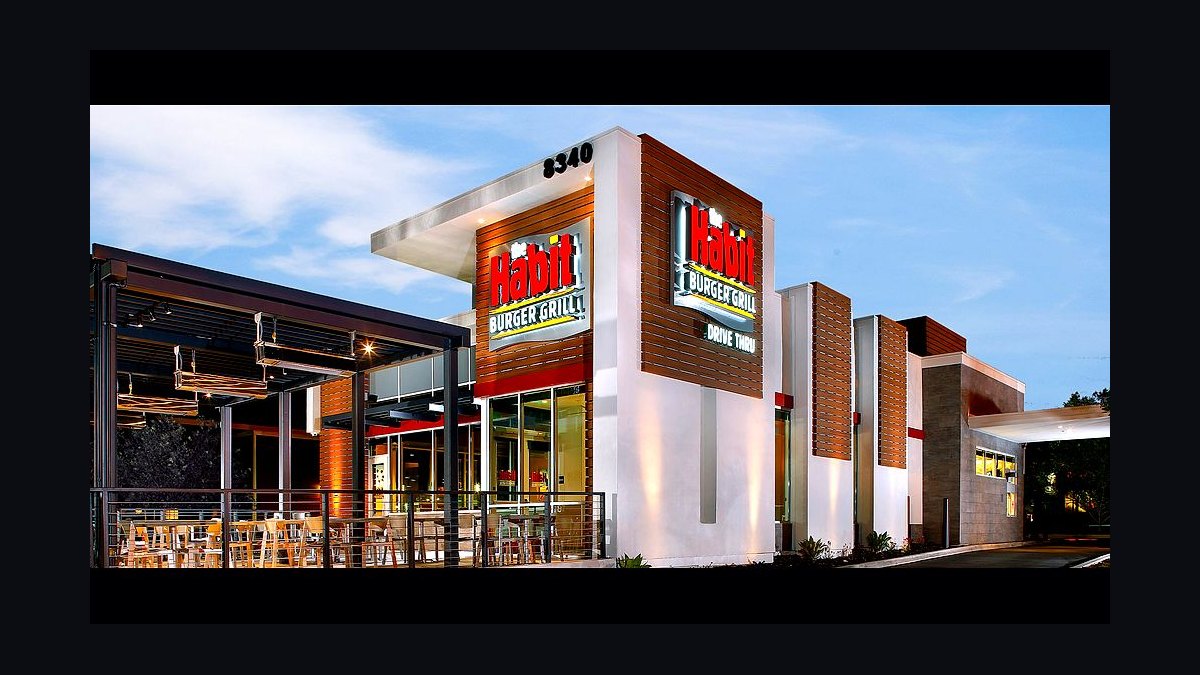
Yes — if you can write a check for $1.4M-$1.65M in real cash, you already own or operate two-plus QSR or fast-casual units, and you can lock in a California, Arizona, Nevada, Texas, or Florida trade area where Habit's charburger DNA actually has brand recognition. With a 5.5% royalty, up to 4.5% marketing fee, $1.802M system AUV, and mid-teens four-wall EBITDA on top performers, a well-run drive-thru unit can hit cash-on-cash payback in 4.5-6 years and throw off $160K-$240K of Year-1 owner cash flow after debt service. Probably not if you are a first-time operator, east-of-the-Mississippi with no Habit awareness, or trying to make a non-drive-thru inline unit pencil at today's labor and food costs.
The Real Numbers
The Habit Burger Grill is the fast-casual charburger chain Yum! Brands acquired for $375M in 2020 and is now pushing into franchised expansion at a pace of 40-50 new units a year. The brand's 2024 FDD (the document a 2027 buyer is signing against until the 2027 refresh drops) discloses the following ranges. Item 7 gives the total initial investment by build format and Item 19 publishes a system-wide AUV of $1,802,000. Multi-unit area development agreements are the default contracting structure — almost no single-unit deals get signed.
| Line Item | Low | High | Notes |
|---|---|---|---|
| Initial Franchise Fee | $35,000 | $35,000 | Item 5; per restaurant |
| Site work + build-out | $565,000 | $1,050,000 | Drive-thru standalone runs highest |
| Furniture, fixtures, equipment | $385,000 | $510,000 | Charbroiler, hood, POS, drive-thru |
| Signage | $35,000 | $75,000 | Pylon + monument adds to top of range |
| Opening inventory + supplies | $20,000 | $35,000 | First 30-day food + paper |
| Training + travel | $15,000 | $30,000 | 8-10 weeks corporate training |
| 3 months working capital | $135,000 | $200,000 | Item 7 baseline; we recommend 6 months |
| Total — no drive-thru | $1,231,000 | $1,439,000 | Inline / endcap no DT |
| Total — endcap with DT | $1,366,000 | $1,604,000 | Best risk-adjusted format |
| Total — standalone DT | $1,401,000 | $1,654,000 | Highest AUV, highest cap-ex |
| Outlier / second-gen build | $1,026,000 | $2,859,000 | FDD full range |
| Royalty (Item 6) | 5.5% of gross sales | 5.5% of gross sales | Paid weekly |
| Marketing fund (Item 6) | Up to 4.5% of gross | Up to 4.5% of gross | National + local combined |
| System AUV (Item 19) | $1,802,000 | $1,802,000 | 2024 FDD, all formats blended |
| Drive-thru top-quartile AUV | $2.1M | $2.4M | Operator interviews + Franchise Times |
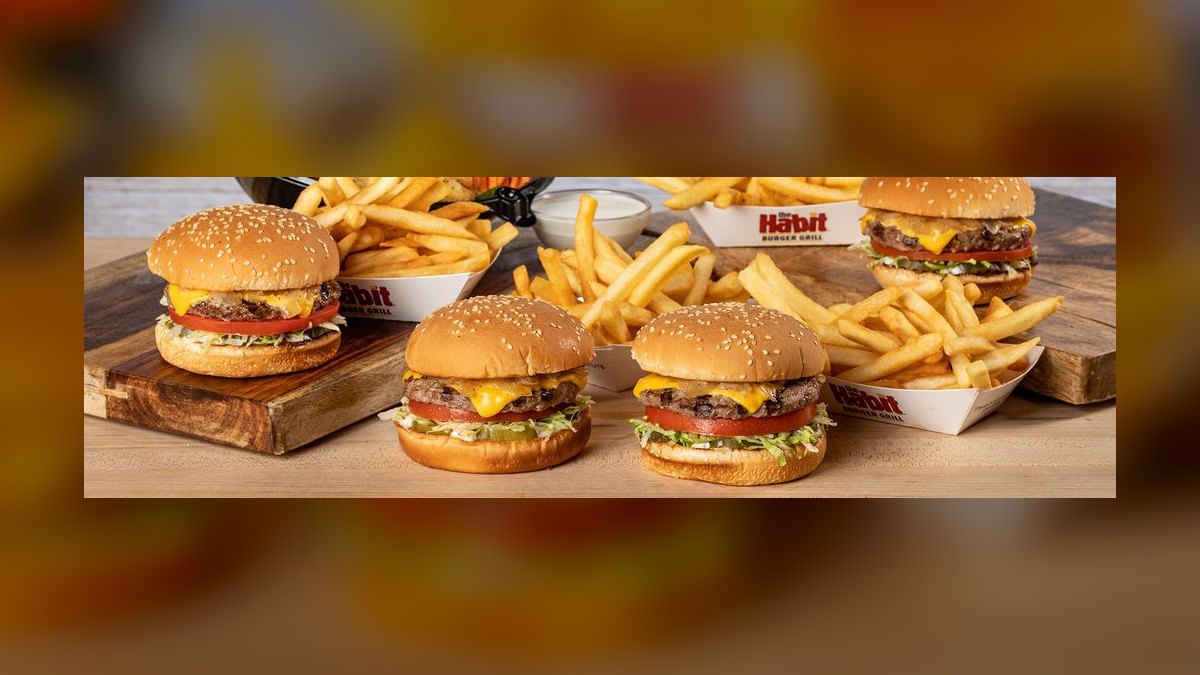
Run the unit economics on a $1.802M AUV drive-thru endcap. Food + paper lands at 30-32% post-2026 beef stabilization, labor at 27-29% in California ($20 fast-food minimum) and 22-24% in Texas/Florida, occupancy at 7-9%, other operating at 9-11%, and the 5.5% royalty plus 4.5% marketing layer eats 10% flat. That maps to a four-wall EBITDA of 13-17% on a strong unit and 6-9% on a sub-AUV unit. At 15% on $1.802M, you clear $270,300 of store-level EBITDA. Service a $1.1M SBA 7(a) note at 11% over 10 years and you pay roughly $182K/year, leaving $88K-$120K of owner cash before tax on the first unit and $160K-$240K on a top-quartile drive-thru. Cash payback on the $400K-$550K of equity you put in (after SBA 7(a) at 75-80% LTV) is realistically 4.5 to 6 years if you hit AUV, and never if you miss by 20%+ on a high-rent California pad site.
Who Wins With This Business
Multi-unit QSR/fast-casual operators with existing back-office, recruiting bench, and lender relationships win first. Yum! Brands' franchise team prefers signing 3-10 unit area development agreements — single-unit hobbyists are a tier-two prospect at best. Operators inside Habit's existing footprint (California, Arizona, Nevada, Utah, Florida, New Jersey, Maryland, Virginia, Washington) win because the brand awareness is already paid for; new-market pioneers carry the marketing burden alone. Real-estate-savvy operators who can land a drive-thru endcap on a grocery-anchored center or a standalone pad with 25K+ VPD and a left-turn signal win — the format moves AUVs by $400K-$600K against an inline box. Operators with $400K-$1M of liquid net worth per unit and $1.5M+ total net worth clear Yum!'s standard financial screen. Tech-stack-disciplined operators running Olo, Toast or Par Brink, and a 7shifts/Crunchtime labor stack capture the 12-18% digital sales mix without giving up margin to DoorDash-only flow. Operators who treat the charbroiler as the brand moat — keeping the open-flame Char on the line and resisting menu sprawl — protect the only thing Habit has that the average burger chain does not.
Who Loses With This Business
First-time restaurant owners lose. Habit is not a turnkey concept; the charbroiler line, made-to-order build, and 80-item menu demand a real operator. California operators on inline boxes without drive-thru lose in 2027 — the $20 fast-food minimum, the stacking ancillary wage rules, and the slowdown in dine-in fast-casual crush the math when you cannot capture drive-thru's 55-65% mix. Northeast and Midwest pioneers with no Habit footprint within 200 miles lose; they pay full national marketing fund without national awareness. Operators who skip the area development minimum and try to negotiate a single-unit deal usually get declined or steered to a different brand. Underleveraged or overleveraged operators lose — sub-50% LTV leaves cash trapped, and over-80% LTV with floating-rate SBA debt turns a 6% rate increase into a covenant breach. Operators who shortcut the 8-10 week training lose, full stop. The labor model only works if the GM holds 90%+ retention on shift leads and the AGM has been through corporate training.
2027 Market Conditions
The fast-casual burger segment lost steam in 2024-2025, with Shake Shack lowering sales guidance, Five Guys flat-to-down, and BurgerFi entering distress. Habit's countercycle bet under Yum! is franchised expansion — pushing toward 2,500 units long-term from roughly 375 today. The beef commodity cycle is the swing variable: 2026 cattle inventories are at multi-decade lows, wholesale ground beef stayed in the $5.20-$5.80/lb band through 2026, and most operators are forecasting 2027 flat-to-modestly-down as herd rebuilding lands. California's AB 1228 fast-food council sets the wage floor at $20+ in 2027, and several other states (NY, MA, IL) have introduced parallel bills. SBA 7(a) rates sit at 10.5-11.5% mid-2026 with most analysts pricing two 25-bps cuts into 2027. Drive-thru pad availability is the binding real-estate constraint — landlords are quoting $45-$65/sf NNN on grocery-anchored endcaps with DT in Sun Belt markets. Digital order mix is now 18-22% of sales at strong Habit units, and third-party delivery runs 8-12% with the typical 25-30% marketplace fee eating into the gross. Yum!'s Byte by Yum! integrated tech platform rolls into Habit through 2027, which should normalize loyalty, kiosk, and labor-scheduling tooling across the system.
The 90-Day Decision Tree
- Days 1-7: Self-qualification gate. Confirm $400K-$1M liquid, $1.5M+ net worth, and 2+ years of multi-unit QSR/FC operating history. If you fail any of these, stop here and revisit in 24-36 months.
- Days 8-21: Pull and read the current Habit FDD. Request directly from habitburger.com/franchise or via franchisedirect. Read Items 5, 6, 7, 19, 20, 21 word-for-word. Cross-check Item 20 unit counts against publicly reported store openings.
- Days 22-35: Validation calls. Contact 8-12 existing franchisees from the Item 20 list. Ask about actual AUV vs system $1.802M, food cost on the new charbroiler line, California vs Sun Belt margins, Yum! field support quality, and whether they would sign their next unit.
- Days 36-50: Real-estate underwriting. Engage a QSR-specialized broker (Northmarq, CBRE, Stan Johnson). Pull 3-5 candidate sites, run demographic + traffic count + competitive overlap on each. Reject anything below 25K VPD or without a drive-thru option.
- Days 51-65: Financial model. Build a 5-year P&L per site at three AUV scenarios ($1.5M, $1.8M, $2.2M). Stress-test at food cost +200 bps and labor +300 bps. Confirm debt service coverage > 1.30 in the downside.
- Days 66-75: SBA + conventional financing. Get soft term sheets from Live Oak Bank, Celtic Bank, Stearns Bank, and First Bank of the Lake. Compare SBA 7(a) vs conventional + USDA B&I vs equipment-only lease.
- Days 76-85: Legal review. Hire a franchise attorney (Lathrop GPM, Cheng Cohen, Marks & Klein). Review the ADA, FA, lease guarantee, and personal guarantee carve-outs. Negotiate territory exclusivity in the ADA.
- Days 86-90: Decision. Sign or walk. If signing, fund the $35K franchise fee + $50K refundable territory deposit. If walking, redirect capital to a DT-anchored alternative (Wingstop, Raising Cane's, Chick-fil-A licensee).
Alternative Plays
Wingstop is the highest-IRR comp in this universe — $430K-$1M total investment, $1.9M AUV, 6% royalty, and 27% four-wall EBITDA on a stronger unit. Real estate is smaller (1,800 sf), labor model is leaner, and 2027 chicken-wing spot pricing is favorable. Raising Cane's does not franchise outside legacy operators, but if you can acquire an existing licensee position, AUVs above $5M crush every burger comp. Jersey Mike's at $237K-$1.07M total investment is a lower-ceiling, lower-floor alternative with proven multi-unit roll-up math. Crumbl has cooled but offers $1.5M-$2.5M AUVs on a $350K-$650K build — solid if you accept the single-product-line concentration risk. Acquiring an existing Habit unit from a tired operator at 3.5-4.5x EBITDA can be better than a new build if the unit is already at AUV and has 5+ years left on the lease. Non-franchise plays: a 2-3 unit independent fast-casual burger concept at $400K-$700K per build trades the brand for margin retention — no 10% royalty + marketing bleed. The freedom is real; the brand and supply-chain leverage are not.
FAQ
What is the total investment range for a Habit Burger Grill franchise?
The total investment typically falls between $1.4 million and $1.65 million in liquid cash, covering franchise fees, construction, equipment, and initial operating costs. This range can vary based on real estate, local build-out requirements, and whether the unit includes a drive-thru.
How much ongoing royalty and marketing fees should I expect? You’ll pay a 5.5% royalty on gross sales and up to a 4.5% marketing fee, which combined total around 10% of revenue. These fees are standard for the QSR segment and fund brand advertising and support.
What is the average unit volume (AUV) for Habit Burger Grill locations? System-wide AUV is approximately $1.8 million, though top-performing drive-thru units in strong markets can exceed $2 million. Non-drive-thru or inline locations often see lower volumes, sometimes below $1.5 million.
How profitable are Habit Burger Grill franchises typically? Well-run units with drive-thrus can achieve mid-teens four-wall EBITDA margins, translating to $160,000 to $240,000 in owner cash flow after debt service in the first year. Profitability depends heavily on location, labor costs, and operational efficiency.
What are the key requirements to qualify as a franchisee? You generally need at least two years of experience owning or operating quick-service or fast-casual restaurants, plus the ability to invest $1.4 million to $1.65 million in liquid cash. First-time operators or those without multi-unit experience may struggle to meet approval.
Which geographic areas are best for opening a Habit Burger Grill? The brand has strong recognition in California, Arizona, Nevada, Texas, and Florida. Expanding east of the Mississippi or into areas without existing Habit presence carries higher risk due to lower brand awareness and longer customer adoption timelines.
Bottom Line
The Habit Burger Grill in 2027 is a legitimate franchise opportunity for multi-unit operators inside the existing footprint who can run drive-thru endcap or standalone formats at $1.4M-$1.65M of total investment per unit. The Yum! Brands platform brings real supply-chain leverage, integrated tech, and disciplined unit growth. The 5.5% royalty plus up to 4.5% marketing is expensive relative to Wingstop's 6% all-in but defensible given the $1.802M AUV. Avoid if you are a first-time operator, a pioneer in a no-awareness market, or trying to make inline non-drive-thru pencil in a $20-minimum-wage state. Buy existing over building new when the resale math works at 4-4.5x EBITDA on an at-AUV unit. Treat the charbroiler as the moat and the brand will outearn the segment.
Sources
- Habit Burger Grill Franchise FDD, Costs & Fees (2025) — Franchise Payback
- The Habit Burger Grill Franchise FDD, Profits & Costs — Sharpsheets
- The Habit Burger Grill Franchise Review — FranchiseGrade.com
- Habit Burger Grill — Entrepreneur Franchise Directory
- Habit Burger & Grill Franchising Information — Yum! Brands
- The Habit Burger Grill heats up growth in California — Nation's Restaurant News
- Inside Habit Burger's Profitability Push With Yum Brands — Franchise Times
- Habit's Plan: Franchises to Drive Expansion — Orange County Business Journal
- Habit Burger Franchise Cost 2026 — QSR Research Hub
- The fast-casual burger business lost steam last year — Restaurant Business
- [Average Fast Food Profit Margin [2025 Data] — Toast](https://pos.toasttab.com/blog/on-the-line/fast-food-profit-margin)
- The Habit Burger Grill Franchise Cost & Profit Exposed — Vetted Biz
Related on PULSE
- Best burger franchises to buy in 2027
- Should I open or buy a The Counter burger franchise in 2027?
- Should I open or buy a Tasty Burger franchise in 2027?
- Should I open or buy a Burger King franchise in 2027?
- Should I open or buy a Bibibop Asian Grill franchise in 2027?
- Should I open or buy a Lenny's Grill & Subs franchise in 2027?
This page will be disappearing soon. Save it to your device for $1 — or read it free while it is here.
@Kory-White- · if Venmo asks, the last 4 of my number are 2012
This page is gone.
This one is off the shelf now. $1 keeps it on your phone for good — the whole page, pictures and diagrams included.
 franchiseShould I open or buy a Kona Ice franchise in 2027?
 franchiseShould I open or buy a Domino's franchise in 2027?
 franchiseShould I open or buy an Ace Hardware franchise in 2027?
 franchiseShould I open or buy a McAlister's Deli franchise in 2027?
 franchiseShould I open or buy a Matco Tools franchise in 2027?
 franchiseShould I open or buy a Primrose Schools franchise in 2027?
 franchiseShould I open or buy an Anytime Fitness franchise in 2027?
 franchiseShould I open or buy a Bahama Breeze franchise in 2027?
 franchiseShould I open or buy a Whataburger franchise in 2027?
 franchiseShould I open or buy a Dunkin' franchise in 2027?