


Should I open or buy a Freddy's Frozen Custard franchise in 2027?
Quality
Certified
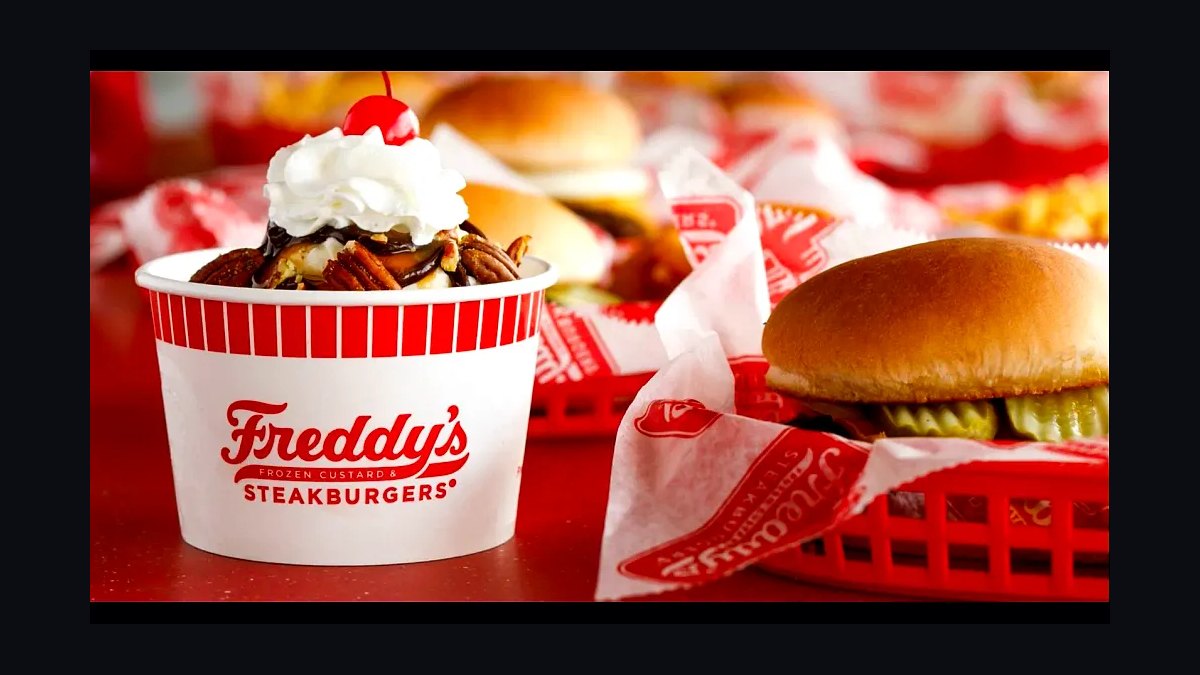
Open or buy a Freddy's Frozen Custard & Steakburgers franchise in 2027 if you have $300,000+ in liquid capital, $1M+ net worth, and access to a high-traffic drive-thru pad in the South, Midwest, or Texas corridor — total investment runs $785,936 to $2,753,566, system AUV is $1.88M, and payback typically lands in 4-5 years. Under-capitalized single-unit hopefuls or urban-Northeast buyers should pass.
A Day at the Counter: Sizing Up the Decision
Picture two prospective owners standing in a Freddy's parking lot in suburban Wichita on a Tuesday afternoon in early 2027. One is a first-time buyer with $180,000 saved, drawn in by the smell of griddled steakburgers and the line stretching past the drive-thru speaker. The other is a regional operator who already runs six Raising Cane's locations and is scouting Freddy's as a second brand to diversify a portfolio. Both are looking at the same franchise, the same disclosure document, and the same royalty structure — but they are not looking at the same deal.
The first-time buyer sees a busy restaurant and assumes the busyness translates directly into personal income. What they are missing is the layer between gross sales and take-home cash: a 5% royalty and 1.5% ad fund on every dollar that rings through the register, a labor model that runs 18-22 hourly employees at peak because steakburgers are cooked to order and custard is churned fresh rather than scooped from a tub, and a construction bill that can swing by nearly $2 million depending on whether the site is a ground-up pad or a converted end-cap with existing utilities. Their $180,000 is not enough to clear the FDD's own liquid-capital floor, and no amount of enthusiasm about the product changes that math.

The multi-unit operator sees something different: a brand backed by Rhône Capital Partners' growth capital, a 580-plus-unit base pushing toward an 800-unit target, and — critically — a district-manager structure that lets a three-to-ten-unit Area Development Agreement spread fixed costs (training, local marketing minimums, back-office labor) across multiple stores instead of absorbing them on one. For this buyer, Freddy's is not a single bet on one drive-thru; it is a scalable addition to an existing operating platform, and the same royalty rate that squeezes a single-unit owner barely dents a six-unit operator who is already running payroll systems, vendor relationships, and a bench of trained general managers.
This is the scenario that actually determines the right answer to "should I open or buy a Freddy's in 2027": not whether the brand is good (by nearly every public metric it is), but whether the buyer's capital structure, operating experience, and target geography match what the brand's own economics reward. A franchise system does not have one right answer for every buyer — it has a set of conditions under which the deal works, and a set of conditions under which the same signed agreement turns into a slow-motion cash drain. The rest of this analysis walks through exactly where that line sits for Freddy's heading into 2027, using the March 2025 FDD as the baseline and layering in what has shifted — beef costs, GLP-1 adoption, minimum-wage law, and the post-July-2025 royalty structure — since that document was filed.
How the Franchise Economics Actually Work

A Freddy's unit generates revenue through two channels that behave very differently: dine-in/counter service and drive-thru/digital, the latter now representing roughly 65-70% of transactions at a typical location. Understanding how money moves from a customer's card swipe to the franchisee's bank account is the single most useful mental model for evaluating whether this business fits a given buyer, because it explains why AUV alone is a misleading headline number.
Start with gross sales. At the 2024 system average of $1.88M, a unit collects that figure in card swipes, cash, and third-party delivery/Olo digital orders across the year. From that top line, the franchisee first pays cost of goods — beef, custard mix, buns, packaging — which industry benchmarks put in the 30-33% range for limited-service concepts, though Freddy's operators report a combined prime cost (food plus labor) in the 58-62% band on well-run units. Next comes the royalty: 5.0% of gross receipts on any agreement signed after July 1, 2025 (grandfathered agreements pay 4.5%), plus a 1.5% national ad fund contribution and typically another 0.5-1.0% in local marketing spend required by the Area Developer. That's 7-7.5% of gross sales leaving the business before a single hourly wage or rent payment is made from what remains.

What's left after cost of goods, labor, royalty, and occupancy is store-level EBITDA — generally 12-17% of gross sales on a healthy unit — and it is this number, not AUV, that determines whether a franchisee can service debt, pay themselves, and reinvest. On a $1.88M AUV unit at a 14% margin, that's roughly $263,000 in EBITDA before debt service. Subtract SBA loan payments (a $1.5M construction loan at 9.0-9.75% amortized over 10 years runs roughly $230,000-$240,000 annually), and the realistic Year-1 cash flow for a single, debt-financed unit compresses toward the $140,000-$240,000 range the FDD's own performance representations suggest — a number that sounds impressive until it's measured against the $785,936-$2,753,566 that had to be risked to generate it.
The mechanism above is why multi-unit operators consistently outperform single-unit buyers on the same brand: they are not changing the royalty rate or the cost-of-goods structure, they are diluting the fixed costs (a shared district manager, negotiated vendor terms, one marketing budget spread across several P&Ls) that otherwise eat into that 12-17% margin band on a single store.
The Real Numbers Behind a 2027 Freddy's Deal

The figures below come from the March 2025 FDD (Items 5, 6, 7, and 19), the most current public disclosure available heading into 2027, cross-referenced against industry benchmarks for context.
| Line item | Range | What drives the spread |
|---|---|---|
| Franchise fee | $35,000 flat | Reduced per-unit under a multi-unit Development Agreement |
| Construction/leasehold | $400,000-$1,650,000 | Ground-up pad vs. converted end-cap |
| Equipment, signage, FF&E | $250,000-$560,000 | Custard machines, griddles, POS/Olo integration |
| Total initial investment (Item 7) | $785,936-$2,753,566 | Site type, market cost-of-construction, real estate terms |
| Royalty / ad fund | 5.0% / 1.5% | Post-July-2025 agreements (4.5%/0.375% grandfathered) |
| 2024 system AUV | $1,886,000 | 496 units reporting a full year |
| Top-quartile AUV | $2,606,743 | 124 units, ~39% clearing this or better |
| Store-level EBITDA margin | 12%-17% | Pre-debt service, post-royalty |
| Payback period | 4.0-7.5 years | Faster for cash buyers/resales, slower for leveraged ground-up builds |
Two comparisons put those numbers in context. IBISWorld's 2025 data shows the average U.S. limited-service restaurant clearing roughly a 6.1% net margin and full-service closer to 4.3% — meaning a Freddy's unit operating at even the low end of its 12-17% EBITDA band is outperforming the broader restaurant category by a wide margin, before debt service is subtracted. Meanwhile the National Restaurant Association's 2025 State of the Restaurant Industry report puts typical QSR labor at 28-32% of sales; Freddy's made-to-order model (steakburgers grilled per order, custard churned rather than pre-batched) pushes staffing needs toward the higher end of that range, which is the tradeoff for a differentiated, non-frozen-patty product that supports a $14-$16 average ticket — meaningfully above McDonald's $9-$11 and below Shake Shack's $18-$22.

Commodity costs matter more here than at a typical burger concept because beef is the largest single food-cost line. USDA Economic Research Service data shows wholesale ground chuck peaking near $8.40/lb in mid-2025 before softening to $7.10-$7.40 entering 2027, a shift that restores an estimated 80-120 basis points of margin system-wide — a meaningful tailwind for anyone modeling 2027 cash flow off slightly stale 2025 assumptions.
Trade-offs, Alternatives, and Where the Money Really Goes
Every franchise decision is really a decision about where a fixed pool of capital gets the best risk-adjusted return, and Freddy's is not the only frozen-custard or better-burger option competing for that capital in 2027. Culver's, the closest direct analog (frozen custard plus ButterBurgers), asks for a steeper $5M+ net worth but delivers AUVs north of $3.0M in its Midwest strongholds — a better return per unit for a buyer who already clears that capital bar, but an inaccessible option for anyone below it. Andy's Frozen Custard sits at the opposite end: a cheaper $625,000-$1,450,000 Item 7, but AUV of only $1.1M-$1.4M and materially less brand recognition outside its regional base, meaning lower risk of entry paired with a lower ceiling on return.
For buyers with less capital who still want franchise exposure to food service, Jersey Mike's ($430,000-$1.1M Item 7, ~$1.3M AUV) and Crumbl ($539,000-$795,000, ~$1.6M AUV) offer a fundamentally different risk profile: lower build-out cost, faster time to breakeven, but also lower absolute ceiling per unit and, in Crumbl's case, a business model more exposed to social-media-driven demand cycles than Freddy's steady drive-thru traffic.
The tradeoff structure below is the one a buyer should actually run before signing anything, because "can I afford Freddy's" and "should I choose Freddy's over the alternatives" are different questions with different answers depending on available capital.
The honest tradeoff with Freddy's specifically is that its economics reward scale and geography in ways that punish exactly the buyer most drawn to the brand emotionally — the enthusiastic first-timer who loves the product but lacks either the capital cushion for a construction overrun or the operating experience to manage an 18-22-person hourly staff through a first summer. The brand's own franchisee validation list (FDD Item 20) exists precisely so that buyer can hear this tradeoff from someone who lived it, not from a discovery-day sales deck.
Common Pitfalls and How to Avoid Them
The single most expensive mistake a 2027 Freddy's buyer can make is underestimating construction cost inflation against the FDD's stated range. The $785,936 low end assumes a second-generation end-cap with existing landlord tenant improvements, no permitting delays, and no lumber/steel/HVAC overruns — an increasingly rare combination. Real 2027 ground-up builds in suburban Texas markets are landing at $2.1M-$2.4M, well above the midpoint of Item 7's published range, which means any buyer modeling off the low end of the FDD without a construction contingency of at least 15-20% is setting themselves up for a financing shortfall mid-build. The fix is straightforward but frequently skipped: get a hard construction bid, not a rough estimate, before signing the Development Agreement, and size the SBA loan request to the bid plus contingency, not to the FDD's published floor.
The second pitfall is treating the operating-principal requirement as a formality. FDD Item 15 requires 100% time commitment from an operating principal for the first 12 months, and franchisees who instead hire a general manager from day one and remain absentee report AUVs running 8-12% below comparable owner-operated units, along with materially higher staff turnover. This is not a paperwork technicality — it reflects the reality that a made-to-order kitchen and a drive-thru-heavy service model need hands-on leadership to hit service-time targets during the first year of ramp.
A third and increasingly relevant pitfall is misreading demand trends. GLP-1/Ozempic adoption reached roughly 18% of U.S. adults by early 2026 according to KFF polling, and it is measurably suppressing indulgence-occasion traffic — custard's share of the sales mix has slipped from roughly 28% to 24% system-wide. A buyer modeling flat or growing dessert attach rates off pre-2025 data is working from an outdated assumption; the more defensible 2027 model treats the steakburger side of the menu as the primary growth driver and custard as a supporting, not leading, revenue line.
Finally, geography-blind site selection is a recurring and avoidable error. Occupancy cost above roughly 8% of sales — common in dense Northeast metros where rents push past 12% — erodes the same margin buffer that makes Freddy's attractive elsewhere, and AUVs in those markets have tracked $1.4M-$1.6M, well under system average, without the offsetting benefit of lower labor or construction cost. Running a Placer.ai or SafeGraph foot-traffic pull against a target site before signing a lease — looking for 20,000+ daytime population, $65K+ median household income, and 25,000+ vehicles per day of two-way traffic — catches this problem before it becomes a five-year lease obligation instead of after.
Related questions
How much does it cost to open a Freddy's Frozen Custard in 2027?
Total initial investment runs $785,936 to $2,753,566 per the March 2025 FDD Item 7, including the $35,000 franchise fee, construction, equipment, and working capital — the spread depends almost entirely on whether the site is a ground-up build or a converted end-cap.
What net worth do I need to qualify for a Freddy's franchise?
Freddy's generally requires at least $1M net worth and $300,000 in liquid capital for a single unit; multi-unit Area Development Agreements typically require $3M+ net worth and $1M+ liquid.
Is Freddy's more profitable than opening a Culver's?
Culver's carries a higher $5M+ net worth bar but delivers AUVs above $3.0M in strong Midwest markets, versus Freddy's $1.88M system average — better returns per unit for buyers who clear Culver's capital floor, worse accessibility for everyone else.
How long does it take to break even on a Freddy's franchise?
Most single-unit franchisees reach breakeven between months 14 and 22, with a typical cash-on-cash payback period of 4 to 5 years at or near system-average AUV, stretching to 7.5 years on under-performing or heavily leveraged units.
Should I buy an existing Freddy's or build a new one?
Resales from retiring owners in mature markets often trade at 3.5-4.5x store EBITDA, which frequently beats the payback math of a ground-up build when the existing unit already clears close to $1.9M in AUV and needs no construction-cost or permitting risk.
FAQ
What is the total initial investment range for a Freddy's franchise in 2027? Per the March 2025 FDD (Item 7), total initial investment ranges from roughly $785,936 to $2,753,566. The low end assumes a smaller end-cap conversion; the high end reflects a ground-up drive-thru build in a higher-cost market.
How much liquid capital and net worth do I need? Freddy's generally requires at least $300,000 in liquid capital and a $1 million minimum net worth for a single unit. Multi-unit developers typically need $1M+ liquid and $3M+ net worth depending on the size of the development agreement.
What is Freddy's average unit volume and how profitable is a single store? The 2024 system-wide AUV was $1.88 million, with top-quartile stores averaging $2.61 million. A realistic Year-1 cash flow for a single unit sits at $140,000-$240,000, assuming breakeven between months 14 and 22.
What are the ongoing royalty and marketing fees? Agreements signed after July 1, 2025 carry a 5% royalty on gross sales plus a 1.5% national ad fund contribution, with local marketing minimums of 0.5-1.0% often layered on by the Area Developer.
Where are the best territories to open a Freddy's in 2027? The strongest growth corridors are the South, Midwest, and Texas, with suburban end-cap or drive-thru pad sites performing best. Dense Northeast urban markets frequently push build-out costs above $2.5 million and AUVs below system average.
Is Freddy's a good fit for a first-time, single-unit franchisee? It can work, but the brand's economics reward multi-unit, well-capitalized operators more clearly. First-timers with capital near the FDD's minimums should budget a construction contingency and plan to operate the unit personally for the first year rather than hiring a general manager immediately.
Sources
- https://www.freddysfranchising.com/
- https://www.franchisechatter.com/
- https://www.qsrmagazine.com/
- https://www.franchisewire.com/
- https://www.prnewswire.com/
- https://www.ibisworld.com/
- https://restaurant.org/
- https://www.ers.usda.gov/
- https://www.kff.org/
Related on PULSE
This page will be disappearing soon. Save it to your device for $1 — or read it free while it is here.
@Kory-White- · if Venmo asks, the last 4 of my number are 2012
This page is gone.
This one is off the shelf now. $1 keeps it on your phone for good — the whole page, pictures and diagrams included.
 franchiseShould I open or buy a Supercuts franchise in 2027?
 franchiseShould I open or buy a Bojangles franchise in 2027?
 franchiseShould I open or buy a Marco's Pizza franchise in 2027?
 franchiseShould I open or buy a KinderCare franchise in 2027?
 franchiseShould I open or buy a Firehouse Subs franchise in 2027?
 franchiseShould I open or buy a Drybar franchise in 2027?
 franchiseShould I open or buy a Crumbl Cookies franchise in 2027?
 franchiseShould I open or buy a Valvoline Instant Oil Change franchise in 2027?
 franchiseShould I open or buy a Kona Ice franchise in 2027?
 franchiseShould I open or buy a Panera Bread franchise in 2027?