


Should I open or buy a Panda Express franchise in 2027?
Quality
Certified
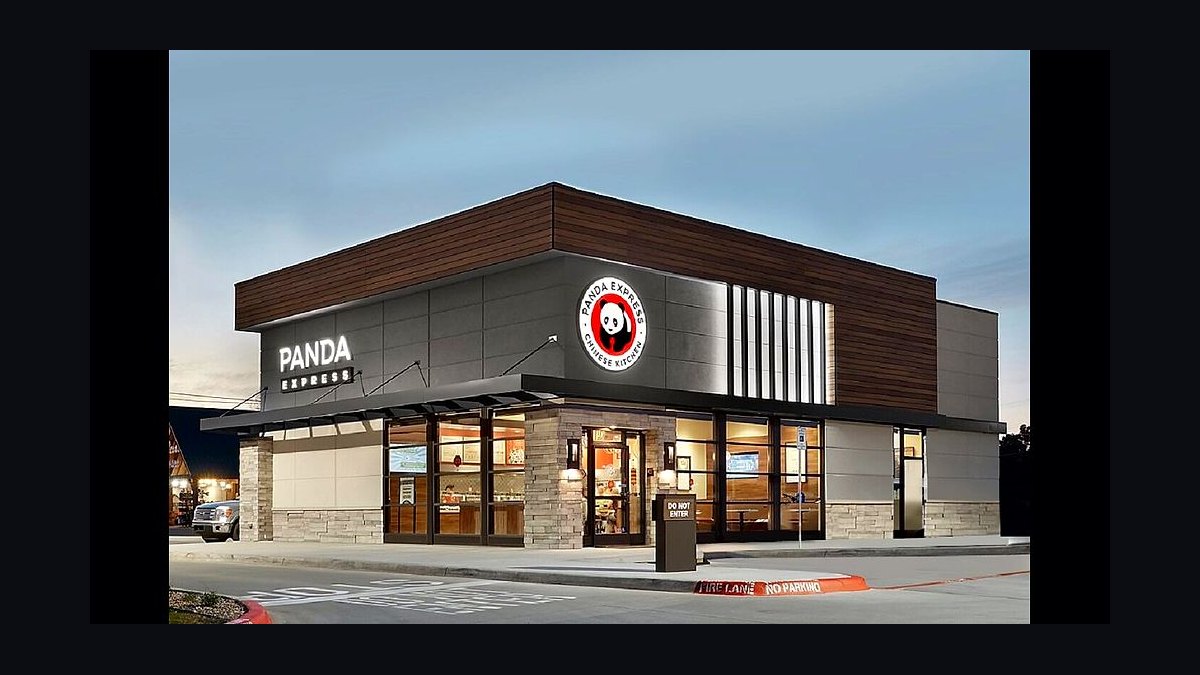
Probably not — unless you already control a captive venue (airport concession, military base, hospital system, large university campus, or theme park) and can pass Panda Restaurant Group's licensing screen. Panda Express does not franchise traditional street-side units to outside investors. The only path in is a non-traditional licensing/joint-venture agreement for captive locations. Realistic 2027 build-out for a non-traditional kiosk runs $510,000 to $3,276,000 (FDD Item 7), with a $25,000 franchise fee, 8% royalty, and 2% marketing fund. Top-quartile airport units clear $4.1M AUV; median franchised AUV is $1.4M (FDD Item 19). Conservative Year-1 cash flow for a non-airport captive unit: $120K-$220K after royalties and rent; payback 4-7 years.
The Real Numbers
Panda Express's franchising model is unusual in QSR. Panda Restaurant Group owns and operates 2,500+ U.S. company units. The franchised footprint is small — ~190 licensed restaurants as of the 2026 FDD — and almost exclusively non-traditional. Below are the real 2026 FDD Item 7 ranges that will price the 2027 cohort (Panda historically files in Q1; the 2027 FDD has not yet been registered as of June 2026).
| Line Item | Low | High | Notes (2026 FDD) |
|---|---|---|---|
| Initial franchise fee | $25,000 | $25,000 | Item 5; non-refundable |
| Real estate / lease deposits | $5,000 | $300,000 | Highly venue-dependent |
| Leasehold improvements / build-out | $250,000 | $2,200,000 | Kiosk vs. inline vs. full footprint |
| Equipment & POS | $150,000 | $400,000 | Wok line, hood, walk-in, Aloha/NCR |
| Signage & decor | $20,000 | $90,000 | Brand standards mandatory |
| Opening inventory | $10,000 | $25,000 | Frozen + dry + produce |
| Training & travel | $5,000 | $35,000 | Rosemead, CA HQ + in-unit |
| Working capital (3 months) | $45,000 | $200,000 | Payroll + utilities + insurance |
| TOTAL initial investment | $510,000 | $3,276,000 | FDD Item 7, 2026 filing |
| Royalty | 8.0% | 8.0% | Gross sales, paid weekly |
| Marketing / brand fund | 2.0% | 2.0% | Gross sales |
| Total ongoing fee load | 10.0% | 10.0% | Of gross revenue |
Revenue and profitability (FDD Item 19, 2026 filing, 187 reporting U.S. franchised units):
| Metric | Bottom Quartile | Median | Top Quartile | Airport Subset |
|---|---|---|---|---|
| AUV (gross sales) | $1.10M | $1.41M | $1.81M | $4.10M+ |
| Food cost % of sales | 30-32% | 29-30% | 27-28% | 26-28% |
| Labor % of sales | 28-30% | 26-28% | 24-26% | 22-25% |
| Rent % of sales | 8-10% | 7-9% | 6-8% | 12-18% (concession fees) |
| Royalty + marketing | 10% | 10% | 10% | 10% |
| Restaurant-level EBITDA margin | 6-9% | 12-15% | 17-20% | 15-22% |
| EBITDA $ | ~$85K | ~$190K | ~$340K | ~$700K+ |
| Simple payback (mid-investment $1.5M) | 10-15 yrs | 6-8 yrs | 4-5 yrs | 2-3 yrs (airport only) |
Reality check: company-operated Panda Express units finished 2024 at $2.592M AUV (per Panda Restaurant Group disclosures cited by QSR Magazine, October 2025). Franchised non-traditional units underperform because captive-venue traffic is bounded — an airport gate, a base food court, a hospital lobby. The only unit type that beats company AUV is major-airport locations (LAX, DFW, ORD, ATL), which clear $4.1M+ but pay 12-18% concession fees on top of the 10% royalty/marketing load.
Who Wins With This Business
You win with Panda Express franchising in 2027 only if you fit a narrow profile.
- Existing airport concessionaires with HMSHost, SSP America, or Areas already-in-portfolio relationships. Panda awards licenses to operators who already hold the concession lease; the brand does not chase real estate for franchisees.
- Military exchange (AAFES/NEXCOM) operators who run multi-brand food courts on bases. These deals are structured as joint ventures where Panda Restaurant Group takes a minority equity position, reducing your capital exposure but capping upside.
- University foodservice contractors — Aramark, Sodexo, Compass/Chartwells — adding a Panda Express kiosk inside a student union or rec center.
- Hospital system foodservice GMs doing captive-cafeteria refresh projects. Cleveland Clinic, Kaiser Permanente, and HCA sites are the realistic peers.
- Multi-unit operators who can absorb 2-3 years of below-market returns to anchor a captive-venue portfolio.
- Operators with $1.5M+ liquid capital and a net worth above $3M. Panda's underwriting bar is closer to Chick-fil-A's selectivity than to McDonald's.
Who Loses With This Business
If you're a first-time franchisee shopping QSR brands online and Panda Express is on your shortlist, you are shopping the wrong brand.
- First-time independent operators with no concession or institutional relationship will be declined at the inquiry stage. Panda's franchise development team does not respond to cold outreach from street-side prospects.
- Suburban strip-mall investors assuming they can build a stand-alone Panda — there is no traditional franchise program.
- Passive investors / absentee owners — even captive-venue licensees must staff a working operator on-site.
- Operators chasing AUV multiples — at 8% royalty + 2% marketing + 12-18% airport concession fees, the revenue split before food and labor can exceed 30%. Compare to Subway's 12.5% all-in or McDonald's 4% royalty.
- Anyone undercapitalized below $750K liquid. Even the lowest-cost kiosk format will exceed your runway when you include 6 months of working capital.
- Investors looking for a 3-year exit — Panda licenses are typically 10-year terms with restrictive transfer clauses.
2027 Market Conditions
The macro picture for Asian-fast-casual QSR in 2027 is mixed, and the captive-venue channel is decoupled from the broader restaurant cycle.
- Air travel volume: TSA throughput is projected to clear 3.1B annual passengers in 2027 (Airports Council International North America forecast, Q1 2026), up 6.4% over 2026. Airport AUVs benefit directly.
- Wage inflation has cooled — federal minimum-wage proposals stalled, California's $20 fast-food minimum (AB 1228) has held since April 2024, and labor markets loosened across Q4 2025-Q1 2026. Captive-venue labor remains the binding constraint.
- Same-store sales: company Panda Express units posted +4.2% comp growth through Q3 2025 (Panda Restaurant Group internal, cited QSR Magazine November 2025). Non-traditional units lag at +1.8%.
- New unit growth: Panda guided to 132 company-owned + 10 franchised openings in 2026. The franchised pipeline for 2027 is similar — 8-12 units, concentrated in airports and military.
- Asian-category competition: CAVA-style modern Asian (e.g., Wokstar, Just Salad's bowl line) is taking share in office-CBD lunch dayparts but does not compete inside captive venues.
- Capital cost: SBA 7(a) rates eased to 9.25-10.75% in May 2026; conventional restaurant financing is 8.75-10.25%.
The 90-Day Decision Tree
A disciplined go/no-go process for an operator who may qualify.
- Days 1-7 — Honest qualification check. Confirm net worth above $3M, liquid above $1.5M, and either (a) a signed concession or institutional lease, or (b) an active RFP you're bidding. If none of these are true, stop.
- Days 8-14 — Request the 2027 FDD. Email
franchisedevelopment@pandarg.com. Expect a screening call, not an FDD, on first contact. - Days 15-30 — Pull and read the FDD cover-to-cover. Focus on Item 5 (fees), Item 6 (ongoing), Item 7 (investment), Item 19 (financial performance), Item 20 (system-wide unit counts and franchise transfers), Item 21 (audited financials).
- Days 31-45 — Validation calls with 8-10 existing franchisees. The FDD Item 20 exhibit lists current licensees by state. Ask: *real* food cost, *real* labor cost, time from LOI to opening, royalty audit experience, transfer mechanics.
- Days 46-60 — Lock the unit economics model. Use the AUV range and margin table above; pressure-test at $1.1M AUV with 8% margin. If it doesn't pencil at that floor, walk away.
- Days 61-75 — Site/venue commitment. Sign the concession or institutional lease subject to Panda licensing approval. Never sign Panda's license before the venue lease.
- Days 76-85 — Capital stack. Lock SBA 7(a) or conventional debt. Hold $200K in reserve outside the build-out budget for working capital and opening losses.
- Days 86-90 — Sign the license. Build-out kicks off; opening is 4-9 months from license execution depending on venue.
Alternative Plays
If you wanted Panda Express because you wanted Asian QSR exposure or captive-venue restaurant ownership, these are the real comparable opportunities you should bid against it.
- Pei Wei Asian Diner franchise — open program, $700K-$1.2M build-out, 6% royalty. Lower AUV (~$1.05M) but accessible.
- Wokstar / Wow Bao licensing — Wow Bao runs a virtual-kitchen license at $15K fee that can pair with an existing captive-venue operator. Lower revenue but near-zero incremental capex.
- Teriyaki Madness — full open franchise, $400-$700K all-in, $1.2M AUV median, 6% royalty.
- Captive-venue multi-brand operator partnership — partner with HMSHost, Areas USA, or SSP America as a sub-operator. You bring capital; they bring the concession.
- Cluster of non-Panda QSR licenses in one captive venue — own the food court, not one tenant. Chick-fil-A licensed airport unit + a Sbarro + a Starbucks licensed store typically out-earn a single Panda unit at lower total capex.
- Buy an existing licensed Panda Express unit via Item 20 transfer disclosure. Panda has right of first refusal, but operator-to-operator transfers do occur. Expect a 3-5x EBITDA multiple on captive units.
FAQ
Can I open a Panda Express franchise as an individual investor? No. Panda Express does not franchise traditional street-side or mall food-court locations to outside investors. The only available path is a non-traditional licensing or joint-venture agreement for captive venues like airports, military bases, hospitals, universities, or theme parks.
What is the realistic total investment for a Panda Express non-traditional unit in 2027? Build-out costs for a non-traditional kiosk or inline unit range from $510,000 to $3,276,000 (based on FDD Item 7). This includes a $25,000 franchise fee, equipment, construction, and initial inventory. Actual costs vary widely depending on venue size, location, and local requirements.
How much can a Panda Express franchisee expect to earn in the first year? For a non-airport captive unit, conservative Year-1 cash flow after royalties and rent is $120,000 to $220,000. Top-quartile airport units average $4.1 million in annual unit volume, while median franchised AUV is $1.4 million (FDD Item 19). Payback period is typically 4 to 7 years.
What are the ongoing fees for a Panda Express license?
You pay an 8% royalty on gross sales and a 2% marketing fund contribution. There is no national advertising fee beyond that. These fees apply to all licensed non-traditional units.
Do I need prior restaurant or food-service experience to qualify? Panda Restaurant Group looks for operators with proven experience in high-volume food service, especially in captive venues. You must also demonstrate financial stability and the ability to manage a complex, high-traffic operation. Prior franchise or multi-unit management experience is strongly preferred.
Can I convert an existing restaurant or location into a Panda Express? No. Panda Express does not offer conversion opportunities. All units must be built to their specific design and equipment standards, and the location must be a captive venue approved by the company. You cannot open a stand-alone or strip-mall location under any circumstances.
Bottom Line
Panda Express in 2027 is not a franchise opportunity for the general operator population. It is a captive-venue license program that exists to extend the company-owned brand into airports, bases, hospitals, and universities where Panda Restaurant Group either cannot or will not operate directly. If you already hold the venue lease and pass the financial screen, the unit economics are respectable — 12-15% restaurant EBITDA at median AUV, 15-22% at airports, and a 6-8 year payback in the mid-case. If you do not hold the venue, stop reading and shop Pei Wei, Teriyaki Madness, or a Wow Bao virtual-kitchen license instead. The brand strength is real and the franchise economics are honest; the access is the bottleneck.
Sources
- Panda Express 2026 Franchise Disclosure Document, Items 5, 6, 7, 19, 20, 21 — filed with the FTC, Q1 2026
- QSR Magazine: Panda Express Continues to Ramp Up Growth, November 2025
- QSR Magazine: Panda Express, Off Another Solid Growth Year, October 2025
- Vetted Biz: Panda Express Franchise Insights — FDD, Costs, Fees
- Franchise Chatter: Panda Express Franchise Review 2025, October 2025
- Sharpsheets: Panda Express Franchise FDD, Profits & Costs (2025)
- Franchimp Database: Panda Express Franchise Analysis, Updated 2026
- Franchise Investor Data: Panda Express Franchise Cost & Profit 2026
- Airports Council International North America — 2027 Passenger Forecast, Q1 2026
- U.S. Small Business Administration — 7(a) Loan Program Rate Sheet, May 2026
- U.S. Bureau of Labor Statistics — Limited-Service Restaurants Employment Cost Index, Q1 2026
- International Franchise Association — Franchise Business Economic Outlook 2027
Related on PULSE
- Should I open or buy a Holiday Inn Express franchise in 2027?
- Should I open or buy a RNR Tire Express franchise in 2027?
- Should I open or buy an Express Oil Change & Tire franchise in 2027?
- Should I open or buy a Chicken Express franchise in 2027?
- Should I open or buy a Goo Goo Express Wash franchise in 2027?
- Should I open or buy a Tommy's Express Car Wash franchise in 2027?
This page will be disappearing soon. Save it to your device for $1 — or read it free while it is here.
@Kory-White- · if Venmo asks, the last 4 of my number are 2012
This page is gone.
This one is off the shelf now. $1 keeps it on your phone for good — the whole page, pictures and diagrams included.
 franchiseShould I open or buy a Rita's Italian Ice franchise in 2027?
 franchiseShould I open or buy a Goddard School franchise in 2027?
 franchiseShould I open or buy a Supercuts franchise in 2027?
 franchiseShould I open or buy an F45 Training franchise in 2027?
 franchiseShould I open or buy a Pizza Hut franchise in 2027?
 franchiseShould I open or buy a Whataburger franchise in 2027?
 franchiseShould I open or buy a Roto-Rooter franchise in 2027?
 franchiseShould I open or buy an Auntie Anne's franchise in 2027?
 franchiseShould I open or buy a Dairy Queen franchise in 2027?
 franchiseShould I open or buy a Big O Tires franchise in 2027?