


Should I open or buy a Salata franchise in 2027?
Quality
Certified
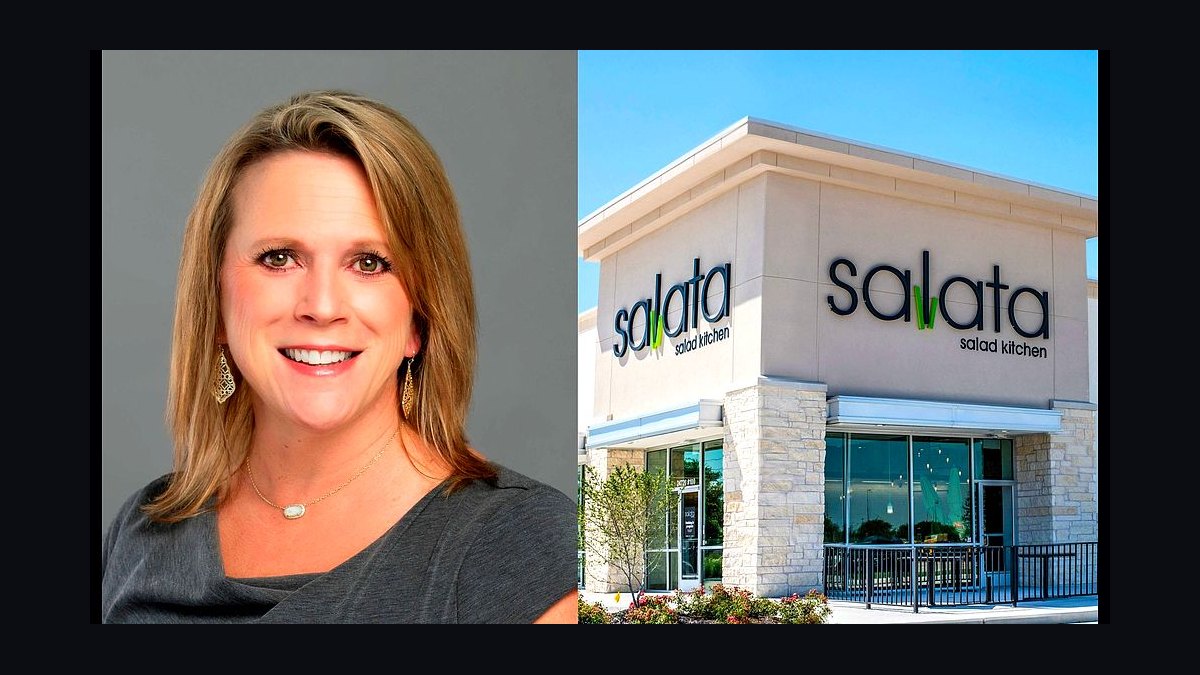
Probably not — unless you are a multi-unit operator inside Salata's Sunbelt footprint (Texas, Florida, Georgia, the Carolinas, Louisiana, Alabama) with $300K-$500K in liquid capital, $1M+ net worth, and at least one partner who has run fast-casual labor before. A traditional in-line Salata Salad Kitchen opens for $522,000 to $968,500 all-in (FDD Item 7, 2025 disclosure), with a $40,000 franchise fee and 6% royalty + 2% brand fund. System-wide AUV exceeds $1 million per Salata corporate (Restaurant Dive, Nov 2024), implying conservative Year-1 cash flow of $90K-$140K after debt service. Breakeven runs 4.5-6.5 years for an in-line build, 3-5 years for an end-cap with a strong daypart. Single-unit hobbyists should walk away.
The Real Numbers
Salata's published FDD Item 7 range covers both site types and is unusually wide because the brand has not standardized one prototype. The numbers below are 2025 FDD figures (most recent registered disclosure) extrapolated to 2027 build costs using a 6-8% construction inflation factor per the ENR Construction Cost Index and NAHB cost data. Salata's Item 19 does not publish a full P&L; it discloses average unit revenue (AUV) above $1 million system-wide, leaving operators to model EBITDA from comparable fast-casual salad benchmarks (Sweetgreen S-1, Just Salad investor decks, Technomic 2026 fast-casual report).
| Line Item | Low (in-line) | High (in-line) | Notes |
|---|---|---|---|
| Initial franchise fee | $40,000 | $40,000 | Paid to Salata Franchising, LLC |
| Leasehold improvements / build-out | $220,000 | $465,000 | 1,800-2,400 sq ft; HVAC, plumbing, hood |
| Equipment + smallwares | $95,000 | $155,000 | Walk-in, prep tables, POS, dressing line |
| Signage + branding | $15,000 | $35,000 | Exterior channel letters, interior decor |
| Opening inventory | $8,000 | $14,000 | Produce, proteins, packaging |
| Training + travel | $10,000 | $18,000 | 6-week certified-manager program |
| Insurance, permits, legal | $9,000 | $22,000 | GL, workers' comp, liquor (if applicable) |
| Pre-opening marketing | $12,000 | $24,000 | Grand opening, geo-fenced digital |
| Working capital (3 months) | $60,000 | $110,000 | Payroll, rent, utilities runway |
| Real estate deposits + rent | $25,000 | $55,000 | Typical 2-3 months rent + security |
| Contingency | $28,000 | $30,500 | 5-7% buffer (FDD recommended) |
| TOTAL (in-line shopping center) | $522,000 | $968,500 | FDD Item 7, 2025 |
| TOTAL (non-traditional/business district) | $285,500 | $600,000 | Smaller footprint, no full build |
| Ongoing royalty | 6.0% of net sales | — | Paid weekly |
| Brand development fund | 2.0% of net sales | — | National marketing pool |
| Local marketing minimum | 1.0% | — | Required spend in-market |
Revenue and margin model (in-line unit, Year 2 stabilized, 2027 dollars):
- System AUV: $1.05M-$1.15M (Salata corporate, Restaurant Dive Nov 2024)
- Top quartile: $1.4M-$1.7M (mature Houston/Dallas units, per VettedBiz estimates)
- COGS: 28-31% of sales (produce-heavy menu, Technomic 2026 fast-casual benchmark)
- Labor: 27-30% (one assembly line, 8-12 FTE, BLS QSR wage data $14.80/hr median)
- Occupancy: 8-10% (NNN, Sunbelt strip)
- Royalty + brand fund + local: 9%
- Other opex: 6-8%
- EBITDA margin: 9-13% system AUV; 15-18% top quartile
- Year-1 cash flow before debt service: $95K-$145K (typical), $200K+ (top quartile)
- Payback period: 5.0-7.0 years (VettedBiz), 3.5-4.5 years (top quartile end-cap)
Who Wins With This Business
The operators who win with Salata Salad Kitchen in 2027 share five traits:
- Multi-unit, multi-brand operators who already run Chick-fil-A, Jersey Mike's, or Tropical Smoothie territories. They have GM bench depth, broker relationships, and construction crews that compress build timelines from 14 months to 8.
- Sunbelt-anchored investors with Texas, Florida, Georgia, Carolinas, Louisiana, or Alabama real estate access. Salata's brand recognition is regional, not national — operators in legacy markets enjoy a 20-30% AUV premium over greenfield markets.
- Operators who target end-caps with drive-thru potential. Salata is piloting drive-thru retrofits and 2027 development agreements prioritize sites with drive-thru envelope approval.
- Cash-rich franchisees willing to self-fund working capital rather than relying on SBA 7(a) loans at 10.5-11.5% prime+ (current Fed funds 4.25-4.50% as of June 2026). Debt service kills Year-1 cash flow when AUV ramps slowly.
- B2B-savvy operators who can land catering contracts with regional hospitals, law firms, and corporate parks. Catering drives 22-28% of mature-unit revenue at Salata, per franchisor disclosures to Franchise Times.
If you tick four of five boxes, Salata is a defensible play. Three or fewer and the math gets fragile.
Who Loses With This Business
The operators who lose with Salata in 2027:

- Single-unit, first-time franchisees outside the Sunbelt corridor. Brand awareness in Ohio, Pennsylvania, or the Pacific Northwest is effectively zero, and Salata's national ad spend cannot prime the market the way Sweetgreen's $87M 2025 ad budget does.
- Investors expecting passive income. Salata requires an owner-operator or full-time GM; absentee ownership consistently shows 180-220 bps lower EBITDA in fast-casual peer benchmarks (FRANdata 2026 study).
- Operators chasing peak salad. Sweetgreen guided to -4% to -2% same-store sales for 2026 (Restaurant Business Online, Feb 2026). Just Salad, Chopt, and Salata all face the same headwind — the $15-$18 lunch salad ceiling is real, and consumers are trading down to wraps, bowls, and grain plates.
- Real estate amateurs. A wrong site — interior in-line with no lunch-daypart office anchor — produces $650K-$800K AUV and negative EBITDA after debt service for years. Salata's site-selection team approves locations, but final risk sits with the franchisee.
- Operators undercapitalized below $300K liquid. The FDD-recommended $60K-$110K working capital is light; real-world cash burn in months 1-9 frequently runs $140K-$180K, especially with 2027 produce inflation projected at 4-6% per USDA ERS food price outlook.
2027 Market Conditions
Five forces are reshaping the fast-casual salad category in 2027:

- Same-store sales pressure. Sweetgreen, Just Salad, and Cava all reported decelerating traffic in Q4 2025 and Q1 2026. Sweetgreen projects -2% to -4% comps for fiscal 2026. The $20 fast-casual salad ceiling identified by Refinery29 and The Food Institute is now a structural cap, not a temporary blip.
- Drive-thru is the new moat. CAVA runs dozens of drive-thru units, Just Salad opened its first in Livingston, NJ with 3-5 more in pipeline, and Salata is piloting drive-thru at select 2026 openings. Operators who lock end-cap drive-thru sites now will have a 3-5 year competitive runway.
- Menu broadening. Salata added warm bowls, wraps, and seasonal grain plates in 2025-2026 to combat menu fatigue and winter daypart softness. Sweetgreen launched a value ladder with wraps starting at $10.95. Pure-play salad is being replaced by bowl-and-wrap hybrid menus.
- Automation pressure. Sweetgreen's Infinite Kitchen is delivering 10-point higher restaurant margins per NRN reporting. Salata has not announced automation rollouts, which creates a margin-disadvantage risk if labor costs continue climbing 5-7% annually per BLS QSR wage tracker.
- Multi-unit operator consolidation. Salata's 2025-2026 strategy memo (covered by Franchising.com) explicitly courts multi-unit operators over single-store franchisees. New development agreements default to 3-5 store commitments with escrowed franchise fees.
The 90-Day Decision Tree
- Days 1-7 — Pull the FDD. Request the current Salata Franchising, LLC FDD directly from the brand or via your state regulator (California, Illinois, Maryland, Minnesota, New York, North Dakota, Rhode Island, South Dakota, Virginia, Washington, Wisconsin require state filings). Read Item 7, Item 19, Item 20, Item 21 word-for-word.
- Days 8-21 — Validate with 10+ franchisees. Call at least 10 current franchisees from the FDD Item 20 contact list. Ask specifically: AUV by year, EBITDA margin, catering percentage, labor pain points, franchisor support quality, and whether they would buy another unit.
- Days 22-35 — Site economics. Walk 3 to 5 target sites with a commercial broker specializing in QSR. Pull demographics, daytime population, lunch competition, and rent per sq ft. Reject sites with <25,000 daytime population in 1-mile radius or >$45/sq ft NNN.
- Days 36-50 — Capital stack. Lock SBA 7(a) pre-qualification (currently prime + 2.25-2.75%, June 2026 rate ~10.75%). Secure $300K-$500K cash equity. Confirm landlord TI allowance ($35-$60 per sq ft typical).
- Days 51-65 — Operator hire. Recruit a GM with 3+ years fast-casual experience at $70K-$85K base + 10% profit share. Without this hire, walk away.
- Days 66-80 — Franchisee discovery day. Attend Salata corporate discovery day in Houston. Stress-test the 5-year unit economic model with their development team.
- Days 81-90 — Sign or walk. Execute development agreement (3-5 stores) or single-unit agreement, OR kill the deal. Indecision after 90 days costs $5K-$10K in legal and travel and signals to the brand you cannot commit.
Alternative Plays
If Salata does not pencil, consider:
- Salad and Go — $5.99 drive-thru salads, 140+ units, faster Sunbelt expansion. Not actively franchising (corporate-owned), but regional licensees are emerging.
- Just Salad — $25K franchise fee, $487K-$847K total investment, 6% royalty, NYC + East Coast brand strength, new drive-thru prototype.
- CAVA — Mediterranean bowl alternative, corporate-owned, no franchising, but publicly traded (NYSE: CAVA) for passive exposure at ~50x forward earnings (June 2026).
- Chopt Creative Salad — East Coast urban, $650K-$1.1M build, B2B catering-heavy, similar unit economics to Salata.
- Tropical Smoothie Cafe — broader menu, 1,400+ units, $298K-$606K investment, $1.1M AUV system-wide, higher brand awareness outside Sunbelt.
- Tocaya / Mendocino Farms — premium fast-casual, higher ticket ($16-$22), limited franchising, stronger California presence.
- Wait 12-18 months. If fast-casual salad comps stabilize and Salata announces automation, the 2028 FDD may show stronger unit economics with better margin protection.
FAQ

What is the total investment to open a Salata franchise? The all-in cost for a traditional in-line Salata Salad Kitchen ranges from $522,000 to $968,500, per the 2025 FDD Item 7. This includes a $40,000 franchise fee, build-out, equipment, and initial inventory. End-cap or freestanding locations may fall on the higher end of that range.
How much liquid capital do I need to qualify? Salata typically requires $300,000 to $500,000 in liquid capital and a net worth of at least $1 million. Multi-unit operators with existing fast-casual experience are strongly preferred over single-unit newcomers.
What are the ongoing royalty and marketing fees? You’ll pay a 6% royalty on gross sales plus a 2% brand fund contribution. These are standard for the fast-casual segment and are deducted weekly or monthly depending on your agreement.
How long does it take to break even?
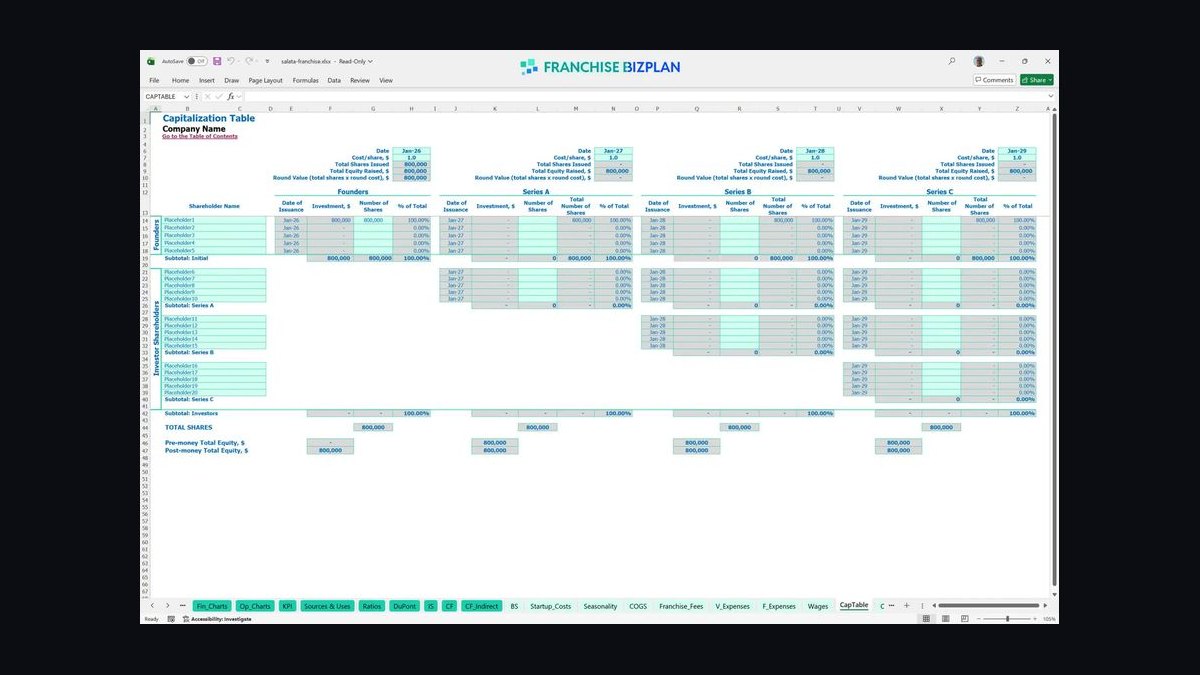
Breakeven typically takes 4.5 to 6.5 years for an in-line build, and 3 to 5 years for an end-cap with strong daypart traffic. Actual timing depends on location, local labor costs, and your operational efficiency.
What is the average unit volume (AUV) for Salata? System-wide AUV exceeds $1 million, according to Salata corporate and industry reports. That translates to conservative Year-1 cash flow of $90,000 to $140,000 after debt service, though results vary widely by market.
Is Salata a good fit for first-time franchisees? Generally no — unless you have a partner with proven fast-casual labor management experience. Single-unit hobbyists should walk away. The brand prioritizes multi-unit operators inside its Sunbelt footprint who can handle the capital and operational demands.
Bottom Line
Salata Salad Kitchen in 2027 is a defensible but narrow opportunity. It works for Sunbelt-anchored multi-unit operators with $300K-$500K liquid, construction discipline, and catering-channel hustle. System-wide AUV exceeds $1 million, 6% royalty is fee-friendly, and the brand is actively courting multi-unit development agreements. It does not work for single-unit, first-time, out-of-territory, or under-capitalized operators, particularly with fast-casual salad comps decelerating and automation pressure mounting from Sweetgreen's Infinite Kitchen. Best move: commit to 3-5 stores in Texas, Florida, Georgia, the Carolinas, or Louisiana with end-cap drive-thru sites, or wait for the 2028 FDD to see whether Salata announces automation, margin uplift, or accelerated franchisee support.
Sources
- Salata Salad Kitchen Franchise Insights — VettedBiz
- Salata Investment page — franchise.salata.com
- Salata 2022 FDD — RestFinance
- How Salata plans to triple its store count — Restaurant Dive, Nov 2024
- Salata Salad Kitchen Primed For Multi-Unit Growth — Franchising.com
- Start a Salata Salad Kitchen Franchise in 2026 — Entrepreneur
- Salata Franchise Review — FranchiseGrade.com
- Sweetgreen 1,000-unit target — Restaurant Business Online
- Salad Chains Diversify as Peak Salad Looms — The Food Institute
- The Rise of $20 Fast-Casual Salad — Refinery29
- What CAVA, Sweetgreen, and Just Salad are doing right — NRN
- USDA ERS Food Price Outlook 2026-2027
Related on PULSE
This page will be disappearing soon. Save it to your device for $1 — or read it free while it is here.
@Kory-White- · if Venmo asks, the last 4 of my number are 2012
This page is gone.
This one is off the shelf now. $1 keeps it on your phone for good — the whole page, pictures and diagrams included.
 franchiseShould I open or buy a Primrose Schools franchise in 2027?
 franchiseShould I open or buy a Bahama Breeze franchise in 2027?
 franchiseShould I open or buy a Panera Bread franchise in 2027?
 franchiseShould I open or buy a Firehouse Subs franchise in 2027?
 franchiseShould I open or buy a Drybar franchise in 2027?
 franchiseShould I open or buy a Bojangles franchise in 2027?
 franchiseShould I open or buy a Big O Tires franchise in 2027?
 franchiseShould I open or buy a Crumbl Cookies franchise in 2027?
 franchiseShould I open or buy a Jeremiah's Italian Ice franchise in 2027?
 franchiseShould I open or buy a Roto-Rooter franchise in 2027?