


Should I open or buy a Perkins franchise in 2027?
Quality
Certified

Opening a new Perkins franchise in 2027 rarely pencils out: a $1.3M–$3.6M build against a declining family-dining segment produces a 9–13 year payback. Buying an existing unit or converting a closed competitor's box for $400K–$700K can work, but only for operators who already run profitable family-dining restaurants, hold $1M+ net worth, and can secure a retirement-corridor or interstate-hotel-cluster location.
The outcome you should expect
If you open a ground-up Perkins franchise in 2027, expect a long, capital-intensive slog rather than a quick win. The 2026 Perkins FDD lists a total investment range of $1,313,890 to $3,581,375, a $40,000 initial franchise fee, a 4.0% royalty, and a 3.0% marketing contribution. Against a median unit volume of $1.9M and a realistic 8–10% restaurant-level EBITDA margin, a new operator should plan on $152,000 to $190,000 of Year-1 cash flow before debt service and before paying themselves a salary. On a $2M+ all-in investment, that produces a 9-to-13-year cash payback — long even by restaurant-industry standards, where most concepts target 5-to-7 years.
The picture changes meaningfully if you buy rather than build. Acquiring an existing, profitable Perkins location, or converting a closed family-dining box (Friendly's, Bakers Square, Village Inn) into a Perkins, typically runs $400,000 to $700,000 all-in because the kitchen hoods, walk-ins, grease traps, and much of the smallwares infrastructure already exist. That math compresses payback to 3-to-5 years, which is a defensible outcome for the right buyer. The dividing line between "should open" and "should not open" in 2027 is almost entirely a function of entry cost, not brand quality — Perkins food and operations are not the problem; the capital structure of greenfield construction is.
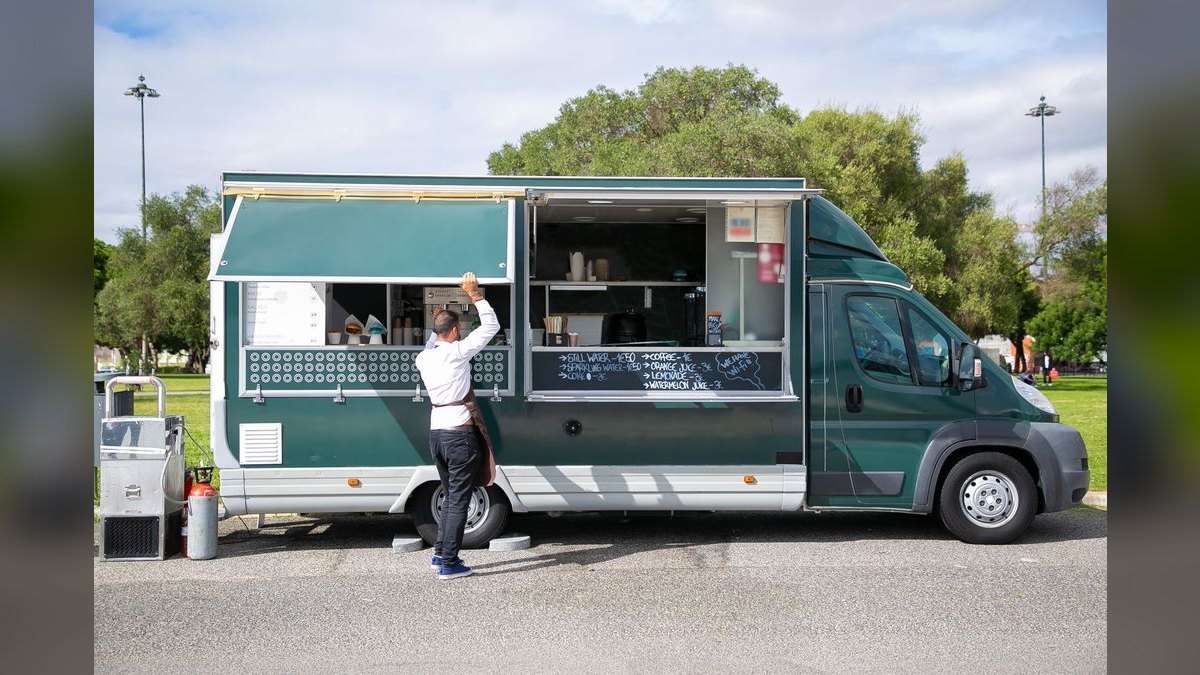
You should also expect the segment itself to work against you unless you're targeting a specific demographic pocket. Family dining as a category grew just 0.3% in 2025, the weakest performance in five years, and Perkins specifically posted a same-store sales decline of roughly 5.3%. That is not a brand in freefall, but it is a brand losing share to breakfast-and-lunch-only concepts like First Watch and Snooze A.M. Eatery, which posted double-digit segment growth over the same period by narrowing hours, simplifying menus, and lowering labor complexity. If you open a Perkins expecting tailwinds similar to those faster-growing concepts, you will be disappointed; if you open one understanding you're buying into a mature, slow-growth category with a loyal older customer base, your expectations will match reality.
What drives that outcome
Three forces interact to produce the payback timeline above: your entry cost, your local AUV ceiling, and your fixed royalty/marketing burden. Entry cost is the biggest lever by far — it's the difference between a 3-year payback and a 13-year one on the exact same operating performance. AUV ceiling depends heavily on trade area: a Perkins near a retirement-heavy suburb, a hospital, or an interstate exit with hotel clusters can push past $2.4M in annual volume, while an urban-core or heavily competitive suburban site struggles to clear $1.4M. Royalty and marketing fees are fixed percentages (4.0% and 3.0% of net sales respectively, with local advertising minimums layered on top), so they scale with revenue but never disappear — a low-volume unit pays the same percentage burden as a high-volume one, which is exactly why bottom-quartile units struggle to clear a manager's salary after all costs.
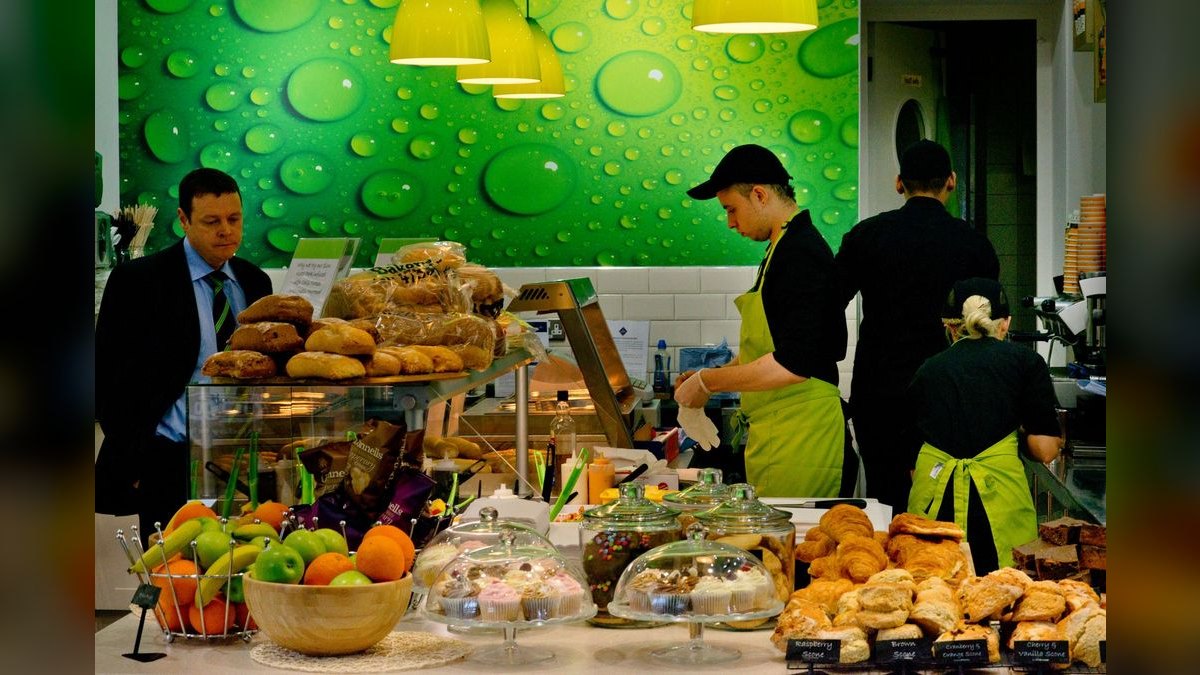
Operator experience is the fourth, less visible driver. Multi-unit family-dining veterans who already run Denny's, IHOP, Cracker Barrel, or Bob Evans locations import shared purchasing relationships with broadline distributors, cross-trained labor pools, and back-office systems that a first-time owner has to build from zero. That operating leverage doesn't show up in the FDD's Item 19 tables, but it's often the single biggest determinant of whether a given unit lands in the top quartile or the bottom quartile of system performance.
Benchmarks and realistic ranges
Use these figures, drawn from the 2026 Perkins FDD (Item 7 investment range, Item 19 financial performance) and independent industry benchmarks, to stress-test any deal before you sign:
- Total investment (greenfield): $1,313,890–$3,581,375, including construction, equipment, bakery case, POS/technology, signage, opening inventory, training, and working capital.
- Total investment (conversion/resale): roughly $400,000–$700,000 all-in, depending on the condition of the acquired box and how much of the kitchen infrastructure survives.
- Franchise fee: $40,000 for a single traditional unit.
- Ongoing royalty: 4.0% of net sales.
- Marketing fund contribution: 3.0% of net sales (with a contractual ability to rise to 4.0%), plus a 1.5% local advertising minimum.
- Median annual unit volume (AUV): approximately $1.9M across the 247-unit reporting sample; mean AUV around $2.0M.
- Top-quartile AUV: roughly $2.6M; bottom-quartile AUV: roughly $1.4M — a wide enough spread that trade-area selection matters more than almost any other variable.
- Restaurant-level EBITDA margin: 8%–12%, based on operator interviews, before debt service and owner compensation.
- Cash payback: 9–13 years for greenfield construction; 3–5 years for a conversion or resale.
- Liquid capital required: $400,000 minimum; net worth required: $1,000,000 minimum, per franchisor qualification standards.
- Term length: a 20-year agreement with two 10-year renewal options.
Run your own numbers against these ranges rather than the marketing pitch. At the median $1.9M AUV, royalty plus marketing fees alone consume about $133,000 a year before you've paid for food cost (typically 29%–31% of sales), labor (32%–35%), rent (6%–8%), and utilities. A bottom-quartile $1.4M unit at an 8% EBITDA margin nets roughly $112,000 — a figure that, in many metros, is below what you'd pay a qualified general manager. The takeaway: don't sign based on the median or the mean; underwrite the deal at the bottom-quartile AUV and see if it still survives.
Risks, edge cases, and failure modes
The clearest failure mode is opening a greenfield Perkins as a first-time restaurant operator. The operational complexity — a menu spanning 160-plus items across breakfast, lunch, dinner, and a full bakery program, combined with extended or near-24-hour operating hours at many legacy locations — punishes inexperience harder than almost any other franchise category. First-time owners without a bench of trained shift leads and assistant managers tend to burn out staff, under-merchandise the bakery case, and miss the labor-cost targets that separate a profitable unit from a break-even one.
A second failure mode is urban-core placement. Units in dense metro trade areas have closed at roughly 2–3 times the systemwide average rate since 2020, largely because rent and minimum-wage increases compress margins on a modest $12 average check faster than sales can grow. A related risk is financing: SBA 7(a) lenders have grown cautious on family-dining concepts generally, and Perkins specifically has seen approval rates fall well below faster-growing quick-service and fast-casual brands, following a wave of company-unit closures in early 2026. If your deal depends on 7(a) financing, expect more underwriting scrutiny and a longer approval runway than you'd face financing a higher-growth concept.
A third, more subtle risk is over-relying on system marketing support. Perkins' systemwide marketing fund is thin relative to sales when set against category leaders — meaning individual operators carry more of the local demand-generation burden than they might expect from a national franchise relationship. Finally, watch litigation and closure history in Item 3 and Item 20 of any FDD you review: a franchisor engaged in disputes with existing multi-unit operators, or showing three-plus consecutive years of net unit decline, is a signal worth a paid attorney review before you commit capital.
The edge case that actually works: an existing multi-unit family-dining operator, already running three or more profitable units, acquiring a closed competitor's box in a retirement-corridor or interstate-hotel-cluster location, with a deliberate plan to merchandise the bakery case for incremental margin. That combination — cheap basis, operator scale, and favorable demographics — is the narrow lane where opening (via acquisition) a Perkins in 2027 remains defensible.
A practical rollout plan
Treat the decision as a staged, gated process rather than a single go/no-go call. First, pull and read the current FDD directly from the franchisor, focusing on Item 3 (litigation), Item 7 (investment range), Item 19 (financial performance), and Item 20 (unit counts and closures) — a pattern of net negative units over multiple years is worth paying an attorney to review before you go further. Second, validate real demand in your specific trade area using foot-traffic or trade-area analytics on the nearest existing units; if daily visit counts run meaningfully below what the median AUV implies, don't trust the system-wide average to apply to your site. Third, call a meaningful sample of existing franchisees listed in Item 20 and ask directly about actual EBITDA margins, labor as a percentage of sales, bakery contribution, and whether they'd sign the agreement again today.
Fourth, actively search for a conversion or resale opportunity rather than defaulting to new construction — closed family-dining boxes come to market regularly, and buying at a multiple of existing EBITDA is consistently the better economic path into this brand. Fifth, line up financing early with lenders who actively work in family dining, since approval timelines and terms vary more by lender than by borrower quality in this category right now. Sixth, apply firm site-selection criteria — adequate square footage, seat count, acreage, and daily traffic counts on the adjacent road — and walk away from any site that fails more than one criterion. Finally, set a hard underwriting bar before signing: if the projected AUV, labor percentage, occupancy cost, and restaurant-level EBITDA don't clear thresholds you set in step one, redirect that capital to a faster-growing adjacent concept rather than forcing the Perkins deal to work.
Related questions
Is Perkins a better investment than IHOP or Denny's in 2027?
Perkins generally trails both on system marketing spend and recent same-store sales trends, though its bakery program and retirement-demographic skew are differentiators. Underwrite each against your specific trade area rather than brand reputation alone.
How much does it cost to convert a closed restaurant into a franchise unit?
Conversions typically run 30%–60% of greenfield construction cost, since kitchen hoods, walk-in coolers, and grease infrastructure often transfer. Expect $400,000–$700,000 for a family-dining conversion depending on condition.
What franchise disclosure sections matter most before signing?
Item 3 (litigation), Item 7 (investment range), Item 19 (financial performance), and Item 20 (unit counts and closures) are the four sections that most directly predict whether a deal will perform as advertised.
Are breakfast-and-lunch-only concepts a safer bet than full-menu family dining in 2027?
Generally yes on growth rate and labor complexity — narrower hours and simpler menus have driven faster same-store growth industry-wide — though they typically carry higher AUVs and comparable investment ranges.
Does multi-unit ownership actually reduce franchise risk?
Yes, meaningfully. Shared purchasing, cross-trained labor, and existing back-office systems reduce both the cost and the operational risk of adding a unit compared to a first-time single-unit owner starting from scratch.
FAQ
What is the realistic total investment to open a Perkins franchise in 2027?
The startup range runs $1.3M to $3.6M for new construction, including a $40,000 franchise fee, with most new franchisees landing toward the higher end once construction and equipment costs are finalized. A conversion or resale typically runs $400,000 to $700,000 all-in.
How much can I expect to earn in the first year? At the median $1.9M AUV with an 8%–10% restaurant-level EBITDA margin, first-year cash flow lands around $150,000 to $190,000, before debt service and before paying yourself a salary, so actual take-home is meaningfully lower.
How long until I break even on a new build? With a $2M-plus total investment producing $150,000–$190,000 in annual cash flow, payback stretches to 9–13 years — long relative to most franchise categories. A conversion at $400,000–$700,000 can pay back in 3–5 years if local sales hold.
Is Perkins a good franchise for first-time restaurant owners? Generally no. The economics favor experienced, multi-unit operators with $1M-plus in liquid net worth and existing family-dining operations, since the segment is flat to declining and leaves little room for operational learning curves.
Can I buy an existing Perkins instead of building new? Yes, and it's typically the stronger path. Acquiring a closed Perkins or a comparable family-dining box for $400,000–$700,000 all-in avoids greenfield construction costs and shortens payback considerably, provided local demand supports the location.
What are the ongoing fees and royalties? Franchisees pay a 4.0% royalty on gross sales plus a 3.0% marketing fund contribution, with a 1.5% local advertising minimum layered on top. On $1.9M in sales, that's roughly $133,000 per year flowing out before any operating costs are paid.
Sources
- https://www.ftc.gov/business-guidance/resources/franchise-rule-compliance-guide
- https://www.technomic.com
- https://www.restaurantbusinessonline.com
- https://nrn.com
- https://www.franchisetimes.com
- https://www.restaurant.org
- https://www.ibisworld.com
- https://www.census.gov
- https://www.sba.gov/funding-programs/loans/7a-loans
- https://www.perkinsrestaurants.com
Related on PULSE
This page will be disappearing soon. Save it to your device for $1 — or read it free while it is here.
@Kory-White- · if Venmo asks, the last 4 of my number are 2012
This page is gone.
This one is off the shelf now. $1 keeps it on your phone for good — the whole page, pictures and diagrams included.
 franchiseShould I open or buy a Mac Tools franchise in 2027?
 franchiseShould I open or buy a Servpro franchise in 2027?
 franchiseShould I open or buy a Little Caesars franchise in 2027?
 franchiseShould I open or buy a Bruster's Real Ice Cream franchise in 2027?
 franchiseShould I open or buy a Take 5 Oil Change franchise in 2027?
 franchiseShould I open or buy a Supercuts franchise in 2027?
 frShould I open or buy a McDonald's franchise in 2027?
 franchiseShould I open or buy a UPS Store franchise in 2027?
 franchiseShould I open or buy a Panera Bread franchise in 2027?
 franchiseShould I open or buy an Auntie Anne's franchise in 2027?