


Should I open or buy a Keller Williams Realty franchise in 2027?
Quality
Certified
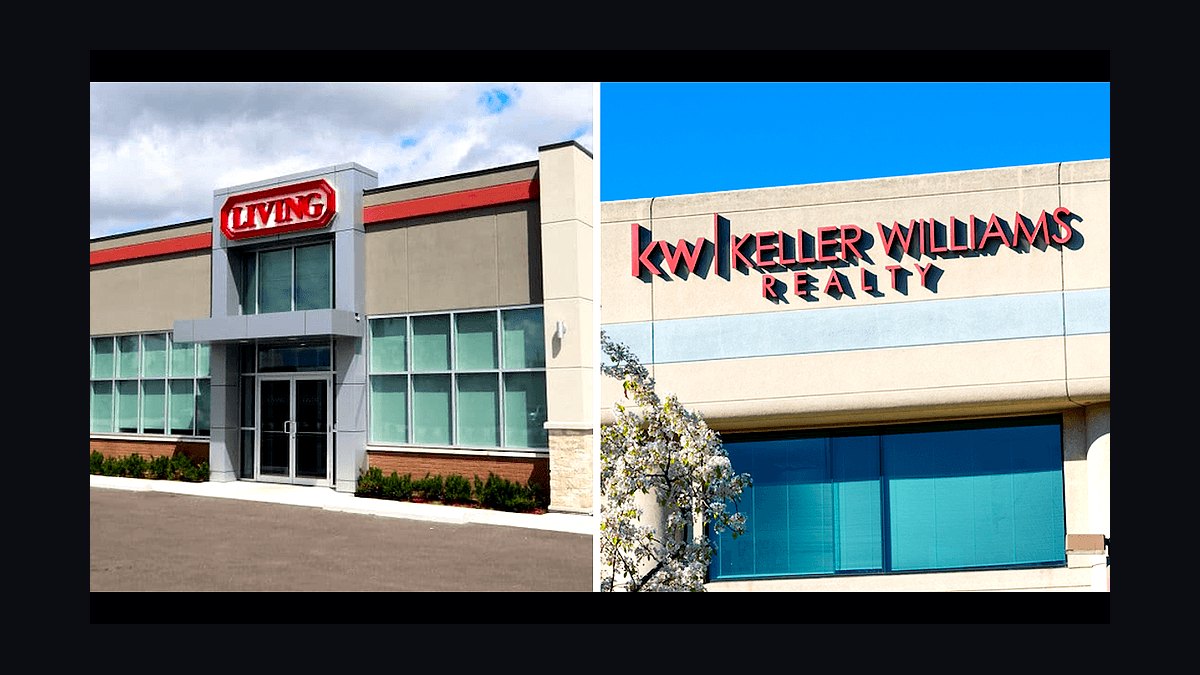
Only if you already run a high-volume brokerage, hold $400,000+ in liquid capital, and can move 30 committed producing agents on opening day. Otherwise no. A 2027 Market Center costs roughly $182,000–$336,000 to open, takes 24–36 months to breakeven, and Keller Williams discloses no Item 19 earnings figures.
What a Market Center actually is, and why the distinction decides the answer
Most people who ask this question are picturing the wrong business. They imagine buying a real estate operation — listings, closings, commission checks. What Keller Williams Realty actually franchises is a Market Center: a licensed brokerage location whose entire economic engine is recruiting, housing, training, and retaining independent-contractor agents. You do not sell houses for a living. You sell a place for agents to sell houses from.
The revenue mechanics follow directly from that. Each agent affiliated with your Market Center splits commission with the house — the familiar KW structure is roughly 64/36 in the agent's favor on gross commission income until that agent hits an annual cap, after which the agent moves to effectively 100% for the remainder of their anniversary year. The house's share is called company dollar. Company dollar is the only line item that pays your rent, your staff, your franchise royalty, and eventually you.
That single fact reorganizes every decision you will make. Consider what it means concretely:

- Your revenue is a function of agent count multiplied by average agent production, not of your own selling skill. A 40-agent office full of part-timers closing two deals a year generates less company dollar than a 20-agent office of full-time professionals closing eighteen.
- Capped agents produce almost no company dollar. Success creates a strange dynamic: your best producers cap early in the year and then run nearly free inside your office for eight months. You want them anyway — they attract other agents — but they are not the ones paying your lease in Q4.
- Churn is the silent killer. An agent who joins in March, produces two closings, and leaves in September cost you onboarding time, desk resources, training seats, and technology fees while contributing a few thousand dollars of company dollar.
Layered on top of company dollar is profit share, KW's distinguishing feature. A defined portion of Market Center owner profit flows back to the agents in the sponsorship tree of the people who recruited each producing agent. Publicly, KW describes distributing roughly 48% of Market Center profit into the profit-share network. Read that carefully as a prospective owner: it is a genuinely powerful *agent* recruiting and retention tool, and it is simultaneously a structural claim on roughly half of the profit line you were planning to live on. The brand's most attractive feature for the people you recruit is a permanent deduction from your P&L. That is not a scandal — it is the deal — but it should appear in your model explicitly rather than as an afterthought.
The franchise royalty is 6% of each agent's commission, capped at $3,000 per agent per year. The cap is real relief at scale, and it changes the shape of your unit economics in a way worth internalizing: your marginal cost per productive agent flattens once that agent caps out on royalty, so the incremental dollar of production from a high-volume agent is dramatically more profitable to you than the first dollar. This is why every experienced Market Center operator obsesses over productive agent count rather than raw headcount, and why a roster of 200 hobbyists is a worse business than 80 professionals.

Why does the distinction matter for your decision? Because the skill that makes someone a $400,000-GCI agent — winning listings, negotiating, farming a neighborhood — has almost no overlap with the skill that makes a Market Center profitable: running a recruiting funnel, building a training calendar people show up for, managing a Team Leader, and holding a culture together through a soft market. Franchisors in every recruiting-driven category see the same failure mode. The top individual producer buys the location, discovers the job is management, and does both jobs badly.
The step-by-step process from inquiry to open doors
The sequence below is the honest version, compressed into roughly ninety days of diligence plus a build-out period. The order matters enormously: nearly every expensive mistake in this category comes from signing before recruiting.
Days 1–7 — Pull the Franchise Disclosure Document from the source. Request the current FDD directly from Keller Williams' franchise development channel, not a third-party lead-generation portal that will resell your contact information. Under the FTC Franchise Rule (16 CFR Part 436), you are entitled to it and must receive it at least 14 days before you sign anything or pay any money. Read Item 5 (initial fees), Item 6 (ongoing fees), Item 7 (estimated initial investment), Item 11 (franchisor obligations, training, technology), Item 17 (renewal, termination, transfer, dispute resolution), Item 19 (financial performance representations), and Item 20 (outlet counts and the franchisee contact list). Item 19 is optional under the rule. When it is absent, the franchisor is telling you it will not stand behind any earnings number — and you should treat every profitability figure you find online as an estimate by someone with no access to the books.

Days 8–21 — Underwrite the territory before you fall in love with it. Map every existing Market Center within a 35-mile radius. Call each one and ask, as a prospective agent, how many agents they have and what their training calendar looks like. Pull agent-count data from the local Realtor board. The signal you are looking for is not "how many KW offices exist" but "how many *productive* agents each supports." Several offices in one metro each averaging well under 70 agents suggests a market that is fragmenting and shedding rather than growing — you would be opening into a zero-sum recruiting war against owners with decade-old profit-share trees and established mentorship pods.
Days 22–35 — Recruit your founding cohort before you sign. Get written, dated commitments from 30 producing agents whose combined trailing-twelve GCI you can verify. This is the single highest-value gate in the entire process, and it is where most aspiring owners quietly discover the answer. If you cannot recruit 30 agents when you are offering a fresh start, founding-member status, and your personal attention, you will not recruit 90 once you are also managing a lease, a Team Leader, compliance files, and a technology rollout.
Days 36–50 — Run validation calls off the Item 20 list. Contact 8–12 current Market Center owners in comparable but non-competing markets. Ask specific, unflattering questions: what percentage of plan did your company dollar hit in Year 1 and Year 2? What month did you cross breakeven? What did your first profit-share check actually look like? What is your real total owner compensation, W-2 plus distributions, net of the capital you injected? Also call former franchisees — the FDD lists departures, and the ones who left are the cheapest education you will ever buy.
Days 51–65 — Build a 36-month P&L at three agent-count scenarios. Model 60%, 80%, and 100% of your recruiting plan. Fixed costs land first and never care about your ramp: lease, Team Leader compensation, Market Center Administrator, Productivity Coach, technology fees per agent, insurance, errors-and-omissions coverage, and marketing. If the 60% case shows cumulative negative owner cash beyond about $80,000 by end of Year 2, the deal does not pencil at your capitalization level.

Days 66–75 — Engage a franchise attorney. Expect a flat fee in the low thousands for FDD review, lease review, and review of the regional operating agreements. This is the cheapest insurance in the process. Ask specifically about transfer rights, territorial protections (or the absence of them), post-termination non-competes, and what happens to your profit-share position if the franchise agreement ends.
Days 76–85 — Lock financing before you sign. SBA 7(a) is the common instrument for brokerage franchises, and it will come with a personal guarantee and likely a lien on your home. Understand that you are converting personal net worth into a recruiting bet.
Days 86–90 — Sign or walk. A clean "no" at day 90 preserves several hundred thousand dollars of unrecoverable Year-1 burn. Walking away is a successful outcome of diligence, not a failure of nerve.
Costs, timelines, and the ranges you should actually plan against
Treat every number below as a planning range to verify against the current FDD in your hands, not as a quote. Franchise costs move year to year, and regional variation in rent and labor is enormous.
The initial investment. Item 7 for a Keller Williams Market Center has historically landed in a total range of roughly $182,000 to $336,000, built from an initial franchise fee in the mid five figures, build-out of a 3,500–6,000 square foot office, furniture, fixtures, signage, technology infrastructure, training and travel, professional fees, insurance, deposits, licensing, and a required working-capital float of roughly three months. KW's underwriting standards have typically looked for around $150,000 in liquid cash and $300,000 in net worth.

Why $400,000+ is the honest liquidity number. The Item 7 range covers opening the doors. It does not cover the eighteen to thirty months during which your fixed cost base is fully loaded and your agent count is not. The gap between "cost to open" and "cost to survive" is where under-capitalized owners die, and it is almost always a month-14-to-month-18 death: build-out capital is spent, the founding cohort has settled in, recruiting has slowed to a grind, and there is no cushion left to fund a Productivity Coach who would have fixed the recruiting problem.
Ongoing costs. A 6% royalty on agent commissions, capped at $3,000 per agent annually, plus per-agent monthly brand and technology fees in the tens-to-low-hundreds of dollars each. The per-agent fees deserve attention because they are charged on *headcount*, not production. Twenty non-producing agents cost you real money every month while generating no company dollar — which is why disciplined operators run production standards rather than collecting names.
Staffing. The standard chassis is a Team Leader (your recruiting engine, and the single most consequential hire you will make), a Market Center Administrator (compliance, accounting, transaction management), and a Productivity Coach (new-agent ramp and retention). Underhiring the Team Leader to save money is a false economy: that role *is* the revenue function.
Breakeven. Plan on roughly 75–90 productive agents to clear fixed costs in a typical mid-size metro, and 24–36 months to get there. Year 1 owner cash flow for a sub-scale office realistically spans meaningfully negative to modestly positive. A mature Market Center at 100–150 capped agents can produce solid six-figure owner cash — but "mature" is a Year-3-to-Year-5 state, and reaching it requires surviving the ramp.
The 2027 market conditions you are underwriting into. Be honest about the environment. Following the NAR commission settlement that took effect in August 2024, buyer-side compensation became explicitly negotiable and disclosed, and downward pressure on buy-side commission rates has been widely reported across the industry. Any percentage-point of commission compression flows straight through to company dollar, because your revenue is a percentage of a percentage. Meanwhile existing-home sale volumes have run well below the pre-2022 baseline, mortgage rates have stayed elevated relative to the 2020–2021 anomaly, NAR membership has declined from its peak, and agents have migrated toward brokerages offering revenue share and equity compensation. You would be recruiting in a contracting talent pool against models with more attractive-looking agent economics on paper.

That is not a reason KW cannot work. The training infrastructure is genuinely deep, the profit-share network is the most mature in the category, and well-run Market Centers retain agents through downturns better than most competitors. But underwrite the actual environment, not the 2021 one.
Where owners get this wrong
Modeling recruiting as linear. Almost every failed pro forma assumes a steady four or five net adds per month. Real recruiting is front-loaded (your existing network), then flat (the grind), then compounding only if retention holds. Model it as a curve with a plateau, and put your working-capital cushion exactly where the plateau sits.
Confusing headcount with production. A roster of 120 agents where 40 are productive is a worse business than 70 agents where 55 are productive, and it costs more to run. Track productive agent count and company dollar per agent as your primary metrics from month one.
The top-producer trap. The single most common loss pattern in the category: a strong individual agent buys the office expecting to scale personal production. Instead, administrative and management load consumes selling time, personal GCI falls sharply, and the Market Center stagnates because recruiting only happens when transactions are slow. Choose one job. If you want to be an owner, plan to stop selling.
Treating an absent Item 19 as a neutral fact. It is information. Under 16 CFR 436 a franchisor may only make financial performance representations if it discloses them in Item 19 with a reasonable basis. Choosing silence means no salesperson can lawfully hand you an earnings projection — so if someone verbally quotes you what a Market Center "typically" makes, that is a red flag about the person, not a data point about the business.

Underwriting on pre-settlement commission assumptions. Any model built on the old buy-side norms as a constant is built on a number that is now negotiated deal by deal. Sensitivity-test your P&L against a further commission haircut and see whether you still survive.
Signing before recruiting. Ordering diligence backwards — lease, then franchise agreement, then recruiting — converts an option into an obligation. Recruit first. Your founding cohort is the only real due diligence on your own recruiting ability.
Ignoring the exit. Brokerage offices trade, but they trade on EBITDA and transferability, and Item 17 governs whether you can sell to whom you want. Read the transfer provisions before you sign, not in year four when you want out.
Decision framework: when a Market Center beats the alternatives
The right question is rarely "is a Keller Williams franchise good?" It is "what is the best use of $400,000 and my next five years, given what I am actually good at?" The alternatives are real and often better risk-adjusted:
- Buy or build a producing team inside an existing Market Center. Far lower capital, no franchise fee, no lease, no compliance staffing, and you inherit an existing brand presence and training calendar. For most strong agents, this is the highest-return path and the fastest payback.
- Launch an independent brokerage under your own broker license. Materially cheaper to start, no royalty and no cap on your own upside, full company dollar retained — at the cost of building training, technology, brand, and recruiting narrative yourself. The flat-fee and low-commission independents have proven the model is viable; they have also proven it is operationally demanding.
- Join a revenue-share or equity brokerage as a senior agent or team lead. No franchise capital at risk, and the compensation models are specifically engineered to compete for exactly the agents you would otherwise be recruiting.
- Acquire an existing franchise resale in any established brand. Buying a cash-flowing office with a roster in place skips the ramp entirely. Pay for the book, verify the roster's production, and check retention history carefully.
- Take a regional or operating-principal role. Participate in brokerage economics at scale without owning a single office P&L.
Use this test. Choose a Market Center only when *all* of the following are true: you have recruiting DNA proven by an existing network; you have capital to survive month 24 without new revenue; you hold 30 written founding commitments; your target market is genuinely under-served; and you intend to build toward multiple offices, because a single location caps your realistic upside below what a senior brokerage executive earns on a W-2 with none of the personal guarantee.

Adjacent plays worth modeling before you commit
Two neighboring paths deserve a real look, because they use the same capital and the same skill set with a different risk profile.
The ancillary-revenue brokerage. Modern brokerage profitability increasingly comes from attached services — mortgage, title, escrow, insurance, and property management — rather than from commission splits alone. Attached services are subject to strict rules; in the United States, RESPA Section 8 governs referral arrangements and affiliated business arrangements, and getting this wrong is a legal problem, not a business one. Structured correctly with proper disclosure, an affiliated business arrangement can add revenue per transaction that is independent of commission compression. If you are going to build a brokerage anyway, model whether the ancillary stack, not the split, is the actual business.
Property management as a counter-cyclical hedge. Sales brokerage revenue is violently cyclical; property management revenue is recurring monthly and rises when sales volume falls and owners rent instead of selling. Many resilient independent operators run both under one roof. It requires different staffing, different trust-accounting compliance, and different systems — but it smooths exactly the revenue trough that kills a sales-only office in a slow year. A Market Center franchise agreement may constrain what else you can operate under that roof; check Item 17 before assuming you can bolt this on.
Related questions

How many agents does a Market Center need to break even?
Plan on roughly 75–90 productive agents in a typical mid-size metro, though the real driver is company dollar, not headcount. A smaller roster of high-producers can break even sooner; a large roster of part-timers may never get there while still incurring per-agent fees.
Is buying an existing Market Center safer than opening one?
Usually yes, if the roster is verifiable. A resale skips the 24–36 month ramp and comes with cash flow, staff, and a training calendar in place. Verify trailing production per agent, retention history, and the transfer terms in Item 17 before pricing it.
What does the absent Item 19 actually mean legally?
Under the FTC Franchise Rule, a franchisor may make financial performance representations only if it discloses them in Item 19 with a reasonable basis. No Item 19 means no lawful earnings claim from anyone selling you the franchise — verbal projections are a warning sign.
Do I need a broker license to own a Market Center?
Licensing is state-specific. Many states require the brokerage to have a designated licensed broker of record, which can be you or an employee. Confirm requirements with your state real estate commission before modeling any staffing plan.
FAQ

How much liquid capital do I really need in 2027?
Budget beyond the Item 7 range. Opening costs have historically run roughly $182,000–$336,000, and KW underwriting has looked for around $150,000 liquid and $300,000 net worth — but surviving a 24-to-36-month ramp with a fully loaded fixed cost base is what actually requires $400,000 or more. Verify all figures against the FDD you receive.
What are the ongoing fees?
A 6% royalty on agent commissions, capped at $3,000 per agent per year, plus per-agent monthly brand and technology fees. Because those per-agent fees are charged on headcount rather than production, non-producing agents are a direct monthly cost with no offsetting revenue.
How does profit share affect owner economics?
Keller Williams distributes a defined portion of Market Center profit — publicly described as roughly 48% — into the sponsorship trees of agents who recruited producing agents. It is a powerful retention tool and a permanent claim on roughly half your profit line. Model it explicitly, never as a rounding item.
Can I keep selling houses as an owner?
You can, but experienced operators strongly advise against it. Administrative and recruiting load consumes selling hours, personal production typically falls sharply, and the office underperforms because recruiting becomes something you do only when transactions are slow. Pick one role.
What is the strongest alternative if I do not qualify?
Build or buy a producing team inside an existing Market Center. It requires a fraction of the capital, carries no franchise fee or lease, inherits brand and training infrastructure, and pays back far faster. If you want full economics instead, an independent brokerage keeps every dollar of company dollar at the cost of building everything yourself.
How do I verify any of these numbers?
Request the current FDD directly from the franchisor, read Items 5, 6, 7, 11, 17, 19, and 20, then call 8–12 current and former franchisees from the Item 20 list. Independent websites aggregating franchise costs are secondary sources with no access to Market Center books.
Sources
- https://www.ftc.gov/business-guidance/resources/consumers-guide-buying-franchise
- https://www.ecfr.gov/current/title-16/chapter-I/subchapter-D/part-436
- https://www.nar.realtor/newsroom/nar-settlement-agreement
- https://www.nar.realtor/research-and-statistics/housing-statistics/existing-home-sales
- https://www.bls.gov/ooh/sales/real-estate-brokers-and-sales-agents.htm
- https://www.sba.gov/funding-programs/loans/7a-loans
- https://www.consumerfinance.gov/rules-policy/regulations/1024/14/
- https://www.freddiemac.com/pmms
- https://www.kw.com/
- https://www.housingwire.com/
Related on PULSE
This page will be disappearing soon. Save it to your device for $1 — or read it free while it is here.
@Kory-White- · if Venmo asks, the last 4 of my number are 2012
This page is gone.
This one is off the shelf now. $1 keeps it on your phone for good — the whole page, pictures and diagrams included.
 franchiseShould I open or buy a Servpro franchise in 2027?
 franchiseShould I open or buy a Valvoline Instant Oil Change franchise in 2027?
 franchiseShould I open or buy an Auntie Anne's franchise in 2027?
 franchiseShould I open or buy a Crumbl Cookies franchise in 2027?
 franchiseShould I open or buy a Jiffy Lube franchise in 2027?
 franchiseShould I open or buy a Bojangles franchise in 2027?
 franchiseShould I open or buy a Kumon franchise in 2027?
 franchiseShould I open or buy a Firehouse Subs franchise in 2027?
 franchiseShould I open or buy a Drybar franchise in 2027?
 franchiseShould I open or buy a Panera Bread franchise in 2027?