


Should I open or buy a Mr. Rooter Plumbing franchise in 2027?
Quality
Certified
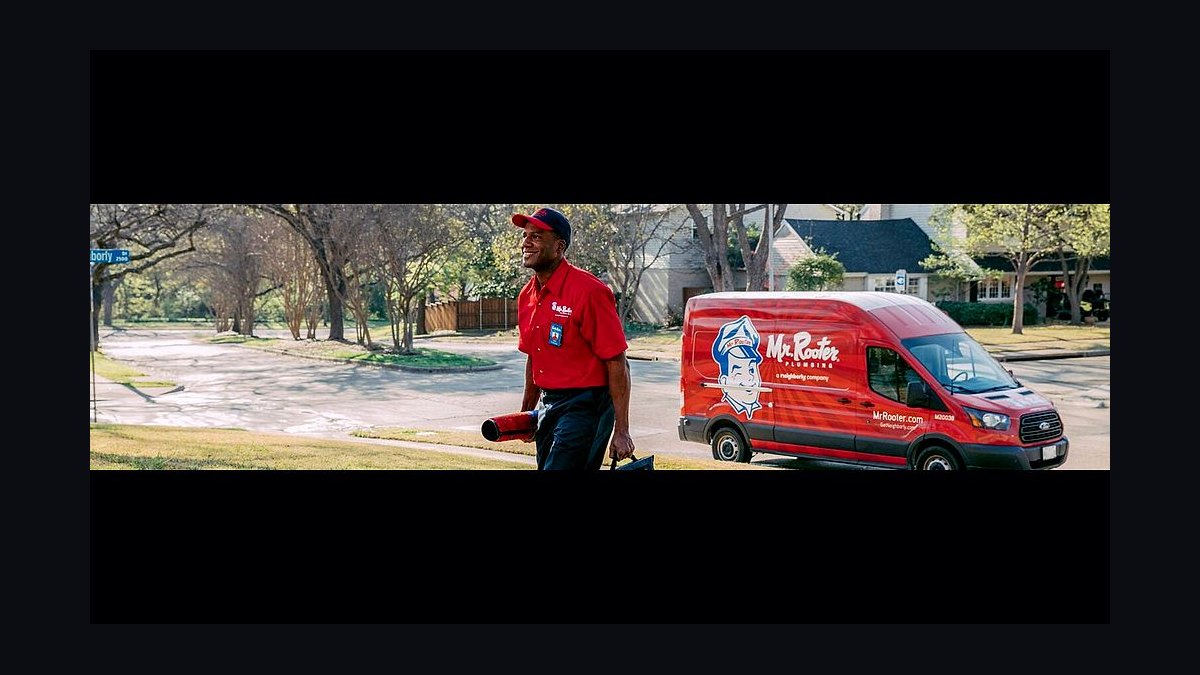
Yes — if you have $300K+ liquid, prior service-trade or operations experience, and a metro with 150K+ households where the average plumber wage is already $70K+. Mr. Rooter Plumbing's 2026 FDD shows total initial investment of $152,900 to $298,675 (including the $42,500 franchise fee), with a 6% royalty plus 2% marketing fund (8% total recurring drag on revenue). Median Item 19 AUV is $1.3M across 229 US units; top-quartile operators clear $1.6M, bottom-quartile $960K. Expect breakeven in months 14-22, conservative Year-1 cash flow of $40K-$95K after debt service, and Year-3 EBITDA of $180K-$260K if you keep CAC under $180 and gross margin above 38%. Probably not if you want to swing a wrench yourself — this is an operator-owner GM business, not a plumbing job.
The Real Numbers
Mr. Rooter is the plumbing flagship of Neighborly Brands (parent: KKR-backed Neighborly), a portfolio of 30+ home-services franchises. The 2026 FDD (effective for 2027 sales) shows a mid-range build — vehicles, inventory, and a small office/warehouse — not a brick-and-mortar buildout. Most of the dollar risk sits in working capital and vehicle financing, not the franchise fee itself.
| Line Item | Low | High | Notes |
|---|---|---|---|
| Initial franchise fee | $42,500 | $42,500 | 20% VetFran discount available |
| Service vehicles (2-3 wraps) | $18,000 | $72,000 | Lease vs. buy, used vs. new |
| Tools, equipment, jetters, cameras | $14,500 | $38,400 | Sewer camera + hydro-jetter mandatory |
| Office/warehouse lease + buildout | $6,000 | $24,500 | 1,000-2,500 sqft light industrial |
| Computer, software, dispatch | $3,500 | $9,750 | ServiceTitan or Neighborly stack |
| Initial marketing/launch | $15,000 | $25,000 | First 90 days |
| Insurance, licenses, bonds | $4,400 | $14,500 | State plumbing license required |
| Working capital (3 mo) | $35,000 | $50,000 | Payroll cushion |
| Training + travel | $1,500 | $6,000 | Waco, TX HQ |
| Royalty (ongoing) | 6.0% of gross | — | Tiered down possible at scale |
| Marketing fund (ongoing) | 2.0% of gross | — | National + local mix |
| Tech fee + software | ~$400-$900/mo | — | Dispatch + CRM |
| TOTAL INITIAL | $152,900 | $298,675 | Per 2026 FDD Item 7 |
| Median Item 19 AUV | — | $1,270,728 | 229 reporting units |
| Top-quartile AUV | — | ~$1.6M | Top 25% |
| Bottom-quartile AUV | — | ~$960K | Bottom 25% |
| Mature EBITDA margin | 12% | 18% | After royalty/marketing fund |
| Payback period | 22 mo | 36 mo | Median operator |
The math you actually run: At median $1.27M AUV, you pay $76,200 royalty + $25,400 marketing fund = $101,600 off the top before a single technician is paid. A two-truck operation in year one typically runs $320K-$420K in labor (2 techs at $75K loaded + a dispatcher at $50K + owner draw), $95K-$140K in vehicles/fuel/insurance, and $70K-$120K in lead generation if you're not yet ranking organically. That leaves $150K-$220K of pre-tax owner cash flow at the median in a steady-state year 2-3. Year 1 is almost always lighter — $40K-$95K is the realistic floor while you build call volume.
Independent (non-franchise) benchmark from IBISWorld: US plumbing-services industry revenue hit $191.4B in 2026 growing 3.1% CAGR, with the average independent residential plumbing shop running 8-12% EBITDA margins — meaningfully below franchised operators who get pricing power from brand and call-center lead flow. The 6% royalty is the price you pay to skip 3-5 years of organic SEO, brand-building, and dispatcher hiring.
Who Wins With This Business

Multi-unit service operators win biggest. The Mr. Rooter model rewards the GM who already knows dispatch optimization, technician compensation design, and call-center conversion — not the plumber who wants to own his own truck. The top-quartile operator at $1.6M AUV is almost always running 3-5 trucks, has a dedicated CSR taking calls, and treats lead-source ROI like a religion. Veterans get a 20% franchise-fee discount through VetFran, and Neighborly's national-account contracts (insurance carriers, home-warranty companies, property managers) feed steady B2B volume to franchisees who staff for it.
Geographic winners: Sunbelt metros with aging housing stock (median home age 35+ years) and rapid in-migration — Phoenix, Tampa, Charlotte, Raleigh, Austin, Nashville. Mr. Rooter dominates the residential repair and drain-cleaning niche where Roto-Rooter, Benjamin Franklin, and local independents compete; the brand premium is real on emergency after-hours calls where homeowners pay 1.5-2x for a name they recognize. Operators who buy a struggling independent plumbing shop and re-flag it as Mr. Rooter often hit median AUV in year one rather than year three.

Personality fit: Process-driven, ex-military, ex-Enterprise Rent-A-Car, ex-Service Corp manager, or franchisee already running another Neighborly brand (Mr. Electric, Aire Serv, Mr. Handyman) who wants to bundle service crews across one back office.
Who Loses With This Business
Working plumbers who want to "own their tools." If your dream is to be on calls 40 hours a week, the 8% royalty + marketing fund will feel like rent for nothing — you already know how to do the work, and the brand premium doesn't justify the drag on a one-truck shop. Independent plumbers at one truck typically out-earn franchised one-truck operators by $20K-$40K because they keep the 8%.
Undercapitalized buyers. The FDD low-end of $152,900 assumes you start with one truck, one technician, and a home office. That configuration almost never hits median AUV — it caps out around $400K-$600K, which after 8% fees and a single technician's loaded cost leaves owner take-home in the $50K-$70K range. You needed three trucks from day one, and you didn't have the capital, so you're now stuck.

Cold-climate, low-density rural markets. Mr. Rooter's national-account lead flow is metro-weighted; rural territories often see 40-60% lower lead-per-capita than the FDD's national-account modeling implies. Markets with strong incumbent independents (a 30-year-old family plumbing shop with 4.9 stars and 2,000 Google reviews) are also brutal — the brand premium evaporates against a trusted local name.
Anyone who thinks royalties are negotiable. They are not. 6% + 2% is the deal, and Neighborly's audit team is professional.
2027 Market Conditions
The plumbing services sector is structurally favored through 2027-2030 for four converging reasons:
1. The plumber shortage hits 550,000 unfilled roles by 2027 (BLS + PHCC projections), which means labor pricing power flows to whoever has trained technicians on payroll. Mr. Rooter's national recruiting funnel and technical academy in Waco are a real moat versus independents who can't recruit. Median plumber wages hit $62,970 in 2024 and are rising 10-15% annually in competitive metros — pass-through pricing has been smooth so far, but margin compression is the medium-term risk.
2. Aging housing stock: median US home age crossed 42 years in 2026, with 60% of homes built before 1990 having original supply lines, drains, or sewer laterals. Sewer-line replacement ($4,500-$15,000 ticket) and water-heater swap-outs ($1,800-$4,500) are the high-margin work, and they grow with the housing stock automatically.
3. Smart-fixture and tankless adoption: tankless water heaters now ship in 38% of new-home builds (NAHB 2026) and command 40-60% higher install tickets than tank units. Mr. Rooter's training catalog covers tankless, recirc loops, and leak-detection sensors before most independents have upskilled.
4. Material cost inflation: fixtures, fittings, and trim up 28.4% from January 2021 to November 2025 and another 7.1% in the last 12 months alone (BLS PPI). Operators who can't reprice quarterly lose margin; Mr. Rooter's flat-rate book updates monthly.
Headwinds: interest rates still elevated through Q2 2027 mean SBA payments are heavier than 2021-vintage franchisees experienced — model 9.5-10.5% on SBA 7(a). Insurance carrier consolidation is squeezing the B2B lead channel; Mr. Rooter's national accounts are still strong but the margin on insurance-claim work has compressed 200-300 bps since 2024.
The 90-Day Decision Tree

- Days 1-7 — Pull the FDD. Request the 2026 FDD directly from franchise.neighborly.com/mr-rooter. Read Items 7, 19, 20, and 21 in that order. Item 20 shows you the trailing 3-year unit-count churn — if franchisees are exiting faster than opening, that's your first red flag.
- Days 8-21 — Call 15 existing franchisees. Item 20 includes the franchisee contact list. Ask three questions only: (a) "What was your trailing-12 revenue and EBITDA?" (b) "What would you change about your launch?" (c) "Would you buy this franchise again at the current fee structure?" If fewer than 10 of 15 say "yes" to question (c), walk.
- Days 22-35 — Validate the territory. Pull household count, median home age, median home value, and median household income for the 5-mile radius. You want 150K+ households, median home age 30+, median HHI $75K+. Call 3 local independent plumbers and ask their average ticket and call volume — if independents are clearing $700K with one truck, the market supports a Mr. Rooter.
- Days 36-50 — Build the unit economics model. Use median AUV $1.27M as your year-2 target, not year-1. Model Year-1 at $600K-$800K, Year-2 at $1.0M-$1.2M, Year-3 at $1.27M-$1.5M. Solve for owner take-home of $120K+ by month 18 — if the model doesn't get there, the territory is wrong or you're under-trucked.
- Days 51-65 — Line up financing. SBA 7(a) up to $5M with 10% down is the default path. Neighborly has a preferred-lender network that pre-underwrites the brand, which cuts close time from 90 days to 45. Veterans: file VetFran paperwork for the 20% fee discount before signing.
- Days 66-80 — Recruit your first two technicians BEFORE signing. This is the step most franchisees skip and regret. Run paid ads on Indeed and Facebook in your target metro before you commit, and verify you can hire two licensed plumbers at $70K-$85K loaded comp. If you can't fill seats in 30 days of paid recruiting, the market is wrong.
- Days 81-90 — Sign and schedule training. Initial training is 2 weeks in Waco, TX, with ongoing Neighborly Academy modules. Target truck-on-the-road within 45 days of training completion.
Alternative Plays
Buy an existing Mr. Rooter resale. The Neighborly franchisee marketplace lists 8-15 Mr. Rooter resales at any given time, typically priced at 3-5x trailing EBITDA. A $1.2M-revenue location with $180K EBITDA trades at $540K-$900K — more upfront cash than a new build, but you skip the 18-month revenue ramp and inherit a trained crew.
Go direct as an independent plumbing company. Skip the 8% royalty drag and build your own brand. Year-1 is harder (no national-account lead flow), but mature EBITDA runs 14-20% versus 12-15% for a franchisee. Best fit if you already have operations chops and a marketing partner who can rank you on Google in 12-18 months.
Sister Neighborly brands. If plumbing labor is too tight in your metro, Mr. Electric ($150K-$310K investment), Aire Serv HVAC ($109K-$268K), or Rainbow Restoration ($199K-$316K) share the same back office and a meaningful chunk of the lead infrastructure. Multi-brand franchisees average 32% higher unit economics than single-brand operators (per Neighborly's 2025 multi-brand report).
Competing plumbing franchises: Benjamin Franklin Plumbing (Authority Brands, $185K-$348K, similar royalty), Roto-Rooter (largely company-owned), Rooter-Man ($46.8K-$137K, lower fee but weaker brand), bluefrog Plumbing ($83K-$249K, regional). Mr. Rooter's edge over Benjamin Franklin is call-center infrastructure; over Rooter-Man it's brand recognition and training depth.
Acquire an independent and re-flag. Acquire a $700K-revenue independent for 2-3x EBITDA (~$210K-$420K), sign the Mr. Rooter franchise agreement, and re-flag. Median revenue lift post-reflag is 22-35% in the first 18 months from the brand and lead-flow upgrade — often the highest IRR play in the category.
FAQ
What is the total initial investment for a Mr. Rooter Plumbing franchise in 2027?
The total initial investment ranges from about $152,900 to $298,675, which includes a $42,500 franchise fee. This covers equipment, vehicles, initial marketing, and working capital, but you’ll need at least $300,000 in liquid capital to qualify.
How much can I expect to earn in the first year? First-year cash flow after debt service is typically between $40,000 and $95,000, with breakeven occurring between months 14 and 22. Realistic earnings depend heavily on your ability to manage customer acquisition costs and maintain gross margins above 38%.
What are the ongoing royalty and marketing fees? You’ll pay a 6% royalty on gross revenue plus a 2% marketing fund contribution, totaling 8% of revenue as recurring fees. This is standard for the plumbing franchise space and funds national brand support and local advertising.
Do I need plumbing experience to run this franchise? No, but you need prior service-trade or operations experience—this is an operator-owner general manager role, not a hands-on plumbing job. The franchise provides training, but you’ll be managing technicians, not swinging a wrench.
How long does it take to break even?
Most franchisees reach breakeven between months 14 and 22, though this varies by market and how quickly you build a customer base. Top performers may hit it sooner, while slower starts can push it closer to two years.
What kind of revenue can a mature franchise generate? Median annual unit volume across 229 US locations is $1.3 million, with top-quartile operators clearing $1.6 million and bottom-quartile around $960,000. Year-3 EBITDA typically falls between $180,000 and $260,000 for well-run units.
Bottom Line
Mr. Rooter Plumbing is a legitimate top-tier home-services franchise with a median $1.27M AUV, a real moat through Neighborly's national-account lead flow, and a 2027 macro setup (aging housing + plumber shortage + smart-fixture upcycle) that favors operators with capital and patience. Buy if you have $300K+ liquid, a multi-truck plan, and a metro with 150K+ households. Skip if you want to be the lead plumber — go independent, keep the 8%, and earn more. The single most important variable in your outcome is whether you can recruit and retain 2-3 licensed plumbers at $70K-$85K loaded comp in your specific metro before you sign. Validate that hiring funnel first; everything else is solvable.
Sources
- Neighborly Mr. Rooter Franchise Investment
- Vetted Biz Mr. Rooter FDD Costs and Fees
- Franchise Direct Mr. Rooter Costs Fees FDD
- Franchise Times Top 400 — Mr. Rooter #147
- IBISWorld US Plumbers Industry Report 1946
- ServiceTitan Plumbing Industry Statistics 2026
- Franchise Investor Data Mr. Rooter Profit and Territory FDD
- Franchimp Mr. Rooter Franchise Database
- Entrepreneur Franchise Directory — Mr. Rooter Plumbing
- IFPG Top Franchises Mr. Rooter Cost and Requirements
- Bureau of Labor Statistics — Plumbers, Pipefitters Occupational Outlook
- PHCC Educational Foundation Workforce Report 2026
Related on PULSE
- Best HVAC and plumbing franchises to buy in 2027
- Should I open or buy a bluefrog Plumbing + Drain franchise in 2027?
- Should I open a independent plumbing business in 2027?
- Should I open or buy a Benjamin Franklin Plumbing franchise in 2027?
- Should I open or buy a Mr. Appliance franchise in 2027?
- Should I open or buy a Mr. Pickle’s Sandwich Shop franchise in 2027?
This page will be disappearing soon. Save it to your device for $1 — or read it free while it is here.
@Kory-White- · if Venmo asks, the last 4 of my number are 2012
This page is gone.
This one is off the shelf now. $1 keeps it on your phone for good — the whole page, pictures and diagrams included.
 franchiseShould I open or buy a Hand and Stone Massage franchise in 2027?
 franchiseShould I open or buy a Crumbl Cookies franchise in 2027?
 franchiseShould I open or buy a Mathnasium franchise in 2027?
 franchiseShould I open or buy a Roto-Rooter franchise in 2027?
 franchiseShould I open or buy a Valvoline Instant Oil Change franchise in 2027?
 franchiseShould I open or buy a Jimmy John's franchise in 2027?
 franchiseShould I open or buy a Pizza Hut franchise in 2027?
 franchiseShould I open or buy a Kona Ice franchise in 2027?
 franchiseShould I open or buy a Matco Tools franchise in 2027?
 franchiseShould I open or buy a Culver's franchise in 2027?