


Should I open or buy an AAMCO Transmissions franchise in 2027?
Quality
Certified

Probably not as a greenfield build. AAMCO Transmissions carries a total investment near $263,000 to $407,000, a 7.5% royalty plus 5% marketing, and a five-to-seven-year payback in a category electric vehicles are slowly shrinking. Buying an existing unit at three-and-a-half to five times EBITDA is the better 2027 entry.
Two doors into the same brand, and they price very differently
Almost every prospect who calls AAMCO's franchise development team is sold on one door: sign the agreement, pick a site, build the shop, open. That is the greenfield path, and it is the most expensive way to enter a mature service category. The second door — buying an existing AAMCO from a retiring or struggling owner — barely gets mentioned in the recruiting deck, because a resale generates a transfer fee for the franchisor instead of a full initial franchise fee. Your economics and the franchisor's economics diverge at exactly this fork, so nobody in the sales process is going to walk you toward the cheaper door.
The greenfield door means you pay the full initial franchise fee, fund the entire build-out, buy every lift and diagnostic tool new, and then spend eighteen months teaching a market that you exist. Your first twelve months of revenue are a ramp, not a business. You are paying rent, payroll, debt service, and a royalty on whatever thin revenue you produce while the phone slowly starts ringing. Grand-opening marketing money buys awareness, not repeat customers — transmission work is a once-every-several-years purchase, so there is no frequency loop to accelerate. A quick-lube or a car wash gets a customer back in six weeks. A transmission shop might see that same car again in four years, if ever.
The resale door means you inherit a phone number that already rings, a Google Business Profile with a review history, a bay full of tools someone else depreciated, and — critically — a technician who already knows where the parts suppliers are. Distressed and retirement-driven AAMCO resales trade in a materially lower range than the all-in cost of a new build, and you skip the ramp entirely. The trade-off is that you inherit whatever is broken: a soured local reputation, a lease with three years left and no renewal option, equipment at the end of its service life, or a book of business that was propped up by one fleet account now walking out the door.

There is a third door people forget. You can buy a non-branded independent transmission shop outright and never sign a franchise agreement at all. Independents trade at lower multiples of seller's discretionary earnings than branded units, and you keep the twelve-and-a-half percent of revenue that would otherwise leave as royalty and marketing. What you give up is real: national brand recall on a high-anxiety purchase, the warranty network that lets a customer get a repair honored two thousand miles from home, the fleet and extended-warranty referral relationships, and a training pipeline. For a transmission job that costs a consumer several thousand dollars, brand trust is not decoration — it is a meaningful part of the close rate. That is the actual thing you are renting for 7.5%.
Reading the fork honestly
The decision is not "franchise versus independent" in the abstract. It is a sequence of gates, and most prospects fail one of them without noticing because they evaluate them in the wrong order. Capital comes first, then market, then labor, then brand. Reverse that order and you will fall in love with a brand before discovering there is no technician within fifty miles who can rebuild a modern eight-speed.

Capital is the hard floor. AAMCO screens for minimum liquidity and net worth before it will even seat you at the table, and the practical number is higher than the stated one because the working-capital line in any franchise disclosure document assumes a revenue ramp that behaves. Ramps rarely behave. If your liquid capital is exactly at the stated minimum, you have no room for the month-seven surprise — the lift that fails inspection, the tech who quits, the two months a road construction project blocks your driveway.
Market comes second because it is the one variable you cannot manage your way out of. Shop density relative to registered vehicles, household income, and — this matters more than anything in the deck — the truck-and-SUV share of local registrations. Heavier vehicles with towing duty cycles produce more transmission failures than a market full of commuter sedans and hybrids. A market with a high electric-vehicle share is structurally hostile to a transmission-rebuild business no matter how well you run it, because an electric drivetrain has no multi-speed gearbox to fail.
Labor comes third, and it is the gate that quietly kills the most units. A qualified transmission rebuilder is a specialist trade with a shrinking pipeline; vocational programs graduate far more general technicians than rebuild specialists. Test this before you sign anything, not after. Post the job. Count the qualified applicants. If the market cannot produce a rebuilder in two weeks of active recruiting, the business does not exist for you at any price, because the alternative — sending work out to a contract rebuilder — inverts the margin structure the model depends on.
Brand comes last precisely because it is the most seductive and the most substitutable. Competitors in the general car-care space run lower royalty rates and publish financial performance representations, and their broader service mix is less exposed to drivetrain electrification. Tire-and-service concepts are arguably counter-cyclical to electrification, since electric vehicles are heavy and eat tires and brakes faster than the cars they replace.
What each door actually costs
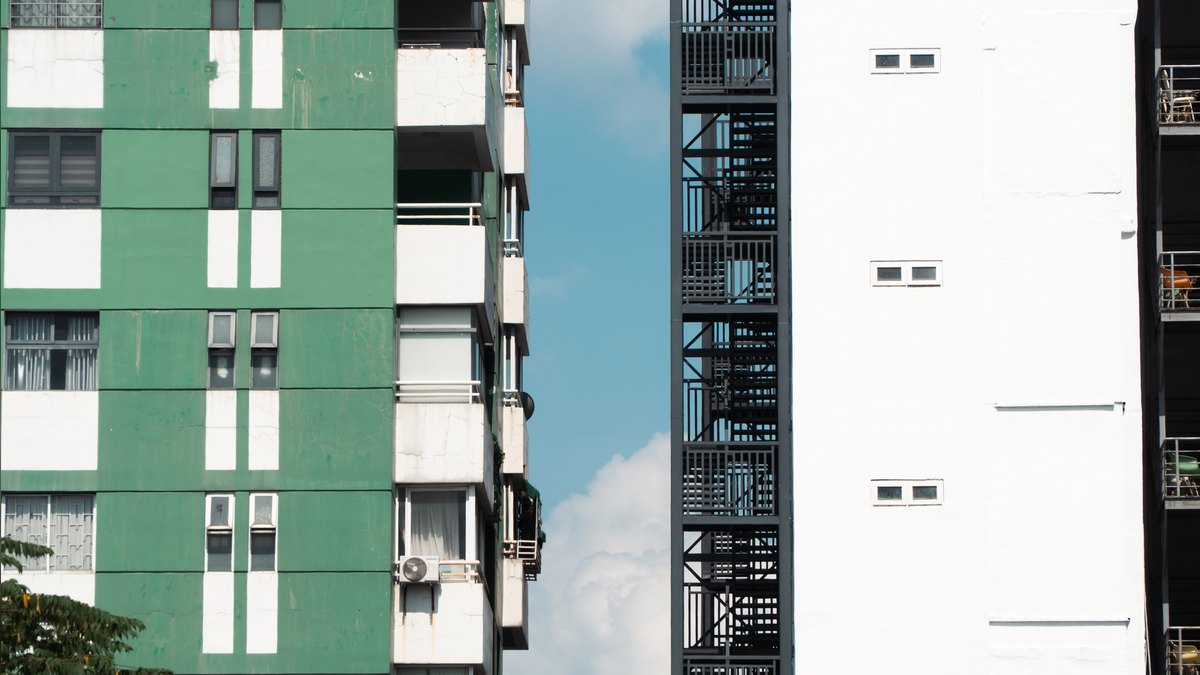
The published investment range for an AAMCO Transmissions and Total Car Care franchise runs roughly from the mid-two-hundred-thousands to just over four hundred thousand dollars all in, and the spread is almost entirely site-driven. Build-out on a shell with no existing bays, drains, or lift footings sits at the top of the range. A former auto-service building with lifts and floor drains already in place can land near the bottom. That single variable moves your outcome more than any negotiation you will ever have with the franchisor.
Inside that range, the line items behave very differently. The initial franchise fee is fixed and non-recoverable. Equipment and diagnostic tooling is the second-largest block and it is real, hard collateral — a lender will underwrite against it, and if you close, you recover something, though used shop equipment sells at a steep discount to what you paid. Leasehold improvements are the worst money in the deal: you spend a large sum and, absent a landlord contribution, you own none of it. Negotiate tenant improvement allowance hard, because every dollar the landlord funds is a dollar you do not borrow at ten percent.
The ongoing structure is where the franchise decision is really made. A 7.5% royalty on gross plus a 5% combined national and local marketing obligation is 12.5% off the top of every dollar of revenue, before you have paid for a single gasket. That sits at the high end of the automotive-service category — general car care and tire-plus-service competitors run several points lower. Each point of royalty differential compounds over a ten-or-fifteen-year term into real money, and it is money that comes out of owner earnings, not out of some abstract corporate line.

Note the disclosure gap that should shape your entire diligence plan: AAMCO's franchise disclosure document has not carried an Item 19 financial performance representation. A franchisor is never obligated to publish one, but its absence means you cannot rely on any revenue figure a broker or franchise-portal article quotes you — those are reconstructions and industry averages, not disclosed unit economics. Competitors that publish full Item 19 tables are handing you underwritable numbers. AAMCO is asking you to go build them yourself, from the Item 20 franchisee contact list.
Which is why the franchisee calls are not optional homework — they are the financial model. Talk to a wide sample, not the three the broker offers. Ask for last year's gross, EBITDA after royalty and marketing, months to breakeven, and the one question that separates satisfied owners from trapped ones: would you sign this agreement again today? A pattern of hesitation across a dozen calls is more informative than any spreadsheet you build.
On the resale side, small service businesses generally trade on a multiple of EBITDA or seller's discretionary earnings, and distressed or retirement-driven single-unit shops price well below the all-in cost of a comparable new build. The arbitrage is straightforward: a new build costs full replacement value plus eighteen months of ramp losses, while a resale costs a multiple of already-proven cash flow. But verify the cash flow is real. Pull three years of tax returns, not just a seller's profit-and-loss. Confirm the franchisor will approve the transfer and tell you what remedial upgrades it will require as a condition — a mandated store refresh or point-of-sale upgrade discovered after closing can consume the entire discount you negotiated.
Financing shapes all of it. Small Business Administration 7(a) loans are the standard instrument for franchise acquisition, and at current rate levels debt service on a three-hundred-thousand-dollar facility is a substantial fixed monthly obligation that simply did not exist at the rates of a few years ago. Model your ramp against that payment, not against a spreadsheet where debt service starts in month six. Interest rates have quietly made greenfield service builds harder to justify than resales across the entire franchise landscape, not just this brand.
The 2027 backdrop, and what it does to the category

Two forces pull in opposite directions and you need to hold both at once. Electrification is eliminating the highest-value job on the menu — an electric drivetrain has no multi-speed transmission to rebuild — and new-vehicle electric share keeps climbing. That is a permanent, one-directional contraction in the addressable market for transmission rebuilds, concentrated in specific metros first.
Against that, the average age of vehicles on American roads keeps rising, and the installed base of internal-combustion vehicles is enormous and will take decades to retire. An older fleet is a friendlier fleet for a repair shop: more failures, more rebuilds, more customers who will spend three thousand dollars to avoid a car payment. The math that matters for a single location is not national electric-vehicle share — it is the drivetrain mix of the fleet within a fifteen-mile radius of your bay, weighted by age. Those two numbers can diverge wildly between a coastal metro and an exurban county two hundred miles inland.
Costs are moving the wrong way regardless. Specialist technician wages continue to rise, rebuild-kit and parts costs remain elevated against pre-pandemic baselines, and commercial insurance and utilities for a shop with lifts and fluid handling have not gotten cheaper. A contracting-revenue, expanding-cost category is a bad place to be a leveraged new entrant and a fine place to be an unleveraged buyer of distressed assets. That asymmetry is the whole thesis for 2027: be the buyer, not the builder.

The strategic hedge inside the brand is the "Total Car Care" side of the name. Units that have genuinely broadened into general repair — brakes, suspension, diagnostics, fluids, alignment — have a demand profile far less exposed to drivetrain change, and they get customers back multiple times a year instead of once a decade. If you buy a resale, buy one that already did that work. A unit still deriving most of its revenue from rebuilds is buying you a shrinking annuity at a growing multiple of risk.
There is a broader lesson here that applies well outside this brand. In any franchise category facing a structural technology shift — quick-lube facing extended service intervals, oil-change facing electric drivetrains, print shops facing digital — the winning move stops being greenfield expansion and becomes consolidation of existing units at distressed prices. The multiple you pay compresses because sellers see the same headwind you do, and you capture the remaining decades of cash flow from the installed base without funding a build at replacement cost. Buying the tail end of a mature category is a legitimate strategy; funding new capacity into it is usually not.
Sequencing the ninety days before you sign anything
Order matters here because each step is cheap relative to the next, and each one can kill the deal before you spend the money on the following one. Run them in this order and your worst case is ninety days and a few hundred dollars in job postings and data pulls. Run them out of order and your worst case is a signed franchise agreement and a lease guarantee.

Start with documents. Request the current franchise disclosure document directly and read Item 5 for fees, Item 6 for the ongoing royalty and marketing obligations, Item 7 for the investment range, Item 19 for whatever performance data exists, Item 20 for the franchisee contact list and the three-year table of openings, closures, transfers, and terminations, and Item 21 for the franchisor's own audited financials. Item 20's turnover table is the single most honest page in the document — a high ratio of terminations and transfers to new openings tells you what franchisees think of the deal in a way no marketing page will.
Then make the calls. Work the Item 20 list yourself rather than accepting a curated list. Aim for a dozen or more substantive conversations, deliberately including former franchisees, who are the most candid people in the entire process and the ones the sales funnel most wants you not to reach.
Then validate the market with data rather than intuition. County-level business counts and vehicle registration mix are publicly obtainable, and the target you are looking for is a market underserved on shops per registered vehicle, weighted toward trucks and SUVs, with household income high enough to absorb a several-thousand-dollar repair rather than junking the car.
Then run the labor test — before real estate, because it is cheaper and faster to run a job posting than to negotiate a letter of intent, and a failed labor test invalidates every site you might have chosen. Post an actual rebuilder role and count qualified applicants over two weeks.
Then site and lease. You want an existing service building where possible, adequate bay count, zoning that permits lifts and fluid handling, stormwater compliance for oil and transmission fluid, and visibility from a corridor with meaningful traffic. Negotiate tenant improvement dollars, a renewal option, and — if you can get it — a rent abatement covering your ramp months. Landlords in secondary markets will trade abatement for term.

Then financing, with the site and market data in hand so the package underwrites cleanly. Then, and only then, the decision gate: if the franchisee calls corroborated the revenue picture, the site and lease terms landed where you modeled, financing is conditionally approved, and you have an identified technician, sign. If any single one of those four failed, do not sign a smaller version of the same deal — take a different door. Buy the resale, buy the independent, or choose a lower-royalty general car-care concept with published performance data.
One discipline worth adopting throughout: write your assumptions down before you gather data, then compare. Prospects who record their expected revenue, breakeven month, and technician wage in advance are far harder to talk into a bad deal than prospects who form those numbers while sitting across from a franchise salesperson. The document does not need to be elaborate. It needs to exist before the enthusiasm does.
Related questions
Is buying an existing franchise always cheaper than opening a new one?
Not always, but usually for mature service categories. A resale prices on proven cash flow; a new build prices on replacement cost plus ramp losses. The exception is a resale with deferred maintenance, a bad lease, or franchisor-mandated upgrades that surface after closing.
What does a franchisor's missing Item 19 actually tell me?
Only that it chose not to disclose unit financials — it is legal and common. Practically, it shifts the entire forecasting burden to you and means every revenue number you see online is a third-party estimate, not a disclosed figure. Build the model from franchisee calls.
How much does electrification really threaten auto-service franchises?
Unevenly. Drivetrain-specific concepts face direct contraction; tires, brakes, suspension, and alignment are largely unaffected or grow, since electric vehicles are heavy. Broad general-repair concepts are the safer structural bet than any single-system specialty.
Should I own the real estate under my shop?

If you can, yes. Owning the building converts rent into equity and captures appreciation independent of operating performance. It is often the difference between a modest operating return and a genuinely good total return, and it gives you a saleable asset if the operating business disappoints.
What is the single fastest way to disqualify a franchise opportunity?
The labor test. Post the key role and count qualified applicants for two weeks. If the specialist your model depends on does not answer, no amount of capital, brand equity, or site quality rescues the unit economics.
FAQ
What is the total investment to open an AAMCO franchise?
The published range runs from roughly the mid-two-hundred-thousands to just over four hundred thousand dollars, covering the initial franchise fee, build-out, equipment, initial inventory, training, required grand-opening marketing, and several months of working capital. Real estate purchase, if you buy rather than lease, sits outside that figure. Site condition drives most of the spread — an existing service building with bays and drains lands near the bottom, a raw shell near the top.
What are the ongoing fees, and how do they compare?
A 7.5% royalty on gross sales plus a 5% combined national and local marketing obligation, so 12.5% of revenue leaves before other expenses. That sits at the high end of automotive service; general car-care and tire-plus-service competitors typically run several points lower on royalty. Over a full agreement term, that differential is a large number and it comes directly out of owner earnings.

Do I need automotive experience?
Not formally required, but it is close to decisive in practice. Labor is the dominant cost of goods, and an owner who can diagnose and rebuild is not hostage to the local technician market. If you cannot turn wrenches, you need a genuine partner who can — with equity, not just a paycheck, so they stay when a competitor offers more.
Is a resale unit risky compared with a new build?
Different risk, not more of it. A new build risks the ramp, cost overruns, and a market that never materializes. A resale risks inherited problems — a soured local reputation, an expiring lease, worn equipment, or revenue propped up by one departing account. Diligence on a resale is knowable and finite; ramp risk on a new build is not.
How long until the business supports me?
Plan on the business paying an owner's salary somewhere in the second year and producing meaningful surplus cash in the third, with full payback on invested capital typically several years out. A resale compresses that timeline considerably since the revenue already exists. Anyone promising owner-level income in the first year is describing an outcome, not a plan.
What would make me walk away entirely?
Any one of four things: liquid capital at the bare minimum with no reserve, a local fleet mix tilted toward hybrids and electric vehicles, a failed technician recruiting test, or a franchise disclosure document whose Item 20 table shows terminations and transfers running high against new openings. Those are not problems to manage around — they are answers.
Sources
- https://www.ftc.gov/business-guidance/resources/consumers-guide-buying-franchise
- https://www.ftc.gov/legal-library/browse/rules/franchise-rule
- https://www.sba.gov/funding-programs/loans/7a-loans
- https://www.bls.gov/ooh/installation-maintenance-and-repair/automotive-service-technicians-and-mechanics.htm
- https://www.bls.gov/oes/current/oes493023.htm
- https://www.census.gov/programs-surveys/cbp.html
- https://www.bts.gov/topics/vehicles-available
- https://www.energy.gov/eere/vehicles/vehicle-technologies-office
- https://www.aamco.com/
- https://www.bizbuysell.com/
Related on PULSE
This page will be disappearing soon. Save it to your device for $1 — or read it free while it is here.
@Kory-White- · if Venmo asks, the last 4 of my number are 2012
This page is gone.
This one is off the shelf now. $1 keeps it on your phone for good — the whole page, pictures and diagrams included.
 franchiseShould I open or buy a Jimmy John's franchise in 2027?
 franchiseShould I open or buy a Bruster's Real Ice Cream franchise in 2027?
 franchiseShould I open or buy a Planet Fitness franchise in 2027?
 franchiseShould I open or buy a Culver's franchise in 2027?
 franchiseShould I open or buy a Smoothie King franchise in 2027?
 franchiseShould I open or buy a Stanley Steemer franchise in 2027?
 franchiseShould I open or buy a Wendy's franchise in 2027?
 franchiseShould I open or buy a Jeremiah's Italian Ice franchise in 2027?
 franchiseShould I open or buy a Mac Tools franchise in 2027?
 franchiseShould I open or buy a Kumon franchise in 2027?