
Should I open or buy a Junk King franchise in 2027?
 Curated by Kory White · Fractional CRO · Maryland
 PULSEKNOWLEDGE LIBRARY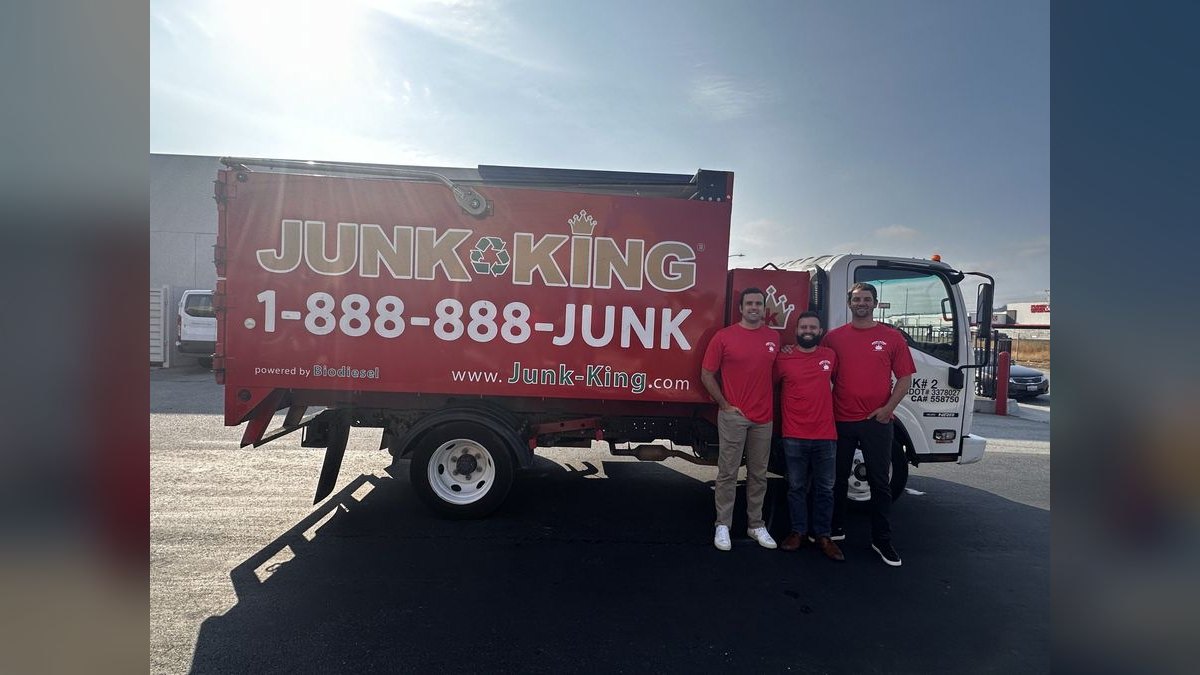
Yes — open or buy a Junk King franchise in 2027 if you have $150,000-$300,000 in liquid capital, operator-grit tolerance for physical labor and same-day dispatch chaos, and a metro territory with 450,000+ population and home-renovation rates above the national 41% baseline. Junk King's 2026 FDD shows $93,400-$246,500 total investment (Item 7) and $553,000 average gross revenue across 166 reporting franchisees (Item 19). Conservative Year-1 owner-operator cash flow lands at $55,000-$95,000 after royalties, MAP, and a single truck payment; breakeven typically arrives month 12 to month 18. Probably not — unless you can stomach 8% royalty plus 5% Customer Care Center fee plus $625-$845/month MAP, which compounds to ~14% of gross revenue going to the franchisor before you pay labor or fuel. Pass if you want a passive investment or a sub-$100K play.
The Real Numbers
Junk King's 2026 Franchise Disclosure Document (issued March 2026) is the most current public filing as of June 2026. The 2027 FDD is expected in March 2027; numbers below are pulled from the 2026 FDD Item 7 (Estimated Initial Investment) and Item 19 (Financial Performance Representations), cross-checked against Franchise Chatter's March 6, 2026 review and Vetted Biz's 2026 cost breakdown.
| Line Item | Low | High | Notes |
|---|---|---|---|
| Initial franchise fee | $54,000 | $77,000 | Tiered by territory population (450K-650K) |
| Truck, equipment, signage | $25,000 | $120,000 | Used box truck low end; new branded truck high end |
| Build-out / storage yard | $2,000 | $15,000 | Most operators run from a leased yard, not retail |
| Insurance, licenses, fees | $4,400 | $8,500 | Commercial auto + general liability |
| Initial marketing / launch | $5,000 | $15,000 | Local SEO, vehicle wraps, launch promotions |
| Working capital (3 months) | $3,000 | $11,000 | Payroll, fuel, dump fees |
| TOTAL INITIAL INVESTMENT | $93,400 | $246,500 | Item 7, 2026 FDD |
| Ongoing royalty | 8% of gross revenue | 8% | Paid monthly |
| Customer Care Center fee | 5% of gross revenue | 5% | National call center handles bookings |
| MAP (marketing fund) | $625/mo | $845/mo | $625 first 18 months, then $845 |
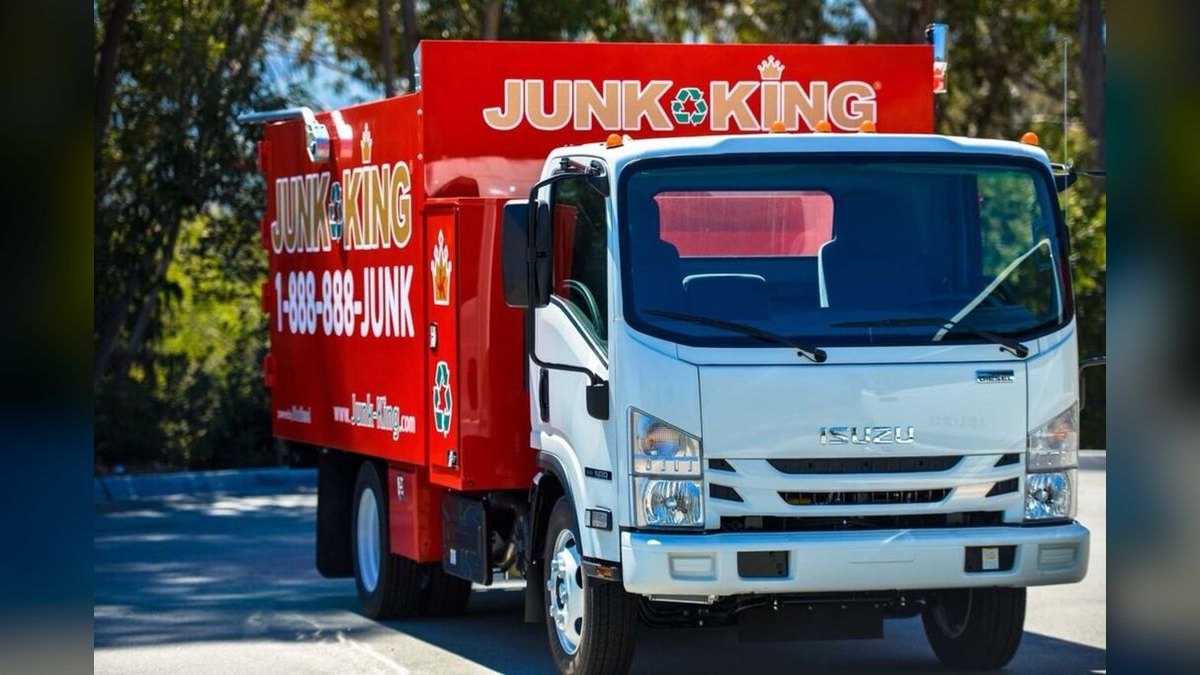
Item 19 highlights from the 2026 FDD: of 172 franchised units operating December 31, 2025, 166 had been open more than 12 months and were included in the financial performance representation. Average gross revenue: $553,000. Top quartile: $1.1M+. Bottom quartile: $215,000. Franchise Chatter's 2024 review reported $758,000 average; the drop reflects post-2024 territory expansion (more young units pulling the average down), not a market contraction.
EBITDA margin for an established, owner-operator Junk King runs 18%-25% per KMF Business Advisors' 2026 junk removal profitability benchmarks. At $553,000 AUV that's $100,000-$138,000 EBITDA before owner salary. After 8% royalty ($44,240) + 5% CCC ($27,650) + $10,140 MAP + labor (typically 25%-30% of revenue) + fuel and dump fees (12%-15%) + truck payment ($48,000/year if financed), Year-1 owner-operator take-home lands at $55,000-$95,000 — meaningfully less if the operator pays themselves a manager salary rather than running the truck personally.
Payback period: 2.5 to 4 years on a $150,000-$200,000 investment at average performance; 5 to 7 years at bottom-quartile revenue.
Who Wins With This Business
Former contractors, military veterans, and ex-logistics operators who already understand dispatch, route density, and physical labor management consistently outperform white-collar career-changers. Junk King's top quartile ($1.1M+ AUV) skews heavily toward operators who run the first truck themselves for 6-12 months, then hire and train two crews while moving into a dispatcher-owner role by month 18. Operators in markets with high housing turnover (8%+) and active home-renovation indices (41%+ owner-occupied) — think Phoenix, Charlotte, Nashville, Tampa, Austin, Raleigh, Denver — capture both estate-clearout and renovation-debris demand cycles, smoothing seasonality. Multi-unit operators who buy a second or third territory after stabilizing the first one extract the most leverage from the $625-$845 MAP fee because national-brand SEO and the Customer Care Center scale across territories without proportional cost increases.
The franchisee who wins big typically owns 2-4 territories by year 5, runs 4-8 trucks, and clears $250,000-$500,000 in annual SDE (seller's discretionary earnings) — at which point the business is sellable at 3-4x SDE to a private-equity roll-up or a regional operator.
Who Loses With This Business
Absentee investors lose more often than they win at Junk King. The 8% royalty + 5% CCC + ~3% MAP compound to ~16% of gross revenue going to fees before any direct cost — there is no margin cushion for a hired general manager who isn't deeply invested in route density, upsells, and crew retention. First-time business owners with no operations background routinely miss the dispatch-density tipping point: at fewer than 6-8 jobs per truck per day, fixed costs (truck payment, insurance, MAP) overwhelm gross margin and the unit posts a loss.
Operators in sub-300,000-population territories — even with a discounted franchise fee — struggle to hit breakeven dispatch density, and rural-to-suburban metros where DIY dump runs are culturally normal (large parts of the upper Midwest and rural South) see 30%-50% lower conversion rates versus dense coastal metros. Capital-light operators who skip the $5,000-$15,000 launch-marketing budget lose the critical first-90-day local-SEO and reputation flywheel and find themselves 18 months in still bleeding cash with a stale Google Business Profile.
Anyone counting on a 6-month payback loses too: the typical breakeven is 12-18 months, and top-quartile performance is a 2.5-year payback, not a 6-month one.
2027 Market Conditions
Junk removal is a $10.4B+ U.S. industry per IBISWorld (2024 baseline) projected to grow at 3.4%-8% annually through 2030 depending on the source. Demand drivers in 2027 remain structurally healthy: housing turnover above 8%, owner-occupied renovation activity above 41%, boomer downsizing accelerating as the median boomer hits 71, and commercial office-to-residential conversions continuing in 18+ major metros. 2027 headwinds: dump-fee inflation running 6%-9% annually in coastal metros (San Francisco, Seattle, NYC), independent operators using TikTok/Instagram for hyperlocal customer acquisition at near-zero CAC, and per-pound pricing transparency tools (Dropcurb, JunkLuggers price comparison) compressing premium-brand pricing power.
Competitively, the top six junk-removal brands (1-800-GOT-JUNK?, College Hunks, Junk King, JDog, LoadUp, The Junkluggers) held ~43% of global market share in 2023 per industry research. Junk King sits #3 by unit count behind 1-800-GOT-JUNK? (~250 U.S. franchises) and College Hunks (~250+ franchises), with 172 franchised units as of December 2025. The Neighborly acquisition (2018) brought Junk King into a 30+ brand portfolio with shared customer-care infrastructure, vendor pricing, and franchise-development capital — a structural advantage independent operators cannot replicate.
The 90-Day Decision Tree
- Days 1-15: Pull the 2026 FDD. Request the official FDD from franchising.junk-king.com or via a franchise broker. Read Items 7, 19, 20, and 21 line-by-line. Item 20 lists every franchisee — call 10 randomly selected operators in territories similar to yours.
- Days 16-30: Validate territory. Pull U.S. Census population, median income, owner-occupied housing percentage, and 5-year housing-turnover rate for your target metro. Reject any territory below 450,000 population or below 40% renovation index.
- Days 31-45: Build a unit-economics model. Build a 24-month cash-flow model assuming $215,000 Year-1 revenue (bottom quartile) and $553,000 Year-1 revenue (average). Stress-test breakeven at $20,000/month in dump fees and $48,000 truck payment.
- Days 46-60: Validate financing. SBA 7(a) loans finance Junk King purchases at 75%-85% LTV; Junk King is on the SBA Franchise Directory, simplifying underwriting. Get two pre-approval letters before signing.
- Days 61-75: Discovery Day in Plano, TX (Neighborly HQ). Mandatory in-person visit. Meet the Junk King leadership team, shadow an existing operator for one full day in a comparable market, and inspect the truck spec.
- Days 76-90: Sign or walk. Sign the Franchise Agreement and pay the $54K-$77K initial fee OR walk away and consider an independent build (see Alternative Plays below). Decision-forcing rule: if any of the prior 5 steps surfaced a yellow flag, walk.
Alternative Plays
1. Build an independent junk-removal operation. $60,000-$120,000 total investment versus $93K-$246K for Junk King. No 8% royalty, no 5% CCC fee, no MAP. Trade-off: no national brand recognition, no Customer Care Center, no SOPs. Best for operators with strong local marketing skills and a 3-5 year time horizon.
2. Buy an existing Junk King resale. Resales transact at 2.5x-3.5x SDE on the franchise resale market. A 3-truck Junk King doing $1.2M revenue with $250K SDE sells in the $625K-$875K range. Trade-off: higher upfront capital, but immediate cash flow and proven operations. Check Junk King's internal resale board and BizBuySell.
3. Compare to College Hunks Hauling Junk or 1-800-GOT-JUNK? College Hunks runs $87K-$256K total investment, 7% royalty, 2% brand fund and trends younger and more moving-focused. 1-800-GOT-JUNK? runs $176K-$258K total investment, 8% royalty, 6% marketing fund and is the #1 brand by recognition but more saturated in major metros.
4. Skip junk removal entirely and look at the Neighborly portfolio. Mr. Rooter, Mr. Electric, Window Genie, Molly Maid all share Neighborly's customer-acquisition infrastructure at different unit-economics profiles. Mr. Rooter franchisees average $1.2M+ AUV versus Junk King's $553K, though startup costs and skilled-labor requirements are higher.
FAQ
What is the total investment range for a Junk King franchise in 2027? The 2026 FDD (Item 7) shows a total investment between $93,400 and $246,500. This includes the franchise fee, equipment, truck, and initial marketing, but not real estate. Expect the higher end if you need a newer truck or a larger territory.
How much liquid capital do I need to qualify? You’ll need $150,000 to $300,000 in liquid capital. This covers the initial investment and provides a cash buffer for operating expenses before the business becomes cash-flow positive, typically by month 12 to 18.
What are the ongoing fees I’ll pay to Junk King? You pay an 8% royalty on gross revenue, a 5% Customer Care Center fee (for call handling and dispatch), and a monthly MAP fee of $625 to $845. Combined, that’s roughly 14% of gross revenue going to the franchisor before you cover labor, fuel, or truck payments.
How much can I expect to earn as a first-year owner-operator? Conservative Year-1 owner-operator cash flow is $55,000 to $95,000 after royalties, MAP, and a single truck payment. This assumes you’re working full-time in the business, not hiring a manager. Average gross revenue across 166 reporting franchisees is $553,000 (Item 19), but your first year will likely be lower.
When does a Junk King franchise typically break even? Most franchisees reach breakeven between month 12 and month 18. This timeline depends on territory population (450,000+ recommended), local home-renovation rates, and how aggressively you market. Faster breakeven is possible in high-demand metro areas.
Is Junk King a good fit for a passive investor? No. This is an owner-operator model requiring daily physical labor, same-day dispatch management, and hands-on customer service. If you want a passive investment or a sub-$100K entry point, look elsewhere. The business demands grit and tolerance for operational chaos.
Bottom Line
Junk King in 2027 is a credible, mid-investment ($93K-$246K) franchise play for an operator-grit buyer with $150K+ liquid capital, a 450K+ population metro, and the willingness to run the first truck personally for 6-12 months. Average gross revenue ($553K), realistic Year-1 owner take-home ($55K-$95K), and 12-18 month breakeven are honest. The 8% royalty + 5% Customer Care Center fee + $625-$845 MAP compound to ~16% of gross revenue in fees, which is the structural cost of brand recognition, national-call-center bookings, and Neighborly's shared services. Absentee owners, sub-300K-population territories, and capital-light launches are the consistent loss patterns. The wealth-creation path is multi-unit (2-4 territories by Year 5), not single-truck, single-territory.
Sources
- Junk King Franchise Review 2026: Costs, Fees, News, Average Revenues and/or Profits — Franchise Chatter (March 6, 2026)
- Junk King Franchise FDD, Costs & Fees (2026) — Franchise Payback
- Junk King Franchise Insights: FDD, Costs & Fees — Vetted Biz
- Junk King: $758K Average Sales vs. $93K-$180K Franchise Cost — Franchise Chatter (Feb 13, 2024)
- [Junk Removal Franchise Cost: Is It Worth $250K? [2026 Data] — Dropcurb](https://dropcurb.com/blog/junk-removal-franchise-cost)
- Junk Removal Business Profitability — KMF Business Advisors
- Junk Removal Franchise Cost — Junk King Official
- Waste Collection Services in the US Market Size Statistics — IBISWorld
- [Junk Removal Franchise Market Size, Share | Global Forecast [2026-2035] — Business Research Insights](https://www.businessresearchinsights.com/market-reports/junk-removal-franchise-market-112685)
- Junk King Franchise FDD, Profits & Costs (2025) — Sharpsheets
- SBA Franchise Directory — U.S. Small Business Administration
Junk King review / Junk King reviews / Junk King rating / Junk King review 2027 / review of Junk King franchise
Related on PULSE
- [Should I open or buy a Burger King franchise in 2027?](/knowledge/fr0019)
- [Should I open or buy a Smoothie King franchise in 2027?](/knowledge/fr0010)
- [Should I open or buy a Junk Doctors franchise in 2027?](/knowledge/fr1004)
- [Should I open or buy a College Hunks Hauling Junk franchise in 2027?](/knowledge/fr0889)
- [Should I open or buy a JDog Junk Removal franchise in 2027?](/knowledge/fr0888)
- [Should I open or buy a Stand Up Guys Junk Removal franchise in 2027?](/knowledge/fr0757)
 pulse-toolsWhat Service Fees Should a Law Firm Charge?
 pulse-toolsHow Many Staff Should I Schedule Each Shift at My BBQ Restaurant?
 pulse-aquariumsTop 10 Canister Filters 2027
 pulse-toolsHow Many Staff Should I Schedule Each Shift at My Sushi Restaurant?
 pulse-moviesTop 10 Action Movies of All Time in 2027
 pulse-toolsHow Many Sales Reps Do I Need to Hire for My Window Replacement Company?
 pulse-toolsHow Many Employees Should I Schedule Each Shift at My Bowling Alley?
 pulse-toolsHow Many Sales Reps Do I Need to Hire for My Healthcare SaaS Company?
 pulse-moviesTop 10 Thriller Movies of All Time in 2027
 pulse-toolsHow Many Sales Reps Do I Need to Hire for My Marketing Agency?