


Should I open or buy a Mosquito Joe franchise in 2027?
Quality
Certified
Yes — if you have $200K+ liquid (not the $50K Mosquito Joe advertises), a seasonal business disposition (April–October revenue spike, dead December), a densely populated suburban territory with median home values above $500K, and a willingness to front-load Q1 marketing to capture the early-season booking window. Total cash-in-the-door including working capital: $150K–$192K per Item 7 of the 2026 FDD, franchise fee $42,500, royalty 10% on first $500K then 7% plus a 2% brand fund. Median franchisee gross revenue per territory hovers around $288K–$339K AUV; owner-operator EBITDA realistically lands $55K–$85K in Year 2 after debt service. Payback is 2.9–4.9 years at average performance. Probably not if you need year-round W-2-replacement cash flow from a single territory or if your metro already has 3+ established Mosquito Joe units.
The Real Numbers
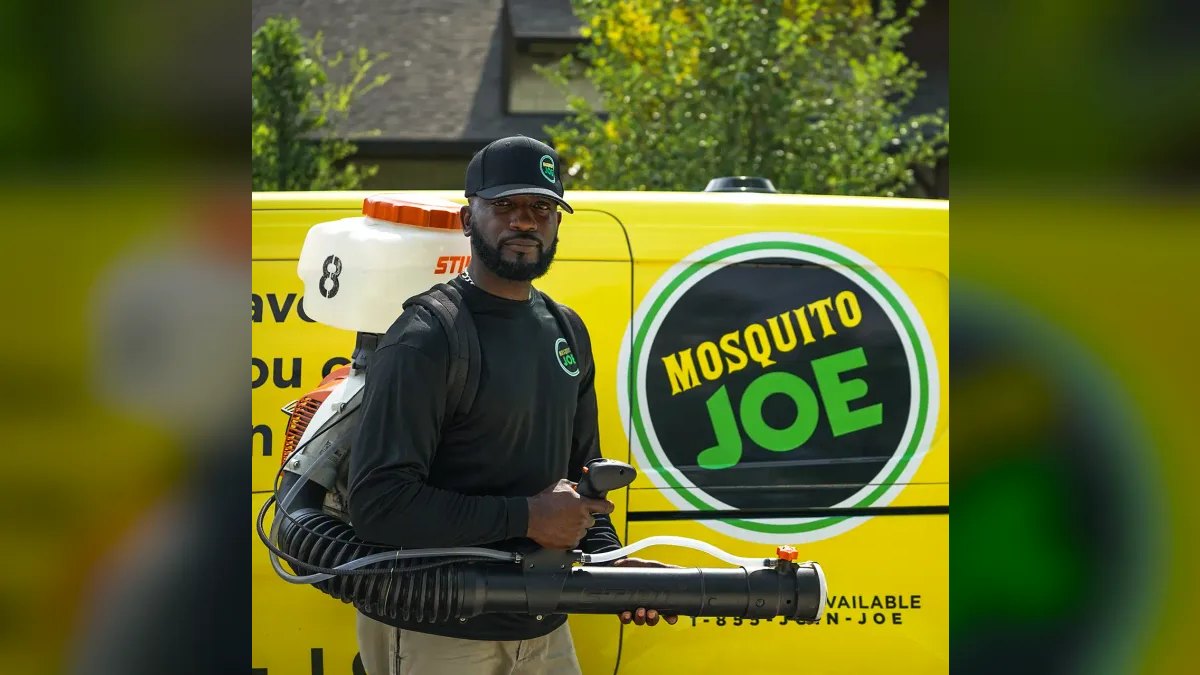
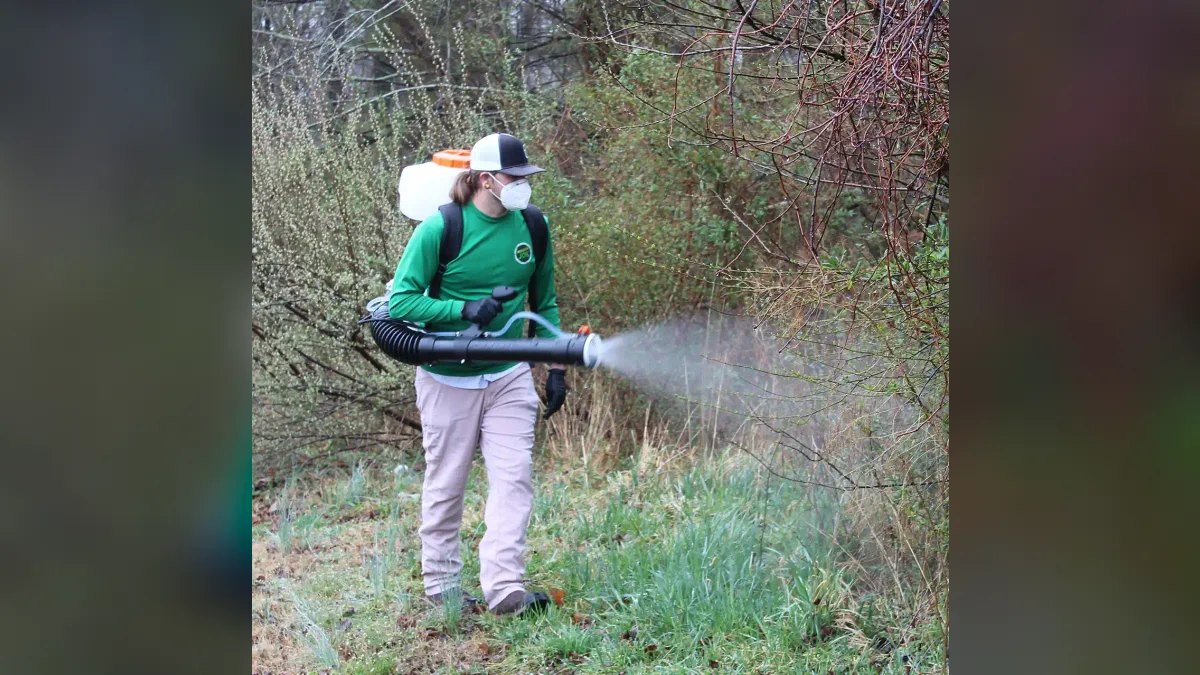
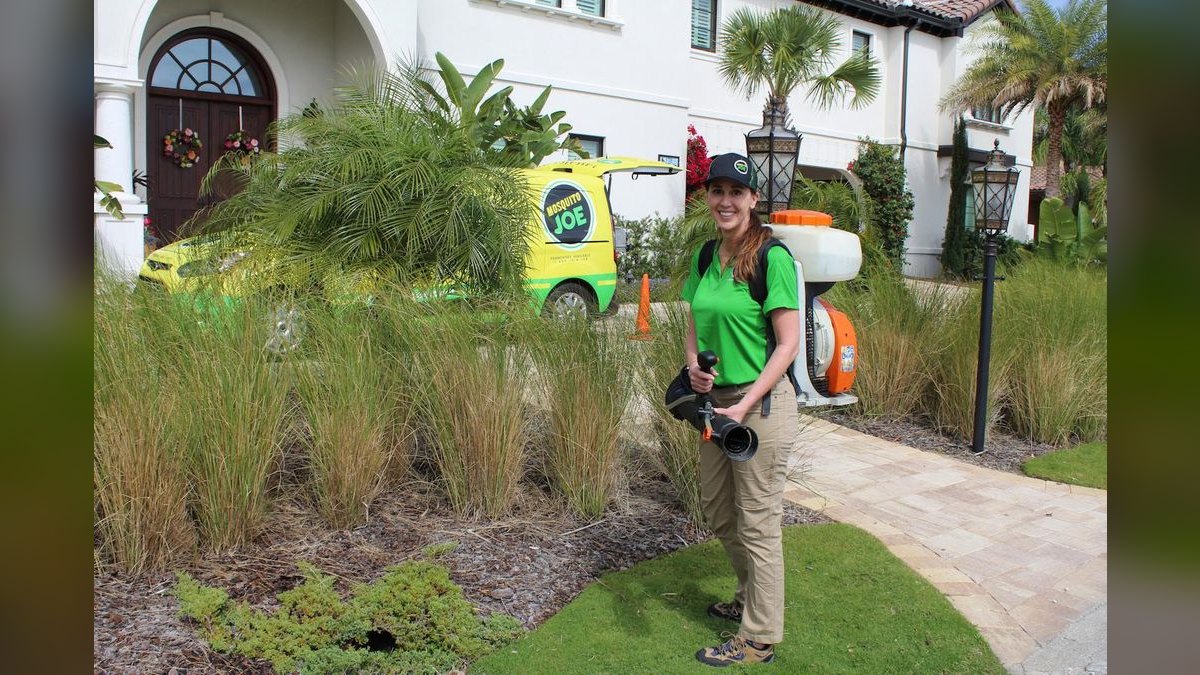
Mosquito Joe operates under Neighborly's home services umbrella (the $5.5K+ location, 19-brand franchisor that owns Molly Maid, Mr. Rooter, Window Genie, and Mr. Handyman). Mosquito Joe has been franchising since 2012, joined Neighborly in 2018, and as of the 2026 FDD reports 413 franchised units in North America — +2.7% net unit growth year-over-year. The model is a van-based, home-based, route-density business: no retail location, no build-out, just trucks, backpack misters, EPA-registered pyrethroid concentrate, and a CRM-driven recurring barrier-spray subscription sold in 21-day cycles April through October.
Item 7 — Total Initial Investment (2026 FDD):
| Line Item | Low | High | Notes |
|---|---|---|---|
| Initial franchise fee | $42,500 | $42,500 | Single territory, ~100K households |
| Vehicle (lease or purchase) | $8,000 | $35,000 | Cargo van or wrapped truck |
| Equipment package | $12,500 | $18,500 | Backpack misters, Stihl SR 450 units, ATV mister, PPE |
| Initial product inventory | $4,500 | $8,000 | Bifenthrin/lambda-cyhalothrin concentrate |
| Training & travel (Wilmington/Waco) | $3,500 | $6,500 | 5-day MoJo University |
| Insurance (deposit + 1 yr) | $2,500 | $4,500 | GL + commercial auto + workers' comp |
| Tech stack (ServiceTitan/PestPac, CallRail) | $3,500 | $6,500 | Annual prepay |
| Pre-open marketing | $15,000 | $25,000 | Google LSA, EDDM mailers, Facebook lead ads |
| Working capital (3 mo) | $25,000 | $35,000 | Payroll, fuel, royalties |
| Misc. legal, permits, EPA cert | $2,000 | $4,000 | State applicator license |
| TOTAL Item 7 range | $151,000 | $193,000 | per 2026 FDD |
Ongoing fees: 10% royalty on gross revenue up to $500K per calendar year per territory, 7% above $500K, plus a flat 2% brand fund contribution and a Neighborly technology fee running approximately $300–$450/month. Net royalty load: ~12% of gross, falling to ~9% as a single territory clears $500K.
Item 19 — Financial Performance Representation (2026 FDD): The median gross revenue across reporting franchisees that operated for a full calendar year sits in the $288,000–$339,000 AUV band, with top-quartile operators clearing $500K–$750K by stacking 2–3 contiguous territories. Gross margin on a stabilized route is 62%–68% (product is roughly 6% of revenue; the rest of cost-of-revenue is technician labor and fuel). After royalty (12%), brand fund, insurance, vehicle lease, owner draw, and office overhead, median Year-2 EBITDA runs $61,000–$81,500 on a single territory — call it a 22%–26% EBITDA margin for an absentee semi-passive operator, and 30%+ for an owner who spends 6 months a year on the truck.
Payback period: 2.9–4.9 years at median performance, 1.8–2.5 years for top-quartile operators, never for the bottom-quartile 18% who fail to hit $150K in Year 2. Customer retention: ~75% season-over-season — the single most important number in this FDD, because recurring subscription revenue is the entire investment thesis.
Who Wins With This Business
The operator profile that prints money at Mosquito Joe shares five traits. First, they own 2–3 contiguous territories before opening, not one — route density inside a 15-mile radius is the entire margin lever. Single-territory operators average $288K AUV; 3-territory stacks clear $650K AUV with the same dispatcher, the same office, and a 2.3x EBITDA multiple because fixed overhead is amortized. Second, they live in a Sun Belt or mid-Atlantic suburb — Houston, Charlotte, Raleigh, Tampa, Atlanta, Northern Virginia, Dallas — where the mosquito season runs 8–10 months instead of 5, and where median home values above $500K correlate with the $95–$120 average ticket the unit economics require.
Third, they front-load Q1 marketing spend — $18K–$25K in February and March on Google Local Services Ads, Nextdoor sponsored posts, and EDDM mailers to ZIP codes with HOA pools — because 70% of season-long customers sign up before May 15. Fourth, they bolt on adjacent services: outdoor flea/tick treatment, special-event spray (weddings, graduation parties at $400/event), commercial accounts at HOAs and country clubs, and the Neighborly cross-referral pipeline from Mr. Handyman and Window Genie franchisees in the same metro. Cross-brand referrals add an average 8%–12% of revenue with zero CAC. Fifth, they treat the offseason as sales season, not vacation — November through February is when next-season annual prepay contracts get signed at a 5%–8% discount, locking in cash flow before the season starts.
The best-fit owner background: mid-career operations or sales manager with a W-2 spouse providing health insurance, $300K+ net worth, willing to be on the truck for the first 18 months, and operating in a metro where they already know 3–5 HOA board members for warm B2B intros.
Who Loses With This Business
The losing profile is equally predictable. First, single-territory absentee owners who think a $42,500 franchise fee buys a passive revenue stream — they ignore that labor is 28%–35% of revenue, that technician turnover in seasonal trades runs 40%–60% annually, and that a hands-off operator paying a full-time GM $65K + benefits wipes out the entire EBITDA line on a sub-$400K territory. Second, northern-tier operators — Minneapolis, Buffalo, Portland (Maine), Boise — where the spray season is April through September at best and Year-1 revenue caps below $150K regardless of marketing spend.
Third, operators who under-capitalize working capital. Mosquito Joe requires March–April outbound payroll and product purchases before the first invoice clears in May, and the cash gap is real. Operators who open with the FDD-minimum $50K liquid and skip the recommended $35K working-capital cushion miss payroll by Week 6 and end up financing on personal credit cards at 24% APR. Fourth, operators in saturated metros — Charlotte, Raleigh, Houston, and Atlanta already have 4–8 active units, and while territories are technically protected by ZIP code, brand awareness saturation means Google LSA cost-per-lead has climbed from $32 in 2022 to $58 in 2026 in those markets. Fifth, operators who refuse to do route ride-alongs — every Item 19 underperformer reports the same root cause: technicians skipping the perimeter foundation spray to cut 8 minutes off each stop, collapsing 21-day retention from 75% to 51% within one season.
The single biggest red flag: anyone who pitches you on "recurring revenue, semi-absentee, $400K AUV in Year 1" without disclosing the $25K–$40K Year-1 cash burn is selling a fantasy that the bottom 18% of franchisees live every season.
2027 Market Conditions
Three macro forces define the 2027 outlook. First, the structural demand tailwind is real and accelerating. The U.S. pest control industry hit $29.7B in 2026 per IBISWorld (industry code 56171), growing 1.8% annually overall, but the outdoor mosquito/tick segment is growing 6.5%–8.8% CAGR per Fortune Business Insights and Business Research Insights — roughly 4x the parent industry rate. Drivers: climate-driven range expansion of Aedes aegypti and Aedes albopictus (now established in 30+ states per CDC ArboNET), West Nile and EEE case counts up 18% YoY in 2026, and consumer willingness-to-pay for outdoor enjoyment post-pandemic. Search volume for "mosquito spray service near me" is up 41% from 2023 to 2026 per Google Trends.
Second, competitive dynamics are tightening. TruGreen-owned Mosquito Squad (~250 units), Mosquito Authority (~190 units), and Mosquito Shield (~280 units) are all in active expansion mode, and Orkin, Terminix, and Aptive have launched dedicated outdoor mosquito product lines at 20%–30% lower price points through cross-sell to existing pest control customers. Mosquito Joe's defensive moat is the Neighborly cross-referral network and brand awareness in suburban-mom Facebook groups, but price compression is real: average ticket has slipped from $98 in 2023 to $89 in 2026 per franchisee-reported data on FranchiseChatter.
Third, regulatory and ESG pressure is rising. California's AB 2113 (2025) restricts pyrethroid foggers within 25 feet of waterways, EPA's 2026 reregistration review of bifenthrin could narrow application windows, and HOA boards in Austin, Portland, and Boulder have begun mandating organic-only treatments (cedar oil, garlic, essential-oil blends) which carry 30%–40% higher product costs and lower 21-day retention. Operators who proactively certify in the Mosquito Joe Natural treatment program capture this segment at a 15% premium; operators who don't lose accounts in 2027.
The 90-Day Decision Tree
- Days 1–10: Pull the full 2026 FDD directly from Mosquito Joe (not third-party summaries). Read Item 19 cohort tables, Item 20 unit turnover (Tables 1–5 — specifically how many franchisees transferred, terminated, or non-renewed in the last 3 years), and Item 3 litigation history. Red flag: any year with >5% terminations.
- Days 11–20: Validation calls. Call at least 12 franchisees from the Item 20 contact list — 4 top performers, 4 median, 4 bottom-quartile. Ask each: "What was your Year-1 actual revenue vs. what discovery day projected?" Discrepancies of 25%+ are common and disqualifying.
- Days 21–35: Territory analysis. Pull median household income, owner-occupied home rate, and outdoor-pool density by ZIP from Census ACS data. Target MHI $95K+, 70%+ owner-occupied, 15%+ pool density. Verify competitor saturation via Google Maps search "mosquito control" + ZIP.
- Days 36–50: Financing. Mosquito Joe is on the SBA Franchise Directory (SBA Form 2462 not required), enabling SBA 7(a) loans up to $5M at SBA + 2.75%. Or HELOC at prime + 1%. Never finance via the franchisor's preferred lender without comparing 3 outside quotes.
- Days 51–60: Discovery Day in Waco, TX at Neighborly HQ. Bring a CPA-prepared 3-year P&L pro forma that uses median Item 19 numbers, not the franchisor's projections. Pressure-test their answers on labor inflation, ticket-price compression, and offseason cash burn.
- Days 61–75: Sign FDA or walk. 14-day cooling-off period is federal law — use it. Have a franchise attorney (not a generalist) red-line the franchise agreement; specifically negotiate encroachment protections, transfer fees ($10K standard), and renewal terms.
- Days 76–90: Pre-launch operations. Complete MoJo University, file for state EPA applicator certification (4–6 week lead time in most states), order trucks and equipment, and launch Google LSA + Facebook lead ads by Day 75 to capture early-season bookings.
Alternative Plays
If Mosquito Joe doesn't fit, consider four alternatives with similar capital profiles. Mosquito Shield ($82K–$157K investment, higher AUV at $410K median per their 2026 FDD but lower territory protection). Mosquito Authority ($79K–$135K, lower royalty at 9% but smaller brand recognition outside the Carolinas/Virginia/Texas corridor). Independent operation under a regional brand (no franchise fee, no royalty — but you lose the Neighborly cross-referral pipeline worth an estimated 8%–12% of revenue and you do your own EPA compliance, insurance shopping, and SEO from zero). And bolt-on at an existing pest control company — buying a single-territory pest control route doing $400K–$600K with 60% gross margin for 3.5x–4.5x SDE is increasingly available as baby-boomer owners retire, and you skip the franchise tax entirely while keeping recurring revenue.
The highest-ROI play for an experienced operator: acquire an underperforming Mosquito Joe territory at a discount (FDD Item 20 transfer listings), inherit the customer book at ~75% retention, and add 2 contiguous territories within 12 months to hit $650K+ AUV with a single overhead structure.
FAQ

What is the real total investment to open a Mosquito Joe franchise? The 2026 FDD Item 7 shows a total investment range of $150,000–$192,000, including the $42,500 franchise fee. However, you should have at least $200,000 in liquid capital, not just the $50,000 Mosquito Joe advertises, to cover working capital and seasonal cash flow gaps.
How much revenue can I expect in a single territory? Median franchisee gross revenue per territory is around $288,000–$339,000 annually. Actual results vary widely by location, with densely populated suburban areas above $500K median home values performing better.
What are the ongoing royalty and marketing fees? Royalty is 10% on the first $500,000 in gross revenue, then 7% after that, plus a 2% brand fund contribution. These fees are standard for the pest control franchise industry.
Is Mosquito Joe a seasonal business? Yes, revenue spikes from April through October, with very little activity in December and winter months. You need to front-load marketing in Q1 to capture early-season bookings, and plan for off-season cash flow.
How long does it take to recoup my investment?

Payback period is typically 2.9 to 4.9 years at average performance. Owner-operator EBITDA realistically lands between $55,000 and $85,000 in Year 2 after debt service.
Is this franchise suitable for someone needing year-round income? Probably not if you need W-2-replacement cash flow from a single territory year-round. The seasonal nature makes it better suited for those with other income sources or a tolerance for off-peak months.
Bottom Line
Mosquito Joe is a legitimate, well-supported recurring-revenue franchise with real Item 19 numbers that work for the right operator in the right metro. The $151K–$193K total investment, 413-unit established system, and Neighborly platform make it one of the better-organized mosquito control franchises in 2027, with stronger brand awareness than Mosquito Authority and more territory protection than Mosquito Shield. But the economics are unforgiving for the wrong profile: single-territory absentee operators in saturated or short-season metros consistently underperform, and the 75% seasonal retention number is fragile — one bad technician collapses the entire investment thesis. Buy this franchise if you have $200K+ liquid, plan to lock in 2–3 contiguous territories, operate in a Sun Belt or mid-Atlantic suburb, and can be on the truck for the first 18 months. Do not buy if you need year-round W-2 replacement cash flow, live in a northern metro with a 5-month season, or believe the "semi-absentee" pitch. Median 5-year IRR for the right operator: 18%–28%. Median 5-year IRR for the wrong operator: negative.
Sources
- Mosquito Joe 2026 Franchise Disclosure Document — Items 5, 6, 7, 19, 20 (Neighborly Franchise)
- Franchise Chatter — Mosquito Joe Franchise Review 2025: Costs, Fees, Average Revenues, Profits
- Entrepreneur Franchise 500 — Mosquito Joe 2026 Directory Listing (413 units, +2.7% growth)
- 1851 Franchise — Mosquito Joe Costs, Fees, Profit and Data for 2026
- IBISWorld — Pest Control in the US Market Size $29.7B, 1.8% growth 2026
- Fortune Business Insights — Global Mosquito Control Market projected $31.94B by 2027
- CDC ArboNET — Aedes aegypti and Aedes albopictus Distribution Maps (range expansion data)
- SBA Franchise Directory — Mosquito Joe SBA 7(a) Eligibility Listing
- Franchise Business Review — Mosquito Joe Franchisee Satisfaction Survey
- VettedBiz — Mosquito Joe Franchise Insights: FDD Cost Analysis
- Sharpsheets — Mosquito Joe Franchise FDD, Profits & Costs Analysis
- EPA — Bifenthrin and Lambda-Cyhalothrin Reregistration Review 2026
Related on PULSE
- Should I open or buy a Mosquito Authority franchise in 2027?
- Should I open or buy a Mosquito Squad franchise in 2027?
- Should I open or buy an Aroma Joe's franchise in 2027?
- Should I open or buy a Tokyo Joe's franchise in 2027?
- Should I open or buy a Happy Joe’s Pizza franchise in 2027?
- Should I open or buy an Aroma Joe's Coffee franchise in 2027?
This page will be disappearing soon. Save it to your device for $1 — or read it free while it is here.
@Kory-White- · if Venmo asks, the last 4 of my number are 2012
This page is gone.
This one is off the shelf now. $1 keeps it on your phone for good — the whole page, pictures and diagrams included.
 franchiseShould I open or buy a Wendy's franchise in 2027?
 franchiseShould I open or buy a Jeremiah's Italian Ice franchise in 2027?
 franchiseShould I open or buy a Whataburger franchise in 2027?
 franchiseShould I open or buy a Wingstop franchise in 2027?
 franchiseShould I open or buy a Servpro franchise in 2027?
 franchiseShould I open or buy a Hand and Stone Massage franchise in 2027?
 franchiseShould I open or buy a Goddard School franchise in 2027?
 franchiseShould I open or buy a Domino's franchise in 2027?
 franchiseShould I open or buy a Matco Tools franchise in 2027?
 franchiseShould I open or buy an F45 Training franchise in 2027?