


Should I open or buy a U.S. Lawns franchise in 2027?
Quality
Certified

Yes — buy or open a U.S. Lawns franchise in 2027 if you have B2B sales experience, $100K+ liquid capital, and the patience to spend Year 1 cold-calling property managers instead of mowing. Total investment runs $59,500 to $200,000 (Item 7, 2026 FDD), the franchise fee is $34,000 plus a $10,000 prospecting fee, and royalties slide from 6% down to 4% as revenue scales. The average operating territory generates $976,000 median / $1,188,352 mean gross revenue with a reported 17.3% net margin (Item 19, FY2023 — most recent disclosed). Breakeven typically lands month 14-22; conservative Year-1 owner cash flow is $45K-$85K while you build the commercial route density that makes this model work.
The Real Numbers
U.S. Lawns is a commercial-only mowing and landscape maintenance franchise — strip malls, HOAs, office parks, industrial sites. The economics are built on route density and contract renewal, not residential one-offs. Below is the 2026 FDD breakdown (Items 5, 6, 7, and 19), which the 2027 FDD will refresh in Q2 2027 but is the most current legally disclosed dataset.
| Line Item | Standard Franchise | Conversion Franchise | Notes |
|---|---|---|---|
| Initial Franchise Fee | $34,000 | $24,000 | Item 5 — veterans get $5,000 off |
| Prospecting Fee | $10,000 | $10,000 | Item 5 — funds initial lead gen |
| Equipment & Vehicle | $15,000 - $75,000 | $5,000 - $30,000 | Truck, trailer, ZTR mowers, blowers |
| Working Capital | $7,500 - $42,000 | $5,000 - $32,000 | 3-6 months operating reserve |
| Insurance, Permits, Misc. | $3,000 - $20,300 | $1,800 - $15,300 | Item 7 |
| TOTAL Item 7 Range | $59,500 - $200,000 | $40,800 - $91,300 | 2026 FDD |
| Royalty | 6% sliding to 4% | 6% sliding to 4% | Item 6 — drops at revenue benchmarks |
| Ad Fund | 2% (capped $550/mo) | 2% (capped $550/mo) | Item 6 |
| Average Gross Revenue (Item 19) | $1,188,352 (FY23) | n/a | Mean of 171 reporting territories |
| Median Gross Revenue | $976,000 | n/a | Item 19 |
| Reported Net Margin | 17.3% | n/a | Item 19 self-reported |
| EBITDA Margin (top quartile) | ~34% | n/a | FranchiseLens estimate |
| Payback Period (median) | 22-30 months | 14-20 months | Calculated from Item 19 |
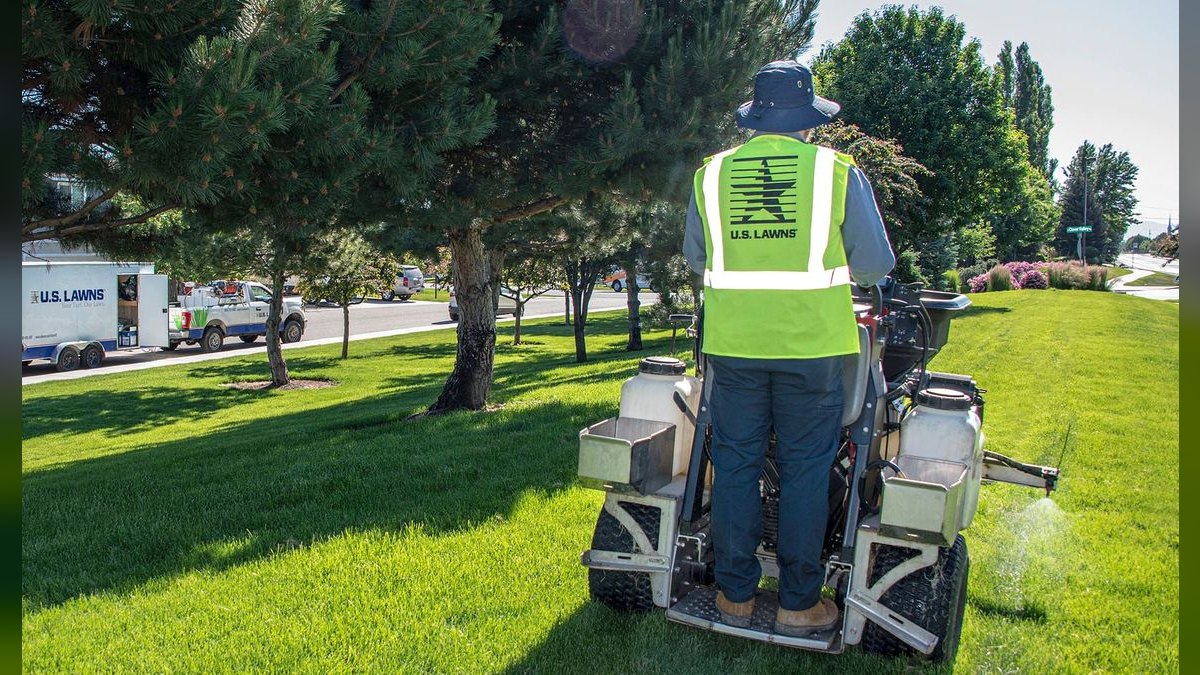
Independent benchmarks for sanity check: IBISWorld pegs the U.S. landscaping services industry at $176.7B in 2026 growing at a 2.0% CAGR through 2031 to $195B. The National Association of Landscape Professionals (NALP) reports the median commercial-focused operator runs 8-12% net margin — meaning U.S. Lawns' self-reported 17.3% is in the top third of independents, which is plausible given the brand's bidding tools and regional vendor pricing but should be discounted by 3-5 points for first-year operators still learning to price.
Who Wins With This Business
Former B2B sales reps win the hardest. The whole model collapses or compounds based on whether you can walk into a property management office cold, get a five-property RFP, and close 30% of bids. U.S. Lawns' own franchisee profile data shows the top quartile of revenue ($1.8M+) is dominated by owners who spent 5+ years selling something other than landscaping before signing — commercial real estate, building products, industrial supply, fleet services. They treat the route as a sales territory, not a job site.
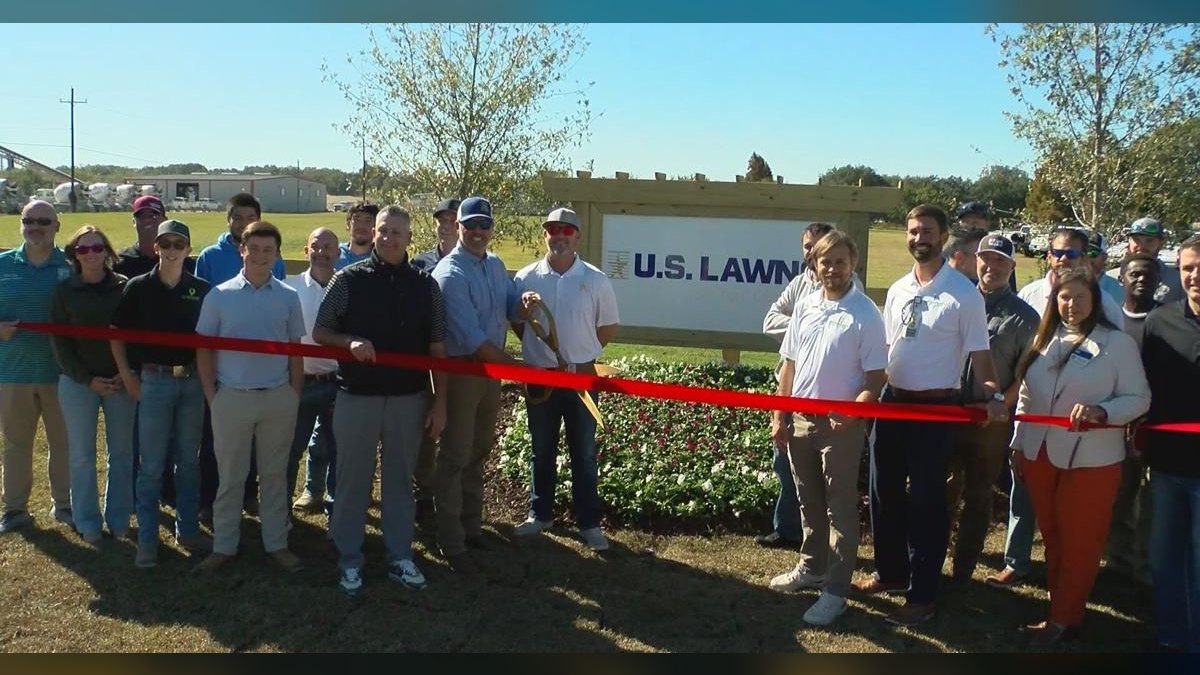
Operators with $150K+ liquid also win. The published $59,500 floor is misleading — sub-$100K starts almost universally undercapitalize the truck-and-trailer rig (real cost $45K-$75K used, $90K+ new) and force you to take smaller, lower-margin residential-adjacent contracts instead of the office park anchor tenant that justifies the model. Owners who fund the full Standard build ($150K-$200K) and add $50K working capital cushion report breakeven 4-7 months faster.
Veteran owners get a real edge: $5,000 fee discount, plus the brand actively recruits through VetFran. The crew-leadership and logistics skills veterans bring map directly onto running a 3-4 truck commercial route by Year 3.
Sunbelt geography wins. Florida, Texas, Georgia, Arizona, and the Carolinas give you 10-12 month mowing seasons, which means royalty-paying revenue 50-100% higher than equivalent Midwest or Northeast territories. The brand's strongest revenue territories are clustered in the I-4 corridor in Florida and DFW Metroplex for this reason.
Who Loses With This Business
"I love yards" hobbyists lose immediately. This is a commercial sales business with a mower attached, not a landscaping career. If you cannot stomach 20 cold prospecting calls a day for 18 months, the franchise fee is a $44,000 lesson. The brand's own attrition data (Item 20, 2026 FDD) shows roughly 8-12% annual franchisee turnover in years 2-3, and the consistent theme in transfer interviews is "I didn't realize how much selling was involved."
Undercapitalized starters lose. Coming in at the $59,500 floor with $20K liquid reserve means you cannot weather a slow Q1, cannot replace a $14,000 transmission, and cannot pre-fund spring fertilizer applications. Owners who closed under $80K total invested showed a disproportionately high failure rate in years 1-2 per FranchiseGrade data.
Owners chasing residential margins lose. U.S. Lawns explicitly does not chase single-family homes. If your market thesis is "I'll mow 200 houses on Saturdays," you bought the wrong franchise — TruGreen, Lawn Doctor, and Augusta Lawn Care are residential-oriented competitors with different unit economics.

Snow-only Northern operators lose. Without snow-and-ice contracts layered on top of mowing, a Wisconsin or Minnesota territory sits idle November-March and burns insurance, truck payments, and royalty minimums for 5 months. Northern franchisees who do not lock down commercial snow plowing by Year 2 typically exit by Year 4.
Anyone with under 660 credit and no SBA pre-qualification loses time. The brand requires lender pre-qualification before sending the FDD; bringing a weak file delays signing by 3-6 months.
2027 Market Conditions
Three macro forces shape U.S. Lawns' 2027 setup, and two cut in the franchisee's favor.
1. Labor supply is the binding constraint. IBISWorld puts labor at 45-55% of total operating cost for landscape operators. The landscaping industry consumes 39% of all H-2B visas issued nationally — more than any other industry. Tightened H-2B caps under the current administration mean wage inflation of 6-9% annually through 2027 in core mowing markets. Operators who locked in multi-year contracts in 2025 without escalator clauses are getting squeezed; new 2027 contracts are being written with 8-10% annual escalators as standard, restoring margin to franchisees who price discipline-fully.

2. Commercial real estate stabilization helps. The 2024-2026 office vacancy spike that pressured commercial landscape budgets is flattening in 2027, with NAIOP forecasting office vacancy plateauing at ~19% nationally. Industrial, retail strip, and HOA segments — U.S. Lawns' bread and butter — never wobbled and continue to grow at 3-4% annually.
3. Tech-enabled scheduling closes the labor gap. Aspire Software, SingleOps, and LMN integrations let a single 3-truck operator route 15-20% more stops per day than 2023 baselines. Franchisees who adopt the brand's recommended tech stack report 18-24% gross margin improvement versus pen-and-paper competitors.
4. Robotic mowers are real but not yet disruptive. Husqvarna Ceora and Echo TM-2000 robotic units are commercially viable on HOA common areas and corporate campuses but still require human edging, blowing, and trimming. Expect 5-8% labor savings on suitable accounts by 2028; not a 2027 game-decider.
5. Acquisition consolidation is heating up. Private equity rolled up 47 regional commercial landscapers in 2025 (per Capstone Partners). For an operator who hits $2M+ revenue by Year 4, 2027-2029 is a credible exit window at 5-7x EBITDA — meaning a franchisee netting $400K EBITDA could exit for $2-2.8M.
The 90-Day Decision Tree

- Days 1-10: Pull the 2026 FDD and 2027 amendment. Request directly from U.S. Lawns franchise development (not third-party portals). Read Items 5, 6, 7, 19, and 20 cover to cover. Item 20 is non-negotiable — that is where you see how many franchisees left in the last 3 years and why.
- Days 10-20: Lender pre-qualification. Get an SBA 7(a) pre-approval letter from a Preferred Lender (Live Oak, Huntington, Byline Bank) for $150K-$225K. The brand will not engage seriously without it.
- Days 20-35: Validation calls with 8-12 existing franchisees. Item 20 lists every current franchisee with contact info. Call operators in your climate zone and at 3 different tenure brackets (Year 1-2, Year 4-6, Year 8+). Ask: "What was your Year-1 revenue?" "What would you do differently?" "How many hours a week are you selling versus operating?"
- Days 35-50: Territory analysis. Pull a list of commercial properties over 5 acres in your target ZIP codes (LoopNet, CoStar, county GIS). U.S. Lawns will provide a heat map but verify independently. You need 80+ qualified commercial accounts within a 10-mile radius to hit the $1M revenue threshold.
- Days 50-65: Discovery Day in Orlando. U.S. Lawns is a Landscape Solutions / Real Matters brand headquartered in Orlando. The mandatory Discovery Day is your shot to meet field support and walk a working franchisee's route. Do not skip the route ride-along.
- Days 65-80: Attorney + accountant FDD review. Spend $2,500-$4,000 with a franchise-specialist attorney (not your real-estate lawyer cousin). Get a CPA pro-forma modeling 5 scenarios: bear (60% of Item 19 median), base (90%), bull (mean Item 19), with full debt service.
- Days 80-90: Sign or walk. If you signed: hire a part-time commissioned BDR before Day 1 of training. If you walked: the $44K you didn't spend is the best deal you got that quarter.
Alternative Plays

Augusta Lawn Care Franchise — Residential-oriented competitor, $30K-$70K total investment, 7% royalty, ~$450K average territory revenue. Lower ceiling but lower risk and a 6-month breakeven. Better fit for owner-operators who want to mow themselves.
Spring-Green Lawn Care — Established residential lawn treatment franchise, $90K-$110K investment, focuses on fertilization and weed control (no mowing). Sticky route-based recurring revenue, fits ex-route-sales operators.

Weed Man USA — Treatment-only, $66K-$92K investment, strong unit economics (~22% EBITDA), but heavily concentrated in northern markets and saturated in 70% of metros.
Buy an existing independent commercial operator. A $1.2M revenue commercial landscaper with $250K SDE typically trades at 2.5-3.5x SDE ($625K-$875K) all-in. SBA-financeable, faster cash flow, no royalty drag — but no brand pricing tools, no bidding system, and you inherit whatever bench staff and customer concentration risk the seller has.
Skip franchising, build independently. Cost: $60K-$120K. Pros: zero royalty, full control. Cons: you spend 18 months building bidding templates, software, hiring playbook, and brand recognition from scratch. Math favors independent route ONLY if you already have 10+ years in commercial landscape ops and a Rolodex.
FAQ
What is the total investment needed to open a U.S. Lawns franchise in 2027? The total investment ranges from $59,500 to $200,000 per the 2026 FDD. This includes a $34,000 franchise fee and a $10,000 prospecting fee, plus costs for equipment, vehicles, and working capital. You’ll need at least $100,000 in liquid capital to qualify.

How long does it take to break even with a U.S. Lawns franchise? Breakeven typically occurs between month 14 and month 22 after opening. This timeline depends on how quickly you build a commercial route density and secure recurring contracts with property managers. Year 1 often involves heavy cold-calling, so cash flow may be tight initially.
What is the average revenue and profit margin for a U.S. Lawns franchise? Based on the most recent Item 19 disclosure (FY2023), the median gross revenue is $976,000 and the mean is $1,188,352 per operating territory. The reported net margin is 17.3%, which means typical owner cash flow in Year 1 ranges from $45,000 to $85,000 before scaling.
What are the ongoing royalty fees for a U.S. Lawns franchise? Royalties start at 6% of gross revenue and slide down to 4% as your revenue increases. This tiered structure rewards growth, so larger territories pay a lower percentage. There is no fixed schedule—the rate adjusts based on your actual revenue performance.
Do I need prior landscaping experience to buy a U.S. Lawns franchise?

No, but you do need B2B sales experience and comfort with cold-calling property managers. The franchise provides training on commercial mowing and maintenance, but the core skill is securing and retaining contracts. Most owners spend their first year on sales, not mowing.
What is the territory size and exclusivity for a U.S. Lawns franchise? Each franchise operates within a defined territory, typically covering a specific geographic area based on population density and commercial properties. Territories are designed to support the median revenue range, but exact size varies by location. You generally get exclusive rights to that area for commercial lawn care.
Bottom Line
U.S. Lawns in 2027 is a B2B sales business disguised as a landscaping franchise. The unit economics work — $976K median revenue, 17.3% reported margin, 22-30 month payback — but only for owners who fund the full Standard build, bring real B2B selling skill, and pick a Sunbelt or snow-bundled territory. Skip it if you are undercapitalized, residentially focused, or expecting to mow your way to wealth. Lock it in if you have $150K liquid, sold something commercial for five years, and want a commercial route business with a credible $2M-plus exit window in 2030-2032.
Sources
- U.S. Lawns Franchise Disclosure Document 2026 (Item 5, 6, 7, 19, 20)
- U.S. Lawns Franchise FDD, Profits & Costs 2025 — Sharpsheets
- U.S. Lawns Franchise Cost & Fees 2026 — FranchisePayback
- U.S. Lawns Franchise Review — FranchiseGrade
- IBISWorld: Landscaping Services in the US Industry Analysis 2026
- Mordor Intelligence: United States Landscaping Market Forecast 2031
- BBB Future of the Landscape Industry Report
- National Association of Landscape Professionals (NALP) operator benchmarks
- Capstone Partners 2025 Landscape Services M&A Report
- U.S. Department of Labor H-2B Visa Program statistics 2026
- 1851 Franchise Deep Dive: U.S. Lawns Costs, Fees, Profit Data
- VetFran Veteran Franchise Incentive Program
<span class="kw-mirror">U.S. Lawns franchise review / U.S. Lawns reviews / U.S. Lawns rating / U.S. Lawns review 2027 / review of U.S. Lawns franchise</span>
Related on PULSE
This page will be disappearing soon. Save it to your device for $1 — or read it free while it is here.
@Kory-White- · if Venmo asks, the last 4 of my number are 2012
This page is gone.
This one is off the shelf now. $1 keeps it on your phone for good — the whole page, pictures and diagrams included.
 franchiseShould I open or buy a Jimmy John's franchise in 2027?
 franchiseShould I open or buy a Papa John's franchise in 2027?
 franchiseShould I open or buy a Meineke franchise in 2027?
 franchiseShould I open or buy a Jeremiah's Italian Ice franchise in 2027?
 franchiseShould I open or buy a Great Clips franchise in 2027?
 franchiseShould I open or buy a Goddard School franchise in 2027?
 franchiseShould I open or buy a KinderCare franchise in 2027?
 franchiseShould I open or buy a Subway franchise in 2027?
 franchiseShould I open or buy an F45 Training franchise in 2027?
 franchiseShould I open or buy a Jiffy Lube franchise in 2027?