


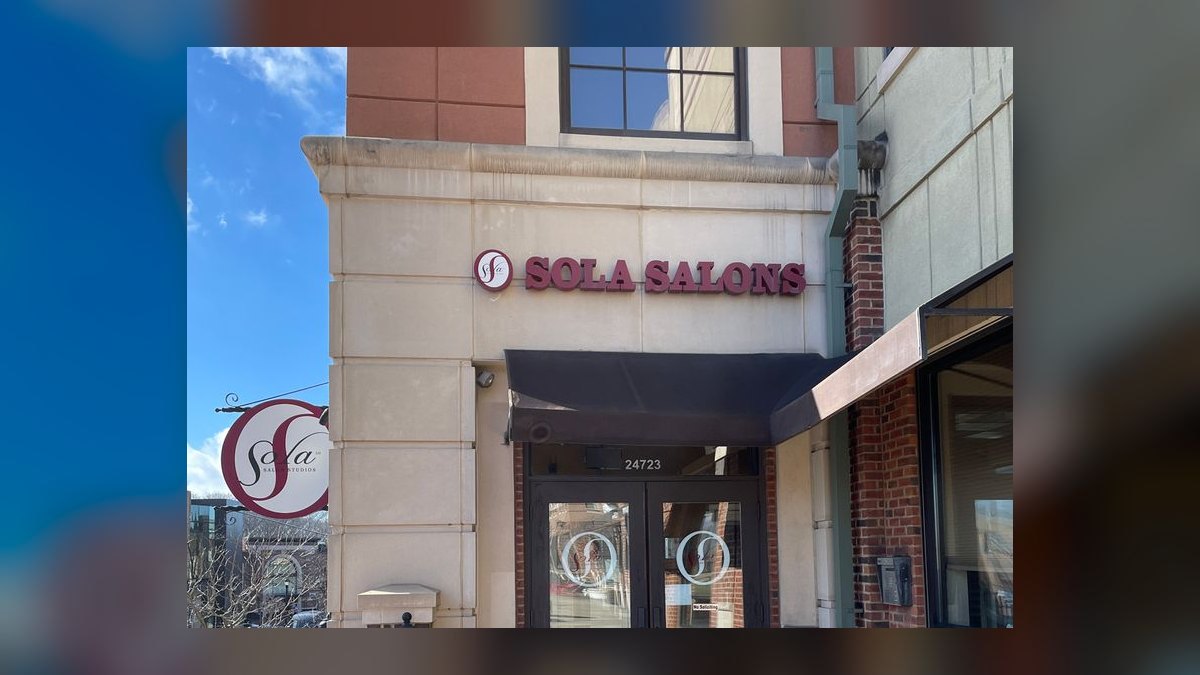
Should I open or buy a Sola Salon Studios franchise in 2027?
Quality
Certified

Yes — if you can write a $400K-$650K liquid check, sign a 10-year lease on 4,500-6,500 sq ft of A/B-grade retail, and accept that you are running a real-estate arbitrage business, not a beauty business. Sola Salon Studios' 2026 FDD Item 7 pegs total investment at $1,182,000-$1,939,000 per studio, with median franchised gross revenue of $420,000 and median occupancy of 89.7% as of December 2025. Year-1 cash flow is typically negative $80K-$150K during lease-up; breakeven hits month 14-20 at 75% occupancy; stabilized EBITDA lands $130K-$220K at 90%+ occupancy. Probably not if you expect operator-light passive income, lack landlord-TI negotiating leverage, or are betting on a single-tenant model in a sub-200K-population metro.
The Real Numbers
Sola's 2026 FDD (issued April 2026, effective for fiscal 2026 sales) is the cleanest disclosure the brand has published. Every number below ties to Item 5, Item 6, Item 7, or Item 19 of that document or to the Q1 2026 system update released May 27, 2026.
| Line Item | Low | High | Notes |
|---|---|---|---|
| Initial Franchise Fee (Item 5) | $55,000 | $55,000 | Single unit; multi-unit packs discount to $45K/unit at 3+ |
| Real estate deposits + first month | $18,000 | $42,000 | 4,500-6,500 sq ft, $28-$48/sf NNN typical |
| Build-out (turnkey w/ landlord TI offset) | $780,000 | $1,310,000 | 28-42 suites at avg $22K-$32K/suite all-in |
| Furniture, Fixtures, Equipment | $95,000 | $165,000 | Shared common areas, laundry, HVAC zones |
| Initial training + travel (Item 6) | $4,500 | $9,000 | Denver HQ, 5 days mandatory |
| Tech stack (Sola Pro, POS, access ctrl) | $12,000 | $24,000 | Onboarding + Year-1 license |
| Grand opening marketing | $15,000 | $35,000 | Minimum spend per franchise agreement |
| Working capital (3 months) | $90,000 | $145,000 | Covers lease-up gap before occupancy |
| Insurance + legal + permits | $14,500 | $40,000 | GL, property, workers' comp, LLC formation |
| Other deposits + contingency | $98,000 | $114,000 | Utility deposits, signage, miscellaneous |
| TOTAL INVESTMENT (Item 7) | $1,182,000 | $1,939,000 | Mean ~$1.49M |
| Ongoing Royalty | 5.5% gross | 5.5% gross | $500/month minimum |
| National Brand Fund | 1.5% gross | 3.5% gross | Capped at 3.5% by FA |
| Tech/Sola Pro fee | $1,800/mo | $2,400/mo | Per studio location |
Revenue and profit (Item 19 medians, 2026 FDD):
- Median franchised gross revenue: $420,000 (n=625 franchised units, full year 2025)
- Top quartile gross revenue: $612,000+
- Bottom quartile gross revenue: $268,000
- Median occupancy first 12 months: 86.6%
- Median occupancy at Dec 31, 2025: 89.7%
- Company-owned units at 95-100% occupancy: $242,793 estimated earnings after operating expenses
- Implied stabilized EBITDA margin: 31-38% on franchised units at 90%+ occupancy
- Cash-on-cash return at stabilization: 14-22% on $400K-$650K equity check
Payback math: At median $420K revenue and ~33% EBITDA, a stabilized unit throws ~$139K/year. Against $500K typical equity, simple payback is 3.6-4.5 years. Most franchisees report full payback in years 5-7 once you factor lease-up drag, debt service on the SBA 7(a) note covering the other ~$1M, and tenant reinvestment cycles.
Who Wins With This Business
The multi-unit real estate operator wins biggest. The franchisees pulling $200K+ EBITDA per location are not stylists — they are HVAC contractors, dental DSO operators, multi-unit Anytime Fitness owners, and ex-commercial real estate brokers who understand triple-net leases, tenant improvement allowances, and percentage rent versus base rent negotiations. They treat Sola as a commercial real estate lease arbitrage: master-lease 5,500 sq ft at $32/sf, sublease 32 suites at an effective $96/sf, pocket the spread.
The second winner profile is the operator-investor with $600K+ liquid and a 10-year horizon. Sola's franchise agreement runs 10 years with two 5-year renewals; the model only really compounds on unit 3 and unit 4 when you can amortize a regional manager across multiple locations. Single-unit owners stall at $130K-$160K EBITDA; three-unit owners commonly clear $500K+ because the regional ops cost stays flat.
The third winner is the first-time franchisee with strong landlord relationships. The number that swings outcomes most is landlord tenant improvement contribution, which ranges from $15/sf to $85/sf depending on market and credit. Every extra $10/sf of TI on a 5,500 sq ft box drops $55,000 directly to your equity check. Operators who walk in with a pre-negotiated $50/sf+ TI letter turn the $1.93M ceiling into a $1.4M effective spend.
Who Loses With This Business
The stylist-turned-owner loses most often. Hairdressers who imagine running "their dream salon" misread the model — you do not cut hair at Sola. You are a landlord to 32 independent contractors who each pay $260-$420/week for a private suite. If you cannot fill 28 of 32 suites in 90 days, your lease-up bleeds $11K-$18K per empty suite per month. Stylists who think their personal book will magnetize the location underestimate the recruiting and retention grind: average professional tenure at Sola is 3.4 years, meaning a 30-suite location turns over 9 professionals annually — that's a full-time recruiting motion.
The passive investor loses. Sola is not absentee despite marketing pitches. Sola's own franchisee performance data shows owner-operated units exceed semi-absentee units by 11-14 percentage points of occupancy in years 1-3. If you plan to fly in monthly from a different state and let a $22/hour studio manager run it, you will lock in bottom-quartile $268K revenue and likely never see positive cash flow.
The undercapitalized buyer loses fastest. The brand requires $500K liquid + $1.5M net worth, but the operators who fail are the ones who scrape together exactly those minimums. Lease-up takes 8-14 months, build-out overruns add $80K-$180K in 60% of new units (per 2025 brand-reported data), and a single anchor-tenant departure mid-lease-up can drain a thin reserve. Plan on $650K+ equity before you start.
2027 Market Conditions
The salon suite category is consolidating fast. As of mid-2026, Sola has 750+ locations and 21,000+ professionals, Phenix Salon Suites runs 425+ locations, and My Salon Suite (Propelled Brands) has 300+. The top three brands control ~70% of all branded salon-suite real estate in the US. Independents and regional concepts are getting squeezed out of A-grade retail by national-credit brand leases.
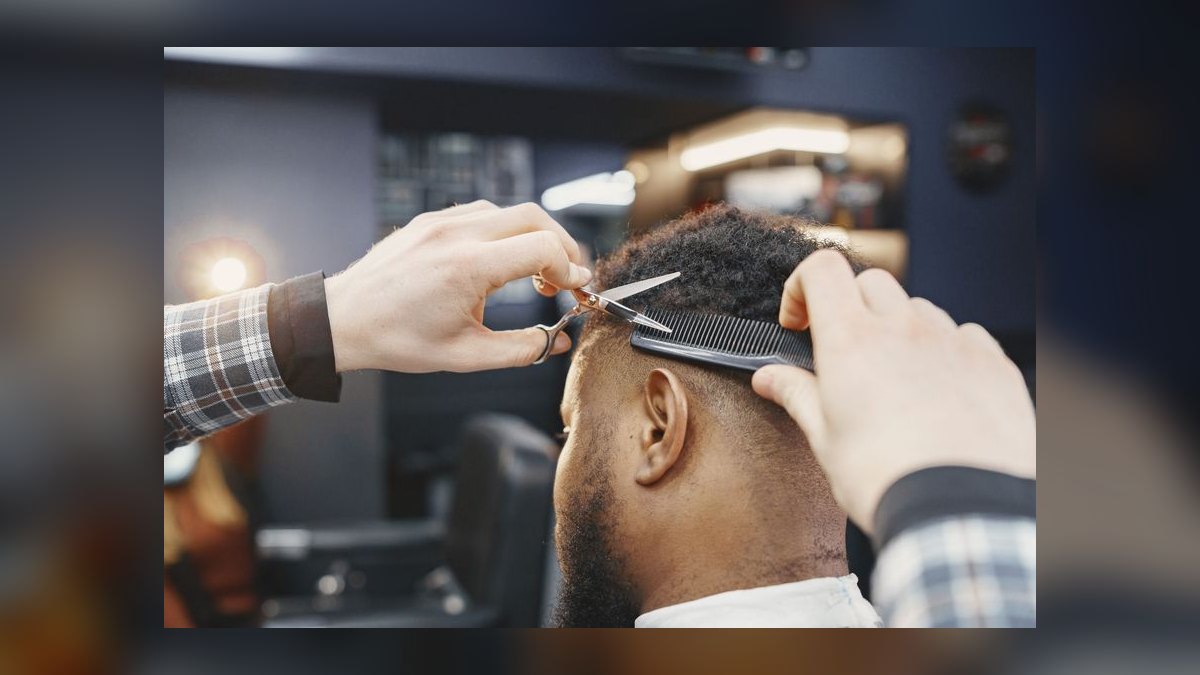
Demand tailwinds are real but not infinite. BLS data shows independent contractor hairdressers grew from 31% of the workforce in 2019 to 58% in 2025, and the trend continues through 2027. Every stylist who leaves a commission salon is a potential Sola tenant. But the TAM is finite: roughly 720,000 licensed cosmetologists in the US, and salon-suite penetration is already near 18% in mature markets like Denver, Dallas, and Charlotte. Sub-200K metros are the remaining greenfield.
Capital costs hurt 2027 starts. SBA 7(a) prime + 2.75% lands at 9.8-11.0% in mid-2026 with Fed cuts only partially priced in. Construction costs are up 6.8% year-over-year per Turner Construction Cost Index Q1 2026. The $1.93M ceiling in the 2026 FDD will likely breach $2.05M in the 2027 FDD. Lock build-out contracts early.
Consumer side: salon spending is sticky but professionals are price-pressured. Beauty service spending grew 4.1% in 2025 per IBISWorld. But the professionals renting suites are passing rent increases to clients at 6-9% annually, and client churn at the professional level is up 14% YoY per Sola Pro internal data shared at the 2026 brand conference. Net effect on landlord (you): rent collection stays at 96%+, but professional turnover rises, increasing your recruiting overhead.
The 90-Day Decision Tree
- Days 1-10: Pull and read the full 2026 FDD. Request via solafranchising.com. Read Item 7, Item 19, Item 20 (turnover), and Item 21 (financials) before anything else. Call eight current franchisees from the Item 20 list — minimum five who have been open 2+ years, three who have closed or transferred. Ask each: *what was your actual all-in build-out cost vs. budget, and how long was lease-up?*
- Days 11-25: Underwrite three target sites. Use Sola's real estate team to pull demographics: minimum 75K population in 3-mile radius, $72K+ median household income, 25-44 age skew. Get letters of intent on three sites with TI offers. Reject any LOI under $35/sf TI in secondary markets or $50/sf TI in primary markets.
- Days 26-40: Build the model with real lease terms. Use the median $420K revenue Item 19 number, NOT the topline marketing pitch. Sensitize at 75%, 85%, 90% occupancy. If your 75% occupancy case does not cover debt service plus a $60K owner draw, the deal is too thin — walk.
- Days 41-60: Secure debt. SBA 7(a) at 75% LTC up to $5M is the standard path. Get three bank quotes minimum (Live Oak, Huntington, Byline are the active Sola lenders in 2026). Negotiate 18-month interest-only period to cover lease-up.
- Days 61-75: Negotiate the franchise agreement. Sola publishes the FA as non-negotiable, but multi-unit development agreements have flex on royalty for years 1-2 (commonly reduced to 3.5% for first 12 months on multi-unit deals). Push for it.
- Days 76-85: Get the build-out GC bid in writing. Use a GC who has built 3+ Sola units — the brand maintains a preferred list. Lock the bid with 5% contingency carve-out and liquidated damages for delivery delays past month 5.
- Days 86-90: Close or kill. If your model breaks at 80% occupancy, if your TI is below $35/sf, if your liquid drops below $600K after deposits — kill it and look at unit 2 of an existing operator's portfolio (acquisition multiples are 4-5x EBITDA versus building new at 7-8x).
Alternative Plays
Buy an existing Sola location, do not build new. The resale market in 2026 has 38-52 listings active at any time on FranchiseResales, BizBuySell, and the Sola internal transfer list. Prices run 4.0-5.2x trailing EBITDA for stabilized units — meaning a $150K EBITDA location lists at $600K-$780K, versus the $1.4M-$1.9M cash burn to build new. You skip the 14-month lease-up bleed.
Buy a Phenix Salon Suites unit instead. Phenix runs a lower total investment ($785K-$1.42M) with similar revenue medians ($380K-$410K) but higher royalty (6.0%). Better fit if you have $300K-$450K liquid rather than $500K+.
Develop a non-branded salon suite concept if you already own commercial real estate. Skip the $55K franchise fee, the 5.5% royalty, and the 1.5-3.5% brand fund. Independent operators in markets like Nashville and Austin are running 35-40% EBITDA margins versus Sola's 31-38%, but you carry the brand build, tech stack ($60K-$120K), and recruiting yourself. Only viable if you own the box.
Skip salon suites entirely and buy a Self Esteem Brands franchise (Anytime Fitness) if your thesis is "branded membership-style real estate arbitrage." Anytime's $400K-$700K total investment, faster lease-up, and $165K median EBITDA at maturity delivers similar cash-on-cash with less build-out risk.
FAQ
What is the total investment required to open a Sola Salon Studios franchise? The total investment ranges from $1.18 million to $1.94 million per studio, as stated in the 2026 FDD Item 7. You’ll need liquid capital of $400,000 to $650,000 to qualify, covering initial fees, build-out, and working capital.
How long does it take to reach profitability?
Most studios hit breakeven between month 14 and month 20, typically when occupancy reaches 75%. Year-one cash flow is often negative by $80,000 to $150,000 during the lease-up phase, so patience and reserve funds are critical.
What kind of revenue and profit can I expect? Median franchised gross revenue is around $420,000, with stabilized EBITDA of $130,000 to $220,000 once occupancy hits 90% or higher. Keep in mind these are ranges, not guarantees, and performance varies by location and management.
Do I need experience in the beauty industry to succeed? No—Sola is a real-estate arbitrage business, not a beauty business. Success depends on negotiating favorable leases, managing tenant relationships, and filling chairs, not on styling hair. Prior experience in commercial real estate or property management is more valuable.
What are the biggest risks I should consider? The main risks include a slow lease-up period (negative cash flow for over a year), dependence on a single-tenant model in smaller markets, and the need for landlord tenant-improvement allowances to keep upfront costs manageable. Markets under 200,000 population may struggle to sustain occupancy.
Can I run this as a passive, operator-light investment? Probably not. Most owners are actively involved in leasing, marketing, and day-to-day operations, especially during the first two years. While you can hire a manager, the model typically requires hands-on oversight to maintain high occupancy and profitability.
Bottom Line
Sola Salon Studios is a real-estate arbitrage business dressed in beauty industry packaging, and that is the precise reason it works. The brand has built the cleanest unit economics in the salon-suite category — $420K median revenue, 89.7% median occupancy, 31-38% stabilized EBITDA margins, and a 750-unit system with measurable Item 19 medians backed by 625 franchised data points. Open or buy if you are a multi-unit operator with $500K+ liquid, real estate underwriting chops, and a 10-year horizon. Skip it if you are a stylist romanticizing the dream, an absentee investor expecting passive returns, or a buyer scraping together exactly the minimum capital with no reserve. The strongest move in 2026-2027 is buying a stabilized resale at 4-5x EBITDA rather than burning $500K of equity through a 14-month lease-up — same unit economics, no construction risk, immediate cash flow.
Sources
- Sola Salon Studios Franchise FDD, Costs & Fees (2026) — FranchisePayback
- Sola Salons Builds Q1 Momentum with New Signings, Openings and Enhanced 2026 FDD — Franchising.com, May 27, 2026
- Sola Salons Franchise Review 2026: Costs, Fees, News, Average Revenues and/or Profits — Franchise Chatter, March 15, 2026
- Sola Salons Franchise Cost, Fees & Profit Data 2026 — 1851 Franchise
- Sola Salon Studios Franchise Insights: FDD, Costs & Fees — VettedBiz
- Sola Salons Named No. 1 Salon Suites Franchise in 2026 by Entrepreneur — 1851 Franchise
- Sola Salons Leans Into Amenity-Heavy Units to Stand Out — Franchise Times
- Phenix Salon Suites Franchise — Official Site
- Why Beauty and Wellness Diversity Is Driving the Next Phase of Salon Suite Growth — Franchising.com, February 2026
- Sola Salon Studios Analysis Updated 2026 — Franchimp
- Turner Construction Cost Index Q1 2026
- BLS Occupational Outlook Handbook: Barbers, Hairstylists, and Cosmetologists
Sola Salon Studios review / Sola Salon Studios reviews / Sola Salon Studios rating / Sola Salon Studios review 2027 / review of Sola Salon Studios franchise
Related on PULSE
- Should I open or buy an Image Studios 360 franchise in 2027?
- Should I open or buy an Image Studios franchise in 2027?
- Best beauty and hair salon franchises to buy in 2027
- Should I open or buy a Salon Lofts franchise in 2027?
- Should I open or buy a MY SALON Suite franchise in 2027?
- Should I open or buy a Phenix Salon Suites franchise in 2027?
This page will be disappearing soon. Save it to your device for $1 — or read it free while it is here.
@Kory-White- · if Venmo asks, the last 4 of my number are 2012
This page is gone.
This one is off the shelf now. $1 keeps it on your phone for good — the whole page, pictures and diagrams included.
 franchiseShould I open or buy a Merry Maids franchise in 2027?
 franchiseShould I open or buy a Valvoline Instant Oil Change franchise in 2027?
 franchiseShould I open or buy a Cinnabon franchise in 2027?
 franchiseShould I open or buy a Wingstop franchise in 2027?
 franchiseShould I open or buy a Wendy's franchise in 2027?
 franchiseShould I open or buy an Ace Hardware franchise in 2027?
 franchiseShould I open or buy a Matco Tools franchise in 2027?
 franchiseShould I open or buy a Smoothie King franchise in 2027?
 franchiseShould I open or buy a Cook Out franchise in 2027?
 franchiseShould I open or buy a Primrose Schools franchise in 2027?