


Should I open or buy a CycleBar franchise in 2027?
Quality
Certified
Probably not as a greenfield build. CycleBar in 2027 demands roughly $411,000–$1,110,000 upfront against average studio revenue near $407,000 and 8–14% EBITDA margins, with cash breakeven at month 22–30. Only affluent-market operators with prior fitness experience and 30 months of runway should open. Everyone else should buy a resale.
What a CycleBar unit actually is, and why the format dictates the answer
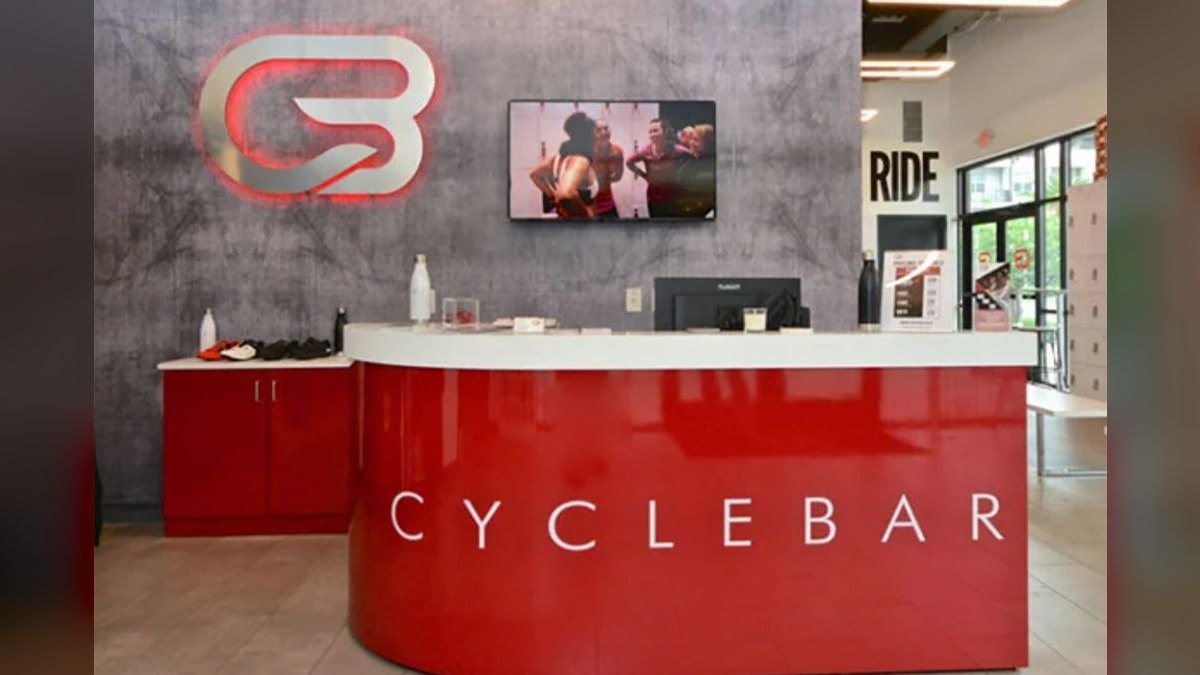
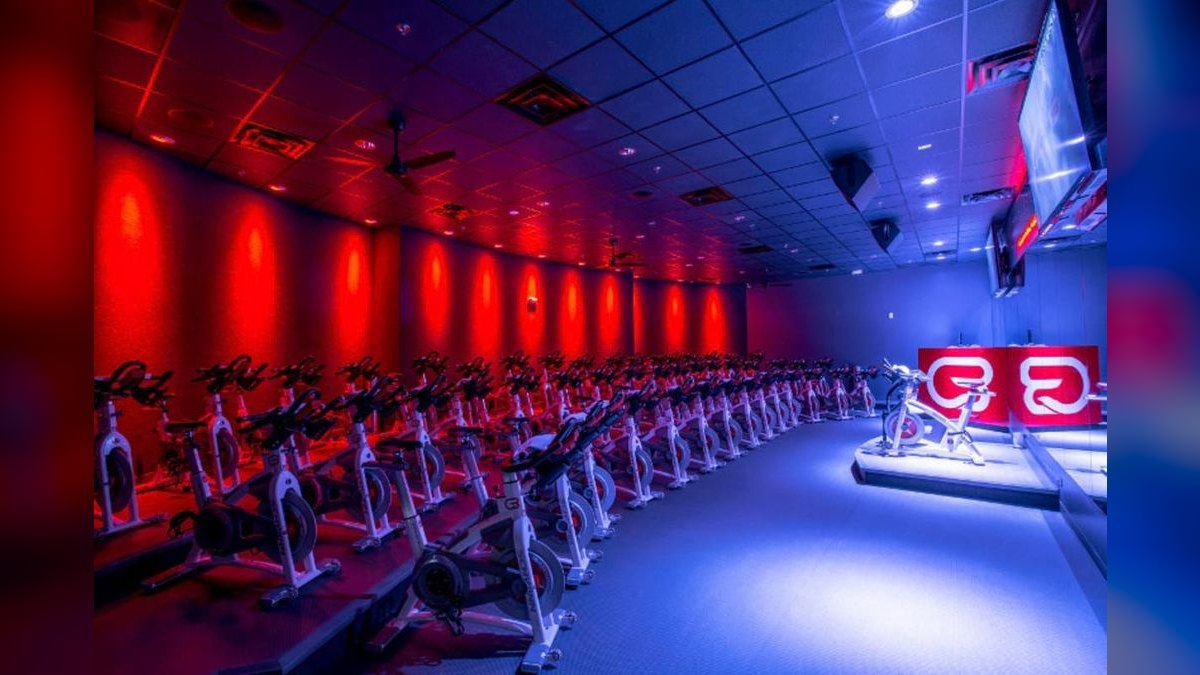
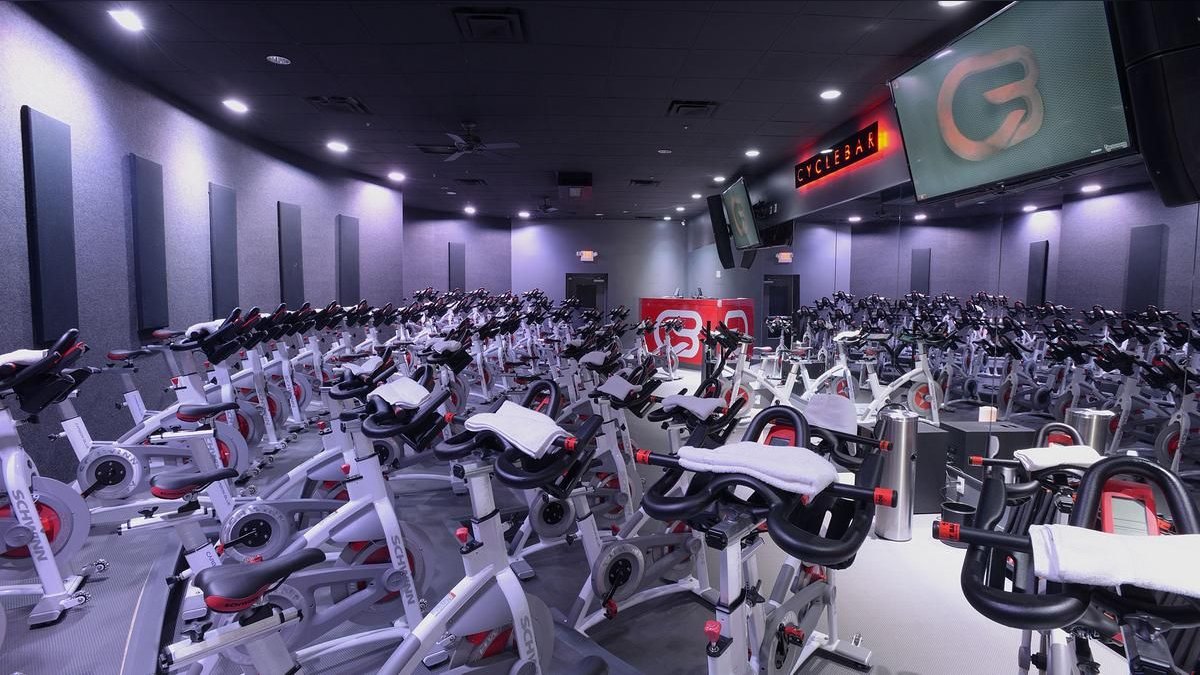
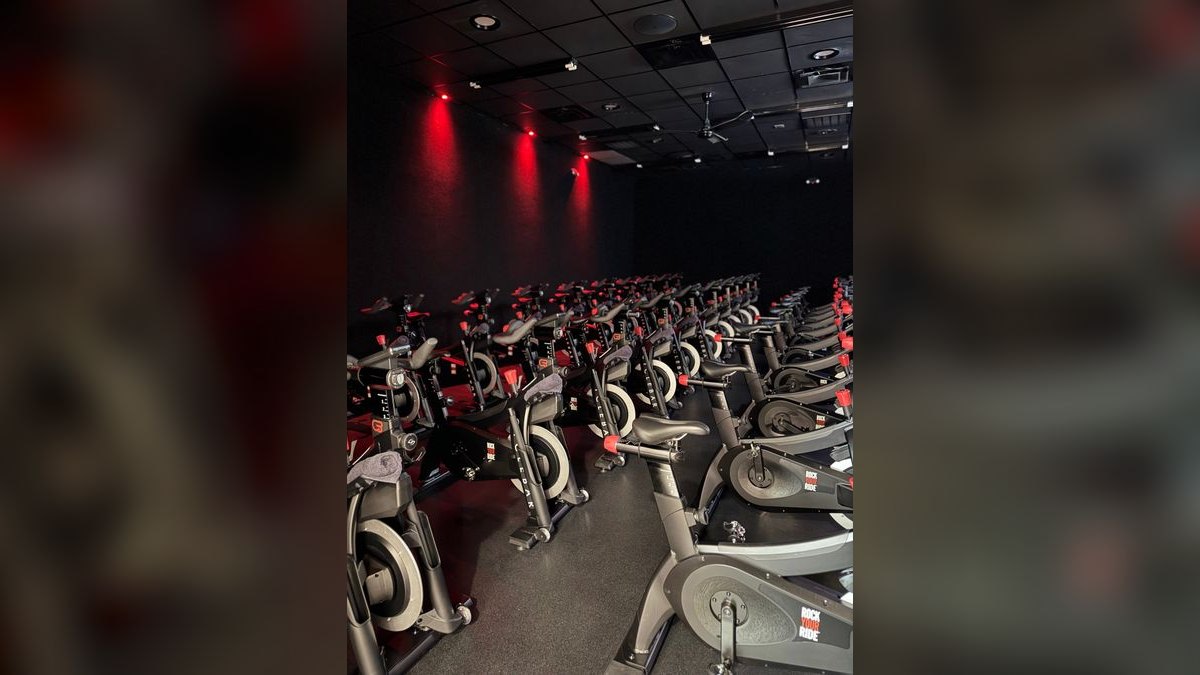
Strip the branding away and a CycleBar studio is a fixed-capacity, high-fixed-cost, appointment-scheduled entertainment venue that happens to sell exercise. That framing matters more than any franchise brochure, because it explains every number that follows. You are buying a room with a hard seat count — typically 40 to 50 proprietary bikes in an 1,800 to 2,500 square foot box — and your entire revenue ceiling is set the day the buildout finishes. Unlike a restaurant that can turn tables faster or a service franchise that can add a truck, a cycling studio cannot manufacture more capacity in prime time. Prime time is roughly 6:00–8:30am and 4:30–7:30pm, five days a week, plus weekend mornings. That is maybe 25 to 30 sellable class slots per week where demand actually exists. Everything outside those windows runs at 20–40% occupancy no matter how good your marketing is.
Run the arithmetic and the ceiling becomes obvious. Forty-five bikes × 28 viable weekly classes × 52 weeks = about 65,000 theoretical rider-slots per year. At a realistic 55–65% prime-time fill and much thinner off-peak, most studios land near 22,000–30,000 actual rides annually. At an effective per-ride yield of $14–$18 — not the $25–$35 rack rate, because class packs, memberships, ClassPass inventory, and intro offers all discount it — you arrive at roughly $350,000 to $450,000 in gross revenue. That is exactly where the disclosed franchise system average sits, around $407,000 for the 2024 cohort of 183 studios, with a median closer to $355,000 because a handful of flagship studios pull the mean upward. The distribution is what should scare you: top quartile above $612,000, bottom quartile under $215,000. A studio in that bottom bucket is not underperforming, it is dying, because $215,000 of revenue cannot carry $45,000–$65,000 per square foot-adjusted rent plus nine percent in franchise fees plus instructor payroll.
Why this matters for the open-versus-buy question: capacity-capped businesses have almost no upside optionality. A software business with a bad year can grow 40% the next. A CycleBar studio with a bad year can grow maybe 12% before it hits the physical wall of bike count in the only hours people want to ride. So when you underwrite a greenfield build, you are not underwriting a growth asset. You are underwriting your ability to reach a known ceiling faster and cheaper than the previous owner of the box next door did. That is a real-estate and operations problem, not an entrepreneurship problem, and it rewards people who have already built one of these before.
The adjacent lesson applies across boutique fitness. Pilates, barre, HIIT, and stretch formats all share the fixed-seat structure, but they differ sharply in cost per seat and instructor leverage. A Pilates reformer studio carries expensive equipment but sustains higher per-session yield and far lower instructor churn, which is why systems in that category post materially higher average unit revenue on comparable footprints. A stretch-and-recovery format has lower buildout and simpler staffing. Cycling sits at the worst intersection: expensive proprietary equipment, expensive audio-visual production, high instructor burnout, and a price point capped by ClassPass-driven commoditization. If you are shopping the category rather than the brand, that comparison should drive your decision before you ever request an FDD.
The step-by-step process from first inquiry to opening day
Most prospective buyers run this sequence backward. They fall in love with a brand, then hunt for a market, then discover financing constraints, then negotiate a lease under time pressure with a signed franchise agreement already forcing their hand. Reverse it. Financing capacity and market quality are the binding constraints; the brand is the last variable, not the first.
Here is the sequence that actually protects you, with realistic elapsed time on each stage.
Weeks 1–3: build your own model before you talk to anyone. Download the current Franchise Disclosure Document and read Item 5 (initial fees), Item 6 (ongoing fees), Item 7 (estimated initial investment), Item 19 (financial performance representations), and Item 20 (outlet tables and franchisee contact list). Item 20 is the single most underread item in franchising, and it is where the truth lives — count transfers, terminations, non-renewals, and ceased operations over the trailing three years and compare that to net new openings. A system opening 12 and closing 14 is contracting regardless of what the sales deck says. Build a three-scenario spreadsheet at bottom-quartile, median, and top-quartile revenue. Model owner draw at zero for 30 months in the median case. If your household cannot survive that, stop here and save yourself six months.
Weeks 4–6: call eight to twelve current franchisees from Item 20, not from the franchisor's referral list. Ask three questions and ignore everything else. First: what was your actual cumulative cash burn through month 18? Second: how many of your original opening-cohort instructors are still teaching? Third: knowing today's investment level, would you sign again? If fewer than five of eight answer yes to the third question, that is a hard stop. Also ask what the franchisor's field-support cadence actually looks like now — CycleBar changed hands in July 2025 when Xponential Fitness divested the brand to Extraordinary Brands, and support quality during an ownership transition is genuinely unknowable from the outside.
Weeks 7–9: underwrite the trade area independently. Pull median household income, daytime population within a three-mile ring, drive-time isochrones rather than radius circles, and a competitive census of every boutique studio within five miles. You want 4 to 7 competing concepts, which proves the market supports boutique pricing, not 12 or more, which proves it is saturated. Then do the thing nobody does: physically visit the three closest competing cycling or rhythm-format studios at 6:15am, 12:15pm, and 6:15pm on a Tuesday and Wednesday, and count occupied bikes. If competitors run below 60% capacity in prime time, demand in that trade area is already satisfied and you would be splitting a fixed pie.
Weeks 10–12: lock financing terms and real estate concessions in parallel, before signing. Get SBA 7(a) pre-approval and treat $400,000 as your maximum debt tolerance, not your target. On the lease, the two concessions that move breakeven are landlord tenant improvement allowance and free rent. Push for $50 or more per square foot in TI and six or more months of abatement. On a 2,200 square foot box, $55/sq ft in TI is roughly $121,000 of buildout you do not fund, and six months of free rent at $9,000/month is another $54,000 of preserved working capital. Those two line items alone can pull cash breakeven forward by four to seven months. If a landlord will grant neither, walk — the location is either overpriced or the landlord knows something about the center that you do not.
Weeks 13–15: hire the general manager before you execute the franchise agreement. Budget $65,000–$80,000 base for someone who has run a boutique studio, plus a bonus tied to active-member count rather than gross revenue so they are not incentivized to discount. This is the single highest-leverage hire in the business and the one first-timers skip to save money, which is how they end up teaching classes at 6am and doing payroll at 11pm by month nine.
Weeks 16–40: buildout, presale, and open. Presale is where the outcome is largely decided. A studio that opens with 180–250 founding members has a fundamentally different trajectory than one that opens with 60. Run a 10-to-14-week presale from a temporary storefront presence or pop-up rides, price founding memberships at a genuine discount with a defined end date, and treat the grand opening budget of $15,000–$25,000 as a customer-acquisition experiment with tracked cost per member, not as a party.
Costs, timelines, and the ranges that actually hold up
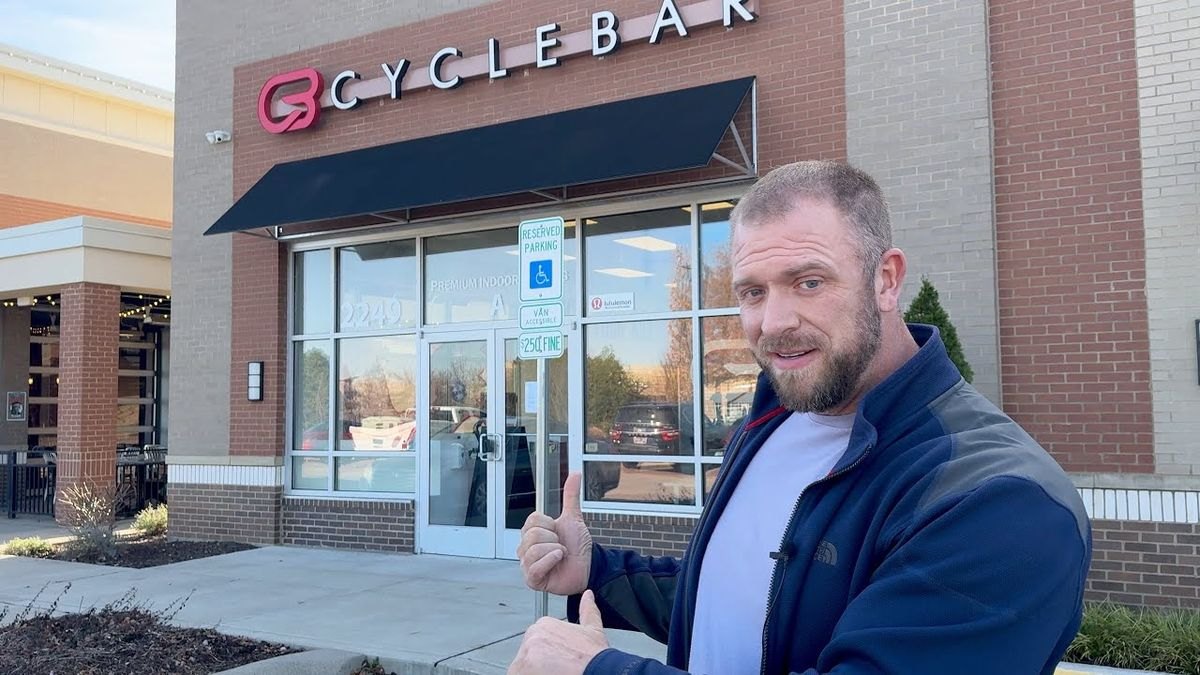
The disclosed initial investment range runs roughly $411,000 on the low end to $1,110,000 on the high end. That spread is not noise — it is almost entirely buildout and market. The low end assumes a second-generation fitness space with existing plumbing, HVAC capacity, and a cooperative landlord funding most of the improvements. The high end assumes cold shell construction in a high-cost metro where you are trenching for showers, upgrading electrical service for the audio-visual and lighting rig, and paying union labor. Most first-time buyers budget near the low end and land closer to the middle, which is the origin story of nearly every undercapitalized studio.
The component ranges break down roughly as follows. Initial franchise fee sits at $60,000 for a single unit. Leasehold improvements and buildout run $185,000 to $475,000. Bikes and the audio-visual package run $75,000 to $125,000, and note that the equipment is proprietary, so you cannot value-engineer it or buy used from a closing independent. Grand opening marketing is $15,000 to $25,000. Initial training and travel for the franchisee plus the GM is $5,000 to $15,000. Real estate deposits, first and last month, and security run $15,000 to $45,000. Insurance and professional fees — general liability, workers comp, entity formation, lease review by counsel who actually reads fitness leases — run $6,000 to $15,000. Working capital for the first three months is disclosed at $50,000 to $150,000, and this is the number to disbelieve. Three months of working capital in a business that reaches cash breakeven at month 22 to 30 is not a reserve, it is a rounding error. Budget 12 months.
Ongoing fees are where the margin structure gets decided. Royalty runs 7% of gross revenue. The national marketing fund takes another 2%. Local marketing spend is typically the greater of a fixed monthly floor around $1,500 or roughly 2% of prior-month gross. A technology fee for point-of-sale, scheduling, and the mobile app runs a few hundred dollars monthly, and music licensing pass-throughs to the performing rights organizations add a couple hundred more. Call it 9% of gross off the top before you pay a single instructor or a dollar of rent. On $407,000 of revenue, that is roughly $37,000 gone to the system, plus another $8,000 to $12,000 in local spend and platform fees.
Now assemble a median P&L. Revenue $407,000. Rent and CAM at a healthy 13% is $53,000, though many studios are carrying 18–22%, which is the structural killer. Instructor and front-desk payroll at 26–30% of revenue is $106,000 to $122,000. GM salary $70,000. System fees and local marketing $45,000 to $49,000. Utilities, laundry, towels, cleaning, amenities, insurance, and repairs $35,000 to $48,000. That leaves EBITDA somewhere between $30,000 and $55,000, consistent with the 8–14% margin band. Then service the debt. A $350,000 SBA 7(a) note at rates that have held above 9% into 2027, amortized over ten years, costs roughly $54,000 annually in principal and interest. The median leveraged studio is therefore break-even to slightly negative on a cash-after-debt basis, and the owner's compensation is whatever they can justify paying themselves as GM, if they are also doing that job.
Timelines are similarly optimistic in franchise marketing materials. Realistic elapsed time from signed franchise agreement to opening day is nine to fourteen months: 60–120 days for site selection and lease negotiation, 30–60 days for permitting in a cooperative jurisdiction and 90–180 in a difficult one, 10–16 weeks of construction, and overlapping presale. Year-one cash flow is commonly negative $80,000 to $140,000. Cash breakeven arrives month 22 to 30, and full recovery of the initial investment lands somewhere in year five to seven at median performance. The resale market tells the same story from the other direction: distressed and motivated-seller units in the category have been transacting in a wide band, often at low single-digit multiples of EBITDA, which is the market's honest verdict on how hard the greenfield math is.
Where operators get it wrong, and the failure patterns repeat
The first mistake is confusing membership count with attendance. A studio can report 400 members and run 45% prime-time occupancy because a large share of those members are dormant — auto-drafting, not riding, and one credit card expiration away from churning. When you audit a resale, demand 24 months of class-level attendance data, not the membership roster. Rides per active member per month is the health metric. Above six is a strong studio with real habit formation. Below three and you are looking at a subscription base that is about to discover it does not use the product.
The second is instructor economics. Rhythm-format cycling instructors are performers, and the good ones build personal followings that walk out the door with them. Tenure in the role commonly runs somewhere in the 12-to-24-month range before burnout or a move to a competing brand or independent studio. Each departure takes 8–20% of that instructor's roster with them. The operators who survive this build a bench three deep before they need it, pay above market for the two instructors who anchor prime time, and deliberately cross-promote riders across multiple instructors so no single departure is existential. The operators who fail treat instructors as interchangeable hourly labor and then wonder why Tuesday 6pm went from 42 bikes to 19 in one quarter.
The third is the owner-as-instructor trap. Teaching your own classes feels like cost discipline and is actually the most expensive decision available to you. Every hour on the bike is an hour not spent on corporate wellness partnerships, not spent on the lapsed-member win-back call list, not spent renegotiating the towel service contract. Worse, it makes you unreplaceable in a business you eventually want to sell, and buyers discount heavily for owner dependency.
The fourth is discounting into a death spiral. When month-nine occupancy disappoints, the reflex is a promotion. Introductory offers train a price expectation that is very hard to unwind, and aggregator inventory does the same thing at scale — filling off-peak seats through a third-party pass is smart yield management, but dumping prime-time inventory there destroys your direct membership pricing power permanently. Cap aggregator allocation to genuinely surplus off-peak capacity and hold prime time for direct members.
The fifth is real estate. Rent load above 15% of revenue is a structural problem no amount of operational excellence fixes. Signing a ten-year lease with fixed 3% annual escalators in a business with a capped revenue ceiling means your rent-to-revenue ratio deteriorates every single year by construction. Negotiate escalators down, negotiate a co-tenancy clause if you are relying on an anchor tenant for traffic, and get a personal guarantee that burns off after 36 months of performance if you possibly can.
The sixth is ignoring the franchisor transition. CycleBar moved from Xponential Fitness to Extraordinary Brands in July 2025. Ownership changes in franchising reset field support, technology roadmaps, supply agreements, and marketing fund priorities. Separately, Xponential's historical financial performance marketing drew regulatory scrutiny and an FTC enforcement action, which is precisely why you underwrite from the current FDD's Item 19 and your own model rather than from any pro forma a salesperson shows you. A prudent buyer waits for a full disclosure cycle under new ownership before committing seven figures.
Decision framework: open, buy, build independent, or walk
Sequence the decision by capital, experience, and market, in that order. Capital is binary — either you can absorb 30 months of negative cash flow without touching household stability, or you cannot, and no amount of enthusiasm substitutes. Experience is the second gate, and it is satisfiable by hiring rather than by having: a committed fitness-industry GM hired pre-signing genuinely closes the experience gap. Market is third and is the one you cannot fix, because trade-area income and competitive saturation are facts you either find or do not.
If all three gates clear, the greenfield build is defensible, and the case for it is control: you pick the site, the layout, the instructor culture, and you own a clean asset with no inherited reputation damage. If capital clears but market is marginal, buy a resale in a proven trade area instead — you trade upside for a shorter path to positive cash flow and you get to audit two years of real attendance data before you wire funds. If experience and market clear but capital is short, become a minority partner in an existing multi-unit operator's holdco and learn the business with someone else's balance sheet carrying the buildout risk. If you clear everything and simply do not want to pay 9% of gross forever, the independent studio is genuinely competitive: lower all-in cost, full control of format and music, and that 9% flows straight to your P&L — at the price of building brand, technology, and instructor training from nothing.
There is also the adjacent-format play. If you have decided you want boutique fitness but not specifically cycling, the honest comparison favors formats with better instructor retention and higher per-session yield on similar footprints — reformer Pilates and recovery-and-stretch concepts generally underwrite more comfortably than rhythm cycling. And if you have decided you want franchising but not fitness, service-based brands with light buildout and month-8-to-12 breakeven are a far better first at-bat; get operator reps somewhere the mistakes cost $30,000 instead of $300,000, then come back to a capacity-capped studio format with scars and a bench.
Finally, consider the landlord seat. In boutique fitness, owning the retail box and leasing it to an operator frequently produces better risk-adjusted returns than operating, because you capture the rent that consumes 13–22% of every studio's revenue without touching instructor churn, aggregator pricing pressure, or the 6am schedule. That is not a cop-out. It is a recognition that in this category, the durable margin sits in the real estate.
Related questions
How long until a boutique fitness studio breaks even?
Cash breakeven for a cycling-format studio typically lands month 22 to 30, not the 12 to 15 months sales materials imply. Formats with lighter buildout and better instructor retention reach it faster. Presale volume at opening is the single largest determinant of which end of that range you hit.
Is buying an existing studio safer than opening a new one?
Usually yes, because you skip the buildout risk and the negative-cash-flow ramp, and you can audit two years of real attendance before committing. The trade-off is inherited problems: a damaged local reputation, a burned-out instructor roster, or a bad lease you cannot renegotiate.
What rent-to-revenue ratio is sustainable for a studio?
Target 13% or below. Above 15% is a structural problem that operational excellence cannot fix, and 18–22% — common in overpriced retail — makes profitability nearly unreachable. Fixed annual escalators make this worse every year in a business with a capped revenue ceiling.
Does ClassPass help or hurt a cycling studio?
Both, depending on allocation. Filling genuinely surplus off-peak seats through aggregators is smart yield management. Dumping prime-time inventory there permanently erodes your direct membership pricing power and trains your best customers to buy through a cheaper channel.
Should I wait for the next FDD before signing?
If the brand recently changed ownership, yes. A full disclosure cycle under new ownership reveals actual unit-count trends, revised fee structures, and whether field support survived the transition. Waiting two quarters costs you very little; signing blind can cost hundreds of thousands.
FAQ
What is the total investment range to open a CycleBar franchise?
The disclosed estimated initial investment runs roughly $411,000 to $1,110,000 for a single unit, including a $60,000 franchise fee, $185,000–$475,000 in leasehold improvements, $75,000–$125,000 in proprietary bikes and audio-visual equipment, grand opening marketing, training, deposits, and working capital. Second-generation fitness space pushes you toward the low end; cold shell construction in a high-cost metro pushes you toward the high end.
How much revenue does an average CycleBar studio generate?

The 2024 cohort of 183 operating studios reported average gross sales around $407,000, with a median closer to $355,000 because top-performing flagships skew the mean upward. The distribution matters more than the average: top quartile exceeds $612,000 while the bottom quartile falls under $215,000, which is a revenue level most studios cannot survive at given fixed rent and system fees.
What are the ongoing fees and how do they affect margins?
Royalty is 7% of gross revenue and the national marketing fund is 2%, plus local marketing spend of roughly $1,500 monthly or 2% of prior-month sales, a monthly technology fee, and music licensing pass-throughs. That is about 9% of gross before any operating expense, which is a primary reason EBITDA margins compress into the 8–14% band at average revenue.
Can I run a studio while keeping my day job?
Not through the first two years. The business requires a full-time general manager at minimum, and the owner's job during ramp is membership sales, corporate partnerships, community events, and lapsed-member recovery — none of which happen on evenings and weekends alone. Owners who try this typically discover the gap around month nine when occupancy stalls and there is nobody to fix it.
Why did CycleBar change ownership, and does it matter to a buyer?
Xponential Fitness divested CycleBar in July 2025 to Extraordinary Brands as part of a portfolio reshaping. It matters because franchisor transitions reset field support, technology roadmaps, and marketing fund priorities. A prospective buyer should review a full disclosure cycle under the new owner and speak with franchisees about post-transition support quality before committing capital.
What is the single best due-diligence step most buyers skip?
Physically counting occupied bikes at competing studios during prime time across multiple weekdays. It takes six hours and tells you more about real trade-area demand than any demographic report. If nearby competitors run below 60% prime-time capacity, the market's appetite for boutique cycling is already satisfied and you would be splitting a fixed pie.
Sources
- U.S. Small Business Administration — 7(a) loan program terms and rates: https://www.sba.gov/funding-programs/loans/7a-loans
- Federal Trade Commission — Franchise Rule and disclosure requirements: https://www.ftc.gov/business-guidance/industry/franchising
- FTC Consumer Advice — Buying a franchise, due diligence guidance: https://consumer.ftc.gov/articles/buying-franchise-consumer-guide
- SEC EDGAR — Xponential Fitness, Inc. filings: https://www.sec.gov/cgi-bin/browse-edgar?action=getcompany&company=xponential
- Health & Fitness Association (formerly IHRSA) — industry research and participation data: https://www.healthandfitness.org/
- International Franchise Association — franchise economic outlook and research: https://www.franchise.org/
- IBISWorld — U.S. gym, health, and fitness clubs industry reports: https://www.ibisworld.com/united-states/market-research-reports/gym-health-fitness-clubs-industry/
- U.S. Bureau of Labor Statistics — Consumer Expenditure Surveys: https://www.bls.gov/cex/
- Athletech News — boutique fitness and franchise industry coverage: https://athletechnews.com/
- CycleBar official franchise site: https://www.cyclebar.com/
Related on PULSE
- How long does it take to open a franchise and break even in 2027?
- Should I open or buy a Tommy Gun's Original Barbershop franchise in 2027?
- Should I open or buy a Painting with a Twist franchise in 2027?
- What rent-to-revenue ratio should a retail franchise target?
- Is a franchise resale safer than a greenfield build?
This page will be disappearing soon. Save it to your device for $1 — or read it free while it is here.
@Kory-White- · if Venmo asks, the last 4 of my number are 2012
This page is gone.
This one is off the shelf now. $1 keeps it on your phone for good — the whole page, pictures and diagrams included.
 franchiseShould I open or buy a Dunkin' franchise in 2027?
 franchiseShould I open or buy a Firehouse Subs franchise in 2027?
 franchiseShould I open or buy a Pizza Hut franchise in 2027?
 franchiseShould I open or buy a KinderCare franchise in 2027?
 franchiseShould I open or buy a Cook Out franchise in 2027?
 franchiseShould I open or buy an Auntie Anne's franchise in 2027?
 franchiseShould I open or buy a Papa John's franchise in 2027?
 franchiseShould I open or buy a Great Clips franchise in 2027?
 franchiseShould I open or buy a UPS Store franchise in 2027?
 franchiseShould I open or buy an Orangetheory Fitness franchise in 2027?