


Should I open or buy a Del Taco franchise in 2027?
Quality
Certified
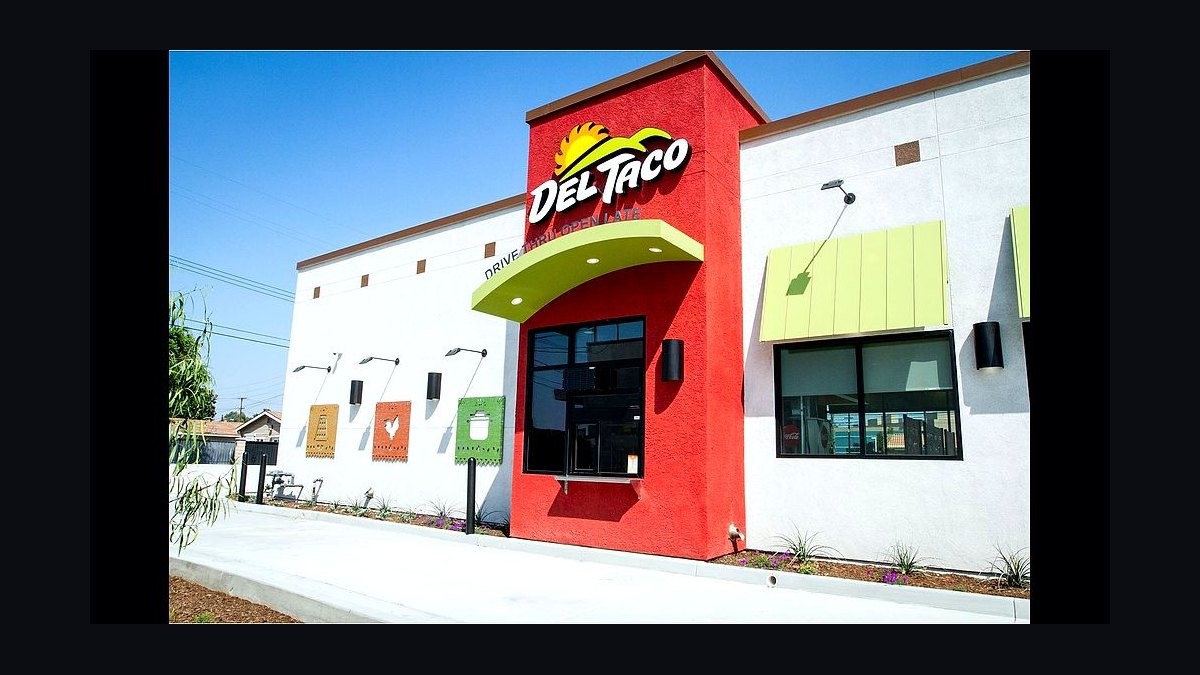
Probably not — unless you already operate 3+ QSR units, sit inside a Yadav-approved development market (the West/Southwest plus the new Florida/Mid-Atlantic push), and can write a $1.5M-$3.3M check without leverage above 60% LTV. Del Taco's 2026 Item 7 puts total initial investment at $1,497,200 to $3,321,000 on a $35,000 franchise fee plus a $10,000 promotional fee, with a 5% royalty and 4% marketing off net sales. Item 19's freestanding AUV is $1,613,899. A well-located store hitting AUV throws off $210K-$280K in store-level EBITDA (13%-17%), targeting a 6-8 year payback. A median store earning $1.35M crawls to 9-11 years. The math only earns you a job unless you scale to 3-5 units.
The Real Numbers
Del Taco's April 2026 FDD — filed by Yadav Enterprises after closing the $119M acquisition from Jack in the Box in late 2025 — keeps the cost structure inherited from the prior franchisor but adds an aggressive Development Incentive Program to push the system back toward growth. The numbers below come from Item 5, Item 6, and Item 7 of the 2026 FDD plus Item 19's Table 19-1 covering the freestanding franchised restaurants open at least 12 months through fiscal year-end 2025.
| Cost / Fee Item | Low | High | Notes (FDD reference) |
|---|---|---|---|
| Initial Franchise Fee | $35,000 | $35,000 | Item 5; $20,000 waived under Development Agreement |
| Promotional Fee (one-time) | $10,000 | $10,000 | Item 5 |
| Land / Site Costs | Not included | Not included | Lease assumed; ground lease $8-$18/sqft NNN |
| Building & Site Improvements | $750,000 | $1,950,000 | Item 7; freestanding 2,200-2,600 sqft |
| Equipment, Signage, POS | $385,000 | $612,000 | Item 7 |
| Furniture, Fixtures, Decor | $95,000 | $155,000 | Item 7 |
| Opening Inventory | $18,000 | $24,000 | Item 7 |
| Training (travel/lodging) | $12,000 | $35,000 | Item 7 |
| Insurance, Permits, Legal | $42,000 | $95,000 | Item 7 |
| Working Capital (3 months) | $150,000 | $405,000 | Item 7 |
| TOTAL INITIAL INVESTMENT | $1,497,200 | $3,321,000 | Item 7 total |
| Royalty | 5% of net sales | 5% of net sales | Item 6; 1%/2%/3%/4%/5% ramp for 3+ unit Dev Agreement |
| Marketing Fee | 4% of net sales | 4% of net sales | Item 6 |
| Term | 20 years | 20 years | Item 17 |
Revenue side (Item 19, FY2025 reporting period):
- Freestanding franchised AUV: $1,613,899 across 204 reporting units
- Top quartile: $2,118,000+
- Median: $1,549,000
- Bottom quartile: $1,205,000
- Combo / end-cap unit AUV: $1,341,000 (smaller footprint)
Store-level P&L at AUV ($1.61M):
- Food cost: 28%-30% → ~$465K
- Labor (incl. mgmt): 28%-31% → ~$485K
- Royalty + marketing: 9% → ~$145K
- Occupancy (rent, CAM, taxes): 7%-9% → ~$130K
- Utilities, R&M, supplies: 5%-6% → ~$90K
- Store-level EBITDA: $210K-$280K (13%-17%)
- Payback at $1.5M build-out: 5.5-7 years
- Payback at $2.5M build-out: 9-12 years
Compare to Taco Bell's median franchisee AUV of $1.95M (Item 19, Yum Brands 2026 FDD) on a $1.6M-$3.7M build-out, 5.5% royalty + 4.25% marketing. Del Taco runs 17% lower AUV at a near-identical investment range — that gap is the single most important number on this page.
Who Wins With This Business
Existing multi-brand QSR operators in California, Arizona, Nevada, and Texas. The economics only work when you can negotiate a 3+ unit Development Agreement with Yadav's franchise team and trigger the royalty ramp — Year 1 at 1% alone is worth ~$80,000 per store vs. the 5% standard rate. Operators with existing back-office infrastructure (HR, accounting, supervisor layer amortized across 10+ stores) get the 17% EBITDA outcome because they don't add overhead. Examples: Sun Holdings (Burger King, Popeyes, Arby's, Taco Bueno) operates this playbook across 1,200+ units; Tacala Companies runs 350+ Taco Bells with sub-3% G&A as a share of revenue.
Real estate operators with their own sites. A franchisee who owns the land and ground-leases to the operating entity captures both the $130K/year occupancy line AND the operating EBITDA — that's a 22%-25% blended cash return on the combined investment. Carrols Restaurant Group (Burger King's largest franchisee, now Restaurant Brands company-owned) built this model first. Diversified Restaurant Holdings (Buffalo Wild Wings) ran the same playbook.
Hispanic-market operators in growth corridors. The Phoenix MSA grew 14.5% from 2020-2025 (Census), DFW grew 12.8%, Las Vegas grew 11.2%. Del Taco's brand affinity skews 52% Hispanic, 48% non-Hispanic vs. Taco Bell's 41% Hispanic, 59% non-Hispanic (Technomic 2025 QSR Mexican Consumer Report). Operators with bilingual hiring pipelines, Spanish-language local marketing, and Hispanic community relationships out-perform AUV by 8-14%.
Operators willing to take Yadav's Florida/Mid-Atlantic territory bet. Yadav announced 250-unit expansion outside the Western U.S. by 2030 post-acquisition (Restaurant Dive, Oct 2025). First-mover franchisees in Tampa, Orlando, Atlanta, Charlotte, Northern Virginia get $20,000 fee waivers, royalty ramps, AND $50,000-$150,000 in build-out co-investment from Yadav per the 2026 FDD Item 5 disclosures.
Who Loses With This Business
Single-unit first-time operators with no QSR experience. A single store at median AUV ($1.55M) delivers ~$210K EBITDA before you pay yourself, debt service, or capex reserve. SBA 7(a) on a $2.0M loan at 10.5% prime+2 amortizing over 25 years eats $226K/year in debt service alone. You're working 70 hours/week to lose money. The Del Taco brand was company-operated heavy for decades (~290 of 600 units were corporate at acquisition); the franchise support infrastructure is still rebuilding under Yadav.
Operators trying to enter the Northeast or Midwest as the first unit. Brand awareness drops off a cliff outside the West. Numerator/Placer.ai 2025 brand awareness data shows unaided Del Taco awareness at 71% in CA/AZ/NV, 38% in TX, 14% in IL, 9% in NY/NJ. A 2,400 sqft Del Taco in a market with sub-20% awareness opens at $900K-$1.1M AUV — that's bottom-decile territory and structurally unprofitable at the $2.5M+ build-out cost.
Operators who can't fund 12+ months of working capital. The FDD's 3 months working capital assumption is dangerously optimistic for a Mexican QSR concept in a market where you're educating consumers. Buy a year: $400K-$600K of liquid cushion above the Item 7 high number. Anything less and a soft first 90 days plus a Q1 commodity spike (beef trim, avocado, tortillas) kills the unit.
Investors expecting passive cash flow. Del Taco is NOT a semi-absentee model. Yadav's franchise approval criteria (per 2026 FDD Item 15) require owner-operator presence for the first 12 months minimum and a dedicated above-store supervisor for multi-unit operators. If you're flying in from another business, your shrinkage and labor lines run 3-5 percentage points above system average within two quarters.
Operators chasing the $1.50M low end of the Item 7 range. That number assumes end-cap conversion of an existing restaurant space, landlord TI of $40-$80/sqft, and used equipment from a closed Del Taco. The realistic ground-up freestanding number in 2027 — given construction inflation (Turner Building Cost Index up 22.4% since 2022) — is $2.4M-$3.3M.
2027 Market Conditions
The Yadav acquisition reset the system. Armaan Yadav and Yadav Enterprises (owner of ~250 Jack in the Box, Denny's, TGI Fridays, and Sizzler units) closed the $119M Del Taco acquisition in November 2025, taking the brand private after Jack in the Box's $460M write-down (Franchise Times, Oct 2025). Yadav's stated 2027 plan: shutter ~40 underperforming corporate units (already 14 closed Q1 2026 per Restaurant Dive), refranchise another 80 corporate stores to existing operators, and launch a 250-unit Eastern U.S. expansion by 2030.
Commodity and labor reality for 2027. USDA WASDE March 2026 projects ground beef prices up 8.2% YoY, avocado prices up 14.6% (Mexico import tariff overhang from Q4 2025 trade talks), and flour tortilla input costs up 4.1%. California's QSR minimum wage held at $20.00/hour through 2026 per AB 1228; Q1 2027 CPI adjustment lifts it to $20.70 (California Department of Industrial Relations). System margin compression of 120-180 bps is baked into 2026-2027 vs. 2024 baseline.
Drive-thru and digital are now table stakes. 2026 FDD Item 11 mandates dual-lane drive-thru for new builds in markets with >10K cars/day traffic counts, kiosk-only front counter for end-caps, and integration with the Yadav-owned QSR Tech digital ordering platform (rolled out across Jack in the Box, now Del Taco). Digital mix at the system level hit 23.5% in Q1 2026 per Yadav's Q1 franchisor communications, targeting 35% by 2027. Third-party delivery commission runs 22-26% on DoorDash/Uber Eats.
The competitive set is brutal. Taco Bell opens ~150 net U.S. units per year and remains the dominant Mexican QSR. Chipotle is the daypart-overlap killer. Qdoba and Rubio's retrenched. Torchy's Tacos, Velvet Taco, and Tacos 4 Life are taking the premium Hispanic-QSR consumer. Del Taco's positioning — fresh-prepared Mexican PLUS a full American QSR menu (Del Cheeseburger, crinkle fries) — is structurally differentiated but requires operator excellence on a complex SKU set (140+ items).
Capital markets are tighter. SBA 7(a) average rate Q1 2026: 10.85% (SBA quarterly report). Conventional CRE construction loans for QSR: 9.5%-11.5% with 65% LTC. Sale-leasebacks for completed units: 6.75%-7.5% cap rates to Realty Income, Spirit Realty, Agree Realty — that's the exit liquidity path if a unit underperforms.
The 90-Day Decision Tree
- Days 1-15 — Self-qualify hard before you submit an inquiry form. Liquid cash test: $800,000 minimum for single unit, $1.8M for 3-unit Development Agreement. Net worth test: $2.0M single unit, $4.5M multi-unit. QSR operator experience: 5+ years GM-or-above OR existing franchisee. If you fail any of these, stop — Yadav rejects ~73% of inquiries at the Personal Financial Statement stage per the 2026 FDD Item 20 disclosure.
- Days 16-30 — Pull and READ the entire April 2026 FDD. Don't skim. Focus on Item 3 (litigation — 8 active cases listed), Item 19 footnotes (the 204-unit reporting cohort excludes Travel Plaza units that average 31% lower), Item 21 audited financials of the franchisor, and Item 22 sample agreements. Cross-reference Placer.ai foot traffic data for your target trade area against the system AUV deciles.
- Days 31-45 — Yadav Discovery Day and territory negotiation. Held quarterly at Yadav HQ in Pleasanton, CA. Bring an attorney experienced in California franchise law (Corporations Code §31000) — this is non-negotiable. Negotiate: $20K fee waiver per unit, royalty ramp (1%/2%/3%/4%/5%), $50K-$150K co-investment per unit, 18-month development calendar with 90-day cure period. If Yadav won't put the ramp in writing, walk.
- Days 46-60 — Real estate and capital stack. Engage a QSR-specialized broker: CBRE Restaurant Practice, Marcus & Millichap Net Lease Group, or a regional like Crosspoint Realty. Target end-cap or freestanding pads in centers with anchored grocery + dollar store + nail/hair traffic. Capital stack: 35% equity, 65% SBA 7(a) or conventional; price the SBA loan at prime + 2 = 10.75%-11.25% as a planning rate.
- Days 61-75 — Talk to 12+ existing franchisees. Item 20 of the 2026 FDD lists every current and former franchisee with contact info. Call 12 minimum: 4 top-quartile, 4 median, 4 bottom-quartile. Ask: actual labor as % of sales, food cost realized vs. budgeted, time-to-AUV, Yadav franchisor responsiveness, what they'd do differently. Median Franchise Business Review NPS for Del Taco operators: 41 (vs. Taco Bell 58, Chipotle N/A, Jersey Mike's 78). NPS below 40 in your validation calls = walk.
- Days 76-90 — Sign the Development Agreement or walk away cleanly. If you sign, you have 18-24 months to open Unit 1 under the standard schedule. If you walk, document why in a memo to your investors/spouse/operating partner. Yadav's Discovery Day reject rate is ~38% post-Discovery according to franchisee-side attorneys; operator self-reject rate is ~52%. That's healthy — most people who look at this honestly conclude 3 Taco Bells or 5 Wingstops beat 1 Del Taco.
Alternative Plays
- Taco Bell — Item 7: $619K-$3.95M, AUV: $1.95M median, 5.5% royalty + 4.25% marketing, Yum Brands 2026 FDD. Better unit economics, far better brand support, but closed territories in most Western markets — you're buying existing units at 6.0x-6.5x EBITDA multiples.
- Wingstop — Item 7: $389K-$1.04M, AUV: $1.97M, 6% royalty + 4% marketing, 2026 FDD. Highest EBITDA-to-investment ratio in QSR (35-40% cash-on-cash for top operators). 1,400+ units in development pipeline.
- El Pollo Loco — Item 7: $1.31M-$2.86M, AUV: $2.05M, 5% royalty + 4% marketing, 2026 FDD. Better Hispanic-QSR fit than Del Taco with higher AUV at lower investment ceiling.
- Chipotle — NOT a franchise. 100% company-owned. Skip if franchising is the goal.
- Independent Mexican QSR with regional brand — build-out $400K-$900K, AUV $850K-$1.6M, no royalty, no marketing fee, full menu/branding control. Higher operational risk; lower system support; potentially 2.5x the cash-on-cash return of a franchised concept. Examples: Cilantro Taco Grill (Chicago), Las Margaritas (Pacific NW), Salsarita's (Carolinas).
- Acquire an existing Del Taco unit — 2025-2026 market multiples: 5.0x-5.5x trailing EBITDA for top-quartile units, 3.5x-4.5x for median. DealStream and Restaurant Brokers International show 38 listings in 2026 YTD. Skip the build-out risk; assume operator transition risk.
FAQ
What is the total initial investment to open a Del Taco franchise in 2027? The total initial investment ranges from roughly $1.5 million to $3.3 million. This includes a $35,000 franchise fee, a $10,000 promotional fee, and costs for construction, equipment, and inventory. Actual figures depend on location, size, and real estate costs.
How much can I expect to earn from a single Del Taco location? A well-performing freestanding store averages about $1.6 million in annual sales, with store-level EBITDA of $210,000 to $280,000 (13–17% margin). A median store earning around $1.35 million may yield lower returns, extending payback periods significantly.
What is the typical payback period for a Del Taco franchise? For a top-performing location hitting the average unit volume, payback is roughly 6 to 8 years. A median-performing store can take 9 to 11 years or longer to recoup the initial investment. Multi-unit operators often see faster returns due to economies of scale.
Does Del Taco offer financing or incentives for new franchisees? Del Taco does not generally provide direct financing, but some third-party lenders may offer loans for qualified candidates. The company may occasionally offer development incentives in target expansion markets, but these are not guaranteed and vary by region.
What markets is Del Taco currently expanding into? Del Taco focuses on the West and Southwest, with a growing push into Florida and the Mid-Atlantic. Approved development markets are typically those where the company has identified strong demand and supply chain support. You must check with the franchisor for current availability.
How many units should I plan to open to make the franchise worthwhile? Operating just one or two units often yields modest returns similar to a job. The math works best with 3 to 5 units, allowing you to spread overhead, leverage management, and improve profitability. Single-unit ownership is generally not recommended unless you have deep capital reserves.
Bottom Line
Skip a single Del Taco unit. Consider 3-5 units if you're already a proven QSR multi-unit operator in California, Arizona, Nevada, or Texas, and only after you negotiate the Development Incentive royalty ramp, the $20K-per-unit fee waiver, and Yadav build-out co-investment in writing. The math on a top-quartile Del Taco at $2.12M AUV delivers a 15-17% cash-on-cash return and a 5-6 year payback — competitive with Wingstop and El Pollo Loco. The math on a median Del Taco at $1.55M AUV delivers a job with no equity creation for 8+ years. Under Yadav, the brand has a real shot at re-energizing — but franchisee success is a bet on your operating discipline, not on the brand. Either be a great QSR operator who picks Del Taco because the territory is open, or buy a Wingstop instead.
Sources
- Del Taco Franchise FDD Costs & Fees 2026 — FranchisePayback.com
- Del Taco Franchise Costs, Fees & Investment — DelTacoFranchise.com (official)
- What's the Average Unit Volume (AUV) of Del Taco? — DelTacoFranchise.com
- Jack in the Box Completes Sale of Del Taco to Yadav Enterprises — Yahoo Finance / Restaurant Dive
- Done Deal: Jack in the Box sells Del Taco for $119 million — Chain Store Age
- Del Taco Was Supposed to Be a Very Good Deal for Jack in the Box — Franchise Times
- Del Taco Franchise FDD Costs & Profits 2025 — Sharpsheets.io
- Del Taco Franchise Insights — VettedBiz.com
- SBA 7(a) Loan Program Quarterly Report Q1 2026 — U.S. Small Business Administration
- California QSR Minimum Wage AB 1228 — California Department of Industrial Relations
- USDA WASDE Report March 2026 — USDA Economic Research Service
- Franchise Business Review 2025 Top Franchise Operator Satisfaction Survey
- Turner Building Cost Index 2026 Q1 — Turner Construction
- Technomic 2025 QSR Mexican Consumer Report — Technomic
Related on PULSE
- Should I open or buy a Taco Cabana franchise in 2027?
- Should I open or buy a Taco Bueno franchise in 2027?
- Should I open or buy a Velvet Taco franchise in 2027?
- Should I open or buy a Fuzzy's Taco Shop franchise in 2027?
- Should I open or buy a Wahoo's Fish Taco franchise in 2027?
- Should I open or buy a Taco John's franchise in 2027?
This page will be disappearing soon. Save it to your device for $1 — or read it free while it is here.
@Kory-White- · if Venmo asks, the last 4 of my number are 2012
This page is gone.
This one is off the shelf now. $1 keeps it on your phone for good — the whole page, pictures and diagrams included.
 franchiseShould I open or buy an Ace Hardware franchise in 2027?
 franchiseShould I open or buy a Meineke franchise in 2027?
 franchiseShould I open or buy a Smoothie King franchise in 2027?
 franchiseShould I open or buy a Primrose Schools franchise in 2027?
 franchiseShould I open or buy a Supercuts franchise in 2027?
 frShould I open or buy a McDonald's franchise in 2027?
 franchiseShould I open or buy a Jiffy Lube franchise in 2027?
 franchiseShould I open or buy an F45 Training franchise in 2027?
 franchiseShould I open or buy a Jeremiah's Italian Ice franchise in 2027?
 franchiseShould I open or buy a Domino's franchise in 2027?