


Should I open or buy a Hurts Donut franchise in 2027?
Quality
Certified
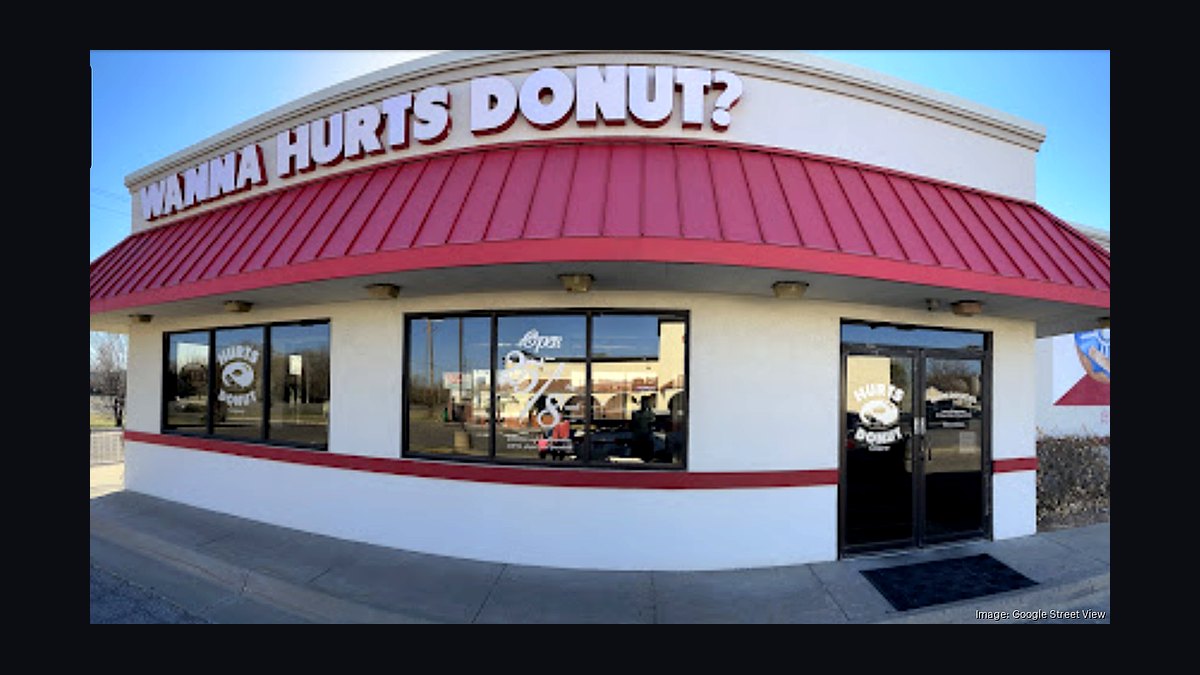
Probably not — unless you can secure a high-traffic late-night entertainment corridor, finance the full $504K–$825K build with at least $200K liquid, and personally run a 24/7 operation for the first 18 months. Hurts Donut Company is a small, regional franchise system (roughly 16–20 open units as of mid-2026, founded 2013 in Springfield, Missouri) selling outrageous, oversized novelty donuts under a 24-hour-a-day model. Real 2026 FDD-derived numbers: $35,000 franchise fee, $504,000–$825,000 total investment, 7% royalty, 2% marketing fund, and an estimated AUV near $1,100,000. Conservative Year-1 owner cash flow lands $90,000–$140,000 in a strong market and breaks even at 18–30 months. Below an $850K trade area population or without nightlife adjacency, the math collapses fast.
The Real Numbers
Hurts Donut's economics live and die on late-night impulse traffic and catering volume, not breakfast commuter flow. Royalty is 7% — meaningfully higher than Dunkin' (5.9%) or Krispy Kreme (6%) — and the 2% marketing fund is small because the brand relies on organic social media virality rather than national TV spend. Build-out is the biggest swing factor: a 2,000–2,800 sq ft retail bakery with a full production line, walk-in cooler, three fryers, glaze tables, decorating stations, and a customer-facing display case runs $260K–$480K alone, before signage, POS, or the Hurts Donut van (a branded delivery vehicle most franchisees buy in Year 2).
| Cost Component | Low | High | Source |
|---|---|---|---|
| Initial Franchise Fee | $35,000 | $35,000 | FDD Item 5 (2026) |
| Real Estate / Lease Deposits | $15,000 | $45,000 | FDD Item 7 |
| Construction & Build-Out | $260,000 | $480,000 | FDD Item 7 |
| Equipment (fryers, mixers, racks) | $90,000 | $150,000 | FDD Item 7 |
| Signage & Branding | $18,000 | $40,000 | FDD Item 7 |
| Initial Inventory | $8,000 | $15,000 | FDD Item 7 |
| POS, Tech, Office | $12,000 | $22,000 | FDD Item 7 |
| Training & Travel (Springfield, MO) | $7,500 | $15,000 | FDD Item 5/7 |
| Working Capital (3 months) | $58,500 | $123,000 | FDD Item 7 |
| TOTAL INVESTMENT | $504,000 | $825,000 | FDD Item 7 (2026) |
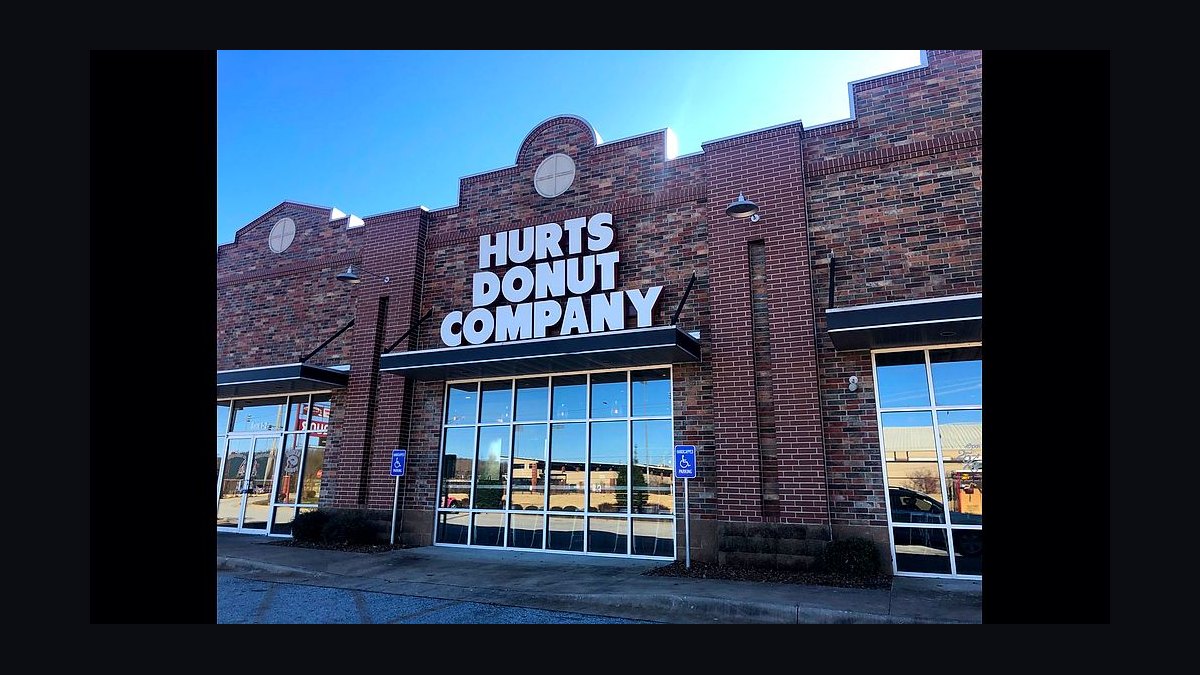
Ongoing fees: 7% royalty on gross sales, 2% national marketing fund, plus a typical 1–2% local marketing minimum. Item 19 (2026 FDD) discloses an estimated average unit gross revenue of $1,100,989 across reporting franchisees, with owner-operator earnings estimated $110,099–$132,119 before debt service. Food cost runs 28–32% (sugar, flour, frying oil, premium toppings like Fruity Pebbles, Oreo, and bacon are the swing items), labor 28–34% (the 24-hour model demands three shifts), occupancy 8–11%, and all-in EBITDA margin lands 10–14% for absentee owners and 15–19% for owner-operators who run their own register on weekend nights. Payback period: 6.0–8.0 years per Vetted Biz, though owner-operators in college towns report 3.5–4.5 year paybacks.
Who Wins With This Business
Owner-operators in college towns or entertainment districts are the only profile that consistently wins. The 24-hour model is purpose-built for bar-close traffic (1 AM–3 AM), post-concert crowds, late-shift hospital and casino workers, and stoner-craving impulse buys. Hurts has historically thrived in Springfield, MO (Missouri State University), Tulsa, OK, Fayetteville, AR (University of Arkansas), Branson, MO (tourist nightlife), and Wichita, KS — all markets with dense, walkable, late-night corridors. Winning franchisees share four traits: (1) prior food-service ownership, (2) liquid capital of $200K+ so they aren't forced to take a high-interest second mortgage, (3) willingness to personally cover the overnight shift for the first 6 months to control quality and shrink, and (4) a built-in catering pipeline (corporate offices, schools, churches, hospitals). The catering channel typically adds $180K–$320K annually to AUV and carries a 38–42% margin because it's pre-sold volume with no late-night labor drag. Multi-unit operators with 3+ stores within a 60-mile radius also win because they can centralize a commissary kitchen, cutting per-unit labor by 6–9 percentage points.
Who Loses With This Business
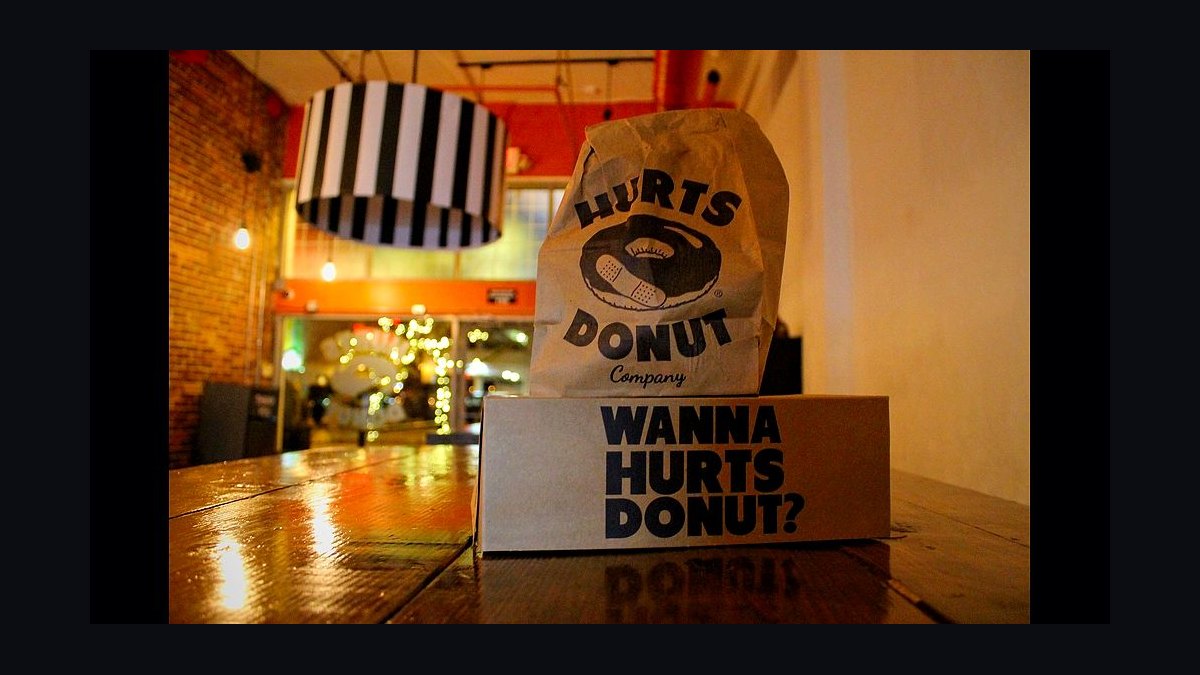
Absentee investors lose, period. The 24/7 model demands a present operator — quality slips, theft spikes, and overnight no-show rates run 18–24% without an owner physically managing the schedule. Suburban strip-mall locations with no late-night traffic generator lose because 65–70% of Hurts revenue concentrates between 8 PM and 4 AM on Thursday–Saturday; a 7 AM commuter market cannibalizes Dunkin' or Krispy Kreme much more cheaply. Operators with under $150K liquid lose because the 9-month working capital cushion evaporates inside the first slow January, and SBA refinancing on a regional brand with fewer than 25 units is hard to land. Franchisees expecting national brand recognition lose — Hurts has almost zero unaided awareness outside the Ozarks and southern Plains. Owners who hate Instagram lose because the brand's growth depends on viral seasonal flavors (Unicorn Donut, Cereal Killer, Maple Bacon Bar) that require 3–5 social posts per week from the local operator. Finally, markets under 80,000 metro population rarely sustain a $1M AUV because diabetic/heart-disease demographics weight older rural areas and the novelty hook wears off after 6 months without student or tourist churn.
2027 Market Conditions
The U.S. doughnut store industry is $9.6 billion in 2026 (IBISWorld, 4315) with 14,469 establishments, growing at a 5.8% CAGR 2020–2025. Three structural forces shape the 2027 outlook for a Hurts franchise. First, Krispy Kreme's 2024 partial McDonald's rollout pullback (announced July 2024, fully reversed by Q3 2025) reopened freezer-aisle and grocery channels but left a vacuum in the specialty/premium late-night segment Hurts owns. Second, GLP-1 drugs (Ozempic, Wegovy, Mounjaro) have suppressed weekly donut purchase frequency by an estimated 6–9% among adults 35–54 (per NielsenIQ 2025 panel data), but dessert as occasion-driven splurge — birthdays, office catering, sorority bid night — is growing 11% YoY because users on GLP-1s still buy for groups and events. Third, labor costs are stabilizing after the 2022–2024 minimum-wage shocks; 2027 federal Tipped Credit Reform (if passed) would mostly miss bakery operators, who run 0% tipped. Coffee commodity prices remain elevated (arabica futures at $3.20/lb in May 2026), which squeezes the beverage attach margin Hurts relies on to bump ticket from $9 to $14. 2027 verdict: opportunity exists in college towns and tourist corridors; saturation risk is low because Hurts only has 16–20 units nationally; but the brand has not yet proven it scales outside the Ozarks/Plains belt.

The 90-Day Decision Tree
- Days 1–10: Pull the FDD. Email franchise@wannahurts.com and request the current Franchise Disclosure Document. Read Item 7 (investment), Item 11 (franchisor obligations), Item 19 (financial performance), and Item 20 (system size and turnover) cover to cover. Cross-reference the closed-unit count in Item 20 — if more than 2 units have closed in the last 24 months on a base of 16–20, that's a 10%+ failure rate and a serious yellow flag.
- Days 11–25: Run trade-area math. Pull Claritas P$YCLE or ESRI demographic segmentation for your three candidate sites. Require 40,000+ residents in a 3-mile ring, median household income $58K+, and a college or entertainment anchor within 1.5 miles. Verify nighttime foot-traffic with Placer.ai or a 6-night manual count between 10 PM and 2 AM.
- Days 26–45: Call 8 existing franchisees. The FDD Item 20 lists every current and former operator. Call eight, not three, and ask specifically: (a) What was your actual Year-1 revenue versus the AUV?, (b) What's your overnight labor cost as a percentage?, (c) How many of your catering accounts came from corporate Springfield support versus your own hustle?, (d) Would you sign again? If fewer than 6 of 8 say yes, walk away.
- Days 46–60: Build the financial model. Use $950K AUV as your base case (15% haircut from the FDD's $1.1M), 30% food cost, 32% labor, 9% occupancy, 9% royalty + marketing combined. Stress-test at $750K to see if you still cover debt service.
- Days 61–75: Lock financing. Hurts is on the SBA Franchise Registry (verify current status) which lets you tap 7(a) loans up to $5M with 10% down. Compare a community bank SBA loan against ROBS (Rollover for Business Startups) if you have $250K+ in a 401(k).
- Days 76–90: Sign or walk. Wait the mandatory 14-day FDD review period after receiving the disclosure. Have a franchise attorney (try Lusk Law, Goldstein Law Firm, or Einbinder & Dunn) review Items 5, 6, 7, 17, and 19. If your model breaks below $850K AUV, do not sign.
Alternative Plays
If Hurts Donut's regional concentration and 24-hour labor model scare you, four alternatives deliver similar returns with different risk profiles. (1) Duck Donuts ($350K–$580K total, 6% royalty, 130+ units, daytime-only model with a make-to-order experience) is the lower-risk, lower-novelty trade. (2) Shipley Do-Nuts (Texas regional, 350+ units, $400K–$1.1M, 5% royalty) is the better fit for Southern markets and runs a more traditional breakfast model. (3) Krispy Kreme franchising is functionally closed to single-unit operators in 2026 — minimum 5-unit area development agreements at $750K+ per unit — but resale stores trade hands at $1.4M–$2.2M on BizBuySell with proven cash flow. (4) Independent specialty donut shop with a rotating Instagram-driven menu can be built for $180K–$320K total (no franchise fee, no royalty), keeping $70K–$95K more per year, but loses Hurts's catering playbook, training, and supply contracts. The honest fifth option: if you have $500K liquid, buy an existing Dunkin' resale in a secondary market. Dunkin' resales clear at 3.5–4.5x EBITDA in 2026, beverage drives 58% of revenue at 78% margin, and the brand recognition removes 80% of the marketing risk that Hurts demands.
FAQ

What is the total investment range for a Hurts Donut franchise? The total investment typically falls between $504,000 and $825,000. This includes the $35,000 franchise fee, build-out costs, equipment, and initial inventory, but varies by location size and local construction costs.
How much liquid cash do I need to qualify? Franchisees generally need at least $200,000 in liquid capital. This covers the franchise fee, initial operating expenses, and a cushion for the first few months before revenue stabilizes.
What is the average unit volume (AUV) for existing Hurts Donut stores? Based on recent franchise disclosure documents, the estimated AUV is around $1,100,000. However, actual sales vary widely depending on location, with high-traffic late-night corridors performing best.
How long does it take to break even? Conservative estimates show break-even at 18 to 30 months in a strong market. Factors like local demand, operational efficiency, and initial investment size can push this timeline longer.
What are the ongoing royalty and marketing fees? You pay a 7% royalty on gross sales and a 2% marketing fund contribution. These fees are standard for the brand and support national and local advertising efforts.
Can I operate the franchise as a semi-absentee owner? No—the model requires you to personally run the 24/7 operation for at least the first 18 months. Hurts Donut’s success depends on owner involvement, especially during late-night hours.
Bottom Line
Hurts Donut Company is a niche, regional, owner-operator franchise that pays well in college towns and tourist corridors and fails fast everywhere else. With only 16–20 open units and a 6.0–8.0 year payback baseline, this is not a scale play or a passive-income play — it's a lifestyle business for a present owner who loves food, social media, and managing a young workforce overnight. If you have $250K liquid, a 40,000+ population college or entertainment trade area, and the willingness to personally work the 10 PM–4 AM shift on Friday and Saturday for the first year, the $110K–$140K owner-operator earnings can become $160K–$200K by Year 3 with disciplined catering growth. If any of those three conditions is missing, Duck Donuts, Shipley, or a Dunkin' resale will outperform Hurts on risk-adjusted returns. 2027 verdict: buy only if you're the operator and the market is right — otherwise, pass.
Sources
- Hurts Donut Company Franchise FDD, Costs & Fees (2026) — Franchise Payback
- Hurts Donut Company Franchise Insights — Vetted Biz
- Hurts Donut Company Franchise FDD, Profits & Costs — Sharpsheets
- Start a Hurts Donut Company Franchise in 2026 — Entrepreneur Franchise Directory
- Hurts Donut Company Analysis — Franchimp (Updated 2026)
- Official Hurts Donut Franchising Page — wannahurts.com
- Doughnut Stores in the US Industry Report — IBISWorld 4315 (2026)
- The Best Six Donut Franchises to Bite Into — International Franchise Association
- Doughnut Store Market Size in the United States — Statista
- Donut Industry Market Growth & Consumer Trends — Strategic Franchise Brokers
- SBA Franchise Registry — U.S. Small Business Administration
- BLS Consumer Expenditure Survey — Bakery Products 2025
Related on PULSE
This page will be disappearing soon. Save it to your device for $1 — or read it free while it is here.
@Kory-White- · if Venmo asks, the last 4 of my number are 2012
This page is gone.
This one is off the shelf now. $1 keeps it on your phone for good — the whole page, pictures and diagrams included.
 franchiseShould I open or buy a Massage Envy franchise in 2027?
 franchiseShould I open or buy a Take 5 Oil Change franchise in 2027?
 franchiseShould I open or buy a Sonic Drive-In franchise in 2027?
 franchiseShould I open or buy a Kumon franchise in 2027?
 franchiseShould I open or buy a Mac Tools franchise in 2027?
 franchiseShould I open or buy a Marco's Pizza franchise in 2027?
 franchiseShould I open or buy a Cold Stone Creamery franchise in 2027?
 franchiseShould I open or buy a McAlister's Deli franchise in 2027?
 franchiseShould I open or buy a Servpro franchise in 2027?
 franchiseShould I open or buy a Dunkin' franchise in 2027?