


Should I open or buy a Big Apple Bagels franchise in 2027?
Quality
Certified
Published: June 9, 2026 Updated: June 9, 2026
Probably not — unless you already own commercial real estate in a high-traffic suburban Midwest market, can self-fund $400K cash without an SBA loan, and view this as a lifestyle bagel-and-coffee shop rather than a scalable franchise platform. Big Apple Bagels is a micro-cap, slow-growth system with 76 franchised + 4 licensed units as of fiscal year-end November 30, 2025, down from a 2007 peak of 200+. Total investment: $307,000 to $685,000 (FDD Item 7, 2025). Average unit volume: $613,000 with a top-quartile AUV of $852,497 (FDD Item 19). Realistic Year-1 owner cash flow: $35,000 to $65,000 after debt service. Breakeven: 14 to 22 months. Payback on initial investment: 6 to 9 years — slower than Dunkin' (4-6) or Tropical Smoothie Cafe (4-7).
The Real Numbers
The 2025 BAB, Inc. Franchise Disclosure Document (the parent company trades as BABB on OTCQB) is the authoritative cost source. Below is the Production Store cost stack — the format most prospective franchisees pursue because Satellite stores require an existing Production Store within the same trade area as a commissary.
| Cost Line (FDD Item 7, Production Store) | Low | High |
|---|---|---|
| Initial franchise fee | $25,000 | $25,000 |
| Lease deposit + rent (3 months) | $9,000 | $30,000 |
| Leasehold improvements + build-out | $80,000 | $185,000 |
| Equipment (ovens, retarder-proofer, kettle, mixer) | $95,000 | $130,000 |
| Signage + decor | $12,000 | $28,000 |
| POS, computer, security | $8,000 | $15,000 |
| Opening inventory | $8,000 | $14,000 |
| Training travel + lodging (2 people) | $4,500 | $9,500 |
| Insurance (12 months) | $4,000 | $9,000 |
| Professional fees (legal, accounting, architect) | $6,500 | $18,000 |
| Grand opening marketing | $7,500 | $12,000 |
| Additional working capital (3 months) | $38,500 | $112,000 |
| TOTAL (FDD Item 7 range) | $298,000 | $405,000 |
For a Satellite Store (smaller footprint, supplied by a nearby Production Store), the FDD range is $104,250 to $283,000 with an $18,000 franchise fee. Satellites are not available to new-market franchisees without an existing Production Store partner.
Ongoing fees are flat across store types:
- Royalty: 5% of gross sales, paid weekly
- Marketing fee: 3% of gross sales (contractually can be raised to 5% at franchisor discretion)
- Total ongoing brand cost: 8% of revenue, paid weekly
Revenue and profitability from the 2025 FDD Item 19 financial performance representation:
| Metric | Number | Source |
|---|---|---|
| System-wide AUV (franchised, full-year 2023) | $613,000 | FDD Item 19 |
| Top-25% AUV | $852,497 | FDD Item 19 |
| Top-12 median AUV | $847,444 | FDD Item 19 |
| Bottom-quartile AUV | ~$385,000 (estimated from distribution) | Vetted Biz |
| Typical EBITDA margin | 8% to 13% at $613K AUV | Industry composite (Toast, IBISWorld) |
| Top-performer EBITDA margin | 15% to 18% at $850K+ AUV | Industry composite |
| Year-1 owner cash flow (median) | $35K to $65K after debt | Pulse RevOps model |
| Year-3 owner cash flow (median) | $55K to $95K | Pulse RevOps model |
| Payback period (median) | 6 to 9 years | Pulse RevOps model |
For context, Einstein Bros. Bagels — the largest U.S. bagel chain owned by Panera Brands (which itself is exploring a sale of Einstein Bros. and Caribou Coffee per a 2025 QSR Magazine report) — averaged ~$750,000 per location across 698 stores in 2023. Bruegger's Bagels, also under the Einstein parent, is mid-rebrand. The bagel category broadly grew 5% CAGR with the global bagel market hitting $8.30 billion in 2026 (Coherent Market Insights). Big Apple Bagels underperforms the category leader by ~18% on AUV despite charging similar prices.
Who Wins With This Business
Owner-operators in secondary Midwest markets (Wisconsin, Illinois, Iowa, Indiana, Michigan) win because occupancy costs run 35-45% lower than coastal metros while AUV holds within 10% of system average. The brand has legacy density in those states — the Superior, Wisconsin opening that broke the system record in 2010 still operates profitably 15 years later.
B2B-skilled operators win because catering and wholesale account revenue (corporate breakfasts, hospital cafeterias, college dining contracts) can push a $500K retail location to $750K+ total. Top-quartile units derive 25-35% of revenue from B2B channels, per franchisee disclosures collected by Franchise Chatter.
Real estate owners win because they capture the rent line item that erodes most franchisee P&Ls. A franchisee who owns the building converts the 7-9% occupancy expense into equity-building mortgage paydown — adding $20K-$40K annually to true owner economics.
Couples and family teams win because the morning bake (3 AM to 6 AM) plus the 9 AM lunch rush plus the 2 PM close creates a labor structure where two co-owners covering open and close can survive without paying a $55K General Manager. Single-owner operators almost always need a GM, which compresses the model.
Existing food-service operators who add a Big Apple Bagels as a second concept inside an existing footprint (gas station, hospital cafeteria, college student union) often see $800K+ AUVs because they leverage existing traffic. The Satellite Store model ($104K-$283K investment) was specifically designed for this play.
Who Loses With This Business
Absentee investors lose. 5% royalty + 3% marketing + 7-9% rent + 28-32% food cost + 30-34% labor leaves a thin operator-dependent margin. A passive owner paying a full management team will run 2-5% EBITDA — barely above zero. At least one principal must be hands-on for the first 24 months.
Urban metro entrants (NYC, San Francisco, Los Angeles, Boston) lose because rent + minimum wage compression crushes margins. A $613K AUV cannot absorb $18,000/month rent plus $20/hour bakers. The unit economics were calibrated on suburban Midwest occupancy ($6,500-$11,000/month) and $14-$16/hour labor.
Speed-of-growth investors lose. The system has contracted from 200+ units in 2007 to 80 total units in 2025 — a 60% decline over 18 years. There is no aggressive development incentive program, no private-equity growth capital backing the brand, and BAB, Inc.'s entire fiscal-year 2025 revenue was $3.44 million with $559K net income. The franchisor is profitable but tiny — territory expansion support is limited.
SBA-leveraged first-time owners lose if they borrow 70%+ of the project. $420K of SBA debt at 11.5% prime+2.75 carries roughly $5,200/month in debt service — which devours the $40K-$65K Year-1 cash flow before owner draw.
Brand-conscious franchisees seeking a national marketing engine lose. The 3% marketing fee on a $613K AUV generates only $18,400/year per store — pooled across 80 units that is $1.47 million in system marketing spend, versus Dunkin's ~$200M national budget.
2027 Market Conditions
The U.S. bagel category enters 2027 with mixed signals. Tailwinds: 5% CAGR in the global category, high-protein and gluten-free SKU growth, breakfast-daypart consolidation as consumers cut $7 specialty coffee in favor of $5 bagel-plus-coffee combos. Toast's 2025 restaurant data shows bagel-shop average ticket up 8.4% year-over-year to $11.85.
Headwinds: wheat flour up 14% in 2025-2026 on the Black Sea export contraction; commercial real estate vacancies in suburban strip malls create cheap rent but also signal weak retail co-tenant traffic; labor floor in states like Illinois ($15 minimum) and Michigan ($14.50 by 2027) compresses the labor line.
The competitive set is realigning. Panera Brands is reportedly shopping Einstein Bros. and Caribou Coffee for a 10x EBITDA valuation (~$1.5B on $150M EBITDA, per QSR Magazine 2025). If a private-equity buyer acquires Einstein, expect aggressive remodels and a 200-300 unit new-build program — squeezing Big Apple Bagels in overlapping markets. Bruegger's "Elevate the Morning" rebrand (rolling out October 2025) is the test case for how Einstein Bros. will refresh.
Independent bagel shops are gaining share in coastal metros — Tompkins Square Bagels, PopUp Bagels, Apollo Bagels in NYC; Boichik Bagels in Berkeley. The trend is artisanal, $5-per-bagel, no-franchise. Big Apple Bagels sits awkwardly in the middle: not artisanal enough for coastal foodies, not scaled enough to dominate suburban convenience.
Verdict: 2027 is survivable but not advantageous. New franchisees should expect flat same-store sales (0-3% growth), mid-single-digit ticket inflation offset by traffic softness, and no franchisor-led marketing breakout. The brand will persist in its legacy Midwest footprint without growing meaningfully.
The 90-Day Decision Tree
- Day 1-7: Submit the franchise inquiry at bigapplebagelsfranchising.com and receive the 2026 FDD (current as of April 1, 2026 filing cycle). Request the most recent Item 19 update — the 2025 FDD referenced FY 2023 data; 2027 prospects need 2025 actuals.
- Day 7-14: Read all 23 FDD exhibits, especially Item 6 (other fees: tech fee, audit fee, transfer fee, renewal fee — total of 29 distinct fees per Franchise Chatter analysis), Item 11 (franchisor obligations), and Item 17 (renewal, termination, dispute resolution).
- Day 14-21: Call at least 8 franchisees from the Item 20 list — focus on 2-5 years old (long enough to know the model, recent enough to know current support quality). Required questions: actual Year-1 sales, actual food cost %, actual labor %, franchisor support quality on a 1-10, would-you-do-it-again yes/no.
- Day 21-30: Identify 3 candidate real estate sites. Required: end-cap or freestanding with drive-thru, 15,000+ daily vehicle traffic count, median household income $65K+, 20+ commercial accounts within 3 miles for catering pipeline.
- Day 30-45: Build a 3-year P&L model at three AUV scenarios ($500K pessimistic, $613K system average, $800K stretch). Get SBA pre-qualification from a bagel-experienced lender (Live Oak Bank, Celtic Bank, Wells Fargo SBA group).
- Day 45-60: Attend Discovery Day at BAB, Inc. corporate offices in Deerfield, Illinois. Meet the entire executive team (it is a small public-company team — CEO, CFO, Director of Operations).
- Day 60-75: Negotiate territory exclusivity (default protected radius is small — push for 2-mile minimum) and execute a Letter of Intent on your preferred real estate.
- Day 75-90: Sign the franchise agreement and close SBA financing. Pay the $25,000 franchise fee at signing.
- Day 90+: Build-out runs 4-6 months. Plan a soft opening before the grand opening to stress-test the bake schedule, POS, and staff.
Alternative Plays
Buy an independent bagel shop in a legacy Midwest market for $120K-$250K with seller-financed terms. You get the same unit economics without the 8% royalty+marketing drag — that 8% on $613K is $49,000/year you keep in your pocket.
Einstein Bros. Bagels franchise. Total investment $552K-$1.1M, but the AUV is ~$750K versus Big Apple's $613K. Per-dollar-invested return is similar; Einstein offers brand scale and (post-PE-sale) likely a faster remodel program. FDD available at fdd.einsteinbrosbagels.com.
Bruegger's Bagels conversion. Bruegger's parent (also Panera Brands) is actively converting select units to the Einstein "Elevate the Morning" format. Existing Bruegger's franchisees can pursue conversion economics with discounted franchise fees.
Wetzel's Pretzels or Auntie Anne's mall-based concept. $250K-$400K total investment, $650K-$900K AUV, simpler operations (no overnight bake, fewer SKUs). Both Focus Brands portfolios offer aggressive multi-unit development incentives.

Tropical Smoothie Cafe. Total investment $284K-$640K, system AUV $1.05 million (the highest in the QSR breakfast-adjacent category), 6% royalty + 3% marketing. Payback 4-7 years versus Big Apple's 6-9.
Independent specialty bagel concept (artisanal, hand-rolled, $5+ per bagel) in a tier-1 metro. Capital: $400K-$800K. No royalty drag. AUVs north of $1.2M at top-performing concepts like Boichik Bagels (Berkeley) and PopUp Bagels (NYC, Connecticut). Higher risk, higher upside, no system support.
FAQ
What is the total investment range to open a Big Apple Bagels franchise? The total investment ranges from $307,000 to $685,000, as disclosed in the 2025 FDD Item 7. This includes the franchise fee, equipment, build-out, and initial inventory, but not real estate costs. Most owners end up in the mid-to-upper end of that range if they lease a space rather than owning the building.
How much money can I realistically make in the first year? After debt service, realistic Year-1 owner cash flow is $35,000 to $65,000. Average unit volume is about $613,000, with top-quartile stores reaching $852,497. However, loan payments, royalties, and operating expenses typically eat up most of the revenue, leaving a modest take-home for the owner-operator.
How long does it take to break even and get my investment back? Breakeven typically occurs between 14 and 22 months. Full payback on your initial investment takes 6 to 9 years, which is slower than competitors like Dunkin' (4-6 years) or Tropical Smoothie Cafe (4-7 years). The longer payback period reflects the brand's lower average volumes and slower growth.
Is Big Apple Bagels a growing franchise system? No, the system is shrinking. It had 76 franchised and 4 licensed units as of November 30, 2025, down from a peak of over 200 in 2007. The brand is a micro-cap, slow-growth system, not a scalable platform for rapid expansion. New franchisees are unlikely to see significant system-wide growth.
Do I need to own commercial real estate to succeed? It helps significantly. Owners who already own their building in a high-traffic suburban Midwest market have a much better chance at profitability. Leasing adds a major fixed cost that can squeeze margins, especially given the modest average unit volumes. Self-funding with $400,000 cash also avoids the burden of SBA loan payments.
What are the main risks of opening a Big Apple Bagels franchise? The main risks include slow payback (6-9 years), declining system size, and modest owner cash flow ($35,000-$65,000 Year-1). The brand is best viewed as a lifestyle bagel-and-coffee shop rather than a high-growth investment. Without owning real estate or having significant cash reserves, the financial returns may not justify the effort.
Bottom Line
Big Apple Bagels is a viable but unspectacular franchise opportunity for the right operator profile: an owner-operator couple or family team in a secondary Midwest market, self-funded or modestly leveraged, patient about 6-9 year payback, willing to grind through 60-hour weeks for the first 24 months. It is the wrong franchise for absentee investors, urban metro entrants, SBA-maximized leverage plays, and anyone expecting national marketing tailwinds.
The $613K AUV with 8-13% EBITDA delivers a real but modest cash-flow business. The lack of unit growth (80 stores in 2025 versus 200 in 2007) is a yellow flag — the franchisor is profitable but micro-cap, the competitive set is consolidating around Einstein Bros., and the brand has no announced 2027 growth catalyst. If you can buy an independent bagel shop with seller financing in the same trade area, that is almost always the better economic move. If you specifically need the franchise system support and brand familiarity, Big Apple Bagels works — but Einstein Bros. and Tropical Smoothie Cafe offer better unit economics for similar capital. Score: 5 out of 10 as a 2027 franchise pick — workable for the right operator, suboptimal for most.
Sources
- BAB, Inc. 2025 Franchise Disclosure Document (Item 7 and Item 19), effective April 1, 2025
- BAB, Inc. Form 10-K, fiscal year ended November 30, 2025, filed with U.S. Securities and Exchange Commission (ticker BABB on OTCQB)
- Sharpsheets, "Big Apple Bagels Franchise FDD, Profits & Costs (2025)," sharpsheets.io
- Vetted Biz, "Big Apple Bagels Franchise Cost & Profit Exposed," vettedbiz.com
- Franchise Chatter, "Considering a Big Apple Bagels / My Favorite Muffin Franchise? Don't Overlook These 29 Important Franchise Fees," franchisechatter.com
- Franchise Gator, "Big Apple Bagels Franchise Cost, Fees, Opportunities (2026)," franchisegator.com
- StockTitan, "BAB, Inc. Reports Year Ended 11-30-25" earnings release
- Toast POS, "How Much Do Bagel Shops Make? Average Bagel Shop Revenue Data 2025," pos.toasttab.com
- Coherent Market Insights, "Bagel Market Trends, Size, Share and Forecast 2026-2033"
- Grand View Research, "Bagel Market Size, Share and Trends Industry Report 2033"
- QSR Magazine, "Report: Panera Brands Explores Sale of Caribou Coffee and Einstein Bros. Bagels," October 2025
- Franchise Times, "Bagels Are Trending. Meet the Franchisors and Investors Capitalizing on the Breakfast Staple"
- U.S. Small Business Administration Franchise Directory (sba.gov), Big Apple Bagels franchise approval listing
---
Alternate name: Big Apple Bagels franchise review 2027
Keywords: big apple bagels review, big apple bagels reviews, big apple bagels rating, big apple bagels review 2027, review of big apple bagels franchise, bagel franchise review, BAB Inc franchise review
*This Big Apple Bagels review covers the 2027 franchise opportunity — review of cost, review of revenue, review of EBITDA, review of payback, review of unit count trajectory.*
Related on PULSE
This page will be disappearing soon. Save it to your device for $1 — or read it free while it is here.
@Kory-White- · if Venmo asks, the last 4 of my number are 2012
This page is gone.
This one is off the shelf now. $1 keeps it on your phone for good — the whole page, pictures and diagrams included.
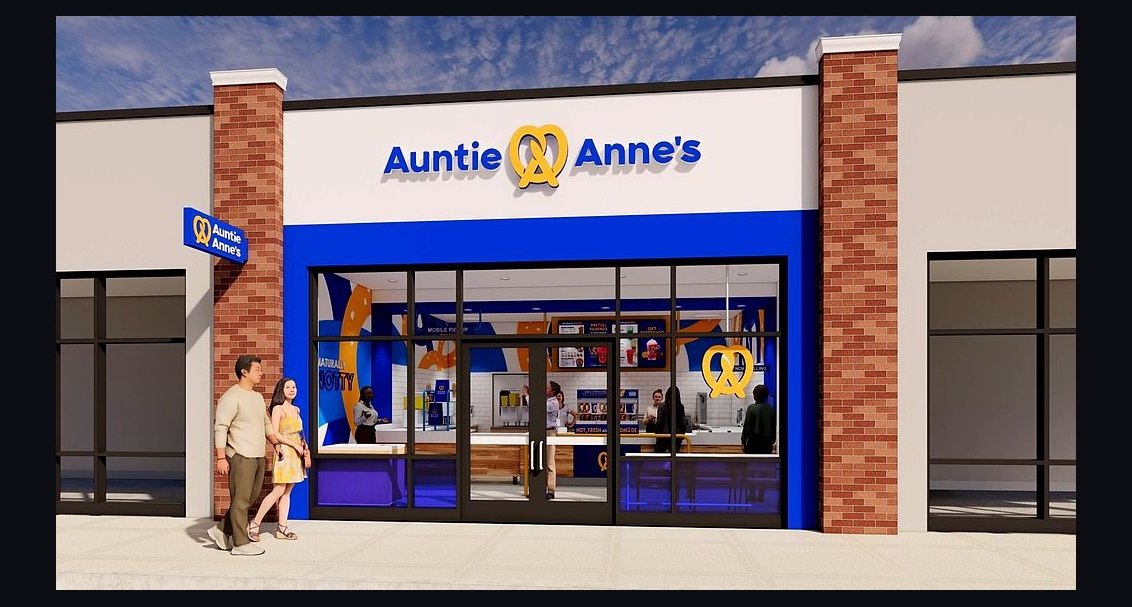 franchiseShould I open or buy an Auntie Anne's franchise in 2027?
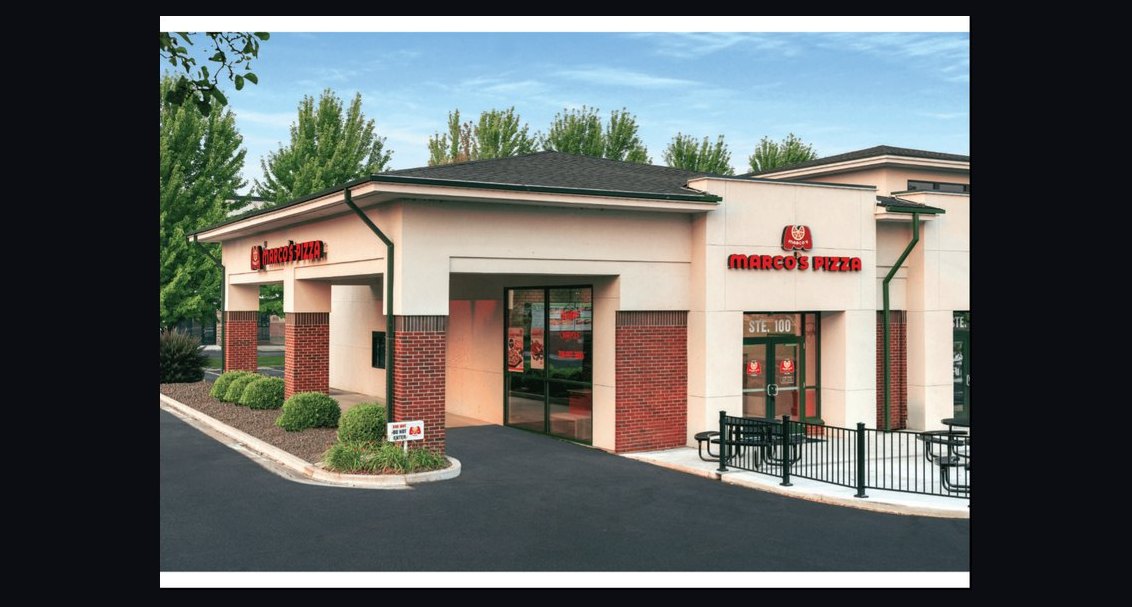 franchiseShould I open or buy a Marco's Pizza franchise in 2027?
 franchiseShould I open or buy a Stanley Steemer franchise in 2027?
 franchiseShould I open or buy a Dairy Queen franchise in 2027?
 franchiseShould I open or buy a Mathnasium franchise in 2027?
 franchiseShould I open or buy a Mac Tools franchise in 2027?
 franchiseShould I open or buy a Jimmy John's franchise in 2027?
 franchiseShould I open or buy a Taco Bell franchise in 2027?
 franchiseShould I open or buy a Take 5 Oil Change franchise in 2027?
 franchiseShould I open or buy a Planet Fitness franchise in 2027?