


Should I open or buy an Edible Arrangements franchise in 2027?
Quality
Certified
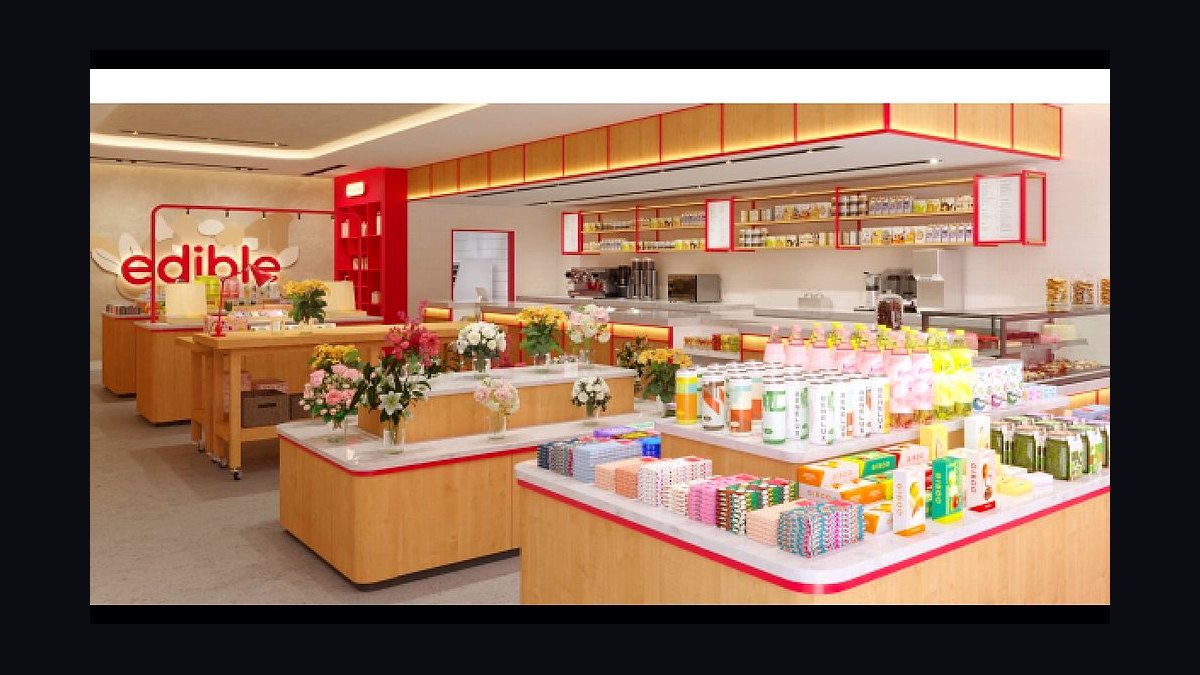
Probably not as a single unit. Edible's U.S. footprint has shrunk roughly 17% from its mid-2010s peak, median store revenue sits near $541K–$666K, and 10% comes off the top in royalty plus ad fund. Buy or open only with $150K–$200K liquid, a corporate-gifting pipeline, and multi-unit intent.
Open a new store versus buying an existing one
The question "should I open or buy" is really two different businesses wearing the same logo, and most prospective franchisees never separate them before signing.
Opening new means you sign the franchise agreement, pay a $30,000 initial franchise fee, and start from zero: site selection, lease negotiation, buildout, hiring, and — the part people underestimate — building the local customer list from scratch. Item 7 of Edible's disclosure document puts total startup investment in the $184,000–$410,000 band, with heavy site work in expensive metros pushing past $500,000. The upside of opening is control. You pick the trade area, you negotiate the lease terms, you install the bakeshop and smoothie equipment to current brand standards rather than retrofitting a 2012 store, and you build a customer database that reflects the corporate accounts you actually want. The downside is a ramp: expect 9–18 months before the store's revenue stabilizes, and expect the first Valentine's Day and Mother's Day to be learning experiences rather than profit events. Those two days can represent an enormous share of annual volume, and a first-year crew that has never staged a 400-order day will bottleneck at the dipping line.
Buying an existing store means you acquire a going concern — customer list, corporate accounts, trained staff, an assigned lease, and a proven sales history you can underwrite against. The typical asking price for a small food-service or gifting retail business runs a multiple of seller's discretionary earnings, commonly in the 2x–3.5x range for owner-operated stores of this size, plus inventory. Do the arithmetic: a store throwing off $70,000 in SDE might list at $175,000–$245,000 — potentially less total cash than a new buildout, and it generates revenue on day one. The catch is that healthy Edible stores rarely change hands cheaply, and the ones on the market are often on the market for a reason: a lease renewal about to reprice, a landlord who won't extend, deferred equipment replacement, a walk-in cooler on its last compressor, or an owner who has been harvesting the corporate list without reinvesting.

There is a third path worth naming, because it's where a meaningful share of experienced operators land: buying an underperforming store in a good trade area specifically to fix it. If a location sits at $400,000 in annual sales inside a trade area that supports $700,000, and the diagnosis is "the previous owner never sold B2B," that gap is addressable with a sales motion rather than capital. That's the highest-return version of this deal, and it's also the one that requires you to be genuinely good at operations, not just willing to own a business.
How to decide between them
The decision isn't preference, it's a sequence of gates. Run them in order and stop at the first one you fail.
Gate one: liquidity. SBA 7(a) lenders typically want a 20%–25% equity injection on a project of this size. On a $400,000 buildout that's $80,000–$100,000 of your own cash, and you need a separate working-capital reserve on top because negative cash months outside the holiday spikes are normal in year one. Under $150,000 liquid, neither path works and you should stop reading.
Gate two: trade area. The strong sites share a profile — a suburban end-cap of roughly 1,200–1,800 square feet on a thoroughfare with real traffic counts, meaningful household income within three miles, and a demand anchor nearby: a large hospital, a college, or a dense business park. Hospitals matter more than people expect, because "get well" and "thank you the nurses" gifting is non-seasonal revenue on the 350 days that aren't Valentine's Day.
Gate three: your sales muscle. Top performers derive a large share of revenue from corporate accounts — real estate brokerages, law firms, hospital administration, car dealerships, HR teams buying for Administrative Professionals Day. If you've never sold B2B and don't intend to learn, you are buying a seasonal retail store and should underwrite it as one.
Gate four: unit count intent. Single-unit economics are thin. The model rewards shared prep labor, a shared delivery fleet, and one marketing spend amortized across three storefronts in a single metro. If your plan tops out at one store, the honest answer is that this is a job you bought, not an investment.
Concrete numbers behind each option
Here is where the two paths diverge financially, and it's worth being precise about what you're buying with each dollar.
The new-build stack. The initial franchise fee is $30,000, non-refundable, for a single store. Leasehold improvements and buildout run roughly $60,000–$185,000 depending on whether you inherit a shell or a former food-service space with existing plumbing and hood infrastructure. Equipment, fixtures, and POS land in the $45,000–$78,000 range — walk-in cooler, dipping line, prep tables, and now ovens, since the bakeshop pivot added baked goods to the required menu. Opening inventory of fruit, chocolate, and packaging is $8,000–$15,000. Signage and decor to current brand standards, updated after the 2021 rebrand, run $10,000–$28,000. Training, travel, and opening labor add $8,000–$22,000, including time at the corporate training program. Three months of working capital is $23,000–$52,000. Total: $184,000–$410,000, with outliers past $500,000.
The ongoing burden is identical either way. Royalty is 5% of gross sales. The national advertising fund plus local marketing requirement adds roughly another 5%. That's 10% off the top before you buy a single strawberry. Food cost runs 32%–38% and it's volatile — fruit is perishable, and strawberry, pineapple, and mango pricing swings hard with weather and freight. Labor is 28%–34%. Occupancy is 8%–12%. Stack those and you can see why the margin envelope is narrow: mid-single-digit to low-teens EBITDA is the realistic band, not the 20%+ some franchise brokers imply.
Revenue expectations. The bottom quartile of stores sits near $340,000 in annual sales. The median lands around $541,000–$666,000. The top quartile clears $1M or better. Average unit volume peaked substantially higher in the mid-2010s and has drifted down as same-day delivery platforms, national floral e-commerce brands, and grocery-store fruit trays absorbed the impulse gifting occasion. Translate that to owner earnings: a bottom-quartile store might leave $10,000–$25,000 after a manager's wage, a median store $45,000–$70,000, a top-quartile store $110,000–$180,000. Payback on a new build runs 4–6 years at the median, 8+ years at the bottom, 2.5–3.5 years at the top.
The resale math. Buying changes the shape of the risk. You pay a multiple of demonstrated earnings rather than funding a ramp, so your capital converts to cash flow immediately. But you inherit three liabilities: the lease (get the assignment terms and remaining term in writing before diligence goes deep), the equipment condition (budget $20,000–$40,000 for deferred replacement on any store older than eight years), and the remodel obligation. Franchise agreements commonly require a refresh at renewal or on a set cycle, and a post-rebrand image conversion on an older store can cost as much as a meaningful slice of a fresh buildout. Ask specifically: when is this store's next required remodel, and what does the franchisor estimate it costs? A resale that looks cheap at 2.5x SDE stops looking cheap when a $90,000 mandatory refresh lands in month fourteen.
What to verify in the disclosure document. Item 5 gives the franchise fee. Item 6 gives all ongoing fees, including the ones nobody quotes — technology fees, transfer fees, and the transfer fee matters enormously if you're buying, since it's your cost, not the seller's. Item 7 gives the investment range. Item 11 describes what the franchisor actually provides, including real estate support and required systems. Item 19 is the financial performance representation, and read the footnotes: how many stores are in the sample, are franchisor-owned units included, and does it report averages or medians. Item 20 is the table that decides this for most rational buyers — outlets opened, closed, transferred, and terminated by state over the last three years. If your state shows more closures and transfers than openings across multiple years, the brand's momentum in your market is negative, and no site is good enough to fully offset that. Item 21 is the audited financials of the franchisor itself.
What the 2027 market actually looks like
The category context matters more than the brand pitch, because you're underwriting a decade-long lease against it.
Edible's unit count has contracted from a peak above 1,100 U.S. locations to somewhere in the 870–930 range, and closures have outpaced openings in most recent years. That's not automatically disqualifying — a contracting system can still have excellent individual stores, and a shrinking footprint means less intra-brand cannibalization in the survivors' trade areas. But it tells you the franchisor's brand marketing isn't going to carry a marginal location. You bring the upside yourself.
The 2021 rebrand — dropping "Arrangements" from the primary mark and repositioning around bakeshop items, smoothies, and treats — is the strategic response. Leadership has publicly pushed toward pastries, coffee, and infused-product categories where local law permits. Strategically it's coherent: a fruit-bouquet-only store is a special-occasion destination with maybe 20 high-volume days a year, whereas a smoothie-and-treat shop has a daily-traffic reason to exist. Operationally it's a real ask. You're funding new equipment, retraining staff on new prep, and hoping local customers update their mental model of what your storefront sells. Operators who fully commit to the new menu see the daypart benefit; operators who treat it as optional keep the old seasonal revenue shape and the old cash-flow gap.
The competitive picture is genuinely harder than it was ten years ago. Gift shop and card store retail as a category has been flat to slightly declining. Gift basket and food-gifting spend is growing modestly, but the growth is going to digital-first players with national logistics and to same-day delivery platforms that let a grocery store's fruit tray substitute for your product at a lower price point. Meanwhile, corporate gifting is the genuinely healthy segment — the market is large and growing at a mid-to-high single digit rate — which is exactly why the B2B gate above isn't optional. Fruit input costs are up materially against pre-2022 baselines, and retail food wage rates have risen sharply. Both compress a 10%-royalty-payer's margin from opposite ends.
One adjacent effect worth planning around: third-party delivery marketplaces are simultaneously a channel and a margin tax. Listing on them fills weekday troughs and reaches customers who'd never look up your store, but the commission on those orders can consume most of the contribution margin on a mid-priced arrangement. The operators who handle this well use marketplaces as customer acquisition and then work hard to convert repeat buyers to direct ordering — a house email list, a text program, standing corporate POs — rather than treating marketplace volume as the business.
Implementation details and sequencing
Whichever path you pick, the order of operations determines whether you get a good deal or an expensive education. Ninety days is a realistic timeline.
Days 1–15 — documents. Request the current disclosure document directly from the franchisor. Read Items 5, 6, 7, 11, 19, 20, and 21 line by line, and specifically count net unit change in your state. If you're buying, request the seller's last three years of tax returns and P&Ls, plus the franchisor's confirmation that the store is in good standing and current on royalties. A seller behind on royalties is a seller whose transfer approval is not a formality.
Days 16–30 — franchisee calls. Item 20 gives you contact information for current and recently departed franchisees. Call at least a dozen. Mix tenures: a first-year owner, a five-year owner, a ten-year owner. Then call former owners, because closed-store conversations are the most valuable diligence you will do — they tell you the failure mode, and the failure mode is what you're trying to avoid. The questions that matter: what's your actual annual sales figure, what do you clear after paying yourself a real wage, what percentage of revenue is corporate, what surprised you about the remodel requirement, and would you sign again.
Days 31–45 — site or store validation. For a new build, don't outsource site selection to the franchisor's real estate team. Independently pull traffic counts, three-mile household income, five-mile population, and map the hospitals, colleges, and large employers. Drive the site at 8am, noon, and 6pm on a weekday and again on Saturday. For a resale, sit in the store for a full week of operating hours. Count transactions. Watch how much product goes into the trash at close — waste is the tell on whether the current owner has demand forecasting under control.
Days 46–60 — build the B2B pipeline before you sign anything. This is the step almost everyone skips and it's the one that predicts outcomes. Identify fifty corporate prospects within a ten-mile radius: firms with 200+ employees, hospital administration offices, real estate brokerages, dealership general managers. Get verbal interest from ten of them for holiday and Administrative Professionals Day programs. If you can't get ten conversations before you've spent a dollar, you will not get them after, when you're also running a store.
Days 61–75 — stress test the model. Build three cases: bottom quartile at roughly $340,000 in sales, median at $541,000–$666,000, top quartile at $900,000+. Hold royalty at 5%, ad fund at 5%, food at 36%, labor at 31%, occupancy at 10%. If the bottom-quartile case loses more than you can fund for two years without touching retirement money, the deal is too big for your balance sheet regardless of how good the median case looks. Lenders will make you do this anyway; do it honestly first.
Days 76–85 — lease and lender. Negotiate a base term with renewal options rather than one long term, since options are yours to exercise and obligations aren't. Push for a rent ramp during buildout and the first months of operation, a personal guarantee capped in duration, a co-tenancy clause if you're in a center anchored by a single big-box tenant, and an assignment clause that doesn't let the landlord block your eventual exit. On a resale, get the assignment consent in writing before you fund. SBA 7(a) at Prime plus a spread is the standard structure; expect the lender to require a full personal guarantee and probably a lien on your home equity.
Days 86–90 — sign or walk, and default to walk. In a contracting system, the marginal deal is a bad deal. There's no shortage of franchise opportunities, and the cost of walking away is a few weeks of your time versus a decade-long lease and a personal guarantee.
Adjacent options if the numbers don't pencil
If the gates knock this deal out, the capital doesn't have to sit idle. The comparison set is worth understanding, because "should I do this deal" is always relative to what else $200,000–$400,000 buys.
Other food-gifting and treat franchises. Bakery-cafe and dessert concepts generally post higher average unit volumes than fruit arrangements do, with simpler production and less perishability risk — a frozen or shelf-stable product forgives a slow Tuesday in a way cut fruit does not. Investment ranges tend to run higher, sometimes meaningfully so, and the strongest brands in that space have long franchisee waitlists and limited territory availability. Smoothie and juice concepts offer broader dayparts and a more predictable weekday traffic pattern, which is exactly the weakness in the arrangement-only model. If you're drawn to Edible specifically because of the smoothie and bakeshop pivot, it's worth asking whether you'd rather own a brand where that's the core business rather than the rescue plan.
Buying an independent instead of a franchise. A local florist or gift-basket business with a few hundred thousand in revenue and an established corporate list can often be acquired for a multiple of earnings with no franchise fee, no royalty, and no ad fund — which means you keep the 10% that a franchisee gives up. You give up the brand, the supply chain, the training system, and the marketing infrastructure. For an experienced operator with their own sales ability, that trade is frequently favorable. For a first-time owner who needs a playbook, it isn't.
Going commissary-only and B2B-only. The lowest-capital version of this business skips retail entirely: rent time in a shared commercial kitchen, sell exclusively to corporate accounts, and deliver. You lose walk-in revenue and the retail brand presence, but you also lose the lease, the buildout, the retail labor, and the royalty. Margins on that structure can be dramatically better than a franchised storefront, with a lower revenue ceiling. It's also the cheapest way to test the thesis — if you can't sell $100,000 of corporate gifting out of a commissary in a year, buying a $400,000 storefront won't fix your sales problem.
Multi-unit inside the system. If you like the brand and the trade area but the single-unit math is thin, the correct move isn't a smaller commitment — it's a bigger one. Three stores in one metro sharing prep, delivery, and marketing is a genuinely different business from one store paying full overhead alone. Negotiate the area development agreement up front, when the franchisor is motivated to fill territory, rather than trying to assemble units one at a time later.
Related questions
How long until an Edible Arrangements franchise breaks even?
A new build typically reaches operational breakeven within 9–18 months and full capital payback in 4–6 years at median volumes. Bottom-quartile stores may take 8+ years or never fully return capital. A resale generates cash immediately but you paid for that head start.
Is buying an existing store cheaper than opening a new one?
Often, yes, in total cash outlay — 2x–3.5x seller's discretionary earnings can undercut a $184K–$410K buildout. But add the franchisor's transfer fee, deferred equipment replacement, and any upcoming mandatory remodel before comparing. Those three items routinely erase the apparent discount.
Does the brand's shrinking unit count mean I should avoid it entirely?
Not automatically. A contracting system means less brand tailwind and less new-unit cannibalization simultaneously. It does mean you cannot rely on franchisor marketing to rescue a mediocre site, and Item 20's state-level closure data deserves more weight than any pitch deck.
What percentage of revenue should come from corporate accounts?
Top performers commonly run a large minority to near-half of revenue from B2B. Under 20% means you're a seasonal retailer dependent on two or three calendar days, which is the cash-flow profile that kills stores in their second year.
Can I run this store absentee?
Realistically no. Fruit is cut daily, dipped within hours, and arranged to spec. Absentee stores post the thinnest margins in the system because the operational discipline that protects food cost and waste is exactly what an owner's presence enforces.
FAQ
What's the total investment to open an Edible Arrangements franchise?
Item 7 of the disclosure document puts total startup investment at roughly $184,000 to $410,000, including the $30,000 franchise fee, buildout, equipment, opening inventory, signage, training, and three months of working capital. Heavy site work in expensive metros can push past $500,000. Lenders will want $150,000–$200,000 liquid and a 20%–25% equity injection.
How much does an owner actually make?
At median volumes of $541,000–$666,000 with mid-single-digit to low-teens EBITDA after the 5% royalty and 5% ad fund, realistic owner earnings run roughly $45,000–$70,000 — closer to a salary than an investment return. Top-quartile operators with strong corporate mixes clear substantially more; bottom-quartile stores may barely clear a manager's wage.
What are the ongoing fees?
Royalty is 5% of gross sales, with the national ad fund plus local marketing requirement adding approximately another 5% — about 10% off the top before food cost. Check Item 6 for the full list, including technology fees and, if you're buying an existing store, the transfer fee, which is typically the buyer's cost.
Why did the company drop "Arrangements" from the name?
The 2021 rebrand repositioned the business from a special-occasion fruit-bouquet shop toward a daily-traffic treat concept — bakeshop items, smoothies, and adjacent categories. The strategic logic is daypart expansion: a gifting-only store has a couple dozen high-volume days a year, while a treat shop has a reason to sell something every weekday.
Should I buy a struggling store to turn it around?
It's the highest-return version of this deal if — and only if — you can name the specific fixable cause. "The previous owner never sold B2B in a trade area full of hospitals and law firms" is fixable with a sales motion. "The trade area doesn't support the volume" and "the lease reprices next year at double" are not.
What single factor best predicts success here?
Whether the owner runs a real B2B sales motion. Site quality sets the ceiling, but corporate account development is what fills the 350 days that aren't Valentine's Day or Mother's Day, and it's the difference between a seasonal cash-flow scramble and a business with predictable weekly revenue.
Sources
- https://www.sba.gov/funding-programs/loans/7a-loans
- https://www.ftc.gov/business-guidance/resources/franchise-rule-compliance-guide
- https://www.franchise.org/
- https://www.bls.gov/cpi/
- https://www.bls.gov/oes/current/oes_nat.htm
- https://www.ers.usda.gov/data-products/fruit-and-tree-nuts-data/
- https://www.census.gov/programs-surveys/acs
- https://www.consumer.ftc.gov/articles/buying-franchise-consumer-guide
- https://www.score.org/
- https://www.irs.gov/businesses/small-businesses-self-employed
Related on PULSE
- How long does it take to open a franchise and break even in 2027?
- Should I open or buy a Tommy Gun's Original Barbershop franchise in 2027?
- Should I open or buy a Painting with a Twist franchise in 2027?
- What percentage of franchise revenue should come from corporate accounts?
- How do I read FDD Item 19 without getting misled?
This page will be disappearing soon. Save it to your device for $1 — or read it free while it is here.
@Kory-White- · if Venmo asks, the last 4 of my number are 2012
This page is gone.
This one is off the shelf now. $1 keeps it on your phone for good — the whole page, pictures and diagrams included.
 franchiseShould I open or buy a Little Caesars franchise in 2027?
 franchiseShould I open or buy a Primrose Schools franchise in 2027?
 franchiseShould I open or buy a UPS Store franchise in 2027?
 franchiseShould I open or buy a Bahama Breeze franchise in 2027?
 frShould I open or buy a McDonald's franchise in 2027?
 franchiseShould I open or buy a Bojangles franchise in 2027?
 franchiseShould I open or buy a Planet Fitness franchise in 2027?
 franchiseShould I open or buy a Panera Bread franchise in 2027?
 franchiseShould I open or buy a Firehouse Subs franchise in 2027?
 franchiseShould I open or buy a Drybar franchise in 2027?