


Should I open or buy a Newk's Eatery franchise in 2027?
Quality
Certified
Open a Newk's Eatery only if you can fund roughly $1.0M–$1.4M, hold restaurant operating experience, and secure a daytime-dense endcap where catering revenue can carry a second profit center. Buying an existing unit is usually the better risk-adjusted entry. Passive, undercapitalized, or suburban-pad operators should pass.
Building new versus buying an existing unit
The question "should I open or buy" is really two different businesses wearing the same logo. Opening from scratch means you control the site, the build spec, the lease term, the opening crew, and the catering account list from day one — and you absorb every dollar of construction risk, every week of permitting delay, and a 12–20 month ramp before the unit behaves like a mature restaurant. Buying an existing Newk's Eatery means you inherit a proven sales history, a trained staff, an established catering book, and a lease with known economics — and you also inherit that unit's ceiling, its deferred maintenance, its reputation in the trade area, and whatever the previous operator did to the labor culture before deciding to sell.
The economics diverge sharply. A ground-up build carries the full initial investment range disclosed in the franchisor's FDD Item 7 — roughly $1.0M to $1.4M for a traditional inline restaurant, including a $40,000 initial franchise fee, $465,000–$685,000 in leasehold improvements, $235,000–$305,000 in furniture/fixtures/equipment, and $160,000–$187,000 in working capital. That capital goes out over 5–7 months of construction while generating zero revenue. A resale, by contrast, is typically priced off cash flow — fast-casual franchise resales commonly trade in the 2.5x–3.5x SDE band — plus a transfer fee and whatever remodel obligation the franchisor imposes at transfer. If a mature unit throws off $250,000 in seller's discretionary earnings, you are looking at $625,000–$875,000 plus closing costs and required refresh, which can land materially under a new build while producing cash in month one.
The trap in resales is the reason the seller is selling. There are good reasons — retirement, portfolio consolidation, a partner buyout, a multi-unit operator pruning a geographic outlier. There are bad ones — a lease with three years left and a landlord planning a redevelopment, a hospital or corporate campus that just announced a relocation, an anchor tenant leaving the center, a remodel obligation coming due that costs $250,000–$400,000, or a catering book that walked out the door with the departing sales rep. Every one of those is discoverable in diligence, and every one of them is routinely missed by buyers who fall in love with a trailing P&L.
There is a third path worth naming: multi-unit development. Newk's and its peers increasingly award area development agreements to operators who commit to three, five, or ten units on a schedule. That path suits the operator who already runs restaurants, has GM bench depth, and can amortize a district manager and a catering sales lead across several locations. It also carries the harshest failure mode — a development schedule you cannot fund becomes a default on the agreement, not just a bad restaurant.
What the brand actually is, and why that shapes the choice
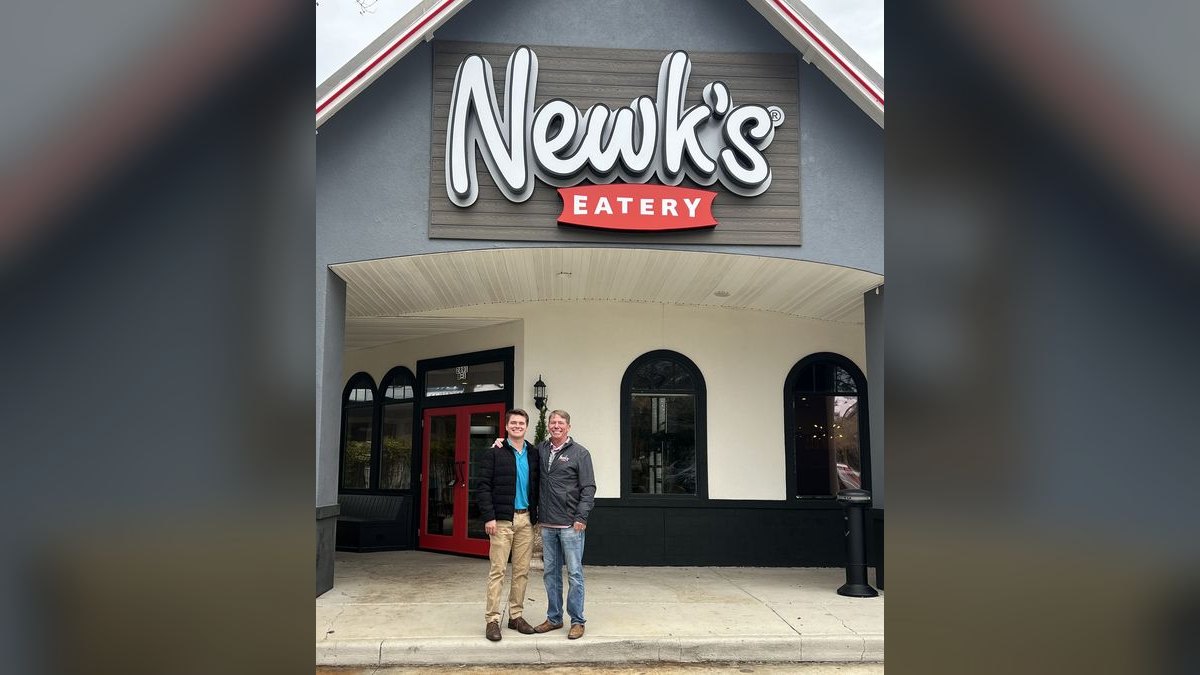
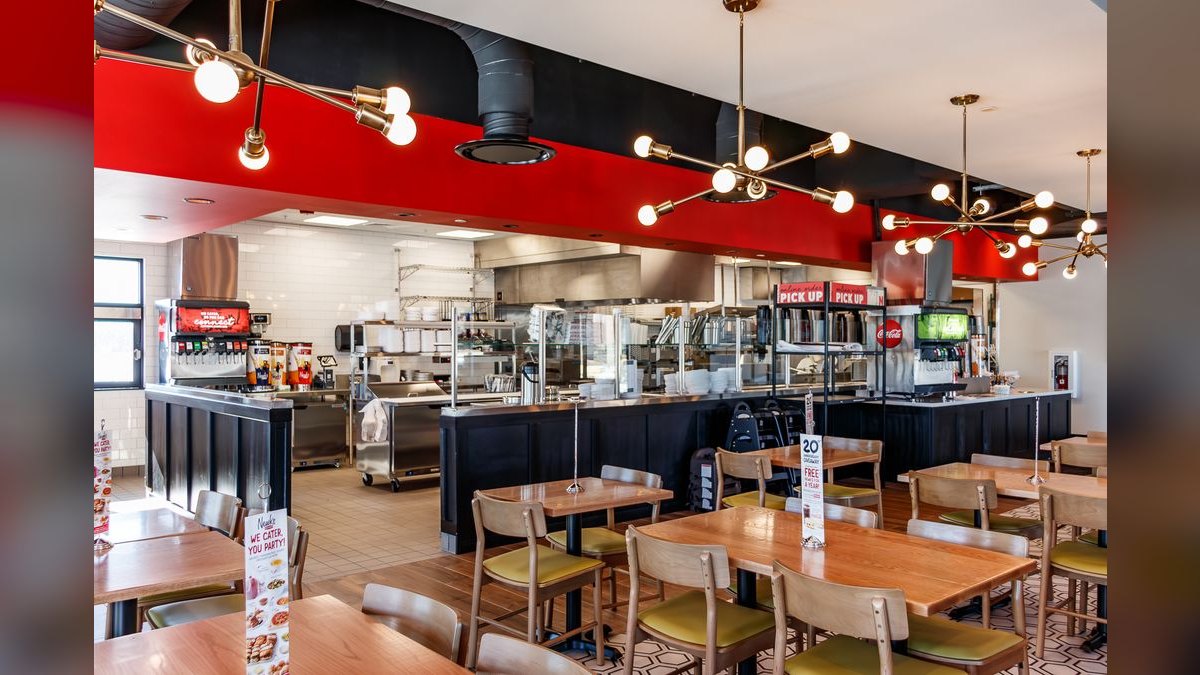
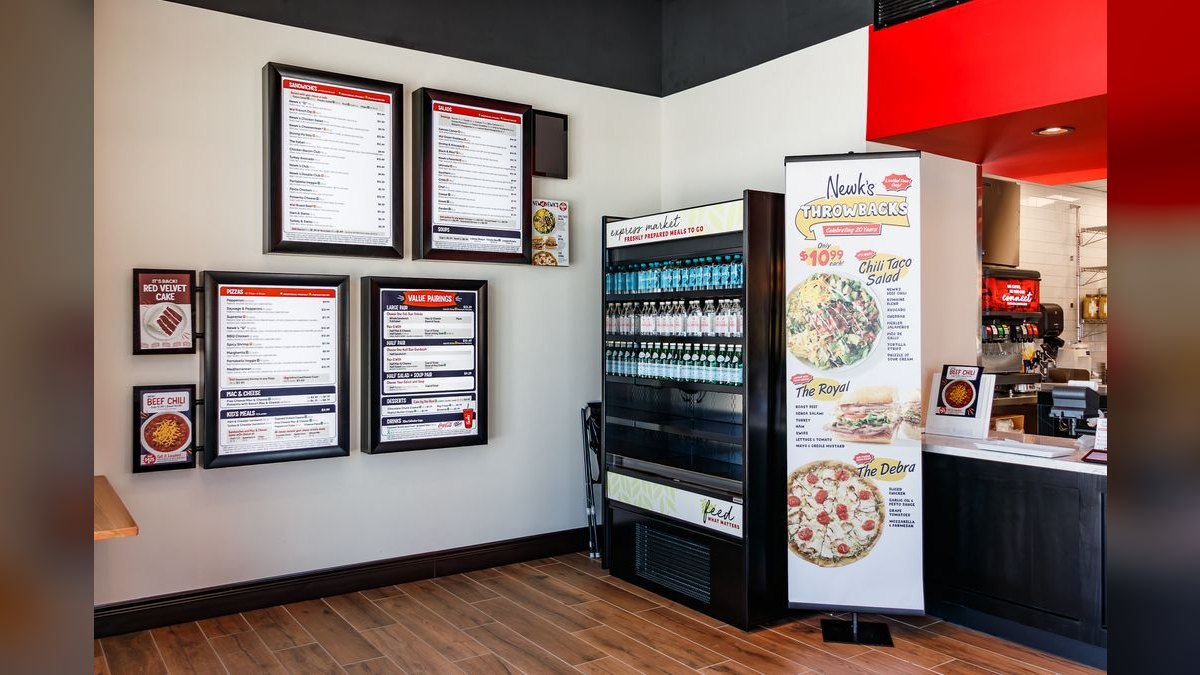
Newk's Eatery is a polished fast-casual chain built around soups, salads, sandwiches, and pizzas, headquartered in Jackson, Mississippi, with its density concentrated across Mississippi, Alabama, Tennessee, Georgia, Texas, and the Carolinas. It is not a sandwich quick-service brand and it is not a full-service casual restaurant. It sits in the middle — higher check and a nicer dining room than the sub shops, lower labor complexity and no bar program compared to casual dining. That middle position is the entire investment thesis, and it drives every site, staffing, and financing decision you will make.
Two structural facts about the concept matter more than anything else in the FDD. First, the daypart is lunch-led: the overwhelming majority of dine-in and takeout volume lands in a narrow window around 11 AM to 2 PM. Second, catering is not a garnish — it runs a materially larger share of mix than at most fast-casual peers, and it carries meaningfully better restaurant-level margin than in-store transactions because it produces high-ticket orders with minimal incremental front-of-house labor.
Together those facts tell you what a good Newk's site looks like and what a bad one looks like. A good one sits inside a dense daytime population — an office corridor, a medical campus, a university edge, a government center, a large master-planned community with employment inside it. A bad one is a cheap outparcel on a highway with strong evening traffic and nobody within three miles at noon on a Tuesday. The evening-heavy site is exactly the one that looks affordable, because the rent reflects what the market thinks the traffic is worth. You will be paying for traffic you cannot convert.
This is also why the open-versus-buy decision is site-dependent rather than universal. If the best trade areas in your market already have a Newk's, buying one of them beats building on the second-best corner. If the brand has no presence and the market has a genuine daytime density gap, building is how you claim it — and you get a protected territory in the bargain, which a resale buyer inherits in whatever shrunken form the prior agreement defined.
A decision path from interest to signature
Work the path in order and refuse to skip the validation calls. The Item 20 franchisee roster is the single highest-value page in any FDD, and it is the one prospective buyers most often treat as a formality. Ask each operator four questions: what your actual annual sales are versus what you expected, what percentage of your revenue is catering, what your labor cost runs at full staffing, and what surprised you most in year one. Six calls will surface the pattern. Two calls will surface only the franchisor's happiest referrals.
Then apply a discipline most buyers skip: separate the brand question from the site question from the price question. A great brand at a bad site fails. A great site at a bad price fails slowly. A great price on a unit whose anchor employer just announced a downsizing fails on a schedule you cannot see yet. Underwrite all three independently and require all three to clear.
The numbers behind each option
Start with the build. The FDD discloses an initial investment range of roughly $1.0M–$1.4M for a traditional inline unit. The line items break out as a $40,000 franchise fee, leasehold improvements in the $465,000–$685,000 band, FF&E at $235,000–$305,000, signage at $22,000–$45,000, smallwares/POS/technology at $45,000–$72,000, training and grand opening at $55,000–$80,000, and three months of working capital at $160,000–$187,000. Ongoing costs are a 5% royalty on gross sales and a 2% brand marketing fund contribution, with a local marketing minimum on top. Financial qualification is a $1.5M net worth and $500,000 liquid.
System average unit volume for franchised units open at least eighteen months has been disclosed in the $2.2M–$2.3M range, with top-quartile units running above $3 million. Do not underwrite to the average in year one. A realistic first-year plan sits below system AUV while the catering channel ramps, and the honest model looks roughly like this at $2.0M in sales:
| P&L line | % of sales | Dollars |
|---|---|---|
| Gross sales | 100% | $2,000,000 |
| Food and paper | 29% | $580,000 |
| Labor, hourly plus management | 30% | $600,000 |
| Royalty plus brand marketing | 7% | $140,000 |
| Occupancy | 8% | $160,000 |
| Other operating expense | 12% | $240,000 |
| Restaurant-level EBITDA | 14% | $280,000 |
Layer an SBA 7(a) note on roughly $900,000 at prevailing restaurant-franchise pricing and debt service consumes a substantial share of that EBITDA, leaving pre-tax cash flow to a working owner in the low six figures in year one. Against a $300,000–$500,000 equity check with 70% leverage, payback runs roughly three-and-a-half to five years for a unit that reaches system AUV by year two. Breakeven on a monthly basis typically arrives somewhere in the month 14–20 window, driven almost entirely by how fast the catering book fills.
Now the resale. Model it differently — you are buying cash flow, not building it. Underwrite three years of tax returns and P&Ls, not the broker's adjusted summary. Verify that add-backs are genuinely discretionary (owner salary above market, a personal vehicle) rather than real costs being laundered (a general manager the seller stopped paying because they worked the floor themselves, deferred equipment repair, a marketing spend cut to zero to inflate the sale year). Then apply the multiple to the *normalized* number, and subtract three things before you call it a price: the transfer fee, the franchisor-required remodel if the unit is near its refresh cycle, and the working capital you will need on day one because sellers rarely leave any.
The comparison sharpens when you convert both to a cash-on-cash yield. A build at $1.2M all-in with $360,000 equity producing $140,000 of owner cash flow in year two is roughly a 39% cash-on-cash return on the equity — impressive on paper, and delayed by the better part of two years of construction and ramp. A resale at $750,000 with $190,000 down producing $130,000 immediately, net of a slightly larger note, is a comparable yield without the dark period. The resale wins on time-to-cash and loses on control. Which matters more depends entirely on whether you have another income source carrying you through the build.
The alternatives deserve honest numbers too. A polished-deli competitor like McAlister's sits in a similar investment band with a somewhat lower disclosed AUV — worth comparing if the Newk's brand has no equity in your market. A sandwich brand like Jersey Mike's runs a substantially lower build-out, in the $500,000–$1.0M range, with a lower revenue ceiling and no meaningful catering channel — you could operate three of them for the capital one Newk's consumes, which is a genuine diversification argument. An independent fast-casual concept costs less to build and pays no 7% off the top, but you fund brand-building yourself, and independent operators in this segment typically run restaurant-level margins several points below a supported franchise system. None of those is obviously wrong. They are different bets on where your edge lives: brand, capital efficiency, or operating skill.
Market conditions heading into 2027
Three forces shape the underwriting for a 2027 opening, and they push in different directions.
Real estate has loosened. Second-generation restaurant space in secondary sunbelt markets has come off the post-2022 spike, which matters enormously because occupancy is the one fixed-cost line you set once and live with for a decade. A lease signed in the softer market carries a structural advantage over a competitor who signed at the peak, and second-generation space also cuts the build-out check because the grease trap, hood, and utility service are already there. Chasing second-gen restaurant space is the single highest-leverage cost decision in the whole project.
Labor remains the pressure point. Food cost inflation moderated substantially from its 2023 peak, but wage inflation and the segment's brutal turnover rate have not resolved. This is where the open-versus-buy calculus tilts toward buying: an existing unit comes with a trained crew and, if you are lucky, a general manager who wants to stay. Building means recruiting a full team into a brand your market may not know, in a labor market where the sandwich shop down the street is competing for the same applicants. Budget for a GM hire well before opening — 8–10 weeks of training inside an existing unit is standard and non-negotiable if you want a functional opening.
The catering tailwind is real but conditional. The return-to-office push across large employers rebuilt the office-lunch catering daypart that operators feared was permanently gone. That is genuinely good for a lunch-led, catering-heavy brand. But it makes your site selection a bet on specific employers, not on a general trend. Before you sign a lease, know which companies occupy the buildings within three miles, how many people they seat, what their in-office policy actually is, and whether any of them have announced consolidation. One large employer leaving a suburban office park can take 15% of a catering book with it.
Competition squeezes from both sides. The sandwich quick-service tier undercuts on price and build cost. The bowl-and-grain-plate concepts compete for the same white-collar lunch customer with a healthier positioning. A polished-deli brand defends the middle with menu breadth and a nicer room, which works — but it means you cannot win on price and you cannot win on speed. You win on being the place a company orders from when the order has to be right.
Implementation and sequencing
Sequencing errors cost more than any single line item, so a few specifics.
Run lenders in parallel, not in series. Restaurant-franchise SBA 7(a) lending is a specialized niche and quotes vary meaningfully between shops. Approach three simultaneously with a complete package — personal financial statement, three years of returns, the FDD, and a written business plan with your own P&L model, not the franchisor's. Sequential applications add months and give you no negotiating leverage.
Hire the general manager before construction finishes, not after. The training window inside an existing restaurant is measured in months, and a GM who arrives two weeks before opening will spend your first quarter learning on live customers. This is the most common self-inflicted wound in first-unit franchising.
Build the catering pipeline before you have a kitchen. By the time the drywall is up, you should have a named list of target accounts within your trade area — the corporate offices, the hospital departments, the law firms, the church and school administrators, the pharmaceutical reps who buy lunch for clinics. Treat it as a B2B sales motion with a named owner, a call cadence, and a tracked pipeline. Operators who staff a dedicated catering salesperson and manage them like a sales rep consistently outperform operators who wait for the phone to ring. The difference shows up in the margin line, not just the revenue line, because catering converts at better restaurant-level economics than counter transactions.
Protect the catering book in a resale. If you are buying, the catering relationships are the most fragile asset on the balance sheet and they are frequently held in one person's head and phone. Structure the purchase so the seller's catering contact stays through a transition period, get the account list in writing as a closing deliverable, and personally call the top twenty accounts within thirty days of closing. A resale that loses its catering book has lost the reason it commanded its multiple.
Plan the second unit before you need it, and do not sign for it before the first one proves out. The strongest franchise economics in this segment come from multi-unit density — shared management, shared catering infrastructure, shared marketing spend, and real leverage with the franchisor. But the fastest way to lose everything is to commit to a development schedule on the strength of a first unit that has not yet stabilized. Let the first restaurant clear breakeven, hold it for two full quarters, and then expand.
Related questions
Is buying an existing franchise always safer than opening a new one?
No. A resale removes construction and ramp risk but transfers the seller's problems — an expiring lease, a pending remodel obligation, a damaged local reputation, or a departing anchor employer. Safety comes from diligence quality, not from the transaction type.
How much of the decision should depend on catering?
Most of it. In a lunch-led polished fast-casual brand, catering is where the margin lives. A site that cannot support a catering sales motion is the wrong site regardless of how attractive the retail traffic looks on a demographic report.
Can I run a Newk's Eatery with a hired manager while keeping my day job?

Rarely well. Absentee ownership in this segment consistently underperforms owner-operated units on restaurant-level margin. If you must be absentee, budget for a genuinely senior operator at market compensation and expect the margin gap to persist.
What is the biggest hidden cost people miss?
Working capital after opening. Most models fund three months of it and then discover the ramp takes twelve to twenty. Carrying an extra $100,000–$150,000 of unbudgeted reserve is the difference between adjusting and panicking.
Does a protected territory actually protect me?
Only within its defined boundaries, and only against traditional units. Read the territory language in the franchise agreement carefully — non-traditional locations, ghost kitchens, and delivery-only formats are often carved out of the protection entirely.
FAQ
How much money do I need to open a Newk's Eatery franchise?
Plan for a total initial investment in the $1.0M–$1.4M range for a traditional inline restaurant, including the $40,000 franchise fee, build-out, equipment, and working capital. Brand financial qualifications call for roughly $1.5M net worth and $500,000 liquid. Most franchisees finance the majority through an SBA 7(a) loan and put $300,000–$500,000 of equity in.
How long until the restaurant breaks even?
Monthly breakeven commonly lands somewhere between month 14 and month 20. The variable that moves it most is how quickly the catering channel ramps, followed by how fast labor stabilizes after opening. Operators who start selling catering before the doors open compress that window meaningfully.
What does a typical Newk's Eatery generate in revenue?
System average unit volume for franchised units open at least eighteen months has been disclosed in the $2.2M–$2.3M range, with top-quartile units above $3 million. Individual results vary widely with trade-area daytime density and catering penetration, which is why the Item 20 validation calls matter more than the average.
Is it cheaper to buy an existing unit than to build one?
Often, but not always. Resales in fast-casual franchising commonly price around 2.5x–3.5x seller's discretionary earnings, which can land below a new build while producing cash immediately. Add the transfer fee, any required remodel, and day-one working capital before comparing — those three items routinely erase the apparent discount.
What are the ongoing fees?
A 5% royalty on gross sales plus a 2% contribution to the brand marketing fund, with a local marketing minimum on top. That roughly 7–8% off the top is the price of the brand, the supply chain, and the operating system — and it is the number to weigh against an independent concept where you keep it but fund your own brand-building.
What kind of site should I be looking for?
A 3,200–4,000 square foot endcap inside a dense daytime trade area — office corridors, medical campuses, universities, government centers. Because the concept is lunch-led, evening-traffic sites underperform badly regardless of how strong the overall vehicle counts look. Second-generation restaurant space cuts both build cost and construction time.
Sources
- https://www.sba.gov/funding-programs/loans/7a-loans
- https://www.ftc.gov/business-guidance/resources/consumers-guide-buying-franchise
- https://www.restaurant.org/research-and-media/research/
- https://www.bls.gov/ppi/
- https://www.ibisworld.com/united-states/market-research-reports/chain-restaurants-industry/
- https://www.cbre.com/insights/sectors/retail
- https://www.nrn.com/
- https://www.bizbuysell.com/
- https://www.newks.com/
Related on PULSE
This page will be disappearing soon. Save it to your device for $1 — or read it free while it is here.
@Kory-White- · if Venmo asks, the last 4 of my number are 2012
This page is gone.
This one is off the shelf now. $1 keeps it on your phone for good — the whole page, pictures and diagrams included.
 franchiseShould I open or buy a Wendy's franchise in 2027?
 franchiseShould I open or buy a Massage Envy franchise in 2027?
 franchiseShould I open or buy a Domino's franchise in 2027?
 franchiseShould I open or buy a Sonic Drive-In franchise in 2027?
 franchiseShould I open or buy a Jamba franchise in 2027?
 franchiseShould I open or buy a Bahama Breeze franchise in 2027?
 franchiseShould I open or buy an Anytime Fitness franchise in 2027?
 franchiseShould I open or buy a Kumon franchise in 2027?
 franchiseShould I open or buy a Cold Stone Creamery franchise in 2027?
 franchiseShould I open or buy a McAlister's Deli franchise in 2027?