


Should I open or buy a Ben's Soft Pretzels franchise in 2027?
Quality
Certified
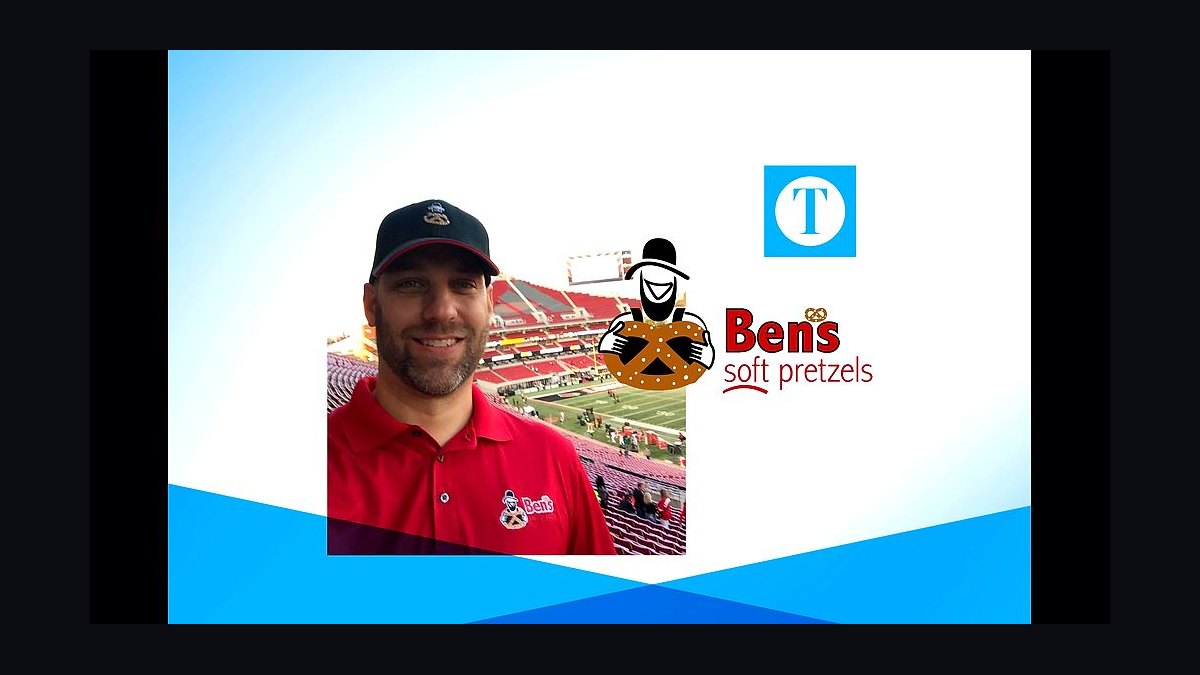
Yes — open or buy a Ben's Soft Pretzels franchise in 2027 only if you can secure a high-foot-traffic Walmart, mall, or sports-venue location, bring $90,000-$345,000 in liquid capital plus a $30,000 franchise fee, and accept a 7% royalty + 2% marketing fee against a median AUV of roughly $213,000. The realistic breakeven window is 18-30 months for a traditional inline unit and 9-15 months for a mobile/kiosk build. Conservative Year-1 owner cash flow lands in the $35,000-$65,000 range after royalties, rent, labor, and debt service — meaningfully below QSR averages. Probably not if you need a six-figure income from a single unit, lack a venue lead from the franchisor, or want absentee ownership.
The Real Numbers
Ben's Soft Pretzels is a single-product snack concept with a comparatively low build-out cost versus full QSR, but a lower average unit volume than Auntie Anne's or Wetzel's. Here is the 2026 FDD baseline (Item 7, Item 19) carried forward into 2027 pro forma using a 3% cost inflation assumption per BLS Producer Price Index for limited-service food.
| Line Item | 2027 Pro Forma Range | Notes |
|---|---|---|
| Initial Franchise Fee | $30,000 | Single unit; multi-unit deals discount the 2nd-5th units |
| Build-Out & Leasehold Improvements | $25,000 - $185,000 | Mobile cart at floor, inline mall store at ceiling |
| Equipment Package | $28,000 - $65,000 | Mixer, twister/roller, deck oven, warmer, POS |
| Initial Inventory & Smallwares | $3,500 - $8,500 | Flour, salt, butter, cups, bags |
| Signage & Branding | $4,000 - $14,000 | Walmart in-store signage at the low end |
| Working Capital (3 mo) | $10,000 - $35,000 | Higher in markets with seasonal traffic |
| TOTAL INITIAL INVESTMENT | $90,000 - $345,000 | Per Ben's Soft Pretzels FDD Item 7 |
| Royalty Fee | 7% of gross sales | Paid weekly via Square integration |
| Marketing/Brand Fund | 2% of gross sales | National + regional campaigns |
| Median Franchisee Revenue (AUV) | $213,178 | Per FDD Item 19, 2024 reporting cohort |
| Average Franchisee Revenue | ~$195,000 | Mean pulled lower by underperforming Walmart in-line units |
| Food Cost | 26-30% of sales | Flour and butter exposure |
| Labor Cost | 24-30% of sales | 1-3 employees per shift at $14-$17/hr |
| Occupancy | 8-14% of sales | Walmart rent often percentage-of-sales, mall rent fixed |
| EBITDA Margin (Year 2+) | 10-18% | Below the 18-22% benchmark for snack QSR per IBISWorld 31181 |
| Payback Period (cash-on-cash) | 24-42 months | Faster for mobile, slower for mall inline |
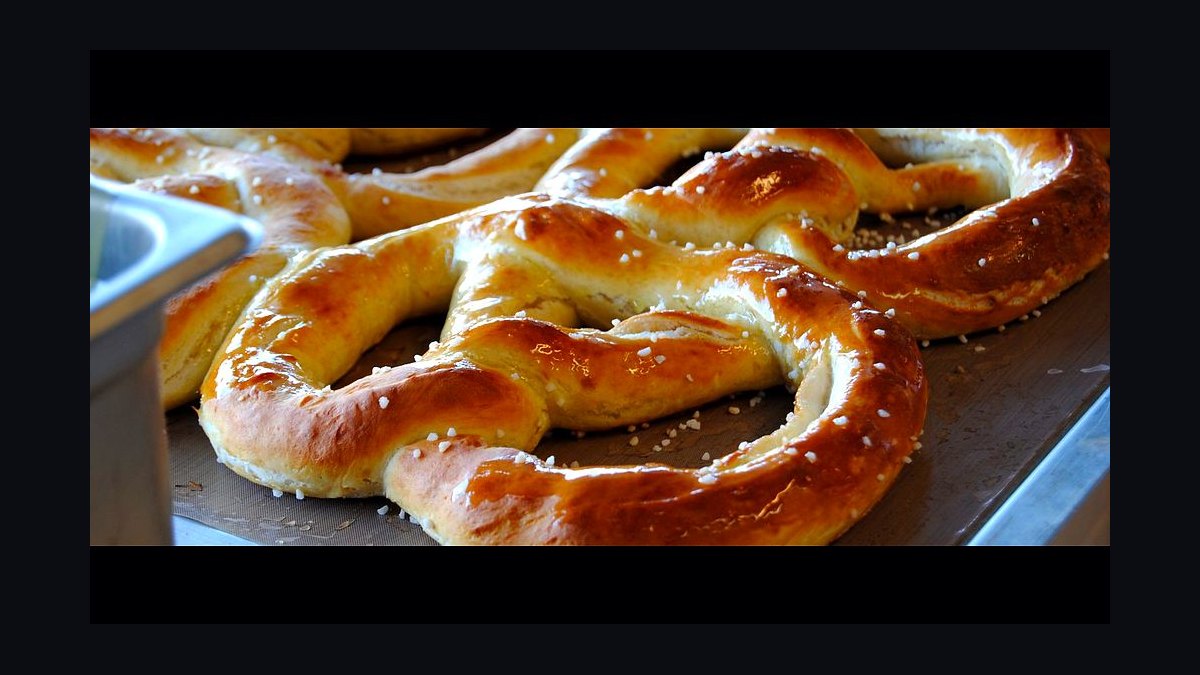
Realistic Year-1 owner-operator P&L at the $213,000 median AUV: $213,000 revenue, $59,640 food (28%), $57,510 labor (27%), $19,170 royalty (9% combined), $25,560 occupancy (12%), $14,910 other operating (7%) — leaving roughly $36,210 in pre-debt EBITDA, or 17%. After typical SBA 7(a) debt service on a $150,000 loan at 10.5% prime + 2.75% in 2027, owner cash sits closer to $15,000-$25,000 in Year 1, climbing to $45,000-$70,000 by Year 3 as the unit matures.
Who Wins With This Business
Operators with an existing Walmart or mall relationship win first. Ben's grew from a single Concord Mall kiosk in Elkhart, Indiana (2008) to 185+ locations largely by piggybacking on Walmart's in-store concession program. If you can secure a Walmart store-within-a-store lease before signing the FDD, your build cost drops to the $90,000-$140,000 floor and your traffic is essentially free and weather-proof.
Multi-unit operators win on the unit economics curve. A single unit at $213K AUV is a job, not a business. Operators running 3-5 units spread G&A across the portfolio, negotiate better food costs via consolidated flour orders, and centralize hiring. The franchisor explicitly discounts the franchise fee on units 2+, and multi-unit owners report EBITDA margins 4-6 points higher than single-unit owners.
Sports-venue and event-driven operators win on margin. Ben's has stadium and arena placements where ticket sizes run 40-60% higher than mall units and where 80% of revenue concentrates into game-day windows. If you can lease a venue concession slot, you can run with 1-2 employees per shift and post 22-26% EBITDA margins.

Owners who are physically present win. This is a scratch-baked product — pretzels are mixed, rolled, salted, and baked in front of the customer. Quality control is binary: a flat, pale, or oversalted pretzel kills repeat traffic. Operators who run 40+ hours/week on the floor in Year 1 outperform absentee owners by 30-50% on AUV.
Who Loses With This Business
Absentee investors lose money in this concept. The $213K median AUV does not support a full-time GM at $50K plus owner profit. Anyone planning to hire a manager from Day 1 and visit weekly will bleed $15-$25K in Year 1 before either selling at a loss or taking over operations personally.
Operators with weak venue selection lose. A Ben's unit in a dying Class B or Class C mall — the kind with sub-3 million annual visitors — generates $140K-$170K AUV, which does not cover royalties + rent + labor. The franchisor does not guarantee placement; you must independently source the lease, and mall vacancy rates hit 9.2% in Q1 2027 per Cushman & Wakefield.
Anyone needing $100K+ owner income from one unit loses. Even a top-quartile Ben's location at $280K AUV caps owner take-home around $70K-$85K after debt service. If your household budget requires more, you need 3+ units or a different concept.
Operators chasing trend-driven categories lose patience. Pretzels are a mature, low-growth snack category — IBISWorld pegs the soft pretzel segment at 1.8% CAGR through 2030. There is no viral-product upside here; the playbook is incremental store-count growth and operational discipline.
2027 Market Conditions
Mall traffic remains under pressure. ICSC reports specialty mall foot traffic down 4.1% YoY in Q1 2027, with Class B malls down 7.3%. Ben's is overweight in Class A and Walmart placements, which insulates the system, but a new franchisee chasing a Class B mall lease is buying a declining traffic curve.
Labor markets favor operators. The Q1 2027 BLS Job Openings report shows food-service quit rates at 4.1%, down from the 5.8% pandemic peak. Wage growth has cooled to 3.6% YoY. Operators can staff a unit at $15-$17/hour starting in most markets without the 2022-2024 hiring crisis premium.

Commodity costs are mixed. Wheat flour is down 8% YoY per USDA Economic Research Service (good for Ben's). Butter is up 14% YoY on continued dairy contraction (bad — Ben's uses cultured butter as a signature). Net food-cost impact is roughly flat to +1.5%.
Auntie Anne's still owns the category. With 1,950+ global locations and a Focus Brands parent (now part of GoTo Foods), Auntie Anne's is the default mall pretzel. Ben's competes by placing in Walmart, where Auntie Anne's has near-zero presence — that white-space remains the strongest argument for the brand in 2027.
SBA lending environment. Prime rate sits at 7.75% in June 2027 per Federal Reserve H.15; SBA 7(a) snack concepts price at prime + 2.75-3.25%. A $150K loan carries ~$1,800/month debt service — manageable, but tighter than the 2021-2022 lending window.
The 90-Day Decision Tree

- Days 1-15: Pull and read the 2026 FDD. Request directly from
benspretzelsfranchising.comor pull from FRANdata. Read Items 7, 19, 20, and 21 in that order. Item 21 (audited financials) tells you whether the franchisor is healthy enough to survive a recession. - Days 16-30: Secure your venue first. Cold-call your regional Walmart Realty contact (walmartrealty.com) and your top 3 mall leasing agents. No lease term sheet = no franchise application. This single rule eliminates 70% of bad Ben's deals.
- Days 31-45: Call 8-10 existing franchisees from Item 20. Ask three questions: (a) What is your actual AUV vs. the FDD median? (b) What did build-out really cost vs. the Item 7 range? (c) Would you sign again at today's terms?
- Days 46-60: Validate financing. Approach Live Oak Bank, Huntington, or your local SBA Preferred Lender. Get a soft commitment letter at your projected investment level. If banks won't lend, your unit economics are not bankable.
- Days 61-75: Build a 36-month pro forma at three AUV scenarios — $165K (downside), $213K (median), $260K (upside). If the downside case does not cover debt service, walk away.
- Days 76-85: Negotiate the franchise agreement. Push back on the territory radius (default is small), the renewal fee, and the transfer fee. A franchise attorney costs $3,000-$5,000 and regularly saves $20,000+ over the term.
- Days 86-90: Sign or walk. If you have a signed lease, bank commitment, validated unit economics, and a clean franchise agreement, sign. If any of the four is missing, walk and revisit in 90 days.
Alternative Plays

Auntie Anne's — 2x the AUV ($430K median) but 2.5x the investment ($200K-$540K) and a saturated mall footprint. Better unit economics, harder to find white-space.
Wetzel's Pretzels — Total investment $187,850-$471,300, stronger West Coast and theme-park presence, AUV in the $450K-$600K range at top units. Royalty 7%, comparable to Ben's.
Philly Pretzel Factory — Lower investment ($175K-$425K), East Coast concentration, AUV $400K-$500K at bakery-format stores that sell wholesale to schools and stadiums. Stronger B2B revenue mix.
Independent kiosk in a Walmart — Skip the franchise fee and royalty entirely. You lose brand recognition but keep 9 points of margin. Viable if you have a proprietary recipe and a Walmart Realty relationship.
Dunkin' or Jersey Mike's instead — Higher investment ($500K-$1.5M) but AUV in the $900K-$1.2M range with 18-24% EBITDA margins. The right call if you have $300K+ in liquidity and want a real income, not a side project.
FAQ
What is the total investment range for a Ben's Soft Pretzels franchise? The total investment typically falls between $160,000 and $450,000, depending on the unit type (inline, kiosk, or mobile). This includes the $30,000 franchise fee, equipment, build-out, and initial inventory, but you'll need $90,000–$345,000 in liquid capital to qualify.
How long does it take to break even? For a traditional inline unit, expect 18–30 months to recoup your initial investment. Mobile or kiosk formats can break even faster, in about 9–15 months, due to lower build-out costs and higher location flexibility.

Can I run this franchise as an absentee owner? Probably not. The franchisor typically requires an owner-operator model, especially in the first year. You'll need to be hands-on with daily operations, including staffing, inventory, and quality control, to hit the projected cash flow.
What are the ongoing fees? You'll pay a 7% royalty on gross sales and a 2% marketing fee. Combined, that's 9% of revenue, which is standard for the QSR industry but can squeeze margins given the median AUV of roughly $213,000.
How much can I realistically earn in the first year? Conservative Year-1 owner cash flow, after royalties, rent, labor, and debt service, lands in the $35,000–$65,000 range. This is meaningfully below average QSR earnings, so don't expect a six-figure income from a single unit.
Do I need to find my own location? The franchisor often provides leads for high-traffic venues like Walmarts, malls, or sports arenas, but you'll need to secure the location yourself. A strong venue lead from the franchisor can significantly improve your odds of success.
Bottom Line
Ben's Soft Pretzels in 2027 is a specific, defensible play for the right operator: someone with $120K-$200K in liquid capital, a Walmart Realty or mall leasing relationship, willingness to work the floor for 12-18 months, and a multi-unit growth plan. The single-unit median delivers a job, not a business — $213K AUV and $15K-$25K Year-1 owner take-home is below what most operators expect. The category is mature and slow-growth, the brand is smaller than Auntie Anne's or Wetzel's, and mall traffic is in structural decline. The reason to pick Ben's anyway is the Walmart white-space, the lower investment floor, and the multi-unit franchise-fee discounts that make the 3-5 unit path actually achievable. Anyone who needs $80K+ in Year-1 owner income, prefers absentee ownership, or doesn't already have a venue lead should pass and look at Wetzel's, Dunkin', or Jersey Mike's instead.
Sources
- Ben's Soft Pretzels Franchise Disclosure Document — FDD Items 7 & 19 (2026 filing)
- Sharpsheets — Ben's Soft Pretzels FDD, Profits & Costs Analysis (2025)
- Vetted Biz — Ben's Soft Pretzels Franchise Cost & Profit Exposed
- Franchise Payback — Ben's Soft Pretzels FDD, Costs & Fees (2026)
- Square Press Release — Ben's Soft Pretzels Drives Growth Across 185+ Locations
- Entrepreneur Franchise 500 — Ben's Soft Pretzels Listing 2026
- Franchise Chatter — 25 Substantial Fees Every Ben's Soft Pretzels Franchisee Needs to Know
- IBISWorld — Snack Food Production in the US (NAICS 31181)
- ICSC — US Mall Foot Traffic Quarterly Report Q1 2027
- BLS Producer Price Index — Limited-Service Restaurants 2027
- Cushman & Wakefield — US Retail Marketbeat Q1 2027
- Federal Reserve H.15 — Prime Rate June 2027
Related on PULSE
This page will be disappearing soon. Save it to your device for $1 — or read it free while it is here.
@Kory-White- · if Venmo asks, the last 4 of my number are 2012
This page is gone.
This one is off the shelf now. $1 keeps it on your phone for good — the whole page, pictures and diagrams included.
 franchiseShould I open or buy a Jiffy Lube franchise in 2027?
 franchiseShould I open or buy a Firehouse Subs franchise in 2027?
 franchiseShould I open or buy a Drybar franchise in 2027?
 franchiseShould I open or buy a Panera Bread franchise in 2027?
 franchiseShould I open or buy a Primrose Schools franchise in 2027?
 franchiseShould I open or buy a Whataburger franchise in 2027?
 franchiseShould I open or buy a Planet Fitness franchise in 2027?
 franchiseShould I open or buy a Mathnasium franchise in 2027?
 franchiseShould I open or buy an Ace Hardware franchise in 2027?
 franchiseShould I open or buy a Chipotle franchise in 2027?