


Should I open or buy a Cookies Crumbl alternative — Insomnia Cookies — franchise in 2027?
Quality
Certified
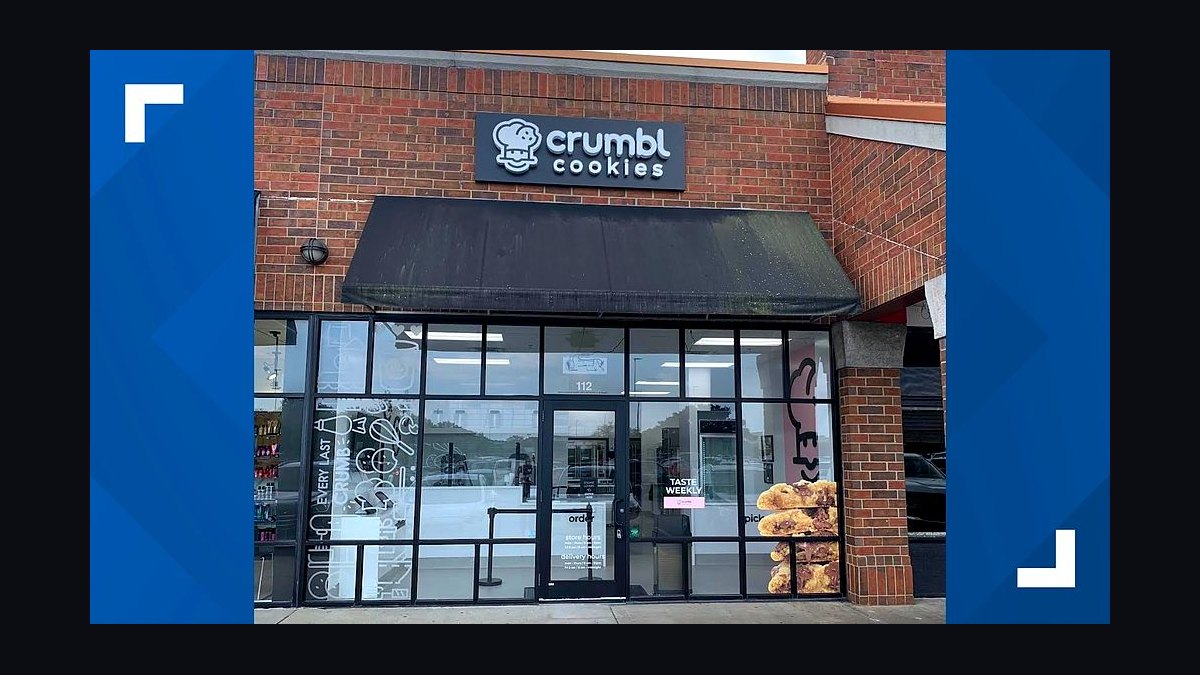
You cannot open a new Insomnia Cookies franchise in 2027 — the brand halted franchise awards in 2018 and operates corporate-only under Verlinvest and Mistral Equity Partners. Pursue an actively franchising alternative instead: Great American Cookies, Dirty Dough, or Crumbl, each with a current FDD and awardable territory.
The outcome you should expect
The realistic outcome of pursuing Insomnia Cookies in 2027 is a dead end followed by a pivot, and the sooner you accept that sequence the less money you burn on brokers, travel, and legal review of an agreement you will never be offered. Insomnia stopped awarding new franchises in 2018. Krispy Kreme took majority control of the brand and then sold its remaining stake back to Verlinvest and Mistral Equity Partners in mid-2025 — a fast round trip that tells you the owners view corporate-operated units as the more capital-efficient growth vehicle. Private equity sponsors who want unit-level EBITDA on their own balance sheet do not reopen franchise pipelines; franchising trades a large slice of store-level profit for someone else's capital, and Verlinvest and Mistral have the capital. Expect that posture to hold through 2027.
So the honest expected outcome splits three ways. Path one: you contact Insomnia, receive a polite no, and pivot to a brand that will actually sell you a territory. That is what happens to the overwhelming majority of prospects and it costs you about two weeks. Path two: you locate a pre-2018 legacy franchise unit that is genuinely for sale, negotiate a transfer, and buy into a contract you did not write, with a franchisor whose strategic interest is corporate expansion rather than franchisee support. These resales are rare, thinly marketed, and priced off trailing EBITDA rather than a published Item 7 range — assume a low- to mid-single-digit multiple of true seller's discretionary earnings once you strip out owner add-backs, and assume the franchisor must consent to the transfer and may impose current-form agreement terms as a condition. Path three: you decide you want exposure to the cookie category rather than to one specific logo, and you underwrite Great American Cookies, Dirty Dough, or Crumbl on their own merits.
Path three is where nearly every rational buyer lands, and it changes the question you are actually answering. You are no longer asking "how do I get Insomnia?" You are asking "which cookie franchise clears my hurdle rate at my capital level in my specific trade area?" Those are different diligence exercises with different failure modes. The first is a sourcing problem with essentially no supply. The second is an underwriting problem with real, documented, comparable data in front of you. Reframe early. Every week you spend chasing a brand that is not selling is a week your competitor spends locking the endcap you wanted.

Set your expectation for economics accordingly. A well-sited cookie unit in the right trade area is a real business with real margin, but it is not a passive annuity. Mature store-level EBITDA in this category typically lands in the low-to-high teens as a percentage of sales after royalty, brand fund, rent, labor, and third-party delivery commissions — and the bottom quartile of almost every system in this segment operates near break-even. Underwrite to the bottom quartile, not the system average, because the system average is arithmetic and your store is a specific address.
What drives that outcome
Four variables move cookie-franchise outcomes far more than brand selection does, and understanding them is what separates a disciplined buyer from someone chasing a logo.
Trade-area demographics and daypart. This category monetizes impulse and celebration, heavily weighted to evenings and weekends, with a pronounced skew toward the 18–34 cohort. Insomnia built its entire brand on late-night delivery to college campuses for exactly that reason. A unit inside a one-mile radius of a large university, a dense young-professional residential cluster, or a high-traffic entertainment corridor behaves like a different business than the same brand in a 55-plus median-age suburban strip center. When you evaluate a site, buy third-party mobility and trade-area data rather than relying solely on the franchisor's site-selection deck — the franchisor is incentivized to approve sites because royalty accrues on gross sales, not on your profit.

Royalty plus brand fund drag. Combined franchisor take in this segment generally runs somewhere between six and ten percent of gross sales once you add the ongoing royalty to national and local marketing obligations. On a store doing $700,000, each additional percentage point of combined fee is $7,000 of pre-tax profit gone permanently. That is why the spread between a six-percent-royalty brand and an eight-percent-royalty brand is not a rounding difference — at scale it is the difference between an owner salary and a hobby.
Third-party delivery mix and commission structure. Cookie shops over-index on delivery aggregators because the product travels well and the order is impulse-driven. But aggregator commissions on marketplace orders are punishing, and every point of sales mix shifting from walk-in to marketplace delivery compresses contribution margin. The operators who win either negotiate lower-rate first-party delivery integrations, push hard on their own app and loyalty program, or accept delivery as a customer-acquisition channel rather than a profit channel and manage the mix deliberately.
Input cost volatility. Butter, sugar, and especially cocoa have been volatile, and cocoa in particular has seen severe supply-driven price pressure in recent years. A cookie shop's cost of goods is concentrated in exactly those inputs. Build your pro forma with a COGS sensitivity band rather than a point estimate, and ask franchisees directly what their food cost percentage did over the last eight quarters.
The diagram above compresses the decision, but the branch that matters most is the one people skip: the loop back through franchisee validation. Item 19 in a Franchise Disclosure Document is a financial performance representation, and franchisors have wide latitude in how they construct it — which units are included, whether corporate stores are blended in, whether immature units are excluded, whether it reports gross sales only with no cost lines. A system average of $700,000 in gross sales tells you almost nothing about what a new franchisee nets in year two. The franchisee call list in Item 20 is the correction mechanism. Use it.
Benchmarks and realistic ranges

Treat every figure below as a band to test against a specific brand's current FDD, not as a quote. Franchise economics change year over year, and the only numbers you should act on are the ones in the disclosure document the franchisor hands you, cross-checked against operators you called yourself.
Initial investment. The cookie segment spans a wide range depending on format. A mall kiosk or small inline unit sits at the low end of the range. A full retail bakery build with a large display case, substantial oven capacity, and a prominent endcap position sits materially higher — a high-spec build in an expensive real estate market can approach or exceed seven figures all-in. Legacy Insomnia units were built as small late-night formats, historically in the several-hundred-to-twelve-hundred square foot band; anyone acquiring one today should price construction and equipment at current market, not at an archived Item 7 from before 2018.
Initial franchise fee. Fees in this segment typically run in the tens of thousands of dollars for a single unit, with discounts common for multi-unit development agreements and for veterans. The fee is the least important number in your model. It is a one-time cost; the royalty is forever.
Ongoing fees. Expect a royalty in the mid-to-high single digits of gross sales plus a brand fund contribution of roughly two to three percent, sometimes with an additional local advertising spend requirement. Read whether the local requirement is a floor you must document or a soft suggestion — a documented two-percent local spend obligation is a real, budgetable line item.

Unit volumes. Average unit volumes across this category range widely. Emerging systems with mostly young units report lower AUVs than mature systems, partly because immature units drag the average and partly because brand awareness compounds. High-profile cookie brands have reported AUVs well into seven figures; regional and value-format brands report substantially less. The critical number is not the average but the distribution: ask specifically what the bottom quartile generates. If a franchise development representative will not or cannot answer that question, escalate to franchisees.
Store-level margin. After royalty, brand fund, occupancy, labor, and delivery commissions, mature cookie units in this segment commonly land somewhere in the ten-to-twenty percent store-level EBITDA range. Independent operators without royalty drag can run higher, which is a genuine consideration if you have local brand-building ability — you trade the franchisor's playbook, supply chain, and marketing muscle for six to ten points of margin.
Working capital. Item 7 estimates routinely understate the cash you actually need. Plan for three to six months of full operating expense coverage held separately from the build budget, and add a contingency of roughly a quarter to a half above the Item 7 midpoint. Construction delays, permitting, equipment lead times, and a slow ramp after the grand-opening bump all consume cash on a schedule nobody forecasts accurately.
Payback. Realistic simple payback in this category runs from roughly two and a half years at the low-investment, high-volume end to five years or more at the high-investment end. Anyone promising a two-year payback on a million-dollar build is selling, not underwriting.
Financing. Most established franchise brands appear on the SBA Franchise Directory, which streamlines 7(a) eligibility. Expect a lender to require meaningful equity injection, personal guarantees, and often collateral beyond the business assets. Get a term sheet before you sign a franchise agreement, not after.
Risks, edge cases, and failure modes
The broker who tells you Insomnia is available. Franchise brokers and consultants are paid by franchisors, typically a commission on each unit sold. A broker who claims a corporate-only brand is awarding units is either uninformed or steering you. Verify directly with the franchisor in writing, and treat the broker's credibility as damaged regardless of the explanation.
Category maturity and novelty decay. The gourmet cookie segment expanded rapidly on the back of social-media-driven rotating-menu novelty. Novelty-led concepts historically see comp sales normalize as the initial cultural moment cools and as unit density increases within the same trade areas. When you underwrite, do not extrapolate peak-year comps forward. Ask franchisees what their same-store sales did in each of the last three years, and ask specifically whether new units opened near them and what that did to their volume — encroachment protection in your territory clause is one of the highest-leverage things you can negotiate.
Legacy-agreement risk on an Insomnia resale. If you do find a resale, the risks are specific and severe. The franchisor must typically consent to transfer, and consent is often conditioned on the buyer signing the franchisor's *current* form of agreement — which, for a brand that no longer franchises, may not meaningfully exist or may be rewritten unfavorably. There may be a right of first refusal letting the franchisor buy the unit out from under you at your negotiated price. Term and renewal rights may be short or nonexistent, meaning you are buying a wasting asset. Support obligations for a legacy franchisee inside a corporate-only system are structurally weak — you will be an orphan account. Have a franchise attorney read the actual agreement and the transfer provisions before you spend anything on valuation work.

Delivery-channel dependency. If more than a third of your volume comes through marketplace aggregators, you do not own your customer, you rent them at a high commission, and a platform algorithm change can move your revenue double digits overnight. Build first-party ordering and a loyalty program from day one.
Labor in a late-night model. The late-night daypart that makes cookie delivery work is the hardest shift to staff and the most expensive to supervise. Absentee ownership fails in this category more often than in almost any other, because the daypart with the best margin is the one you are least likely to personally cover. Budget for a general manager and an assistant manager as W-2 hires before you open, not after.
Single-unit economics versus development agreements. A single unit carries the full weight of your management overhead. Multi-unit operators amortize a district manager, shared prep, shared marketing spend, and shared administrative cost across three or more locations, which is why multi-unit franchisees in most systems out-earn single-unit owners on a percentage-margin basis. If your capital only supports one unit, be honest that you are buying yourself a job, and price your own labor into the pro forma.
Real estate is the dominant variable. Most cookie-franchise failures I would expect to see trace back to a site that never had the traffic, the visibility, or the demographic to support the volume — not to a bad brand or a bad operator. Rent as a percentage of sales is the tell: if your projected rent exceeds roughly eight to ten percent of your realistic sales forecast, the site is probably too expensive or the forecast is too optimistic.
A practical rollout plan
Work the following sequence and do not skip stages, even when a franchise development rep pressures you with territory-scarcity language. Scarcity pressure is a sales technique.
Weeks 1–2: kill the Insomnia question in writing. Contact Insomnia Cookies' corporate franchising channel directly and get a written confirmation of their franchising posture. File it. This single email ends every future argument with a broker and gives you a clean record if you later revisit a resale. Simultaneously, if you specifically want the Insomnia brand, ask directly whether any legacy franchise units exist in your region and whether the franchisor maintains any transfer or resale listing process.
Weeks 2–4: pull and read the alternatives' FDDs. Request current Franchise Disclosure Documents from each brand you are seriously considering. Read Item 7 (estimated initial investment), Item 19 (financial performance representations, including the footnotes — the footnotes are where the exclusions live), Item 20 (outlet tables and the franchisee contact list, including *departed* franchisees), and Item 21 (the franchisor's audited financials). Item 20's turnover table is the most underrated page in the document: a system with heavy terminations and non-renewals relative to openings is telling you something the marketing deck is not.
Weeks 3–6: call franchisees, including former ones. Target twelve to fifteen current operators per brand, plus every departed franchisee you can reach. Ask a consistent script: What did you actually invest, all-in, versus Item 7? What is your current annual gross? What is your store-level EBITDA after royalty and delivery commissions? What percentage of sales is aggregator delivery? What did comps do the last three years? Would you sign again? What surprised you? What is the bottom quartile in your region doing? Franchisees are candid on the phone in a way no document is.
Weeks 6–10: site selection and territory terms. Engage a tenant-rep broker who works for you, not the franchisor. Pull independent trade-area and mobility data. Model rent as a percentage of a conservative sales forecast. In parallel, negotiate territory language: radius protection, encroachment remedies, and what happens if the franchisor opens a corporate unit or a nontraditional location nearby.
Weeks 8–12: financing and legal. Get a lender term sheet with the equity injection, rate, term, and collateral requirements spelled out. Have a franchise attorney — one who reads FDDs weekly, not a generalist — review the agreement and mark the negotiable clauses. Some franchisors negotiate more than prospects assume, particularly on development schedules and transfer fees.
Weeks 12–16: sign, build, and staff ahead of opening. Hire your general manager early enough to send them through franchisor training and to be present during build-out and equipment commissioning. Open with a fully staffed schedule, because the grand-opening bump is the one time you get free trial traffic and a bad first experience during it is expensive to undo.
The plan front-loads the cheap work. Everything through week six costs you time, document fees, and phone calls. Nothing irreversible happens until you sign a lease or a franchise agreement, and by then you should have heard the unvarnished version of the business from a dozen people who already own one.
Related questions
Can I buy an existing Insomnia Cookies location directly from the company?
Corporate-operated locations are company assets and are not generally sold to individuals. A refranchising program would be a strategic decision by the ownership group; absent a public announcement of one, assume corporate units are not for sale.
Is Crumbl a better choice than Great American Cookies?
Neither is universally better. Crumbl carries a higher investment and higher reported volumes; Great American Cookies is a lower-cost entry with a long operating history and proven mall economics. Match the brand to your capital, your trade area, and your risk tolerance.
How much cash do I actually need beyond the franchise fee?

Plan on the full Item 7 midpoint plus twenty-five to fifty percent contingency, plus three to six months of operating expenses held separately. Under-reserved working capital is the most common cause of early-stage franchise distress.
Does the SBA finance cookie franchises?
Most established franchise brands appear on the SBA Franchise Directory, which makes 7(a) loans available for eligible borrowers. Expect a substantial equity injection requirement, personal guarantees, and collateral pledges. Verify a specific brand's directory listing before assuming eligibility.
Should I consider an independent cookie shop instead?
It is a legitimate alternative. You keep the six to ten points of royalty and brand fund drag, but you build brand, supply chain, recipes, and marketing yourself. Choose it only if you have genuine local marketing ability and operating experience.
FAQ
Why did Insomnia Cookies stop franchising?
The company shifted to a corporate-operated growth model in 2018 and has maintained it through subsequent ownership changes. Corporate operation keeps full unit-level profit with the parent, which suits a private-equity-backed growth strategy funded by sponsor capital rather than by franchisee investment. Verlinvest and Mistral Equity Partners hold the brand today, following Krispy Kreme's acquisition of majority control and its subsequent sale of the remaining stake back to those sponsors in 2025.
Could Insomnia reopen franchising before 2027 ends?

It is possible but not something to plan around. Brands do reverse course, usually when they need third-party capital to accelerate unit growth or want to enter markets where local operators have an advantage. If it happens, it will be publicly announced with a new FDD registered in the franchise-registration states. Until an FDD exists, there is nothing to buy.
What is the single most important number in a cookie franchise FDD?
The bottom-quartile performance figure, if it is disclosed, and the Item 20 turnover table if it is not. Averages hide the tail. A system where the bottom twenty-five percent of units barely break even is a system where a mediocre site ruins you, regardless of how attractive the headline AUV looks.
How much does delivery commission really affect profitability?
Materially. Marketplace aggregator commissions consume a large share of the order value on every delivered order, so contribution margin on aggregator sales is far below walk-in margin. If aggregator orders grow from ten percent to forty percent of mix without a price adjustment, store-level margin compresses noticeably. Manage the mix deliberately and build first-party ordering.
Is a college-town location genuinely better?
Generally yes for this category, because the product's core demographic and its strongest daypart both concentrate there. The trade-off is seasonality — summers and semester breaks can cut volume sharply, so your annual pro forma needs a seasonality curve rather than a flat monthly average, and your labor model needs to flex.
What should I do first if I only have one hour?
Email Insomnia's franchising contact for written confirmation of their posture, then request the FDD from the one alternative brand that best matches your capital. Those two actions cost nothing, take under an hour, and replace weeks of speculation with documents.
Sources
- https://www.insomniacookies.com/
- https://www.sec.gov/cgi-bin/browse-edgar?action=getcompany&company=krispy+kreme&type=10-Q&dateb=&owner=include&count=40
- https://www.ftc.gov/business-guidance/resources/franchise-rule-compliance-guide
- https://www.ftc.gov/business-guidance/resources/consumers-guide-buying-franchise
- https://www.sba.gov/document/support-sba-franchise-directory
- https://www.franchise.org/
- https://www.crumblcookies.com/franchising
- https://greatamericancookies.com/franchising/
- https://www.qsrmagazine.com/
- https://www.nrn.com/
Related on PULSE
- Should I open or buy an Insomnia Cookies franchise in 2027?
- Should I open a Crumbl Cookies franchise in 2027?
- Should I open or buy a Crumbl Cookies franchise in 2027?
- Should I open or buy an Arby's alternative — Roast House — franchise in 2027?
- Should I open or buy a Subway alternative — Schlotzsky's — franchise in 2027?
- Should I open or buy a Tropical Smoothie Cafe alternative — Frutta Bowls — franchise in 2027?
This page will be disappearing soon. Save it to your device for $1 — or read it free while it is here.
@Kory-White- · if Venmo asks, the last 4 of my number are 2012
This page is gone.
This one is off the shelf now. $1 keeps it on your phone for good — the whole page, pictures and diagrams included.
 franchiseShould I open or buy a Bruster's Real Ice Cream franchise in 2027?
 franchiseShould I open or buy an Anytime Fitness franchise in 2027?
 franchiseShould I open or buy a Pizza Hut franchise in 2027?
 franchiseShould I open or buy a Whataburger franchise in 2027?
 franchiseShould I open or buy a Roto-Rooter franchise in 2027?
 franchiseShould I open or buy a Massage Envy franchise in 2027?
 franchiseShould I open or buy a Cold Stone Creamery franchise in 2027?
 franchiseShould I open or buy a Big O Tires franchise in 2027?
 franchiseShould I open or buy a Culver's franchise in 2027?
 franchiseShould I open or buy a Jamba franchise in 2027?