


Should I open or buy a HuHot Mongolian Grill franchise in 2027?
Quality
Certified

Probably not as a first-time single-unit buyer. HuHot Mongolian Grill costs roughly $782,000 to $1,219,000 all-in for a traditional unit with a $40,000 fee, 5% royalty, and 0.5% marketing fee, inside a shrinking all-you-can-eat category. Buy only with captive college, military, or mountain-west demand, second-generation real estate, and multi-unit operating experience.
The kitchen-table scenario that frames the whole decision
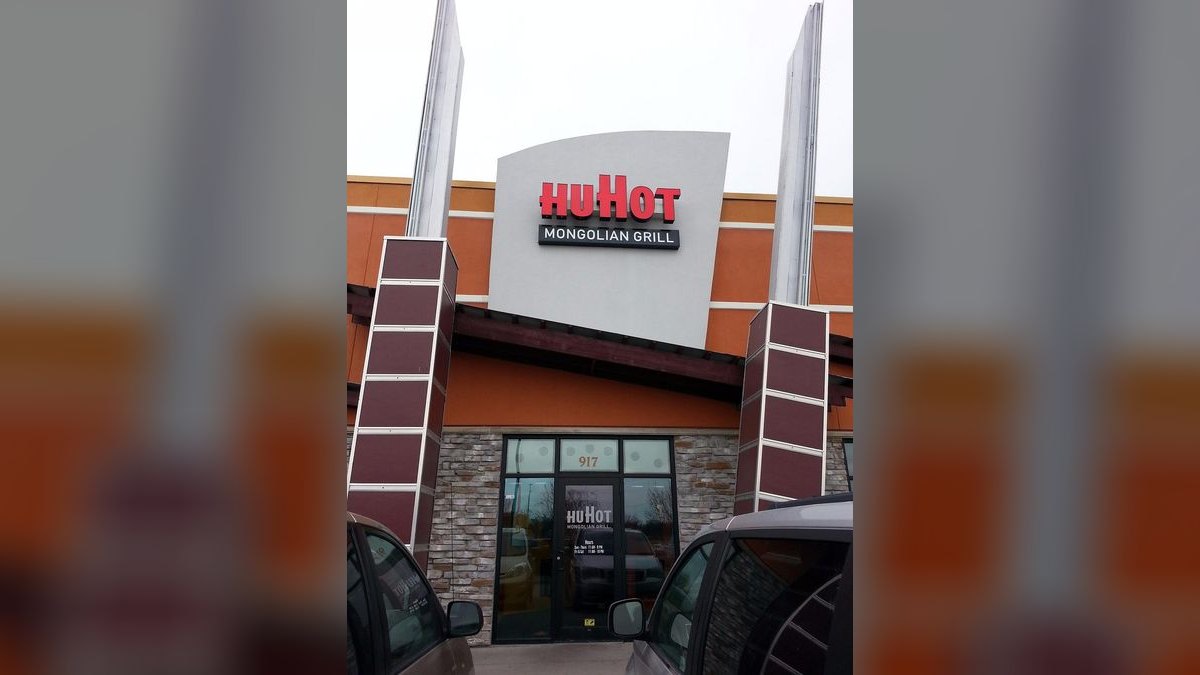
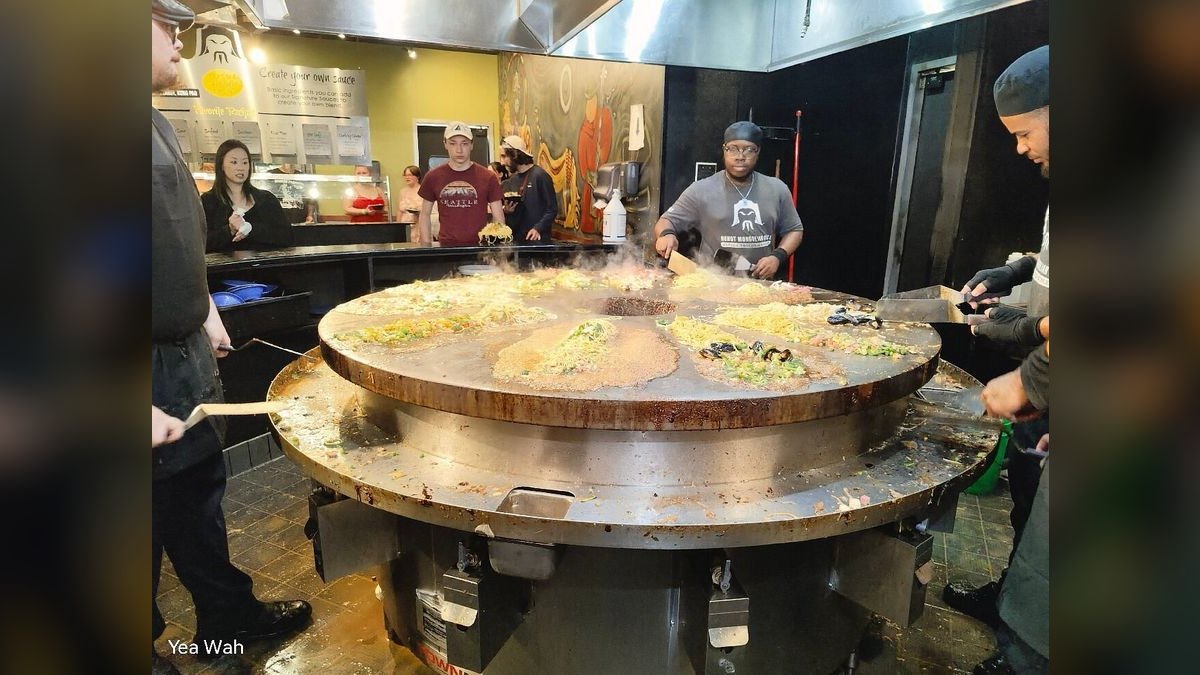
Picture a specific buyer, because abstractions hide where these deals actually break. A 44-year-old operator in Sioux Falls has run a single casual-dining store for nine years, has $420,000 liquid after a partial exit, and owns nothing. He sees a HuHot on a Saturday night in a college town with a forty-minute wait and a line of families stacking bowls at the grill island, and he thinks: this is a machine. He requests the Franchise Disclosure Document, reads that a traditional unit runs 4,500 to 5,500 square feet, that the total investment lands somewhere between $782,000 and $1,219,000, and that he needs a $1,000,000 net worth to qualify. The numbers feel survivable. He starts touring second-generation boxes.
Here is where the scenario turns. The Saturday-night line he saw is the peak of a weekly demand curve that flattens badly Monday through Thursday. Mongolian grill is an occasion format — group dinners, birthdays, post-game, payday — and occasion formats concentrate revenue into six or eight shifts a week while paying rent, insurance, and salaried management across all twenty-one. His mental model was built from the single hour of the week where the concept looks unstoppable. If he underwrites off that hour, he builds a cost structure sized for $1.7M in sales and gets a store that does $1.3M.
Now change one variable. Same operator, same market, but he finds a shuttered buffet box with an intact hood system, walk-in cooler, dish pit, and grease trap, and he negotiates a landlord tenant-improvement allowance because that box has been dark for fourteen months. His build-out drops several hundred thousand dollars, his debt service drops proportionally, and suddenly a $1.3M store throws off real owner earnings instead of feeding a bank. Nothing about the brand changed. The real estate changed. That is the actual lesson of nearly every restaurant franchise decision: the concept sets your ceiling, the occupancy cost sets your floor, and most buyers spend ninety percent of their diligence time on the ceiling.
The third version of this scenario is the one nobody wants: he skips validation calls because the franchisor's list is warm and friendly, signs in a dense Sun Belt metro where Korean barbecue, hot pot, pho, and Indian buffets already own the all-you-can-eat occasion, and discovers in month eight that his trade area treats a Mongolian grill as a mid-tier compromise rather than a destination. The unit does not fail dramatically. It just never clears debt service, and he spends four years working for a lender.
How the unit economics actually mechanize
The mechanism is worth walking slowly, because franchise marketing describes revenue and franchise reality is decided by what survives after four fixed claims on that revenue.
Start with gross sales. Every dollar of revenue at a HuHot passes through the same stack: cost of goods, labor, occupancy, and franchise fees. Food and paper in a create-your-own stir-fry format typically runs 30% to 33% of sales, and that band is wider than it looks because all-you-can-eat exposes you to consumption variance you cannot price around. A table of four teenagers and a table of four retirees pay the same check and cost you wildly different protein. Beef, sirloin, and shrimp are the proteins guests load heaviest, and those are precisely the proteins with the most upstream volatility. When cattle supply tightens, your food cost moves and your menu price does not — not immediately, because in an all-you-can-eat format a price increase is a visible, symbolic act that guests notice far more sharply than a fifty-cent bump on an à la carte entrée.
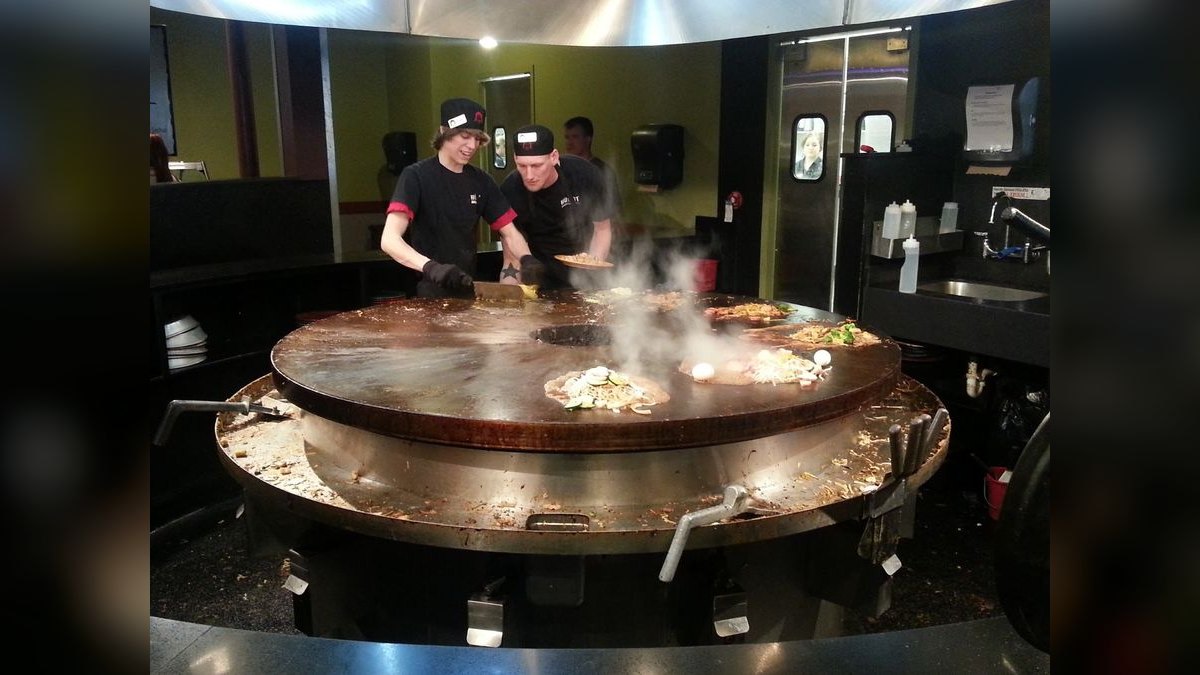
Labor is the second claim. A traditional unit runs a grill line, a prep line, a front-of-house rotation, and salaried management, generally landing in the 30% to 34% range including managers. The grill island is a fixed labor cost: it must be staffed whenever the doors are open, regardless of whether twelve or ninety guests walk in. That is why the format punishes slow dayparts so severely — your variable cost structure is less variable than it appears.
Occupancy is the third and the one you control most at signing and least afterward. Somewhere between 7% and 10% of sales is the workable band. New construction at aggressive per-square-foot rates on a 5,000-square-foot box can push a store to 12% or higher, and that is where units quietly become unrescuable. You cannot operate your way out of occupancy. You can only sign your way out of it.
Fees are the fourth claim: 5% royalty plus 0.5% national marketing on gross sales, taken off the top regardless of profitability. On a $1.4M store that is roughly $77,000 a year leaving before you have paid yourself anything.
What remains is restaurant-level EBITDA, and in this segment a realistic band is 8% to 14% for traditional units. Then debt service comes out of that. This is the step first-time buyers consistently skip: restaurant-level EBITDA is not owner earnings. A $950,000 project financed with a seven-year SBA note carries real monthly principal and interest, and that payment is indifferent to your same-store sales trend.
Read that chain backward and you get the underwriting rule: pick the debt service you can survive at a pessimistic sales number, then work upward to the project cost you are allowed to sign, then find real estate that fits. Most buyers run it forward — they fall in love with a site, accept the build cost, and hope sales cover it.
Real numbers, ranges, and what to benchmark against
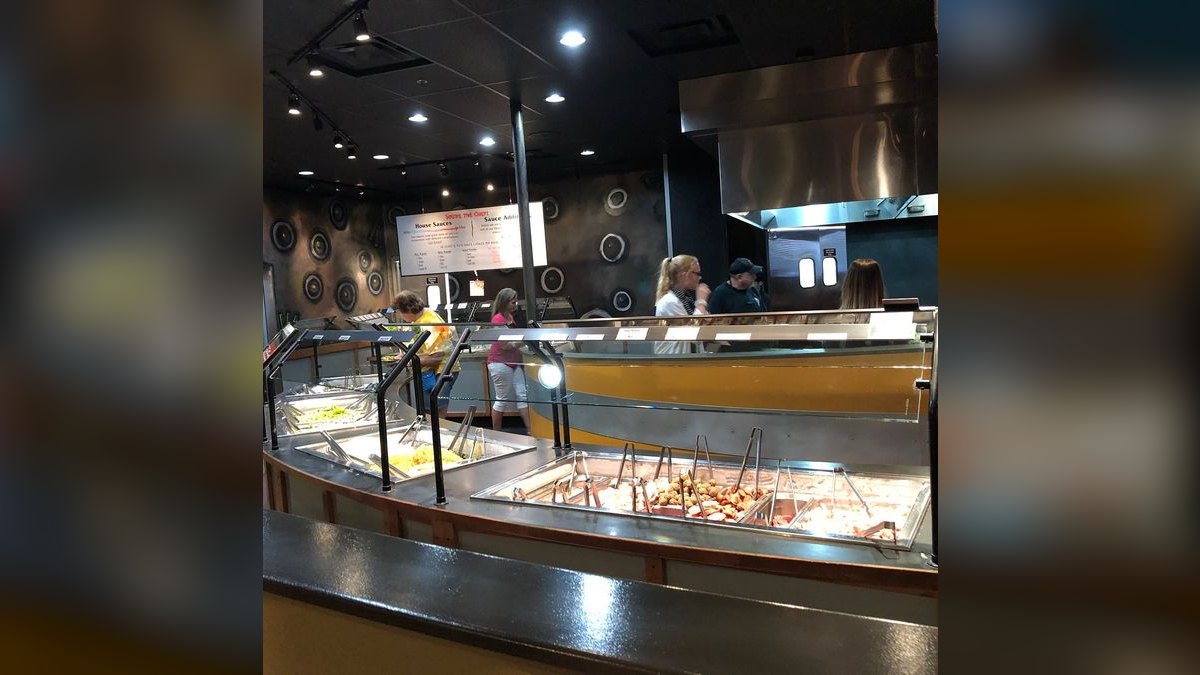
The disclosed figures are the starting point, not the analysis. A traditional HuHot Mongolian Grill franchise carries a $40,000 initial franchise fee and a total initial investment in the $782,000 to $1,219,000 range covering build-out, the grill island and kitchen equipment, signage and smallwares, opening inventory, training and travel, and a working capital reserve. An Express format at roughly 2,000 to 2,500 square feet starts materially lower, near $487,000, because you are buying less box and less equipment. Liquidity requirements sit in the low-to-mid six figures with a $1,000,000 net worth threshold. Ongoing: 5% royalty, 0.5% national marketing.
The revenue side is where diligence has to get aggressive. The widely circulated average unit volume figure of roughly $1.74M traces to a 2020 interview with the founder, not to a current, audited financial performance representation. That distinction matters enormously. An Item 19 FPR is a regulated disclosure with defined methodology; a magazine quote from six years ago is a data point about a different economy, a different labor market, and a pre-pandemic dine-in occasion pattern. If the current FDD does not contain a full system-wide FPR, treat the absence itself as information and build your model from validation calls instead.
Practical benchmarking targets to hold in your head while you make those calls:
- Base case, not best case. Model $1.3M to $1.5M in Year-1 sales for a traditional unit in a decent but non-captive trade area. If the deal only works at $1.7M+, it is not a deal, it is a bet.
- Cost-to-sales ratio. A useful franchise screen across restaurant concepts is total project cost divided by expected first-year sales. Below 0.6 is attractive. Between 0.6 and 0.8 is workable with discipline. Above 1.0 — spending $1.1M to generate $1.0M — is where payback stretches past the useful life of your equipment.
- Payback. At 8% to 14% restaurant EBITDA on a $1.4M store, you are generating roughly $110,000 to $195,000 before debt. Against a $900,000+ project, unlevered payback realistically runs five to eight years for traditional units, faster for Express formats where the denominator is half the size.
- Break-even timing. Twenty-four to thirty-six months to true cash break-even including debt service is a sane expectation. Anyone promising twelve is describing an outlier.
- Ramp shape. Restaurant openings usually see an eight-to-twelve-week honeymoon of inflated volume, then a decline of 15% to 30% off peak before settling. Underwrite the settled number. Franchisees who staff and inventory to honeymoon volume burn working capital right at the moment sales normalize.
- Reserve. Fifteen months of personal living expenses held completely outside the deal. Not in the working capital line. Outside it.
Cross-check every one of these against comparable segments rather than against HuHot alone. Fast-casual concepts with build-your-own formats and strong lunch mixes tend to clear higher restaurant EBITDA than all-you-can-eat formats, largely because portion control is priced rather than unlimited and food waste is more predictable. Better-burger and salad-bowl concepts in a similar capital band frequently underwrite to tighter cost-to-sales ratios. That does not make HuHot a bad business; it means your hurdle rate for saying yes should account for the category headwind you are accepting.
One more number that gets ignored: resale economics. Small restaurant businesses commonly trade on a multiple of seller's discretionary earnings in the low single digits. If a healthy existing unit with real cash flow can be acquired for meaningfully less than the cost of building new, and it comes with a proven trade area, a trained crew, and a sales history you can actually verify, that is usually the superior entry. Building new means paying full price for an unproven site. Buying existing means paying for evidence.
Trade-offs, adjacent plays, and the paths around the obvious deal
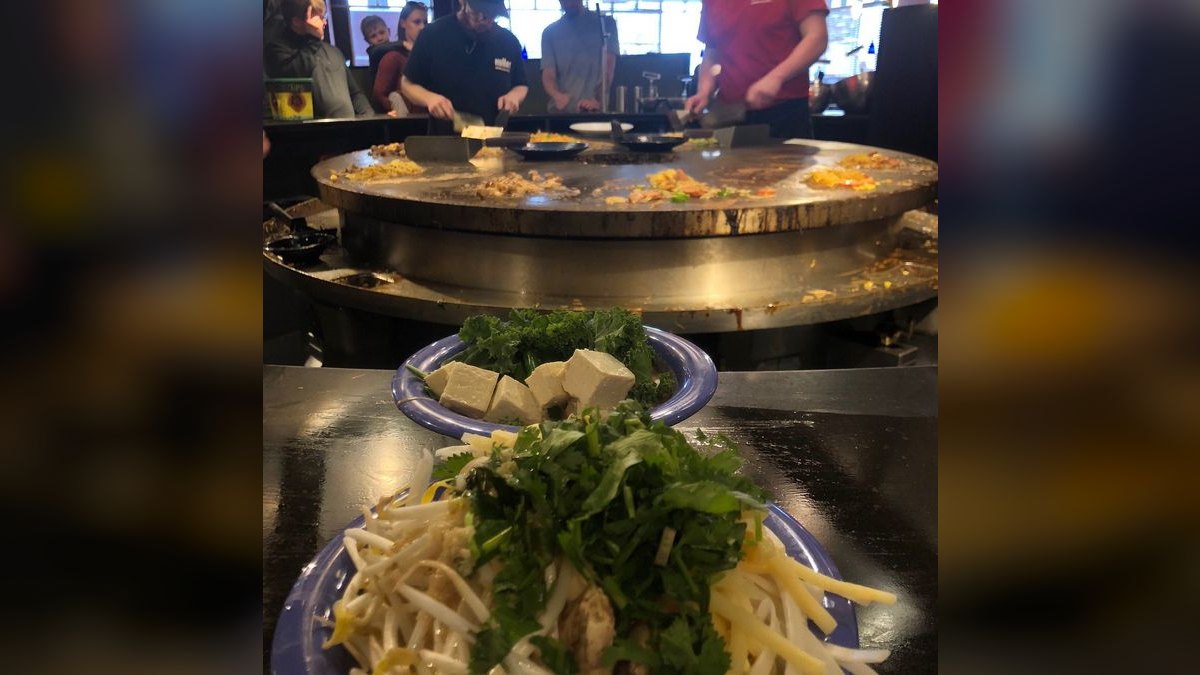
The binary framing — open a HuHot or don't — is the wrong frame. There are at least six distinct positions available, and they carry very different risk profiles.
Build new, traditional format. Highest capital, highest control over site and layout, longest payback. Only rational with second-generation real estate or a landlord contributing heavily to tenant improvements. The capital difference between a raw shell and a former restaurant box with usable infrastructure is the single largest swing factor in the entire model.
Build new, Express format. Roughly half the capital, smaller box, quicker-service operation, lower absolute ceiling but a much friendlier payback ratio. Express formats fit captive-traffic environments — campus adjacency, transit-heavy corridors, dense office nodes — where a limited footprint is an advantage rather than a compromise. For a first-time franchisee determined to enter this brand, Express is the lower-variance entry.
Buy an existing unit. You purchase verified revenue, an existing crew, and a known trade area, and you skip construction risk entirely. The trade-off is that motivated sellers are motivated for reasons, and the diligence burden shifts from site analysis to forensic accounting — three years of tax returns, POS exports, vendor invoices, and labor records, not the seller's spreadsheet.
Multi-unit development agreement. Committing to several units unlocks territory protection and lets you spread a general-manager bench, a bookkeeper, and a marketing spend across more revenue. Overhead absorption is the actual reason multi-unit operators outperform single-unit operators in nearly every franchise system; it is not that they are smarter, it is that their fixed costs have more denominators. The trade-off is that you have signed up for a category you may want to exit in year three.
Adjacent franchise concepts in the same capital band. Bowl-format fast-casual, better-burger, chicken-focused, and salad concepts frequently sit in a comparable $500,000 to $1.1M range with published Item 19 disclosures. A franchise with a robust FPR is not automatically a better business, but it is a better-informed decision, and information asymmetry is the thing that hurts first-time buyers most.
Independent concept. Skip the fee and the 5.5% ongoing take, keep those points of margin, and accept that you now own brand-building, supply chain, recipe development, and marketing yourself. For an experienced operator in a market that already knows them, this can pencil better than any franchise. For someone who has never run a restaurant, the franchise system's operating manual is worth every point it costs.
The decision tree is deliberately unkind to the middle path — new build, new market, first-time operator, no real-estate advantage. That combination is where the losses concentrate across essentially every restaurant franchise category, not just this one.
Pitfalls that repeat across buyers, and the countermeasures
Underwriting to the headline average unit volume. The most common and most expensive error. A system average includes the flagship units in the brand's strongest legacy markets. Your unit is not the average until it proves it is. Countermeasure: build the model at 75% to 85% of any published average, and require the deal to work there.
Treating the franchisor's referral list as validation. Franchisors hand out their happiest franchisees. Countermeasure: pull the full current-and-former franchisee list from Item 20 and cold-call a random sample — eight to twelve current operators and, more importantly, three to five who left. Former franchisees give you the failure mechanics. Ask blunt questions: actual first-year sales, actual food cost percentage, actual labor percentage, how long to positive cash flow, and whether they would sign again at today's build costs.

Missing the closure history. Item 20 contains a multi-year table of openings, closures, transfers, and terminations. A system with steady transfers and closures in a specific region is telling you something about that region. Countermeasure: map the closures geographically and see whether they cluster in a trade-area type that resembles yours — enclosed malls, saturated metros, high-rent new construction.
Ignoring the enclosed-mall exposure. Formats that grew up as mall anchors face a structural traffic problem that no operator skill fixes. Countermeasure: prefer freestanding, end-cap, or lifestyle-center positions with independent street visibility and their own parking. If a site's traffic depends on someone else's anchor tenant, you have outsourced your revenue to a landlord's leasing department.
Skipping the category-history homework. The Mongolian grill format is decades old in the U.S., and several chains in this exact niche have contracted sharply over the last two decades. That history is not a prediction, but it is a signal about how the format ages once novelty wears off. Countermeasure: assume Year-2 and Year-3 same-store sales decline unless you actively add revenue layers — catering, packaged lunch service, group and team bookings, a functioning loyalty program, third-party delivery where margin allows.
Under-reserving working capital. The three-month working capital line in the investment table is a minimum, not a plan. Openings run over, permits slip, and the sales ramp settles below the honeymoon. Countermeasure: fund six months of operating costs, and hold personal living expenses entirely separate.
Absentee ownership. In a format where food cost swings on guest consumption and labor must cover a fixed grill line, the difference between an owner on the floor and a hired manager is frequently several points of margin. Countermeasure: plan to be in the building for at least the first eighteen months, or do not buy.

Signing the lease before the loan. A signed lease with no financing is a personal guarantee attached to an empty box. Countermeasure: sequence it — franchise approval, financing pre-approval with two competing term sheets, then a letter of intent with a financing contingency, then the lease.
Neglecting the exit before the entry. Franchise agreements have terms, renewal fees, remodel obligations, and transfer approval requirements. A mid-term mandated remodel can consume a year of profit. Countermeasure: read the remodel and renewal clauses as carefully as the fee schedule, and price a future remodel into your model from day one.
Related questions
Is buying an existing HuHot better than opening a new one?
Usually yes for a first-time operator. You acquire proven revenue, a trained crew, and a validated trade area instead of paying full construction cost for an unproven site. Demand three years of tax returns and POS exports, and verify why the seller is selling.
How much liquid capital do I actually need beyond the disclosed minimum?
Add roughly six months of operating expenses plus fifteen months of personal living costs held outside the business. The disclosed three-month working capital figure assumes an on-time opening and a normal ramp — two things that frequently do not happen together.
Does the Express format change the risk profile meaningfully?
Yes. Roughly half the capital at around $487,000, a smaller box, and a quicker-service model produce a much friendlier payback ratio even with a lower sales ceiling. For constrained capital or a first franchise, Express is the lower-variance entry point.
What does a missing Item 19 disclosure actually tell me?

That you must build your revenue model from primary sources — franchisee validation calls, local traffic and demographic data, and comparable-concept benchmarks. It is not automatically disqualifying, but it shifts the entire evidentiary burden onto you.
Which trade areas support this concept best?
Secondary markets with captive group demand: college towns, military-adjacent communities, and mountain-west and upper-midwest cities where the format still reads as a destination rather than one of many all-you-can-eat options competing on authenticity.
FAQ
What is the total investment for a HuHot Mongolian Grill franchise?
A traditional unit runs roughly $782,000 to $1,219,000 all-in per the disclosure document, including the $40,000 initial franchise fee, build-out, kitchen equipment and the grill island, signage, smallwares, opening inventory, training, and a working capital reserve. The Express format starts near $487,000. Site condition drives most of the variance — a second-generation restaurant box with usable hood, walk-in, and grease-trap infrastructure can shift you toward the bottom of the range, while raw new construction pushes you to the top or past it.
What are the ongoing fees?
A 5% royalty on gross sales plus a 0.5% national marketing fee, taken off the top regardless of profitability. On a $1.4M unit that is roughly $77,000 annually. Budget separately for local marketing, credit card processing, insurance, and technology fees, which are not included in that 5.5% and routinely surprise first-time franchisees during their first full year of operation.
How long until the business breaks even?
Plan on twenty-four to thirty-six months to genuine cash break-even including debt service, with unlevered payback on a traditional unit realistically running five to eight years. Express units, with roughly half the capital at risk, compress that materially. Anyone quoting twelve months is describing an exceptional site in an exceptional market, not a planning assumption you should build a personal balance sheet around.
Is the all-you-can-eat format still viable in 2027?
Viable in the right trade area, difficult in the wrong one. All-you-can-eat concepts face real traffic pressure and specific competition from Korean barbecue and hot pot formats that have captured the premium social-occasion diner. The defensible position is family pricing, build-your-own personalization, and secondary-market dominance where competing options are genuinely thin. In a saturated metro with abundant Asian dining, the format loses its distinctiveness fast.
Can a first-time franchisee succeed with this brand?
It is possible but the odds tighten considerably. The winning profile skews toward multi-unit operators with casual-dining or buffet experience, a real-estate advantage, and a captive trade area. If you are entering as a first-timer, materially improve your odds by buying an existing profitable unit rather than building new, by choosing the Express format, and by planning to work in the building full-time for at least eighteen months.
What is the single biggest red flag to watch for in diligence?
The gap between the revenue number circulating in franchise-broker marketing and the revenue number the current disclosure document will actually stand behind. If there is no full financial performance representation, every sales figure you have seen is unverified. Build your projections from franchisee validation calls and comparable-concept benchmarks instead, and require the deal to survive a pessimistic case.
Sources
- https://www.ftc.gov/business-guidance/resources/franchise-rule-compliance-guide
- https://www.sba.gov/funding-programs/loans/7a-loans
- https://www.restaurant.org/research-and-media/research/
- https://www.bls.gov/ppi/
- https://www.ers.usda.gov/topics/food-markets-prices/food-price-outlook/
- https://www.ibisworld.com/united-states/market-research-reports/asian-restaurants-industry/
- https://www.franchise.org/
- https://www.mckinsey.com/industries/retail/our-insights
- https://www.nrn.com/
- https://www.huhot.com/
Related on PULSE
- Should I open or buy a bd's Mongolian Grill franchise in 2027?
- Should I open or buy a Bibibop Asian Grill franchise in 2027?
- Should I open or buy a Luna Grill franchise in 2027?
- Should I open or buy a Pancheros Mexican Grill franchise in 2027?
- Should I open or buy an Eggs Up Grill franchise in 2027?
- Should I open or buy a Lenny's Grill & Subs franchise in 2027?
This page will be disappearing soon. Save it to your device for $1 — or read it free while it is here.
@Kory-White- · if Venmo asks, the last 4 of my number are 2012
This page is gone.
This one is off the shelf now. $1 keeps it on your phone for good — the whole page, pictures and diagrams included.
 franchiseShould I open or buy a Merry Maids franchise in 2027?
 franchiseShould I open or buy a Mac Tools franchise in 2027?
 franchiseShould I open or buy a Marco's Pizza franchise in 2027?
 franchiseShould I open or buy a Hand and Stone Massage franchise in 2027?
 franchiseShould I open or buy a Dunkin' franchise in 2027?
 franchiseShould I open or buy a Jamba franchise in 2027?
 franchiseShould I open or buy a Mathnasium franchise in 2027?
 franchiseShould I open or buy a Taco Bell franchise in 2027?
 franchiseShould I open or buy a Rita's Italian Ice franchise in 2027?
 franchiseShould I open or buy a Primrose Schools franchise in 2027?