


Should I open or buy a Portillo's franchise in 2027?
Quality
Certified

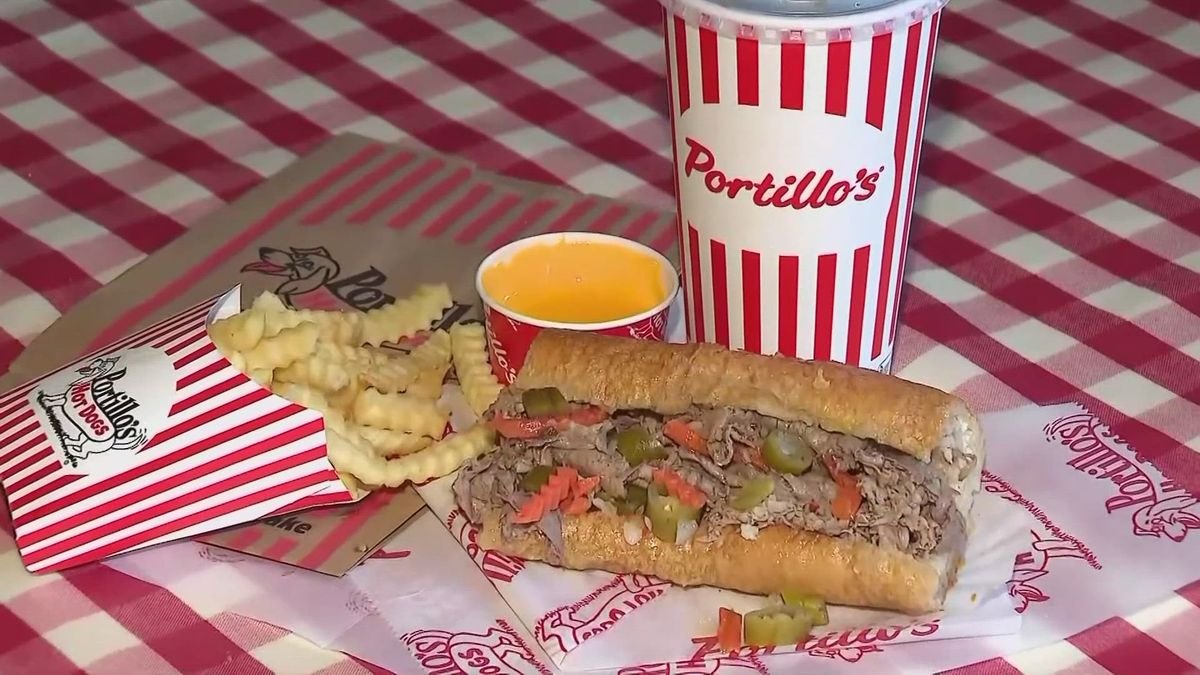
You cannot open or buy a Portillo's franchise in 2027. Portillo's Inc. (NASDAQ: PTLO) is 100% company-owned and has never franchised, so no Franchise Disclosure Document exists. Any site quoting Portillo's franchise costs is fabricating them. Your real options are PTLO stock, a corporate operator career, or building an independent Chicago-style concept.
Why the brand is closed and what that actually leaves you
Portillo's has operated as a fully corporate chain since Dick Portillo opened his first trailer in Villa Park, Illinois in 1963. The company went public in October 2021, and every filing since has described a company-owned-and-operated restaurant base. There is no area development program, no master franchise, no licensing arm selling territory, and no sub-franchising structure. That is not a temporary posture while the company "prepares a franchise program" — it is the operating model, and it is restated in the company's SEC filings and investor materials.
This matters more than it sounds, because the absence of an FDD is a hard legal fact, not an opinion. Under the FTC Franchise Rule (16 CFR Part 436), anyone offering a franchise in the United States must furnish a disclosure document containing, among other things, Item 7 (estimated initial investment) and optionally Item 19 (financial performance representations). Several states — California, Minnesota, Wisconsin, New York, Maryland, Virginia, Illinois and others — additionally require registration or filing before a franchise can be offered to a resident. If Portillo's were selling franchises, there would be a registered document sitting in at least one of those state registries and available to the public. There isn't one. So when a broker page confidently publishes a "$1.97M–$7.7M Portillo's initial investment," that number has no source document behind it. It was reverse-engineered from corporate build-cost reporting and dressed up as disclosure to capture search traffic and harvest leads.
The practical takeaway is that the decision in front of you is not "open versus buy a Portillo's." It's a different decision entirely: what were you actually trying to get when you typed that question? In almost every case, the underlying want falls into one of four buckets — exposure to the brand's economics, the experience of running a high-volume restaurant, ownership of a Chicago-style hot dog and Italian beef concept, or simply a strong franchise in the QSR category. Each of those has a real, legal, executable path. None of them involve wiring a franchise fee to someone claiming to represent Portillo's.

There is a broader pattern worth internalizing here, because it will save you money on your next search too. A whole tier of high-AUV, brand-dense restaurant companies deliberately refuse to franchise domestically: Chipotle, Shake Shack (domestically), In-N-Out, and Portillo's all sit in that camp. The logic is consistent — when a single unit generates several million dollars a year and the brand's differentiation lives in execution consistency, the royalty stream a franchisee would pay is worth less to the company than the full restaurant-level margin plus total control of the guest experience. So the "it's not franchised" answer is not a quirk of one chain. It's a recognizable category. When you search a beloved regional chain with cult-level brand equity and cannot find an FDD in thirty minutes, the correct inference is usually that no FDD exists — not that you haven't found the right broker yet.
The two real options compared: build independent versus buy a real franchise
Set Portillo's aside and the decision narrows to a classic fork that every restaurant entrepreneur eventually faces: build your own independent concept, or buy into a franchise system that already has a brand, a playbook, and a supply chain.
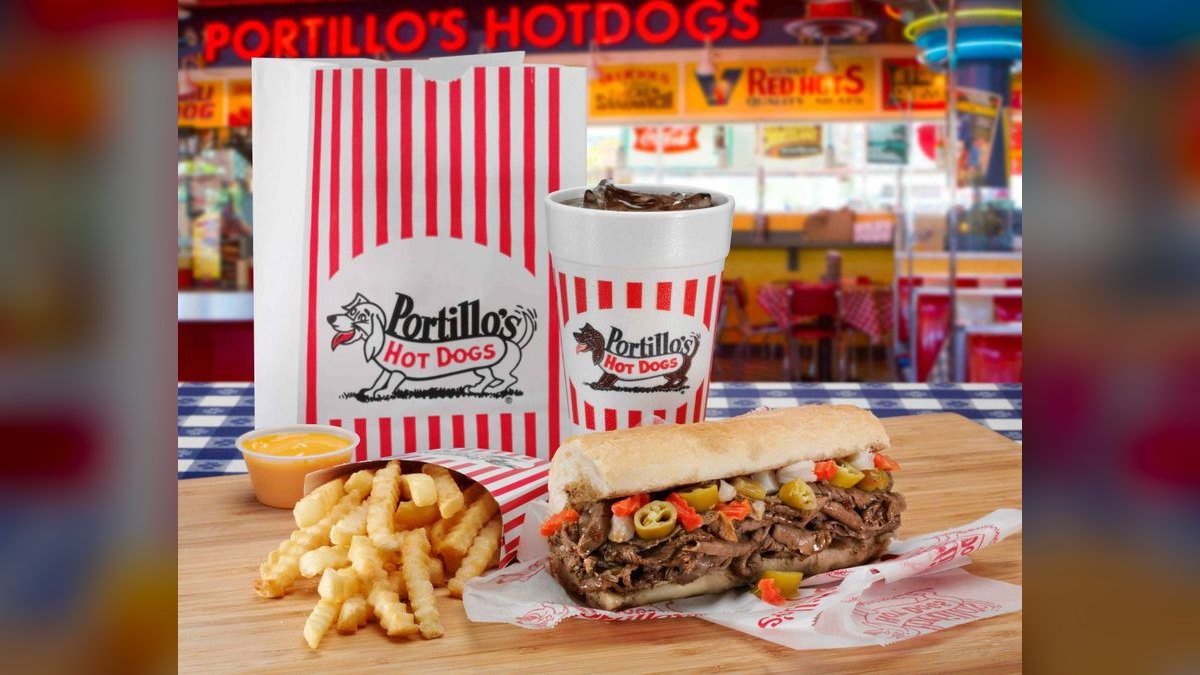
The independent build. You form your own LLC, sign your own lease, design your own menu, and keep 100% of the upside. In the Chicago-style category specifically, the independent path is unusually viable because the supply chain is already commoditized and available to anyone. Vienna Beef has sold hot dogs to independent Chicago stands for over a century. S. Rosen's supplies poppy-seed buns. Turano and Gonnella both bake Italian beef rolls. You do not need a franchisor to source authentic product — you need a distributor account. That is a genuinely different situation from, say, opening a chicken-sandwich concept where the proprietary marinade *is* the business.
The trade-off is brand risk. A franchise buys you day-one awareness; an independent build means you are spending the first eighteen months teaching a trade area that you exist. That shows up as slower ramp, heavier local marketing spend, and a longer path to stabilized volume. It also shows up in financing: SBA lenders underwrite franchise concepts with published Item 19 data more comfortably than a first-time independent, because the franchise has comparable-unit performance to point at.
The real franchise. In the same category, several franchisors publish actual FDDs you can read. Al's Beef is the closest brand overlap — Chicago-original Italian beef, a real registered disclosure document, and a modest unit count. Buona is a comparable Italian-beef and Italian-American QSR franchisor with Midwest and Sunbelt ambitions. For the hot dog side, Nathan's Famous and Wienerschnitzel are national systems with decades of franchising history. Each of these gives you what Portillo's cannot: a document with Item 7 investment ranges, Item 19 performance data where disclosed, Item 20 unit-count tables showing openings, closures and transfers over three years, and Item 21 audited financial statements for the franchisor itself.
The trade-off runs the other direction. You pay an initial franchise fee, an ongoing royalty typically in the 5–6% range for this category, and a marketing contribution usually around 2%. Those percentages come off the top line, which means at a $1.5M-volume store a 6% royalty plus 2% marketing is roughly $120,000 a year leaving the business before you've paid rent. In exchange you get brand pull, a proven prototype, vendor pricing, training, and — critically — a franchisee network you can call when something breaks.
The third option most people miss: buy an existing independent. Resale of an operating restaurant is chronically underrated. You get real trailing revenue instead of a projection, an existing customer base, a trained crew, and equipment already installed and permitted. Business brokers commonly price small QSR resales on a multiple of seller's discretionary earnings, and the multiple sits well below what a comparable new-build costs to create from zero. The risk is that you are buying someone else's problem — check why they're selling, pull three years of tax returns against POS data, verify the lease is assignable with remaining term, and confirm no deferred maintenance is hiding in the hood system, walk-in, or roof.
And the fourth: don't operate at all. If what you wanted was exposure to Portillo's specifically, PTLO trades publicly. You can own the economics — the AUV, the margin, the unit growth — without signing a personal guarantee on a $2M loan or working Saturday nights. That is a legitimate answer to "should I buy a Portillo's," and for a meaningful share of the people asking, it's the correct one.
How to decide between them
The choice isn't about which option is best in the abstract — it's about which one matches your capital, your risk tolerance, your operating experience, and how much of your own labor you intend to put into the business. Run yourself through the decision honestly before you talk to a broker or a lender, because both of those parties are compensated on you transacting.
Start with capital. If your liquid, losable capital is under roughly $150,000, a ground-up restaurant build is not realistic even with SBA leverage, because lenders typically want a meaningful equity injection on a new-concept project and you still need working capital to survive the ramp. Under that threshold, look at lower-investment franchise formats, a non-traditional footprint (food hall stall, ghost kitchen, mall inline), or a resale where the seller will carry part of the note.
Then test operating appetite. High-volume QSR is a labor business, not a food business. If you are not prepared to be in the building for the first year — opening, closing, covering call-outs, running the schedule — an owner-operator model will punish you. That pushes you toward either a semi-absentee franchise format with a strong GM structure, or toward the equity path.
Finally, test brand conviction. Ask yourself whether you want *this specific food* or whether you want *a good business*. Those are different questions with different answers, and conflating them is how people end up over-paying for a concept they love and under-analyzing the unit economics.
Work the tree top-down and the emotional pull of the Portillo's brand stops distorting the analysis. Most people who start at "Portillo's franchise" and finish the tree honestly land on one of three endpoints: a category franchise with a readable Item 19, a resale of an existing independent, or PTLO shares. Very few land on a ground-up independent build, because the capital requirement filters them out long before the brand question matters.
Concrete numbers behind each option
Numbers first, then the caveats — and every figure below is a range, because trade area, construction market, and format drive enormous variance.
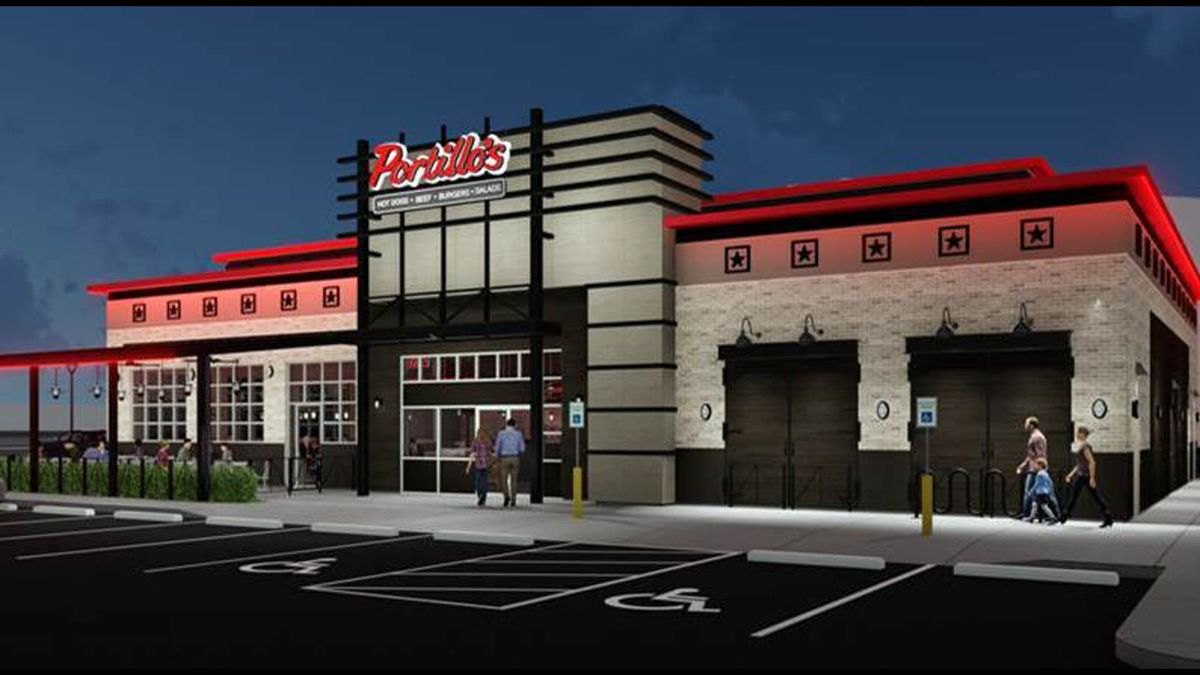
Portillo's corporate new build. The company has disclosed that its recent restaurant prototype runs in the low-to-mid single-digit millions per unit, and it has publicly discussed moving to a smaller sub-5,000-square-foot format specifically to bring that build cost down. Corporate average unit volumes for the chain sit near the top of the fast-casual industry — well above the segment norm — with restaurant-level margins historically in the high teens to low twenties as a percentage of sales. Those are *corporate* economics with no royalty drag, corporate-funded marketing, and a real estate team that self-builds on ground leases. They are not available to you at any price, and they should not be used as the pro forma for an independent.
Independent Chicago-style build. A ground-up freestanding QSR with a drive-thru is the expensive version: land or ground lease, shell construction, kitchen equipment, hood and fire suppression, drive-thru infrastructure, signage, permits, architecture and engineering, pre-opening labor and training, and ninety days of working capital. Realistically that lands in the seven figures. A second-generation restaurant space — an existing former restaurant with hood, grease trap, and gas service already in place — cuts the build dramatically, often by half or more, because the most expensive infrastructure is inherited. If you are capital-constrained, the single highest-leverage decision you will make is taking a second-gen space instead of a raw shell.
Category franchise investment. In the hot dog and Italian beef segment, published FDD investment ranges cluster in the mid-six-figures for inline and endcap formats, running higher for freestanding with drive-thru. Royalties in the category commonly sit around 5–6% of gross sales with a marketing contribution near 2%. Initial franchise fees are typically in the tens of thousands. Always read the actual current FDD rather than a summary — ranges shift year to year with construction costs, and the Item 7 low end almost always assumes the cheapest possible format in the cheapest possible market.
Operating margin reality. Independent quick-service restaurants generally do not earn the margins a high-AUV public chain reports. Food cost, labor, occupancy, and the "other operating" bucket consume most of revenue, and independents lack the purchasing scale that lets a large chain shave points off cost of goods. Assume you will run materially below the corporate benchmark, and build your pro forma so the deal still works at the low end. If the model only clears debt service at the optimistic case, it isn't a model — it's a hope.
Financing. The SBA 7(a) program is the standard vehicle for restaurant acquisition and build-out, with a statutory maximum loan amount of $5 million. Expect a real equity injection requirement, a personal guarantee from any owner with a significant stake, and a lien on available collateral including, in many cases, your home equity. SBA 504 is an alternative when you are buying real estate. Rates float over a published index and reset periodically, so stress-test your debt service at a rate materially above today's.
Compensation as an alternative. If the goal was to run a high-volume restaurant, the salaried path is worth pricing. General manager compensation at a high-volume fast-casual chain, plus bonus tied to unit P&L, is a real six-figure package in most major markets, and multi-unit leadership pays substantially more with equity at the senior end. No personal guarantee, no landlord, no $2M note. Compare that honestly against your projected owner draw net of debt service in year two — for many first-time operators, the salaried number wins on a risk-adjusted basis.
The scam math. If someone asks you to wire a "Portillo's franchise fee," the expected value of that transaction is negative one hundred percent. There is no franchise, so there is nothing to receive. Report it to the FTC and to your state attorney general's office. This is not hypothetical caution — fake franchise offerings are a recurring category of consumer fraud precisely because the brands people love most are often the ones that don't franchise, which leaves an information vacuum for bad actors to fill.
Implementation details and sequencing
If you've worked the decision tree and landed on an actual path, sequence matters. The most common way first-time restaurant owners lose money is doing things in the wrong order — signing a lease before securing financing, or committing capital before verifying the concept's supply chain.
Verify the franchise claim first, always. Before anything else, confirm whether the brand you want actually franchises. Go to the company's investor relations site if it's public, read the most recent annual filing's description of the business, and search your state's franchise registry. This takes an afternoon and eliminates the entire category of fraud. For Portillo's, both the investor materials and the SEC filings state the company-owned model plainly.
If you're going the equity route. Read the last four quarterly filings and the most recent annual report before buying a single share. Pay attention to same-store sales trends, restaurant-level margin direction, the new-unit opening cadence versus prior guidance, and management's commentary on markets outside the core geography — expansion into unfamiliar regions has been a recurring challenge for regional restaurant brands generally, and site selection discipline is the thing to watch. Build a simple model, stress it for flat comps and slower unit growth, and size the position accordingly.
If you're going the operator route. Apply directly through the company careers site. Expect a multi-round process, a working interview or shift shadow, and a case exercise on unit P&L. Prepare a 30/60/90 plan and be ready to talk about labor scheduling, food cost variance, throughput at peak, and guest recovery. Operators who come from another high-volume brand and can speak in numbers — not adjectives — move fastest.
If you're building or buying a restaurant. The order is: capital, then site, then lease, then buildout, then supply chain, then hiring, then soft open.
Real estate is where the deal is won or lost. Screen trade areas on daytime population, traffic counts on the frontage road, visibility and turn-in access, median household income against your price point, and — critically — the competitive set within a short drive. Negotiate a lease with a meaningful base term plus renewal options, a construction allowance if you're taking a second-gen space, and rent commencement tied to certificate of occupancy rather than lease signing. That last clause alone can be worth several months of free rent while permits crawl.
Supply chain comes before menu finalization, not after. In the Chicago-style category you want distributor accounts locked before you print a menu, because your food cost model is meaningless until you have real delivered pricing. Vienna Beef, S. Rosen's, Turano, and Gonnella are all established suppliers in this space and sell through foodservice distribution. Get quotes at your projected case volume, and understand that your first-year pricing will be worse than a chain's because your volume is smaller.
Hiring your kitchen lead is the highest-consequence hire you'll make. Someone who has run a high-throughput grill line — char-grilled dogs, sliced beef, fryers, and a shake station simultaneously — is worth paying above your instinct. Under-paying that role is the single most reliable way to blow your food cost and your ticket times in the same quarter.
Upstream and downstream effects worth planning for. Opening a restaurant changes your personal balance sheet in ways people underestimate. A personal guarantee on an SBA note affects your ability to borrow for anything else. Restaurant ownership is illiquid — you cannot sell a third of your store when you need cash. And the exit is a small-business sale, which takes months and typically prices off earnings, meaning your exit value is a function of the same operating discipline that drives your weekly cash. Plan the exit while you're building, not when you're tired.
Adjacent scenarios that change the answer
A few variations on the question deserve their own treatment, because the analysis shifts.
"What if I want to bring Portillo's to my market as a developer?" This is the one genuinely live commercial relationship an outsider can have with the brand. Portillo's builds its own restaurants, typically on ground leases in strong retail corridors. If you control a high-quality corner in a growth metro, pitching the site to the company's real estate team is a legitimate business path — you become the landlord, not the operator. It is a real estate play with real estate returns, not restaurant returns, and it requires you to already own or control the dirt.

"What about international?" Brands that refuse to franchise domestically sometimes license internationally, because operating a company-owned restaurant in a foreign market is operationally and legally expensive. Nothing has been announced for Portillo's, and you should not build a plan around a hypothetical. But if the company ever does open a franchise or license channel, history across the restaurant sector suggests it would likely come with a substantial net-worth and liquidity requirement and a multi-unit development commitment — meaning it would be aimed at established multi-brand operators, not first-time franchisees.
"What if I just want the food business without the real estate risk?" Non-traditional formats have gotten materially better. Food halls, stadium and airport concessions, ghost kitchens, and mobile units all let you test a Chicago-style concept at a fraction of a ground-up build's capital. The margins are structurally different — you often pay a percentage of sales to the venue instead of fixed rent — but as a proving ground for the concept before committing to a freestanding build, they are hard to beat. Several successful regional chains started exactly this way.
"What about a different category entirely?" If your real constraint is capital rather than passion for a specific food, the franchise universe outside restaurants is worth a look. Service-based franchises — home services, cleaning, pet care, tutoring — routinely carry lower initial investment and far lower fixed occupancy cost, because they don't need a hood system or a dining room. The revenue ceiling per unit is usually lower, but so is the downside, and cash conversion is often faster. Ask yourself whether you want a restaurant or whether you want to own a business; those two answers lead to different aisles of the same store.
Related questions
Has Portillo's ever franchised any location?
No. The company has operated a wholly company-owned restaurant base throughout its history and reaffirms that model in its public filings and investor materials. There is no historical franchise program, no legacy franchisees, and no registered Franchise Disclosure Document in any state registry.
How do I verify whether any brand actually franchises?

Check the company's own site for a franchising page, search state franchise registries in California, Minnesota, and Wisconsin, and read the business description in the most recent SEC annual filing if it's a public company. If no FDD exists anywhere, no legal franchise offering exists.
Is buying PTLO stock really comparable to owning a franchise?
Not operationally — you get no control, no salary, and no day-to-day involvement. But financially it gives you exposure to the same unit economics without a personal guarantee, a lease, or labor management. For passive investors, it is often the better risk-adjusted answer.
What's the closest franchise to Portillo's I can actually buy?
Al's Beef is the nearest brand overlap as a Chicago-original Italian beef franchisor with a registered FDD. Buona is a comparable Italian-beef system. Nathan's Famous and Wienerschnitzel are the national hot dog franchise options with long disclosure histories.
Should I use a franchise broker to find an option?
Brokers are paid by franchisors, not by you, so their recommendations skew toward whoever pays the highest commission. Use them for introductions, never for evaluation. Do your own FDD review and hire an independent franchise attorney before signing anything.
FAQ
Can I open a Portillo's franchise in 2027 if I have enough capital?
No amount of capital changes the answer, because there is nothing to buy. Portillo's does not sell franchises, does not license territory, and does not do area development or master franchising in the United States. Capital only matters once a legal offering exists, and none does. If someone tells you a large enough check unlocks a territory, that is the clearest possible signal you are being defrauded — walk away and report it.
Why do so many websites publish Portillo's franchise cost ranges?
Because "Portillo's franchise cost" is a high-volume search term and those pages monetize the traffic through lead generation and advertising. The numbers are typically reverse-engineered from public corporate build-cost commentary and then formatted to look like FDD Item 7 disclosure. There is no underlying document. A useful tell: legitimate franchise data always cites a specific FDD issue date, and these pages never do.

What is the difference between a franchise fee and total initial investment?
The franchise fee is a one-time payment for the right to use the brand and system, disclosed in Item 5 of the FDD. Total initial investment, disclosed in Item 7, is everything required to open and operate through the initial period — build-out, equipment, signage, inventory, deposits, training, and working capital. The franchise fee is usually a small fraction of the total, which is why evaluating a franchise on fee alone is a mistake.
Is an independent Chicago-style restaurant realistic outside the Midwest?
It can be, but the assumption to test is demand, not supply. Supply is easy — the established Chicago suppliers ship nationally through foodservice distribution. Demand is the question, and even large chains with real capital have found that transplanting a regional food culture into an unfamiliar market underperforms home-market benchmarks. Validate with a low-capital format first — a food hall stall, a mobile unit, a limited-run pop-up — before committing to a freestanding build.
What should I read in an FDD before I sign anything?
Start with Item 7 for investment range, Item 19 for any financial performance representation, Item 20 for the three-year table of openings, closures, terminations and transfers, and Item 21 for the franchisor's audited financials. Item 20 is the most underrated: a system with heavy closures and transfers is telling you something the marketing deck won't. Hire a franchise attorney to read Items 5, 6, 11, 12, and 17 with you.
If I can't buy the brand, what's the fastest legitimate way to be involved with Portillo's?
Apply for a corporate role. Restaurant general manager and multi-unit leadership positions are posted on the company careers site, pay competitively for the segment, and give you the actual operating experience of a high-volume box without a personal guarantee or a landlord. Many people who think they want to own a restaurant discover in the first year of operating one that what they wanted was the job, not the debt.
Sources
- Portillo's Inc. investor relations — https://investors.portillos.com
- U.S. Securities and Exchange Commission, EDGAR company filings search — https://www.sec.gov/edgar/searchedgar/companysearch
- Federal Trade Commission, Franchise Rule and buying-a-franchise guidance — https://www.ftc.gov/business-guidance/industry/franchises
- U.S. Small Business Administration, 7(a) loan program — https://www.sba.gov/funding-programs/loans/7a-loans
- California Department of Financial Protection and Innovation, franchise registry search — https://docqnet.dfpi.ca.gov
- Wisconsin Department of Financial Institutions, franchise registration search — https://www.wdfi.org/apps/FranchiseSearch/MainSearch.aspx
- International Franchise Association — https://www.franchise.org
- QSR Magazine — https://www.qsrmagazine.com
- Restaurant Business Online — https://www.restaurantbusinessonline.com
- U.S. Bureau of Labor Statistics, Occupational Employment and Wage Statistics — https://www.bls.gov/oes/
Related on PULSE
This page will be disappearing soon. Save it to your device for $1 — or read it free while it is here.
@Kory-White- · if Venmo asks, the last 4 of my number are 2012
This page is gone.
This one is off the shelf now. $1 keeps it on your phone for good — the whole page, pictures and diagrams included.
 franchiseShould I open or buy a Hand and Stone Massage franchise in 2027?
 franchiseShould I open or buy a Bahama Breeze franchise in 2027?
 franchiseShould I open or buy a Whataburger franchise in 2027?
 franchiseShould I open or buy an F45 Training franchise in 2027?
 franchiseShould I open or buy a Dunkin' franchise in 2027?
 franchiseShould I open or buy a Firehouse Subs franchise in 2027?
 franchiseShould I open or buy a Pizza Hut franchise in 2027?
 franchiseShould I open or buy a Goddard School franchise in 2027?
 franchiseShould I open or buy a Jiffy Lube franchise in 2027?
 franchiseShould I open or buy a Sonic Drive-In franchise in 2027?