


Should I open or buy a Quaker Steak & Lube franchise in 2027?
Quality
Certified
Probably not — unless you already own the real estate, have $1.5M+ in liquid capital, run multiple casual-dining units, and genuinely love the muscle-car-and-wings concept enough to keep it differentiated against Buffalo Wild Wings, Wingstop, and Cooper's Hawk. A Quaker Steak & Lube franchise in 2027 asks for a total investment of $465,000 to $3,532,500 (FDD Item 7), a $40,000 franchise fee, 5% royalty, and 4% national advertising. The average gross sales sit around $2.87M/unit (Item 19), with operator EBITDA realistically 7–10% — roughly $200K–$287K. Payback runs 8.7 to 10.7 years. Year-1 cash flow for a new operator is usually breakeven to slightly negative. The brand emerged from 2015 Chapter 11 under TravelCenters of America ownership and has been shrinking unit count, not expanding — a meaningful risk signal you must underwrite directly.
The Real Numbers
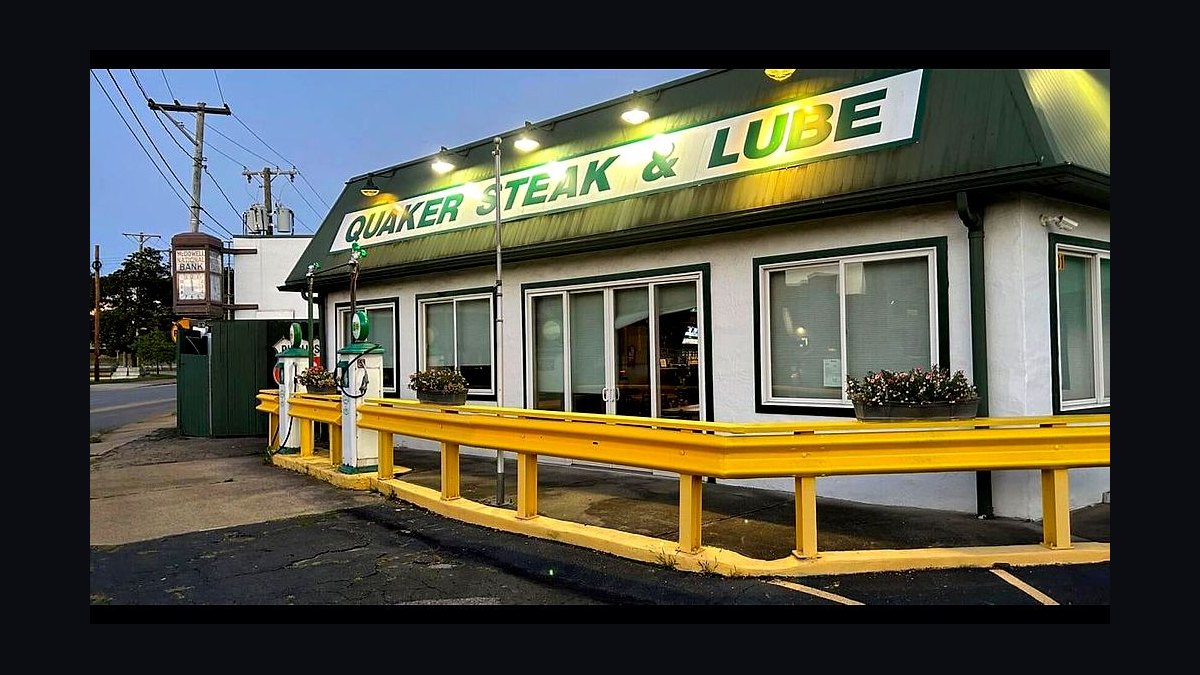
Quaker Steak & Lube (QSL) is a wings-and-bar casual-dining concept with a truckstop adjacency (parent TravelCenters of America, now owned by BP). The 2026 FDD shows a wide investment band because the prototype ranges from a conversion of an existing TA travel-center restaurant at the low end to a 3,500–6,500 sq ft freestanding "Lubie" full-build at the top.
| Cost Line Item | Low | High | Notes |
|---|---|---|---|
| Initial Franchise Fee | $30,000 | $40,000 | FDD Item 5; $30K for multi-unit/conversion |
| Build-Out / Leasehold | $150,000 | $2,200,000 | Conversion vs. new ground-up |
| Equipment + Smallwares | $120,000 | $385,000 | Bar, kitchen, POS, signage |
| Initial Inventory | $25,000 | $45,000 | Food, alcohol, wing sauces |
| Training + Pre-Opening | $25,000 | $75,000 | Travel, lodging, payroll |
| Working Capital (3 mo) | $75,000 | $500,000 | 90 days of payroll, rent, COGS |
| Insurance + Licensing | $15,000 | $60,000 | Liquor license is the swing variable |
| Real Estate (if owned) | $0 | $2,000,000+ | Often financed separately |
| TOTAL | $465,000 | $3,532,500 | FDD Item 7 |

Ongoing fees:
- Royalty: 5.0% of gross sales (FDD Item 6)
- National marketing fund: 4.0% of gross sales
- Local advertising: minimum 1.0% of gross sales
- Technology / POS / loyalty: ~$800–$1,200/month
Revenue & profitability (Item 19 disclosures + industry triangulation):
- System-wide average unit volume (AUV): ~$2,874,144
- Top quartile AUV: ~$3.6M (high-traffic interstate + sports markets)
- Bottom quartile AUV: ~$1.9M (mature, semi-rural)
- Food + beverage COGS: 30–33% (wings inflation hit hard 2022–2025; jumbo bone-in wings ran $2.60–$2.90/lb at peak)
- Labor: 30–34% (tipped + BOH; rising minimum wages in OH/PA/NY squeeze this)
- Occupancy: 6–9% (lower if you own the dirt)
- Royalty + marketing: 10% combined
- Operator EBITDA: 7–10% → $201,191 – $287,415 at AUV
- Payback period: 8.7 – 10.7 years (single-unit, financed)
Breakeven timing: Most new openers report months 14–22 for operational cash-flow positive, year 4–5 for cumulative breakeven after debt service. Honeymoon traffic in months 1–3 (typically +30–50% above AUV) masks the unit economics — underwrite to stabilized year-3 numbers, not opening weekend.
Who Wins With This Business
Real winners look like this:
- TravelCenters of America operating partners — the parent ran QSL units inside TA travel plazas for a decade. Co-located units share utilities, parking, security, and pull diesel trucker + interstate family traffic that pure-play casual dining cannot. Build cost drops 50–70% vs. greenfield.
- Mid-sized multi-brand restaurant groups (e.g., Tackle Box Hospitality in OH, Romulus Restaurant Group in MI) that already operate Buffalo Wild Wings, Twin Peaks, or Hooters and want a differentiated wings-and-bar concept in a non-compete territory.
- Real estate owners in Ohio, Pennsylvania, West Virginia, Indiana who already own a suitable 1.5–2 acre pad near a highway exit + sports venue + high school football corridor. The brand over-indexes in the Rust Belt where it has nostalgia equity.
- Operators with a captive crowd — minor-league ballpark adjacency, NASCAR track proximity, car-show circuit cities. The muscle-car decor and bike nights convert.
- Sub 30-unit emerging-brand specialists who want lower royalty pressure than BWW (5% + 4% mkt) and more menu flexibility than a tier-1 franchisor.
Who Loses With This Business

- First-time restaurant operators. A $1.5M+ casual-dining bar with liquor service, late-night labor, and 30% wing COGS volatility is not a starter business. The failure rate inside year 3 for first-timers in this segment exceeds 40% per National Restaurant Association + Bundle Loans restaurant-default data.
- Anyone betting on system growth. QSL went through Chapter 11 in November 2015, sold to TA for $25M, and the unit count has contracted from ~60 to ~43 locations over the past decade. Buffalo Wild Wings has 1,200+ units and a $2B+ ad fund. Wingstop opened 341 net new units in 2024 alone. You are buying into a shrinking system, which means less brand pull, weaker supply leverage, smaller national ad spend.
- Investors expecting absentee ownership. This is a 7-day-a-week, 110-hour-operating-window concept with alcohol compliance, late-night security, and bone-in wings yield management. Absentee operators bleed 4–6 GP points vs. owner-operators.
- Urban-core, high-rent markets. QSL needs suburban or exurban traffic patterns with parking for 80–120 cars, outdoor patio space, and bike-night-friendly zoning. Downtown Chicago, Boston, or San Francisco pencils are negative.
- Operators without a wings-cost hedge. Wing prices spiked $2.85/lb in late 2022 and crushed BWW corporate margins. If you can't lock 6-month supply contracts through the QSL national distributor program, your food cost will swing 400–600 bps year over year.
2027 Market Conditions
Three forces drive the 2027 outlook for a wings-and-bar concept:
- Casual dining is bifurcating. Per the National Restaurant Association 2026 State of the Industry report, one-third of casual chains posted positive same-store sales in 2025, while the other two-thirds shrank. Chili's (Brinker International) hit record same-store sales; Applebee's posted growth. The middle is dying. QSL sits in the middle — a regional brand without the national marketing scale of Chili's or BWW. 2027 is a "differentiate or die" year.
- Wing economics are normalizing. Jumbo bone-in wing prices retreated from the $2.85/lb 2022 peak to ~$1.80–$2.10/lb through 2025 and projected $1.95–$2.20/lb for 2027 per USDA Poultry Outlook. That's a tailwind, but boneless wings (breast meat) are climbing again as avian-flu pressure lingers. Menu mix matters — operators leaning into bone-in + flavored sauces (QSL's strength) outperform.
- Bar revenue is structurally pressured. Gen Z drinks less — Toast 2026 Bar Trends shows on-premise alcohol consumption per capita down 12% since 2019. A concept that depends on 30–35% beverage mix (QSL historically does) needs a food, mocktail, and family-daypart strategy. Buffalo Wild Wings GO (takeout-only model) and Wingstop's 80% off-premise mix are the new benchmarks — QSL has no comparable off-premise format yet.
Net 2027 read: Wing demand stays strong (+25% NFL Sunday lift per Toast); bar revenue stays soft; regional brands without scale get squeezed. QSL needs to prove unit growth before a rational outside operator should add capital.
The 90-Day Decision Tree
- Days 1–15: Pull the 2026 FDD and read Items 5, 6, 7, 19, 20, and 21 cover to cover. Item 20 lists every current and former franchisee with phone numbers. Item 21 has audited financials of the franchisor — TA-owned, so cross-reference the BP parent 10-Q.
- Days 16–30: Call at least 10 franchisees from the Item 20 roster. Ask: actual AUV, COGS %, labor %, royalty audit experience, supplier rebates, how long until cash-flow positive, would they do it again. Aim for 5 "yes" answers. Fewer than 5 = walk.
- Days 31–45: Visit three units in person — one high-AUV, one median, one bottom-quartile. Eat there on a Wednesday lunch, Friday dinner, Sunday afternoon NFL window. Count cars. Count turnover.
- Days 46–60: Underwrite the specific site. Get a traffic study, demographic pull (Esri Tapestry), and competitive radius map. Identify the closest BWW, Wingstop, and Hooters and price-shop their wings + beer.
- Days 61–75: Lender pre-approval. SBA 7(a) to $5M is the typical vehicle; expect 10–25% equity injection and a personal guarantee. Live Oak Bank, Huntington, Byline Bank are active QSL/casual-dining lenders.
- Days 76–90: Final GO/NO-GO decision. Run a 5-year DCF with a stress case (-20% AUV, +400 bps COGS, +200 bps labor). If the stress case still services debt, proceed. If not, kill it. Sign the decision memo with your spouse and an outside CFO in the room.
Alternative Plays
If the QSL economics don't pencil, these adjacent plays are usually stronger:
- Wingstop franchise — $315K–$1.0M total investment per Wingstop 2026 FDD, 6% royalty + 5% marketing, AUV $1.7M, 70%+ off-premise, ~25% cash-on-cash returns for top quartile. The system added 341 net new units in 2024.
- Buffalo Wild Wings GO — takeout/delivery-only format, ~$500K all-in, 20×20 footprint, leverages BWW national ad fund. Better for urban infill where full QSL won't fit.
- Slim Chickens — $1.0M–$1.7M total investment, 5% royalty + 4% marketing, AUV $2.0M+, faster unit growth than QSL, strong tendrils + sauces menu.
- Independent sports bar with QSL-style decor — skip the franchise fee + royalty, license your own car-show nights, save ~$200K/year at AUV. Trade-off: no supply chain leverage, no national insurance program.
- Buy an existing QSL unit on the resale market. Item 20 lists transferred/closed units. Distressed acquisitions sometimes hit $0.30 on the dollar of original build cost — a way better risk-adjusted entry than greenfield.
FAQ
What is the total investment range for a Quaker Steak & Lube franchise? The total investment ranges from $465,000 to $3,532,500, as stated in the Franchise Disclosure Document Item 7. This covers everything from the franchise fee to build-out costs, depending on location size and format.
How much can I expect to earn as a franchisee? Average gross sales are around $2.87 million per unit per Item 19, but operator EBITDA typically falls between 7% and 10%. That translates to roughly $200,000 to $287,000 in annual profit before debt service, though new operators often break even or run slightly negative in year one.
What are the ongoing royalty and advertising fees? You’ll pay a 5% royalty on gross sales and a 4% national advertising fee. These are standard for the casual-dining segment and can significantly impact net margins if sales dip.
How long does it take to recoup my initial investment? Payback periods generally range from 8.7 to 10.7 years, based on typical unit economics. This is a long horizon, so you should have patient capital and a strong cushion for slow early years.
Is the brand growing or shrinking? The brand has been shrinking its unit count since emerging from Chapter 11 in 2015 under TravelCenters of America ownership. This contraction is a meaningful risk signal that you should investigate directly with the franchisor and existing franchisees.
What financial qualifications do I need to open a franchise? You’ll need at least $1.5 million in liquid capital and experience running multiple casual-dining units. Owning the real estate yourself can also improve your chances of success, as it reduces occupancy cost volatility.
Bottom Line
Quaker Steak & Lube is a mid-tier regional casual-dining bar franchise with legitimate brand nostalgia in the Rust Belt and a wings-plus-muscle-car-decor differentiation that still draws crowds at the right address. But the system is shrinking, not growing, the payback runs 8.7–10.7 years, and the competitive pressure from Wingstop, BWW, and Slim Chickens is intensifying through 2027. The only profile that should pull the trigger is an operator who already owns the real estate or a TA travel center, has multi-unit casual-dining experience, can write a $1M+ equity check without leverage stress, and genuinely loves the concept enough to innovate the menu, off-premise format, and daypart mix that QSL corporate is unlikely to deliver. Everyone else should look at Wingstop, BWW GO, or a distressed QSL resale before greenfielding a new build.
Sources
- Quaker Steak & Lube Franchise Cost and Requirements for 2026 — IFPG
- Quaker Steak & Lube Franchise Insights: FDD, Costs & Fees — VettedBiz
- Start a Quaker Steak & Lube Franchise in 2026 — Entrepreneur Franchise Directory
- Quaker Steak & Lube Franchise Review — FranchiseGrade
- Quaker Steak & Lube Franchise Cost & Opportunities 2026 — FranchiseHelp
- Quaker Steak & Lube files for bankruptcy — Nation's Restaurant News
- Bankrupt Quaker Steak & Lube Sold to TravelCenters of America — exploreVenango
- Quaker Steak & Lube — Wikipedia (history + acquisition timeline)
- 2026 State of the Restaurant Industry — National Restaurant Association
- Casual chains need to prioritize experience to win in 2026 — Restaurant Dive
- 2026 Bar Industry Trends and Statistics — Toast
- QSL Franchising — Investment Startup Costs (Official)
Related on PULSE
This page will be disappearing soon. Save it to your device for $1 — or read it free while it is here.
@Kory-White- · if Venmo asks, the last 4 of my number are 2012
This page is gone.
This one is off the shelf now. $1 keeps it on your phone for good — the whole page, pictures and diagrams included.
 franchiseShould I open or buy a Goddard School franchise in 2027?
 franchiseShould I open or buy a Dairy Queen franchise in 2027?
 franchiseShould I open or buy a Rita's Italian Ice franchise in 2027?
 franchiseShould I open or buy a KinderCare franchise in 2027?
 franchiseShould I open or buy an F45 Training franchise in 2027?
 franchiseShould I open or buy a Whataburger franchise in 2027?
 franchiseShould I open or buy a Jimmy John's franchise in 2027?
 franchiseShould I open or buy a Hand and Stone Massage franchise in 2027?
 franchiseShould I open or buy a Domino's franchise in 2027?
 franchiseShould I open or buy an Auntie Anne's franchise in 2027?