


Should I open or buy a Tilted Kilt Pub franchise in 2027?
Quality
Certified
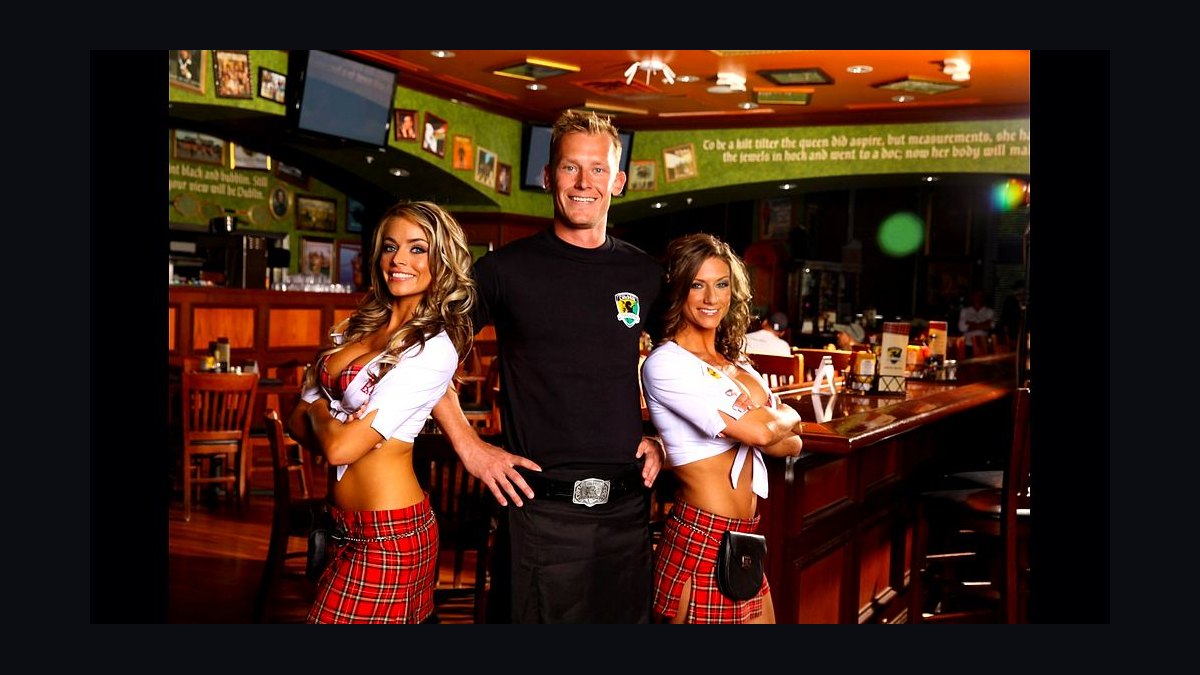
Probably not. Buying a new Tilted Kilt franchise in 2027 is a poor bet — the system has contracted sharply from its 2014 peak, its parent has shown little appetite for rebuilding it, and the whole sports-bar-with-uniformed-servers category is losing share. The only defensible case is an experienced operator buying a proven existing unit at distressed pricing.
What a shrinking franchise system actually means for a buyer
When people evaluate a franchise, they usually start with the wrong number. They ask what it costs and what the average unit sells, and they stop there. Those two numbers tell you almost nothing on their own, because a franchise is not a business you buy — it is a business you rent access to, and the value of that access depends entirely on whether the system behind it is growing, holding, or dying.
Tilted Kilt Pub & Eatery is a full-service casual-dining sports bar built around a Celtic theme and a uniformed-server format. At its peak in the mid-2010s it operated somewhere in the neighborhood of a hundred locations. By 2027 the operating count is a small fraction of that. The chain changed hands in 2018 in a transaction widely reported at a nominal cash price plus stock — a sale price that is itself the single most informative data point available to any prospective buyer. Nobody pays a nominal price for a healthy brand. The buyer of a franchise system pays for future royalty streams; a nominal price says the acquirer assigned essentially zero present value to those streams and was buying an option, not an asset.
Here is why that matters concretely to you as a franchisee rather than as an observer. Every dollar of royalty and brand-fund contribution you pay is supposed to buy you four things: (1) demand you would not otherwise have, because the sign on the building means something to people driving past; (2) purchasing leverage, because the system negotiates food, liquor, and equipment contracts at volume you could never reach alone; (3) operating infrastructure — recipes, training programs, POS configuration, labor-scheduling models, marketing calendars, a field consultant who walks your store and tells you your bar is over-poured; and (4) an exit, because a buyer someday will pay more for a branded, transferable unit than for your independent bar.
A contracting system erodes all four simultaneously, and the erosion compounds. Fewer units means less aided brand awareness, so the sign works less hard. Fewer units means less purchasing volume, so your food cost creeps a point or two above what a large system's franchisee pays for identical product. Fewer units means the franchisor's royalty income shrinks, which means the field-support team, the marketing department, and the R&D budget all shrink with it — right when you need them most. And fewer units means a thinner resale market, because the pool of buyers who want to own a unit in a shrinking chain is small and getting smaller.

That last point is where most first-time franchise buyers get hurt worst, and it is worth sitting with. Your exit is not a theoretical concern to deal with in year seven. It is a live term of your purchase today, because the price you should pay is a function of what you can sell for. If you buy a unit in a growing system at a 3x multiple of store-level cash flow, you can reasonably expect to sell at a similar multiple later, with the multiple supported by system growth. If you buy into a system that may not have a franchisor in five years, you should be underwriting your exit as an equipment-and-lease sale — the value of a used kitchen, a bar, a POS, and a leasehold with remaining term — not as a going-concern business sale. Those two valuations can differ by a factor of five.
There is a related and underappreciated risk: franchise-agreement term versus lease term. Restaurant franchise agreements commonly run ten years with renewal options; commercial leases for a 6,000-to-9,000-square-foot box commonly run ten years with options too. If the franchisor ceases to operate mid-term, you are still on the lease and still personally guaranteeing it. You do not get to hand the keys back because the brand went away. Every serious evaluation of a distressed-brand franchise has to answer the question: *if the brand disappears in year three, what do I do with this building on year four's rent?* If the honest answer is "I would be stuck," the deal is not underwritable at any price.
The category headwind you are buying into
You cannot evaluate this franchise question purely at the unit level, because the biggest variable is not your store — it is the segment. The uniformed-server sports-bar format, sometimes called the "breastaurant" segment in trade press, was built on a specific consumer behavior: young men going out in groups to watch televised sports, drinking domestic beer at meaningful volume, and staying for hours. Nearly every input to that behavior has moved against the format.

Start with the television itself. The competitive advantage of a sports bar in 1998 was that it had games you literally could not watch at home — the out-of-market packages, the pay-per-view fights, the wall of screens. That advantage has been almost entirely competed away by streaming. A group of friends can now watch essentially any game on a large, excellent television in someone's living room, at a fraction of the cost, with the exact games they want. The bar has to sell something else now: the room, the energy, the crowd, the food, the reason to leave the house. Formats that leaned hardest on "we have the games" and lightest on food quality are exactly the ones squeezed most.
Then look at what the category leader has done. Hooters — the brand that defined and largely created this segment — went through a Chapter 11 restructuring in 2025 and closed a substantial number of company-operated locations before and after. When the category-defining brand restructures, the effects ripple well past its own units. Lenders reclassify the entire segment as elevated risk, which shows up as higher required equity, shorter amortization, and more personal collateral for anyone financing a comparable concept. Landlords become warier of the use, or price the risk into the lease. Suppliers tighten credit terms across the segment, which is a real working-capital hit in a business where you might otherwise carry thirty days of food and liquor on trade credit. None of that is about your store's food or service. It is a category tax you pay for being in the segment.
Meanwhile the one operator in the segment that has genuinely grown — Twin Peaks — did so by moving upmarket on the parts of the business that still differentiate: scratch food, a serious draft-beer program, better boxes, and much heavier unit-level marketing. That is instructive in two ways. First, it proves the segment is not dead — a well-capitalized, well-run version of it still works. Second, it means the remaining demand in the category concentrates in the strongest operator, which is a problem if you are the weaker brand in the same trade area. In casual dining, competing head-to-head against a better-funded version of your own concept is the single most reliable way to lose money slowly.
Underneath all of this sits the demographic drift. The core customer for this format has more competing options for the same night out than at any point in the format's history — sports-betting-oriented bars, brewery taprooms, food halls, golf-simulator and pickleball venues, esports bars, and simply staying home. You do not need a precise statistic to underwrite this; you need only to accept the direction. When you build a financial model for a unit in this segment, a flat same-store-sales assumption is optimistic, not conservative. Model modest annual erosion in traffic offset partially by menu price, and see whether the deal still clears. Most do not.
One more adjacent effect worth naming, because it shows up on the P&L and not in the pitch deck: an appearance-based server program carries structural human-resources and legal overhead that a conventional bar does not. Uniform standards, scheduling around a specific staffing model, higher turnover in the front-of-house, and elevated exposure to employment claims all cost real money and real management attention. Operators inside the segment plan for it. Buyers coming from outside consistently underestimate it, and it is one of the most common reasons a first-time owner's labor line runs three or four points above the model they were shown.
How to actually run the evaluation, step by step

If you are still interested — and there is a narrow, legitimate version of this deal — the evaluation is not a gut call. It is a sequence, and the sequence is designed so that the cheap disqualifying tests come first and the expensive diligence comes last. Run it in order and you will spend a few thousand dollars finding out this is a bad deal, instead of a few hundred thousand.
Get the current Franchise Disclosure Document — not an old one. Under the FTC Franchise Rule, a franchisor selling franchises must provide a current FDD at least 14 days before you sign anything or pay any money. Franchise-broker sites and blog posts circulate old FDDs, and for a brand that has been quiet for years those old documents are the ones you will find first. They are worthless for underwriting. Request the current document directly from the franchisor. If the franchisor cannot produce a current, properly updated FDD, that is not a paperwork inconvenience — it is a signal that the entity may not be actively franchising, and it should end your process on the spot.
Read Item 20 before Item 19. Everyone flips to Item 19, the financial performance representation, because it has the sales numbers. Read Item 20 first. Item 20 contains the unit-count tables: outlets opened, outlets closed, transfers, terminations, non-renewals, and reacquisitions, by year and by state. That table is the honest history of the system, and it cannot be dressed up the way an averaged sales figure can. What you are looking for is the ratio of closures and terminations to openings over the last three fiscal years, and whether transfers are running high — a high transfer rate in a shrinking system usually means franchisees are trying to get out, not that a healthy secondary market exists. Item 20 also contains the contact list for current and, critically, recently departed franchisees.
Call ten current franchisees and every former franchisee you can reach. This is the highest-value hour of the entire process and almost nobody does it properly. Ask current operators three specific questions: trailing-twelve-month sales for their unit, the direction of same-store sales over the last two years, and whether they would buy their unit again at today's asking price knowing what they know. Then call the departed operators from the Item 20 list. Former franchisees have no incentive to protect the brand and will tell you exactly what broke. If you cannot get a meaningful majority of current operators to say they would do the deal again, stop.

Audit the specific unit, not the system. If you are buying an existing store — and you should only be considering an existing store — get three years of profit-and-loss statements, the corresponding bank statements, and the sales-tax filings. Then reconcile them to each other. Reported sales must tie to sales-tax remittances within a very tight tolerance. A meaningful gap means either the P&L is inflated to raise the price or the seller has been under-remitting tax, and both are reasons to walk. Pull the liquor-purchase records separately and compare liquor purchases to reported liquor sales; the implied pour cost tells you whether the bar is being run tightly or bleeding.
Underwrite the lease as hard as you underwrite the business. Occupancy cost is the one major expense you cannot fix later. Target rent plus common-area charges and taxes at a defensible percentage of realistic sales, negotiate a cap on your personal guarantee measured in months rather than the full term, and secure assignment and sublease rights so you have an exit if the brand fails. In an oversupplied large-box retail market, a buyer with strong financials has genuine leverage here — use it, because a lease negotiated well is worth more to your eventual return than almost anything you will do operationally.
Walk the store during real dayparts before you sign. Not a scheduled tour. Go on a Friday at eight, a Sunday at one, and a Tuesday at eleven. Count guests, count staff, watch the bar, watch the kitchen expo window, watch how long a table waits after they put their card down. Then pull six months of turnover data. Front-of-house turnover well above segment norms tells you the culture is broken, and you will inherit it — along with the training cost of replacing the entire staff in your first year.
Map the competition on foot. Drive a five-mile radius and inventory every venue that competes for the same Friday night. A stronger, better-capitalized competitor in the same format within the trade area should end the deal. A large national wings-and-sports chain nearby means you should model a meaningful sales decline in year one and see if the deal still works.
Structure the capital last, and structure it conservatively. Cap your total all-in investment at a number your model supports with pessimistic sales assumptions, not optimistic ones. Push a meaningful share of the purchase price into seller financing — it is the cheapest capital available and, more importantly, a seller who refuses to carry any paper is telling you what they think of the unit's forward prospects. Keep personal liquidity outside the deal sufficient to cover many months of debt service and fixed costs, because the first year of any restaurant transition runs behind plan.
Costs, timelines, and what the money actually does
The investment ranges published for this concept in its last widely circulated disclosure covered a wide band — roughly high-six-figures at the bottom to the high-two-millions at the top for a new build — and the width of that band is itself the point. In full-service restaurants, the spread between the low and high end of an Item 7 estimate is almost entirely a function of two variables: how much of the build-out the landlord funds through a tenant-improvement allowance, and whether you are converting an existing restaurant box or building into raw shell space.
Understand the components, because they behave very differently.
The initial franchise fee is a payment for the right to use the marks and the system for the initial term. It is fully sunk on day one and typically non-refundable. In a growing system, it is defensible. In a contracting system, it is the least defensible dollar in the entire deal — you are pre-paying for support infrastructure that may thin further during your term. This is the single strongest financial argument for buying an existing unit over opening a new one: on many transfers the franchisor charges a reduced transfer fee rather than a full initial fee.
Build-out and leasehold improvements dominate the budget and swing the widest. A conversion of a former restaurant with usable grease interceptors, hoods, walk-ins, restrooms already at code, and adequate electrical service can come in at a fraction of raw-shell construction. This is precisely why the current oversupply of closed large-format restaurant boxes is the one genuine tailwind in this market — the segment's contraction has produced inventory of exactly the physical asset this concept needs, and that inventory is cheap.
Equipment, furniture, and the bar package are the most recoverable dollars in the deal, which matters enormously in a distressed-brand scenario. Used commercial kitchen and bar equipment has a real secondary market. When you underwrite your downside, this is the line that gives you a floor.
The liquor license varies more by jurisdiction than any other line item and deserves independent research before you go far. In license-quota states, a full liquor license trades on a private market and can cost more than your entire kitchen. In license-available states, the same license is an application fee and a waiting period. Two otherwise identical deals in two states can differ by hundreds of thousands of dollars on this line alone, and it is not something the franchisor's estimate will capture well for your specific market.
Working capital is the line first-time buyers systematically shortchange, and it is the one that kills deals. A restaurant transition reliably underperforms in its first months: staff turn over, regulars test the new operator, systems break, and you are paying full fixed costs the entire time. Budget more months of full operating expense than you think you need, hold it outside the purchase price, and do not count a line of credit as working capital — credit availability disappears exactly when you need it.
On the operating side, the recurring franchise costs are royalty on gross sales plus a brand-fund contribution plus a local marketing minimum. Combined, those obligations in this segment typically run in the high single digits of gross sales. Model that as a fixed percentage tax off the top, because that is what it is. On a unit doing a couple of million in sales, that is six figures a year flowing to the franchisor regardless of your profitability — and the honest question you must answer is whether the brand is generating more than that in incremental demand and purchasing savings versus running the same box independently. For a strong system, the answer is clearly yes. For a shrinking one, it is very often no.
The cost stack underneath is standard casual dining and unforgiving: food and beverage cost in the low thirties as a percentage of sales, labor in the low-to-mid thirties and rising in jurisdictions phasing out the tip credit, occupancy in the high single digits, and the franchise obligations on top. What is left before overhead and debt service is store-level cash flow, and in full-service casual dining that number lives in the single digits to low teens as a percentage of sales for a good unit, and goes negative below a sales threshold that surprises people — full-service restaurants have high fixed costs and a genuinely steep breakeven.
Run that arithmetic honestly and the payback math writes itself. Divide realistic store-level cash flow into your all-in investment and you get years-to-payback before any debt service. In a growing brand with a durable exit multiple, a payback measured in several years is acceptable because you also own a saleable asset at the end. In a brand with genuine existential risk, you need the payback to be short enough that you get your capital back before the brand risk resolves against you — and on a new build, it simply is not. That single comparison, more than any qualitative argument about the segment, is why the new-build answer is no and the deeply discounted resale answer is a qualified maybe.
Timeline-wise: for a resale, budget two to four months from letter of intent to close, driven mainly by lease assignment and liquor-license transfer, which is frequently the long pole and can extend well past the rest of the deal. For a new build, from signed franchise agreement through site selection, lease negotiation, permitting, construction, and training to opening day is commonly a year to eighteen months — and in that window you are paying rent during construction and carrying pre-opening costs with zero revenue.
Where buyers get this wrong
Treating an averaged sales figure as a forecast. A system-wide average unit volume is a blend of thriving locations and dying ones, and in a contracting system it is upward-biased by survivorship — the worst units already closed and left the average. Your unit's trailing twelve months is the only sales number that means anything, and even that needs adjustment for whether the outgoing owner was still trying.
Believing they will fix it. Nearly every buyer of an underperforming unit believes better operations will lift sales. Sometimes true — there are genuinely badly run restaurants with real upside. But it is critical to diagnose whether the problem is operational or structural. Operational problems (bad service, inconsistent kitchen, no local marketing, a demoralized staff) are fixable and represent real value. Structural problems (wrong trade area, wrong daypart mix, a competitor that took the crowd, a format the local market has aged out of) are not fixable by working harder, and buyers routinely misdiagnose the second as the first because the first is the story that lets them do the deal.
Buying semi-absentee. Full-service restaurants with a substantial bar are among the most management-intensive small businesses in existence. Cash handling, liquor control, scheduling, and food safety all degrade the moment nobody with ownership stakes is watching. In a strong system with deep field support, semi-absentee is difficult. In a thin system, it is a way to lose money on a predictable schedule. If you are not going to be on site full time, do not do this deal.
Underestimating the personal guarantee. New buyers focus on the equity check and treat the lease and loan guarantees as paperwork. They are not. A ten-year lease on a large-format box with a full personal guarantee is potentially a seven-figure personal obligation that survives the closure of the business. Cap it, negotiate a burn-off, or secure assignment rights — and if the landlord will not move at all, price that risk into what you are willing to pay.
Skipping the departed-franchisee calls. Current franchisees have a financial interest in the brand's reputation and in the value of their own units. Former franchisees do not. The Item 20 list of departed operators is the most honest source of information you will ever have access to, and it is free.
Confusing a cheap price with a good deal. Distressed pricing is a necessary condition for this deal, not a sufficient one. A unit is cheap for a reason. The work is determining whether the reason is fixable, and whether the discount is large enough to compensate for the risk that it is not.
Deciding between this and the alternatives
The honest framing is that "should I buy this franchise" is almost never the real question. The real question is "what is the best use of this capital and the next decade of my working life," and this franchise is one candidate among several. Put it in a bracket against its actual alternatives.
A growing franchise in the same segment. Higher entry cost, materially better unit economics, real corporate support, a functioning resale market. If you have the capital and the operating background, this dominates the distressed play on nearly every dimension except entry price. Paying more for a system that is growing is usually the correct trade.
A family-oriented sports-bar franchise. Lower investment than the premium end of the segment, broader demographic appeal, less legal and HR overhead than an appearance-based server program, and generally more durable trade-area demand. For an operator who wants the sports-bar business without the category-specific risk, this is the sensible middle.
An independent bar in a former restaurant box. No franchise fee, no royalty, no brand fund, no franchisor risk — and complete control over concept, menu, and marketing. The trade is that you build demand entirely yourself and your exit is a going-concern sale without brand support. For an experienced operator with a real point of view about their market, this is very often the highest risk-adjusted return available right now, precisely because the segment's contraction has made suitable real estate cheap and available.
Buying the distressed unit and planning to re-flag it. A deliberately unromantic version of this deal: acquire the location for its lease, its liquor license, and its build-out, operate under the brand while the agreement runs, and convert to an independent concept at expiration. This works only if you underwrite the purchase price as an asset purchase from the start and if the franchise agreement's remaining term and post-term non-compete allow it. Read those clauses before you get attached to the plan.
A non-restaurant franchise entirely. Worth naming honestly, because many people drawn to a bar concept are drawn to the idea of it. Service-based and food-light franchise categories generally offer lower capital requirements, far lower fixed costs, dramatically simpler labor models, and no liquor liability. If what you actually want is cash-flowing business ownership rather than the specific experience of running a bar, the restaurant is a hard way to get there.
The decision framework below sequences those choices by the two variables that actually determine the outcome: your relevant operating experience, and whether you are buying an existing cash-flowing unit or building something new.
Related questions
Is buying an existing franchise unit always safer than opening a new one?
Not always, but usually. An existing unit has proven sales, an in-place staff, and no construction risk. The trade-off is inheriting deferred maintenance, a damaged local reputation, or a bad lease. Safer only if you verify the trailing financials against tax filings.
What does Item 19 of an FDD actually tell me?
Item 19 is the financial performance representation — the only place a franchisor may make earnings claims. It is optional, so its absence is itself informative. When present, read exactly which units are included, since averages often exclude weak or closed locations.
How much working capital should I hold outside the purchase price?
Enough to cover several months of full fixed costs — rent, payroll, insurance, debt service — with zero revenue contribution. Restaurant transitions reliably underperform early. Undercapitalization, not bad food, is the most common cause of first-year failure in acquired restaurants.
Can I get out of a franchise agreement if the brand collapses?
Rarely on favorable terms. Franchise agreements are drafted to protect the franchisor, and your lease obligations are entirely separate. Assume you remain liable on rent and any personal guarantees regardless of what happens to the brand, and negotiate assignment rights accordingly.
Does a franchise resale require the franchisor's approval?
Almost always yes. Transfers typically require franchisor consent, a transfer fee, buyer qualification, and often a remodel commitment or a new full-term agreement. Confirm the transfer terms in writing before you spend money on diligence — they can materially change the deal's economics.
FAQ
Should I open a brand-new Tilted Kilt franchise in 2027?
No. A new build commits the largest possible capital outlay to the brand with the longest possible payback period, at exactly the moment the system's future is least certain. If the underlying business appeals to you, the only defensible entry is an existing unit with verified trailing sales bought at a discount that reflects the brand risk.
What is the strongest argument in favor of buying a distressed unit in this brand?
Real estate and equipment. A former or operating restaurant with a functioning kitchen, bar build-out, hood system, and — in some states — a transferable liquor license carries substantial standalone value. If you can buy near that asset value, your downside is protected even if the brand disappears, because you can re-flag the location.
How do I verify a seller's reported sales figures?
Reconcile the profit-and-loss statements against bank deposits and against state sales-tax filings for the same periods. Sellers rarely overstate sales on tax returns. Any material gap between reported sales and remitted tax is a reason to end the process, not to negotiate a lower price.
Does the franchisor have to give me a disclosure document?
Yes. Under the FTC Franchise Rule, a franchisor offering franchises must provide a current disclosure document at least 14 days before you sign an agreement or pay any money. Some states add their own registration and disclosure requirements. A franchisor unable to produce a current FDD should end your consideration immediately.
How long does it take to break even on a full-service restaurant franchise?
Payback on invested capital in casual dining typically runs several years even in healthy systems, and considerably longer for units at the high end of the investment range or below the sales threshold where the model works. In a brand with existential risk, you need payback short enough to recover your capital before that risk resolves.
What should I do if I have already signed a letter of intent and now have doubts?
A letter of intent is normally non-binding as to the purchase itself. Use the diligence period exactly as intended — pull the current FDD, call current and former franchisees, reconcile the financials to tax filings. Walking away during diligence costs you legal and accounting fees. Closing a bad deal costs you everything you put in.
Sources
- FTC Franchise Rule Compliance Guide (16 CFR Part 436)
- FTC — Buying a Franchise: A Consumer Guide
- U.S. Small Business Administration — Franchise Directory
- Bureau of Labor Statistics — Consumer Price Index, Food Away From Home
- Bureau of Labor Statistics — Quarterly Census of Employment and Wages (NAICS 7224)
- National Restaurant Association — Research and Reports
- Restaurant Business Online
- Nation's Restaurant News
- U.S. Department of Labor — Tipped Employees Minimum Wage by State
- U.S. Courts — Chapter 11 Bankruptcy Basics
Related on PULSE
- How long does it take to open a franchise and break even in 2027?
- Should I open or buy a Tommy Gun's Original Barbershop franchise in 2027?
- Should I open or buy a Painting with a Twist franchise in 2027?
- What should I look for in Item 19 of a Franchise Disclosure Document?
- How much working capital does a new restaurant franchise really need?
This page will be disappearing soon. Save it to your device for $1 — or read it free while it is here.
@Kory-White- · if Venmo asks, the last 4 of my number are 2012
This page is gone.
This one is off the shelf now. $1 keeps it on your phone for good — the whole page, pictures and diagrams included.
 franchiseShould I open or buy a Goddard School franchise in 2027?
 franchiseShould I open or buy a Supercuts franchise in 2027?
 franchiseShould I open or buy an F45 Training franchise in 2027?
 franchiseShould I open or buy a Rita's Italian Ice franchise in 2027?
 franchiseShould I open or buy a Pizza Hut franchise in 2027?
 franchiseShould I open or buy a Whataburger franchise in 2027?
 franchiseShould I open or buy a KinderCare franchise in 2027?
 franchiseShould I open or buy an Auntie Anne's franchise in 2027?
 franchiseShould I open or buy a Dairy Queen franchise in 2027?
 franchiseShould I open or buy a Big O Tires franchise in 2027?