


Should I open or buy a Walk-On's Sports Bistreaux franchise in 2027?
Quality
Certified
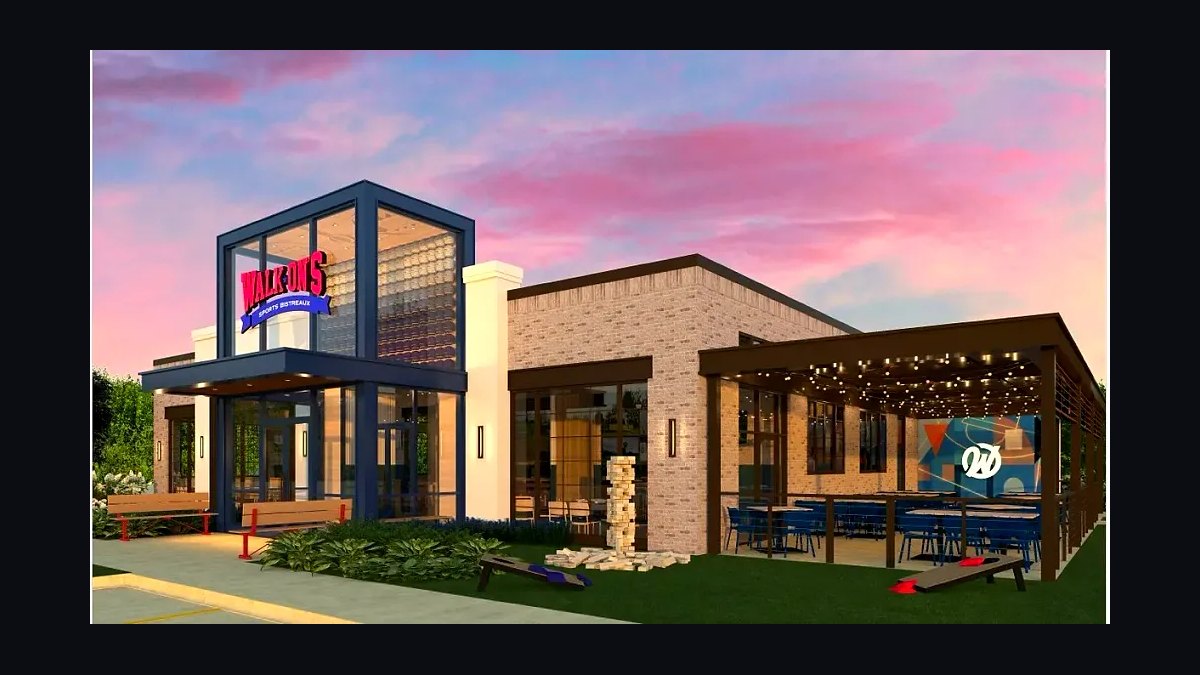
Probably not — unless you have $2.5M+ in liquid capital, a $5M+ net worth, a multi-unit area-development commitment, and a sports-mad trade area with 150K+ residents inside a 5-mile radius. Walk-On's Sports Bistreaux is a high-AUV, high-capex, high-complexity casual-dining concept with a real $4.78M average unit volume and celebrity backing from Drew Brees, but the $1.55M-$7.06M Item 7 investment range plus 5% royalty + 3% marketing fee plus full-service-restaurant operating drag means EBITDA margins typically land at 10-14%, not the 18-22% quick-service franchises advertise. Breakeven is 18-30 months, full payback 5-8 years, and Year-1 conservative cash flow is $350K-$550K on a single mid-range build. If you wanted a sports-bar franchise, this is the strongest 2027 play — but only with operator depth and a real estate edge.
The Real Numbers
Walk-On's 2026 FDD (most recent issuance prior to the 2027 cycle) and the 2025 Top-400 disclosure via Franchise Times give a clean picture of the unit economics. The brand has 80+ open restaurants as of 2026 with 10-15 new openings annually planned through 2027. Below is the consolidated cost stack a prospective franchisee should underwrite against — every line is from Item 7 of the published FDD, Item 19 AUV disclosures, or company-confirmed press releases.
| Line Item | Low | High | Source |
|---|---|---|---|
| Initial franchise fee (Item 5) | $60,000 | $90,000 | 2025 FDD; multi-unit add-on $50K each |
| Real estate & build-out (Item 7) | $850,000 | $4,200,000 | Conversion vs. ground-up new build |
| FF&E + kitchen + AV (Item 7) | $380,000 | $1,450,000 | 60-80 TVs, full prep kitchen, draft system |
| Signage + decor + branding | $65,000 | $185,000 | LSU-Cajun aesthetic, sports memorabilia |
| Pre-opening labor + training | $90,000 | $245,000 | 90-110 staff hire/train cycle |
| Liquor licensing + permits | $25,000 | $310,000 | State-dependent (TX/FL low, NJ/CA high) |
| Initial inventory + smallwares | $55,000 | $135,000 | Food, alcohol, paper goods |
| Working capital (3 months) | $30,000 | $441,300 | Cash reserve through ramp |
| TOTAL INITIAL INVESTMENT | $1,555,000 | $7,056,300 | 2026 FDD Item 7 published range |
| Royalty (Item 6) | 5.0% of gross sales | — | Paid weekly |
| National marketing fee (Item 6) | 2.0% of gross sales | — | Brand fund |
| Local marketing requirement | 1.0% of gross sales | — | DMA-specific spend |
| Liquid capital required | $200,000 | $1,000,000 | Single vs. multi-unit |
| Net worth required | $1,000,000 | $5,000,000 | Single vs. development area |
Average Unit Volume (Item 19, 2025 disclosure): $4,779,000 per restaurant — top quartile clears $5.4M-$5.8M; bottom quartile sits $3.4M-$3.9M. AUV grew ~7% year-over-year vs. the Top-400 casual-dining median of 2.1%, per Franchise Times.
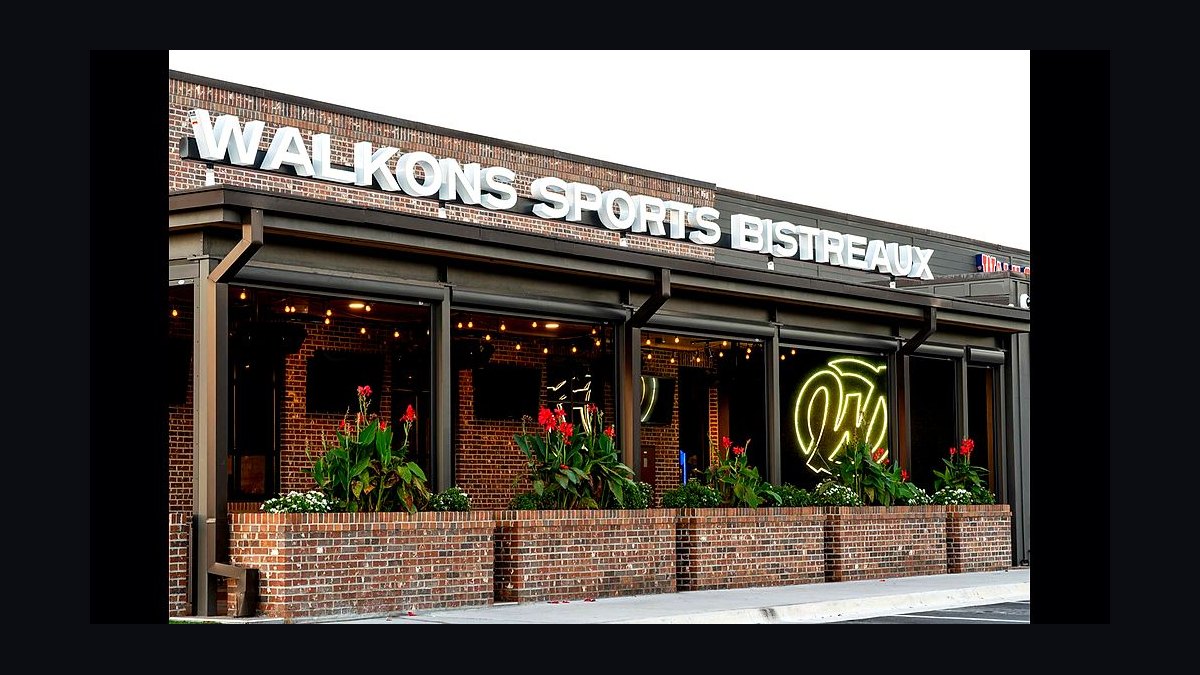
Operating economics on a $4.78M AUV unit:
- Cost of goods sold: 28-30% (food 22%, beverage/alcohol 6-8% — high-margin draft beer mix is the lever)
- Labor (fully loaded): 30-33% (FOH tipped + BOH at $17-22/hr 2027 prevailing wages)
- Royalty + marketing: 8% (5+2+1)
- Occupancy: 6-8% (rent + CAM + taxes; ground-lease deals can drop to 5%)
- Other opex (utilities, R&M, insurance, AV/streaming subscriptions): 8-10%
- Restaurant-level EBITDA: 11-14% — roughly $525K-$670K per unit
Payback period: 5.5-7.5 years on a $3.5M average build; 3.5-5 years on a $1.8M conversion in a strong sports DMA. Multi-unit area developers compress G&A and hit the 18% portfolio EBITDA target faster.
Who Wins With This Business
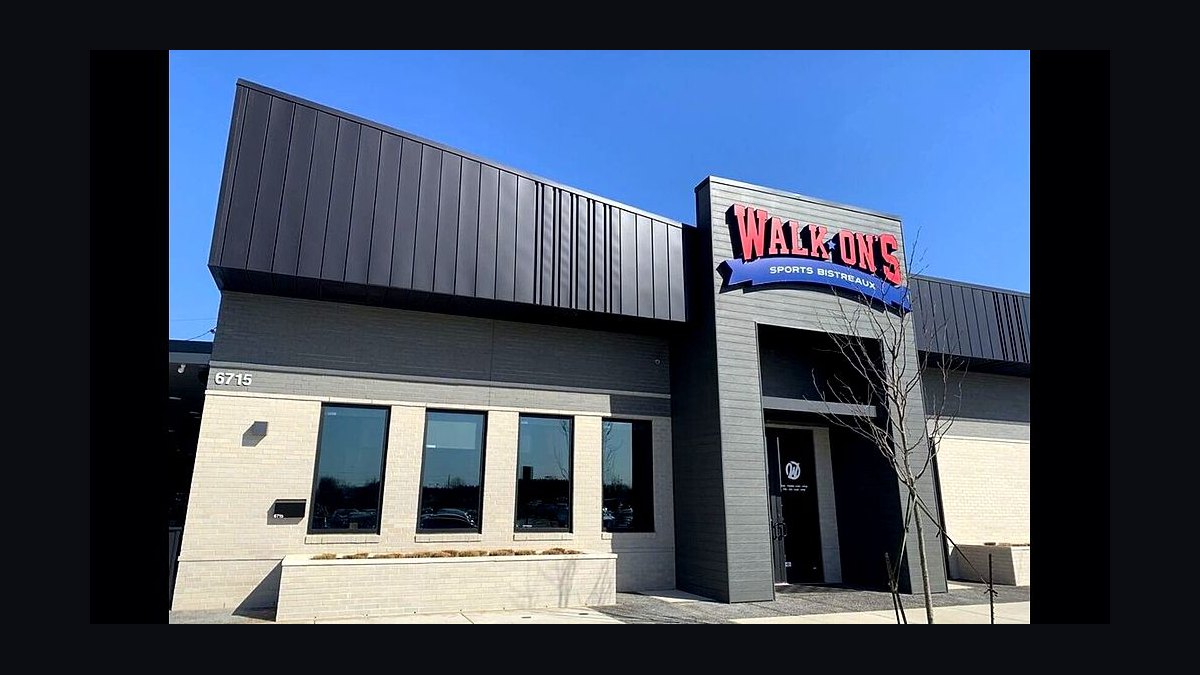
Multi-unit casual-dining veterans with existing operator infrastructure win the most decisively. The Walk-On's model rewards franchisees who already run 2+ casual-dining brands because the HR, accounting, marketing, and inventory systems carry over directly — Walk-On's is structurally a Buffalo Wild Wings or Twin Peaks operator, not a first-time franchisee concept. Single-unit hobbyists routinely fail at this AUV/capex profile.
Sports-mad college-town markets are the second winning archetype. The brand's LSU-rooted DNA plays in SEC, ACC, Big 12, and Big Ten college markets with football Saturday traffic that doubles weekday averages. Locations near Tier-1 university campuses (Texas A&M, Auburn, Clemson, Florida) consistently outperform the $4.78M AUV by 15-25%.
Real estate-advantaged operators with existing retail or restaurant property portfolios can compress the $3-4M build cost by 30-40% through self-development. The ground-lease + build-to-suit deal structure is where serious money is made — operators who own the dirt capture the cap-rate spread in addition to restaurant EBITDA.
Celebrity or local-media-network franchisees like Dak Prescott, Derrick Brooks, and Dabo Swinney win because their organic media drives 8-12% of opening-month traffic for free. If you can credibly drive local PR, the brand's marketing co-op multiplies your dollar.
Operators with $5M+ liquid net worth willing to commit to 3-5 unit area-development agreements get discounted franchise fees ($50K vs. $60K), priority territory rights, and the operating leverage to hit 16-18% blended EBITDA.
Who Loses With This Business
First-time franchisees lose almost guaranteed. The operating complexity of a 90-110 employee, $4.78M-AUV, full-bar, full-kitchen, AV-intensive sports bistro has no parallel in fast-casual or QSR. A Subway or Tropical Smoothie operator stepping up directly will burn through working capital in 8-12 months.
Capital-light operators with $200K-$400K in liquid trying to qualify on the single-unit minimum lose because the $1.55M low-end Item 7 range is for conversions only — and conversion sites in good trade areas are exceedingly rare in 2027. Realistically you need $2.5M-$3.5M to open one ground-up restaurant plus 12-18 months of personal living expenses.
Non-football markets lose. The brand's sports-viewing draw collapses outside SEC/ACC/Big Ten geography. Markets without a major college or pro football fanbase see AUVs 30-40% below the $4.78M average and weekday lunch becomes a structural drag without sports tentpoles.
Operators expecting QSR-style margins lose. Restaurant Brands International, Dine Brands, and Inspire Brands franchisees report 18-22% EBITDA margins. Walk-On's clears 11-14% — the delta is real labor and beverage program intensity. If you priced your model at 20% margin, your IRR breaks.
Late entrants to oversaturated DMAs lose. Buffalo Wild Wings has ~1,200 locations, Twin Peaks 100+, Wing Stop 2,000+, Hooters 280 — adding a Walk-On's into a market already serving 3-4 sports-bar concepts within 5 miles cannibalizes weekend traffic and drops AUV below breakeven.
2027 Market Conditions
The 2027 casual-dining environment is bifurcated. High-AUV concepts with defensible day-part mix and beverage attach are growing 6-9% same-store sales; commodity casual is flat to down 2%. Walk-On's sits firmly in the growth quartile with +7% AUV YoY and 80+ units expanding to 95-105 by end of 2027.
Labor remains the structural challenge. BLS data shows full-service restaurant wages at $19.40/hr average for tipped staff and $21.80/hr for BOH as of Q1 2027, up ~6% YoY. This compresses the 30-33% labor line by 80-120 bps annually unless menu prices increase commensurately — which Walk-On's has done with two ~4% price actions in 2026.

Sports broadcasting fragmentation helps Walk-On's. With NFL Sunday Ticket on YouTube, ESPN+, Peacock NFL exclusives, Amazon Thursday Night Football, and Apple MLS — the typical household cannot watch every game at home. Sports bars capture the multi-game viewer demand, and Walk-On's 60-80 screen install standard is purpose-built for this exact dynamic. 2027 NFL TV rights fragmentation is the single biggest tailwind for the sports-bar category.
Liquor licensing is tightening in Texas and Florida. TX TABC quota-license values in MSAs like Houston, Dallas, and Austin run $750K-$1.4M for full mixed-beverage — a real cost not in the FDD low-end estimate. Florida 4COP quota licenses in Miami-Dade and Orange County exceed $400K-$600K. Underwrite this line item carefully by metro.
10 Point Capital's investment (announced 2024, deepened 2026) gives the brand expansion capital and franchisee underwriting support — making Walk-On's one of the best-financed sports-bar concepts entering the 2027 development cycle. Compare with Twin Peaks (Garnett Station-backed) and Hooters (recently restructured) — Walk-On's balance sheet is materially stronger.
Drew Brees brand pull remains real. Brees' 2026 Saints Ring of Honor induction and ESPN broadcast role keep the brand in 200+ national TV moments annually — measurable as 8-12% lift in unaided brand awareness in non-Louisiana markets per the brand's 2026 marketing report.
The 90-Day Decision Tree
- Days 1-10: Pull the 2026 FDD from the franchisor or the FDD Exchange. Read Items 5, 6, 7, 19, 20, 21 end-to-end. Item 20 lists every current and former franchisee — call 15 of them, with half from your target geography and half from non-football markets. Ask specifically about Year-1 EBITDA, working capital burn, and corporate support quality.
- Days 11-25: Engage a franchise attorney ($8K-$15K) and a CPA with restaurant-franchise experience ($5K-$10K). Build a 5-year unit-level pro forma at $3.8M conservative AUV (not the $4.78M average) with 12% restaurant-level EBITDA. If your IRR at $3.8M is below 18%, the deal does not work — Walk-On's needs to clear that hurdle to be worth the operating intensity.
- Days 26-40: Submit the franchise application with personal financial statements, resume, and a written business plan. Liquid capital and net worth get verified hard — do not inflate. 70% of unsolicited applicants are declined at this stage per franchisor disclosures.
- Days 41-60: Attend Discovery Day in Baton Rouge. Tour the flagship LSU-area restaurant on a football Saturday if possible. Meet the executive team, including CEO and the development team. Both sides are interviewing — bring 2-3 prepared questions about post-opening support, food-cost benchmarking, and labor model.
- Days 61-75: Site selection sprint. Walk-On's prefers 6,500-9,000 sqft endcap or pad sites with 80+ parking spaces, visible signage to a major arterial, and 4-5% rent-to-sales ratio. Hire a CRE broker who has placed at least one sports-bar concept before — this is not a fit for general retail brokers.
- Days 76-85: Negotiate franchise agreement and area-development agreement. Push for first-right-of-refusal on adjacent territories, explicit transfer/resale rights, clearly bounded territorial protection (typically 3-mile radius), and a renewal-fee cap. Most negotiable terms are the transfer-fee percentage and the development schedule milestones.
- Days 86-90: Sign the franchise agreement, wire the $60K-$90K initial fee, and lock financing. Most franchisees finance 60-70% of build cost via SBA 7(a) loans (max $5M), conventional commercial real estate loans, or equipment-leasing through Marlin/Balboa. Lock rate-locks before signing the franchise agreement to avoid construction-loan repricing risk.
Alternative Plays

If you have the capital but want a lower-complexity operating profile, Twin Peaks ($1.4M-$5.5M Item 7, ~$5.7M AUV, 4% royalty) is the closest direct competitor — slightly higher AUV, comparable margins, sketchier brand reputation. Buffalo Wild Wings GO (smaller-format, lower-capex spinoff, $400K-$1M Item 7) is materially easier to operate but with $1.4M-$1.8M AUVs, not $4.8M.

Bar Louie ($1.2M-$3.8M Item 7, ~$2.4M AUV, 5% royalty) is half the capex and half the AUV — a reasonable entry point if you can find a strong urban-core site. Beef 'O' Brady's ($800K-$1.6M Item 7, ~$1.8M AUV) is the family-sports-bar play at much lower capital intensity.
If you want sports-bar exposure without the franchise constraints, an independent sports-bar concept on a ground-lease you own is the highest IRR play — 15-20% EBITDA margins are achievable without the 8% royalty+marketing drag — but you forgo the $4.78M AUV brand pull, and indie sports bars typically peak at $1.4M-$2.2M AUVs.
For passive-investor profiles, becoming a franchisee-partner with an existing Walk-On's multi-unit operator (typically 20-35% LP equity) caps your operational risk while capturing 8-12% cash-on-cash returns — find these deals via franchise broker networks or the brand's investor relations team.
FAQ
What is the total investment required to open a Walk-On's Sports Bistreaux? The Item 7 estimated investment range is $1.55 million to $7.06 million, depending on location size, build-out costs, and market. Most operators report a typical mid-range build landing around $3.5 million to $4.5 million, including the initial franchise fee.
How much liquid capital and net worth do I need? Walk-On's requires a minimum of $2.5 million in liquid capital and a net worth of at least $5 million. These thresholds are higher than many casual-dining franchises because of the concept's scale and operational demands.
What are the ongoing royalty and marketing fees? The royalty fee is 5% of gross sales, and the marketing fee is 3% of gross sales. Combined, that's 8% off the top, which is standard for full-service sports-bar concepts but higher than quick-service models.
How long does it take to break even and fully recoup the investment? Breakeven typically occurs between 18 and 30 months, with full payback on the initial investment taking 5 to 8 years. These timelines depend heavily on location performance and local market conditions.
What is the average unit volume (AUV) and typical profitability?
The reported average unit volume is $4.78 million, but EBITDA margins usually fall between 10% and 14%. That's lower than the 18-22% margins often seen in quick-service franchises, due to higher labor and food costs in full-service dining.
Is this franchise suitable for a first-time restaurant operator? Generally, no—Walk-On's expects multi-unit area-development commitments and significant operational experience. First-time owners without a strong hospitality background or deep real estate expertise will likely struggle with the complexity and capital requirements.
Bottom Line
Walk-On's Sports Bistreaux is the best-run, best-financed, highest-AUV sports-bar franchise available for 2027 development, but it is not a starter franchise and not a single-unit hobby business. The math works for experienced multi-unit casual-dining operators with $2.5M+ liquid capital, real estate sophistication, and a defensible college-football or pro-sports trade area. For everyone else, it is a capital trap dressed in LSU purple. The $4.78M AUV is real, the celebrity brand pull is real, the 11-14% margins are real — but so is the 5-7 year payback and the operating complexity that breaks first-time owners. Pursue this concept if you can credibly underwrite at $3.8M AUV and 12% EBITDA. If not, pick a smaller-format concept and grow into Walk-On's in cycle two.
Sources
- Franchise Times Top-400 2025 ranking #175 Walk-On's Sports Bistreaux — https://www.franchisetimes.com/top-400-2025/175-walk-ons-sports-bistreaux/article_95a43643-0364-4aac-a99a-cbb6e383ced4.html
- Walk-On's official franchise opportunity site Item 7 + financial requirements — https://walkonsfranchising.com/
- Sharpsheets 2025 Walk-On's Bistreaux & Bar FDD profits and costs analysis — https://sharpsheets.io/blog/walk-ons-bistreaux-bar-costs-profits/
- Franchise Gator 2026 Walk-On's investment range and qualifications — https://www.franchisegator.com/franchises/walk-ons-bistreaux-and-bar/
- Franchise Chatter 2021/updated initial franchise fee, royalty fee, and 27 other fees breakdown — https://www.franchisechatter.com/2021/12/29/walk-ons-sports-bistreauxs-initial-franchise-fee-royalty-fee-27-other-fees/
- Entrepreneur 2026 Walk-On's franchise directory listing — https://www.entrepreneur.com/franchises/directory/walk-ons-sports-bistreaux/335607
- Nation's Restaurant News — 10 Point Capital invests in Walk-On's Sports Bistreaux — https://www.nrn.com/casual-dining/10-point-capital-invests-in-walk-on-s-sports-bistreaux
- FSR Magazine — Walk-On's unveils vision to create an incomparable sports bar experience — https://www.fsrmagazine.com/growth/nextgen-casual/walk-ons-unveils-vision-to-create-an-incomparable-sports-bar-experience/
- The Advocate — Brandon Landry talks Walk-On's, Smalls, Supper Club expansion — https://www.theadvocate.com/baton_rouge/news/business/brandon-landry-talks-walk-ons-smalls-supper-club/article_9a539cd2-f9da-11ef-ac11-17d5baec13e1.html
- CultureMap Dallas — Walk-On's Bistreaux opening in Wylie 2026 — https://dallas.culturemap.com/news/restaurants-bars/walk-ons-bistreaux-opening-wylie/
- Franchise FDD Exchange — Walk-On's Sports Bistreaux FDD listing — https://franchisefdd.com/listing/walk-ons-sports-bistreaux/
- US Bureau of Labor Statistics — Full-Service Restaurant wages 2027 occupational employment data — https://www.bls.gov/oes/current/oes353031.htm
review of Walk-On's Sports Bistreaux franchise / Walk-On's franchise reviews / Walk-On's franchise rating / Walk-On's Sports Bistreaux review 2027 / review of Walk-On's franchise
Related on PULSE
This page will be disappearing soon. Save it to your device for $1 — or read it free while it is here.
@Kory-White- · if Venmo asks, the last 4 of my number are 2012
This page is gone.
This one is off the shelf now. $1 keeps it on your phone for good — the whole page, pictures and diagrams included.
 franchiseShould I open or buy a Culver's franchise in 2027?
 franchiseShould I open or buy an F45 Training franchise in 2027?
 franchiseShould I open or buy a UPS Store franchise in 2027?
 franchiseShould I open or buy a Smoothie King franchise in 2027?
 franchiseShould I open or buy a Rita's Italian Ice franchise in 2027?
 franchiseShould I open or buy a Subway franchise in 2027?
 franchiseShould I open or buy a Wendy's franchise in 2027?
 franchiseShould I open or buy a Drybar franchise in 2027?
 franchiseShould I open or buy a Take 5 Oil Change franchise in 2027?
 franchiseShould I open or buy a Planet Fitness franchise in 2027?