


Should I open or buy a Honey Baked Ham franchise in 2027?
Quality
Certified

Only if you can fund $580K–$880K, tolerate a P&L where roughly 60–65% of revenue arrives in two holiday windows, and commit to owner-operating for three years. Buying an existing store or a seasonal unit usually beats a greenfield open on risk-adjusted return. Passive investors reliably land in the bottom quartile.
The scenario nobody models before signing
Picture the version of this deal that actually shows up. You are 44, you have $300K in liquid savings plus meaningful home equity, and you have spent nineteen years in medical device sales — high AOV, relationship-driven, quota-carrying. You want out of the corporate ladder and into something with a sign on the building. A broker sends you the Honey Baked Ham development package and the pitch lands: an American brand with fifty-plus years of equity, a product people plan their holidays around, and an Item 19 showing average annual gross sales near $924,000. You do the mental math at 12% and see roughly $110,000 of owner earnings, which is less than you make now but feels like ownership.
Here is what that model omits. You sign a lease in March 2027 and take possession in April. Build-out runs sixteen weeks. You soft-open in late August into the deadest stretch of the calendar — the ham business between Easter and Thanksgiving is a lunch-and-catering business, not a holiday business, and you have neither a catering book nor lunch regulars yet. September grosses maybe $34,000 against a fixed cost base of rent, a manager, two part-timers, utilities, insurance, and debt service that together clear $46,000 a month. October is slightly better. Then in the first week of November your distributor wants a Christmas pre-build commitment, and that invoice — $80,000 to $140,000 of inventory — comes due sixty days before the revenue that liquidates it. You are cash-negative at the exact moment you need to be cash-flush.
That is the real shape of the business, and it is why the Item 7 working capital line — commonly $50,000 to $90,000 for a traditional store — is the single most under-budgeted number in the entire package. It is sized for a store in steady state, not a store crossing its first Christmas. Operators who open in the second half of the year and clear their first combined Easter-plus-Christmas cycle above roughly $450,000 typically hit breakeven somewhere around month 14 to 18. Operators who miss that mark are not slightly behind; they are writing a second check of $75,000 to $125,000 in the first quarter of year two, and that check is what turns a nine-year payback into a twelve-year one.
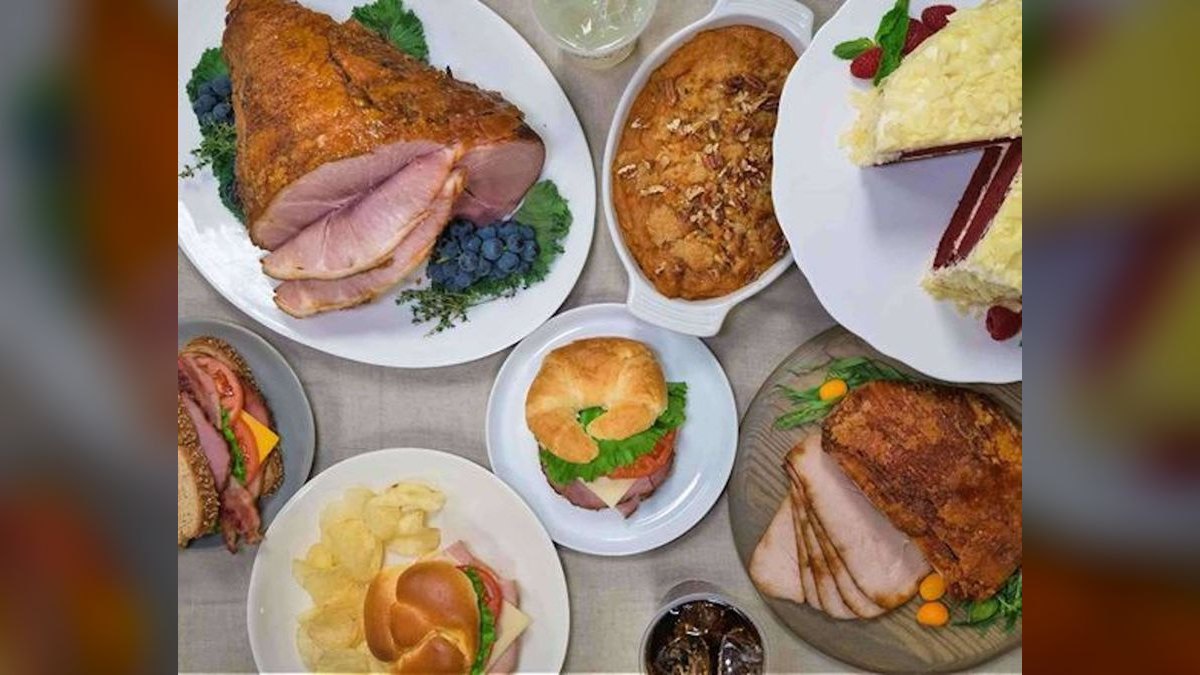
The framing matters because it reorders the diligence. The question is not "is Honey Baked Ham a good brand" — the brand is fine, the product has genuine pull, and the franchisor has spent the last two years broadening the menu specifically to attack the seasonality problem. The question is whether your specific capital stack, your specific trade area, and your specific tolerance for a lumpy year survive contact with a calendar where two weeks in December can be worth more than the preceding five months combined.
How the seasonal cash engine actually works
Every franchise has a unit economic model. This one has a unit economic model plus a treasury problem, and confusing the two is how people lose money on a profitable store.
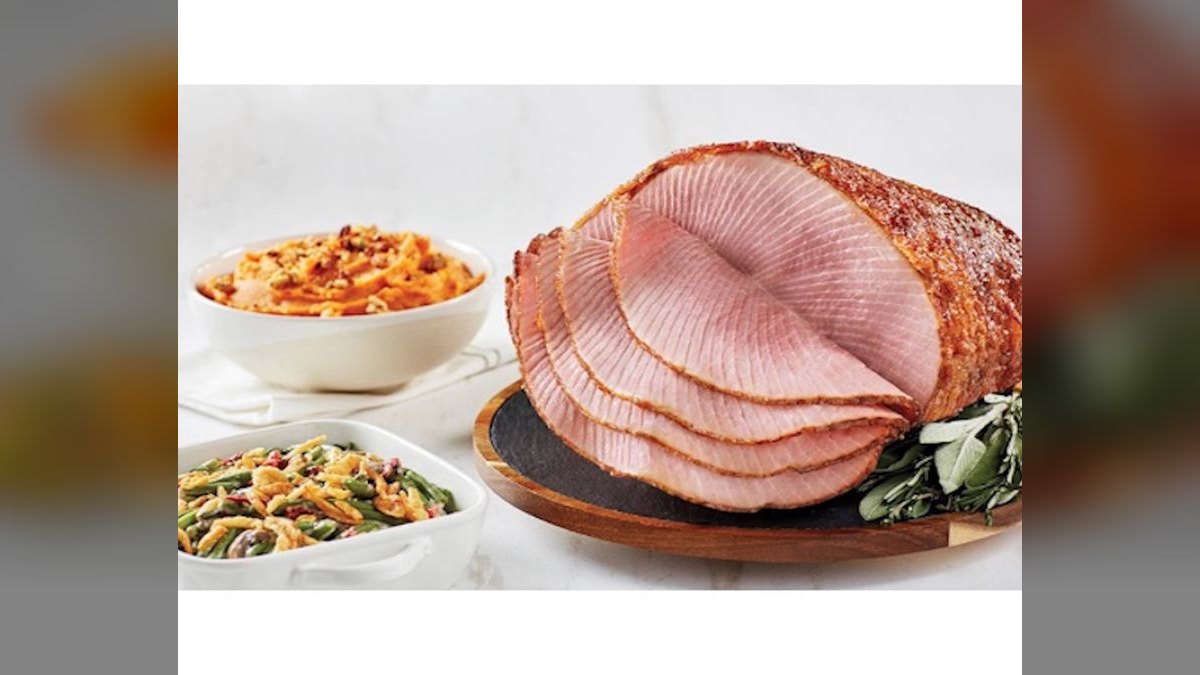
Start with the revenue shape. A traditional store's year is not a flat line with two bumps. It is a low plateau with two vertical walls. Easter week — a single seven-to-ten-day selling window whose date moves as much as a month year to year — can produce 12% to 18% of annual revenue. Thanksgiving week adds another slice. Then the ten days before Christmas can deliver more volume than the entire third quarter. Between those walls, the store runs on lunch traffic, sliced-ham-by-the-pound regulars, corporate catering, and gift cards. That trough business is what the franchisor's menu expansion — Take & Bake items, prime rib, an expanded sandwich lunch, catering platforms — is designed to thicken, and stores that adopted the full menu have generally reported better non-holiday weeks than stores that stayed narrow. But it thickens the trough; it does not flatten the walls.
Now layer the cost structure on top. Royalty runs 6% of net sales. The brand fund adds 4.25%. On $924,000 of gross sales that is roughly $55,000 and $39,000 respectively — about $95,000 off the top before you have paid a single employee or landlord. Cost of goods on a premium bone-in spiral-sliced product typically sits in the high thirties to low forties as a percentage of revenue. Labor targets the low-to-mid twenties. Occupancy runs 8% to 12%. Everything else — utilities, insurance, packaging, local marketing, bookkeeping, card fees, repairs — lands in the 9% to 12% band. Stack those and a normal year leaves 10% to 13% at the EBITDA line; a strong holiday cycle that absorbs fixed cost across higher volume can push 15% to 18%.
The critical asymmetry: royalty and brand fund are variable, but rent, the salaried manager, insurance, and debt service are not. In July you pay full fixed cost against a fraction of peak revenue. In December you pay the same fixed cost against multiples of it. That means your annual margin is almost entirely determined by holiday execution — basket size, upsell attach, staffing accuracy during surge weeks, and how much B2B gift card volume you booked in October and November. Miss labor discipline during the Easter and Christmas surge and you can run 32% to 38% labor in the exact weeks that were supposed to fund the year. That single line item is the difference between a 15% store and a 6% store on identical revenue.
The upstream implication is that this business rewards a treasury mindset more than a restaurant mindset. You are managing a working capital cycle with two enormous inventory pre-builds, not managing daily covers. That is a different operator skill set than most food franchising, and it is closer to seasonal retail — think Halloween pop-ups, garden centers, tax-prep offices, or a fireworks operation — than it is to a sandwich shop. If you have run seasonal retail, you already understand the muscle. If your background is steady-state B2B, the rhythm will fight you for two years.
The numbers, and what they conceal
Take the disclosed figures at face value first, then interrogate them.
A traditional store's total initial investment commonly runs $581,400 to $876,950, built from a $15,000 franchise fee, leasehold improvements and real estate costs in the $185,000 to $325,000 range, equipment including the ham-handling and oven package at $95,000 to $150,000, signage, POS and IT at $25,000 to $45,000, opening inventory at $35,000 to $55,000, three months of working capital at $50,000 to $90,000, and training plus grand opening around $20,000 to $35,000. Financial qualification generally requires roughly $350,000 of net worth and $100,000 of liquid capital. Ongoing fees are 6% royalty plus a 4.25% marketing contribution.
The seasonal format is a materially different deal. A store operating eight to ten weeks per year carries something in the range of $167,000 to $266,000 all-in, and because it does not carry twelve months of rent, management salary, and utilities against three months of meaningful revenue, its margin profile is structurally better — mid-to-high teens EBITDA is achievable on gross sales in the low-to-mid six figures. Payback compresses accordingly. The tradeoff is that you are not building a year-round enterprise with a catering book and a resale multiple; you are buying an annuity that requires an intense ten weeks and a plan for the other forty-two.
Now the interrogation. An Item 19 average is not your forecast. Three specific distortions matter:
Averages hide the distribution. A system average near $924,000 is consistent with a top quartile above $1.1 million and a bottom quartile closer to $650,000. At $1.1 million with disciplined labor you might net $155,000 to $185,000 and pay back in four to six years. At $650,000 you are netting $26,000 to $45,000 before your own labor is fairly priced, and payback stretches past twelve years — which is not a business, it is a job with a personal guaranty attached. Ask the franchise development team for the distribution, not the mean. If Item 19 discloses medians, quartiles, or the percentage of stores that met the average, read that language extremely carefully; the percentage attaining the average is often the single most informative number in the document.
Averages include mature stores. A system average is weighted toward units that have had a decade to build a catering book and a repeat holiday customer base. Your year one is not that store. Model year one at roughly 70% of the disclosed median, year two at 90%, and year three at 100% or slightly above. If the model does not throw off at least $75,000 of owner cash flow by year two under that ramp, the deal is telling you something.
Gross sales are not earnings. Item 19 frequently discloses revenue without a full cost structure, or with a partial one. You must build the rest yourself: your actual negotiated rent, your actual debt service at current SBA 7(a) pricing, your actual labor market. A store in a $38-per-square-foot suburban Atlanta center and a store in a $65-per-square-foot Northeast lifestyle center have identical Item 19 exposure and completely different P&Ls.
Then stress it. Wholesale bone-in ham and pork pricing moves, and franchisors in premium categories typically pass only part of input inflation through to retail in order to protect holiday unit volume — which means input spikes compress store-level gross margin rather than customer counts. Run your pro forma with cost of goods 15% above your base assumption and labor 18% above, simultaneously. A deal that survives that double stress is a real deal. A deal that only works at base case is a bet on benign conditions across a ten-year note.
One more number that rarely makes the model: the financing stack. A typical structure is 30% to 35% equity — call it $175,000 to $305,000 on this investment range — with an SBA 7(a) loan covering the balance on a ten-year amortization at prime plus roughly two to three points. That debt service is a fixed monthly obligation that does not care about the calendar. Price it into July, not just December.
Trade-offs and the four other doors
Greenfield is the default path presented to you. It is rarely the best one.
Buy an existing store instead. Mature Honey Baked Ham stores trade, and a five-to-ten-year-old unit at a typical small-business multiple of roughly three-and-a-half to four-and-a-half times EBITDA often lands well below the cost of building new. You acquire proven trade-area economics, a trained holiday crew that already knows how to run a surge week, an existing catering book, and — most valuably — historical monthly cash flow you can actually underwrite instead of forecast. You skip the eighteen-month ramp entirely. The tradeoffs are real: you inherit the seller's lease terms, possibly deferred equipment maintenance, whatever staff culture exists, and you will owe a transfer fee and likely franchisor approval and retraining. But on risk-adjusted return, a fairly priced resale beats a greenfield open in most markets, and the diligence is easier because you are auditing history rather than validating a hypothesis.
Take the seasonal format. Lower capital, better margin percentage, shorter payback, and a life that lets you keep other income for most of the year. This is the correct answer for capital-constrained operators and for people who want the brand's holiday demand pull without twelve months of overhead. It is the wrong answer if your goal is to build a sellable multi-unit enterprise, because you are not accumulating the year-round catering and lunch business that gives a traditional store its resale value.
Go year-round in an adjacent category instead. If what you actually want is a food business with an owner-operator path, the fast-casual and sandwich segments offer materially more daypart diversification and higher unit volumes — you trade holiday concentration for seven-day-a-week labor management and tighter competitive density. Higher AUV, usually higher capital, and a completely different operational rhythm: you win on execution consistency rather than on two surge weeks. Pull the Item 7 and Item 19 for two or three of those brands and compare payback side by side. It is a genuinely different risk profile, not a better one.
Skip franchising. An independent specialty butcher, prepared-protein, or holiday-catering concept carries no franchise fee and no 10.25% of revenue flowing out the top, which on $900,000 of sales is roughly $95,000 a year retained. That is the entire argument for independence, and it is a strong one. The counter-argument is equally strong: you lose the brand-driven holiday demand that makes the ham business work. Honey Baked customers plan around the brand and drive across town for it. An independent has to manufacture that pull from zero, and holiday demand is exactly the kind of habit that takes years to build.
The meta-point: these four doors are not ranked by quality, they are ranked by fit. A resale suits someone who underwrites cash flow. Seasonal suits someone protecting capital and optionality. Greenfield suits someone who wants control of the site and the build and has the reserves to fund a bad first year. Independence suits someone who believes their own operating skill exceeds the value of the brand pull they are renting at 10.25% of revenue. Decide which of those describes you before you decide anything about ham.
The pitfalls that actually kill deals
Six failure modes recur, and every one is visible before signing if you look for it.
Absentee ownership from day one. Hiring a general manager before you have personally run two full holiday cycles is the strongest single predictor of bottom-quartile performance. It costs several points of margin through shrink, missed upsell, and — above all — sloppy surge-week scheduling. Nobody schedules Christmas week as tightly as the person whose personal guaranty is on the note. If you are not willing to be in the store for the first three years, buy a different asset class.

Choosing a B-grade trade area to save on rent. This is the most expensive kind of frugality available to you. The Honey Baked customer skews toward higher household income and treats holiday entertaining as default behavior; they will drive past two grocery stores to get to you, but they have to be in your radius to begin with. Saving $4,000 a month on rent while dropping $200,000 of annual revenue is not savings. Screen sites hard: reject a candidate where median household income in the primary trade area is meaningfully below the mid-eighties, or where you are not within a few miles of a premium grocery anchor whose customer base overlaps yours. Co-tenancy with a high-AOV grocer is a real revenue driver, not a nice-to-have.
Under-funding the working capital line. Covered above but worth restating as a rule: hold reserves beyond Item 7 sized to cover one full Christmas pre-build plus three months of fixed cost, in cash, uncommitted. If that reserve does not exist, you do not have enough money to open, regardless of what the qualification minimums say.
Ignoring regional holiday food culture. Ham is not the universal holiday default. In parts of the Pacific Northwest, Northern California, and dense urban cores, the holiday meal skews toward restaurants, delivery, or non-pork proteins. The brand can still work there, but the Item 19 median was not built in those markets. If you are siting somewhere the ham habit is weak, discount your revenue forecast further and do not assume a national average applies to a regional food tradition.
Never building the trough business. Operators who treat May through October as downtime rather than as a sales season leave the year's margin on the table. The offset is deliberate B2B work: standing weekly catering accounts with law firms, medical practices, real estate teams, hospitals, and clubs, plus an aggressive October–November corporate gift card push. Gift cards are particularly efficient — they compress revenue into a short selling window, arrive as cash before the product is redeemed, and create a returning customer. This is straightforward outbound sales work, and it is why people with quota-carrying backgrounds often outperform career restaurant operators in this system.

Skipping the franchisee calls. Item 20 gives you a contact list. Use it — eight to twelve calls, minimum, and deliberately include former franchisees and anyone who transferred or closed, because they will tell you things current operators won't. Ask for specifics: gross sales year one versus year two, labor as a percentage of revenue during holiday weeks, how much capital they needed beyond Item 7, what the franchisor did when their store struggled, and what they would do differently. Anyone unwilling to discuss P&L specifics is a data point, not a dead end — but weight the ones who will. Then have a franchise attorney read the agreement for the terms that never make the marketing deck: territory definition and whether it protects you from a nearby seasonal unit, transfer and resale conditions, renewal terms, personal guaranty scope, and what happens to your investment if you want out in year four.
Related questions
Is the seasonal store a better deal than the traditional store?
On margin percentage and payback speed, usually yes — lower capital, mid-to-high-teens EBITDA, faster recovery. On absolute dollars and resale value, no. Seasonal is the better risk-adjusted return; traditional is the better enterprise if you intend to build and eventually sell a multi-unit operation.
Can I run this while keeping my day job?
Not a traditional store, and not credibly. Easter and Christmas weeks are eighty-hour weeks where owner presence directly drives basket size and labor discipline. A seasonal unit is closer to feasible if your employment allows a genuine ten-week sprint, but even that requires real availability during the season.
How much should I hold in reserve beyond Item 7?

Enough to cover one full Christmas inventory pre-build plus three months of fixed cost — realistically an additional $75,000 to $125,000 in uncommitted cash for a traditional store. The Item 7 working capital estimate is sized for steady-state operation, not for crossing your first holiday cycle.
What does a fair price look like for an existing store?
Small-business food retail commonly trades around three-and-a-half to four-and-a-half times EBITDA, adjusted for lease quality, equipment condition, and how much of the revenue depends on the departing owner's relationships. Verify the multiple against actual tax returns, not a broker's adjusted figures.
Which background predicts success here?
Prior P&L ownership plus outbound sales experience. The holiday weeks reward labor discipline and upsell coaching; the trough rewards booking corporate catering and gift card accounts. Seasonal retail experience transfers unusually well. Pure investor backgrounds without operating reps consistently underperform.
FAQ
What is the total investment for a Honey Baked Ham franchise?
A traditional store commonly runs $581,400 to $876,950 all-in, including a $15,000 franchise fee, build-out, equipment, opening inventory, and initial working capital. The seasonal format is substantially lower, roughly $167,000 to $266,000. Actual cost depends heavily on your real estate market and the condition of the space you take. Always confirm against the current Item 7 in the FDD you receive, since ranges are updated annually.
What are the ongoing fees?
A 6% royalty on net sales plus a 4.25% marketing and brand fund contribution — 10.25% combined. On $924,000 of gross sales that is roughly $95,000 a year leaving the store before rent, labor, or product cost. Local marketing spend is typically additional. Treat that 10.25% as the price of the brand pull that fills your store at Christmas, and judge whether your own operating ability could generate equivalent demand independently.

How seasonal is it, honestly?
Roughly 60% to 65% of annual revenue concentrates in November through December plus Easter week. That is the defining fact of the business. Everything else — hiring, cash management, inventory planning, your personal calendar — is downstream of it. The franchisor's menu expansion into Take & Bake items, prime rib, expanded lunch, and catering is a genuine effort to thicken the trough, and it helps, but it does not change the fundamental shape.
What owner earnings should I expect?
At the disclosed system average, a steady-state year plausibly produces somewhere in the $92,000 to $111,000 range at 10% to 13% EBITDA, before your own compensation is fairly priced against the hours. Top-quartile stores do considerably better; bottom-quartile stores do not clear a reasonable salary. Model year one at roughly 70% of the median rather than at the average, and require $75,000 of owner cash flow by year two to proceed.
When does breakeven happen?
Commonly month 14 to 18, contingent on the first combined Easter-and-Christmas cycle clearing roughly $450,000. That contingency is the whole sentence. If the first holiday season underperforms, you are funding a second capital injection in early year two, and total payback stretches from the seven-to-ten-year range toward twelve or beyond.
Is buying an existing store better than opening a new one?
For most first-time franchise buyers, yes. A fairly priced resale gives you real historical cash flow to underwrite, a trained holiday crew, and an existing catering book, and it skips the eighteen-month ramp where new stores burn cash. You accept the seller's lease and equipment condition and owe a transfer fee, but you are auditing history rather than betting on a forecast — a materially lower-risk position.
Sources
- https://www.ftc.gov/business-guidance/resources/consumers-guide-buying-franchise
- https://www.ftc.gov/legal-library/browse/rules/franchise-rule
- https://www.sba.gov/funding-programs/loans/7a-loans
- https://www.honeybaked.com/
- https://www.franchisechatter.com/
- https://www.franchisedirect.com/
- https://www.qsrmagazine.com/
- https://www.restaurantdive.com/
- https://www.bls.gov/ppi/
- https://www.ers.usda.gov/topics/animal-products/hogs-pork/
Related on PULSE
This page will be disappearing soon. Save it to your device for $1 — or read it free while it is here.
@Kory-White- · if Venmo asks, the last 4 of my number are 2012
This page is gone.
This one is off the shelf now. $1 keeps it on your phone for good — the whole page, pictures and diagrams included.
 franchiseShould I open or buy a Mac Tools franchise in 2027?
 franchiseShould I open or buy an Orangetheory Fitness franchise in 2027?
 franchiseShould I open or buy a Jeremiah's Italian Ice franchise in 2027?
 franchiseShould I open or buy a Panera Bread franchise in 2027?
 franchiseShould I open or buy a Stanley Steemer franchise in 2027?
 franchiseShould I open or buy a McAlister's Deli franchise in 2027?
 franchiseShould I open or buy a Dunkin' franchise in 2027?
 franchiseShould I open or buy a Bruster's Real Ice Cream franchise in 2027?
 franchiseShould I open or buy an Anytime Fitness franchise in 2027?
 franchiseShould I open or buy a Little Caesars franchise in 2027?