


Should I open or buy a Tommy's Express Car Wash franchise in 2027?
Quality
Certified
Open a Tommy's Express in 2027 only if you can put roughly $1M liquid and $2M net worth behind a hard-corner acre on a 25,000+ vehicles-per-day road, and you intend to own the dirt and run it yourself for eighteen months. All-in cost runs about $5M–$8.5M. Absentee or saturated-market buyers should pass.
What an express tunnel franchise actually is, and why the model changed
Strip away the branding and a Tommy's Express is a real-estate deal with a subscription business bolted onto it. That framing matters more than any single number in the disclosure document, because it tells you where your return actually comes from and which risks will kill you.
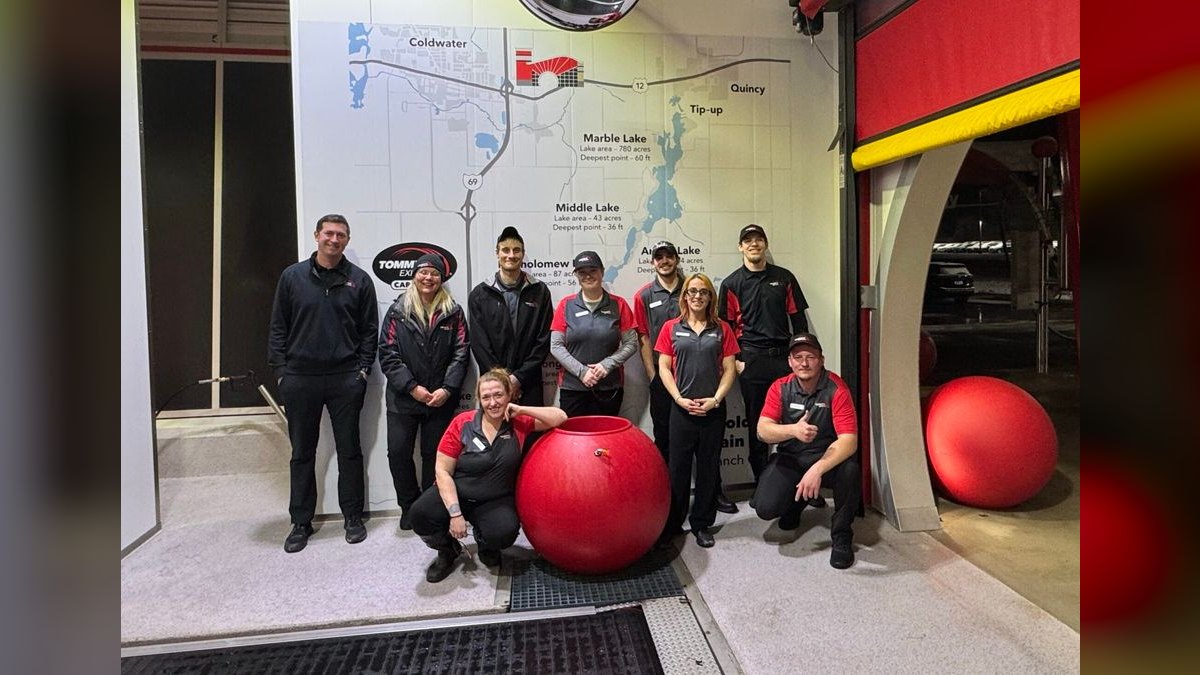
The physical asset is a conveyor tunnel — typically 100 to 130 feet — that pulls a car through on a belt while chemistry, friction media, and dryers do the work. A crew of three to five people staffs a shift: one or two loading cars onto the belt at the entrance, one at the pay stations troubleshooting, one floating across the free-vacuum lot. Throughput is the whole game. A well-designed tunnel at peak can move well north of 100 cars an hour, and the marginal cost of the 101st car is essentially water, chemistry, and a few cents of electricity. Fixed costs — the land, the building, the equipment note, the base labor — do not move. That is the operating leverage that makes express wash attractive and also what makes an underperforming site so brutally unforgiving: the same leverage runs in reverse.
The subscription layer is what changed the industry between roughly 2018 and today. Unlimited wash clubs converted a weather-dependent, impulse-driven retail business into recurring revenue. Instead of praying for a dirty week in March, you bill a member every month whether they show up or not. Tommy's runs a tiered monthly plan structure in the high-$20s to high-$30s range depending on market and wash level. The strategic consequence is that your job as an owner is much less "sell washes" and much more "acquire and retain members" — a retention job that looks far more like a gym, a SaaS company, or a pest-control route than like a traditional retail storefront.
That reframing has real operational teeth. Members wash more often than retail customers, which means your effective revenue per car goes *down* as membership penetration goes up, while total site revenue and predictability go up. You are trading yield for volume and smoothness. If you model your pro forma on retail per-car pricing and then convert two-thirds of your traffic to members, your revenue forecast will be wrong in both directions at once. Practitioners track membership penetration — active members divided by daily car count, or member revenue as a share of total revenue — as the single most predictive KPI on the site. Brand-wide, member revenue has climbed from roughly half of the mix a few years ago to a clear majority today, and the trend line still points up.
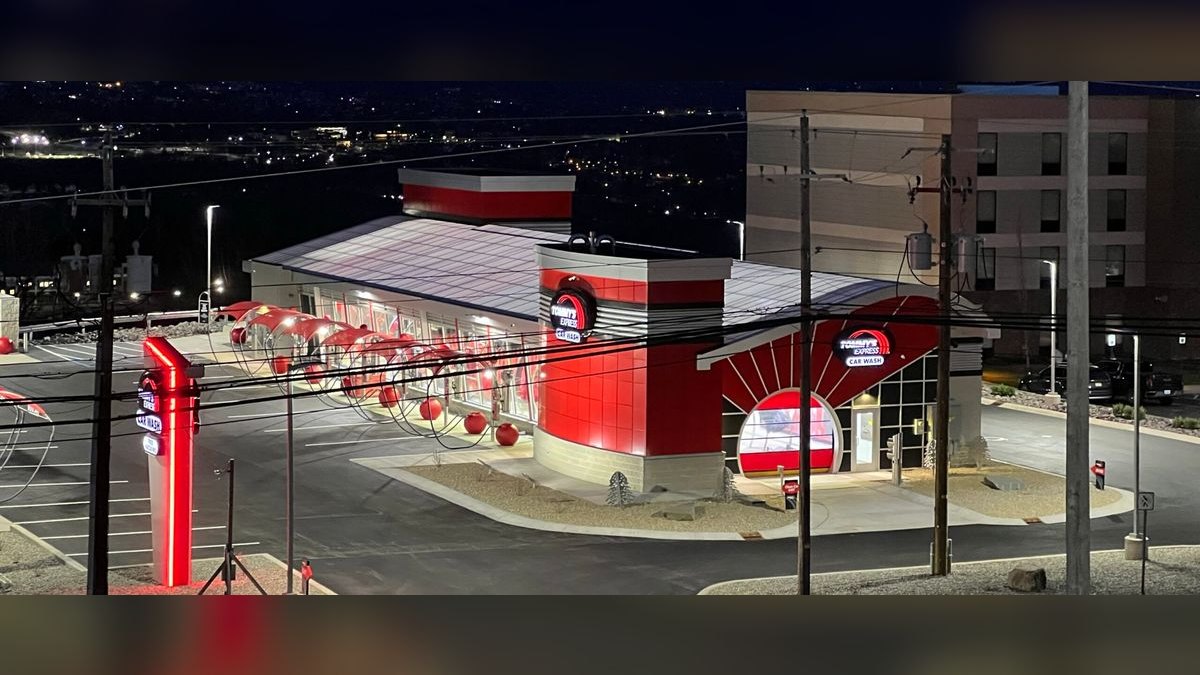
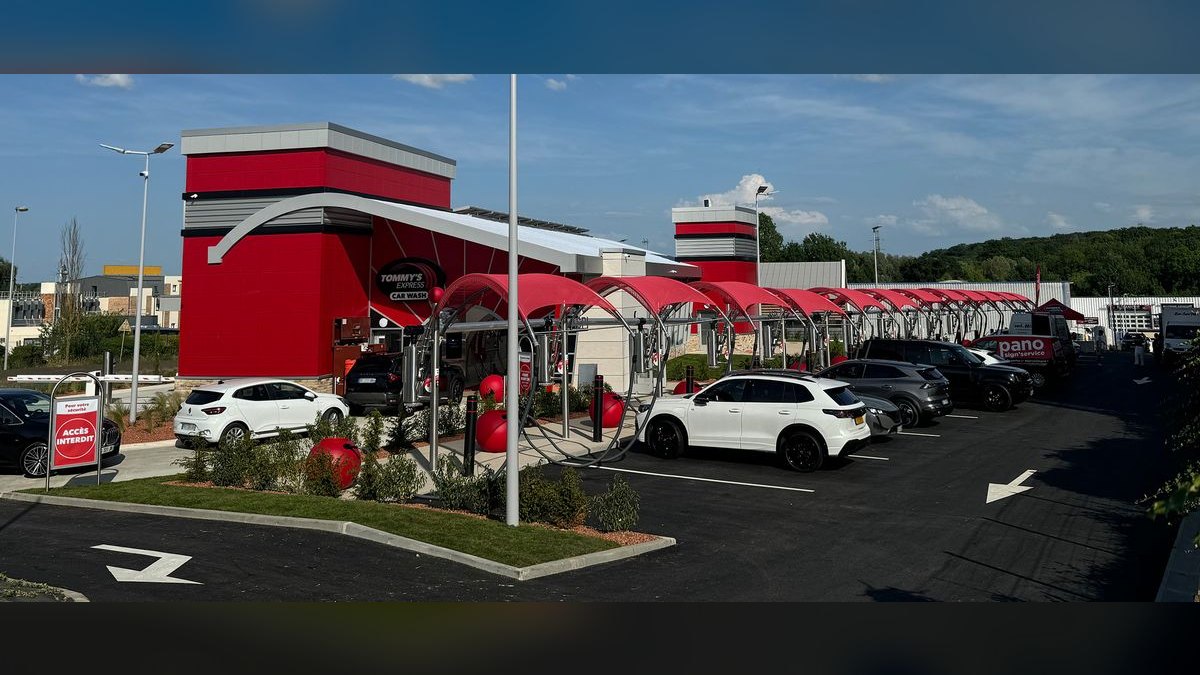
Why does the franchise wrapper matter at all, given that you are supplying the land, the building, and most of the capital? Three things you cannot easily replicate solo: the equipment and chemistry system engineered as a matched package by Tommy Car Wash Systems (the manufacturer is the same organization behind the franchise, which is unusual and meaningful), the membership app and license-plate-recognition infrastructure that makes frictionless member entry possible, and brand pull — the yellow-and-blue building reads as a known quantity to a driver who has used one in another city. Against that you pay a 4% royalty and a 1% national brand fund on gross revenue, plus a local marketing minimum, plus a $50,000 initial fee (discounted for honorably discharged veterans). On $1.8M of revenue, the royalty and brand fund alone are roughly $90,000 a year — real money, and the core of the build-versus-buy-the-brand question addressed later.
The adjacent lesson worth internalizing: this is the same structural bet as self-storage, RV and boat storage, and quick-lube. High fixed cost, low variable cost, real estate you'd want to own anyway, and a demand curve that is relatively insensitive to recession. If you are evaluating Tommy's, you should honestly be evaluating those three alongside it, because they compete for the same investor profile and the same dirt.
The step-by-step process from inquiry to first wash
The sequence below is the practical path. Treat the day counts as a disciplined minimum, not a promise — site control is the variable that blows up every timeline.
Capital verification first, before you talk to anyone. Build a personal balance sheet that separates truly deployable liquid assets from paper net worth. Retirement accounts you will not actually touch are not liquidity. Home equity you would need a HELOC to reach is not liquidity. The franchisor's full-ownership path generally looks for approximately $1M liquid and $2M net worth; there is a lighter path where the franchisor or a real-estate partner controls the dirt and your requirement drops to roughly half that, at the cost of giving up the appreciation. Get a pre-qualification conversation going with lenders that actively underwrite car wash — Live Oak Bank and Celtic Bank are the two most commonly cited names in the segment, and conventional construction lenders in your region will also quote it.
Application and qualifying call. Territory availability is the first filter and it is binary. If a candidate corridor already has three or more competing express tunnels within a three-mile radius, treat that territory as disqualified regardless of how good the demographics look on paper. Member acquisition cost in oversaturated corridors has risen sharply — operators report roughly doubling or worse versus a few years ago — and every dollar of that increase comes straight out of your ramp.
FDD review and the franchisee calls. You get the disclosure document and a mandatory review window before you can sign. Read Item 7 (investment ranges), Item 19 (financial performance representations), Item 20 (the franchisee list, plus openings, closures, and transfers), and Item 21 (audited financials) personally — not through a summary, not through a broker. Then call twelve to fifteen existing franchisees from Item 20. Structure the sample deliberately: five or more in your target region, three multi-unit owners, two from a recent opening cohort, two who have been operating five-plus years. Ask each one the same four questions: what did you spend versus the Item 7 range, what was your month-12 membership count, what surprised you about labor, and would you sign again. The delta between the enthusiastic answers and the quiet hesitations is the real due diligence.
Discovery Day. Two days on site at the Holland, Michigan headquarters — walking a live tunnel, reviewing build specs, meeting the leadership team. Bring your CPA and your franchise attorney to the financial session. This is not a formality; the questions a good CPA asks about depreciation schedules, cost segregation, and equipment financing structure will change your after-tax return materially.
Real-estate sourcing — the true bottleneck. Engage a broker who specializes in car wash and net-lease retail rather than a generalist. Underwrite three to five candidate pads simultaneously. Non-negotiables: roughly 1.0 to 1.5 acres, 25,000+ vehicles per day on the primary road, hard-corner or strong-visibility position, 200+ feet of frontage for stacking, and lot geometry that lets you get cars in, through, and out without queueing into the street. Then layer demographics — a median household income floor in the mid-$60Ks is a common screen — and competitor density. Six to eighteen months to find and control the right pad is normal. Rushing this is the most expensive mistake available to you.
The model and the go/no-go. Build a ten-year discounted cash flow with deliberately conservative inputs. Assume a Year 1 revenue well below system average, a thin Year 1 EBITDA margin, and a ramp to system-average performance no earlier than Year 3. Sensitivity-test membership count, average plan price, and utility cost independently. If the deal only works at system-average performance in Year 1, it is not a deal — it is a hope.
Sign, close, and order long-lead items. Execute the franchise agreement and pay the initial fee, close on the land or a long ground lease, and get the tunnel conveyor and equipment package on order immediately. Lead times on the core mechanical package run many months, and it is entirely possible to finish a building and then sit on it waiting for equipment.
Costs, timelines, and the ranges that actually bind
The headline range from the disclosure document is roughly $4.97M to $8.52M all-in per site. That spread is not noise — it is almost entirely land and site work, and it means your local dirt market determines whether you are running a five-million-dollar project or an eight-and-a-half-million-dollar one.
Rough shape of where the money goes. Land and site work carry the widest variance, from a bit over a million to well north of two million; grading, retention, utility runs, and municipal impact fees can add hundreds of thousands on a difficult pad. The building shell — tunnel structure plus the small retail and equipment room — lands in the low-to-mid seven figures. The Tommy Car Wash Systems equipment package, which includes the proprietary belt conveyor, is itself a seven-figure line and is not optional; it is the mechanical heart of the brand and skipping it is not a cost-saving strategy, it is a path to losing the franchise. Then pay stations, vacuum arches, signage, and point-of-sale; then three months of working capital; then pre-opening marketing.
Ongoing: 4% royalty, 1% brand fund, and a local marketing obligation typically expressed as an annual dollar minimum or a percentage of revenue, whichever is greater. Budget those as roughly 7% of gross before you have paid a single employee.
On the revenue side, the disclosure document's Item 19 puts average system-wide gross sales in the neighborhood of $1.83M–$1.88M per location, with reported unit-level EBITDA margins in the high-20s. The quartile spread is what you should actually plan around: top-quartile sites clear well past $2.5M with margins that can approach or exceed 40%, while bottom-quartile sites sit closer to $1M–$1.25M and grind out mid-teens margins. Those are not different operators being lazy; they are overwhelmingly different *sites*. Traffic count, visibility, ingress/egress, and competitor density explain most of the variance before management skill enters the picture.
Payback math depends entirely on what you count. Against the franchise fee and the non-real-estate investment, roughly a 30-month payback at average performance is a defensible planning number. Against the full project including land, you are looking at something in the seven-to-ten-year range — which is precisely why owning the dirt matters. Over that horizon, land appreciation and principal paydown on the mortgage are a meaningful share of your actual return, and an operator who leased the pad has given that entire component away.
Timeline: figure six to eighteen months for site control, three to six months for entitlement and permitting depending on municipality (this is where Sun Belt and Midwest jurisdictions diverge wildly — some approve a car wash as by-right retail, others treat it as a conditional use requiring a public hearing and a water-recycling study), then ten to fourteen months of construction. From signed franchise agreement to first car through the tunnel, eighteen to twenty-four months is realistic. Then a ramp: you are chasing something like 1,500 members in the first ninety days and 2,500 to 4,000 at steady state, and reaching steady state takes twelve to twenty-four months.
The cost line that has moved most against operators is utilities. Water rates in fast-growing Sun Belt markets have been climbing at a mid-to-high single-digit annual clip, and commercial electricity has risen alongside. Reclaim systems — recycling a large share of tunnel water — went from a nice environmental talking point to a genuine margin defense, and in some jurisdictions they are now a permitting requirement. Model your cost per wash with an escalator, not a flat rate. Labor is comparatively contained because the headcount is small, but the site manager is the expensive seat: a manager capable of running a $1.8M tunnel without you standing there costs enough to visibly move your EBITDA line, which is exactly why the first eighteen months of owner presence is not optional advice.
Financing deserves its own line. Interest rates in the current environment mean a heavily levered build carries dangerous debt service. Run the arithmetic yourself: a four-million-dollar note amortized over twenty-five years at a low-double-digit rate consumes roughly the entire average-unit EBITDA. That is not a thin margin of safety, it is no margin at all. The practical guardrail most experienced sponsors use is to keep total leverage meaningfully under two-thirds of project cost, and to separate the real estate financing from the equipment and business financing so the two can be structured — and eventually refinanced or sold — independently.
Where owners get it wrong
Treating it as passive income. This is the number one failure mode and it is not close. The marketing gravity around car wash — low headcount, automated equipment, recurring revenue — creates a strong impression of a set-and-forget asset. It is not. The first eighteen months demand an owner physically present: dialing in chemistry, training loaders, chasing the membership number weekly, fixing the vacuum that has been out for three days that nobody told you about. Owners who hire a general manager on day one and check the P&L monthly are systematically the underperformers.
Buying the site the broker had, not the site the model needed. Every disappointed operator has a version of this story. The pad was available, it was close to home, the price was right, and the traffic count was 14,000 instead of 25,000. There is no operational excellence that fixes a bad corner. You cannot market your way past a median that blocks a left turn in, or a competitor with a two-year head start 1.4 miles up the same road. If you take one thing from this page: the site decision carries more of your outcome than every other decision combined, and it is the one you are most tempted to rush because it is the one that makes you wait.
Under-modeling the membership ramp. New operators routinely project a membership curve that assumes the launch promotion converts cleanly into long-term members. In practice, a heavily discounted or free launch month produces a large cohort with poor retention; churn in months two through four is the number that separates a real base from a vanity number. Track cohort retention, not gross member count. And understand the yield trade explicitly: a member washing three-plus times a month at a $30-ish plan is generating an effective per-wash revenue well under half your retail price. That is fine — it is the model working — but it means your revenue-per-car metric will decline as your business improves, and if you don't expect that, you will misdiagnose it as a pricing problem.
Ignoring competitive response. You are not opening into a static market. If your corridor is attractive to you, it is attractive to Mister Car Wash, Take 5, Quick Quack, Zips, and every regional operator with a development pipeline. Underwrite as though a well-capitalized competitor opens within two miles in your first three years, because in growth markets that is closer to the base case than the downside case. The defense is member lock-in built early — a customer with an active subscription and a plate on file is dramatically stickier than one deciding fresh each time.
Skipping or shortcutting the franchisee calls. Fifteen phone calls is a few hours of work against a multi-million-dollar decision, and it is the single highest-yield diligence available. Franchisees will tell you things no document will: which markets got soft, how the equipment support actually performs, whether the construction estimates held.
Confusing brand-average with your-site-expected. Item 19 averages are drawn from a system weighted toward mature sites in proven corridors. Your Year 1 is not the average. Plan for a below-average first year and let outperformance be a surprise rather than a requirement.
Underestimating entitlement risk. Car washes attract municipal scrutiny — water use, noise, traffic, stacking, signage. In some jurisdictions the approval is routine; in others you will spend nine months and six figures on studies and hearings and may still lose. Never close on land without a due-diligence period long enough to confirm you can actually build the thing, and negotiate the purchase contingent on entitlement wherever you can.
Decision framework: open, buy, or walk
Three distinct paths exist and they suit different people. Building new gives you site selection control and a pristine asset, at the cost of eighteen-plus months of pre-revenue risk, construction exposure, and a full ramp. Acquiring an existing Tommy's Express resale gives you cash flow on day one and eliminates construction risk, but you inherit whatever member-base damage the prior operator created — and a weak member base with high churn is the hardest thing in this business to fix. Secondary-market pricing for single sites has compressed meaningfully from the peak multiples of a few years ago, which makes resale more interesting than it was, particularly for a first-time operator who would rather learn the business on a running asset.
The third path is not doing it at all, and it is a legitimate outcome. If your honest liquid capital is well under the threshold, the answer is not to lever up to reach it — it is to look at a lower-capex concept or a different asset class. The under-capitalized car wash operator has no ability to absorb a slow ramp, and the ramp is exactly where the risk lives.
For those who want car-wash exposure without operating it: the publicly traded operators in the segment offer a liquid, passive proxy. You get sector exposure and none of the control, the tax advantages, or the enterprise-value creation. That trade is a real one and worth naming honestly rather than dismissing.
The strongest version of this deal is the multi-unit platform. Three to five sites inside a drive radius you can cover in a day share a manager bench, a marketing spend, a maintenance tech, and a membership base that follows customers across locations. Density is what turns a good single-site cash flow into an enterprise a strategic buyer wants — and single sites trade at materially lower multiples than platforms of scale. If you have no intention of ever building unit two, be clear-eyed that you are building a job with a good return and a modest exit rather than a company.
Adjacent plays worth pricing before you commit

Do not evaluate Tommy's in isolation. Several nearby options compete for the same capital and the same corner.
Other express tunnel franchises — Take 5 Car Wash, Quick Quack, Zips, WhiteWater Express — sit at somewhat lower total investment with different royalty structures and, in several cases, more flexible site standards including smaller minimum lot sizes. Lower site standards are a double-edged benefit: easier to find a pad, and a real reason those systems' averages differ. Compare Item 19 disclosures side by side rather than comparing marketing decks.
An independent single-site build eliminates the initial fee and the ongoing 4% plus 1%, which on $1.8M of revenue is roughly $90,000 a year returned to you. What you give up is brand recognition that drives launch membership, the engineered equipment and chemistry package, the app and plate-recognition stack, and the operational playbook. For an operator with prior car-wash experience and an existing customer base, independent can be the better math. For a first-timer, the franchise wrapper is buying down exactly the risks a first-timer cannot price.
Then the genuinely adjacent asset classes: self-storage on the same kind of pad, with even lower labor and comparable recurring revenue but a slower ramp; quick-lube, which shares the drive-thru retail geometry and the real-estate logic but adds inventory and technician labor; and RV/boat storage, which is the lowest-operational-intensity version of the same real-estate bet. Each competes for the identical investor profile. If your actual thesis is "I want to own commercial dirt with a durable cash-flowing operating business on it," you owe yourself a serious look at all four before you sign anything.
Finally, the exit question, which should shape the entry. Single-site operators sell to local buyers at modest multiples. Platforms of three or more sites in a defined trade area attract regional and private-equity buyers at meaningfully higher multiples. Consolidation activity in the segment has cooled from its peak, and multiples compressed accordingly — but scale still commands a premium and always has. Design the entry for the exit you actually want.
Related questions

How many members do I need to break even?
Break-even depends on your debt service, but a useful planning anchor is that most single sites need to cover fixed costs before member revenue turns meaningful. Operators generally target 2,500 to 4,000 active members at steady state, with roughly 1,500 as a realistic ninety-day post-launch goal.
Is owning the land actually necessary?
Not required — a site-lease path exists with roughly half the capital threshold. But over a seven-to-ten-year hold, land appreciation and mortgage principal paydown represent a large share of total return. Leasing converts an asset play into a pure operating play with materially lower upside.
Can I run this remotely with a general manager?
Eventually, yes; initially, no. The first eighteen months require owner presence to dial in operations and build the membership base. A capable site manager costs enough to visibly compress unit EBITDA, so hiring one on day one both raises cost and removes the person most motivated to fix problems.
What is the single biggest predictor of site performance?
Site quality — traffic count, hard-corner visibility, ingress and egress geometry, and competitor density within three miles. Site explains most of the quartile spread in system revenue before operator skill enters the equation. No amount of operational excellence rescues a poorly chosen corner.
Should I buy an existing location instead of building?
If you value day-one cash flow and want to avoid construction and entitlement risk, yes — but audit the member base's churn history forensically. A resale with a decaying, heavily discounted member roster is a harder turnaround than a ground-up build.
FAQ

What is the total investment range for a Tommy's Express franchise?
The current disclosure document puts all-in investment at roughly $4.97 million to $8.52 million per site, covering the $50,000 initial franchise fee, land and site work, building, the Tommy Car Wash Systems equipment package, pay stations and vacuums, working capital, and pre-opening marketing. The spread is driven almost entirely by local land cost and site-work difficulty.
How much liquid capital do I need to qualify?
The full-ownership path generally looks for approximately $1 million in genuinely liquid assets and $2 million in net worth. A site-lease pathway, where you do not own the real estate, carries roughly half those thresholds. Most operators who ramp comfortably bring more than the minimum, because construction overruns and a slow membership ramp both consume cash.
What are the ongoing fees?
A 4% royalty on gross revenue plus a 1% national brand fund contribution, along with a local marketing obligation typically expressed as an annual minimum or a percentage of revenue. Budget roughly 7% of gross for franchisor-related and local marketing costs combined before any operating expense.
How long until I make my money back?
Measured against the non-real-estate investment, roughly 30 months at average unit performance is a reasonable planning figure. Measured against the full project including land, seven to ten years is the honest number — with the offset that you own an appreciating asset and are paying down mortgage principal throughout.
What happens if a competitor opens nearby after I build?
Assume it will happen and underwrite accordingly. Your defense is a large, well-retained member base established before the competitor arrives; subscribers with a plate on file and an active plan are far stickier than transactional customers. If you have not built that base by the time competition arrives, you will be fighting on price, which nobody wins.
Is there a veteran discount?
Yes. Honorably discharged veterans receive a reduction on the initial franchise fee. It is a meaningful gesture but small relative to total project cost, so it should not move a marginal go/no-go decision.
Sources
- https://www.ftc.gov/business-guidance/resources/franchise-rule-compliance-guide
- https://www.ibisworld.com/united-states/market-research-reports/car-wash-auto-detailing-industry/
- https://www.sba.gov/funding-programs/loans/7a-loans
- https://www.carwash.org/
- https://www.carwash.com/
- https://www.franchisechatter.com/
- https://www.tommys-express.com/franchise
- https://investors.mistercarwash.com/
- https://www.bls.gov/ppi/
- https://www.matthews.com/
Related on PULSE
- Should I open or buy a Quick Quack Car Wash franchise in 2027?
- Should I open or buy a Club Car Wash franchise in 2027?
- Should I open or buy a Goo Goo Express Wash franchise in 2027?
- Should I open a independent car wash business in 2027?
- Should I open a coin-op car wash in 2027?
- Should I open or buy a Tommy Gun's Original Barbershop franchise in 2027?
This page will be disappearing soon. Save it to your device for $1 — or read it free while it is here.
@Kory-White- · if Venmo asks, the last 4 of my number are 2012
This page is gone.
This one is off the shelf now. $1 keeps it on your phone for good — the whole page, pictures and diagrams included.
 franchiseShould I open or buy a Panera Bread franchise in 2027?
 franchiseShould I open or buy a UPS Store franchise in 2027?
 franchiseShould I open or buy a Mathnasium franchise in 2027?
 franchiseShould I open or buy a Planet Fitness franchise in 2027?
 franchiseShould I open or buy a Culver's franchise in 2027?
 franchiseShould I open or buy a Jamba franchise in 2027?
 franchiseShould I open or buy a Big O Tires franchise in 2027?
 franchiseShould I open or buy a Cold Stone Creamery franchise in 2027?
 franchiseShould I open or buy a Marco's Pizza franchise in 2027?
 franchiseShould I open or buy a Bojangles franchise in 2027?