


Should I open or buy a Pigtails & Crewcuts franchise in 2027?
Quality
Certified

Yes — if you have $200K liquid, can sign a 5-year lease in a high-density suburban trade area with 5,000+ kids under 12 within 3 miles, and you treat this as an absentee-light, manager-run retail business (not a passive investment). Pigtails & Crewcuts' 2026 FDD shows total investment of $130,000–$283,000, a $30,000 franchise fee, 5% royalty + 2% brand fund, and a system AUV of ~$294,143 across 86 salons in 26 states. A disciplined operator hits breakeven in months 10–14, generates conservative Year-1 owner cash flow of $35K–$55K, and ramps to $70K–$95K by Year 3 at a mature ~$300K AUV with 12–15% EBITDA margins. Probably not if you need $100K+ of W-2 income immediately, you are buying for tax-shelter reasons only, or your county has fewer than 20,000 children under 12.
The Real Numbers
Pigtails & Crewcuts is a children-only hair salon franchise founded in 2004 and headquartered in Atlanta, Georgia. The system finished 2025 with 86 operating salons in 26 states and signed a 3-unit Chicago deal plus targeted expansion in Florida, Indianapolis, Omaha, Tampa, and St. Louis. Below is the 2026 FDD-aligned cost stack (Item 7) and financial performance (Item 19) you need to underwrite before signing.
| Line item | Low (FDD Item 7) | High (FDD Item 7) | Notes |
|---|---|---|---|
| Initial franchise fee | $30,000 | $30,000 | Single unit; veterans discount available |
| Real-estate deposits | $4,000 | $12,000 | First/last + security on 1,200–1,800 sq ft retail |
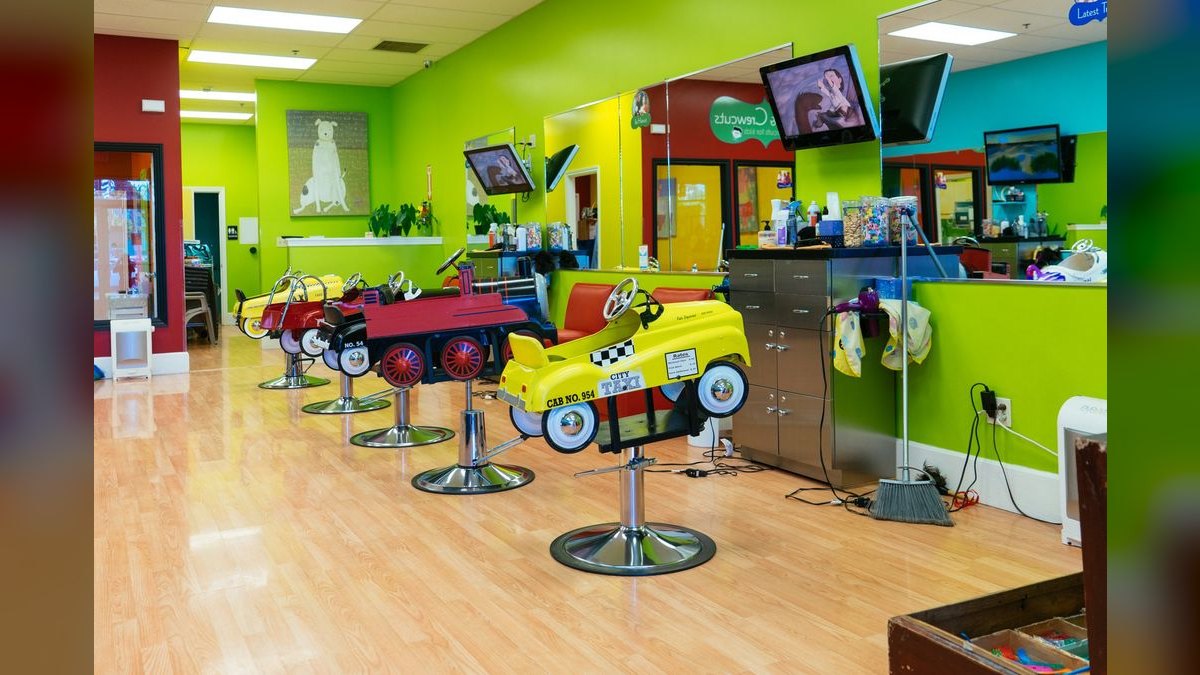
| Leasehold improvements & build-out | $45,000 | $135,000 | Themed millwork, kid chairs (planes/cars), TVs, paint |
| FF&E + signage | $25,000 | $50,000 | 4–6 styling stations, POS (Phorest/Zenoti) |
| Initial inventory | $4,000 | $8,000 | Hair products, retail SKUs (bows, books) |
| Pre-opening training & travel | $3,000 | $7,000 | Atlanta HQ training for owner + lead stylist |
| Grand-opening marketing | $5,000 | $10,000 | 2% brand fund starts on opening week |
| Working capital (3 months) | $14,000 | $31,000 | Payroll, rent, utilities until cash-flow positive |
| Total investment | $130,000 | $283,000 | Median deal lands near $195K–$215K |
| Royalty | 5% gross sales | 5% gross sales | Paid weekly |
| Brand fund | 2% gross sales | 2% gross sales | National + local digital |
| Liquid capital required | $150,000 | — | Per franchisor qualification |
| Net worth required | $250,000 | — | Per franchisor qualification |
| Term | 10 years | — | 2x 5-year renewals, renewal fee $5,000 |
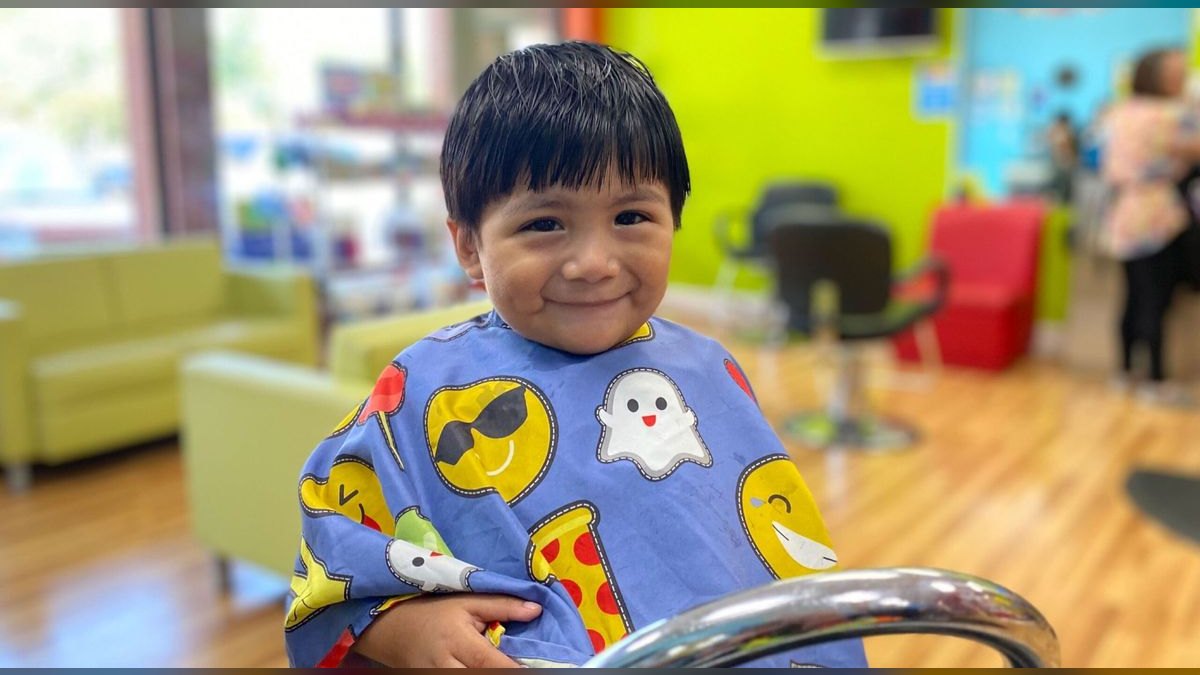
Item 19 (Financial Performance Representation): The 2026 FDD reports a system-wide average unit volume of $294,143 across reporting salons, with the top quartile clearing $400,000+ and the bottom quartile under $200,000. The general hair salon industry average is $245,000 per IBISWorld's $60.0B Hair Salons (NAICS 812112) market sizing for 2025. Pigtails outperforms the category because kids' haircuts are recurring (every 4–6 weeks), schedule-driven, and price-inelastic (parents pay $25–$32 to avoid a screaming toddler in a generic Supercuts chair).
Conservative pro forma at $290,000 AUV:
- Gross revenue: $290,000
- Cost of services + retail COGS (12%): $34,800
- Stylist labor + commissions (40%): $116,000
- Rent + CAM (10–12%): $32,000
- Royalty + brand fund (7%): $20,300
- Other opex (insurance, software, supplies, utilities): $22,000
- EBITDA: ~$64,900 (≈22% headline) before owner replacement labor
- Net owner cash flow (manager-run, 15 owner hrs/week): $40K–$55K
- Owner-operator pull (40 hrs/week, no GM): $75K–$95K
Payback period: at the median ~$210K investment and $55K mid-case owner cash flow, the all-in payback is 3.8–4.5 years, with mature stores at AUV $325K+ paying back in 2.8–3.2 years. This is slower than QSR top performers (Chick-fil-A, Raising Cane's) but competitive with single-unit personal-services franchises like Great Clips ($240K AUV) and Sport Clips ($315K AUV).
Who Wins With This Business
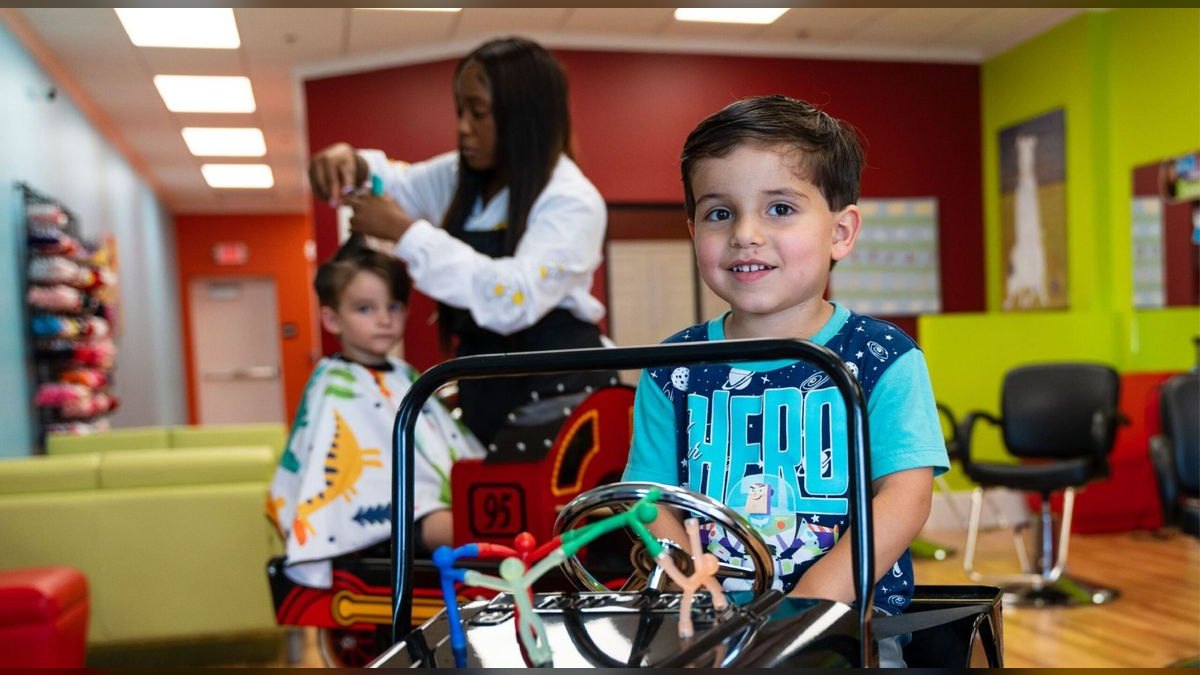
You win with Pigtails & Crewcuts if you fit at least four of these six profiles:
- Multi-unit suburban operator with $200K+ liquid who plans to open 2–3 salons within 36 months in one DMA. The brand has explicitly signaled multi-unit preference in its 2026 development plan (Chicago 3-pack, Tampa multi-unit target).
- Parents of young kids (under 12) who understand the emotional buying trigger: the haircut is not the product — the screen at the chair, the airplane seat, the lollipop, and the first-haircut keepsake certificate are the product. Customers pay a 25–40% premium over Supercuts for that experience.
- Operators with retail management experience — particularly personal services (gyms, swim schools, Pump-It-Up), Montessori childcare, or Chick-fil-A management alumni. The unit economics live or die on labor scheduling for the Tues/Wed slow days vs Sat/Sun rush.
- Trade areas with 20,000+ children under 12 within 5 miles, median household income $90K+, and 2+ Class A pediatric dental practices (proxy for high-spending kid-services demand) within 3 miles. Plano TX, Cedar Park TX, Carmel IN, Fishers IN, Brentwood TN, and Frisco TX are the canonical winning trade areas.
- Operators willing to be onsite 30+ hours per week for months 1–6 to recruit and train stylists. Stylist retention is the #1 KPI — the brand reports top-quartile salons have <20% annual stylist turnover vs system average ~35%.
- Buyers of existing units acquiring a salon doing $260K+ with documented 3-year financials. Resales in this system typically transact at 2.5–3.0x SDE ($150K–$250K all-in), which is a faster path to cash flow than a greenfield build.
Who Loses With This Business
You lose money — or wreck two years of your life — if any of these are true:
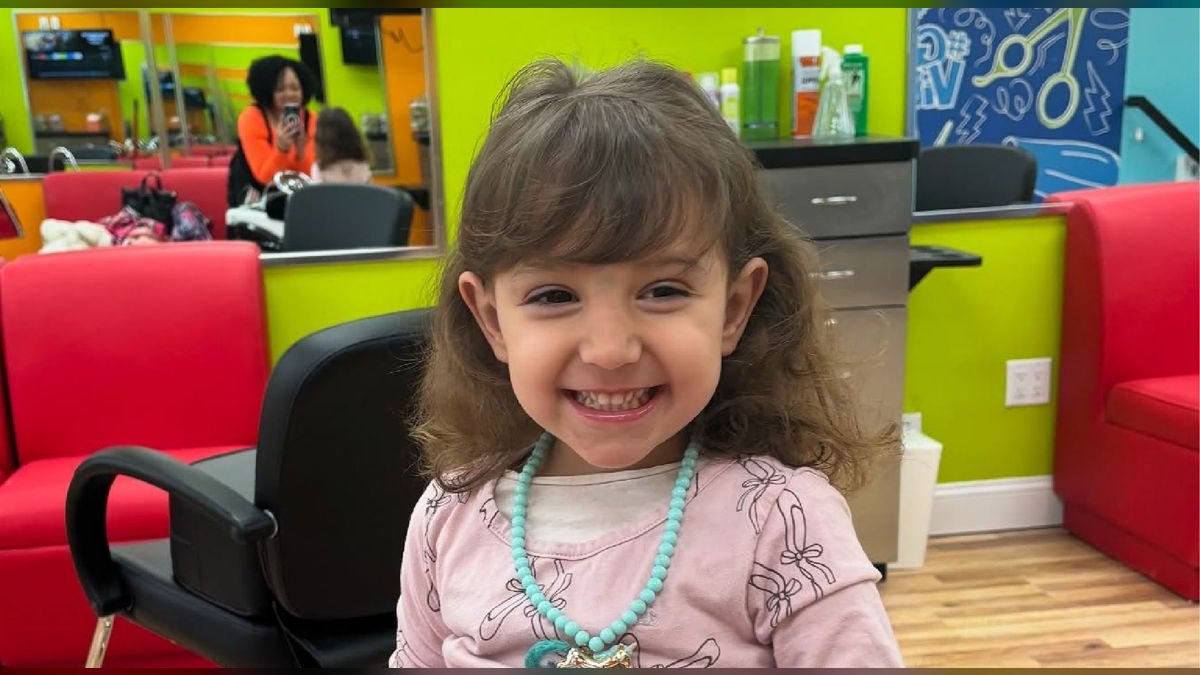
- You need $100K+ in W-2-equivalent income from Year 1. Year-1 owner cash flow is realistically $35K–$55K; if you cannot live on that, you will drain working capital keeping yourself paid and underfund marketing.
- Your trade area has fewer than 12,000 kids under 12 within 5 miles or median HHI under $75K. The model does not flex down to value-pricing — you cannot drop ticket from $28 to $18 and stay above breakeven with 5% royalty + 7% rent.
- You believe this is semi-absentee from day one. Owners who hire a manager-on-Day-1 with no operator presence consistently underperform the system AUV by 25–35%. The brand's own coaching playbook calls for 6 months minimum of owner-led operations before stepping back.
- You are opening in a mall without a dedicated kid-services anchor (Build-A-Bear, Lego Store, indoor playground). Strip-center suburban next to grocery + Goldfish Swim School is the winning real estate; mall in-line is the losing real estate.
- You cannot recruit 4–6 stylists in your market. Pediatric haircutting is a specialty — most cosmetology school grads want adult color/balayage work for tips. If your local cosmetology school has fewer than 40 grads per year, stylist sourcing will choke your AUV.
- You expect drive-thru-style throughput. Average ticket time is 22–28 minutes including check-in, kid acclimation, cut, and product upsell — the model is not optimized for volume cuts like Great Clips' 12-minute service.
- You're a W-2 corporate exec buying for tax shelter. The passive activity loss rules (IRC §469) will likely disallow your losses without material participation — the 750-hour test is hard to meet from a corporate day job.
2027 Market Conditions
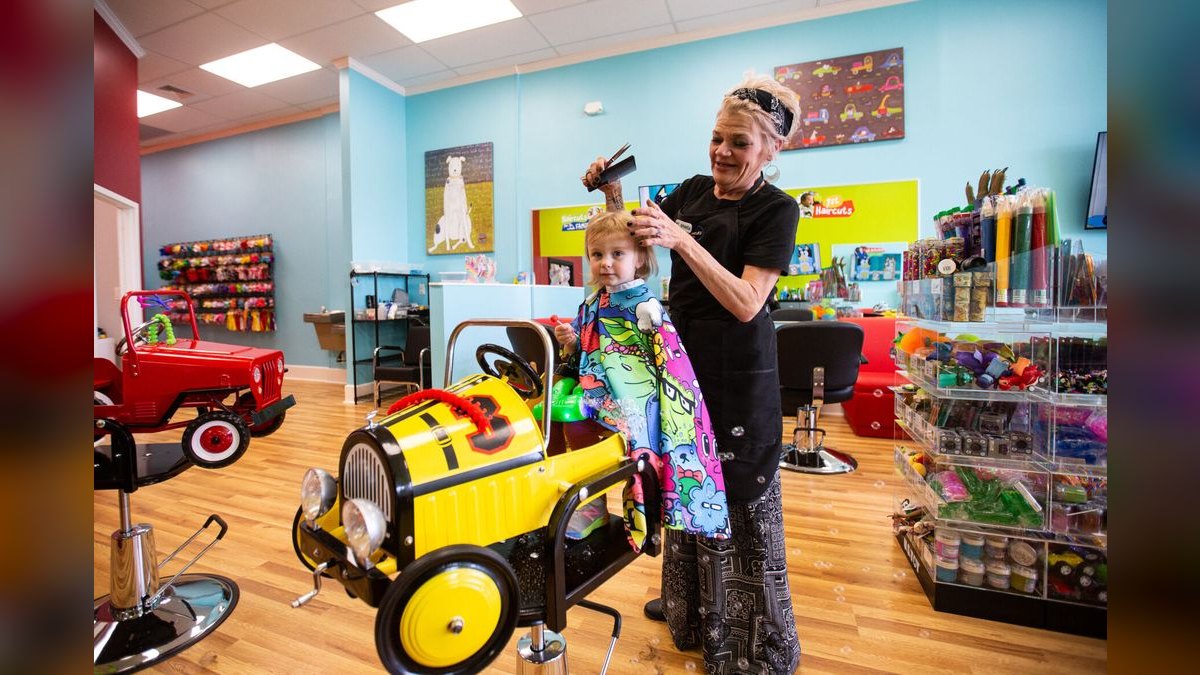
Three macro forces define the 2027 entry decision for kids' hair franchises:
1. Demographic tailwind softens. The CDC reports U.S. births fell to ~3.59 million in 2024, the lowest since 1979. The under-12 cohort that funds this business peaks in 2027–2028 and begins a measurable decline through 2032. Trade-area selection matters more in 2027 than it did in 2018 — Sun Belt growth markets (Florida, Texas, Tennessee, Arizona, the Carolinas) remain net-positive while Northeast and Midwest legacy markets are net-negative. The brand's 2026 expansion announcement targeting Florida, Indianapolis, Omaha, and Tampa is a deliberate Sun Belt bet.
2. Labor cost pressure compresses margin. BLS Occupational Employment Statistics (May 2024) show median hourly wages for hairdressers/cosmetologists at $17.34/hr nationally, up 22% since 2020. In high-cost metros (Denver, Seattle, Boston, NYC suburbs), top-quartile stylists now command $24–$28/hr base + commission. A 2027 pro forma must bake in 4–6% annual labor inflation through 2030 — store labor went from 35% of revenue pre-COVID to 40–42% in 2026.
3. Recession-resistance is real but not absolute. Children's haircuts are among the last discretionary services families cut — the BLS Consumer Expenditure Survey shows personal-care services for households with kids dropped just 3.1% in the 2008–2010 recession vs. 18% for restaurant spending. However, frequency stretches in a downturn — average visit cadence moves from 5.2 weeks to 6.8 weeks, which is a 23% revenue hit per customer without losing the customer entirely.

Competitive set: The kids-haircut category is consolidating. Sharkey's Cuts for Kids (~70 units) and Cookie Cutters Haircuts for Kids (~85 units) are direct competitors. Snip-its (~50 units) is retrenching. Great Clips, Supercuts, and Sport Clips indirectly compete on price but lose on experience. Pigtails & Crewcuts wins on stylist quality and recurring frequency; loses on price-sensitive trade areas.
The 90-Day Decision Tree
Days 1–14: Validate the macro and the math.
- Pull U.S. Census ACS 5-year estimates for target ZIP codes — confirm 20,000+ kids under 12 within 5 miles, median HHI $90K+.
- Drive the trade area on a Saturday 10am–2pm. Count cars in the parking lots of Goldfish Swim School, The Little Gym, and the local pediatric dentist. If those lots aren't full, walk away.
- Pull the 2026 FDD from the Pigtails & Crewcuts franchise development team (request via pigtailsandcrewcutsfranchise.com) and read Items 1, 3, 7, 19, 20 in full — Item 20 lists every franchisee with contact info.
Days 15–45: Validator calls.

- Call at least 12 current franchisees from the Item 20 list. Required questions: AUV in years 1/2/3, stylist turnover rate, owner-hours-per-week in year 1, what they wish they knew, and whether they would buy again. If fewer than 75% say "yes I would buy again," pause.
- Interview 3 former franchisees (also in Item 20 if they left within 3 years). Ask why they sold or closed.
- Get a draft LOI on the real estate with a 180-day contingency for franchise approval and financing.
Days 46–75: Underwrite and finance.
- Build your 3-year pro forma in Excel using two scenarios: bottom-quartile ($200K AUV) and system average ($294K AUV). Underwrite to the bottom quartile.
- Apply for SBA 7(a) financing — Pigtails & Crewcuts is on the SBA Franchise Directory, so loans up to $5M at Prime+2.75% are available. Expect 10–25% down and personal guarantee.
- Engage a franchise attorney (not your real-estate attorney) for $3,500–$6,000 to review the Franchise Agreement red-line.
Days 76–90: Decision gate.
- GO if: pro forma clears 18% IRR at bottom-quartile AUV, financing committed, 10+ validator calls positive, real estate locked, and you have 6 months of personal living expenses set aside outside the working capital line. NO-GO if any of those five conditions fail. The deal will still be there in 6 months — patience compounds.
Alternative Plays

If Pigtails & Crewcuts isn't the right fit, evaluate these 2027-relevant alternatives:
- Sharkey's Cuts for Kids — direct kids' haircut competitor; lower initial investment $135K–$220K, smaller system (~70 units), higher operational risk but lower entry cost. Best for single-unit operators in mid-tier markets.
- Cookie Cutters Haircuts for Kids — closest peer; $120K–$245K investment, 6% royalty + 2% brand fund, ~85 units. Stronger franchisor support in Mountain West.
- Goldfish Swim School — adjacent kid-services franchise; $2.0M–$3.6M investment but AUV of $1.8M–$2.4M and 20%+ EBITDA margins. Capital requirement is 10x higher — only viable if you have $1M liquid.
- The Little Gym — kids' fitness/activity franchise; $220K–$700K investment, recurring monthly membership revenue (more predictable than haircut frequency). Good complement if you want two adjacent kid-services units in one trade area.
- Snapology / Code Ninjas — STEM kids' education franchises; lower capex ($60K–$200K), recurring revenue, but higher reliance on after-school programming logistics.
- Independent kids' salon (no franchise) — saves the $30K fee + 7% ongoing, but you lose the proven build-out playbook, the regional marketing co-op, and the SBA-friendly directory listing. Best for second-time operators who have already run a Pigtails or Sharkey's unit.
- Acquire an existing Pigtails resale — instead of greenfield, buy a 3-year-old unit doing $280K+ from a retiring operator. Typically $180K–$280K all-in, immediate cash flow, no build-out risk.
FAQ

What is the total investment range for a Pigtails & Crewcuts franchise? The total investment typically falls between $130,000 and $283,000, including a $30,000 franchise fee. This range covers build-out, equipment, and initial inventory, but actual costs depend on lease terms and location size.
How much liquid capital do I need to qualify? Franchisees generally need at least $200,000 in liquid assets. This ensures you can cover the initial investment and have working capital for the first several months before the salon reaches breakeven.
How long does it take to break even? Most operators reach breakeven between months 10 and 14. This timeline assumes a well-chosen location with strong local demand and effective manager oversight.
What are the ongoing royalty and marketing fees? You’ll pay a 5% royalty on gross sales plus a 2% brand fund contribution. These fees support corporate support, training, and national marketing efforts.
Can I run this franchise as a passive investment?

No—Pigtails & Crewcuts is best suited as an absentee-light, manager-run business. You’ll need to be involved in hiring, marketing, and financial oversight, though daily operations can be delegated.
What kind of owner cash flow can I expect in the first few years? Conservative Year-1 owner cash flow is around $35,000 to $55,000, growing to $70,000–$95,000 by Year 3 at a mature salon. This assumes a system average unit volume of roughly $294,000 and 12–15% EBITDA margins.
Bottom Line
Pigtails & Crewcuts is a legitimate, mid-tier personal-services franchise with real Item 19 disclosure, 15+ years of operating history, 86 units across 26 states, and a system AUV ($294K) that beats the broader hair-salon category ($245K). It is not a get-rich-quick franchise. It is a 2.8–4.5-year payback business that pays $55K–$95K of owner cash flow at maturity if you nail trade-area selection, stylist retention, and owner presence in year one. Sign if you have $200K liquid, a Sun Belt suburban trade area with 20,000+ kids under 12 within 5 miles, and the temperament to be onsite 30+ hours per week for six months. Pass if you need immediate W-2-replacement income, you're chasing tax shelter, or your county's birth rate is declining. The deal will still be there in six months — do the validator calls and the underwriting math first.
Sources
- Pigtails & Crewcuts Franchise Disclosure Document & Cost (2026) — FranchiseOverview
- Pigtails & Crewcuts Franchise FDD, Profits & Costs — Sharpsheets
- Pigtails & Crewcuts Franchise Cost & Profit (2024 Update) — Vetted Biz
- Pigtails & Crewcuts Franchise Cost, Fees, Opportunities (2026) — Franchise Gator
- A Year of Expansion, Heart and Momentum: Pigtails & Crewcuts Looks Ahead to 2026 — PR Newswire
- Pigtails & Crewcuts Signs 3-Unit Deal in Chicago — PR Newswire
- Pigtails & Crewcuts Targets Southeast Florida Expansion — 1851 Franchise
- Hair Salons in the US Market Size — IBISWorld (NAICS 812112)
- BLS Occupational Employment Statistics: Hairdressers, Hairstylists, and Cosmetologists (May 2024)
- CDC National Vital Statistics: U.S. Births 2024
- SBA Franchise Directory — Pigtails & Crewcuts SBA Eligibility
- Are Kids Haircut Franchises Profitable? — Pigtails & Crewcuts Franchise
Related on PULSE
This page will be disappearing soon. Save it to your device for $1 — or read it free while it is here.
@Kory-White- · if Venmo asks, the last 4 of my number are 2012
This page is gone.
This one is off the shelf now. $1 keeps it on your phone for good — the whole page, pictures and diagrams included.
 franchiseShould I open or buy a Wingstop franchise in 2027?
 franchiseShould I open or buy a Taco Bell franchise in 2027?
 franchiseShould I open or buy a Hand and Stone Massage franchise in 2027?
 franchiseShould I open or buy an Ace Hardware franchise in 2027?
 franchiseShould I open or buy a Wendy's franchise in 2027?
 franchiseShould I open or buy a Primrose Schools franchise in 2027?
 franchiseShould I open or buy a Bojangles franchise in 2027?
 franchiseShould I open or buy a Cinnabon franchise in 2027?
 franchiseShould I open or buy a Smoothie King franchise in 2027?
 franchiseShould I open or buy a Jiffy Lube franchise in 2027?