


Should I open a podcast production business in 2027?
Quality
Certified

Open a podcast production business in 2027 only if you can sell business-to-business retainers before you buy gear. The work is roughly 80% sales and strategy, 20% audio. Producers who prospect reach $3,500–$8,000 monthly per client; producers who only edit compete against $25/hour offshore labor and stall near $50,000 a year.
The outcome you should expect
Set expectations against the shape of the business rather than the romance of it. A solo operator working from a treated spare bedroom, carrying three to six retainer clients, lands somewhere between $90,000 and $180,000 in year-one revenue with a 35–55% margin because there is no payroll and no lease. Owner take-home in that band typically runs $60,000–$140,000. That is a decent professional income, not a windfall, and it arrives only after a prospecting slog most first-time operators badly underestimate.
Two-person boutiques — usually a seller and an editor, or a producer-plus-video-operator pair — sit in a different regime. Startup capital moves to roughly $22,000–$45,000 once you add a second workstation, a modest studio space, and duplicate recording rigs. Revenue in year one commonly lands $240,000–$480,000, but margin compresses to 22–32% because you are now paying a person and possibly rent. Breakeven stretches from three-to-six months out to six-to-ten. The trade you are making is capacity for margin, and it only pays off if the pipeline is already producing more work than one person can deliver.
Full agencies with four to six staff are a genuinely different business — $90,000–$180,000 of startup capital, 14–22 months to breakeven, 12–20% margins, and a payroll that does not care whether your biggest client renewed. Do not start here. Nearly every durable production shop that reached this size arrived by adding staff behind demand, not by hiring in anticipation of it.

The single most useful number to hold in your head is the retainer floor. Three signed retainers at $3,500–$5,000 each puts roughly $10,500–$15,000 of monthly recurring revenue under you. That is the point where the business stops being an experiment. Most operators who fail never reach it — not because their audio was bad, but because they bought a microphone before they bought a list.
Client lifetime value follows retention, and retention in this category is fragile. Eight-month average retention on a $3,000 monthly retainer is roughly $24,000 of lifetime value; push retention to eighteen months by bundling strategy and distribution and the same client is worth $54,000 without a single new sales conversation. Every hour spent on renewal mechanics outperforms an hour spent shaving another five minutes off an edit.
What drives that outcome
Four variables move the number, and only one of them involves audio.
Network depth at start. The strongest predictor of a profitable first year is how many warm business-to-business contacts you can name on day one. Thirty-plus executives, marketers, or founders who would take your call is a workable starting position. Under thirty and you are running a cold-outreach campaign with a production business attached, which is a longer, thinner, more brutal path. Former agency account executives, fractional marketing leaders, and ex-media sellers convert fastest because they can diagnose a buyer's funnel problem in the first meeting and position the show as a solution to it, not as a content project.

Positioning. "We'll edit your podcast" is a commodity sentence. It invites a price comparison against per-episode editors and offshore labor, and you will lose that comparison. "We run the interview program that fills your pipeline with the fifty accounts you care about" is a different conversation with a different budget line. The same production work, sold as a marketing program, carries multiples of the price it carries when sold as post-production.
Vertical concentration. Pick a lane — legal, financial advisory, healthcare, manufacturing, industrial distribution, business software — and build five to ten reference clients inside it. Vertical proof does two things: it lets you charge above generalist rates because you already understand the buyer's compliance constraints and jargon, and it turns every client into a referral node inside a network that talks to itself. Generalists have to re-explain themselves in every pitch.
Delivery cost per episode. Labor per episode is the margin lever. A disciplined operator with a real standard operating procedure and modern editing tools lands in the three-to-five-hour range per finished episode including publishing. Six-plus hours, and a $3,500 retainer with four episodes stops clearing meaningful profit once you count the client calls. Transcription-based editing tools — where you cut the text and the audio follows — are the single largest productivity change in this workflow. The operators who profit are the ones who kept prices flat and absorbed the time savings as margin instead of racing competitors to the bottom.
Benchmarks and realistic ranges

Price against the market's actual tiers rather than against what feels comfortable to charge.
Per-episode editing-only work sits at the bottom: a few hundred dollars an episode, sometimes less on freelance marketplaces where the global labor pool sets the clearing price. This tier is a job, not a business. It has no recurring revenue, no switching cost, and no defense against a client discovering a cheaper editor.
Mid-tier full-service retainers — recording coordination, editing, show notes, audiogram clips, distribution, basic reporting — commonly run in the $3,500–$6,500 monthly range for two to four episodes. This is the volume center of the market and where most independent shops should aim first.
Upper-tier retainers, generally $8,000–$12,000 monthly, add strategy: guest sourcing tied to a target account list, host coaching, a written content calendar, repurposing into written and social assets, and reporting that connects episodes to pipeline. Enterprise engagements with multi-camera video, dedicated producers, and compliance review climb well past that, but they come with procurement cycles, security questionnaires, and payment terms that can strain a young balance sheet.
On the cost side, the equipment conversation is smaller than beginners expect. A broadcast-standard dynamic microphone runs roughly $400–$500; a capable multi-channel podcast interface with onboard recording runs a few hundred more; closed-back headphones, boom arms, and basic acoustic treatment add a few hundred on top. Editing and transcription software is a modest monthly subscription. Remote recording platforms that capture separate local tracks per participant are another modest monthly line. Media hosting is roughly the price of a streaming subscription. A complete solo rig comfortably fits inside $3,500, and the wider $8,000–$15,000 startup band mostly reflects a second recording kit, camera gear, a website, and a few months of operating runway rather than exotic hardware.

Two adjacent benchmarks are worth borrowing because the economics rhyme. Video production shops and marketing retainer agencies both live and die on the same three ratios: revenue per delivery hour, retention months, and the share of pipeline that arrives by referral. Healthy service agencies typically pull 40–60% of new business from referrals by the six-month mark. If your referral share is near zero at month six, the problem is not your marketing — it is that clients are satisfied rather than delighted, and satisfied clients do not make introductions.
One more range matters for anyone thinking about the exit. Small service businesses in this category generally trade on a multiple of seller's discretionary earnings, and multiples improve sharply with recurring-revenue mix and reduced owner dependence. A shop where the owner is the only salesperson and the only producer is worth materially less than the same revenue delivered by a documented team with contracted retainers. Build toward the second version from month one, even if you never sell.
Risks, edge cases, and failure modes
Selling to the wrong buyer. Consumer and entertainment podcasts are a trap for a production business. Attention concentrates brutally at the top of the charts, and the hosts below that line generally cannot fund professional production out of their own pockets. Business buyers treat the show as a marketing expense with a budget attached; hobbyist creators treat it as a passion project someone else should subsidize. The revenue difference per episode between those two buyers is not marginal — it is an order of magnitude.

Revenue-share and equity-for-production deals. Advertising economics on a cost-per-thousand basis only start working at download volumes that a small minority of shows ever reach. When a host offers to pay you out of future ad revenue, you are being asked to underwrite their audience risk with your labor. Decline it, or price it as a paid engagement with an upside kicker on top of a floor that covers your costs.
Building the studio first. A large share of business podcast recording now happens remotely, with each participant's audio and video captured locally and uploaded. A six-figure physical studio built on the assumption of studio-day rates is a fixed cost hunting for demand that has largely moved online. If you want a room, rent one by the day until booked days force the decision.
Client concentration. Two clients providing 70% of revenue is not a business, it is a contract with extra steps. One reorganization or one marketing leader changing jobs — and marketing leaders change jobs often — takes the majority of your income with it. Aim for no single client above 25% of revenue by the end of year one, and write shorter renewal cycles with clear value reporting so departures are visible before they happen.
The founder-dependency ceiling. In a shop where the owner sells, produces, edits, and manages every relationship, growth stops at the owner's calendar. The first hire should almost always be an editor, not a salesperson, because it frees the person with the relationships to keep making them. Operators who hire a seller first usually discover that nobody sells this service as well as the founder in year one.
Commoditization of the craft. Automated editing, cleanup, and transcription have made competent post-production dramatically cheaper to perform. That is good for your margin and bad for your differentiation. The defensible layer is judgment — which guests, which questions, which cuts, which distribution — not button-pushing. Any part of your offer that a tool can do end-to-end will eventually be priced like a tool.
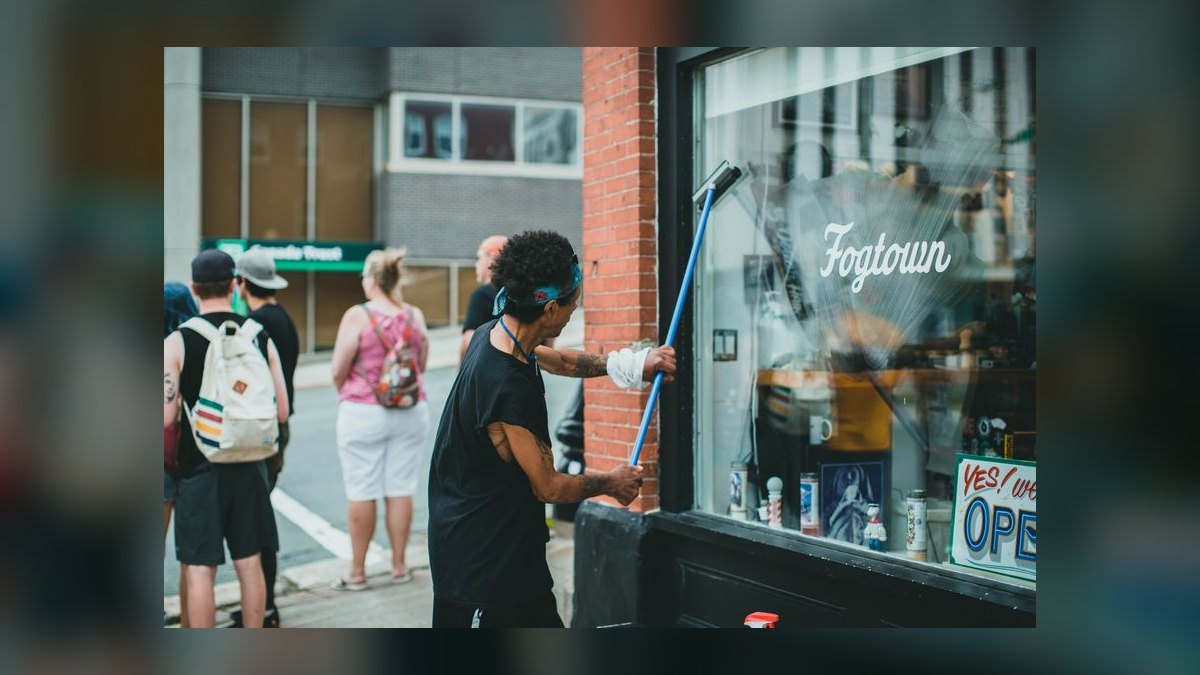
Scope creep inside the retainer. The most common margin killer is not underpricing the base package; it is the accumulation of unbilled extras — an extra clip here, a rush turnaround there, a last-minute re-record. Write the deliverable count into the agreement, define what a revision round means, and price rush work explicitly. Agencies that skip this discover at month nine that their most profitable client on paper is their least profitable in practice.
Platform and distribution volatility. Video-forward distribution has become central to how new listeners find shows, which is a real opportunity and a real dependency. Algorithmic changes on any single platform can reshape a client's numbers through no fault of your production. Report on a basket of metrics — completion rate, subscriber growth, guest-sourced pipeline, sales-team usage of clips — so your renewal conversation never rests on one platform's chart position.
A practical rollout plan
Run the first ninety days in a strict order, and resist the urge to buy equipment early.
Days 1–14: audit the network. Write down every business executive, marketing leader, founder, or agency contact who could buy or refer. Names only, no filtering. If the list clears thirty, you have a business to open. If it does not, the correct next move is six months of relationship building — publishing, industry communities, targeted outreach — before any spend. This is the step people skip, and skipping it is the single most common cause of failure in this category.

Days 15–30: build one flagship demo. Record a single sample episode with two of the strongest names on your list, using borrowed or entry-tier gear and a free remote-recording tier. Edit it to a standard you would be proud to show a chief marketing officer. This is a sales asset, not a launched show — you are proving craft, not building an audience.
Days 31–45: sell three pilot retainers. Price in the $3,500–$5,000 range for two to four episodes monthly with full production, show notes, clips, and distribution. Ask for a three-month minimum commitment so both sides can evaluate honestly. Three signatures put roughly $10,500–$15,000 of monthly recurring revenue underneath you before a dollar of capital equipment leaves your account.
Days 46–60: buy the production stack. Now, and only now, purchase the microphones, the interface, headphones, the editing and transcription subscriptions, a remote-recording plan, and hosting. Keep the total under $10,000 until recurring revenue confirms the demand is real. Buy the second recording kit only when a second simultaneous session forces it.
Days 61–75: deliver and codify the workflow. Run a fixed weekly rhythm — record early in the week, edit mid-week, client review late in the week, publish on a consistent day. Write the standard operating procedure while you are doing it, including file naming, loudness targets, an intake form for guests, and a review checklist. Target three to five hours of total labor per finished episode. The procedure is what makes your first hire possible; without it, you are hiring someone to guess.
Days 76–90: build the referral engine. Ask every active client for two introductions to comparable buyers, and make the ask specific — name the kind of company you want to meet rather than asking generally. Offer a meaningful thank-you, such as retainer credit. In parallel, start publishing evidence of your own competence: clips, a short case write-up, a point of view on what makes business interview shows work. You are demonstrating the exact service you sell.

Beyond ninety days, three adjacent expansion paths are worth evaluating rather than defaulting into more of the same. Productizing a single fixed-scope offer — one price, one deliverable count, no custom scoping — scales faster than bespoke retainers and sells well to smaller teams. Repositioning as a fractional content lead, bundling the show with strategy and distribution, raises both price and retention because you become harder to remove. And acquiring an existing small production shop is a legitimate shortcut past the prospecting cliff if you have capital or lending capacity; you are buying the client list and the recurring revenue, which is precisely the part that takes six months to build from zero.
Related questions
How much money do I need to start a podcast production business?
A solo home setup fits comfortably inside $8,000–$15,000, and the gear itself is a fraction of that — under $3,500 covers professional microphones, an interface, headphones, treatment, and software. The remainder is website, legal setup, and operating runway while you sell.
Do I need audio engineering experience to open this business?
No. Competent editing is learnable in weeks with modern transcription-based tools, and you can subcontract post-production entirely. Sales ability, relationship depth, and content strategy judgment are the scarce inputs. An engineer without a network struggles far more than a marketer without an engineering background.
Is per-episode pricing ever the right model?

Only as an entry ramp or an overflow offer. Per-episode work has no recurring revenue, no switching cost, and prices against global freelance labor. Use it to earn a first engagement, then convert the client to a retainer with a broader deliverable set within the first quarter.
How many clients can one person actually handle?
Four to six retainer clients is the realistic ceiling for a solo operator running four episodes monthly each, once you count recording coordination, editing, publishing, client calls, and continued prospecting. Beyond that, either an editor joins or delivery quality and pipeline development both suffer.
What should my first hire be?
An editor or associate producer, not a salesperson. In the early years nobody sells the service as convincingly as the founder, so the correct move is to remove delivery hours from the founder's calendar and redeploy them into sales and client strategy.
FAQ
What equipment do I actually need to start?
A broadcast-standard dynamic microphone, a multi-channel podcast interface or a solid audio interface, closed-back headphones, a boom arm, and basic acoustic treatment for one room. Add editing and transcription software, a remote-recording platform that captures separate local tracks, and a media host. A complete professional solo rig fits inside roughly $3,500 — far less than most beginners assume.
How many clients do I need before this replaces a salary?
Three retainer clients at $3,500–$5,000 each is the practical breakeven and roughly the point where the business supports a modest full-time income. Five to six clients in the $3,500–$8,000 band puts owner take-home in the $60,000–$140,000 range for a solo operator with no payroll and no lease.

Can I run this part-time while keeping my job?
Yes, up to about two to four clients, with recording scheduled around your calendar and editing handled evenings and weekends. The constraint that ends the part-time phase is rarely editing hours — it is client communication, guest scheduling, and prospecting, all of which need daytime availability.
What is the hardest part nobody warns you about?
Selling. Most independent producers earn modest incomes not because their work is weak but because they cannot consistently open and close business-to-business retainers. The technical craft is learnable; building relationships with executives who will commit thousands of dollars monthly is the actual job, and it never fully ends.
How long until the business is genuinely profitable?
With a home studio, no debt, and a real prospect list at launch, four to eight months to breakeven is realistic. Without a prospect list, add six months of pure relationship building at the front. Nearly every timeline overrun in this business traces back to starting the sales work after the equipment purchase instead of before it.
Is 2027 too late — is the market saturated?
The commodity editing tier is saturated and will stay that way, because automated tools and global freelance labor keep pushing that price toward zero. Full-service business retainers that connect a show to pipeline are a different market with a different buyer and are not saturated. Your outcome depends far more on whether you can prospect than on the calendar year.
Sources
- https://www.iab.com/insights/podcast-advertising-revenue-study/
- https://www.edisonresearch.com/the-infinite-dial-2025/
- https://www.ibisworld.com/united-states/market-research-reports/music-production-distribution-industry/
- https://www.sba.gov/business-guide/plan-your-business/calculate-your-startup-costs
- https://www.bls.gov/ooh/media-and-communication/sound-engineering-technicians.htm
- https://podcasters.spotify.com/
- https://podcasters.apple.com/support/
- https://support.google.com/youtube/answer/13973562
- https://www.buzzsprout.com/podcast-statistics
- https://www.pewresearch.org/journalism/fact-sheet/podcasts/
Related on PULSE
- How do I franchise my own business in 2027?
- Franchise vs. independent business: which should I start in 2027?
- Should I open or buy a Padgett Business Services franchise in 2027?
- Should I open a arcade business in 2027?
- Should I open a ATM business in 2027?
- Should I open a vending machine business in 2027?
This page will be disappearing soon. Save it to your device for $1 — or read it free while it is here.
@Kory-White- · if Venmo asks, the last 4 of my number are 2012
This page is gone.
This one is off the shelf now. $1 keeps it on your phone for good — the whole page, pictures and diagrams included.
 franchiseShould I open or buy a Jimmy John's franchise in 2027?
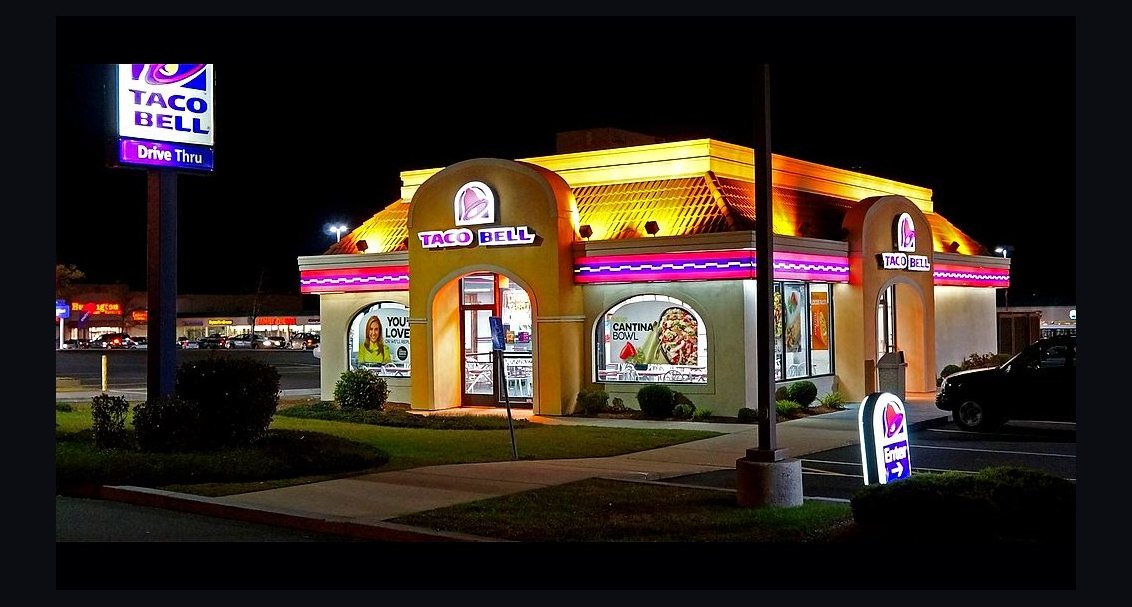 franchiseShould I open or buy a Taco Bell franchise in 2027?
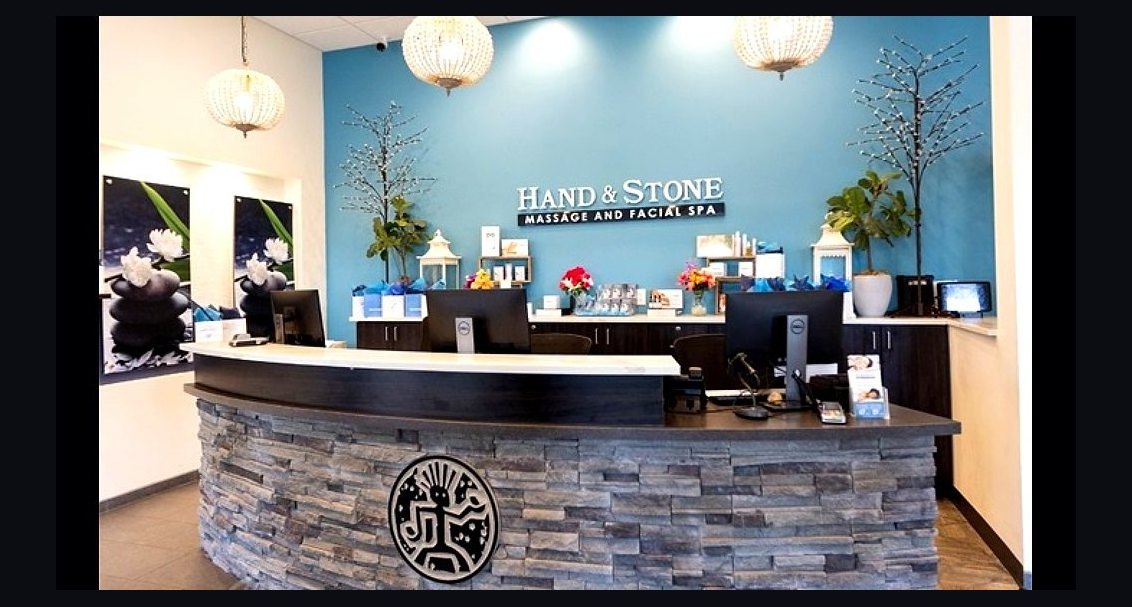 franchiseShould I open or buy a Hand and Stone Massage franchise in 2027?
 franchiseShould I open or buy a Bruster's Real Ice Cream franchise in 2027?
 franchiseShould I open or buy a Merry Maids franchise in 2027?
 franchiseShould I open or buy a Goddard School franchise in 2027?
 franchiseShould I open or buy a Wingstop franchise in 2027?
 franchiseShould I open or buy a Bojangles franchise in 2027?
 franchiseShould I open or buy a Matco Tools franchise in 2027?
 franchiseShould I open or buy an F45 Training franchise in 2027?