


Should I open a independent tire shop in 2027?
Quality
Certified
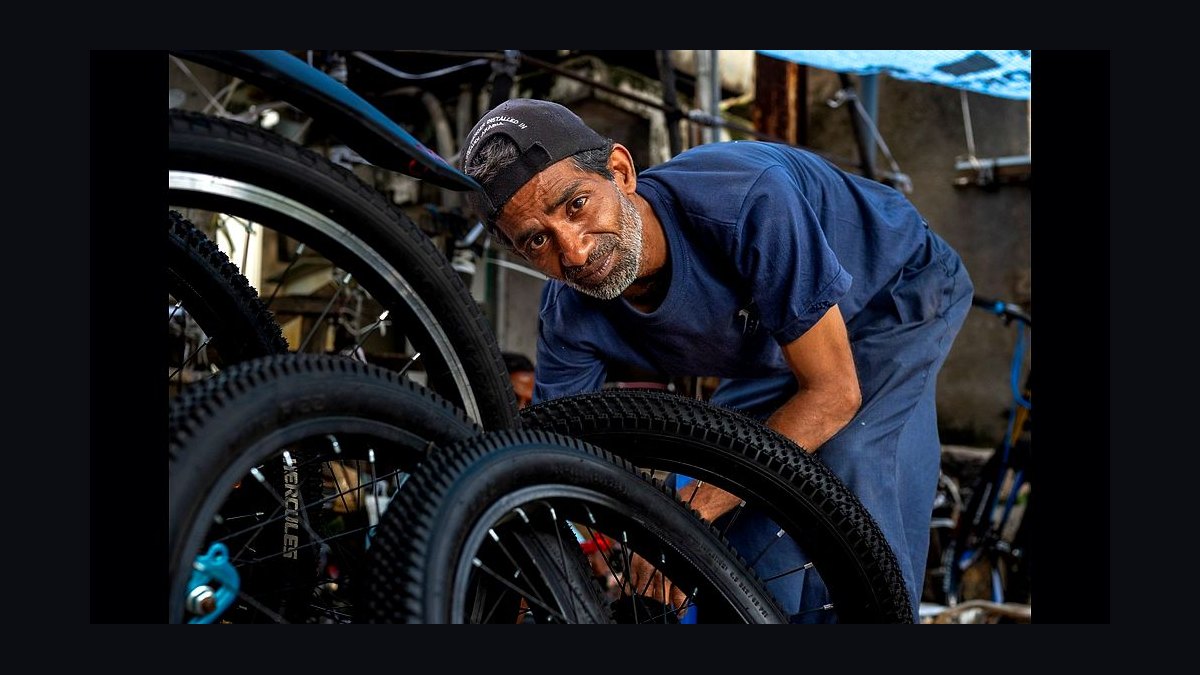
Yes, opening an independent tire shop in 2027 can work — if you can fund $280,000–$520,000 in startup capital, secure a 3,500–5,000 sq ft second-generation auto bay at $14–$22/sq ft NNN, personally turn wrenches for the first 18 months, and survive negative cash flow of $40,000–$90,000 before turning profitable around month 14–22. Skip it if a Discount Tire, Mavis, or NTB sits within two miles.
A Shop Owner's First Year, Walked Through
Picture a former service manager with eight years at a regional dealership, $95,000 in personal savings, and a HELOC that can stretch to $180,000. They find a vacant second-generation auto bay — four lifts already roughed in, former home to a shop that closed when the owner retired — at $16.50/sq ft NNN on a 4,200 sq ft building fronting a road with 24,000 daily traffic count. No chain competitor within two miles. This is close to the textbook setup for an independent tire shop to work in 2027.
They sign a lease, pull an SBA 7(a) loan through a preferred lender for $260,000 on top of their own capital, and spend six weeks on buildout: paint, lighting, a small retail counter, an office. They buy a Hunter Hawkeye Elite alignment rack new for $48,000 installed — non-negotiable, because alignment tickets at $169–$219 for a four-wheel job are the highest-margin recurring service in the building. They buy two lifts and a tire changer used from a closing shop two counties over at roughly 45% of new, saving nearly $9,000. They open accounts with American Tire Distributors and K&M Tire on 30-day terms, refusing pay-on-scan because it would strangle cash flow by month four. They open with themselves plus one technician, working 7 AM to 6 PM six days a week, flagging 45 billable hours themselves in week one alone.

By month five, car count is sitting at 16 per day — below the 18-per-day target the plan called for by day 75 — so they shift $600/week from radio to Google Local Service Ads and land a 22-vehicle plumbing fleet account worth roughly $4,200 a quarter in tire and brake work. By month nine, tire-distributor terms tighten seasonally and working capital gets tight, but the $80,000 in reserves held outside the startup budget covers it. By month 17, the shop crosses into positive monthly cash flow. This is the shape the numbers below describe in detail — and the scenario that answers whether the independent model still has room to open and compete in 2027.
How the Tire Shop Economics Actually Work
The mechanism that makes an independent tire shop profitable — or kills it — is simple to state and hard to execute: tire units are a low-margin loss leader that gets a vehicle on the lift, and service work is where the money is made. Tire units run an 18–24% gross margin because national distributor pricing and chain buying power compress what an independent can charge. Service work — alignments, TPMS resets, brake jobs, suspension repair — runs 47–52% gross margin because labor, not inventory cost, drives the ticket.

This means the entire business model inverts the instinct a new owner has walking in: you do not win by beating Discount Tire's tire prices, because you structurally cannot — their national buy programs land tires 8–14% cheaper than an independent can source. You win by using the tire sale as the entry point to a vehicle, then converting that visit into an alignment, a brake inspection, or a TPMS service that the tire swap exposed. A customer who buys four tires and walks out without an alignment check is a missed ticket of $99–$219. The owner-operator who can personally perform that alignment captures 100% of that margin instead of paying a second technician's wage against it.
This is also why owner-operator wrench time is the single highest-correlation variable in whether an independent tire shop survives its first 18 months. Every hour the owner personally bills is an hour where labor cost — typically $26.50–$32.00/hour for a B-level ASE-certified tech in a Tier-2 market — never hits the P&L. Flag 40 billable hours a week yourself and you save $85,000–$110,000 in labor cost across year one. That figure is frequently the entire gap between a shop that survives to month 22 and one that runs out of working capital in month nine.
Real Numbers, Ranges, and Benchmarks
The startup capital stack for a 4-bay, 3,500 sq ft second-generation shop breaks down into a handful of large, fairly predictable line items. Equipment is the biggest capital draw outside inventory: a tire mounting machine (Hunter TCX59 or Coats 70X) runs $4,800–$8,200 new; a wheel balancer with road-force capability (needed for EV and run-flat work) runs $6,200–$11,500; four 2-post lifts run $14,000–$22,000 installed; and the alignment system — a Hunter Hawkeye Elite or comparable — is the single largest capex line at $42,000–$58,000, because it is the machine that unlocks the highest-margin service category in the building. A brake lathe, A/C machine, and a diagnostic scan tool add another $11,000–$18,000.

Inventory is the next major draw: an opening stock of 250–400 tire SKUs from Goodyear, Michelin, or BFGoodrich dealer-net pricing runs $48,000–$85,000. Leasehold improvements on a second-generation bay (paint, lighting, a small office buildout) run $18,000–$42,000 — considerably less than building from a raw shell. Working capital to cover three months of payroll, rent, insurance, and tire floor-plan payments adds $65,000–$110,000, and marketing for the first 90 days — Google Local Service Ads plus direct mail — runs $8,000–$18,000. Add licensing, permits, and an EPA tire-disposal bond at $2,800–$5,400. Total realistic startup capital lands at $231,200–$398,300, and a prudent owner adds a $50,000 contingency cushion on top, landing in the $280,000–$520,000 range cited in the direct answer.
On the revenue side, year-one revenue for a shop like this typically runs $620,000–$1,140,000, with top-quartile independents clearing $1.4M–$2.1M per location by year three, per Modern Tire Dealer's annual dealer survey. Blended gross margin sits at 38–46% (the weighted average of 18–24% tire-unit margin and 47–52% service margin). After counting a $72,000 owner salary as a real cost, pre-tax net margin lands at 7–11%, meaning realistic owner take-home in year two is $95,000–$165,000 on a roughly $900,000-revenue shop. Equipment-specific capex payback runs 26–34 months; full-business payback including working capital and leasehold runs 4–6 years. At exit, shops under $2M in revenue trade at 3.5x–5.5x trailing EBITDA, and shops above $3M trade at 5.5x–7.5x, per 2026 M&A benchmarking in the tire-distribution sector.

Three structural market conditions matter for a 2027 opening specifically. First, EV adoption is a tailwind, not a threat: EV tires wear 20–38% faster than internal-combustion tires because of curb weight (a Rivian R1S runs roughly 7,000 lbs, an F-150 Lightning roughly 6,500 lbs) and instant torque delivery, compressing the replacement cycle from roughly 50,000 miles to 28,000–35,000 miles — meaning more tire-replacement events per vehicle, not fewer. Second, industry-wide revenue is essentially flat (roughly $46.7 billion with sub-1% annual growth), but independents are holding roughly two-thirds of total industry revenue, meaning share is not migrating to the chains despite their expansion. Third, skilled-labor costs are rising faster than the broader market: a B-level ASE-certified tech now costs $26.50–$32.00/hour in Tier-2 markets and $34–$42/hour in Tier-1 markets, up from roughly $24/hour just a few years ago, which is why productivity-based bonuses (commonly $0.50–$1.25 per flat-rate hour above a 38-hour week) have become necessary retention tools rather than perks.
Trade-offs and Alternatives to the Full Build-Out
Opening a standalone independent tire shop is not the only way to capture this trend, and the full $280,000–$520,000 capital stack is out of reach for many otherwise-qualified operators. A mobile tire service van is the lowest-capital entry point: a build-out of $78,000–$135,000 (van, mobile tire changer, balancer, generator) targets fleet accounts, RV owners, and at-home consumers, generating $340,000–$620,000 in revenue per van at 55–62% gross margin — higher than a brick-and-mortar shop, because there is no rent and no leasehold investment to amortize. The trade-off is scale: a single van has a hard ceiling on daily jobs that a four-bay shop does not.

A used-tire-only shop in a dense urban submarket is a second option, with startup costs of $95,000–$165,000 and gross margins of 48–58% — but average ticket size runs roughly half of a new-tire shop, and EPA tire-disposal regulatory exposure is a real and growing risk that a new-tire shop manages differently. A third path is buying an existing shop rather than opening cold: 150-plus independent tire shops list annually on marketplaces like BizBuySell at $280,000–$1.4M asking, typically priced at 3.5x–4.5x seller's discretionary earnings. Buying trades the 14–22 month ramp-to-profitability for immediate cash flow, an existing customer base, trained technicians already in place, and standing supplier relationships — for roughly the same capital outlay as building new.
A fourth alternative is franchising rather than going fully independent: Big O Tires' 2027 disclosure document lists total investment ranges of $340,000–$1,180,000, with established operating systems, supplier programs, and marketing support — but royalty and ad-fund obligations typically run 6.5–7.5% of gross revenue combined, which is $45,000–$135,000 a year in fees on a $900,000-revenue shop that an independent owner keeps entirely. The right choice depends heavily on risk tolerance: franchising trades margin for a tested playbook, buying trades ramp-time for a known asking price, and the mobile or used-tire paths trade peak revenue ceiling for a dramatically lower capital bar.
Common Pitfalls and How to Avoid Them
The single most common and most fatal mistake is planning to open as an absentee owner who hires a manager on day one. Tire-shop manager turnover ran roughly 38% in 2026 per Tire Industry Association labor data, and an absentee ownership model built on that level of turnover typically collapses within nine months. The fix is structural, not managerial: plan to be the shop's primary technician and the person who opens the door at 6:45 AM for the first 18 months, full stop.

The second major pitfall is site selection that ignores chain proximity. A location within two driving miles of a Discount Tire, Mavis Tires & Brakes, NTB, or Belle Tire exposes a new shop to national buying-program pricing it cannot match, and those chains will price-match aggressively during a new competitor's first 90 days specifically to prevent it from establishing a customer base. The fix is a disciplined trade-area audit before signing any lease: pull annual average daily traffic counts from the state DOT, map every competitor within a three-mile radius, and walk away from any site where a major chain sits inside the two-mile ring, even if the real estate terms look attractive.
The third pitfall is underinvesting in the alignment system to save capital upfront. A discount alignment rack that throws inaccurate readings doesn't just produce bad service — it erodes repeat business and forfeits the $99–$219 alignment ticket that should be the shop's highest-margin recurring line. The fourth pitfall is accepting manufacturer floor-plan financing without modeling curtailment payments: when tire sell-through slows during a seasonal or recessionary dip, floor-plan curtailment can turn into an $8,000–$22,000 monthly cash drain with little warning, which is why negotiating standard 30-day distributor terms instead of pay-on-scan financing matters so much in the first year. Finally, opening in a Sunbelt market with no winter tire-swap cycle and a population leaning toward leased vehicles under OEM warranty service removes the two biggest demand drivers independents rely on — the fix there is simply recognizing before signing a lease that geography itself can cap the addressable market regardless of how well the shop is run.
Related questions

How much does it cost to open an independent tire shop in 2027?
Realistic total startup capital runs $280,000–$520,000, covering equipment (especially the $42,000–$58,000 alignment rack), 250–400 SKUs of opening tire inventory, leasehold improvements, permits, and three to six months of working capital reserves.
How long before an independent tire shop turns a profit?
Most shops run cash-flow negative $40,000–$90,000 through year one, turning positive between month 14 and month 22, driven almost entirely by service revenue rather than tire-unit sales.
Do I need to be a certified technician to open a tire shop?
It's not legally required, but owners who can personally perform alignments, TPMS resets, and brake work save $30,000–$60,000 a year in labor cost and dramatically improve the odds the shop survives its first 18 months.
Is a mobile tire van a better option than a fixed shop?
A mobile van needs far less capital ($78,000–$135,000) and often posts higher margins (55–62%) with no rent, but it has a hard ceiling on daily job volume that a multi-bay fixed shop does not.
FAQ
What is the single biggest mistake new independent tire shop owners make? Underestimating the cash needed to survive the first year. Owners who focus on tire sales — a low-margin category — instead of building a service-revenue base often run out of working capital before the shop reaches profitability around month 14–22.
Do I need to be a mechanic to open a tire shop in 2027?

It's strongly recommended you can personally perform core services for the first 18 months. Owners who can do alignments, TPMS work, and brake jobs themselves save $30,000–$60,000 annually in labor costs that would otherwise go to a second technician.
How much does it actually cost to open an independent tire shop? Startup capital typically runs $280,000–$520,000, covering lease deposits, equipment (lifts, tire changers, balancers, an alignment rack), opening inventory, permits, and several months of operating expenses. New versus used equipment and building condition drive most of the variance.
What kind of location does a tire shop need? A second-generation auto bay of 3,500–5,000 sq ft with at least two service bays, leased around $14–$22 per square foot NNN, on a road with at least 22,000 daily vehicle traffic — and ideally no major chain competitor within two miles.
How long until an independent tire shop becomes profitable? Most shops reach cash-flow positive between month 14 and month 22, after a year-one stretch running $40,000–$90,000 negative. Profitability comes primarily from service work — alignments, brakes, suspension — carrying 47–52% gross margin versus 18–24% on tire units alone.
Can an independent shop compete with chains like Discount Tire or Mavis? Yes, but mainly on service, convenience, and relationships rather than tire price — same-day appointments, thorough inspections, and loyalty matter more than matching a national chain's buying-power pricing. Proximity within two miles of a major chain substantially lowers the odds of success.
Sources
- https://www.ibisworld.com
- https://www.moderntiredealer.com
- https://www.tirereview.com
- https://www.tireindustry.org
- https://www.focusbankers.com
- https://www.sba.gov
- https://www.bls.gov
- https://www.hunter.com
- https://www.coats.com
- https://www.atd-us.com
- https://www.bigotires.com
Related on PULSE
- Best auto-parts and tire franchises to buy in 2027
- Should I open or buy a RNR Tire Express franchise in 2027?
- Should I open or buy an Express Oil Change & Tire franchise in 2027?
- Should I open or buy a Tuffy Tire & Auto franchise in 2027?
- Should I open a independent auto repair shop in 2027?
- Should I open a independent coffee shop in 2027?
This page will be disappearing soon. Save it to your device for $1 — or read it free while it is here.
@Kory-White- · if Venmo asks, the last 4 of my number are 2012
This page is gone.
This one is off the shelf now. $1 keeps it on your phone for good — the whole page, pictures and diagrams included.
 franchiseShould I open or buy a Primrose Schools franchise in 2027?
 franchiseShould I open or buy a Great Clips franchise in 2027?
 franchiseShould I open or buy a Cinnabon franchise in 2027?
 franchiseShould I open or buy a Meineke franchise in 2027?
 franchiseShould I open or buy a Mathnasium franchise in 2027?
 franchiseShould I open or buy a Little Caesars franchise in 2027?
 franchiseShould I open or buy a Take 5 Oil Change franchise in 2027?
 franchiseShould I open or buy a Merry Maids franchise in 2027?
 franchiseShould I open or buy a Subway franchise in 2027?
 franchiseShould I open or buy a Mac Tools franchise in 2027?