


Should I open a independent laundromat in 2027?
Quality
Certified
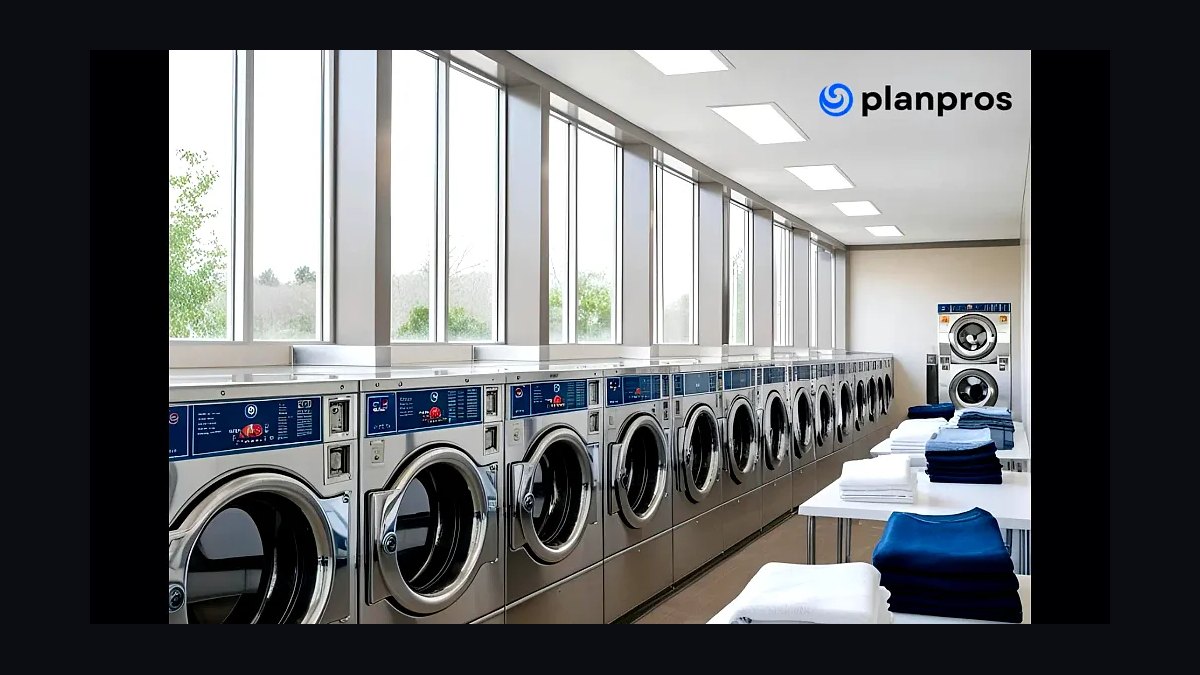
Yes — if you can buy an existing cash-flowing store for a 3.0-3.5x SDE multiple in a dense, renter-heavy ZIP (≥35% renters, median HHI $35-65K) with independently metered water and gas, and you have $150-250K liquid to cover the 20-25% SBA down payment plus $40-60K working capital. Otherwise, probably not — building from scratch in 2027 means $350-750K all-in, a 30-42 month payback, and Year-1 cash flow of $35-90K while you fight rising utility costs (21% of gross) and 2-3 hours/day of personal labor. Independent operators clear $90-225K in cash flow at a steady 22-32% EBITDA margin — but only at $400-700K gross revenue, which requires 70+ turns per machine per month.
The Real Numbers
The math has tightened in 2027. Utility rate increases (water, sewer, natural gas) outpaced revenue growth across the 17,461 U.S. laundromats tracked by IBISWorld, and the Coin Laundry Association reports utilities now consume 21% of gross revenue — up from 17% pre-2022. The two viable paths are acquiring an existing store (faster cash flow, real comps) or building new (higher upside if you nail demographics, brutal if you don't).
| Line Item | Buy Existing | Build From Scratch |
|---|---|---|
| All-in capital required | $200K-500K | $350K-750K |
| Equipment (20-30 washers + 20-30 dryers) | Included | $180K-300K (Speed Queen / Huebsch / Continental Girbau) |
| Build-out + plumbing + electrical | Included | $80K-180K |
| Working capital (3 months) | $30K-50K | $40K-60K |
| Annual gross revenue (single store) | $250K-500K | $350K-700K (Yr 2-3) |
| EBITDA margin | 22-32% | 18-28% ramp, 25-32% steady |
| Year-1 owner cash flow (SDE) | $60K-150K | $35K-90K |
| Utilities (% of gross) | 21% | 21-26% (Yr 1) |
| Rent (% of gross) | 12-18% | 12-18% |
| Labor (attended W/D/F) | 12-20% | 10-15% (Yr 1, owner-operator) |
| Payback period | 24-36 months | 30-42 months |
| SDE multiple (sale) | 3.0-3.5x | 3.5-4.5x once stabilized |

Industry context (2027 framing): IBISWorld pegs the U.S. laundromat market at $7.2B with a 1.6% revenue CAGR (2021-2026) even as store count fell 1.5% annually — fewer, bigger, better-run stores. Wash-dry-fold (WDF) is now 34% of revenue at fully-attended stores per CLA data, and 55% of laundromats accept card/mobile payments in 2026 (projected 70% by 2027 in metros) per Card Concepts Inc. and Coin-O-Matic reporting.
Who Wins With This Business
Owner-operators who treat it as a real business, not passive income. The mythology of "set-it-and-forget-it laundromats" is dead in 2027 — the CLA's 2024 operating expense study confirms that fully-attended stores comprising 34% of the market generate 2-3x the revenue per square foot of unattended coin-op shops. The winners share patterns:
- Multi-store operators (3-7 stores) who pool labor, route a single tech, and buy detergent/parts at wholesale. They hit 28-34% EBITDA vs. 18-24% for single-store owners.
- Demographic hunters who buy in renter-heavy ZIPs (35%+ renters per Census), median HHI $35-65K, and no in-unit laundry in surrounding multifamily. Density beats traffic count every time.
- WDF and commercial route operators who layer $80-220K in B2B revenue (Airbnb hosts, salons, gyms, restaurants) on top of the retail base. WDF nets $1.50-2.25 per pound with 42-55% gross margins.
- Card/mobile-only conversions who eliminate coin handling, cut shrink by 4-7%, and raise vend price 8-15% without measurable customer loss — supported by CSI / SpyderWash / Setomatic adoption data.
- Buyers of distressed stores who acquire at 2.0-2.6x SDE from retiring boomers, then re-equip with high-efficiency machines (cutting water use 30-40%) and rebrand within 18 months.
Who Loses With This Business
Absentee investors expecting truly passive income. The "buy a laundromat, collect quarters" pitch from finance Twitter does not survive contact with reality. Losers cluster in five archetypes:
- Greenfield builders in suburban strip malls with <25% renter density — they finish build-out at $550K all-in, then discover 52 turns/machine/month instead of 90+. EBITDA collapses to 9-14%, payback stretches to 6+ years.
- Cash-only nostalgia operators clinging to coin-op past 2026 — they lose 15-22% of millennial and Gen Z foot traffic to card-accepting competitors per Coin-O-Matic survey data.
- Buyers who skip the utility audit — they take seller's word on $1,400/month water, get the actual bill at $3,100/month post-close, and watch margin evaporate.
- Operators in soft-water municipal supply areas who don't install a softener — equipment lifespan drops from 15 years to 7-9, replacement capex eats two years of profit.
- Owners who skip security cameras and attendant coverage — vandalism, theft, and unattended fires destroy stores. Insurance loss runs run $45K-180K before recovery.
2027 Market Conditions
Five forces shape the 2027 entry decision. First, commercial real estate softness in Tier 2/3 metros means landlords are negotiating 6-9 months free rent on 10-year NNN leases — a meaningful tailwind for new entrants. Second, water and sewer rate inflation averaged 6.2% annually 2022-2026 per BLS data and the EPA Water Affordability Index; CLA expects the 21% utilities-as-percentage-of-revenue figure to drift to 23-25% by 2028 without efficiency upgrades. Third, SBA 7(a) rates sit at Prime + 2.25-2.75% (roughly 10.75-11.25% in mid-2026 per SBA bulletins), meaningfully higher than the 6-7% rates 2020-2022 buyers locked in — debt service eats more of the pro forma.
Fourth, boomer succession is the deal flow — 42% of independent laundromat owners are 60+ per Coin Laundry Association demographics, and a wave of 2026-2029 retirements means acquisition multiples are softening from 4.0x to 3.0-3.5x SDE in most secondary markets. Fifth, AI-enabled remote monitoring (Cents, LaundryCard, CSC ServiceWorks WashAlert) now lets a single operator manage 3-5 stores from a phone, structurally favoring multi-unit consolidators over single-store mom-and-pops.
The 90-Day Decision Tree
- Days 1-15 — Capital and credit readiness. Pull all three credit bureaus, confirm 680+ FICO, secure $150-250K liquid (not retirement accounts unless you ROBS). Get SBA 7(a) pre-qualification from a Preferred Lender Program (PLP) lender — Live Oak Bank, Newtek, Celtic Bank, Byline Bank are the volume leaders for laundromat deals.
- Days 16-30 — Market and demographic scan. Pull Census ACS data for target ZIPs. Filter for renter density 35%+, median HHI $35-65K, and <2 competing laundromats within 1 mile. Drive every candidate site at 6 PM Saturday and 11 AM Sunday — peak laundromat traffic windows.
- Days 31-50 — Choose buy vs. build. If 3+ acquisition targets with clean books and 3.0-3.5x asks exist in your market, buy. If not, build new — but only with a signed 10-year NNN lease at <$22/sqft, 2x 5-year options, and TI allowance of $40-80/sqft for plumbing and electrical upgrades.
- Days 51-75 — Due diligence (buy path). Demand 3 years of federal tax returns, sales tax returns, and 24 months of utility bills. Cross-check vended sales against water consumption (rough check: 0.45-0.65 gallons per dollar of vended wash revenue). Verify the lease has assignment rights and no kick-out clause. Inspect every machine — replacement cost is $1,800-3,500 per washer, $1,200-2,200 per dryer pocket.
- Days 76-90 — Close, train, operate. Close SBA, take possession, run the store yourself for first 30 days minimum. Track turns per machine per day, average ticket, WDF lbs/day, and utility cost per revenue dollar in a simple sheet. Adjust vend prices, hours, and attendant coverage only after 30 days of clean baseline data.
Alternative Plays

- Laundromat franchise (WaveMAX, Tide Cleaners franchise, Wash Plus, BubbleNow, Maytag Commercial Laundry) — pay $25-60K franchise fee + 4-7% royalty for brand, layout playbook, and equipment-buying power. Right for first-timers with $300K+ capital who want guardrails; wrong if you have operational chops and want full margin.
- Wash-dry-fold-only commercial route — no retail location, $25-50K equipment, $60-180K revenue servicing Airbnb hosts, gyms, salons, restaurants, smaller hotels. Lower ceiling but 35-50% net margins and 6-9 month payback.
- Pickup-and-delivery laundry app (powered by Cents, CleanCloud, Curbside Laundries) — add $40-120K incremental revenue to existing store, or run standalone with a single vehicle and a contract laundry partner.
- Buy a laundromat real estate package — acquire the building plus business ($600K-1.2M total) so rent becomes mortgage equity. Best for operators who want to stack rental income and business income and exit the building separately in 10-15 years.
- Hotel/multifamily linen contracts — wholesale commercial laundry serving boutique hotels at $0.60-0.85/lb, $300K-1.5M revenue at 18-26% EBITDA — different business, different capex ($400K-900K for industrial equipment), but adjacent skill set.
FAQ
What's the minimum cash I need to buy an existing laundromat in 2027? You'll want $150,000–$250,000 liquid to cover a 20–25% SBA down payment on a $500K–$1M store plus $40,000–$60,000 in working capital. If you have less, you'll struggle to qualify for financing or handle early repairs.
Is building a new laundromat from scratch ever worth it? Only if you have $350,000–$750,000 in total capital and can tolerate a 30–42 month payback period. New builds carry higher risk because you're paying for construction, equipment, and leasehold improvements before earning a dime, and Year-1 cash flow is typically just $35,000–$90,000.
How many customers do I need per machine to be profitable? You need at least 70 turns per machine per month to hit $400,000–$700,000 in gross revenue, which is the typical range for a profitable independent store. Below that, fixed costs like rent and utilities eat your margin.
What are the biggest hidden costs I should expect? Utility costs average about 21% of gross revenue, and they're rising. Also budget for 2–3 hours of your own labor per day for cleaning, maintenance, and customer issues — you can't afford full staff from day one.

Can I run the business part-time or hire a manager from the start? Not realistically in Year 1. Most independent owners work on-site daily because margins are thin at $400K–$700K revenue. Once you reach $700K+ and have reliable staff, you can step back, but that usually takes 2–3 years.
What's the typical profit range for a well-run independent laundromat? Cash flow runs $90,000–$225,000 annually with a 22–32% EBITDA margin. The lower end is typical for smaller stores or newer owners; the upper end requires high machine turns, low utility costs, and minimal labor expense.
Bottom Line
Buy an existing cash-flowing store at 3.0-3.5x SDE in a renter-dense ZIP with verified utility bills, run it yourself for 90 days, layer in WDF and cashless within 6 months, and you will clear $90-180K of owner cash flow in Year 1 with a 24-36 month payback. Build new in 2027 only if (a) you can secure a 10-year NNN lease at <$22/sqft with 6-9 months free rent and meaningful TI allowance, and (b) you have $250K+ liquid plus the patience for a 30-42 month payback. The boomer succession wave (42% of operators 60+) is the deal flow — patient buyers will find soft multiples through 2029. Skip this business if you wanted truly passive income, can't stomach 21-26% utilities-as-percentage-of-revenue, or refuse to convert to cashless.
Sources
- IBISWorld, Laundromats in the US Industry Analysis, 2026 (https://www.ibisworld.com/united-states/industry/laundromats/1729/)
- Coin Laundry Association, Industry Overview (https://laundryassociation.org/for-investors/industry-overview/)
- Coin Laundry Association, 2024 Operating Expense Study (utilities-as-% of revenue)
- Trycents, Laundromat Investment Cost Breakdown (https://www.trycents.com/our-2-cents/laundromat-cost-analysis)
- WaveMAX Laundry, Laundromat Investment Guide 2026 (https://wavemaxlaundry.com/laundromat-investment-guide/)
- DueDilio, How Much Does a Laundromat Cost? Valuation Tips (https://www.duedilio.com/how-much-to-buy-a-laundromat/)
- Card Concepts Inc., New Trends in the Laundromat Industry (https://www.laundrycard.com/new-trends-in-the-laundromat-industry/)
- Coin-O-Matic, Cashless Laundry Payment Systems (https://www.coinomatic.com/coin-o-matic-blog/cashless-payment-systems-commercial-laundry/)
- U.S. Small Business Administration, 7(a) Loans Program (https://www.sba.gov/funding-programs/loans/7a-loans)
- ProjectionHub, SBA Loan for a Laundromat — Ultimate Guide (https://www.projectionhub.com/post/sba-loan-for-a-laundromat-ultimate-guide)
- Kentley Insights, Laundromat Industry Report 2025 (https://www.kentleyinsights.com/laundromats-industry-market-research-report/)
- American Coin-Op, Self-Service Laundry Industry Trends 2026 (https://americancoinop.com/articles/self-service-laundry-industry-trends-taking-hold-2026-part-2)
- U.S. Bureau of Labor Statistics, Water/Sewer/Trash CPI series
- U.S. Census Bureau, American Community Survey (renter density, median HHI by ZIP)
Published 2026-06-09 · Updated 2026-06-09 · independent laundromat review / reviews / rating / review 2027 / review of independent laundromat
Related on PULSE
- Franchise vs. independent business: which should I start in 2027?
- Should I open a independent self-storage facility in 2027?
- Should I open a independent quick lube business in 2027?
- Should I open a independent car wash business in 2027?
- Should I open a independent tire shop in 2027?
- Should I open a independent auto repair shop in 2027?
This page will be disappearing soon. Save it to your device for $1 — or read it free while it is here.
@Kory-White- · if Venmo asks, the last 4 of my number are 2012
This page is gone.
This one is off the shelf now. $1 keeps it on your phone for good — the whole page, pictures and diagrams included.
 franchiseShould I open or buy a Chipotle franchise in 2027?
 franchiseShould I open or buy a McAlister's Deli franchise in 2027?
 franchiseShould I open or buy a Servpro franchise in 2027?
 franchiseShould I open or buy a Wingstop franchise in 2027?
 franchiseShould I open or buy an Anytime Fitness franchise in 2027?
 franchiseShould I open or buy a Little Caesars franchise in 2027?
 franchiseShould I open or buy an Auntie Anne's franchise in 2027?
 franchiseShould I open or buy a UPS Store franchise in 2027?
 frShould I open or buy a McDonald's franchise in 2027?
 franchiseShould I open or buy a Supercuts franchise in 2027?