


Should I open a coin-op car wash in 2027?
Quality
Certified
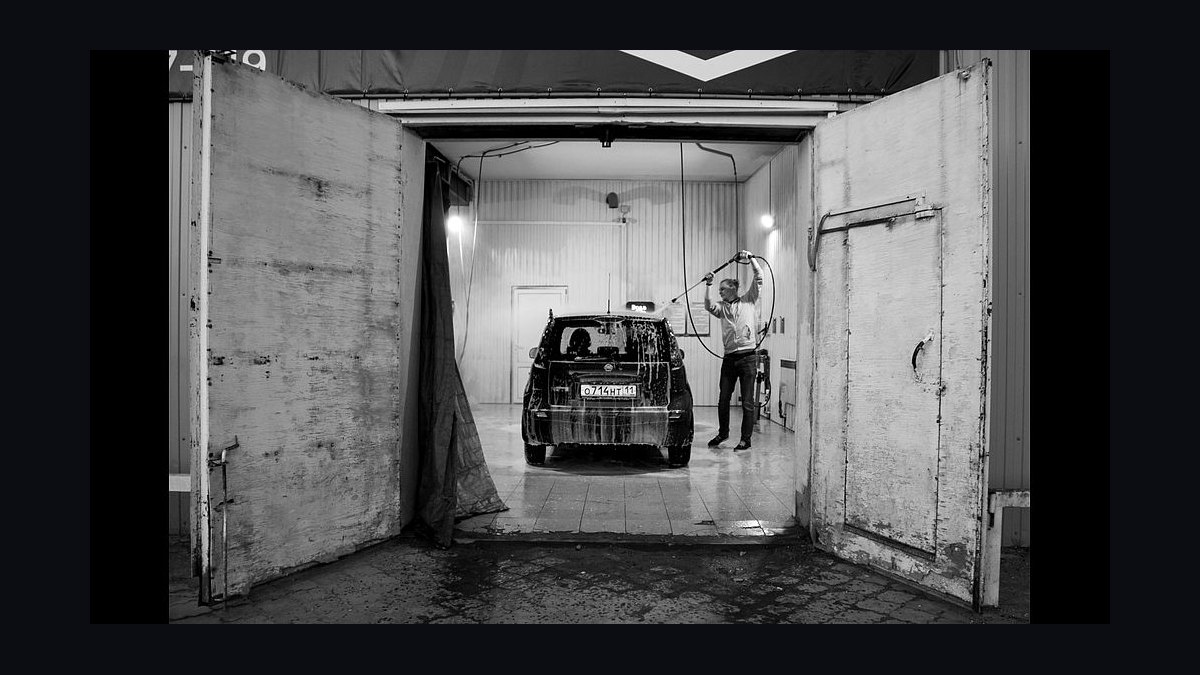
Probably not, unless you already own the land, can keep the all-in build under roughly $500K–$600K, and have confirmed no express tunnel operates within a 3-mile radius. A coin-op self-serve car wash opened in 2027 typically returns $15K–$35K in revenue per bay annually at a 55%–65% gross margin, with payback stretching to 5–8 years — not the 2–3 years operators saw a decade ago, because land, construction, and insurance costs have all risen while express tunnels captured most urban and suburban wash volume.
What a coin-op car wash is and why 2027 is a different bet than 2015
A coin-op car wash — also called a self-serve bay — is a facility where customers pay by coin, token, or card to operate their own wash wand, brush, and vacuum for a set time increment, typically $1–$2 per minute or cycle. Most modern builds pair several self-serve bays with one in-bay automatic (IBA), a single-vehicle automated wash that a driver pulls into and lets run. In 2027, a pure self-serve site with no automatic component is increasingly difficult to finance or operate profitably, so when people ask whether they should open one, they're usually really asking about a hybrid 4-bay self-serve plus 1-IBA layout.
The reason this decision looks different than it did ten or fifteen years ago comes down to one structural shift: the rise of the express tunnel model. Chains like Mister Car Wash, Take 5, Tommy's Express, and Spotless Brands built out subscription-based, conveyorized tunnels that wash a car in under five minutes and bill customers $20–$30 a month for unlimited visits. That subscription economics changed what customers expect to pay per wash and where they expect to go. Industry tracking from the International Carwash Association puts express tunnels at over half of North American car wash revenue, while self-serve has fallen to roughly 11% of industry revenue and continues to shrink as a share, even though total industry revenue keeps growing.
That doesn't mean self-serve is dead — it means the addressable customer has narrowed. The vehicles and customers who still value a coin-op bay in 2027 are the ones a tunnel structurally cannot serve: trucks with toppers or ladder racks that won't clear a tunnel's overhead clearance, boats and trailers, oversized vans, and customers who want to hand-detail wheels, interiors, or pet messes rather than run through an automated cycle. There's also a geographic narrowing: rural and secondary markets — towns in the 8,000 to 35,000 population range without a nearby tunnel — retain self-serve volume far better than any market that already has tunnel access, because driving 20+ minutes to reach a subscription wash isn't worth it for an occasional wash.
This matters for anyone evaluating whether to open one in 2027 because the business is no longer a generic "car wash" decision — it's a niche real estate and service play that only works for specific site and customer profiles. Treating it like the self-serve business of 2012, when margins were higher and competition from tunnels was minimal, will produce a financial model that doesn't survive first contact with current land, construction, and insurance costs.
The step-by-step process for deciding whether to open one

Opening a coin-op wash responsibly in 2027 is less about picking equipment and more about proving, before you spend money, that your trade area can actually support the narrowed customer base described above. The sequence below is the practical order operators and their lenders expect to see.
Start with a trade-area competitive scan. Drive a 5-mile radius around any site you're considering and physically count every existing self-serve, IBA, and express tunnel. Note each tunnel's membership pricing and how long the line gets on a Saturday between 10am and 2pm — long lines signal unmet demand, while short lines signal the tunnel has already absorbed the market. If you find two or more tunnels within 3 miles of your candidate site, that is generally a disqualifying signal on its own.
Next, pull traffic and demographic data. State departments of transportation publish annual average daily traffic (AADT) counts for most arterial roads; a commonly cited viability floor for a self-serve site is around 12,000 AADT passing the parcel. Layer in household income and vehicle ownership data for the 1-mile and 3-mile rings around the site, since truck and RV ownership rates vary heavily by area and directly predict demand for oversized bays.
Once a site clears the traffic and competition screen, move to site control. Look for a 0.5 to 0.75-acre parcel with corner visibility, feasible right-in/right-out access for vehicles towing trailers, and access to municipal sewer rather than requiring a septic system. Negotiating a feasibility option — effectively a paid right to walk away within 90 to 120 days — lets you do engineering and permitting due diligence before committing capital.
With a site under option, build the financial model. A 10-year projection should run at least two scenarios: a mid-case built around $150K–$275K in annual site revenue, and a downside case 25%–30% lower that assumes a tunnel opens nearby within three years of your own opening. If the downside case produces an unacceptable return, the deal isn't bankable regardless of how the mid-case looks.
Get firm equipment bids next, rather than working off list pricing. Self-serve equipment vendors and IBA manufacturers quote substantially different totals depending on bay count, finish level, and payment system integration, and a 10-year total cost of ownership comparison — not just the sticker price — is what separates equipment that's cheap to buy from equipment that's cheap to run.
Line up financing in parallel, typically through an SBA 7(a) loan given that this is real-estate-heavy, equipment-heavy small business lending. Rates and down payment requirements (commonly around 25% down with the real estate amortized over a longer term than the equipment) should get locked into the model rather than assumed.
Finally, confirm zoning and environmental compliance before closing. Car washes are permitted by-right in many commercial zones but require a special use permit in others, and stormwater or water-reclaim requirements — increasingly mandated in water-stressed states — can add real cost if discovered after you've already committed to a building design.
Costs, timelines, and typical ranges
Build costs for a 4-bay self-serve plus one IBA facility break down across several line items, and the spread between a favorable build and an expensive one is wide enough to change the entire investment thesis.
Land for a 0.5–0.75 acre commercial corner parcel ranges from roughly $80K in a rural secondary market to $400K or more in a dense suburban location with strong visibility. Site work, utilities, and permitting typically run $60K–$180K depending on how much grading, sewer tie-in, and stormwater infrastructure the parcel needs. The building shell itself — covering four self-serve bays plus one automated bay — runs $150K–$360K depending on finish level and regional construction costs.
Equipment is its own major category. Self-serve bay equipment, fully installed, runs roughly $18K–$38K per bay depending on whether you install touchless/brushless systems, foam color options, and card/tap payment readers versus basic coin mechanisms. The in-bay automatic unit is the single largest equipment line, typically $130K–$250K installed, since it includes the automated arch or rollover mechanism, water reclaim and treatment systems, and the control electronics. Vending, vacuum stations, a bill/coin changer, and point-of-sale hardware add another $25K–$70K.
Layering all of that together, a realistic all-in turnkey build in 2027 ranges from roughly $565K on the favorable end — owned land, moderate finish, efficient site work — up to $1.4M or more on sites with expensive land, heavy permitting requirements, or premium equipment specs. Owning the land outright before you start, rather than buying it as part of the project, is the single biggest lever for compressing that range, since it can cut $150K–$350K off the total depending on market.
On the revenue side, a well-positioned site should expect $18K–$28K in annual revenue per self-serve bay and $90K–$160K from the IBA, which nets out to roughly $160K–$275K in total site revenue for a 4-bay-plus-IBA layout. Gross margins run 60%–68% on self-serve bays (water, chemicals, and power are the main cost of goods) and 55%–62% on the IBA, which carries higher per-wash chemical and water cost. After real estate carrying costs, debt service, and management, EBITDA margins in the 22%–32% range are typical for a well-run site.
Timeline-wise, expect the due-diligence-to-opening process outlined above to run 90 days at minimum if the site is already identified, and realistically 6–12 months when you factor in permitting review cycles, construction lead times for the IBA equipment (which often has a multi-month order lead time), and any zoning variance process. Payback on a debt-financed, newly built site runs 5–8 years under 2027 cost conditions — meaningfully longer than the 2–3 year paybacks some long-time operators remember from the 2000s and early 2010s, driven by higher land costs, higher interest rates on SBA financing, and materially higher commercial insurance premiums for unattended, coin-operated facilities.
Where owners get it wrong
The single most common mistake is building or buying within a competitive radius of an existing express tunnel without stress-testing what happens to self-serve volume once that tunnel opens or a new one arrives. Markets that have an express tunnel open within roughly 18 months of a self-serve site's launch typically see self-serve volumes decline 30%–50%, because the tunnel's subscription model captures the convenience-focused customer who used to be the self-serve regular. Operators who built their model only on current-state competition, without a scenario for a tunnel opening in year two or three, get caught by a revenue cliff they never modeled for.
A second frequent error is over-leveraging the purchase. Commercial lending rates for this category of small-business real estate and equipment loans have been elevated through 2026, and an owner who finances close to 100% of the project ends up with debt service that can consume most or all of a mid-case EBITDA, leaving no cushion if revenue comes in at the downside case instead. The deals that actually work tend to have either significant owner equity, owned land contributed at a low basis, or both.
A third mistake is underestimating the labor and attention the business actually requires. Self-serve washes get marketed to prospective buyers as "passive income," but that framing doesn't match how operators who are actually running these sites describe their week. Unattended, coin-operated sites face theft of coins and card-reader hardware, vandalism, graffiti, and routine mechanical issues like clogged trench drains that need same-day attention, because a broken bay or a flooded lot drives customers straight to the nearest tunnel. Surveys of self-serve operators have found that a large majority spend six or more hours per week on-site, and a meaningful share spend fifteen or more — this is a hands-on small business, not a mailbox-money investment, and owners who try to run it fully remotely tend to see real margin leakage from theft, deferred maintenance, and lost volume during downtime.
A fourth mistake is skipping the truck-and-RV bay dimensioning that's increasingly the whole point of opening a self-serve site in 2027. Building standard-height, standard-depth bays because that's what the generic equipment package includes, rather than specifying taller doors and deeper bays that can accommodate oversized pickups, vans, and trailered boats, throws away the one durable customer segment that a tunnel genuinely cannot serve. Those oversized-vehicle customers also spend meaningfully more per visit than a standard sedan wash, so under-building the bays directly caps the revenue the site can ever generate.
Finally, many first-time owners never run a buy-versus-build comparison before committing to new construction. Existing self-serve facilities regularly trade at a meaningful discount to the multiple that express tunnels command, which means buying an operating site with a real track record of revenue and customer flow can deliver the same exposure to this niche with substantially less execution risk than a ground-up build — yet it's frequently skipped because new construction feels like the default path rather than one option among several.
Decision framework: when to open, buy, convert, or walk away
Not every prospective owner is actually choosing between "open a new coin-op wash" and "don't." In practice there are several adjacent paths, and the right one depends heavily on whether you already control land, how much capital you're willing to deploy, and how hands-on you want to be.
If you already own low-basis or paid-off land in a qualifying rural or secondary market with no nearby tunnel, building new is usually the strongest option, because removing the land cost from the equation compresses payback meaningfully and lets the real estate itself serve as a long-term hold. If you don't own land and are evaluating raw sites, buying an existing self-serve facility instead of building from scratch is often the better risk-adjusted choice, since it comes with real operating history, an established customer base, and a lower purchase multiple than new construction would cost to replicate. If your target market already has one or two tunnels nearby but still shows real traffic and no oversized-vehicle capacity, converting an aging self-serve into a hybrid — keeping a couple of truck/RV bays and adding a short conveyorized mini-tunnel for standard vehicles — can capture both customer segments, though it requires meaningfully more capital than a straight self-serve build. And if the trade area already has two or more tunnels within three miles, or you're not willing to be on-site multiple hours a week, the better move is usually to either walk away from operating a wash altogether and instead lease a well-located parcel to a tunnel operator as a long-term net-lease landlord, or to consider a lower-capital adjacent business like mobile detailing that doesn't require any real estate commitment at all.
Related questions
Should I buy an existing self-serve wash instead of building new in 2027?
Often yes — existing self-serve facilities typically trade at lower valuation multiples than express tunnels, come with proven revenue history, and avoid construction and permitting risk entirely, making them a lower-risk way to get the same market exposure.
How close can an express tunnel be before it kills a self-serve business?
Within roughly 3 miles is the commonly used danger zone; tunnels that open inside that radius typically pull 30%–50% of nearby self-serve volume within about 18 months through subscription-priced unlimited memberships.
Is a coin-op car wash a good passive-income investment?
No — despite how it's often marketed, most operators report spending 6 or more hours a week on-site handling theft, vandalism, chemical refills, and mechanical issues; fully remote ownership tends to leak significant margin.
What's the fastest way to improve a struggling self-serve site's economics?
Adding or upgrading an in-bay automatic and dimensioning or re-equipping bays for trucks, RVs, and trailers to capture the higher-spending customers a tunnel structurally can't serve.
Does owning the land change the investment case significantly?
Yes — contributing land at a low or zero basis instead of buying it as part of the project can cut total build cost by $150K–$350K and compress payback from the 5–8 year range down to roughly 3–5 years.
FAQ
What's the realistic revenue range for a 4-bay coin-op wash in 2027? A well-located 4-bay self-serve site paired with one in-bay automatic typically generates $160K–$275K in total annual revenue, with self-serve bays contributing $18K–$28K each and the automatic bay contributing $90K–$160K, depending heavily on local traffic and competition.
How much does it cost to open one from the ground up?
A full turnkey build — land, site work, building shell, self-serve equipment, one automatic bay, vending, and working capital — runs roughly $565K on the favorable end up to $1.4M or more depending on land cost, finish level, and local permitting requirements.
What's the single biggest threat to opening a coin-op wash in 2027? An express tunnel opening within a 3-mile radius, since subscription-priced unlimited memberships capture the convenience-focused customer segment and can reduce nearby self-serve volume by 30%–50% within about 18 months.
How long until the investment pays back? Realistic payback on a new, debt-financed build is 5–8 years under current land, construction, and insurance costs — longer than the 2–3 year paybacks some long-time operators remember from a decade or more ago.
Can I run this as a part-time, semi-absentee owner? You can, but expect net margins to drop meaningfully — commonly to a 40%–50% range instead of 55%–65% — because theft, vandalism, and deferred maintenance tend to increase without regular on-site presence.
Is the truck-and-RV niche actually worth building for? Yes — oversized vehicles that can't fit in an express tunnel typically spend two to three times what a standard sedan wash generates per visit, but capturing that demand requires taller doors and deeper bays designed in from the start, along with higher water and sewer costs per bay.
Sources
- International Carwash Association — icahq.org
- IBISWorld — ibisworld.com
- U.S. Census Bureau, Economic Census (NAICS 811192) — census.gov
- U.S. Small Business Administration, 7(a) Loan Program — sba.gov
- CarWash.com — carwash.com
- BizBuySell — bizbuysell.com
- Kleen-Rite Corp. — kleenritecorp.com
- Coleman Hanna Carwash Systems — colemanhanna.com
- Dultmeier Sales — dultmeier.com
- The Hartford Small Business Insurance — thehartford.com
Related on PULSE
- Should I open or buy a Club Car Wash franchise in 2027?
- Should I open a independent car wash business in 2027?
- Should I open or buy a Quick Quack Car Wash franchise in 2027?
- Should I open or buy a Mister Car Wash franchise in 2027?
- Should I open or buy a Tommy's Express Car Wash franchise in 2027?
- Should I open or buy a Driven Brands (Take 5 Car Wash) franchise in 2027?
This page will be disappearing soon. Save it to your device for $1 — or read it free while it is here.
@Kory-White- · if Venmo asks, the last 4 of my number are 2012
This page is gone.
This one is off the shelf now. $1 keeps it on your phone for good — the whole page, pictures and diagrams included.
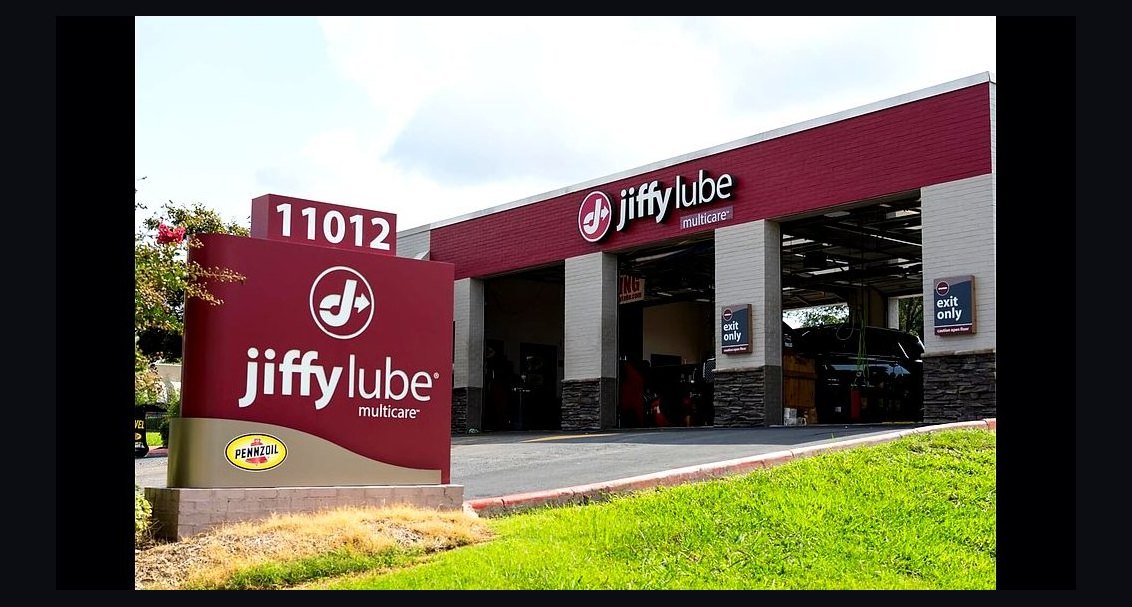 franchiseShould I open or buy a Jiffy Lube franchise in 2027?
 franchiseShould I open or buy a Jeremiah's Italian Ice franchise in 2027?
 franchiseShould I open or buy a Servpro franchise in 2027?
 franchiseShould I open or buy a Marco's Pizza franchise in 2027?
 franchiseShould I open or buy a Dairy Queen franchise in 2027?
 franchiseShould I open or buy a Dunkin' franchise in 2027?
 franchiseShould I open or buy a Sonic Drive-In franchise in 2027?
 franchiseShould I open or buy a Cinnabon franchise in 2027?
 franchiseShould I open or buy a Cook Out franchise in 2027?
 franchiseShould I open or buy a Taco Bell franchise in 2027?