


Should I open or buy a Soccer Stars franchise in 2027?
Quality
Certified
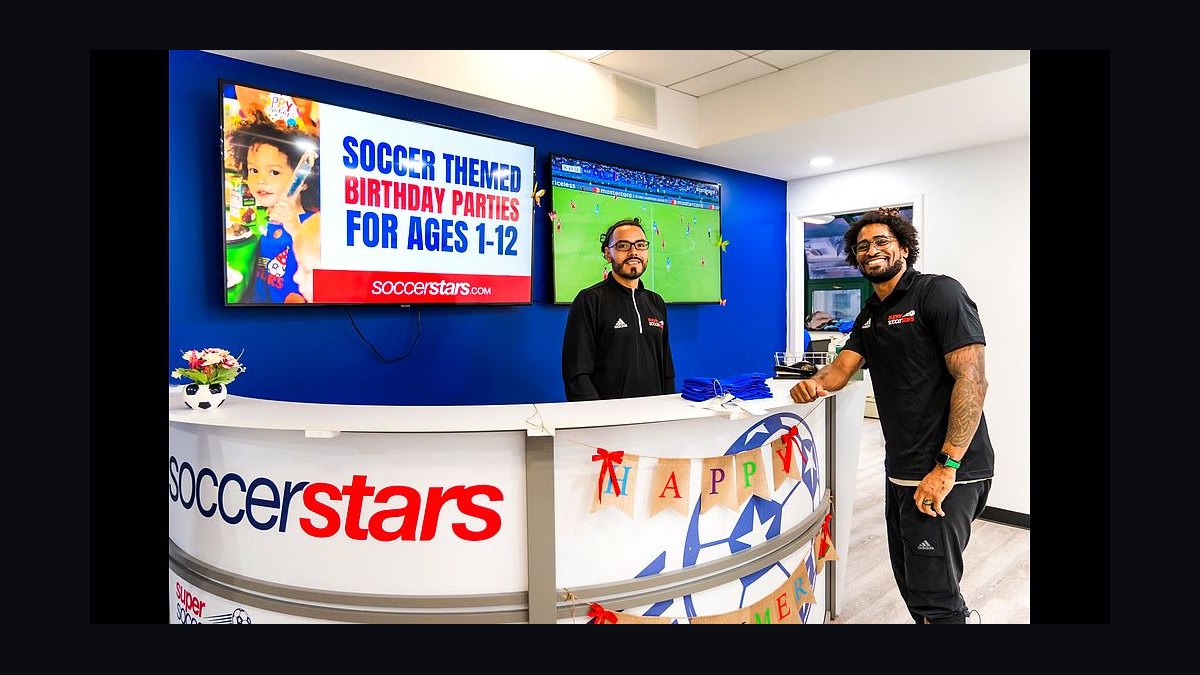
Buy or open a Soccer Stars franchise in 2027 only if you enjoy business-to-business selling into preschools, daycares, and parks departments. The model is asset-light — roughly $40,000 to $90,000 all-in, no real estate, high owner margins — but one territory rarely clears six figures. Multi-territory operators earn real money.
What a mobile youth-enrichment franchise actually is, and why the format matters
Soccer Stars sits in a category that looks nothing like the franchise most people picture. There is no storefront, no lease, no build-out, no hood system, no point-of-sale terminal, and no closing shift. What you buy is a curriculum, a brand, a registration platform, a protected geographic territory, and permission to place branded coaches on fields and gym floors that somebody else owns. The company operates within the Youth Athletes United portfolio, which also includes i9 Sports and TGA, and the shared corporate function is largely technology and operational support rather than real-estate development.
That structure drives every economic fact about the business. Because your fixed costs are near zero, your breakeven point is low and your downside is shallow. A brick-and-mortar children's gym carrying $8,000 to $15,000 a month in rent has to fill classes just to open the doors; a mobile operator with a car full of cones and pinnies has almost no monthly floor to clear. If enrollment softens in February, your worst case is thinner margin, not insolvency. That asymmetry is the single strongest argument for the format, and it is why mobile enrichment franchises kept selling through periods when retail franchising slowed.

The mirror image of that advantage is the ceiling. You cannot merchandise, you cannot upsell birthday parties into an owned space, and you cannot fill dead hours with open gym. Your revenue is a straight function of how many class slots you can place into other people's calendars, multiplied by how many children enroll in each, multiplied by the price per session package. Every one of those three variables is capped by the physical geography of your territory. That is the structural reason nearly every serious operator ends up buying more territories rather than trying to squeeze more out of one.
Understanding this also reframes what you are actually good at, or need to become good at. The person who succeeds here is not a soccer person. They are a route salesperson with a relationship memory. The work resembles selling uniform service, commercial landscaping, or vending placement more than it resembles running a sports academy — you are trying to become the default vendor inside a recurring institutional calendar, and once you are in, inertia works for you. The adjacent franchises that reward the same instincts are the tutoring and STEM-enrichment brands that also live inside schools, and mobile pet grooming or in-home senior care, where the sale is trust plus reliability rather than a product feature.
One more framing point worth absorbing before you sign anything: this is a two-audience business. Your customer is the parent who pays, but your gatekeeper is the director who lets you in the building. Marketing that speaks only to parents will underperform, because parents cannot invite you onto a preschool campus. Marketing that speaks only to directors will underperform, because a partnership with no enrollment gets quietly dropped at renewal. The operators who win learn to run both motions at once, and they treat the director relationship as the harder, more durable asset.
How the business actually gets built, week by week

The sequence from signed agreement to first paying class is fairly consistent across mobile enrichment brands, and it takes most new owners somewhere between sixty and one hundred twenty days. The mistake first-timers make is treating the franchisor's training as the starting gun. Training teaches curriculum and systems; it does not fill your calendar. The territory work should begin the day you sign, in parallel with everything the corporate onboarding asks of you.
Start with a territory census. Pull every licensed childcare center, private preschool, faith-based early-learning program, Montessori school, parks and recreation department, HOA clubhouse, and community center inside your boundaries. Most states publish licensed childcare facility lists through their department of health or human services, which makes this a data exercise rather than a guessing game. A typical suburban territory of 100,000 to 200,000 residents will surface somewhere between forty and a hundred and twenty realistic sites. Rank them by enrolled-child count, drive time from your home base, and whether they have usable outdoor or indoor space.
Then work the list in tiers. Your first fifteen calls are practice, so make them to the sites you care least about. By call thirty your pitch is tight enough to spend on the anchor accounts — the big multi-site daycare chains and the parks department, which alone can supply a meaningful share of a territory's volume. Expect a long lag between first contact and first class: preschool directors plan enrichment on semester cycles, so a conversation in October frequently becomes a January start. Budget for that lag rather than being surprised by it.

The economics of each partnership vary more than newcomers expect. Some centers let you sell directly to their parents and take nothing. Some collect tuition themselves and remit a share to you. Some parks departments run the registration and pay you a per-session fee or a revenue split. Each arrangement has a different working-capital profile: direct-to-parent gives you cash upfront, while a revenue-share with a municipality can mean net-45 payment terms. Model your first two seasons on the assumption that the slowest-paying partner is also one of your largest.
Coach recruiting should start before you have classes to staff, not after. The pipeline is college students, recent graduates, youth-league referees, and part-time workers who want daytime hours. Post at university kinesiology and education departments, not just general job boards — education majors make excellent early-childhood coaches because managing a group of four-year-olds is a classroom-management problem more than an athletic one. Carry a bench of two or three trained backups per territory from the beginning, because a single no-show at a flagship preschool can cost you the account.
Costs, ranges, and the seasonal shape of the cash
The investment profile published in the Franchise Disclosure Document for this category clusters in a narrow band, and you should verify the exact current figures in the FDD you receive rather than trusting any secondhand number, including the ranges here. Broadly, an initial franchise fee in the tens of thousands, portable equipment in the low single-digit thousands, registration and scheduling technology, general liability plus participant accident insurance, launch marketing, travel to headquarters training, and a working-capital cushion for coach payroll before revenue lands. The total lands well under a hundred thousand dollars, which is why this format shows up on almost every "low-cost franchise" list.

Ongoing costs are simpler than most franchises: a royalty on gross revenue in the high single digits, plus a smaller brand or marketing fund contribution. There is no rent, no utilities, no equipment financing, and no inventory carrying cost. Your dominant expense line — by a wide margin — is coach labor, typically consuming somewhere between a quarter and forty-five percent of revenue depending on your local wage floor. In high-minimum-wage metros that figure runs at the top of the range and compresses your margin correspondingly, which is the single biggest geographic variable in the model.
Cash flow is aggressively seasonal, and new owners routinely underestimate this. The strong months track the academic calendar: roughly September through November, then March through May. December is fractured by holidays, January is slow while families recover financially, and June through August drops sharply as preschools go to reduced schedules and families travel. Plan for summer revenue meaningfully below your school-year run rate. The standard hedges are camps, park district summer programming, and multi-week intensive formats, which can partially fill the gap but rarely fully replace it.
Break-even for a disciplined operator generally arrives within the first year, because the fixed-cost base is so thin. Recovering the full initial investment takes longer — think in terms of a year to two years for a single territory that ramps normally. The trap is the second-year plateau: revenue climbs nicely from a standing start, then flattens once you have saturated the easy accounts, and the owner who has not begun the expansion conversation by month eighteen tends to stall. Resale value in small service franchises typically prices off a multiple of seller's discretionary earnings, so building a business that runs without you present is what actually creates an exit, not raw revenue.
There is one financing nuance worth flagging. Because there is no real estate and little hard collateral, conventional lending is thinner here than for a restaurant or a gym. Many owners in this price band self-fund, use a home-equity line, borrow against retirement through a rollover structure, or use an SBA-backed loan where the franchisor is listed in the SBA franchise directory. Each of those carries different risk to your personal balance sheet, and the rollover structures in particular deserve a conversation with a tax professional before you commit.
Where new owners get this wrong
The most common failure is buying the business you wanted rather than the business that exists. People who love soccer imagine spending their days on the field with kids. The actual calendar is dominated by prospecting calls, director meetings, scheduling, payroll, parent-complaint triage, and coach quality control. If the sales portion of the week sounds like a chore you will do "once things are established," this franchise will punish you, because the sales motion never ends — accounts churn, directors change jobs, and a partner you closed two years ago has to be re-won when new leadership arrives.
The second failure is single-territory thinking. The model is engineered for portfolio ownership. One territory funds a decent side income or a modest owner-operator salary; the six-figure outcomes described in franchisee conversations almost always belong to people running multiple territories, sharing coaches and equipment across adjacent boundaries and amortizing one marketing spend over a larger footprint. If you buy one territory and treat the ceiling as a surprise, you have misread the format.

The third failure is under-investing in coach quality. A parent decides whether to re-enroll based on one thing: whether their four-year-old had fun and felt successful. A bored, disengaged, or disorganized coach kills retention faster than any pricing decision. Turnover in this labor pool runs high — this is a part-time job for people whose lives change — so the operators who thrive build a recruiting machine that always has candidates in the pipeline, pay above the local part-time floor, and use small per-child performance bonuses to make the good coaches stay. Treating coach pay as a line to minimize is a false economy.
Fourth: choosing the wrong territory. This business runs on the density of young children and the density of institutions serving them. A territory with sprawling geography, few licensed centers, and long drive times between sites will bleed margin into windshield time no matter how good you are. Before signing, physically drive the territory during a weekday morning and count how many preschools you pass. Look at the household income profile, because discretionary enrichment spend is elastic, and look at competitive saturation from the adjacent brands in the same lane — Soccer Shots, Lil' Kickers, Amazing Athletes, and independent local operators all fish the same pond.
Fifth, and subtler: neglecting the renewal calendar. Institutional accounts renew on a rhythm, and the operators who lose accounts usually lose them by silence. Build a quarterly touch cadence with every director — a short report on enrollment and feedback, a thank-you at the end of each session, a check-in before the planning window opens for the next semester. This is unglamorous relationship maintenance, and it is worth more than any marketing campaign you could run.
Finally, owners frequently misjudge how much of the parent-facing marketing the franchisor will do for them. Corporate provides brand assets, a registration platform, and national-level presence. Local demand generation — the neighborhood Facebook groups, the school newsletter placements, the flyer in the daycare cubby, the sibling discount — is yours. Budget both money and calendar time for it, and measure it, because unmeasured local marketing is where small franchise owners quietly lose their margin.
Choosing between opening fresh, buying an existing unit, or going independent

There are three distinct paths into this business, and they suit different people. Opening a new territory gives you a clean slate, a lower purchase price, and full control over which accounts you build — but you carry the entire ramp risk and you eat six to twelve months of building relationships from zero. Buying an existing territory from a departing franchisee costs more upfront, since you are paying a multiple of established earnings, but you inherit signed partnerships, trained coaches, and cash flow from day one. In a resale, spend your diligence on account concentration: if one daycare chain represents a third of revenue and the relationship lives in the departing owner's personal rapport, you are buying more risk than the multiple implies.
The third path is building your own independent enrichment company. You keep every dollar, you set your own pricing, you write your own curriculum, and you owe nobody a royalty. What you give up is the brand credibility that gets you past a skeptical preschool director, the curriculum development you would otherwise do yourself, the insurance and background-check infrastructure, and the registration technology. For someone who already has deep local relationships — a former youth coach, a parks employee, a preschool director going out on their own — independent can be the better math. For someone new to the market, the brand is doing real work at the door.
Worth comparing honestly against neighboring formats, too. The recreational league brands in the same corporate family carry higher revenue ceilings per territory because leagues generate larger registration volumes and season-long commitments, at the cost of heavier weekend operations and field-permit logistics. Brick-and-mortar children's gyms produce far higher revenue per location and a real asset you can sell, but carry rent, build-out capital in the hundreds of thousands, and genuine downside risk. Non-sport enrichment — music, STEM, coding, art — runs the identical institutional sales motion with different curriculum, which means the skills transfer almost perfectly if you later want to diversify.

The decision that matters most is honest self-assessment on two axes: your appetite for cold outreach and your capital tolerance. High appetite for outreach and low capital points squarely at opening fresh in a dense suburban territory. Low appetite for outreach but decent capital points toward buying an established unit with a manager already in place, or toward a format with more inbound demand. Low on both suggests this category is not your entry into franchising at all — and that is a perfectly good conclusion to reach before you write a check.
Related questions
How many territories do I need to replace a full-time salary?
Most owners describing six-figure take-home run two to four territories. One territory typically supports a part-time income or a modest owner-operator draw. Plan the second territory purchase into your original financing model rather than treating it as a later surprise.
Can I run this alongside a full-time job?
For the first several months, plausibly — much of the sales work is phone-based and coaches deliver the classes. But director meetings happen during business hours and quality control requires watching classes. Most owners find the job pulls them full-time once partnerships multiply.
What happens to revenue over the summer?
Expect a meaningful drop. Preschools reduce schedules, families travel, and school-year partnerships pause. Camps and parks department summer programming are the standard hedges, but budget conservatively and hold working capital through June to August rather than assuming continuity.
Is soccer experience actually required?

No. The franchisor supplies the curriculum and coach training, and your role is sales and management. Early-childhood classes are about engagement and classroom management, not technical instruction. What genuinely helps is comfort talking to school administrators and evaluating whether a coach holds a group's attention.
How do I evaluate a territory before signing?
Count licensed childcare centers using your state's public facility list, drive the territory on a weekday morning, check household income and under-ten population density, and map competing enrichment brands already operating there. Thin institution density is the hardest problem to fix after signing.
FAQ
How much liquid capital should I actually have before I open?
More than the minimum the franchisor quotes. Beyond the initial investment itself, hold a separate cushion covering several months of coach payroll and your own living expenses, because revenue lags partnership signing by weeks and some institutional partners pay on extended terms. Undercapitalization here rarely kills the business outright — it forces you to skip the local marketing and coach pay that drive retention, which quietly caps your ceiling.
Do I own the customers or does the franchisor?
Read the franchise agreement carefully on data ownership and post-termination covenants. In most systems the registration platform and customer data sit with the franchisor, and non-compete terms restrict you from serving the same accounts under a different banner after you exit. This matters enormously if you later want to go independent, and it is one of the more common sources of regret among departing franchisees across every service category.
How is this different from opening a Soccer Shots or Lil' Kickers unit?

They compete in the same lane with similar economics: mobile or facility-based early-childhood soccer, low capital, partnership-driven distribution. The meaningful differences are territory availability in your specific market, the curriculum and coach-training quality, the technology stack, and the strength of the existing franchisee network you can call for reference. Interview owners at each before choosing — availability in your metro often decides it anyway.
What should I ask existing franchisees during validation calls?
Ask for actual take-home after paying themselves a coach's wage for hours worked, partnership renewal rates by account type, coach turnover and what they pay, how long the ramp really took, what percentage of revenue comes from their largest three accounts, and whether they would buy again knowing what they know. Weight the multi-territory owners heavily — they have seen the full arc.
Is 2027 a reasonable time to enter this category?
The underlying demand driver — working parents needing structured, supervised activity for young children — is durable and not especially cyclical, and institutions outsourcing enrichment is a long-running trend. The headwind is part-time labor cost, which has risen faster than program pricing in many markets. Enter with eyes open on wage math in your specific state rather than on national averages.
Can I sell the business later, and what determines the price?
Yes, and small service businesses generally price off a multiple of seller's discretionary earnings, adjusted for how dependent the operation is on the owner personally. A territory where you personally hold every director relationship and schedule every coach is worth less than one with a manager, documented processes, and diversified accounts. Build toward that from year one if an exit matters to you.
Sources
- https://www.ftc.gov/business-guidance/resources/franchise-rule-compliance-guide
- https://www.sba.gov/funding-programs/loans
- https://www.bls.gov/ooh/entertainment-and-sports/coaches-and-scouts.htm
- https://www.franchise.org/
- https://www.entrepreneur.com/franchises/franchise500
- https://www.projectplay.org/state-of-play
- https://www.census.gov/topics/population/age-and-sex.html
- https://www.childcare.gov/
- https://www.ibisworld.com/united-states/market-research-reports/sports-coaching-industry/
- https://www.franchisebusinessreview.com/
Related on PULSE
- Should I open or buy a Soccer Shots franchise in 2027?
- Should I open or buy a Lil' Kickers soccer franchise in 2027?
- Should I open or buy an i9 Sports franchise in 2027?
- Should I open or buy a TGA Premier Sports franchise in 2027?
- Should I open or buy an Amazing Athletes franchise in 2027?
- Should I open or buy a The Little Gym franchise in 2027?
This page will be disappearing soon. Save it to your device for $1 — or read it free while it is here.
@Kory-White- · if Venmo asks, the last 4 of my number are 2012
This page is gone.
This one is off the shelf now. $1 keeps it on your phone for good — the whole page, pictures and diagrams included.
 franchiseShould I open or buy a Planet Fitness franchise in 2027?
 franchiseShould I open or buy an Ace Hardware franchise in 2027?
 franchiseShould I open or buy a Wingstop franchise in 2027?
 franchiseShould I open or buy a Kona Ice franchise in 2027?
 franchiseShould I open or buy a Roto-Rooter franchise in 2027?
 franchiseShould I open or buy a Big O Tires franchise in 2027?
 franchiseShould I open or buy a Little Caesars franchise in 2027?
 franchiseShould I open or buy a Drybar franchise in 2027?
 franchiseShould I open or buy a Valvoline Instant Oil Change franchise in 2027?
 franchiseShould I open or buy a Whataburger franchise in 2027?