
Should I open or buy a K1 Speed indoor karting franchise in 2027?
 Curated byKory White · Fractional CRO · Maryland
 PULSEKNOWLEDGE LIBRARY
Only if you can commit roughly $2M–$4.6M with $600K–$1.5M liquid and accept a 24–42 month ramp. K1 Speed is the dominant indoor electric karting franchise, but it is a large-format real-estate and fleet business. Buying an existing profitable center is usually the lower-risk path over building new.
Building new versus buying an existing center
The first fork in this decision is not "K1 Speed or not" — it is "construct or acquire." They are close to two different businesses wearing the same brand.
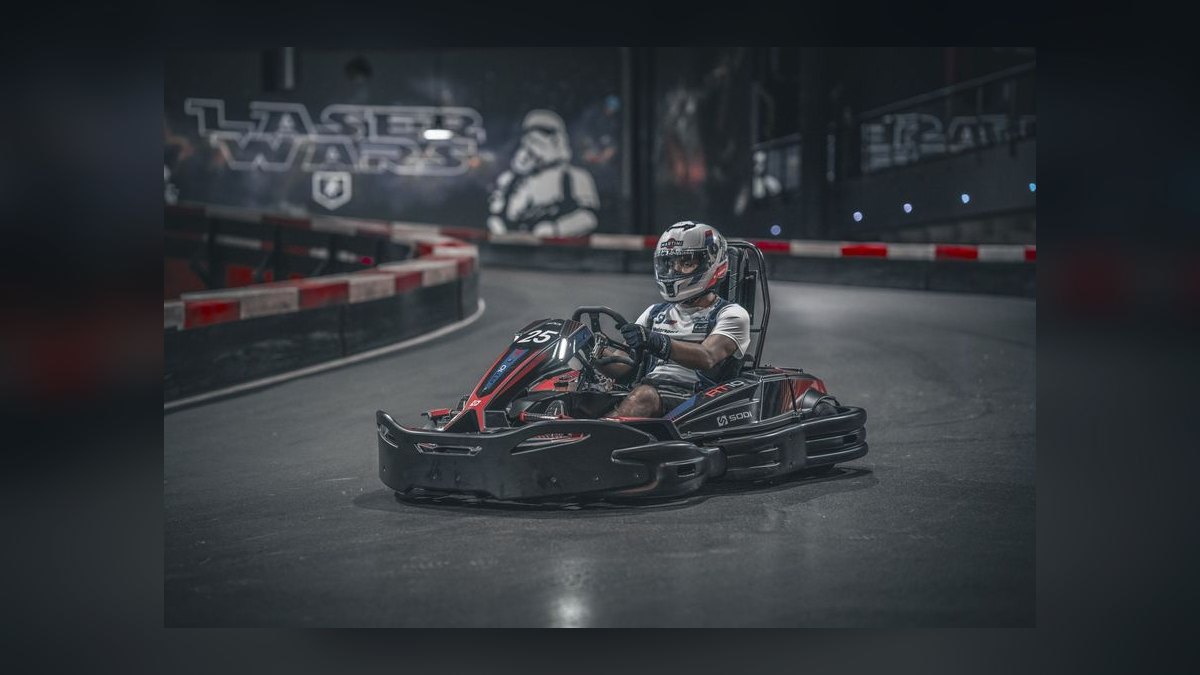
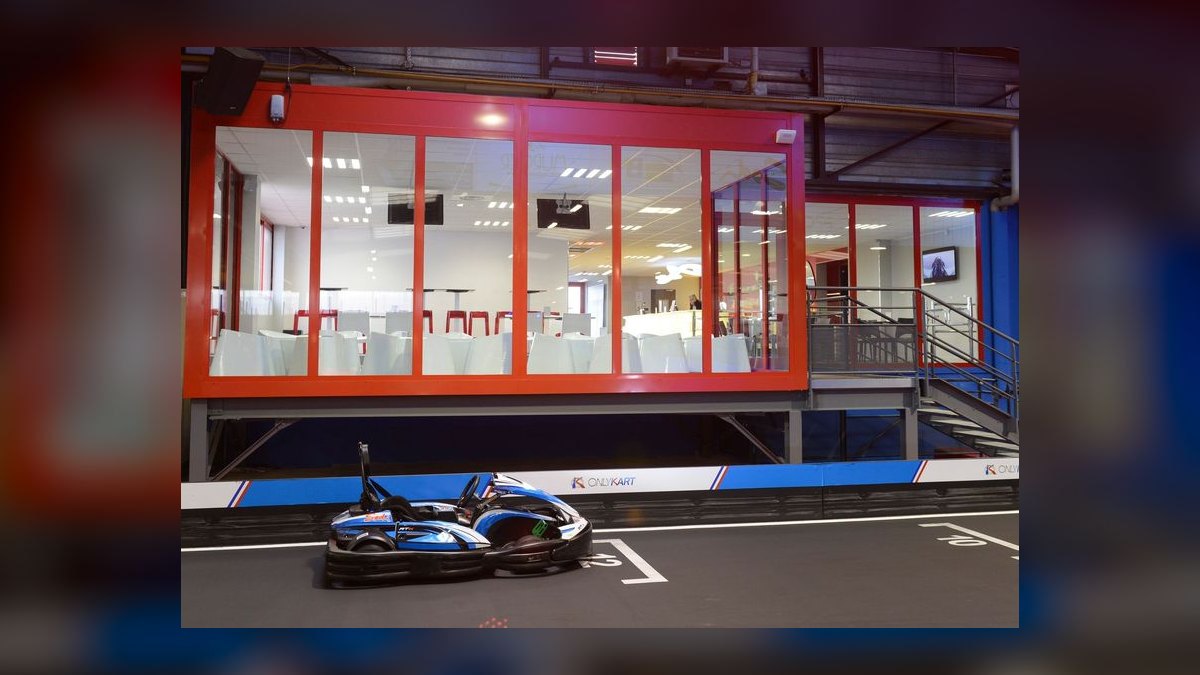
Building new means you sign the franchise agreement, pay the roughly $50,000 franchise fee, then spend 12–18 months on site selection, lease negotiation, permitting, track construction, electrical infrastructure, and fleet delivery before a single customer pays you. Total Item 7 investment on the 2026 FDD runs roughly $1.9M to $4.6M. During that entire window you are paying rent on a shell you cannot monetize, carrying interest on construction debt, and paying a general manager you hired early enough to actually train staff. Your revenue is zero. Your burn is real. Build-out overruns of 15–30% against the franchisee's original budget are a recurring complaint in this format because the electrical work — high-amperage charging infrastructure for a fleet of 20–30 electric karts — is not something a standard retail contractor prices accurately on the first pass. Neither is HVAC for a 40,000+ square foot open-volume space with a track in it.
Buying an existing center means you inherit a built track, a trained staff, a corporate client list, a league roster, and — critically — a revenue history you can underwrite against. Established K1 Speed locations have historically traded in the range of 3.5x to 5.5x EBITDA, with mature centers (five-plus years operating) at the higher end. On a center netting $500K, that's a $1.75M–$2.75M purchase price, plus whatever the lease assignment and fleet condition force you to negotiate. You are often paying a similar or slightly higher headline number than a ground-up build — but you are buying cash flow on day one instead of eighteen months of nothing.

The trade-off is that a resale is a used asset with a hidden clock. The two clocks that matter most are the lease and the franchise agreement term. Buyers want 10+ years remaining on the lease; centers with under five years left commonly transact at a 20–30% discount because the buyer is effectively purchasing a business that may have to relocate — and relocating a permanent indoor track means rebuilding it entirely. The franchise agreement runs an initial term of roughly 10 years with renewal options; a location with three years left on the initial term is a materially different asset than one with eight, because renewal terms can change and the incoming owner has less runway to amortize any capital they put in.
There is a third path worth naming: buying a distressed or underperforming center. Sometimes a location is well-sited and well-built but has been run by an absentee owner who never developed corporate event revenue. That center might be doing $1.8M when its market supports $3.2M. The purchase multiple is low because EBITDA is low. If your operational thesis is "I can sell to HR departments and this owner couldn't," the arbitrage is real. But be honest about whether the underperformance is fixable-operator or unfixable-market. A center failing because the metro has 180,000 people is not a corporate-sales problem.
How to decide between them
Run the decision through capital structure and operator profile before you run it through enthusiasm for karting. The three variables that actually determine which path fits are: how much cash you have versus how much you need to borrow, whether you have operated a multi-department entertainment or hospitality business before, and whether an existing center is even available in a market you'd want.
That last one is the quiet constraint. K1 Speed resales do not come to market often, and when they do the buyer pool is narrow — high-net-worth individuals and existing multi-unit franchise operators, not conventional small-business buyers. If you are set on a specific metro, you may simply not have the choice. Build is the default not because it's better but because it's available.
The honest framing for a first-time franchise owner is this: if you have never run a business with a kitchen, a bar, a retail arcade, a maintenance shop, and a corporate sales function under one roof, building one from scratch is a harsh place to learn. A K1 Speed center is five small businesses stapled together. Buying an operating center hands you a staff that already knows how those pieces fit. You pay a premium for that, and the premium is usually worth it.
Conversely, if you are an experienced multi-unit operator with an existing entertainment portfolio, building is more attractive: you already have the playbook, you can absorb the ramp with cash flow from other units, and you capture the full construction-to-stabilization value creation rather than paying a seller for it.
The numbers behind each option
Here is where the two paths actually diverge financially. The build path front-loads risk into construction and back-loads reward into a stabilized asset you created at cost. The buy path front-loads cost into a purchase price and back-loads reward into incremental improvement.
Build path capital stack. Against the roughly $1.9M–$4.6M Item 7 range, the major buckets are leasehold and buildout ($700K–$2.2M, covering track, barriers, electrical, and food and beverage), the electric kart fleet ($400K–$1M including charging and spares), arcade and simulators ($150K–$500K), technology and software for timing, booking, and POS ($30K–$120K), initial marketing for grand opening and corporate sales ($40K–$150K), insurance and permits ($30K–$120K), and working capital for the first three to six months ($150K–$400K). The $50,000 franchise fee is almost a rounding error against that stack.
Budget tenant improvements at $200–$350 per square foot rather than the lower figures often quoted for generic retail buildout. On a 45,000 square foot space, that's $9M at the top of the range — which tells you immediately that most franchisees are taking a landlord TI allowance and building into a shell where the landlord is carrying a meaningful share, not paying that number out of pocket. Understanding exactly how much TI your landlord contributes is one of the largest single swing factors in your actual cash outlay, and it is negotiable.
Buy path capital stack. Purchase price at 3.5x–5.5x EBITDA, plus a working capital injection, plus whatever deferred capital expenditure the seller has been avoiding. That last item deserves its own diligence line. Ask for the maintenance log on every kart. A center that needs a full battery replacement cycle immediately is handing you an $80K–$180K bill in year one, and that should come straight off the purchase price, not out of your post-close cash.
Operating economics, either path. A $3M-revenue center typically runs labor around 26% ($780K), rent and facility around 16% ($480K), kart and track maintenance around 8% ($240K), royalty in the commonly cited 6%–10% range (call it $240K at 8%), marketing fee around 2% ($60K), and other operating expense around 22% ($660K) — landing owner profit near $540K before debt service. Net margins across the format tend to fall in the 10%–22% band, producing $250K–$900K of pre-debt owner profit at high-performing centers.
The line item that separates a 12% margin from a 20% margin is almost always corporate and event revenue mix. Arrive-and-drive walk-in racing fills the track but at retail price with retail labor intensity. A corporate team-building booking fills the same track at a negotiated group rate with catering attached, on a weekday afternoon when the center would otherwise be near-empty. The marginal cost of that hour is close to zero because you are already paying the rent, the lights, and a skeleton staff. Every dollar of weekday corporate revenue drops toward the bottom line at a rate that weekend retail racing never matches. Owners who neglect B2B sales are running the same building at meaningfully worse economics, and it shows up entirely in net margin.
Real estate cost. Lease rates for 40,000–60,000 square feet of appropriate industrial or retail space with the required ceiling height run roughly $12–$25 per square foot annually on a triple-net basis in 2027, which is $480K to $1.5M in annual rent depending on market and footprint. That range is enormous, and it is the single largest structural determinant of whether a center works. Two identical centers doing identical revenue can be a healthy business and a failing one purely on the rent line. This is why secondary markets sometimes outperform primary ones — the revenue ceiling is lower, but the rent floor is dramatically lower, and the net can be better.
Insurance. Indoor karting carries real liability exposure. Annual premiums for general liability, property, and workers' compensation land in the $60K–$120K range, and premiums have been rising in the high single digits to low double digits annually as claims history accumulates across the industry. Add $15K–$30K for the umbrella liability coverage the franchisor requires. Operators in litigious states report genuine difficulty placing coverage at all, not just pricing it. Confirm insurability in your target state before you sign anything — this is a diligence item that can kill a deal late and expensively.
Fleet replacement. The karts are proprietary electric units running roughly $15K–$25K each depending on model and configuration. Battery packs need replacement every two to three years at approximately $4,000–$6,000 per pack. Across a 20–30 kart fleet, that is $80K–$180K recurring every two to three years — a capital expense that has to be sinking-funded monthly, not discovered in year three. Motor controllers and chassis components add $30K–$60K annually in ongoing maintenance depending on utilization. High-volume centers pay more here because throughput is what wears karts, which means your best revenue months generate your largest maintenance liability. That's a healthy problem, but it needs to be modeled, not absorbed by surprise.
Market fit, competitive position, and adjacent formats
By 2027 the indoor electric karting category is well past its novelty phase, which cuts both ways. Consumer awareness is high — you do not have to explain what the product is — but the top-50 metro areas are substantially penetrated.
Direct competition comes from Andretti Indoor Karting & Games, which runs larger entertainment complexes with deeper food, beverage, and arcade offerings; Autobahn Indoor Speedway as a direct franchise competitor with comparable capital requirements; and regional brands including Pole Position Raceway and MB2 Raceway. K1 Speed's structural advantages are scale — 65-plus locations across the U.S. and internationally — which translates into fleet purchasing power, an established operational playbook, and national marketing leverage no independent can match.
Indirect competition is broader and arguably more dangerous. You are not really competing for "people who want to drive go-karts." You are competing for the group-outing dollar and the corporate team-building budget, and that pits you against Topgolf, Main Event, Dave & Buster's, Bad Axe and Stumpy's-style axe throwing, Five Iron and BigShots golf entertainment, and every new eatertainment format that opens in your trade area. When an HR director has $4,000 to spend on a 40-person team event, karting is one of six credible options. Your competitive position in that decision is determined by your sales responsiveness and your event package quality far more than by your track layout.
Territory. Protected territory typically ranges from a 3–5 mile radius in dense urban markets to 10–15 miles in suburban and rural zones — verify the specifics in Item 12 of the FDD, and specifically ask about company-owned location policy in adjacent markets, since encroachment complaints in this format usually involve corporate units rather than other franchisees.
Where the remaining opportunity sits. The most viable 2027 territories are secondary and tertiary markets in the 300,000–750,000 population range where a K1 Speed can become the dominant entertainment anchor rather than the fourth option. Markets with median household income above roughly $85,000 and a strong concentration of 25–44 year olds tend to support the format best, because that demographic carries both the discretionary spending and the corporate employment that drives weekday revenue. Corporate density matters as much as population — a metro of 500,000 with three large employer campuses can outperform a metro of 800,000 that is primarily residential.
Adjacent formats worth pricing before you commit. If the appeal is experiential entertainment rather than karting specifically, the capital ladder has rungs well below $2M. Axe throwing concepts open for a small fraction of this investment. Indoor golf formats like X-Golf run materially lower capital with strong corporate event revenue and a fraction of the maintenance burden — no fleet, no batteries, no track. Family entertainment formats like Urban Air and Sky Zone sit in between. If the goal is entertainment exposure with meaningful cash-on-cash return, running those numbers side by side against K1 Speed is a legitimate exercise, not a distraction. Karting justifies its premium only if you specifically want the destination-anchor position and the barrier to entry that comes with it.
That barrier, incidentally, is the strongest argument for the format. A $2M+ build with specialized electrical infrastructure and a permanent track is not something a competitor casually replicates in your trade area. Compare that to axe throwing, where a rival can open across the street for a few hundred thousand dollars. High capital intensity is a cost going in and a moat once you're operating.
Sequencing the deal and the first 24 months
The execution order matters more here than in most franchise categories because the capital commitments stack sequentially and each one narrows your options.
Days 1–30 — model before you tour. Read the 2026 FDD end to end, with particular attention to Item 7 (investment), Item 12 (territory), Item 19 (financial performance representations, including what it does and does not say), and Item 20 (outlet counts, transfers, and terminations — the turnover table tells you more about franchisee outcomes than any brochure). Build a capital model with an explicit 25% construction overrun line, not a 10% one.

Days 31–60 — talk to owners, not the franchisor. Item 20 gives you a contact list. Call at least eight, including at least two who have exited or transferred. The questions that produce useful answers are specific: What did your build actually cost versus your original budget? How many months until you hit positive cash flow? What percentage of your revenue is corporate and events versus walk-in? What surprised you in year two? Would you sign again? Vague questions produce vague reassurance.
Days 61–100 — validate the market and confirm you can insure it. Site selection is the highest-leverage decision you will make, and the constraints are unforgiving: 40,000–60,000 square feet, minimum ceiling height in the eighteen-foot range for track layout, adequate parking for a peak weekend, sufficient electrical service capacity for the charging infrastructure, and zoning that permits assembly use. Confirm insurance availability in your state during this window, before you sign a lease.
Days 101–160 — finance and build. Lenders in this category want substantial equity, and SBA 7(a) caps out well below the total project cost, so most deals require a combination of SBA, conventional financing, landlord TI, and personal equity. Construction is long and the electrical scope is the usual source of delay. Order the fleet early — lead times on specialized equipment are not something you want to discover late.

Days 161–220 — hire and pre-sell in parallel. Bring your general manager on 90 days before opening so they can build the staffing roster and learn the systems. Start corporate sales outreach before the building is finished. Opening with a booked event pipeline instead of an empty calendar is the single biggest lever on your first-year trajectory, and it is entirely within your control.
Day 221 through month 42 — grind toward stabilization. Breakeven typically lands 24 to 42 months out. The work in that window is unglamorous: league recruitment to build recurring weeknight utilization, corporate account development to fill weekday afternoons, membership programs to smooth seasonality, and relentless maintenance discipline because kart uptime is the product. A center with six karts down on a Saturday is capping its own revenue.
Plan the exit at entry. Holding periods run 8–12 years before optimal exit multiples. Net proceeds after debt repayment for a well-performing location typically land in the $1.5M–$3.5M range — solid, but not a spectacular decade-long return on a $2M–$4.6M investment, which is why the operating income matters more than the terminal value. Also read the post-termination non-compete carefully; a 2–3 year restriction within a 25-mile radius has been reported to deter otherwise-qualified buyers who operate competing venues, which shrinks your exit pool.
Related questions
Is buying an existing K1 Speed always safer than building?
No. A resale with a short lease, an aging kart fleet, and a franchise term nearing renewal can carry more risk than a clean build. Safety comes from the specific asset's lease term, fleet condition, and revenue trend — not from the fact that it already exists.
Can I finance this with an SBA loan alone?
Unlikely. SBA 7(a) maximums fall well short of a $2M–$4.6M project. Most deals combine SBA financing, conventional debt, landlord tenant-improvement allowance, and substantial personal equity. Lenders in this category typically expect meaningful liquid capital and relevant operating experience.
How much does corporate event revenue actually matter?
Enormously. Weekday corporate bookings fill capacity that would otherwise sit idle at near-zero marginal cost, which is why event mix is the primary driver separating a 12% net margin from a 20% one. Neglecting B2B sales is the most common self-inflicted margin problem in this format.
Are secondary markets really better than large metros?
Sometimes. Large metros offer higher revenue ceilings but face saturation and rent of up to $25 per square foot. Secondary markets of 300,000–750,000 people offer lower revenue but dramatically lower occupancy cost, and the chance to be the dominant anchor rather than one option among six.
What kills these centers most often?
Under-capitalization and rent. Owners who cannot carry 24–42 months of ramp, or who signed a lease the revenue cannot support, fail regardless of how well they operate. Poor kart maintenance discipline is the third cause — downtime directly caps the revenue the building can produce.
FAQ
What is the total investment range to open a K1 Speed franchise?
The 2026 FDD shows total investment typically between roughly $1.9 million and $4.6 million, including the approximately $50,000 franchise fee. That covers leasehold improvements and track construction, the electric kart fleet, arcade and simulators, technology systems, initial marketing, insurance and permits, and three to six months of working capital. Actual cost varies substantially with market, footprint, and how much tenant-improvement allowance the landlord contributes.
How much can a K1 Speed location earn annually?
Mature centers generally report gross revenue in the $2 million to $5 million range, drawn from arrive-and-drive racing, corporate events, leagues, arcade, and food and beverage. Net margins typically land between 10% and 22%, which produces roughly $250,000 to $900,000 of pre-debt owner profit at strong locations. Profitability hinges on occupancy cost and corporate event mix more than on raw traffic.
What are the ongoing royalty and marketing fees?
Royalties commonly run in the 6% to 10% of gross sales range, with a marketing fee frequently around 2% to 3%. Exact percentages vary by franchise agreement and are specified in the FDD. Model these as fixed percentages off the top line when projecting net income — at a $3 million center, a 10% royalty is a $300,000 annual expense before any operating cost.
How long does it take to open from signing?
Twelve to eighteen months is typical, covering site selection, lease negotiation, permitting, construction, track and electrical installation, fleet delivery, and staffing. Permitting delays and electrical scope are the most common sources of overrun. During that entire period you are carrying rent and interest against zero revenue, which is why working capital must be sized for the delay case rather than the plan case.
What real estate does an indoor karting center require?
Typically 40,000 to 60,000 square feet with ceiling height around eighteen feet minimum for the track layout, adequate electrical service for charging infrastructure, substantial parking for peak weekend demand, and zoning permitting assembly use. Triple-net lease rates in the $12 to $25 per square foot range mean annual rent of $480,000 to $1.5 million — the largest structural variable in the whole model.
Is this a good fit for a first-time franchise owner?
Generally it suits experienced operators or well-capitalized investors with entertainment, hospitality, or multi-unit backgrounds. A center is effectively five businesses under one roof: racing operations, food and beverage, arcade, corporate sales, and a maintenance shop. A first-time owner is better served buying an operating location with trained staff and systems in place than building one from scratch.
Sources
- https://www.k1speed.com/franchise/
- https://www.ftc.gov/business-guidance/resources/franchise-rule-compliance-guide
- https://www.sba.gov/funding-programs/loans/7a-loans
- https://www.franchise.org/
- https://www.ibisworld.com/united-states/market-research-reports/family-entertainment-centers-industry/
- https://www.iaapa.org/
- https://www.entrepreneur.com/franchises
- https://www.franchisebusinessreview.com/
- https://www.census.gov/programs-surveys/metro-micro.html
- https://www.bls.gov/oes/current/naics4_713900.htm
Related on PULSE
- [Should I open or buy an Andretti Indoor Karting franchise in 2027?](/knowledge/fr0639)
- [Should I open or buy an X-Golf indoor golf franchise in 2027?](/knowledge/fr0668)
- [Should I open or buy a Parisi Speed School franchise in 2027?](/knowledge/fr0625)
- [Should I open or buy an Urban Air Adventure Park franchise in 2027?](/knowledge/fr0612)
- [Should I open or buy a Stumpy's Hatchet House franchise in 2027?](/knowledge/fr0644)
 pulse-toolsHow Many Staff Should I Schedule Each Shift Across My Food Truck Fleet?
 pulse-toolsHow Many Sales Reps Do I Need to Hire for My Office Furniture Dealership?
 tlHow Many Sales Reps Do I Need to Hire for My Merchant Services Company?
 tlHow Many Sales Reps Do I Need to Hire for My Landscaping Company This Year?
 pulse-toolsHow Many Employees Should I Schedule Each Shift at My Movie Theater?
 pulse-toolsHow Many Budtenders Should I Schedule Each Shift at My Cannabis Dispensary?
 pulse-toolsHow Many Cashiers Should I Schedule Each Shift at My Convenience Store Chain?
 pulse-toolsHow Many Sales Reps Do I Need to Hire for My Window Replacement Company?
 tlHow Many Baristas Should I Schedule Each Shift at My Coffee Shop?
 pulse-toolsHow Many Employees Should I Schedule Each Day at My Wine Shop?