


Should I open or buy a Bowlero franchise in 2027?
Quality
Certified
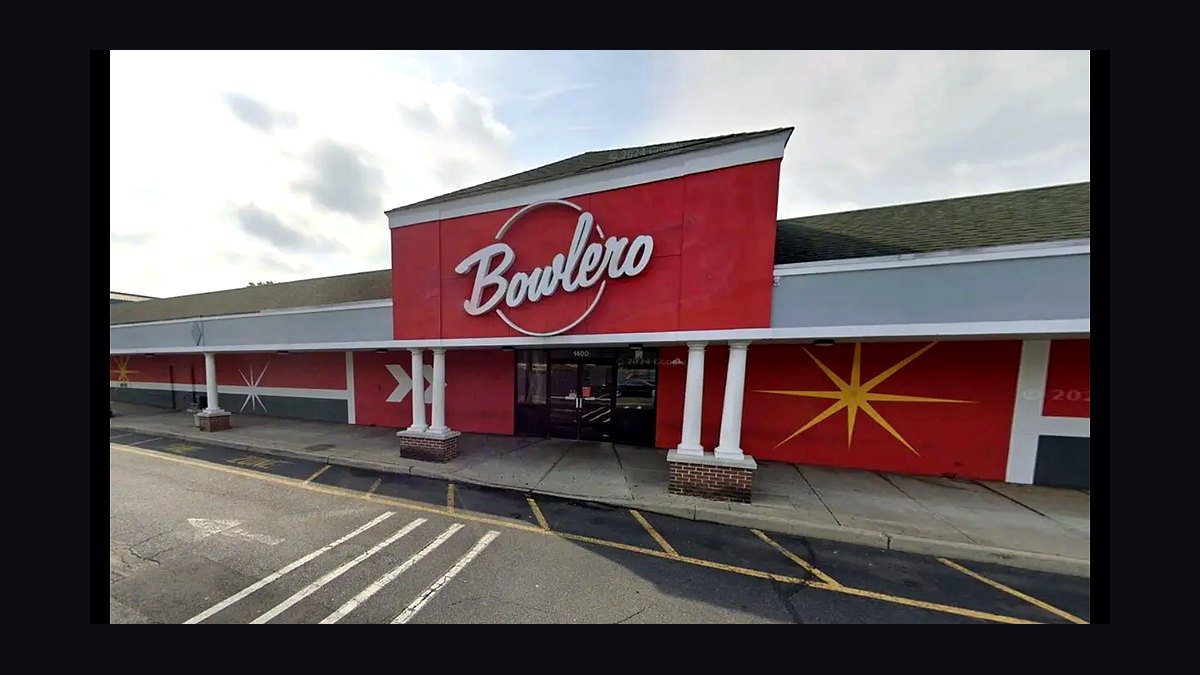
You can't literally buy a Bowlero franchise — Bowlero Corp (Bowlero, Bowlmor, AMF, Lucky Strike) grows through corporate ownership and acquisition, not franchising. The realistic 2027 paths are: build or acquire an independent bowling-entertainment center ($2M–$8M+, run as an F&B-and-events business, possibly sold to Bowlero later at 4x–8x EBITDA), or buy Bowlero stock (NYSE: BOWL) for passive exposure.
A Founder Walks Into the Wrong Meeting
Picture an aspiring operator who calls Bowlero's corporate offices looking to open a franchise the way they'd open a Dunkin' or a UPS Store — a fee, a territory map, a training program, a grand-opening date. That call goes nowhere, because Bowlero simply doesn't have a franchise development department. There's no Franchise Disclosure Document (FDD) to request, no initial franchise fee schedule, no royalty percentage to negotiate. Bowlero's growth strategy for the past decade has been almost entirely inorganic: buy existing centers, often family-owned or regional-chain operated, fold them into a shared brand, POS system, and procurement network, then repeat. The company now operates more than 350 centers across North America, and the overwhelming majority of those came from acquisitions rather than ground-up franchise development.
This matters enormously for how you should plan 2027. If you walk in assuming a turnkey franchise model — predictable startup costs, a proven playbook, ongoing corporate support — you will misallocate months of research and possibly real capital toward a path that doesn't exist. Instead, the founder in this scenario needs to reframe the entire question: not "how do I buy in," but "how do I build or acquire an asset that either generates strong cash flow on its own, or becomes attractive enough that Bowlero's corporate development team wants to buy it from me." That's a fundamentally different business — closer to opening an independent restaurant-and-entertainment venue than opening a franchise unit.
The practical version of this scenario plays out in one of three ways. First, the founder locates an existing bowling center — maybe a tired 24-lane facility from the 1980s with a snack bar and outdated pinsetters — buys it at a discount, and invests in a renovation: full bar, modern arcade, event space, updated scoring technology. Second, the founder builds new from the ground up in a growing suburban or metro market with strong family-entertainment demand, sizing the investment to the $2M–$8M range depending on lane count and amenities. Third, the founder skips physical operations altogether and buys shares of BOWL, accepting lower control and lower potential returns in exchange for liquidity and no operational burden.
Each of these three scenarios has wildly different capital requirements, time horizons, and skill demands, which is exactly why "should I open a Bowlero franchise" is really three separate questions wearing one costume. Before committing to any path in 2027, the founder needs to run the numbers on all three, because the wrong assumption at this stage — that a conventional franchise exists — cascades into wrong assumptions about financing, staffing, timeline, and exit strategy for the rest of the project.
How Bowlero's Acquisition Machine Actually Works
Understanding the mechanism behind Bowlero's growth is the single most important thing an entrepreneur can do before deciding whether to open or acquire a center in this space. Bowlero doesn't sell franchise rights; it buys finished, operating businesses and integrates them. The company's corporate development team continuously scans the market for centers that fit a specific acquisition profile, then negotiates a purchase — typically at a multiple of the target's EBITDA (earnings before interest, taxes, depreciation, and amortization) rather than a flat asking price.
The characteristics Bowlero looks for are fairly consistent across its acquisition history: centers with 24 to 48 lanes, existing and meaningful food-and-beverage revenue (not just a snack counter), a location in a growing metro area or tourist corridor, a liquor license already secured, and real estate — leased or owned — with at least 15 to 20 years of runway remaining. Bowlero also strongly favors centers that can be upgraded into its "premium entertainment" format, meaning there's physical space for an arcade, laser tag, or a full bar-and-grill buildout without a complete structural overhaul. A center under 16 lanes, or one requiring a full gut renovation just to reach baseline safety and code standards, is far less likely to attract a fair offer — Bowlero will either pass entirely or lowball the valuation.
The financial mechanics work like this: an operator invests in building or renovating a center, runs it for typically two to five years to establish a track record of consistent EBITDA, then approaches Bowlero's corporate development team directly or lists the property through a broker who specializes in bowling-center mergers and acquisitions. Multiples in the space generally run 4x to 7x EBITDA for a standard independent center, with Bowlero occasionally paying a premium — 8x to 10x — when a location fills a specific geographic gap in its national footprint. A center throwing off $1 million in annual EBITDA could reasonably sell in the $4 million to $10 million range, which is a meaningful return relative to a $2M–$6M build cost, assuming the operator has run a disciplined, well-marketed business in the interim.
It's worth being honest about the risk sitting underneath this mechanism: Bowlero's appetite for acquisitions isn't constant. It rises and falls with the company's stock price, its balance-sheet leverage, and the broader interest-rate environment. During 2023–2024, Bowlero visibly slowed its acquisition pace as higher rates and integration costs from prior purchases weighed on the balance sheet. Anyone building toward a 2027 sale needs to treat the acquisition itself as a real possibility, not a guarantee — and needs a fallback plan for operating the center indefinitely or selling to a different buyer, such as a regional operator or private equity group, if Bowlero isn't in a buying mood when the center is ready.
The Real Numbers: Build Costs, Revenue, and Benchmarks
The economics of a modern bowling-entertainment center — the asset class Bowlero actually acquires — break down into a handful of major line items, and getting these numbers right before you commit capital is the difference between a viable business and a slow-motion failure. Building costs for the facility itself, whether leased or purchased, typically run $500,000 to $3,000,000 or more for a 20,000 to 50,000 square-foot building. Lanes and pinsetters — the core bowling infrastructure — run $600,000 to $2,000,000 depending on whether you're installing 16 lanes or 40-plus. Arcade and redemption games add another $200,000 to $800,000, and a full food-and-beverage buildout with a real bar and kitchen (strongly recommended, since F&B is now the primary margin driver in this category) runs $300,000 to $1,200,000. Layer in technology and point-of-sale systems ($60,000–$250,000), initial marketing for the launch period ($40,000–$200,000), and working capital to cover the ramp-up ($150,000–$500,000), and the total investment for an independent center lands between roughly $2,000,000 on the low end and $8,000,000-plus for a large, amenity-rich facility.
On the revenue side, a modern center grosses $1.5 million to $6 million annually, blended across bowling, food and beverage, arcade, leagues, and private events. Net margins for well-run operations fall in the 12% to 25% range, though independents specifically report 10% to 20%, with the gap explained by scale advantages Bowlero-owned centers get from centralized purchasing and shared marketing infrastructure that an independent has to build alone. Labor typically consumes 27% to 40% of revenue depending on staffing model, occupancy costs run 14% or so of revenue, F&B and arcade cost of goods sold sits around 16% to 35% of related revenue, and marketing plus general operating expenses account for another 20% to 22%. A useful sanity-check example: a center grossing $3 million might net roughly $630,000 in EBITDA after those deductions — right in the range Bowlero's acquisition targets typically need to hit before a sale conversation makes sense.
Lane utilization — the percentage of available lane-hours actually booked — is one of the most underappreciated benchmarks in this business. Top-performing centers achieve 60% to 80% utilization during peak hours (evenings, weekends, league nights), while average or underperforming centers see only 30% to 50%. This single metric explains more variance in center profitability than almost any other factor, because fixed costs (rent, base staffing, loan payments) don't move whether a lane sits empty or hosts three parties in a night. Insurance is another line item operators consistently underbudget: liability, property, and workers' compensation coverage for a facility this size runs $50,000 to $150,000 annually, and skipping adequate coverage to save money in year one is a common and expensive mistake. On the marketing side, a realistic annual budget for a new independent center is 3% to 6% of projected revenue — roughly $60,000 to $240,000 for a $2 million-grossing center — money that has to substitute for the national brand recognition and centralized booking system Bowlero-owned locations get for free.
Trade-offs: Build-to-Sell, Independent Operation, or the Stock
Once the "no conventional franchise" reality sets in, the decision genuinely splits into three distinct strategies, each with a different risk-return profile, capital requirement, and time commitment — and the right choice depends heavily on how much capital you have, how hands-on you want to be, and how much illiquidity you can tolerate.
The build-to-sell strategy treats the center as a business built explicitly to attract Bowlero's acquisition team. You invest $2 million to $6 million, run the center for two to five years while deliberately shaping it toward Bowlero's stated preferences (lane count, F&B revenue share, liquor license, lease term), and then shop it to corporate development or an M&A broker. The upside is a potentially strong multiple on exit — 4x to 10x EBITDA — but the downside is real: you're dependent on Bowlero's acquisition appetite staying open when you're ready to sell, and on competition from other buyers (regional operators, private equity roll-ups, Main Event, Dave & Buster's) not driving the price dynamics against you.
Independent, indefinite operation is the default path if you never sell. Here you keep full control over branding, pricing, programming, and local marketing — you can run glow-bowling nights, cosmic bowling, corporate leagues, birthday-party packages, and even esports tournaments without needing corporate sign-off, and you can partner with local breweries or restaurants for cross-promotion in ways a standardized Bowlero location typically can't. The cost of that freedom is that you're building your customer base, supplier relationships, and brand recognition entirely from scratch, competing against a company with national scale and a centralized online booking system.
The third path skips physical assets entirely: buying shares of Bowlero Corp on the NYSE under the ticker BOWL. Bowlero went public via a SPAC merger in 2021, and its market capitalization has generally ranged between roughly $1 billion and $2 billion. As a shareholder you get diversification across hundreds of centers, full liquidity (sell anytime), and zero operational responsibility — but also zero influence over local decisions, and returns tied entirely to how the market values the company's execution. Bowlero's revenue growth has run roughly 5% to 10% annually, driven by both acquisitions and same-store sales gains from premium offerings like elevated menus and expanded event spaces, but the company also carries substantial acquisition-driven debt, generally in the $800 million to $1.2 billion range, making it sensitive to interest-rate moves.
A well-run independent center can produce cash-on-cash returns of 15% to 25% annually for an owner who executes on F&B and events, while Bowlero's stock has historically delivered total returns — price appreciation plus any dividends — in the single digits to low teens. That gap is the core trade-off: physical ownership offers higher potential returns, tax advantages like depreciation and Section 179 equipment deductions, and direct control, at the cost of illiquidity and years of hands-on management. Stock ownership offers convenience and liquidity at the cost of upside and control. Neither path is a "Bowlero franchise" in the traditional sense, and that distinction should drive which one you pick for 2027 rather than defaulting to whichever sounds more familiar.
Common Pitfalls and How to Avoid Them
The single most common mistake is searching for a Bowlero franchise application or fee schedule that doesn't exist, then either giving up on the category entirely or, worse, falling for a third party falsely claiming to sell Bowlero franchise rights. Verify directly through Bowlero's investor relations and SEC filings before sending anyone money — the company's growth model is public record, and there is no legitimate franchise offering to purchase.
A second pitfall is under-capitalizing the project by treating the low end of the cost range ($2 million) as the realistic target without accounting for your specific market's construction costs, lane count ambitions, or F&B buildout quality. Operators who skimp on the bar and kitchen buildout in particular tend to underperform, because food and beverage — not lane rental — has become the primary margin engine in this category; a center that treats F&B as an afterthought is competing with one hand tied behind its back against modern eatertainment concepts like Main Event, Round1, and Dave & Buster's.
A third pitfall is choosing a location without validating real family-entertainment and league demand, or choosing a market too small to support a large-format center — Bowlero's target acquisition profile skews toward growing metro areas and tourist corridors specifically because population density drives the utilization rates that make the economics work. A fourth is neglecting insurance and compliance costs in the initial budget, only to discover the $50,000–$150,000 annual liability, property, and workers' comp bill eats meaningfully into thin first-year margins. A fifth is planning around a guaranteed Bowlero acquisition rather than treating it as one possible outcome among several — building a fallback plan for indefinite independent operation, or a sale to a regional operator or private equity buyer, protects you if Bowlero's acquisition appetite has cooled by the time your center is ready. Finally, watch lane utilization from day one: a center running at 30–50% utilization instead of the 60–80% top performers achieve is usually a marketing and programming problem, not a demand problem, and it's fixable with the kind of local events, league recruitment, and cross-promotions that a nimble independent operator can execute faster than a corporate-owned location.
Related questions
Does Bowlero offer any franchise opportunities at all?
No. Bowlero Corp does not sell traditional franchises for any of its brands — Bowlero, Bowlmor, AMF, or Lucky Strike. All locations are corporate-owned, acquired, or developed directly by the company itself.
How long does it typically take to build a bowling-entertainment center from scratch?
Ground-up construction plus permitting, lane installation, and buildout of F&B and arcade areas commonly takes 12 to 24 months, depending on municipal approval timelines and the complexity of the amenity mix.
What return should I expect if Bowlero never acquires my center?
Well-run independent centers can generate 15% to 25% annual cash-on-cash returns from operations alone, meaning a profitable exit isn't strictly necessary if the business performs on an ongoing basis.
Is investing in Bowlero stock less risky than building a center?
It's differently risky — you avoid operational and construction risk but take on market risk and company-specific debt risk, since Bowlero carries $800 million to $1.2 billion in acquisition-related debt.
What entertainment concepts compete most directly with a new bowling center?
Main Event, Dave & Buster's, Round1 Entertainment, and regional family-entertainment centers all compete for the same discretionary entertainment and events spending in most metro markets.
FAQ
Can I buy a Bowlero franchise directly from the company? No. Bowlero Corp does not sell traditional franchises. The company operates its centers — including Bowlero, Bowlmor, AMF, and Lucky Strike — through corporate ownership and acquisitions. If you want to be involved, you'd need to start or buy an independent center, or invest in Bowlero stock.
What is the typical cost to open a modern bowling-entertainment center?
A new center generally requires an investment between $2 million and $8 million or more, depending on location, size, and amenities like arcades, bars, or event spaces. This range reflects real-world estimates from industry operators, not an official franchise fee schedule.
How much revenue can a bowling-entertainment center generate? Annual gross revenue typically falls between $1.5 million and $6 million, though results vary widely by market, management, and local competition. Higher-end centers with strong food, drink, and events programming tend to land at the top of that range.
Is Bowlero likely to buy my center if I open one? Bowlero frequently acquires existing bowling centers, but there's no guarantee they'll buy yours. They target centers with strong locations, modern amenities, and growth potential — generally 24 to 48 lanes with existing F&B revenue and a secured liquor license. If that fits your business, a future sale is possible, but you should plan to operate independently for the long term regardless.
What are the main risks of opening an independent bowling center? Key risks include high upfront costs ($2M–$8M+), reliance on discretionary consumer spending, seasonal demand swings, and direct competition from Bowlero-owned locations and other entertainment venues. Many centers also run on thin margins without strong food, beverage, and event revenue carrying the business.
Can I invest in Bowlero instead of opening a center? Yes. Bowlero trades on the NYSE under the ticker BOWL. Investing in the stock gives you exposure to the company's growth and acquisition strategy without the operational risks of owning a center. However, stock prices fluctuate and past performance doesn't guarantee future returns.
Sources
- Bowlero Corp investor relations and SEC filings (NYSE: BOWL)
- IBISWorld — Bowling Centers in the US industry report
- Bowling Proprietors' Association of America (BPAA) — industry data
- Statista — US bowling and family-entertainment revenue statistics
- Technomic — eatertainment market reports
- IAAPA — International Association of Amusement Parks and Attractions industry data
- International Franchise Association (IFA) — Franchise Economic Outlook
- Nation's Restaurant News — eatertainment and F&B trend coverage
Related on PULSE
This page will be disappearing soon. Save it to your device for $1 — or read it free while it is here.
@Kory-White- · if Venmo asks, the last 4 of my number are 2012
This page is gone.
This one is off the shelf now. $1 keeps it on your phone for good — the whole page, pictures and diagrams included.
 franchiseShould I open or buy an Auntie Anne's franchise in 2027?
 franchiseShould I open or buy an Ace Hardware franchise in 2027?
 franchiseShould I open or buy a UPS Store franchise in 2027?
 frShould I open or buy a McDonald's franchise in 2027?
 franchiseShould I open or buy a Supercuts franchise in 2027?
 franchiseShould I open or buy a Primrose Schools franchise in 2027?
 franchiseShould I open or buy a Panera Bread franchise in 2027?
 franchiseShould I open or buy a Rita's Italian Ice franchise in 2027?
 franchiseShould I open or buy an Orangetheory Fitness franchise in 2027?
 franchiseShould I open or buy a Bojangles franchise in 2027?